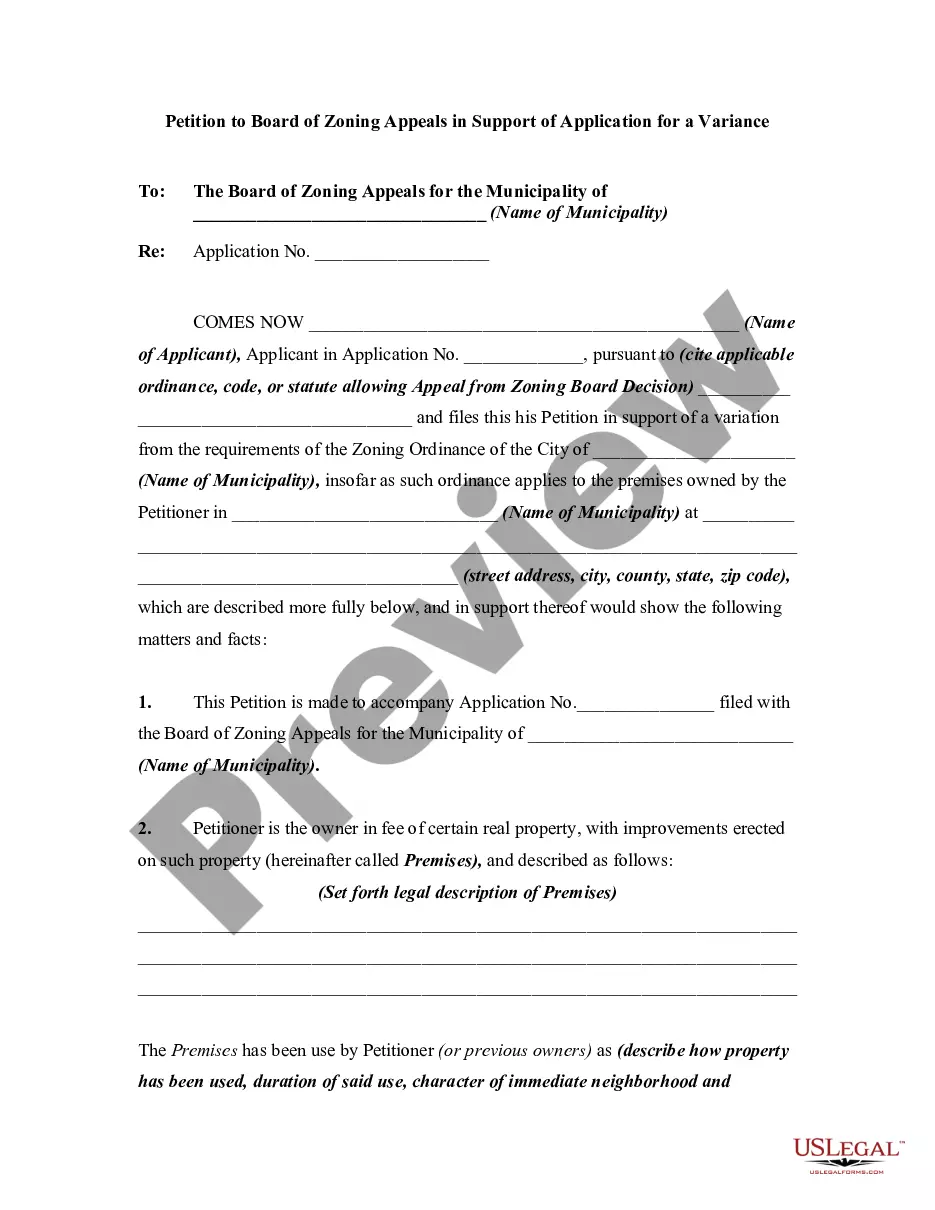
Petition to Board of Zoning Appeals in Support of Application for a Variance
What is this form?
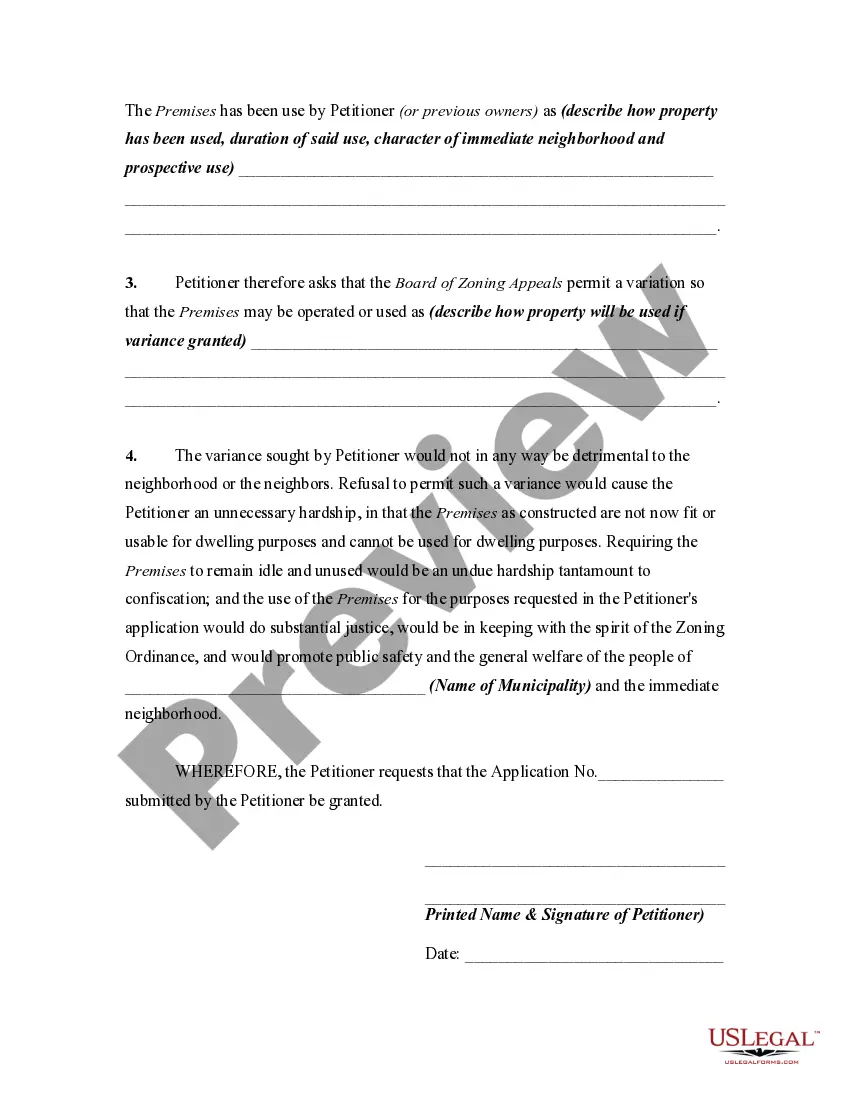
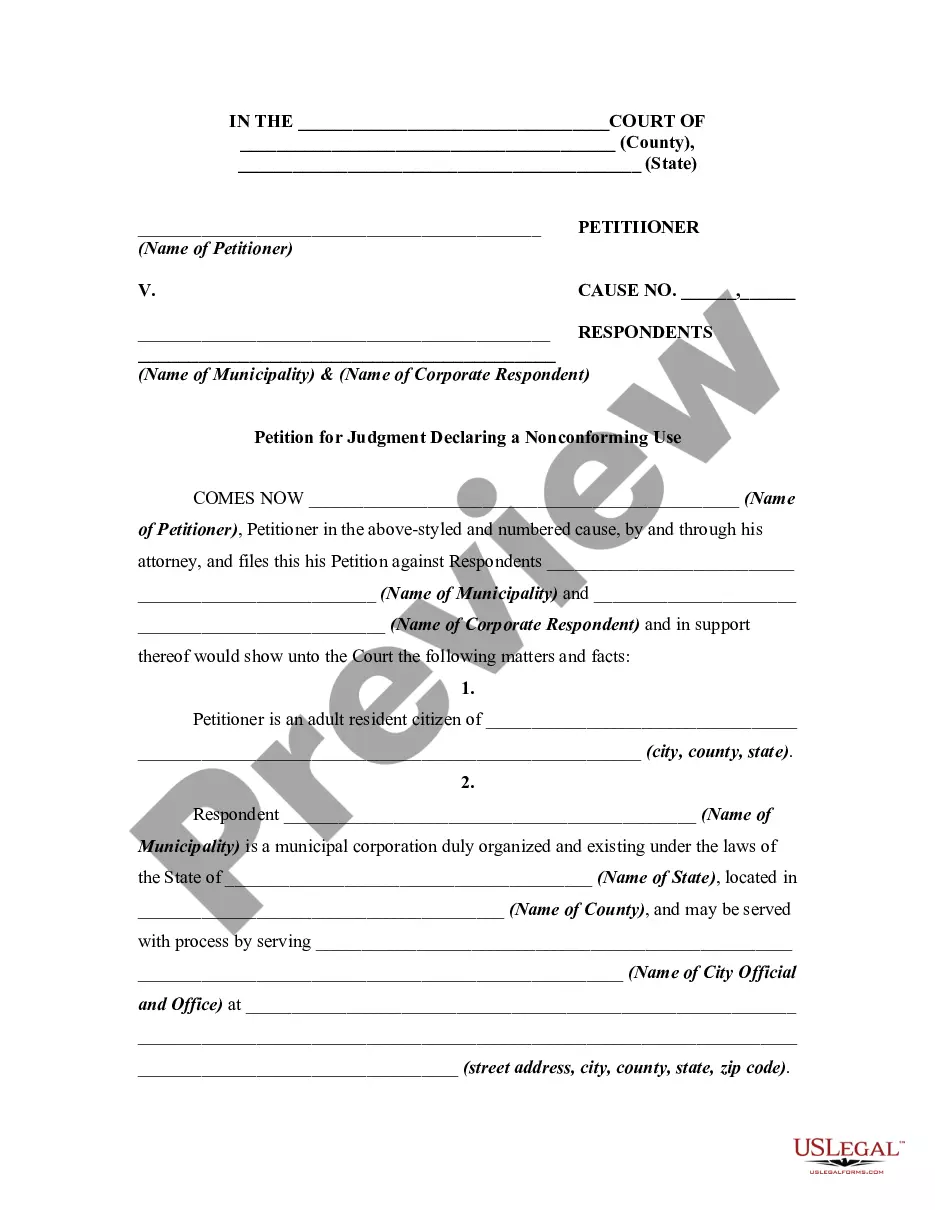
The Petition to Board of Zoning Appeals in Support of Application for a Variance is a legal document allowing landowners to request an exception to current zoning regulations. This form specifically supports an application for a variance, which permits a land use that might not comply with existing zoning laws. It is essential for individuals looking to change the use of their property when faced with zoning restrictions.
Main sections of this form
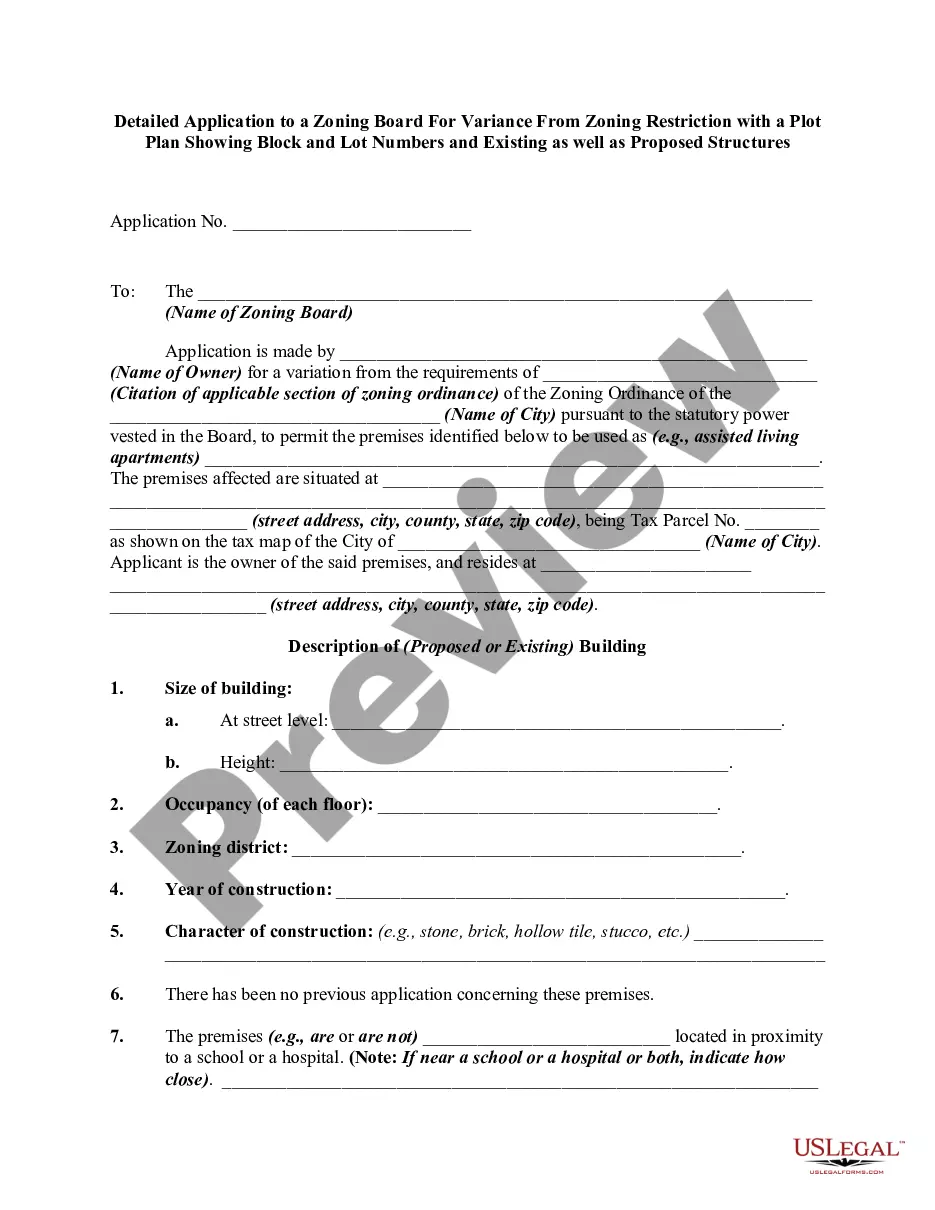
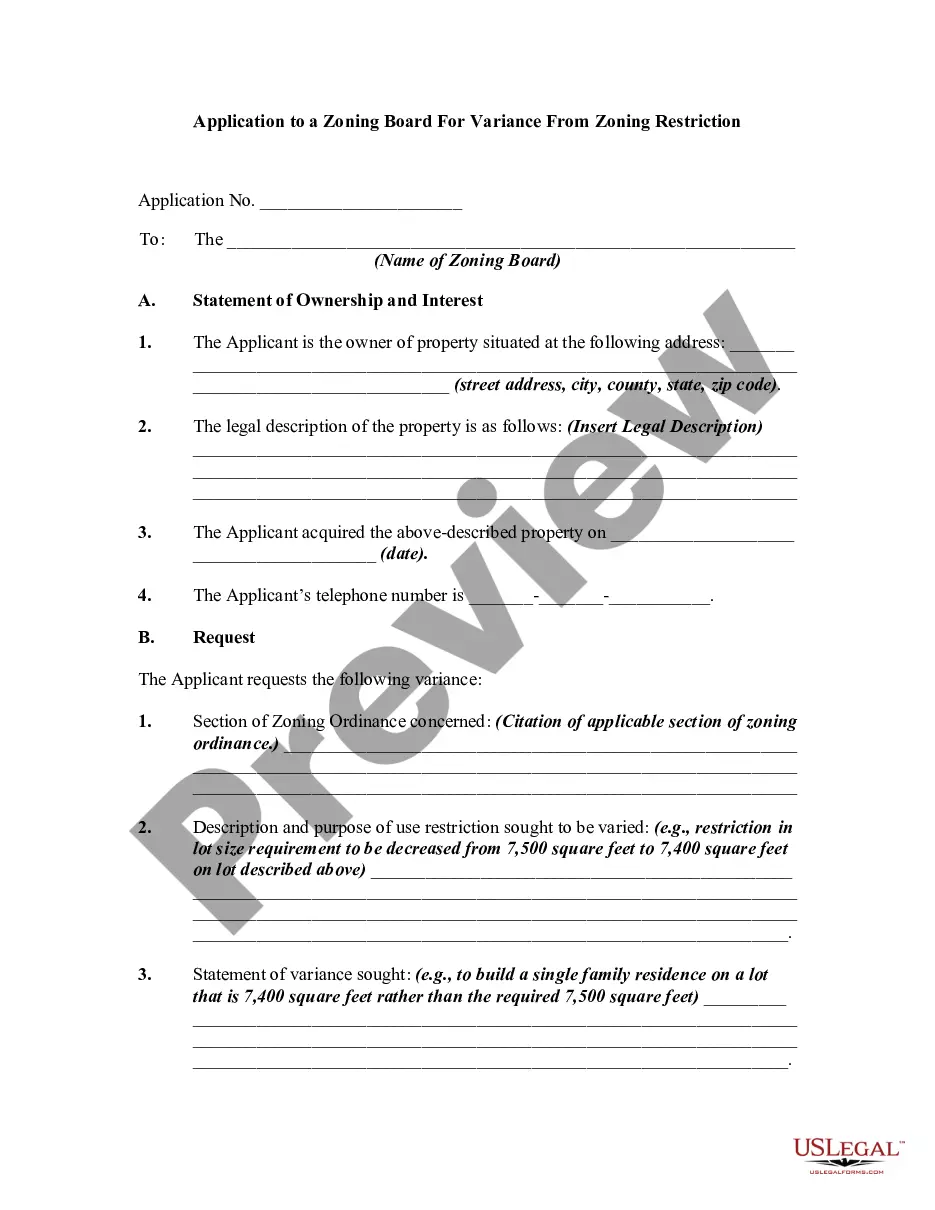
- Name of the applicant and contact information.
- Application number linked to the zoning board.
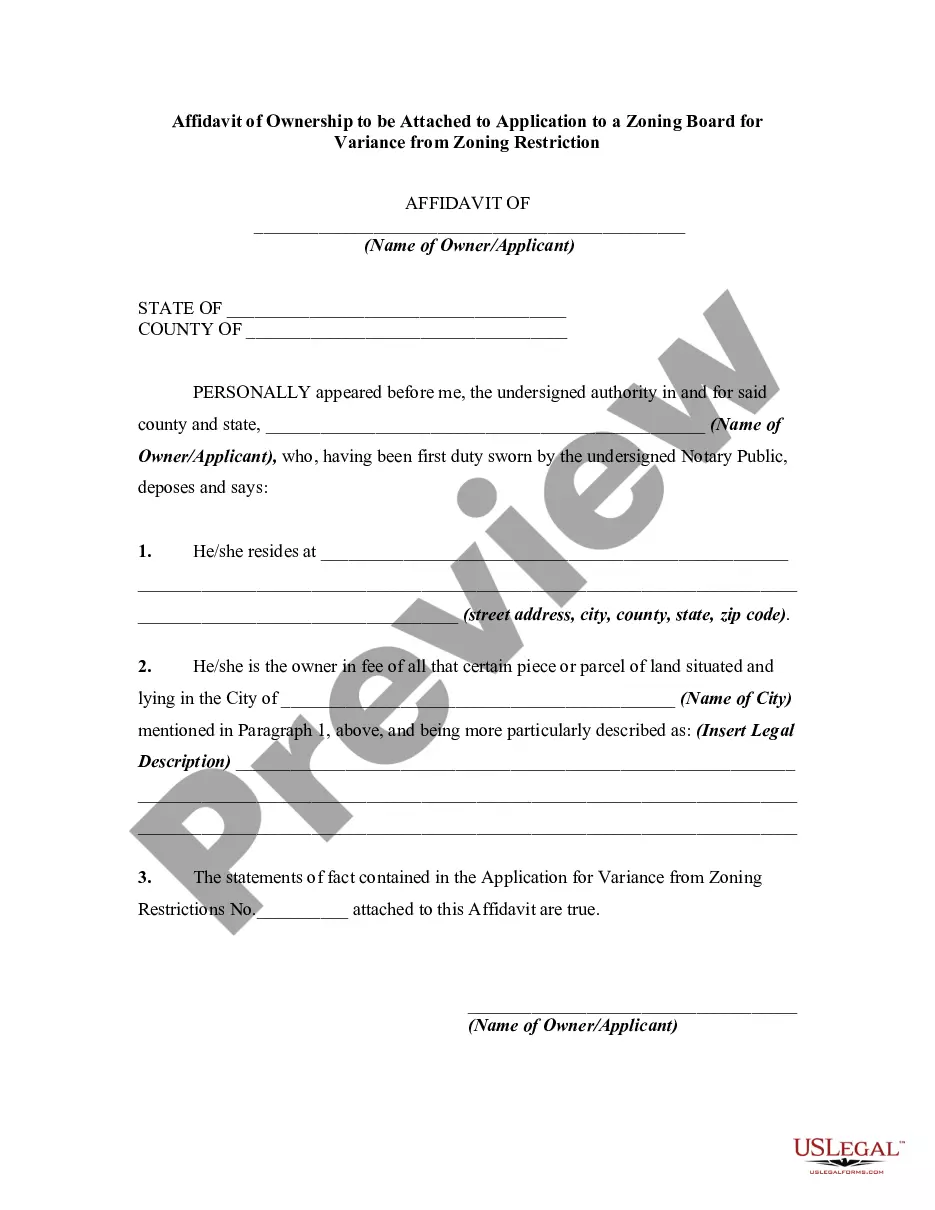
- Legal description of the property in question.
- Description of the intended use of the property if the variance is granted.
- Rationale for why the variance should be granted, emphasizing lack of detriment to the neighborhood.
- Signature and date by the applicant.
When this form is needed
This form should be used when a property owner needs to appeal a zoning board's decision that denies a use of their property which contradicts existing zoning ordinances. It is applicable in scenarios where the current zoning of the property does not allow for the desired use, and the owner believes that such use would not harm the neighborhood or community welfare.
Who this form is for
- Property owners seeking to modify the use of their land.
- Individuals required to appeal a zoning board decision.
- Anyone wishing to apply for a variance regarding local zoning laws.
- Those who have experienced denial of property use based on zoning regulations.
How to complete this form
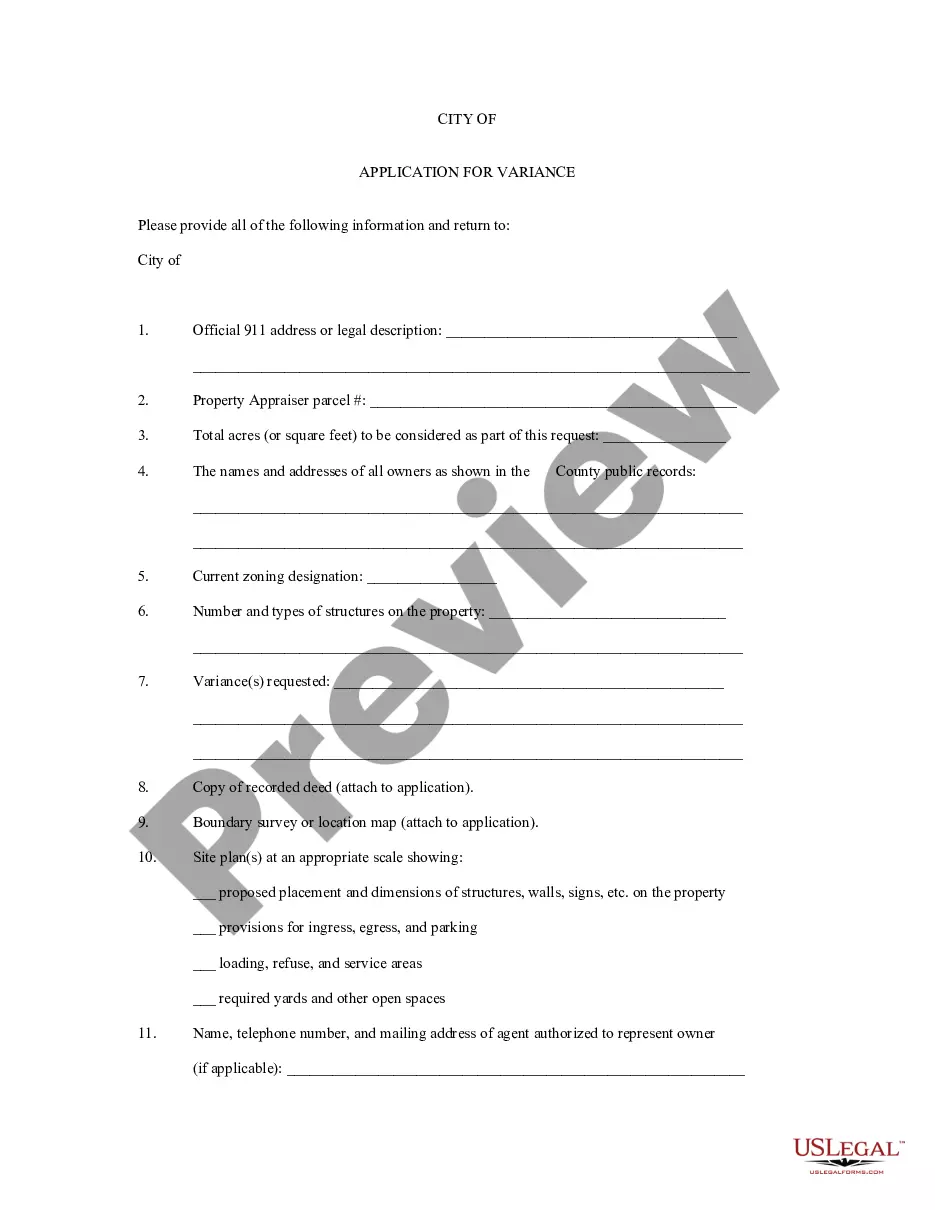
- Identify the name of the municipality and fill in the application number.
- Provide the applicant's details, including full name and address.
- Include the legal description of the property for which the variance is sought.
- Explain the current and proposed use of the property.
- Articulate the reason for requesting the variance, focusing on hardship and neighborhood impact.
- Sign and date the petition to validate it.
Does this document require notarization?
This form does not typically require notarization unless specified by local law. Always check with local zoning regulations to ensure compliance with any applicable notarization requirements.
Get your form ready online
Our built-in tools help you complete, sign, share, and store your documents in one place.
Make edits, fill in missing information, and update formatting in US Legal Forms—just like you would in MS Word.
Download a copy, print it, send it by email, or mail it via USPS—whatever works best for your next step.
Sign and collect signatures with our SignNow integration. Send to multiple recipients, set reminders, and more. Go Premium to unlock E-Sign.
If this form requires notarization, complete it online through a secure video call—no need to meet a notary in person or wait for an appointment.
We protect your documents and personal data by following strict security and privacy standards.

Make edits, fill in missing information, and update formatting in US Legal Forms—just like you would in MS Word.

Download a copy, print it, send it by email, or mail it via USPS—whatever works best for your next step.

Sign and collect signatures with our SignNow integration. Send to multiple recipients, set reminders, and more. Go Premium to unlock E-Sign.

If this form requires notarization, complete it online through a secure video call—no need to meet a notary in person or wait for an appointment.

We protect your documents and personal data by following strict security and privacy standards.
Mistakes to watch out for
- Failing to include the legal description of the property.
- Not providing adequate justification for the variance request.
- Leaving fields blank or incorrectly filling in application numbers.
- Missing signatures or dates on the petition.
Benefits of completing this form online
- Convenience of downloading the form at any time.
- Easy editing to customize the form as per your specifics.
- Access to templates created by licensed attorneys, ensuring legal validity.
Legal use & context
- This petition allows homeowners and developers to seek relief from zoning regulations.
- It provides a formal process to request variances, which can be critical for property usability.
- Understanding local zoning ordinances is important to effectively use this form.
Looking for another form?








Form popularity
FAQ
Zoning requires that all involved property owners relinquish some of their individual property freedoms for the common good. Zoning can discourage some development in some locations. Zoning can increase the cost of building new structures. Zoning can work against historic mixed use neighborhoods in older communities.
Functional zoning. The most prevalent form of zoning where land use zones are defined according to their function, such as commercial, residential, or industrial. Form-based zoning. Intensity zoning. Incentive zoning.
Zoning allows you to raise or lower the temperature in different areas in your home (zones). When a zone isn't being put to use, the temperature in that zone can be lowered which saves on energy consumption.
Because of the zoning, the value of the property is diminished as the number of buyers that would have a use for the building has now been greatly reduced which, based on supply and demand , would lessen the value of the building. Another example might be the density requirement of zoning.
Zoning laws help to ensure that a community is laid out in the most convenient and efficient manner and that areas reserved for related and complimentary uses are located in close proximity. For example, ideally, you would want to locate schools in close proximity to the residential neighborhoods they serve.
Land use zones are the codes that the government uses to classify parcels of land. Zoning regulations can be used to separate business from farming or residential areas, protect natural resources and wildlife, designate lot sizes or regulate the types of animals owned by landowners.
The purpose of land use zoning is to indicate the planning control objectives of the Council for all lands in its administrative area. Thirteen such zones are indicated in this Plan. They are identified by letter on the zoning matrix and by letter and colour on the Development Plan Maps.
1.1 C entral Business District (CBD) The Central Business District is the heart of any city and its function is commercial. 1.4 Medium-status housing zone. 1.5 High-status housing zone. 1.6 Large industries. 1.7 Rural-urban seam.
In addition to the three main categories (residential, commercial, manufacturing), the zoning toolkit includes complementary rules that address specific types of development, as well as the design and quality of public spaces.
Functional zoning. The most prevalent form of zoning where land use zones are defined according to their function, such as commercial, residential, or industrial. Form-based zoning. Intensity zoning. Incentive zoning.