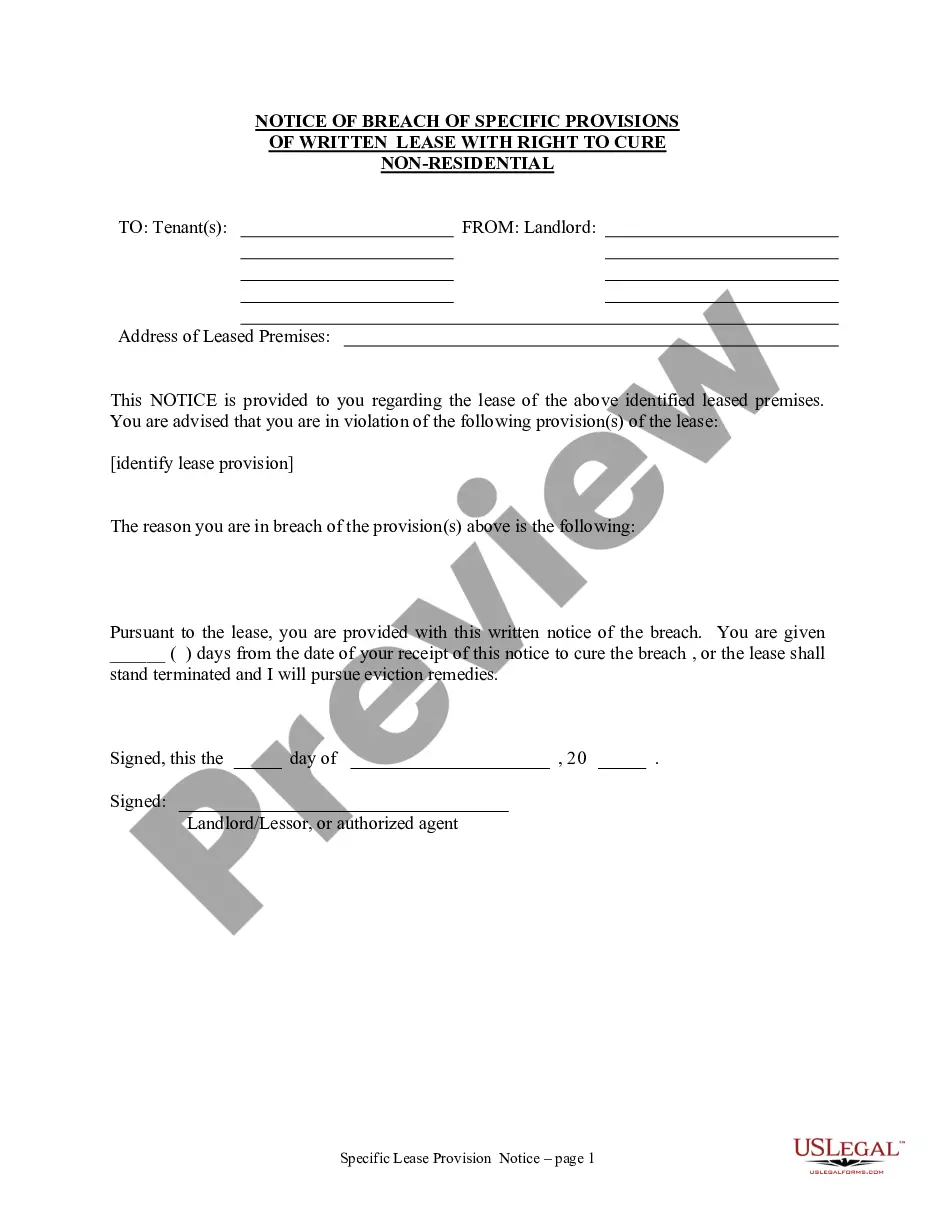
Disclaimer by Beneficiary of all Rights under Trust and Acceptance of Disclaimer by Trustee
About this form
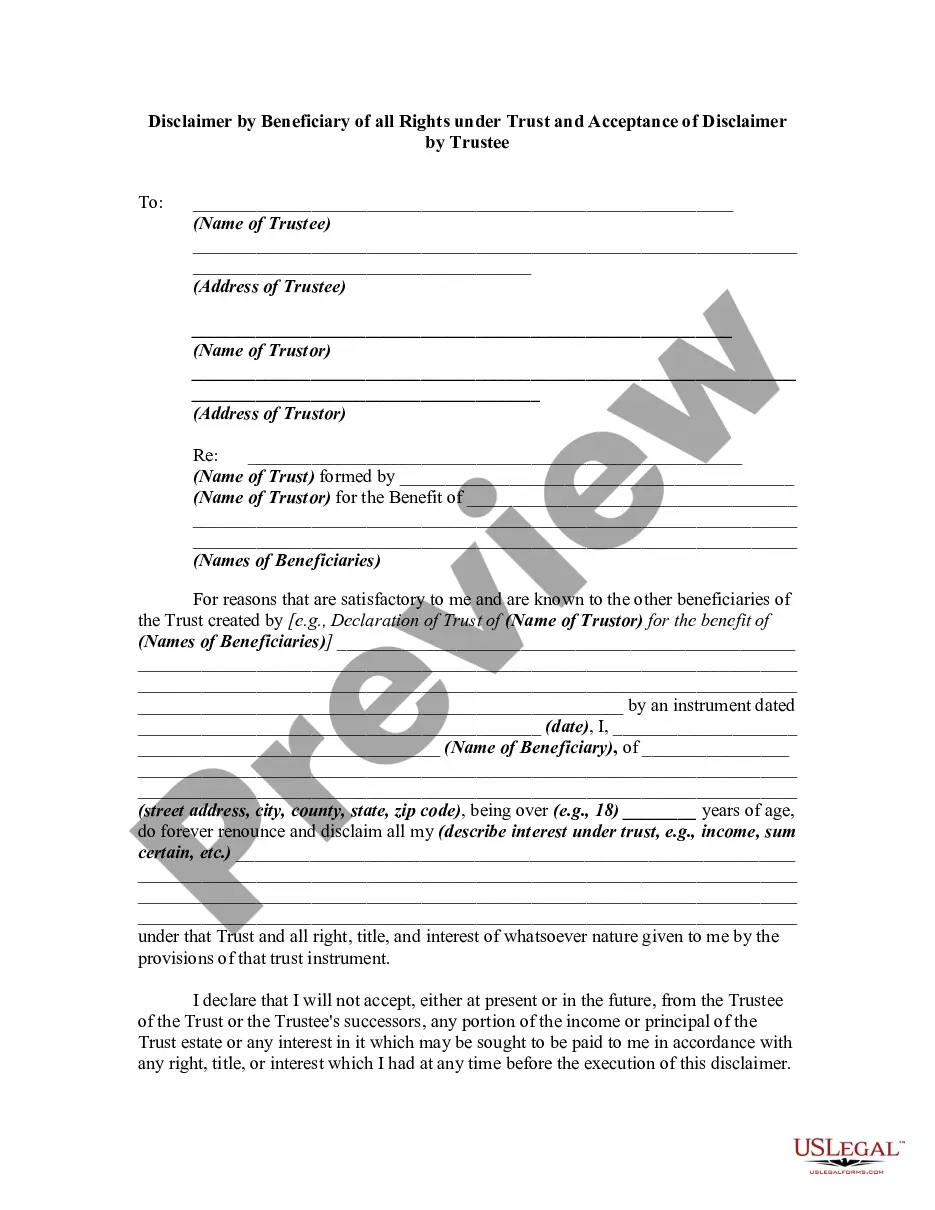
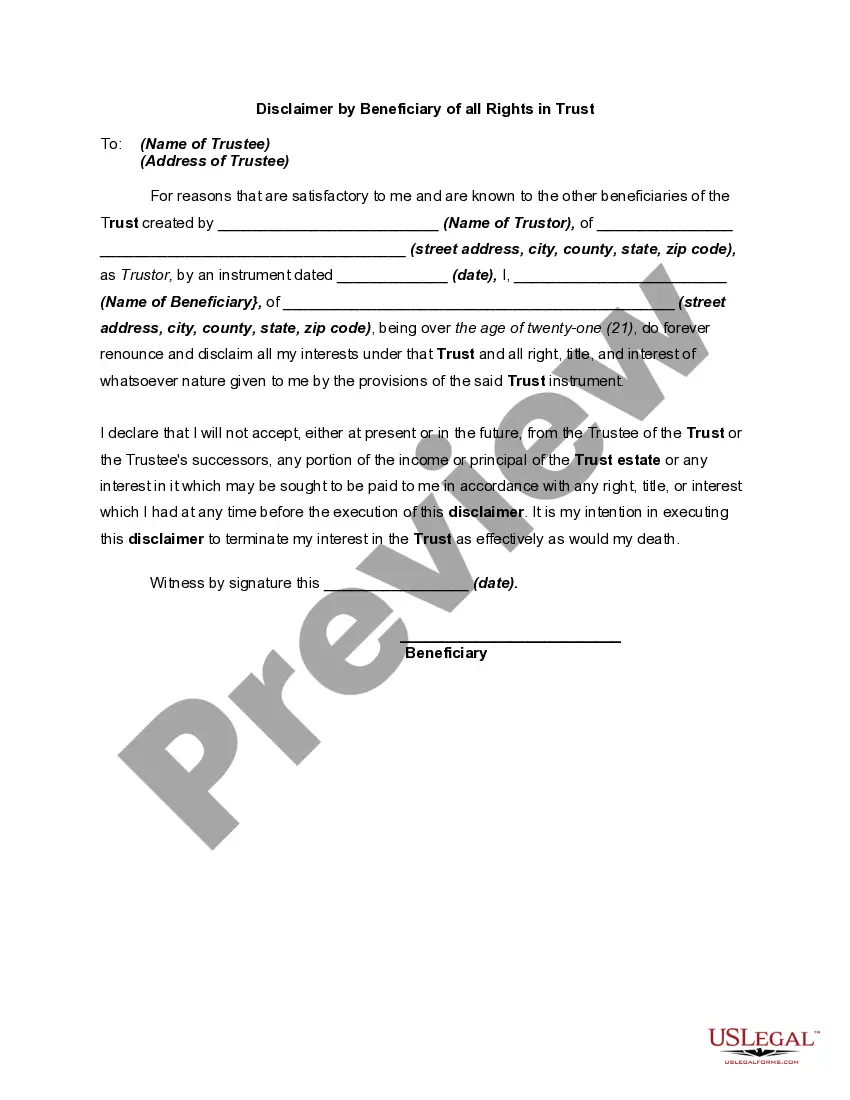
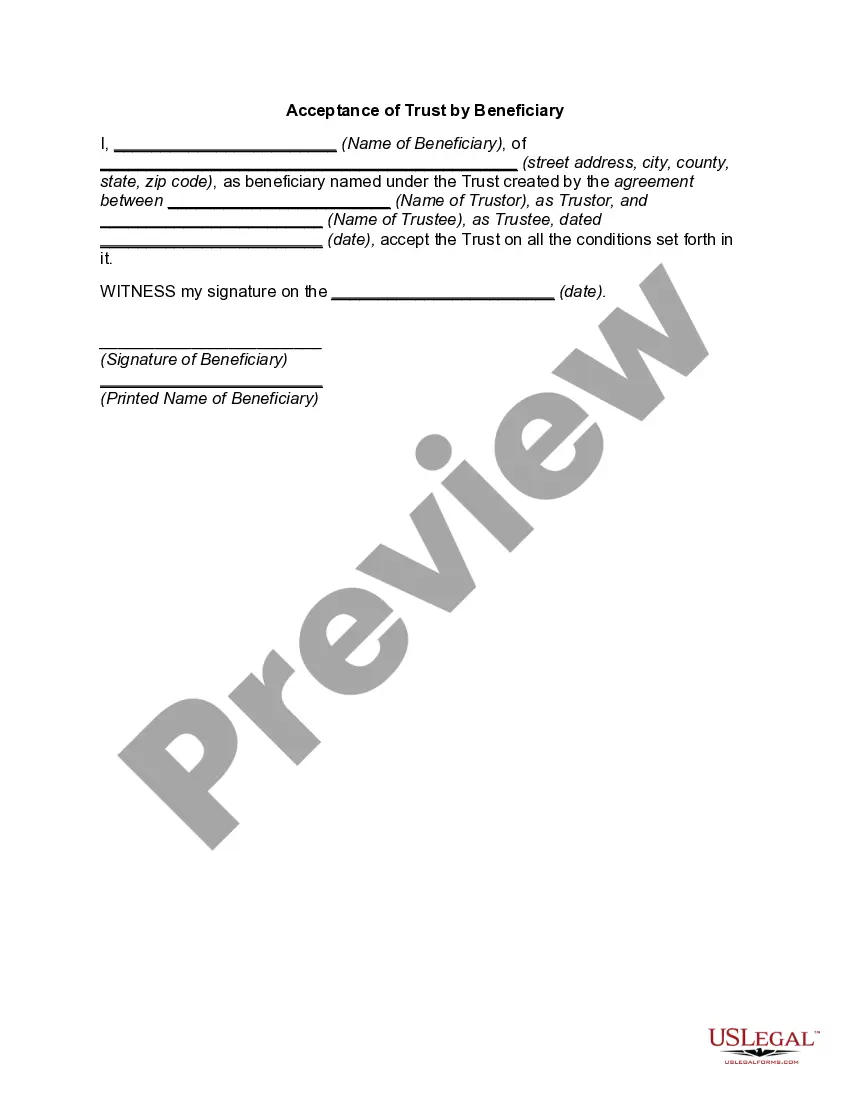
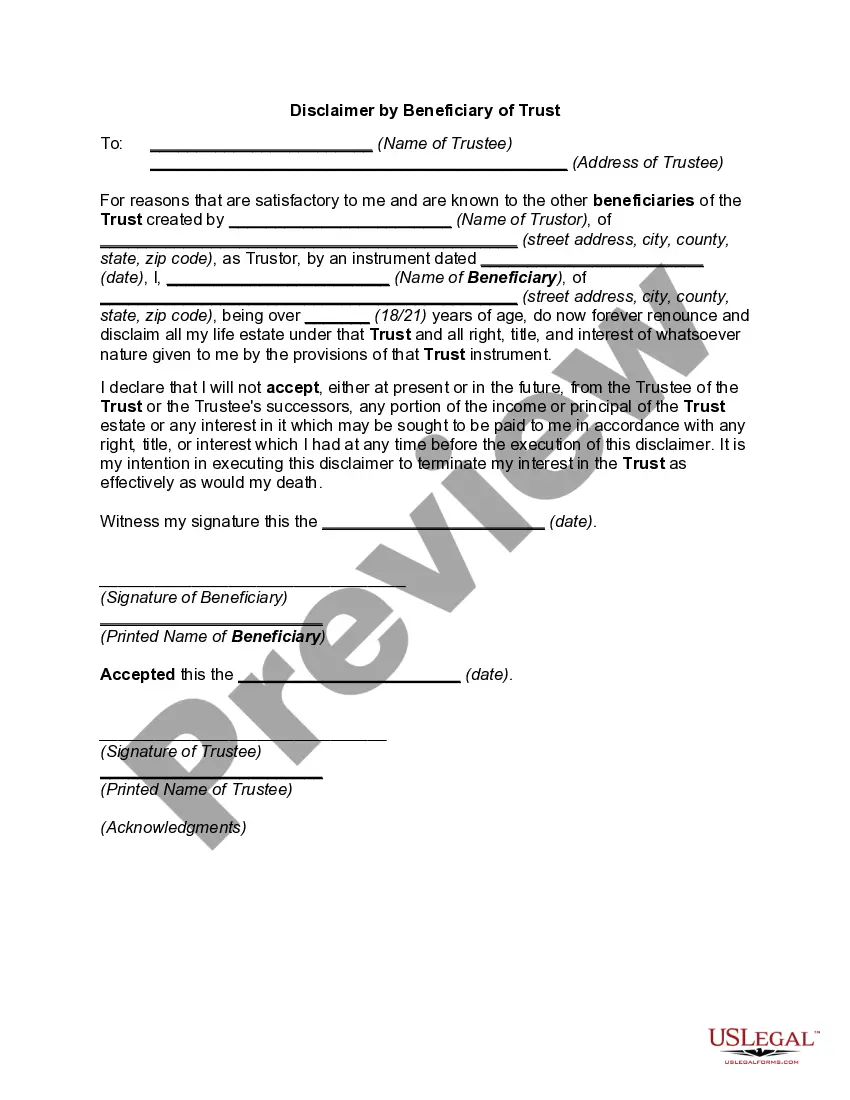
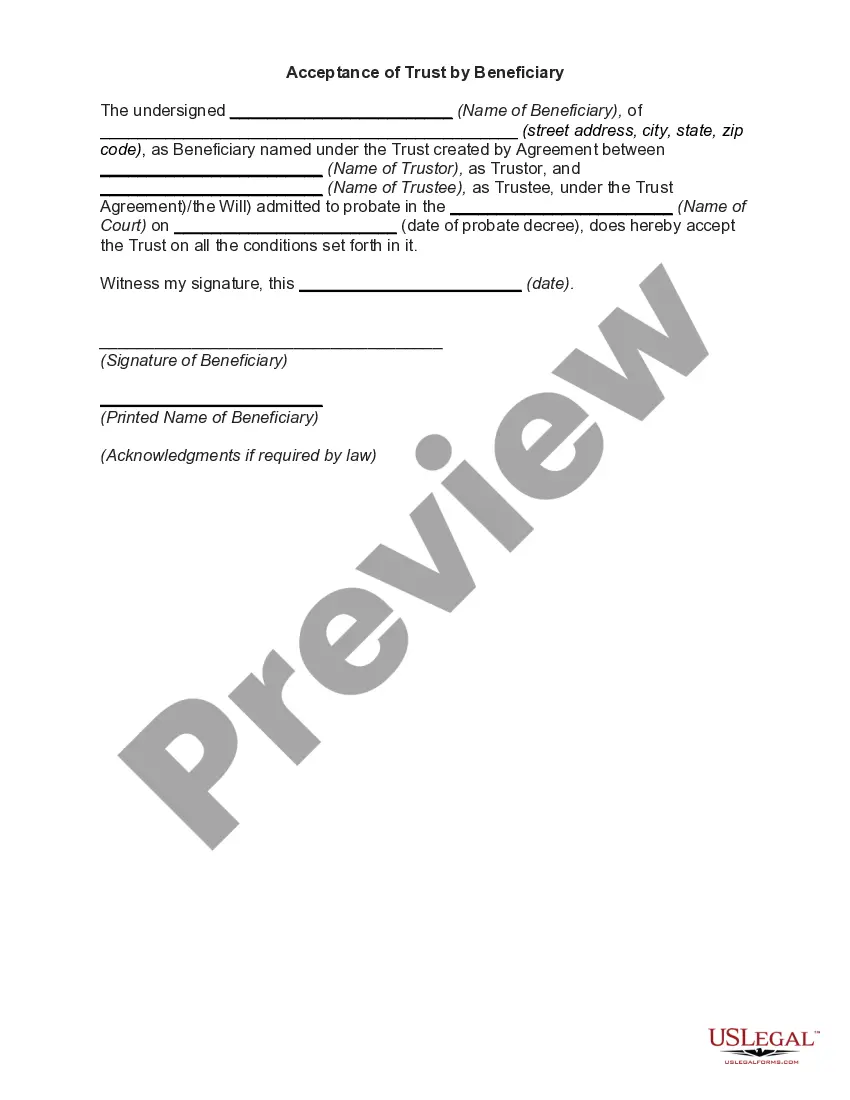
The Disclaimer by Beneficiary of all Rights under Trust and Acceptance of Disclaimer by Trustee is a legal document where a beneficiary renounces any claim or rights to a trust. This form is essential to formally reject the entitlements from the trust, ensuring that the beneficiary cannot later accept any benefits. Unlike other legal forms related to trusts, this document specifically focuses on the beneficiary's refusal to accept their rights under the terms of the trust, providing clarity and protection for both the beneficiary and the trustee.
Key components of this form
- The names and addresses of the trustee and trustor.
- The name of the trust and its creation date.
- A detailed renunciation statement by the beneficiary.
- Proof of the beneficiary's age and capacity.
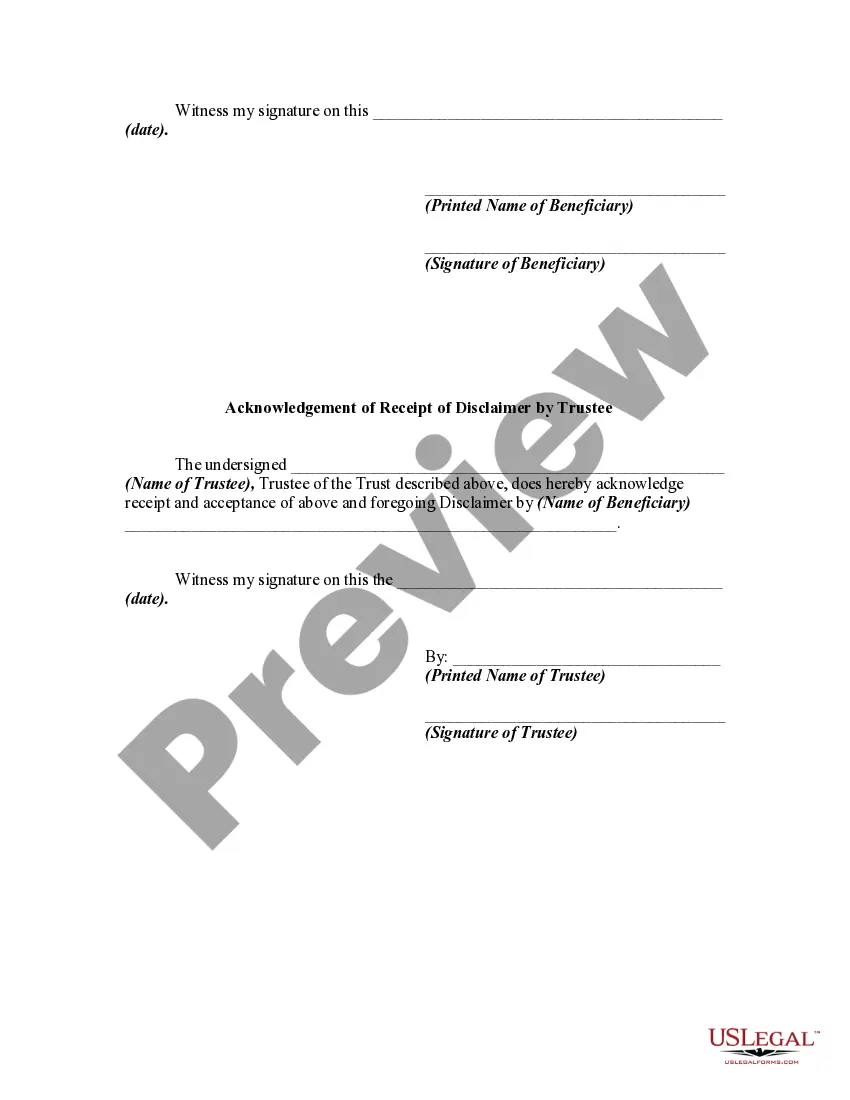
- The signatures of both the beneficiary and trustee, along with dates.
When this form is needed
This form is useful in situations where a beneficiary chooses to decline their rights or benefits under a trust, often due to personal reasons, financial considerations, or conflicts among beneficiaries. By officially disclaiming their interest, the beneficiary ensures that the trust's assets are left for the remaining beneficiaries or may be redirected as per the trustor's wishes.
Who needs this form
- Beneficiaries of a trust who wish to renounce their rights.
- Trustees needing formal acknowledgment of a beneficiary's disclaimer.
- Estate administrators managing distributions among beneficiaries.
How to prepare this document
- Identify and enter the names and addresses of the trustee and trustor.
- Specify the name of the trust and the date it was created.
- Provide details on why you are disclaiming your rights under the trust.
- Include your personal information and confirm your age.
- Sign the document and date it, then ensure the trustee also acknowledges the disclaimer.
Is notarization required?
In most cases, this form does not require notarization. However, some jurisdictions or signing circumstances might. US Legal Forms offers online notarization powered by Notarize, accessible 24/7 for a quick, remote process.
Get your form ready online
Our built-in tools help you complete, sign, share, and store your documents in one place.
Make edits, fill in missing information, and update formatting in US Legal Forms—just like you would in MS Word.
Download a copy, print it, send it by email, or mail it via USPS—whatever works best for your next step.
Sign and collect signatures with our SignNow integration. Send to multiple recipients, set reminders, and more. Go Premium to unlock E-Sign.
If this form requires notarization, complete it online through a secure video call—no need to meet a notary in person or wait for an appointment.
We protect your documents and personal data by following strict security and privacy standards.

Make edits, fill in missing information, and update formatting in US Legal Forms—just like you would in MS Word.

Download a copy, print it, send it by email, or mail it via USPS—whatever works best for your next step.

Sign and collect signatures with our SignNow integration. Send to multiple recipients, set reminders, and more. Go Premium to unlock E-Sign.

If this form requires notarization, complete it online through a secure video call—no need to meet a notary in person or wait for an appointment.

We protect your documents and personal data by following strict security and privacy standards.
Avoid these common issues
- Failing to include signatures of both the beneficiary and the trustee.
- Not providing complete information on the trust and its terms.
- Overlooking the requirement of collecting all necessary acknowledgments.
Benefits of using this form online
- Convenience of accessing and completing the form from any location.
- Editability allows you to customize the form to meet your specific needs.
- Reliability of attorney-drafted templates ensures legal validity.
Legal use & context
- Ensures the legal formalities of disclaiming rights are respected.
- Protects the integrity of the trust and its intended distribution.
- Helps prevent future disputes among beneficiaries.
Key takeaways
- A disclaimer by a beneficiary is a formal renunciation of rights under a trust.
- This form clarifies the beneficiary's decision, safeguarding their future interests.
- Complete the form accurately to avoid legal issues and ensure its effectiveness.
Looking for another form?

Form popularity
FAQ
Put the disclaimer in writing. Deliver the disclaimer to the person in control of the estate usually the executor or trustee. Complete the disclaimer within nine months of the death of the person leaving the property. Do not accept any benefit from the property you're disclaiming.
Put the disclaimer in writing. Deliver the disclaimer to the person in control of the estate usually the executor or trustee. Complete the disclaimer within nine months of the death of the person leaving the property. Do not accept any benefit from the property you're disclaiming.
Any disclaimer of an interest in a trust by a trust beneficiary must be made to the trustee of that trust. For a disclaimer to be valid, it must be supported by some evidence that the beneficiary is disclaiming their interest. Silence or otherwise passive behaviour will not suffice.
The disclaimer must be in writing: A signed letter by the person doing the disclaiming, identifying the decedent, describing the asset to be disclaimed, and the extent and amount, percentage or dollar amount, to be disclaimed, must be delivered to the person in control of the estate or asset, such as an executor,
Put the disclaimer in writing. Deliver the disclaimer to the person in control of the estate usually the executor or trustee. Complete the disclaimer within nine months of the death of the person leaving the property. Do not accept any benefit from the property you're disclaiming.
Specifically, the IRS requires that: You make your disclaimer in writing.You disclaim the assets within nine months of the death of the person you inherited them from. (Note: There's an exception for minor beneficiaries; they have until nine months after they reach the age of majority to disclaim.)
A qualified disclaimer is a part of the U.S. tax code that allows estate assets to pass to a beneficiary without being subject to income tax. Legally, the disclaimer portrays the transfer of assets as if the intended beneficiary never actually received them.
No, a disclaimer does not need to be notarized.To get the most legal protection out of your disclaimers, display them in accessible places for users to see, such as linking to the disclaimer page in the website footer, and including it in the terms and conditions.