Agreement to Extend the Duration or Term of a Trust
Overview of this form
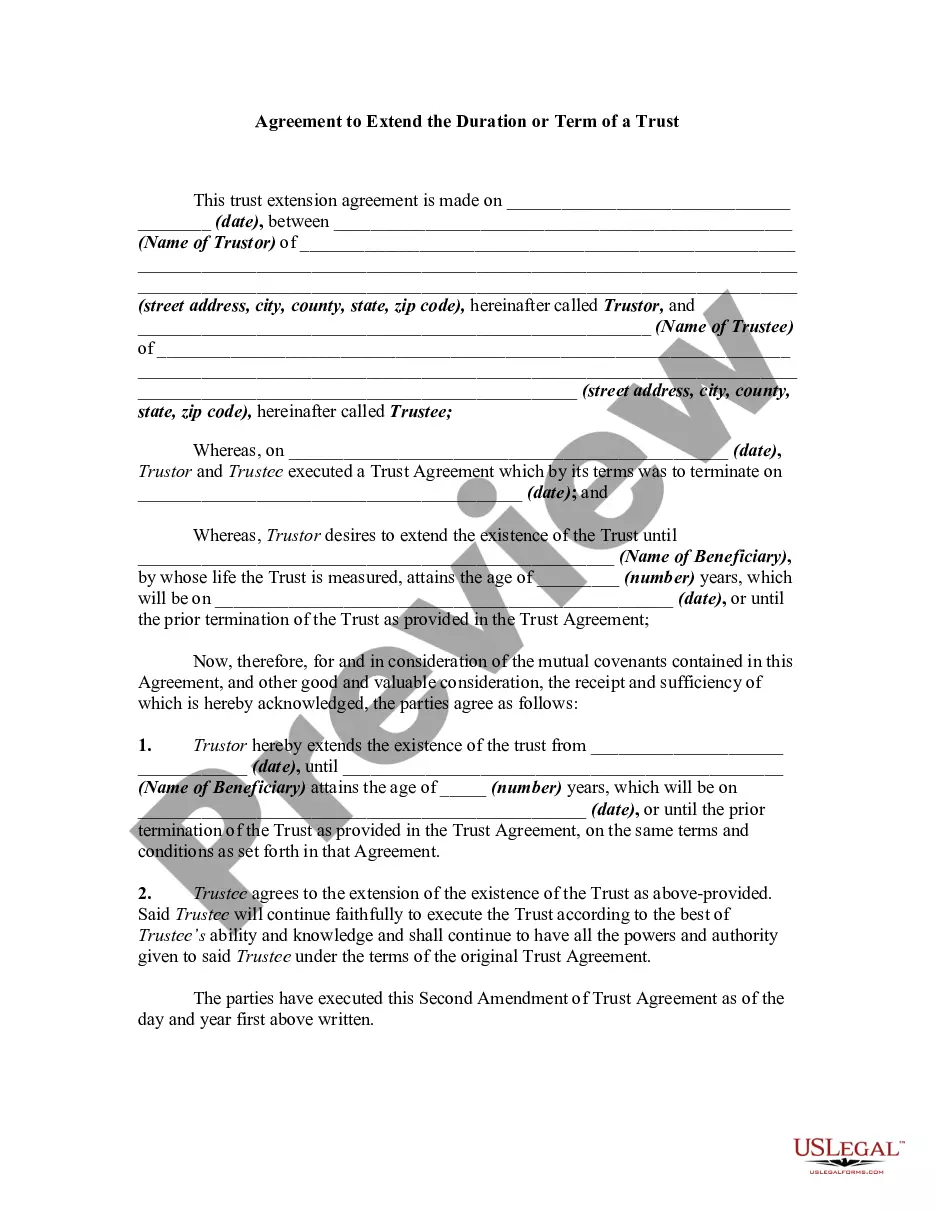
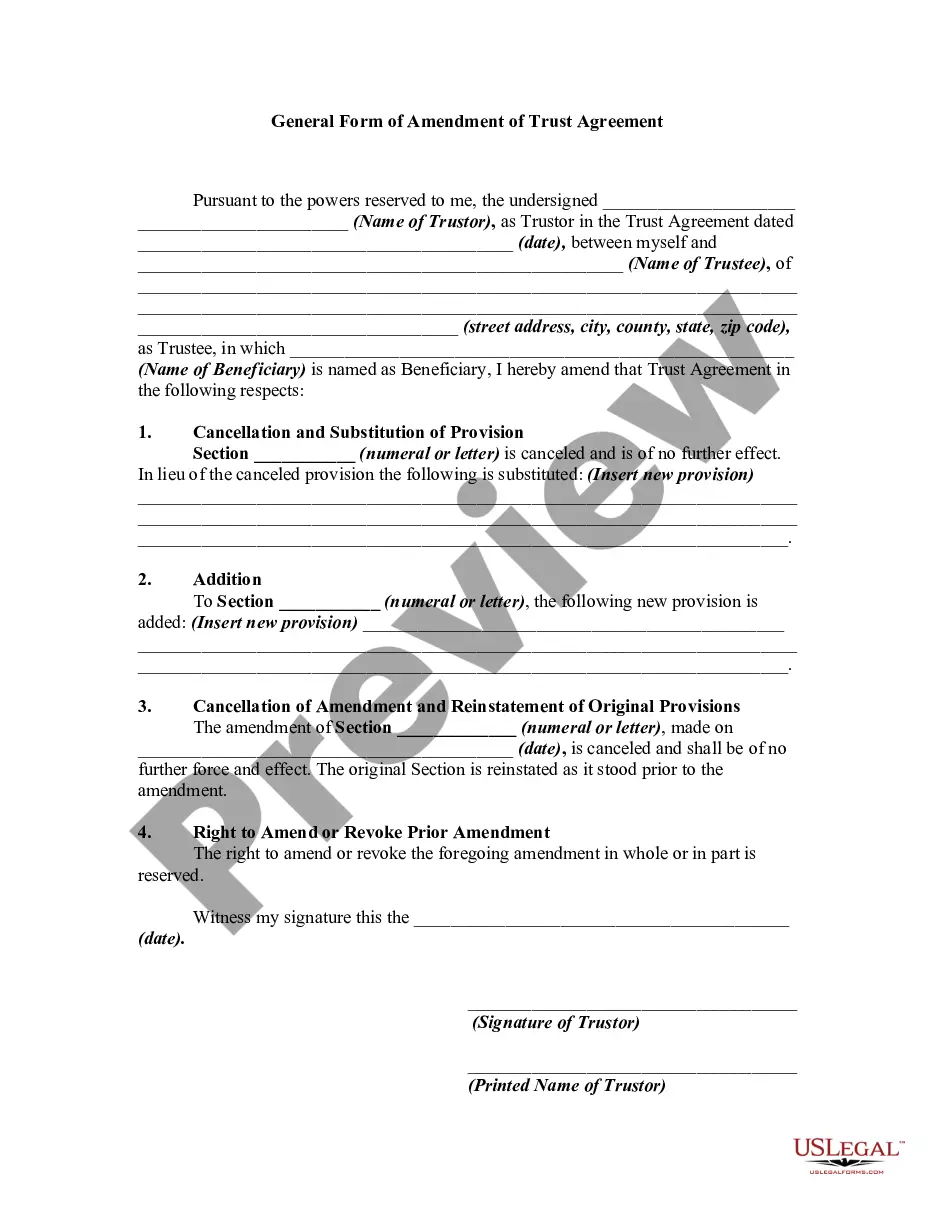
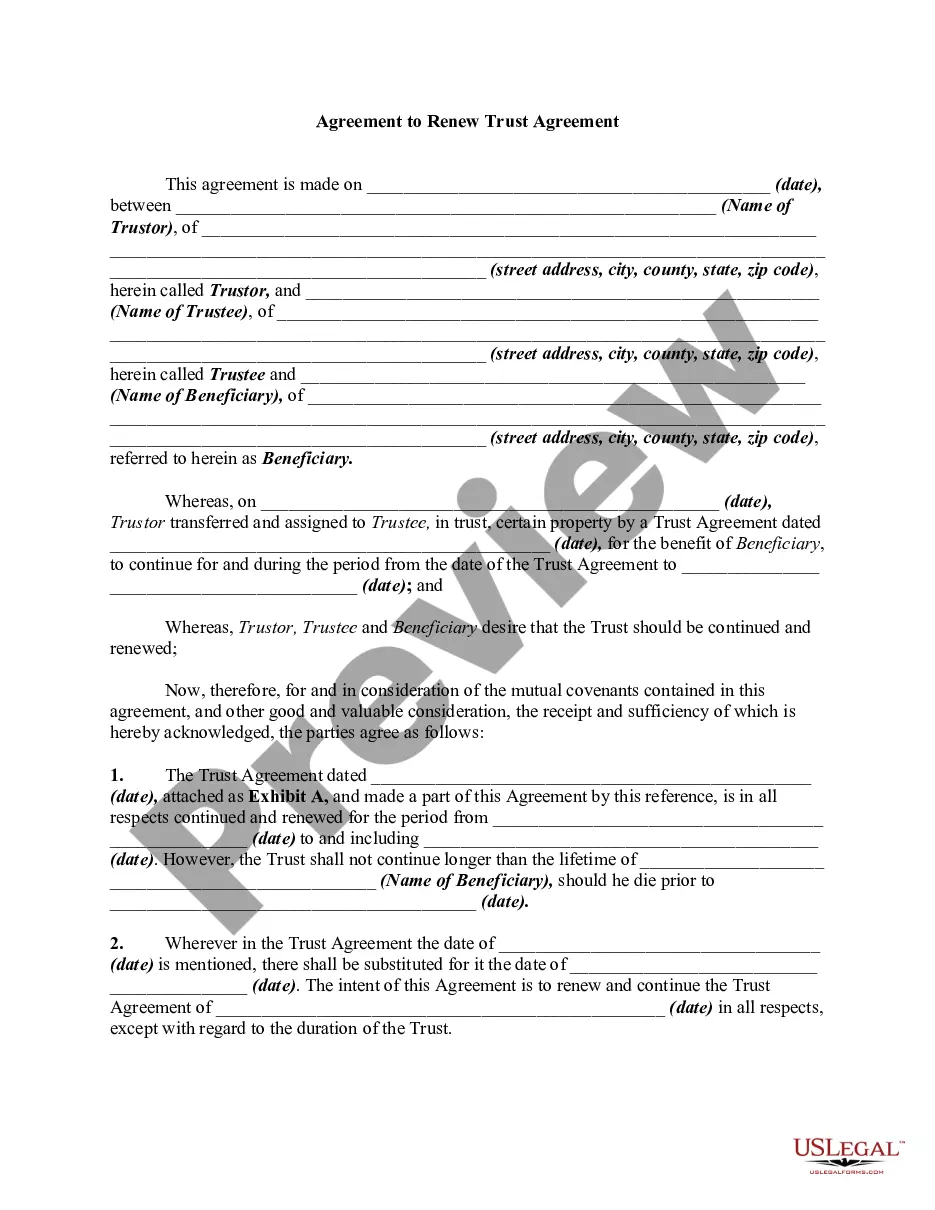
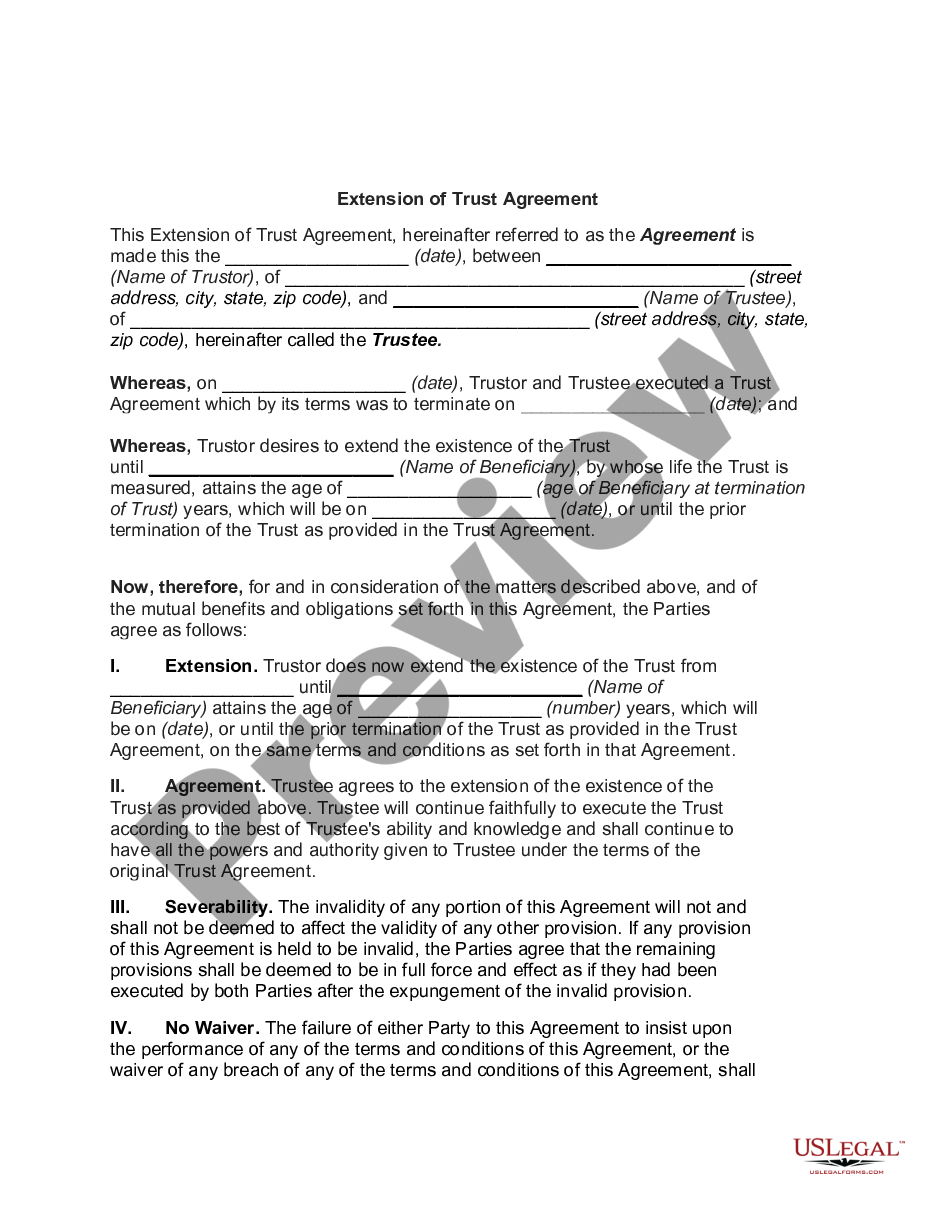
The Agreement to Extend the Duration or Term of a Trust is a legal document that allows a trustor to amend an existing trust agreement to extend its duration. This extension is typically necessary when the original terms of the trust would lead to its expiration, and it ensures that the trustee continues to manage the trust in accordance with the trustor's wishes. This form serves a specific purpose and is distinct from other trust-related documents, as it focuses solely on extending the life of an existing trust.
Main sections of this form
- Date of the agreement.
- Name and address of the trustor.
- Name and address of the trustee.
- Date of the original trust agreement.
- Date when the trust was supposed to terminate.
- Details about the beneficiary's age and related timelines.
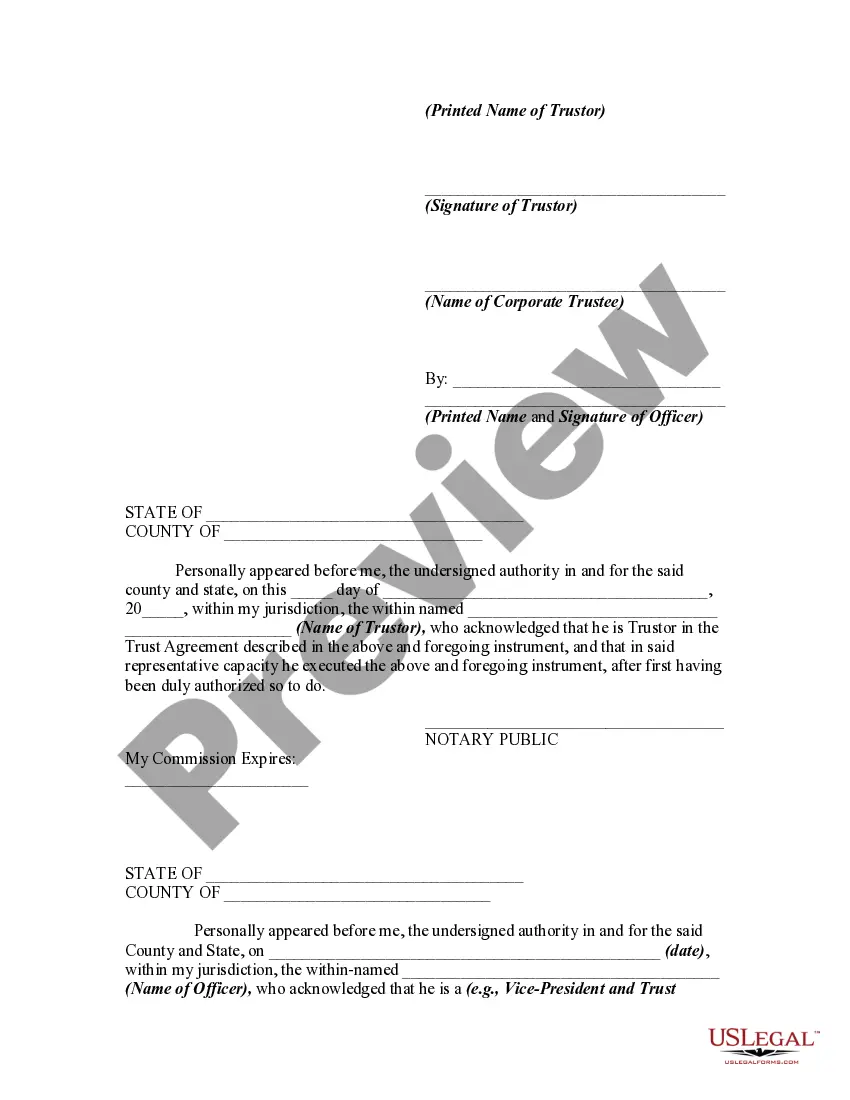
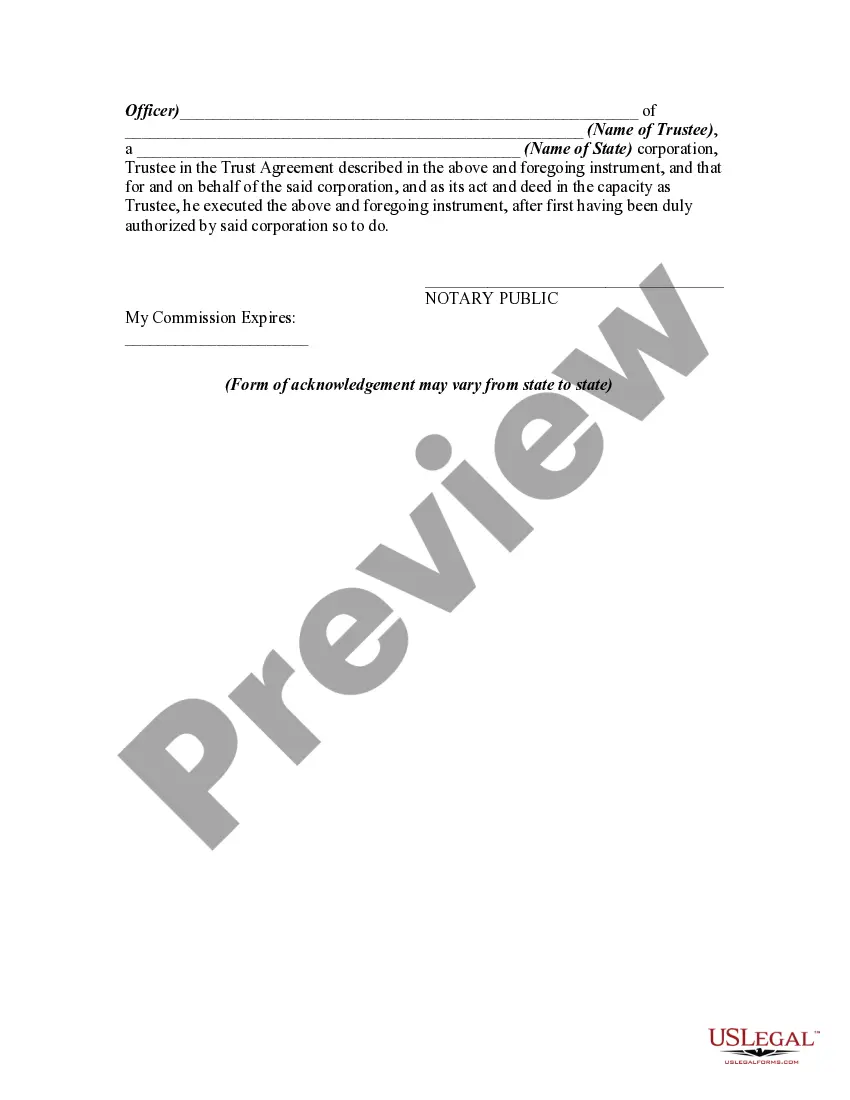
- Signatures of the trustor and trustee, along with notary sections.
When this form is needed
This form is used when the trustor wishes to extend the duration of an existing trust that is about to expire. Common scenarios include situations where the primary beneficiary is not yet of age, or when the trustor wants to ensure continued management of assets to protect beneficiaries until they are ready to inherit. It is particularly useful when the original trust terms are still applicable and the trustor wants to maintain the existing structure of the management of trust assets.
Intended users of this form
- Trustors who wish to extend the duration of their existing trust.
- Trustees who need to continue their obligations under an amended trust agreement.
- Legal representatives or estate planners assisting clients with trust management.
How to prepare this document
- Identify the date of the agreement and enter the names and addresses of the trustor and trustee.
- Reference the date of the original trust agreement and the intended termination date.
- Specify the age of the beneficiary upon which the trust will be measured.
- Ensure the trustor and trustee sign and date the document.
- Have the document notarized, if necessary, as per local requirements.
Notarization guidance
This document requires notarization to meet legal standards. US Legal Forms provides secure online notarization powered by Notarize, allowing you to complete the process through a verified video call, available 24/7.
Get your form ready online
Our built-in tools help you complete, sign, share, and store your documents in one place.
Make edits, fill in missing information, and update formatting in US Legal Forms—just like you would in MS Word.
Download a copy, print it, send it by email, or mail it via USPS—whatever works best for your next step.
Sign and collect signatures with our SignNow integration. Send to multiple recipients, set reminders, and more. Go Premium to unlock E-Sign.
If this form requires notarization, complete it online through a secure video call—no need to meet a notary in person or wait for an appointment.
We protect your documents and personal data by following strict security and privacy standards.

Make edits, fill in missing information, and update formatting in US Legal Forms—just like you would in MS Word.

Download a copy, print it, send it by email, or mail it via USPS—whatever works best for your next step.

Sign and collect signatures with our SignNow integration. Send to multiple recipients, set reminders, and more. Go Premium to unlock E-Sign.

If this form requires notarization, complete it online through a secure video call—no need to meet a notary in person or wait for an appointment.

We protect your documents and personal data by following strict security and privacy standards.
Avoid these common issues
- Failing to provide complete names and addresses for the trustor and trustee.
- Not specifying the exact age of the beneficiary for trust measurement.
- Omitting a signature or date on the agreement.
- Neglecting to notarize the document if required by local law.
Why use this form online
- Convenient access to the form from anywhere with an internet connection.
- Easy to fill out and editable to suit individual needs.
- Reliability of having a form drafted by licensed attorneys.
Looking for another form?
Form popularity
FAQ
When they pass away, the assets are distributed to beneficiaries, or the individuals they have chosen to receive their assets. A settlor can change or terminate a revocable trust during their lifetime. Generally, once they die, it becomes irrevocable and is no longer modifiable.
A court can, when given reasons for a good cause, amend the terms of irrevocable trust when a trustee and/or a beneficiary petitions the court for a modification.Such modification provisions are common with charitable trusts, to allow modifications when federal tax law changes.
A trust agreement is a document that allows you (the trustor) to legally transfer the ownership of specific assets to another person (trustee) to be held for the trustor's beneficiaries.
In most cases, a trustee cannot remove a beneficiary from a trust.However, if the trustee is given a power of appointment by the creators of the trust, then the trustee will have the discretion given to them to make some changes, or any changes, pursuant to the terms of the power of appointment.
An irrevocable trust is a type of trust where its terms cannot be modified, amended or terminated without the permission of the grantor's named beneficiary or beneficiaries.Irrevocable trusts cannot be modified after they are created, or at least they are very difficult to modify.
Like a will, a living trust can be altered whenever you wish. One of the most attractive features of a revocable living trust is its flexibility: You can change its terms, or end it altogether, at any time. If you created a shared trust with your spouse, either of you can revoke it.
A trust can remain open for up to 21 years after the death of anyone living at the time the trust is created, but most trusts end when the trustor dies and the assets are distributed immediately.
Can an irrevocable trust be changed? Often, the answer is no. By definition and design, an irrevocable trust is just thatirrevocable. It can't be amended, modified, or revoked after it's formed.