Complaint Objecting to Discharge in Bankruptcy Proceedings for Concealment by Debtor and Omitting from Schedules Fraudulently Transferred Property
Understanding this form
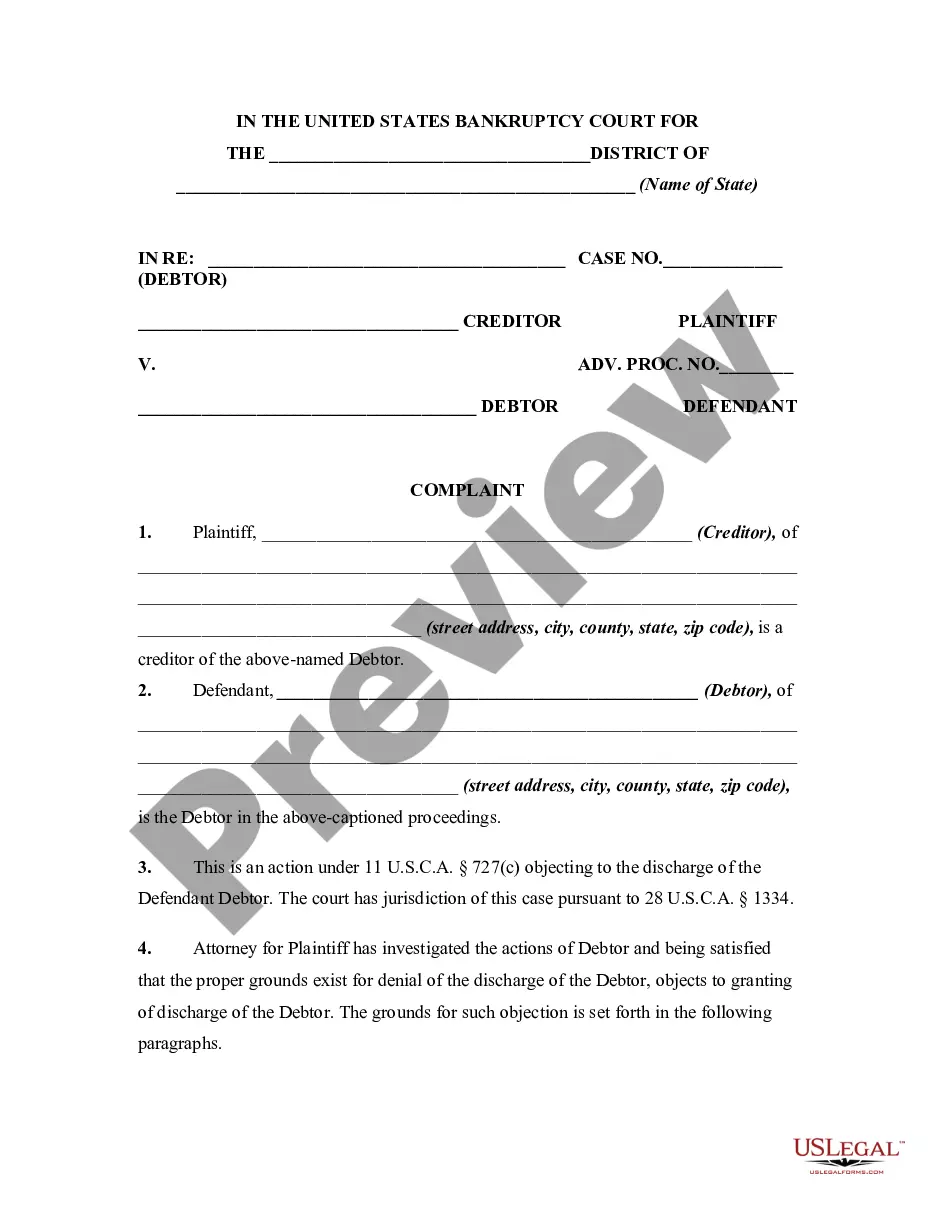
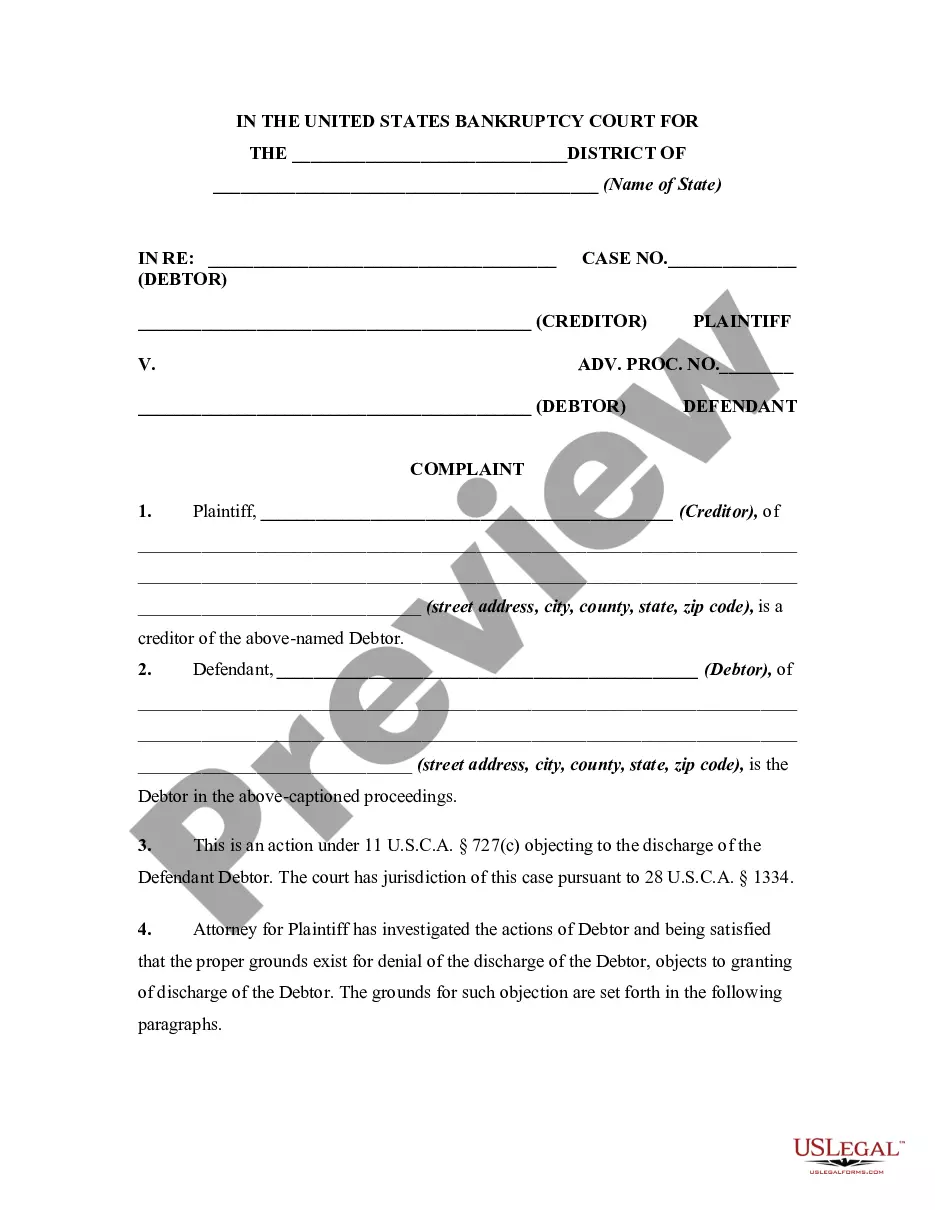
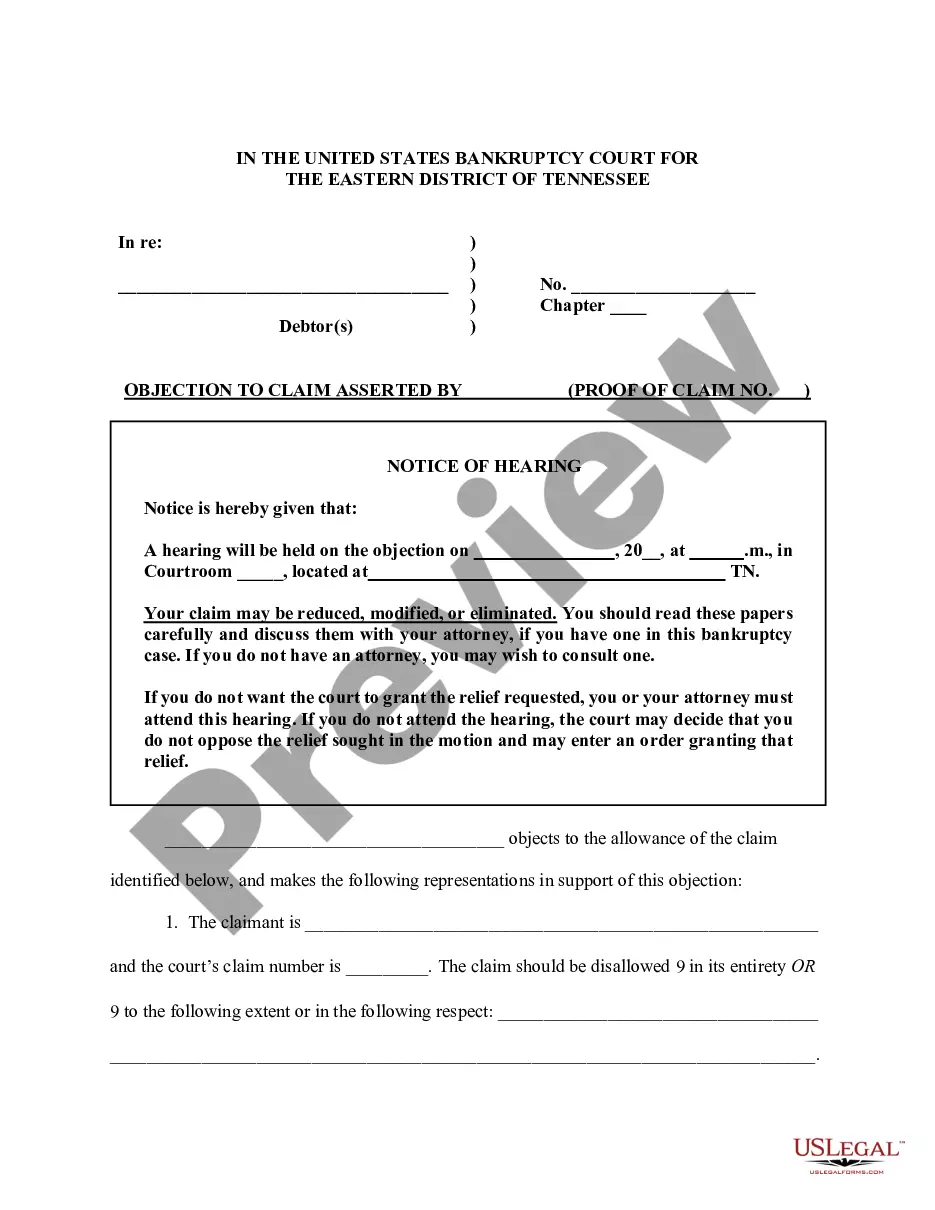
This form, Complaint Objecting to Discharge in Bankruptcy Proceedings for Concealment by Debtor and Omitting from Schedules Fraudulently Transferred Property, is designed for creditors who wish to contest a debtor's discharge in bankruptcy due to fraudulent activities. It outlines the necessary allegations and procedural requirements for emphasizing the debtor's concealment of assets and transference of property, which may affect the debtor's eligibility for discharge of debts, distinguishing it from other bankruptcy forms.
Key parts of this document
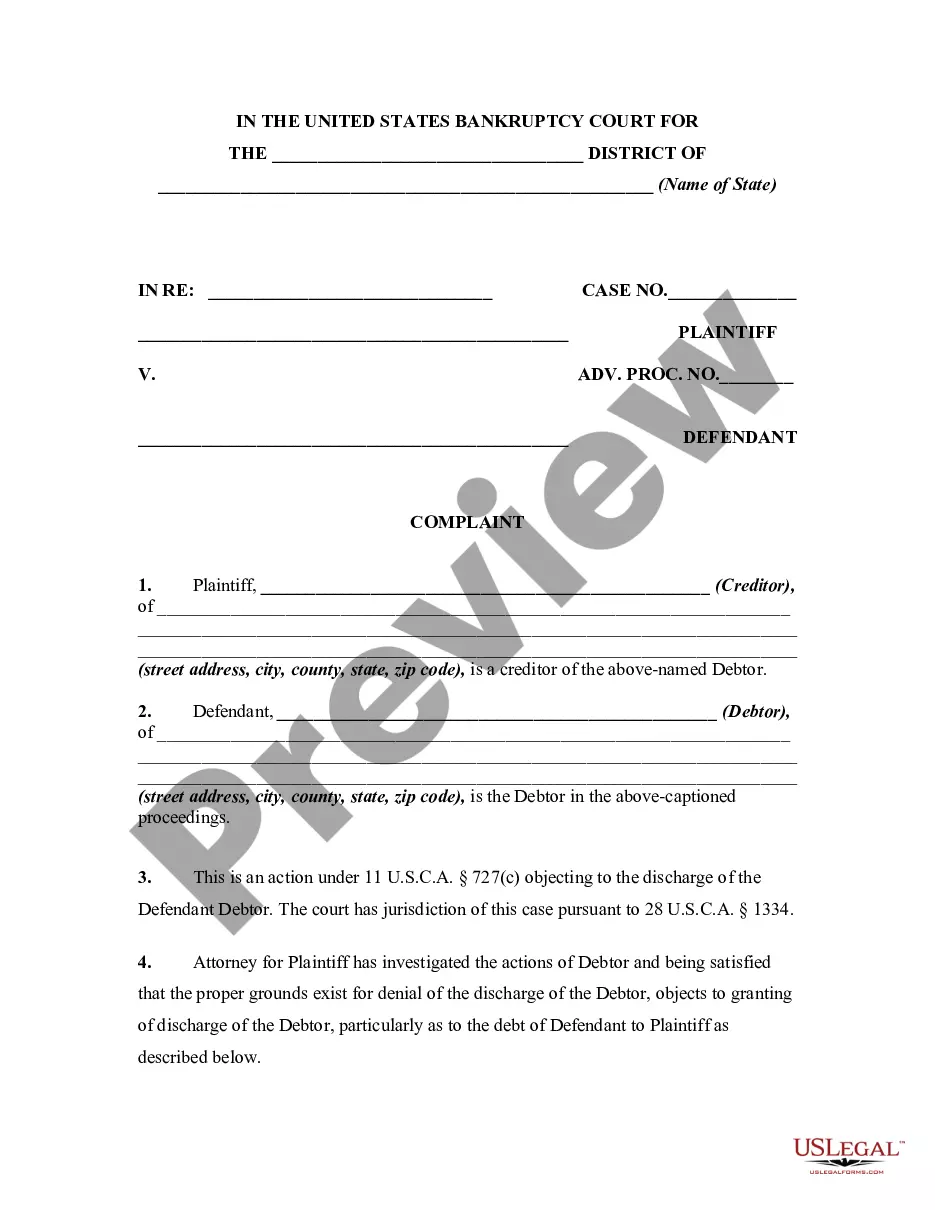
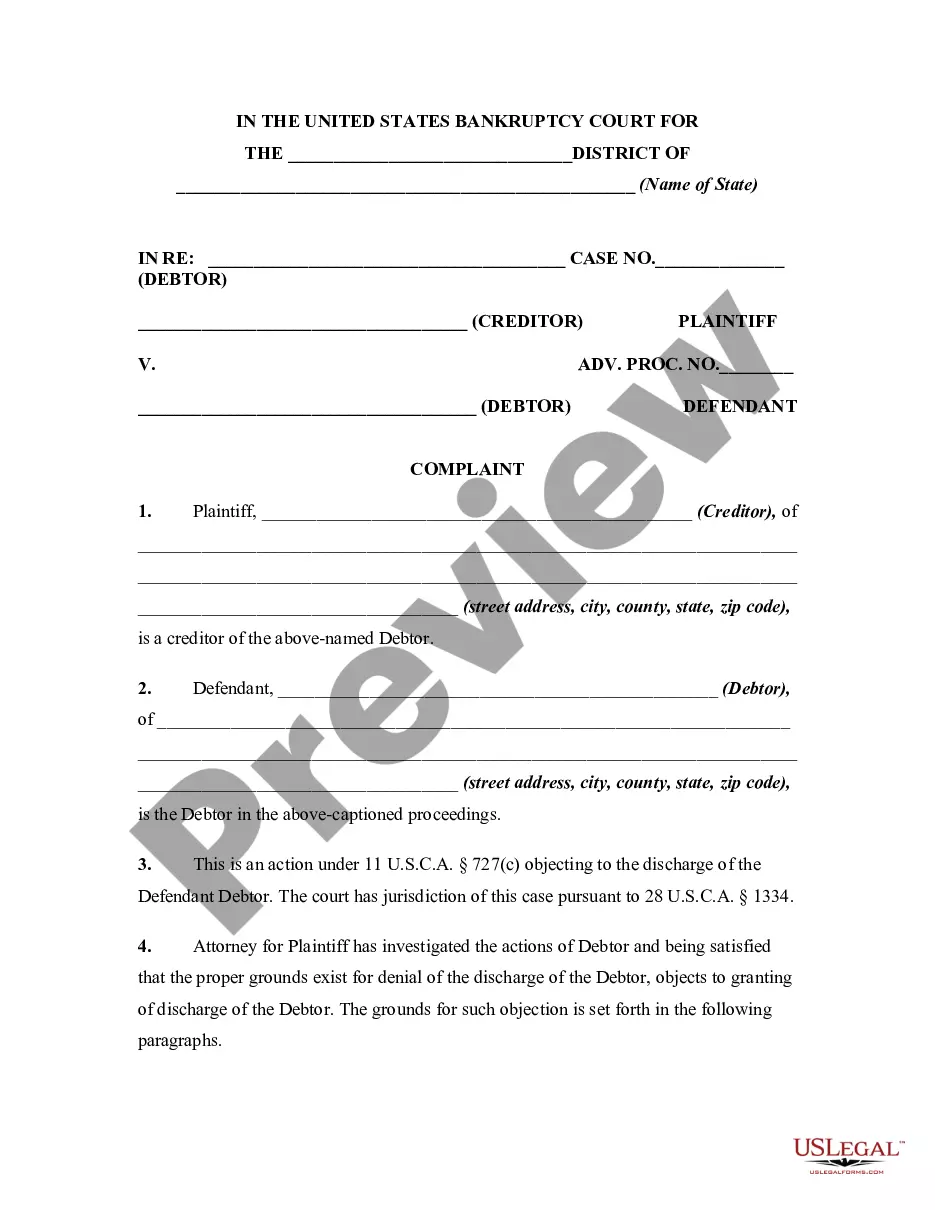
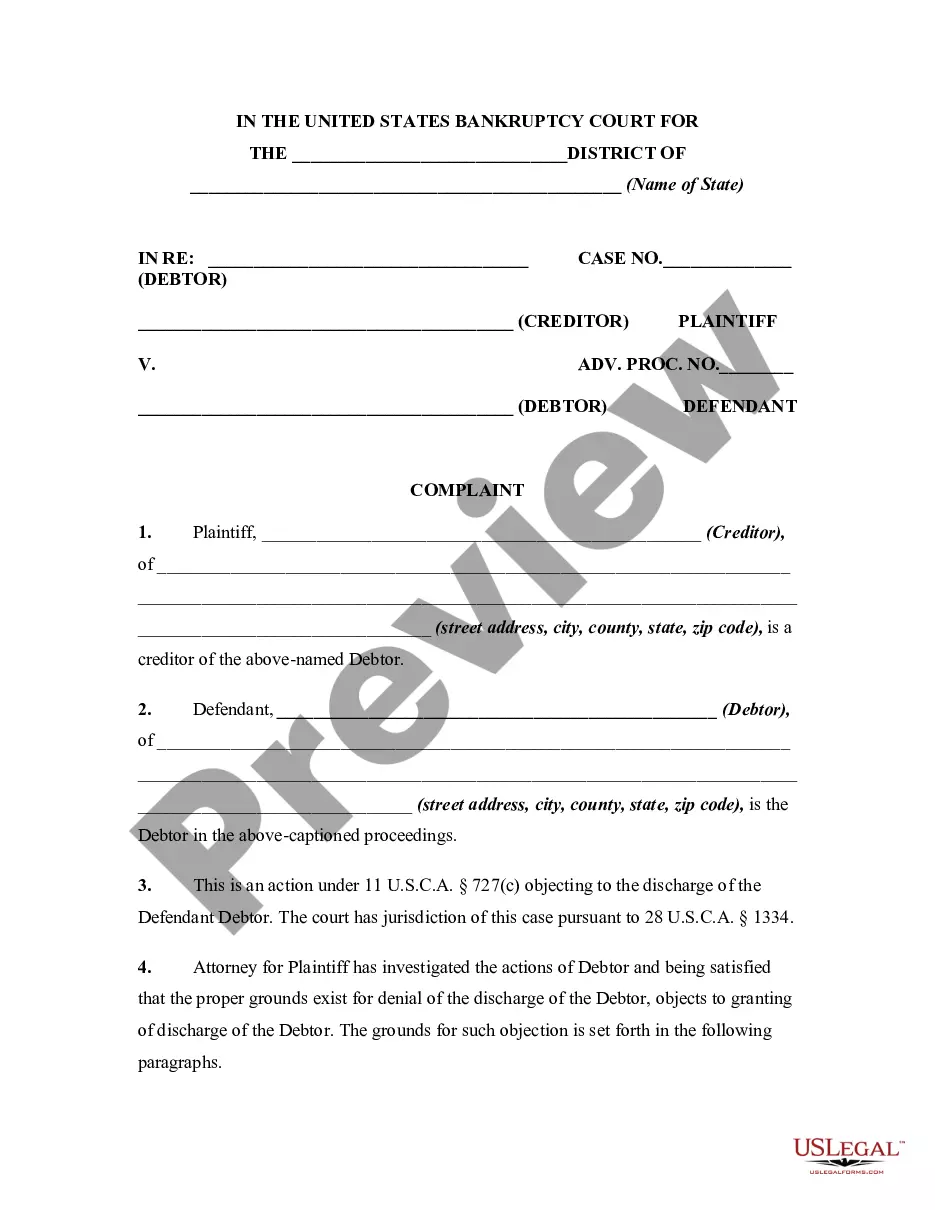
- Identification of the debtor and creditor involved in the bankruptcy case.
- Statement of jurisdiction under relevant bankruptcy laws.
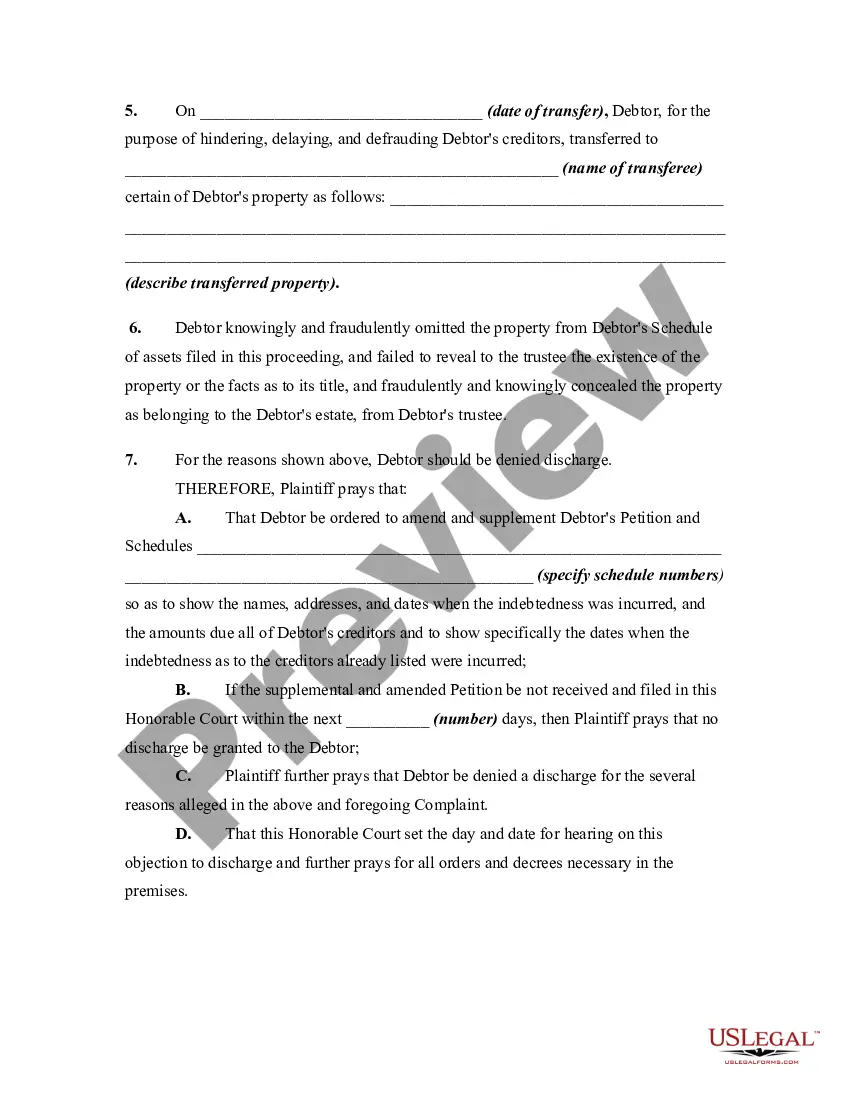
- Details of the fraudulent transfer, including dates and descriptions of property involved.
- Request for the debtor to amend their schedules and disclose omitted assets.
- Petition for a hearing on the objection and for the denial of debtor's discharge.

When to use this document
You should use this form when you are a creditor who believes that a debtor has acted fraudulently by concealing assets or making improper transfers to avoid debt obligations. It is necessary when you want to formally object to the discharge of the debtor's debts in a bankruptcy proceeding and seek legal recourse against such actions.
Who can use this document
This form is intended for:
- Creditors who have claims against a debtor in bankruptcy.
- Attorneys representing creditors in bankruptcy cases.
- Individuals who suspect fraudulent behavior by a debtor regarding transferred assets.
How to complete this form
Follow these steps to complete the form:
- Identify the parties involved by entering the creditor's and debtor's names and addresses.
- Specify the jurisdiction by noting the appropriate district and state where the bankruptcy is filed.
- Detail the fraudulent transfer, including the date and a description of the property concealed or omitted.
- Include a request for the debtor to amend their schedules, specifying which schedules need updates.
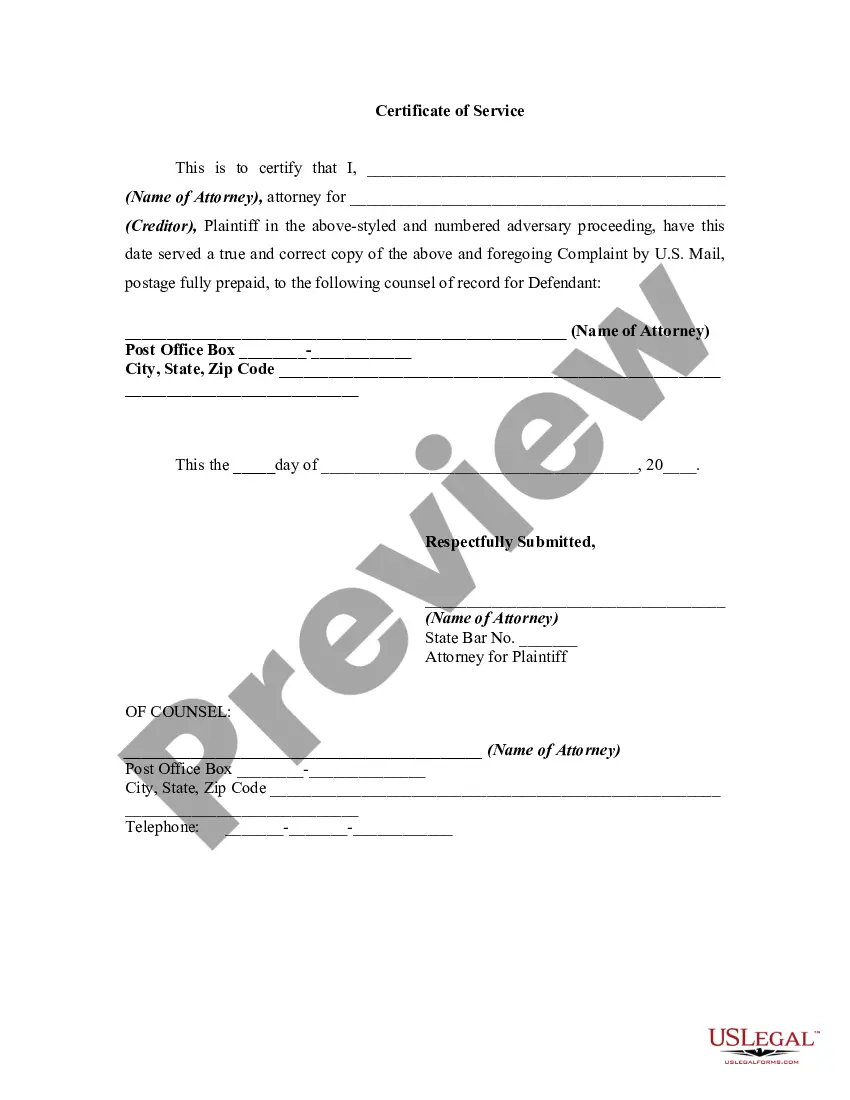
- Sign and date the form at the bottom, including your name and state bar number if applicable.
Notarization requirements for this form
This form does not typically require notarization unless specified by local law. However, check with a legal professional or consult local court rules to ensure compliance with any additional requirements.
Get your form ready online
Our built-in tools help you complete, sign, share, and store your documents in one place.
Make edits, fill in missing information, and update formatting in US Legal Forms—just like you would in MS Word.
Download a copy, print it, send it by email, or mail it via USPS—whatever works best for your next step.
Sign and collect signatures with our SignNow integration. Send to multiple recipients, set reminders, and more. Go Premium to unlock E-Sign.
If this form requires notarization, complete it online through a secure video call—no need to meet a notary in person or wait for an appointment.
We protect your documents and personal data by following strict security and privacy standards.

Make edits, fill in missing information, and update formatting in US Legal Forms—just like you would in MS Word.

Download a copy, print it, send it by email, or mail it via USPS—whatever works best for your next step.

Sign and collect signatures with our SignNow integration. Send to multiple recipients, set reminders, and more. Go Premium to unlock E-Sign.

If this form requires notarization, complete it online through a secure video call—no need to meet a notary in person or wait for an appointment.

We protect your documents and personal data by following strict security and privacy standards.
Mistakes to watch out for
- Failing to provide complete and accurate information about the creditor and debtor.
- Not including specific details about the fraudulent transfers made by the debtor.
- Neglecting to state the specific reasons for objecting to the discharge clearly.
- Missing the deadline for filing the complaint, which can affect eligibility to object.
Advantages of online completion
- Convenience of accessing and downloading the form online.
- Editable format allows customization to fit specific details and circumstances.
- Drafted by licensed attorneys, ensuring compliance with legal standards.
Looking for another form?

Form popularity
FAQ
The purpose of this form is to enable a creditor to challenge a debtor's discharge in a bankruptcy case when concealment of assets or fraudulent transfers is alleged. It lays out the required parties, jurisdiction, and details of the fraudulent transfer, and requests amendment of omitted schedules as well as a hearing on the objection and denial of discharge.
This form guides a creditor through the filing by (1) identifying the debtor and creditor, (2) stating the court's jurisdiction, (3) detailing a fraudulent transfer with dates and property involved, (4) requesting amendment of assets omitted from the debtor's schedules, and (5) petitioning for a hearing on the objection and for denial of discharge.
The form supports objections grounded in concealment of assets and omitted assets and in fraudulent transfers intended to defeat or delay discharge. It prescribes identifying the parties, establishing jurisdiction, describing the transfer details, and filing to obtain a hearing and a denial of discharge.
Yes. If the creditor alleges concealment by the debtor or fraudulent transfers, the court may deny the discharge. The form is designed to support that outcome by guiding the filing to identify the parties, establish jurisdiction, describe the transfer details, and request a hearing and denial of discharge.
This form targets concealment of assets and fraudulent transfers as grounds to oppose discharge. While courts may consider other grounds in bankruptcy law, the document focuses on asset concealment and omitted assets tied to transfers and does not address claim priority.
This form is tailored to allegations of concealment by the debtor and omitting from schedules fraudulent transferred property. It includes specific steps to identify parties, establish jurisdiction, describe transfers, and seek amendment of schedules plus a hearing and denial of discharge, whereas a general discharge objection form may address different grounds.