Motion for Continuance Due to Absence of Witness and Notice of Motion
About this form
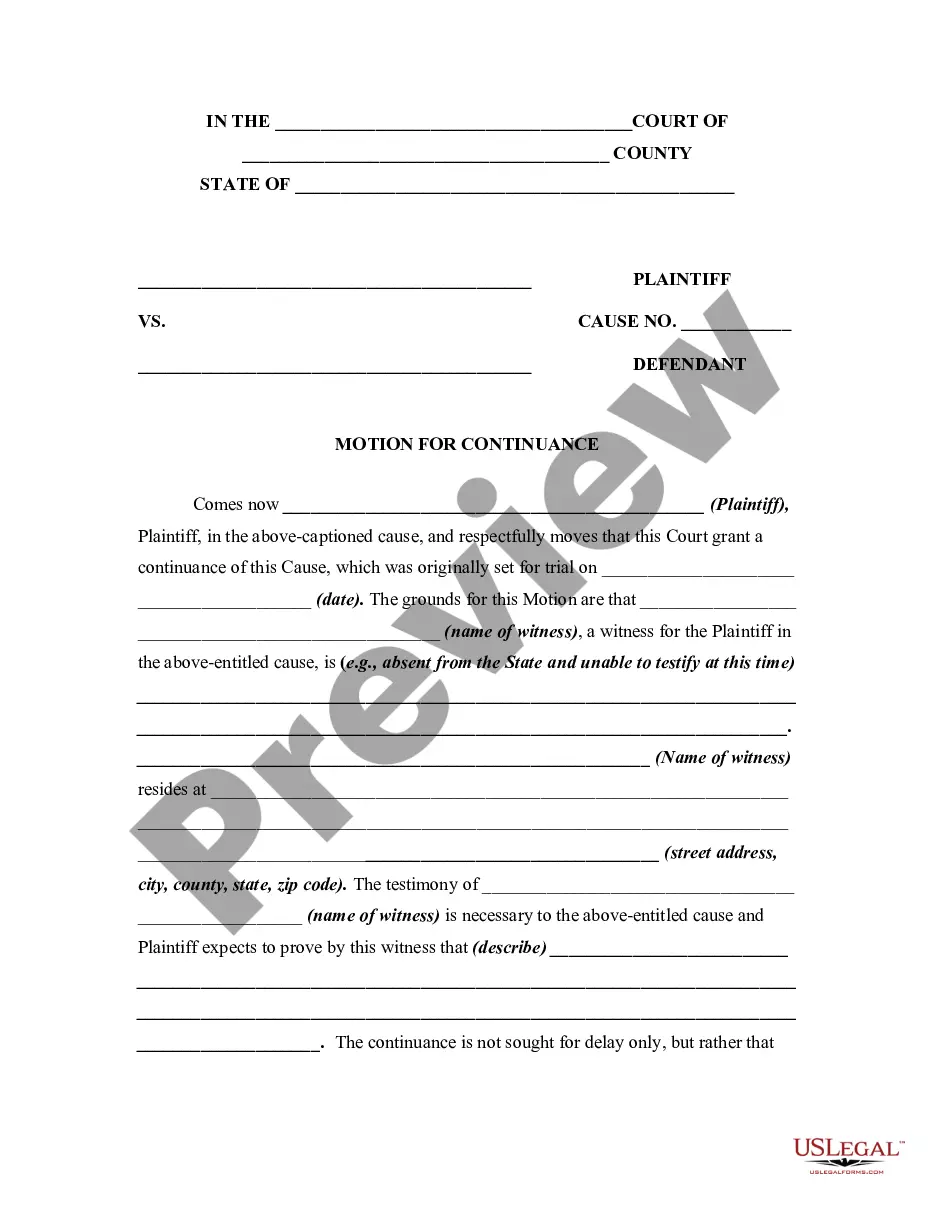
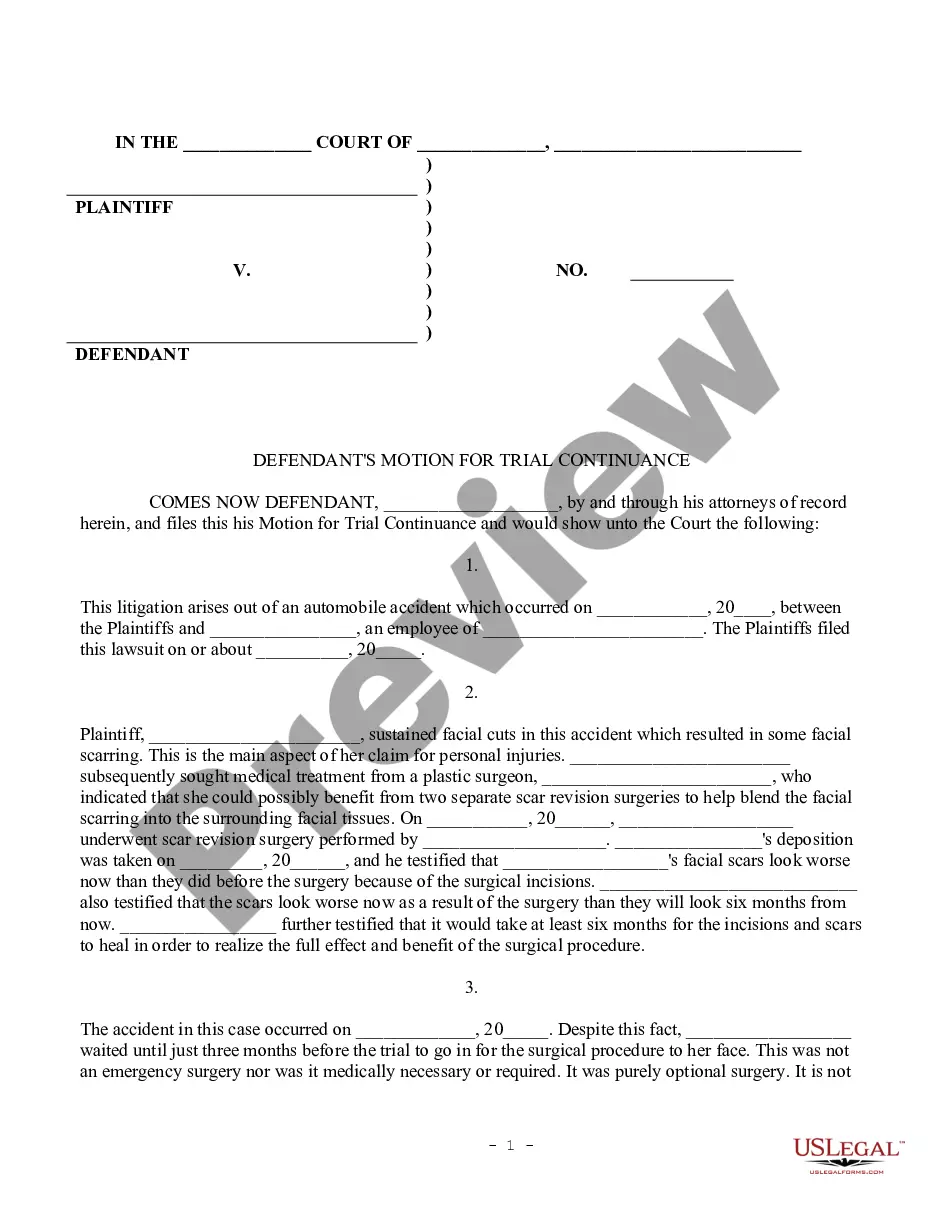
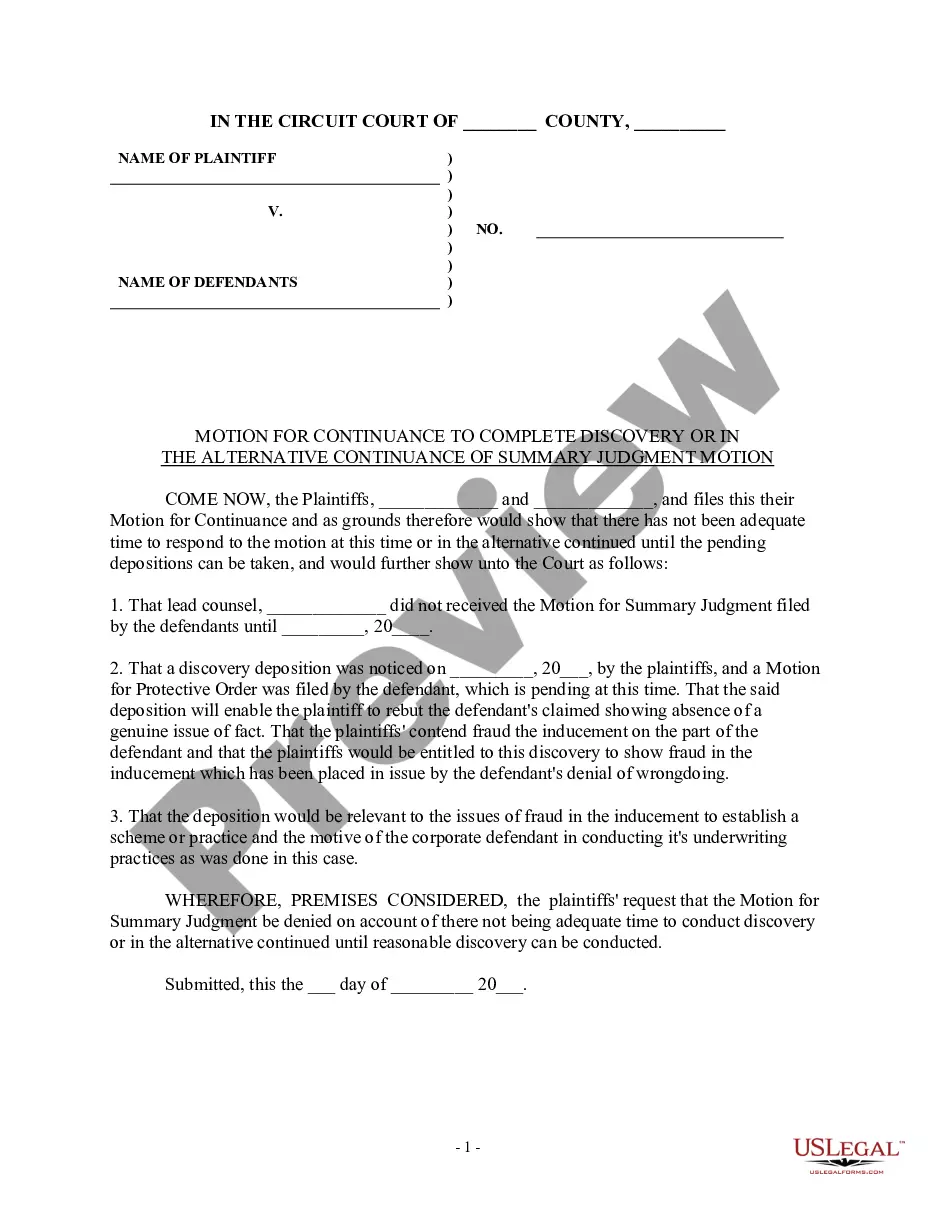
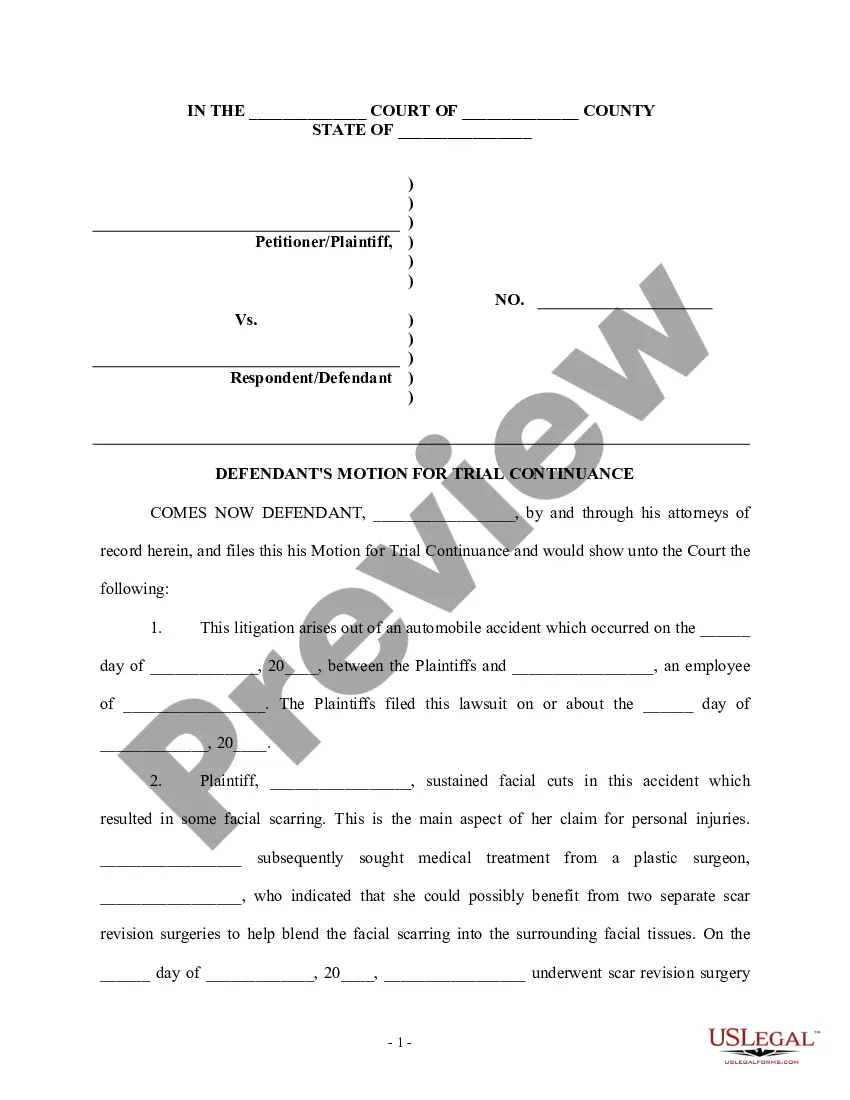
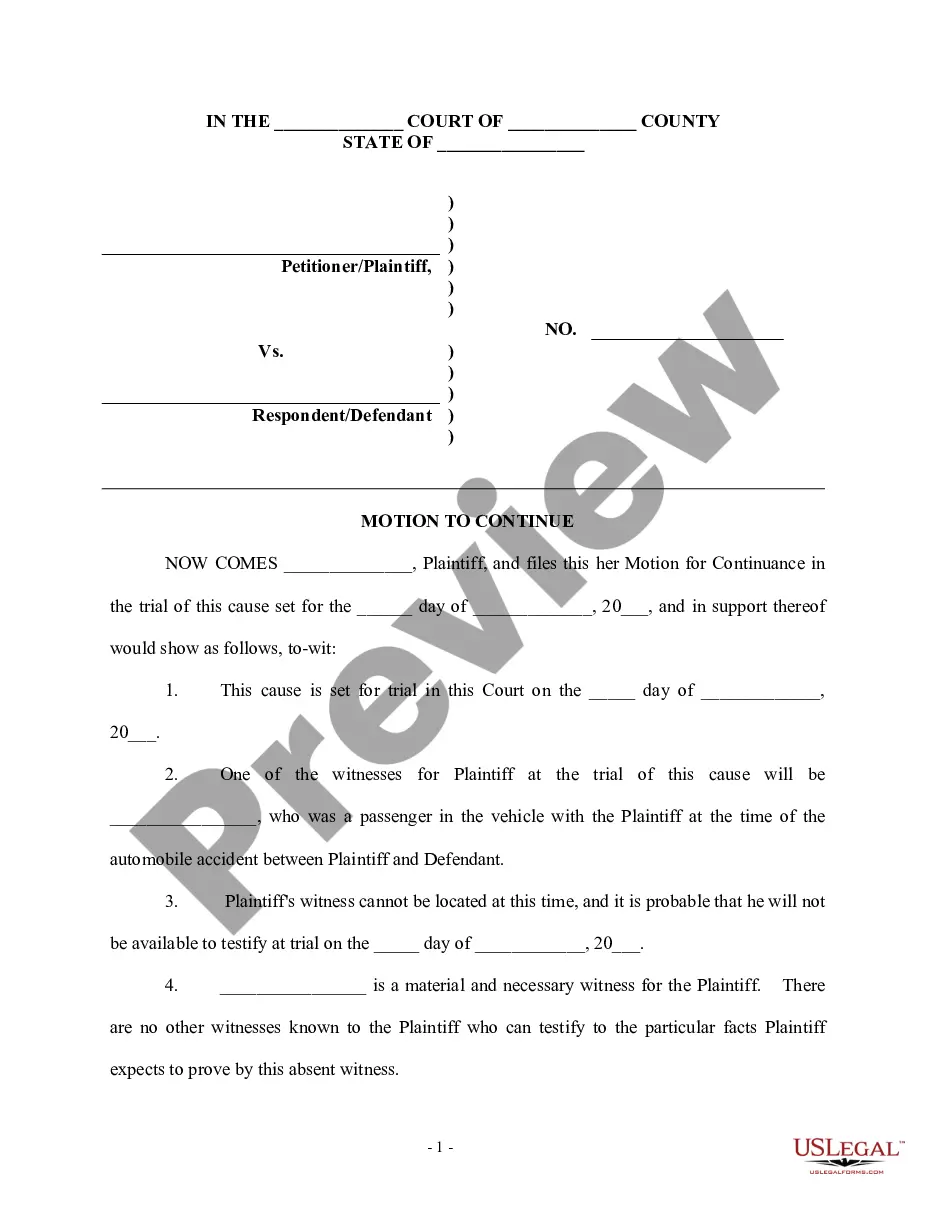
The Motion for Continuance Due to Absence of Witness and Notice of Motion is a legal document that requests a postponement of a trial, hearing, or court appearance. This form is essential when a crucial witness is unavailable, impacting the ability to present a complete case. It differs from similar forms in that it specifically addresses the need for a continuance based on witness absence, ensuring that justice is served while allowing for adequate preparation time.
Key components of this form
- Case information: Identifies the plaintiff and defendant, along with the cause number.
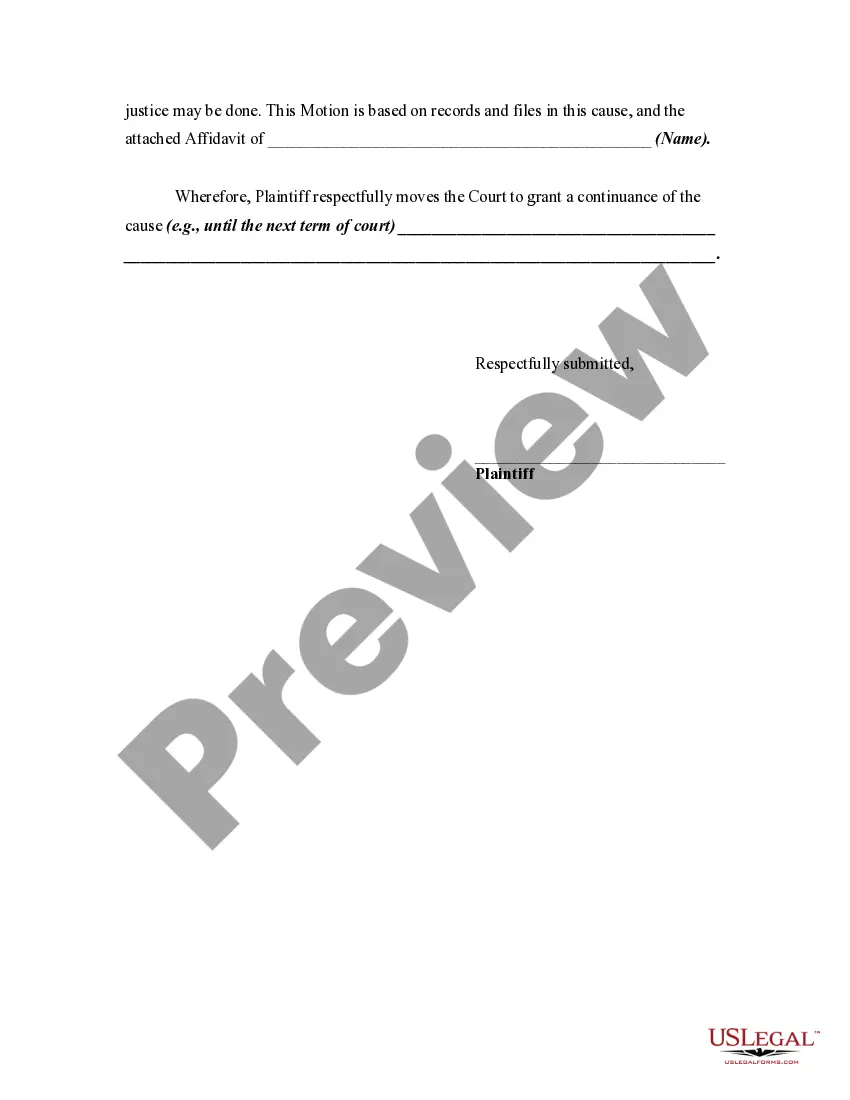
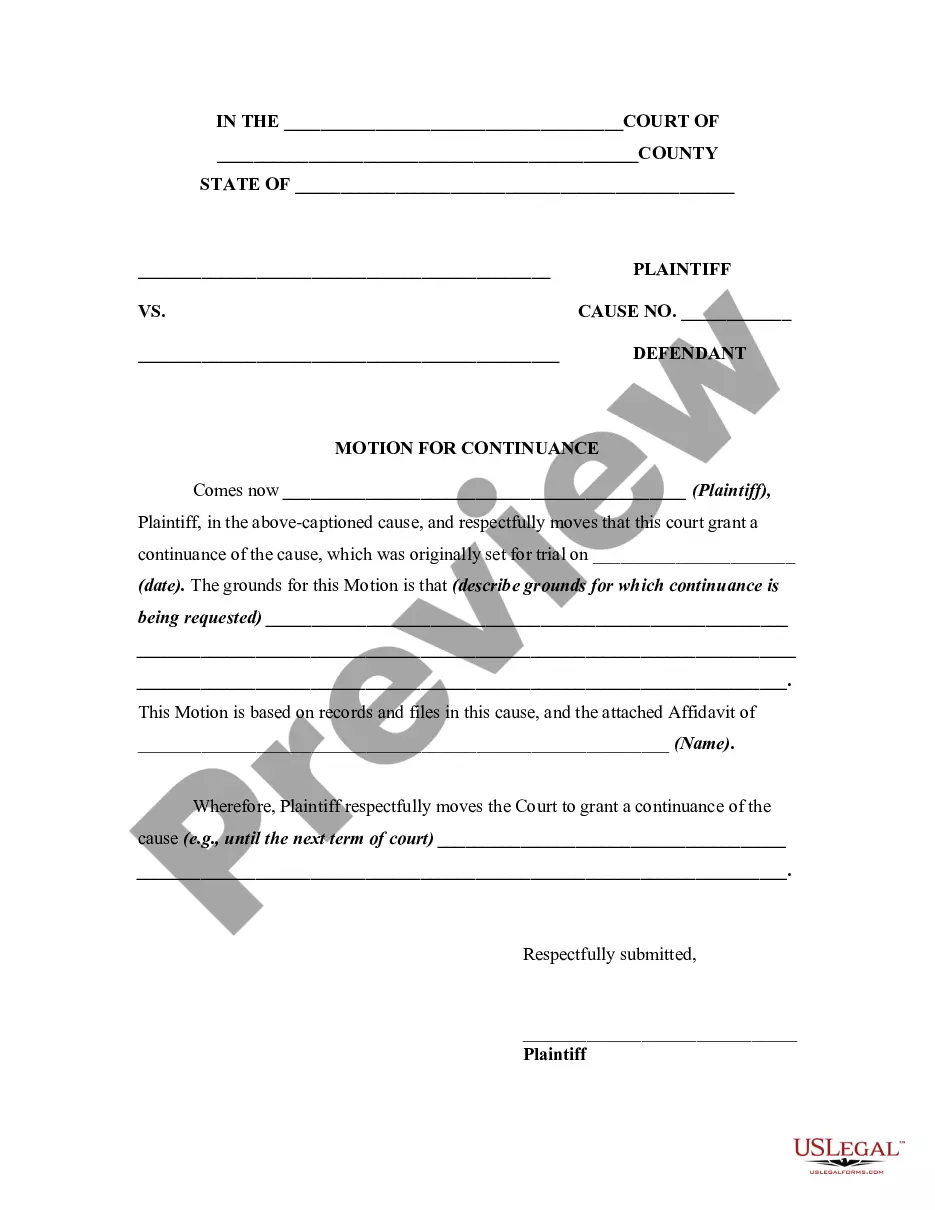
- Motions details: Outlines the specific request for a continuance, including the original trial date and reasons for the motion.
- Witness information: Provides the name and address of the absent witness whose testimony is essential.
- Justification clause: States the necessity for the continuance to achieve justice, emphasizing it is not sought for delay.
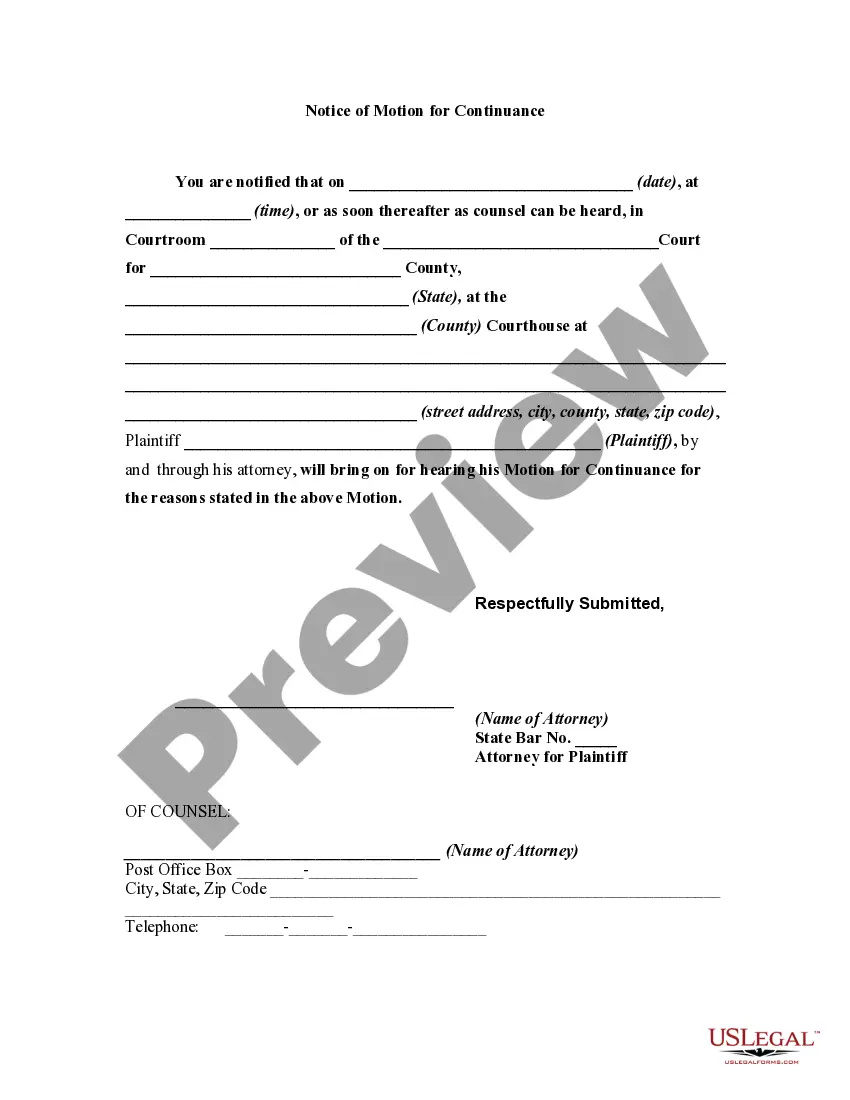
- Notice of motion: Informs the opposing party of when and where the motion will be heard.
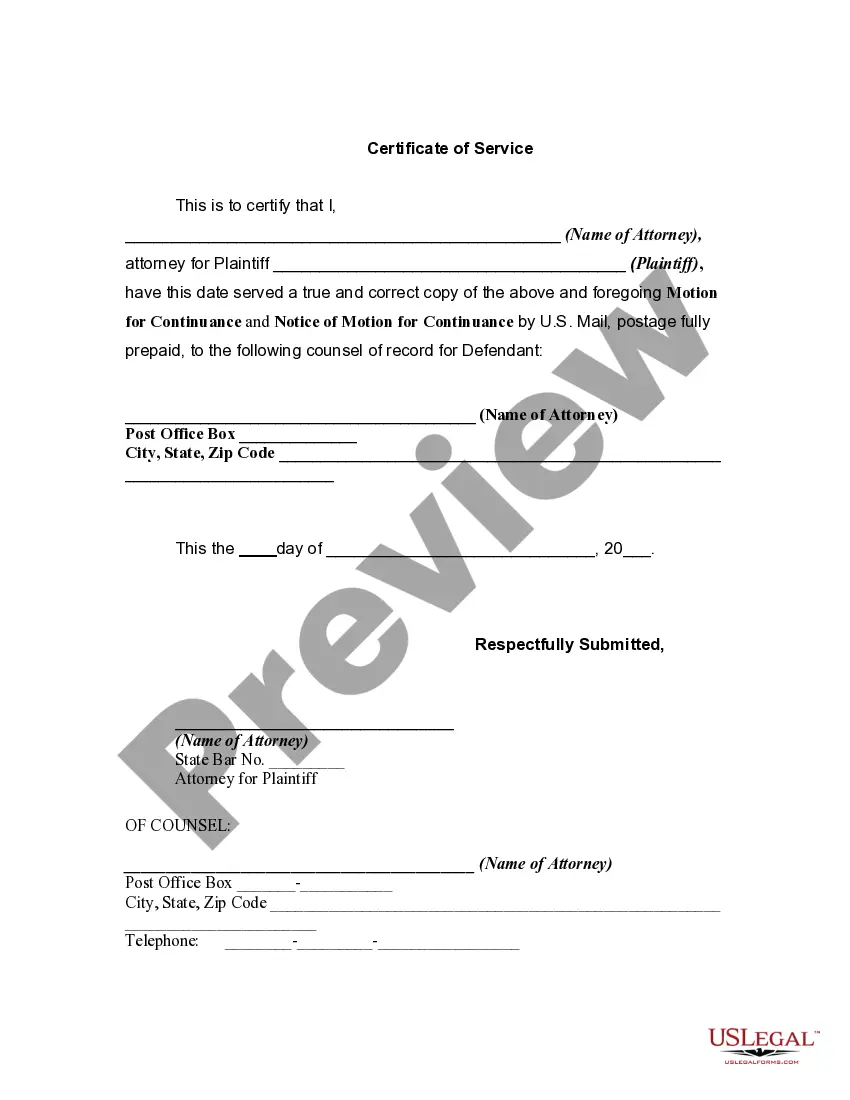
- Signature lines: Includes fields for the plaintiff and attorney signatures, along with a certificate of service to confirm delivery to the opposing counsel.
Situations where this form applies
This form should be used when a party to a case requires a delay in court proceedings due to the unavailability of a necessary witness. Situations may include instances where the witness is out of state, facing personal emergencies, or unable to attend for medical reasons. Utilizing this form ensures that the case is adequately prepared and that all relevant testimonies are heard, which is crucial for a fair trial process.
Who should use this form
- Parties involved in civil or criminal cases where a witness cannot attend.
- Attorneys representing clients who need to delay court proceedings.
- Individuals seeking to ensure that their case is fully supported by necessary testimonies.
How to prepare this document
- Identify the parties involved by filling in the names of the plaintiff and defendant as well as the case number.
- Enter the original date set for the trial or hearing.
- Provide the name and address of the absent witness, along with the reasons for their unavailability.
- Articulate why the witness's testimony is crucial to the case, detailing what the testimony would prove.
- Specify how long the continuance should last, suggesting a new trial date or timeframe.
- Complete the notice of motion section, indicating when and where the motion will be heard, and include necessary signatures.
Notarization requirements for this form
This form does not typically require notarization unless specified by local law. However, it's advisable to confirm with your jurisdiction's regulations to ensure compliance.
Get your form ready online
Our built-in tools help you complete, sign, share, and store your documents in one place.
Make edits, fill in missing information, and update formatting in US Legal Forms—just like you would in MS Word.
Download a copy, print it, send it by email, or mail it via USPS—whatever works best for your next step.
Sign and collect signatures with our SignNow integration. Send to multiple recipients, set reminders, and more. Go Premium to unlock E-Sign.
If this form requires notarization, complete it online through a secure video call—no need to meet a notary in person or wait for an appointment.
We protect your documents and personal data by following strict security and privacy standards.

Make edits, fill in missing information, and update formatting in US Legal Forms—just like you would in MS Word.

Download a copy, print it, send it by email, or mail it via USPS—whatever works best for your next step.

Sign and collect signatures with our SignNow integration. Send to multiple recipients, set reminders, and more. Go Premium to unlock E-Sign.

If this form requires notarization, complete it online through a secure video call—no need to meet a notary in person or wait for an appointment.

We protect your documents and personal data by following strict security and privacy standards.
Common mistakes to avoid
- Failing to provide a valid reason for the witness's absence.
- Neglecting to sign the form, which can render it invalid.
- Not notifying the opposing party of the motion in accordance with local rules.
- Inaccurately identifying the court or time for the hearing.
Why complete this form online
- Immediate access to a professionally drafted legal form.
- Editability allows customization to your specific situation.
- Convenient downloading ensures you have a copy for your records.
- Guidance on form completion helps avoid common pitfalls.
Legal use & context
- This motion helps maintain fairness in legal proceedings by allowing all parties the opportunity to present necessary evidence.
- Understanding local court rules about continuances is crucial to avoid denial of the motion.
- Repeated requests for continuances without valid reasons may negatively affect the case.
Summary of main points
- The Motion for Continuance is essential for cases needing additional time due to a witness's unavailability.
- Completing the form accurately is crucial for a successful motion outcome.
- Always be informed of your state-specific requirements and potential consequences of filing.
Looking for another form?
Form popularity
FAQ
You can file a written response to the Motion to Continue, calling it something like an "Objection" or "Opposition." This MAY prevent the Court from entering a continuance without a hearing...
Continuances Based on Inadequate Time. Perhaps the most common reason for a continuance is when one side did not have enough time to investigate the case and analyze the evidence. Continuances Based on Changing the Indictment or Attorney. Continuances Based on Surprises.
The rule of reason applies to postponing a court date. If the justification is reasonable, related to trial preparation, your health or that of a family member, or a matter of some importance scheduled before the court date was set, the judge will likely have no problem with a request for postponement.
A continuance can be asked for as many times as someone might wish. Whether the judge grants is going to be based on the type of case, the rationale for the request, and the particular judge's general stance on continuances.
A valid emergency can serve as an excuse for missing a court date. Some examples of legitimate emergencies include: An emergency room visit for a sudden, debilitating medical condition. A sick child.
A continuance in a criminal trial is a formal delay of the trial that can be requested by either side, before or during the trial.Requesting a continuance and receiving one are two very different things; it is important to have a good reason behind the request because it is a good reason the judge will expect.
If you want to change your court date, you must ask for a postponement (also called a "continuance"). In your Form SC-150 or letter, give the judge a good reason why you are filing your request late.
Failure to appear in court or provide the relevant documents can lead to you being arrested and taken to court, or charged with a criminal offence. If you are charged with contempt of court, you could be liable for a prison sentence.