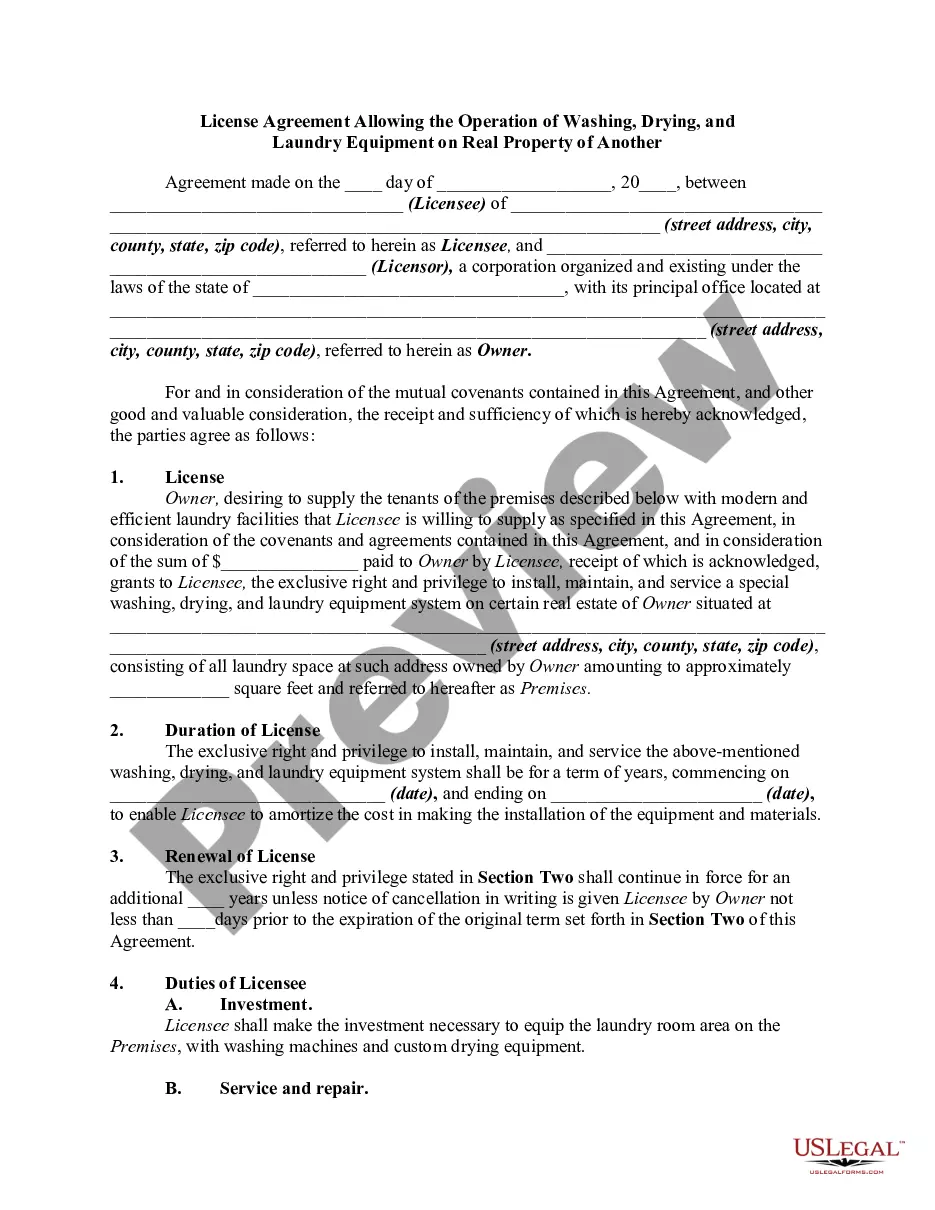
License Agreement Allowing the Operation of Washing, Drying, and Laundry Equipment on Real Property of Another
What this document covers
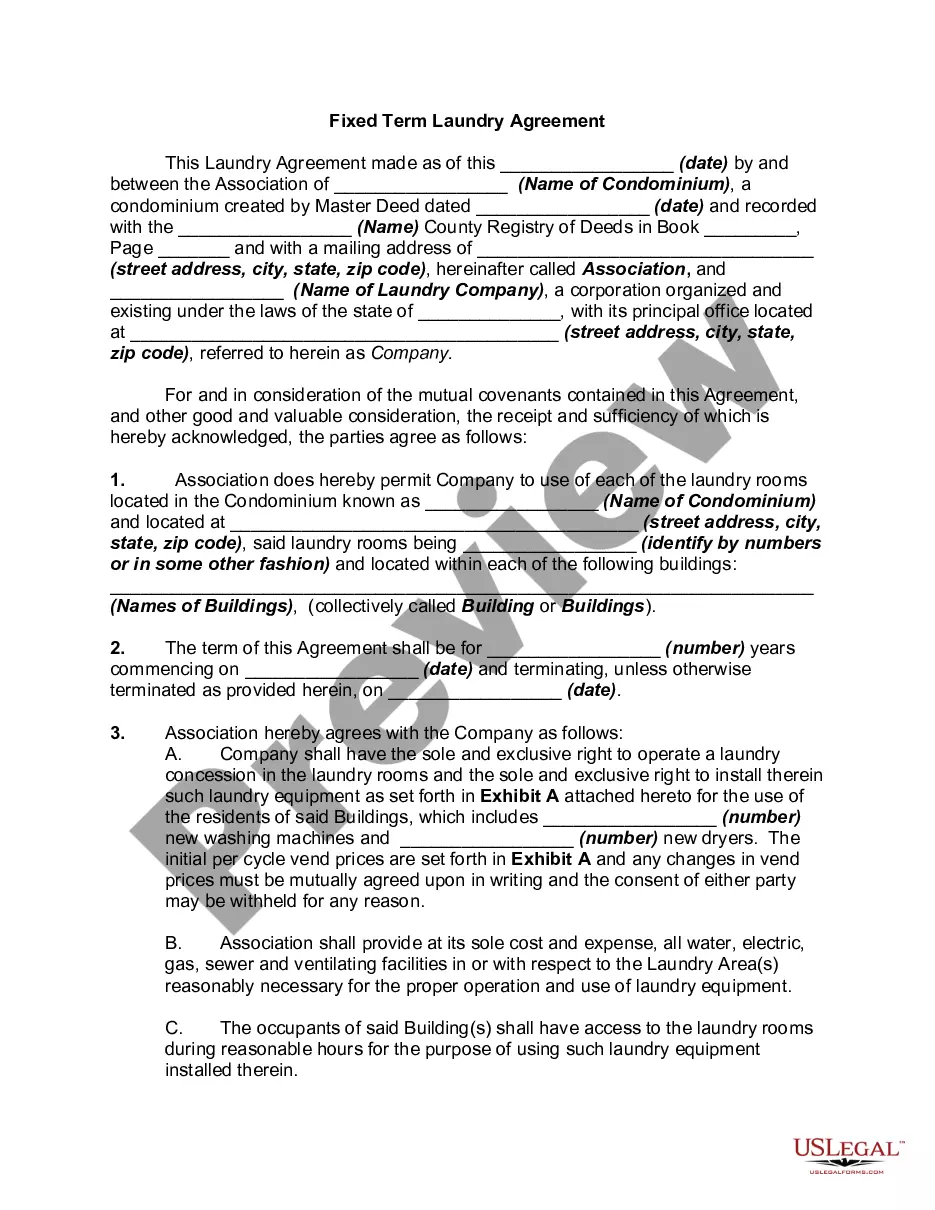
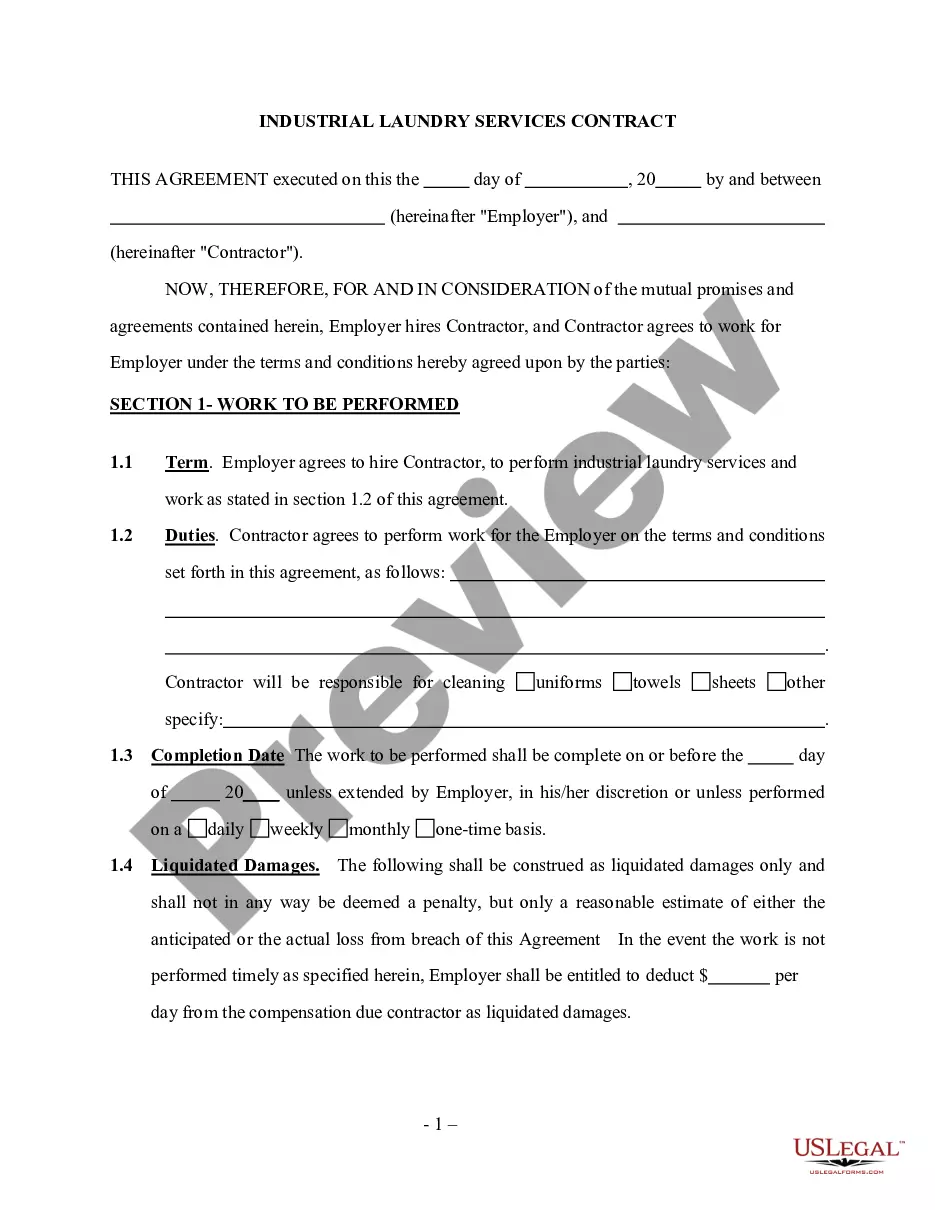
This License Agreement Allowing the Operation of Washing, Drying, and Laundry Equipment on Real Property of Another grants permission from a property owner (Licensor) to an individual or entity (Licensee) to use their real property for laundry operations. Unlike a lease, a license is a personal privilege that cannot be transferred and does not attach to the property title. This form is essential for establishing clear terms regarding the installation, maintenance, and use of laundry equipment on a property that the Licensee does not own.
Form components explained
- Agreement Date: Specifies the date of the agreement.
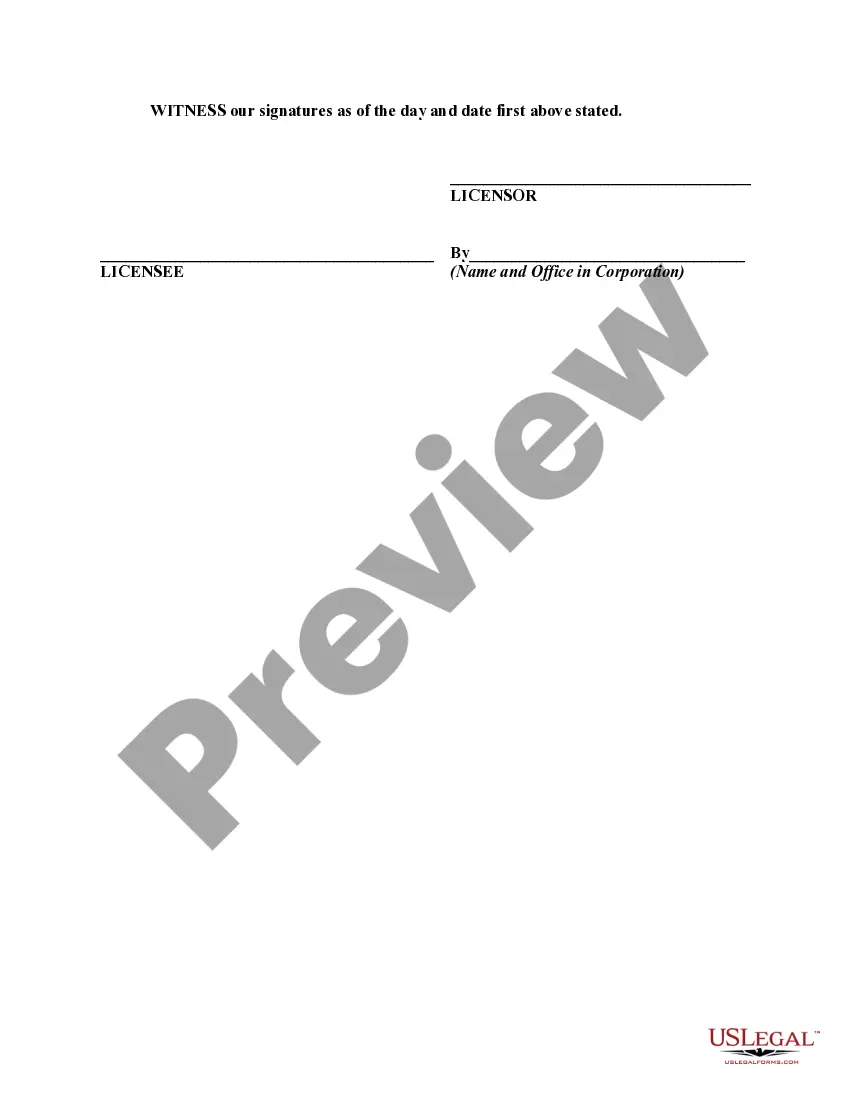
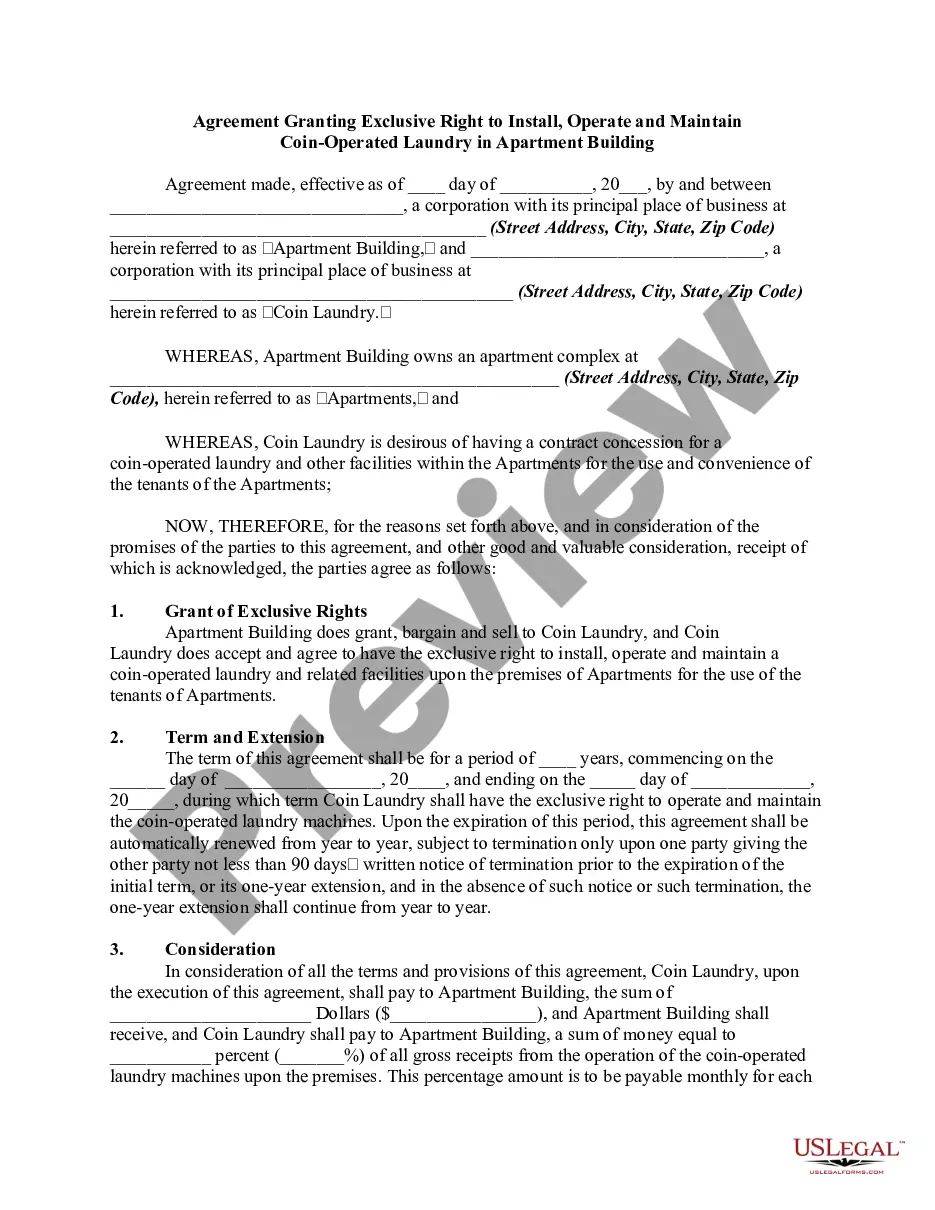
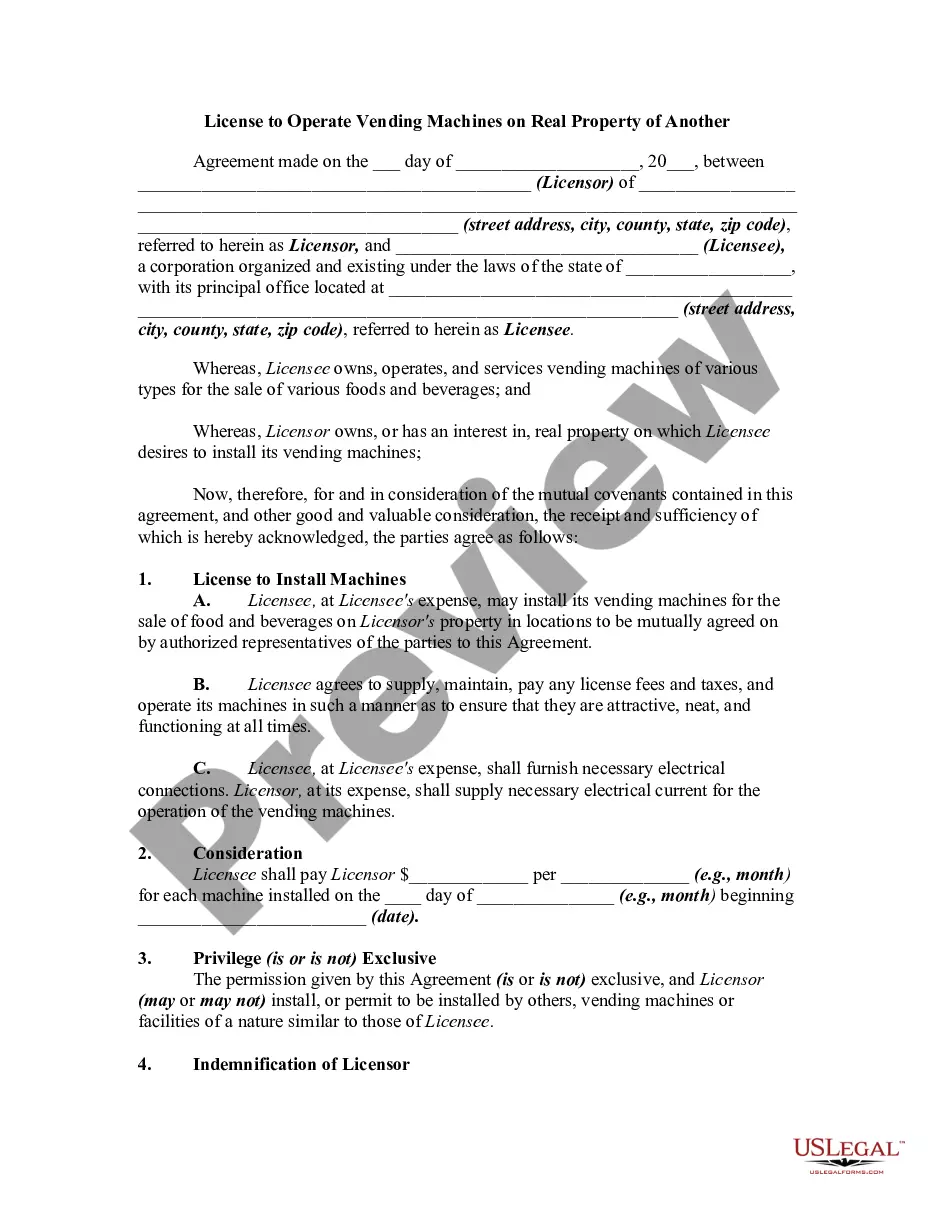
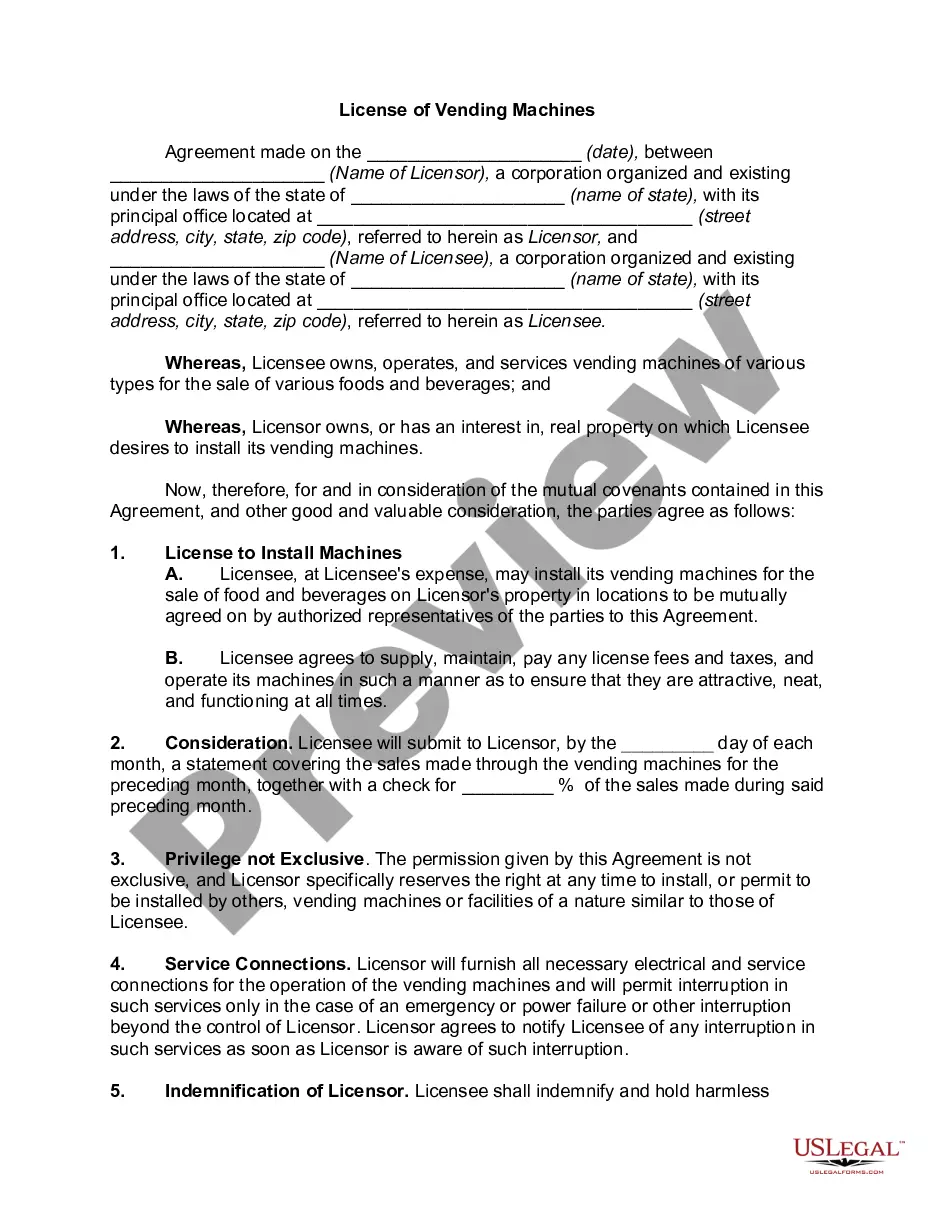
- License Grant: Outlines the right to install and maintain laundry equipment.
- Duration: Indicates the term of the license and any renewal options.
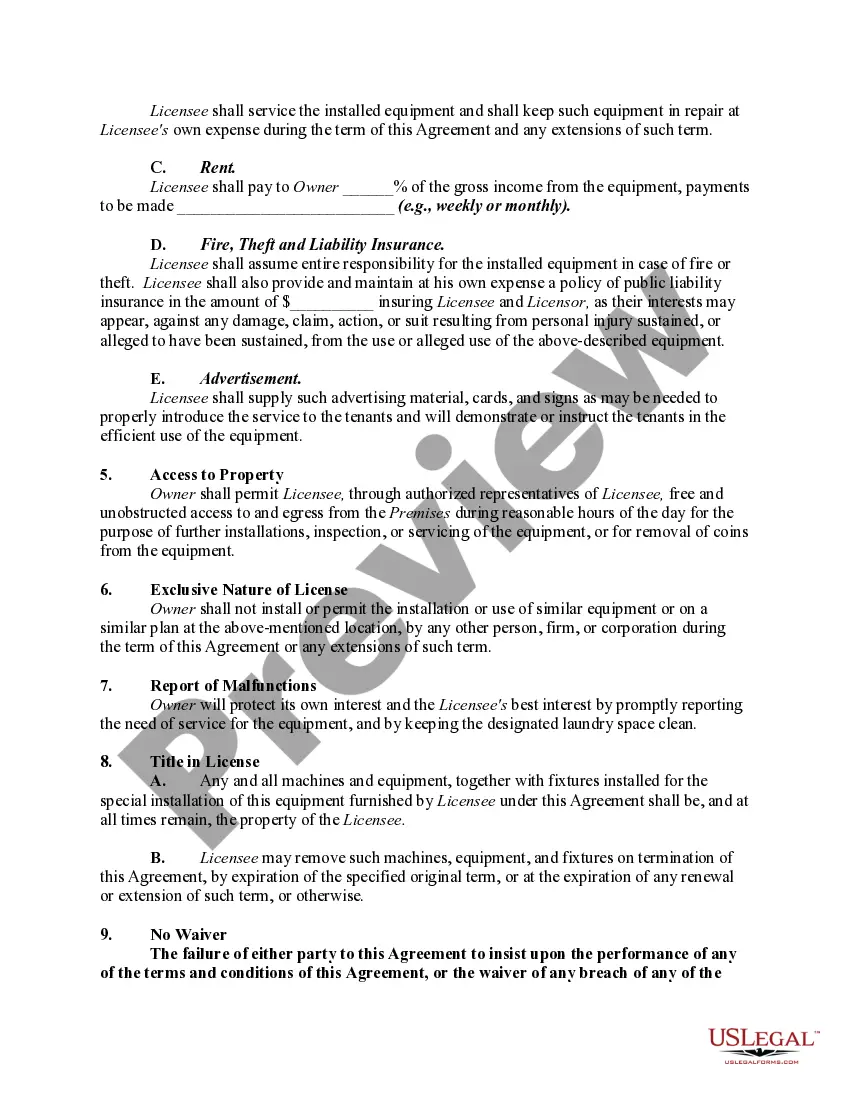
- Licensee Duties: Details the responsibilities regarding equipment investment, maintenance, and insurance.
- Exclusive Use: Prohibits the owner from allowing similar equipment to be used by others.
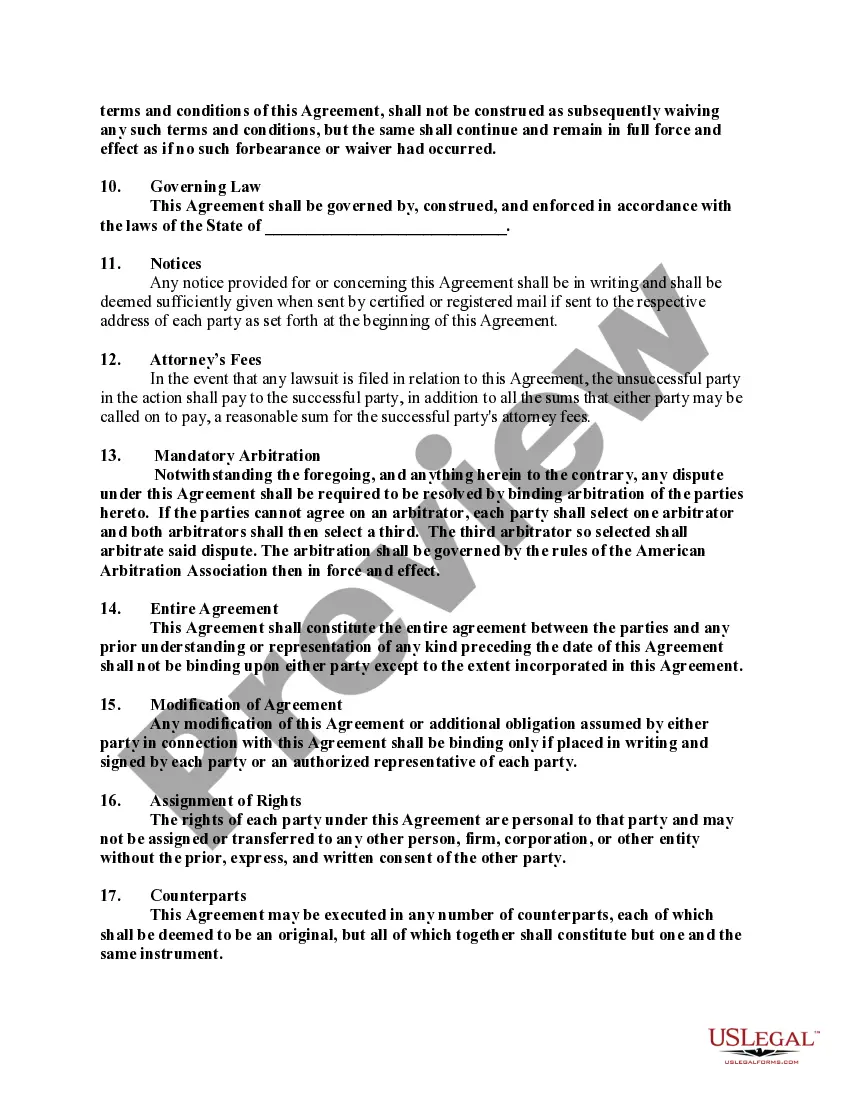
- Legal Clauses: Includes provisions on governing law, dispute resolution, and modifications to the agreement.
When this form is needed
This form is useful when a property owner wishes to allow a third party to install and operate laundry equipment on their premises. It should be used when the owner wants to outline clear responsibilities and financial arrangements while also protecting their own interests. Examples include residential properties, apartment complexes, or commercial spaces where laundry services are provided to tenants or customers.
Who can use this document
- Property owners (Licensors) looking to permit another party to use their property for laundry services.
- Individuals or businesses (Licensees) seeking to operate washing and drying equipment in a location they do not own.
- Landlords who want to provide laundry facilities to tenants while formalizing their agreement.
How to prepare this document
- Identify the parties: Enter the names and addresses of both the Licensor and Licensee.
- Specify the property: Clearly indicate the address and description of the property where the equipment will be installed.
- Enter dates: Fill in the start and end dates of the license term.
- Detail financial arrangements: Specify any payments or percentages of income to be paid to the Licensor.
- Sign and date: Ensure both parties review and sign the agreement, indicating their consent to the terms.
Notarization requirements for this form
This form does not typically require notarization unless specified by local law. However, consider confirming local regulations to ensure compliance.
Get your form ready online
Our built-in tools help you complete, sign, share, and store your documents in one place.
Make edits, fill in missing information, and update formatting in US Legal Forms—just like you would in MS Word.
Download a copy, print it, send it by email, or mail it via USPS—whatever works best for your next step.
Sign and collect signatures with our SignNow integration. Send to multiple recipients, set reminders, and more. Go Premium to unlock E-Sign.
If this form requires notarization, complete it online through a secure video call—no need to meet a notary in person or wait for an appointment.
We protect your documents and personal data by following strict security and privacy standards.

Make edits, fill in missing information, and update formatting in US Legal Forms—just like you would in MS Word.

Download a copy, print it, send it by email, or mail it via USPS—whatever works best for your next step.

Sign and collect signatures with our SignNow integration. Send to multiple recipients, set reminders, and more. Go Premium to unlock E-Sign.

If this form requires notarization, complete it online through a secure video call—no need to meet a notary in person or wait for an appointment.

We protect your documents and personal data by following strict security and privacy standards.
Common mistakes to avoid
- Failing to specify the exact location of the laundry equipment installation.
- Neglecting to include proper financial terms regarding payment to the property owner.
- Overlooking renewal and termination provisions in the agreement.
- Not providing clear details about responsibilities for maintenance and repairs.
Benefits of completing this form online
- Convenience: Download and fill the form at your own pace.
- Editability: Make necessary adjustments easily without starting from scratch.
- Reliability: Use a legal document that has been drafted by licensed attorneys, ensuring legal soundness.
Legal use & context
- Licenses differ from leases as they do not confer property rights.
- Ensure both parties understand their rights and responsibilities under this agreement.
- Validity may vary based on state laws surrounding property use and agreements.
What to keep in mind
- This License Agreement allows for the operation of laundry equipment on rented property.
- It is crucial to outline all financial responsibilities and duration clearly.
- Both parties should be aware of their duties and the limited nature of the privileges granted.
Looking for another form?
Form popularity
FAQ
An example of a licensing agreement is a contract between the copyright holders of software and another company, allowing the latter to use the computer software for their daily business operations.
Exclusive or non-exclusive. In an exclusive license, the intellectual property holder is licensing the work only to one person, for that particular use/territory. Territory. Use. Attribution. Derivative works. Confidentiality. Time frame. Termination.
An example of a licensing agreement is a contract between the copyright holders of software and another company, allowing the latter to use the computer software for their daily business operations.
What is a Licensing Agreement? A licensing agreement is a contract between two parties (the licensor and licensee) in which the licensor grants the licensee the right to use the brand name, trademark, patented technology, or ability to produce and sell goods owned by the licensor.
A manufacturing license agreement (MLA) is an agreement between an inventor and a manufacturer. The agreement allows a third party to produce and use the inventor's product for payment in royalties or a specific lump sum.
The 3 P's of collegiate licensing are protection, promotion, and profit.
A license agreement is a business contract between two parties. The licensor (the seller of the license) owns the asset being licensed and the licensee (the buyer) pays for the right to use the license. The licensee pays royalties to the owner in exchange for the right to sell the product or use the technology.
Download a template for a licensing agreement. Choose your role as the licensor or licensee. Define the license(s) in the agreement. Decide whether the license is exclusive or not. Settle the matter of fees and payment schedule. Add a renewal date and rules.