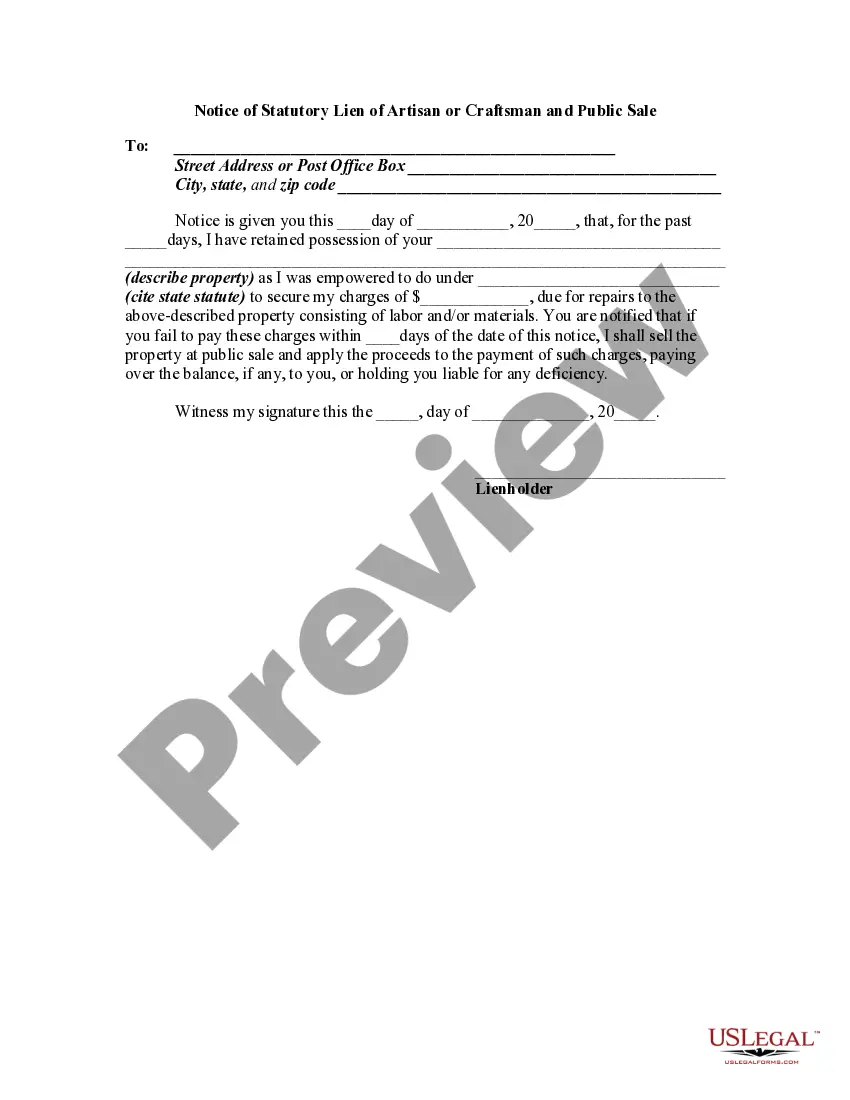
Notice of Statutory Lien of Artisan or Craftsman and Public Sale
Understanding this form
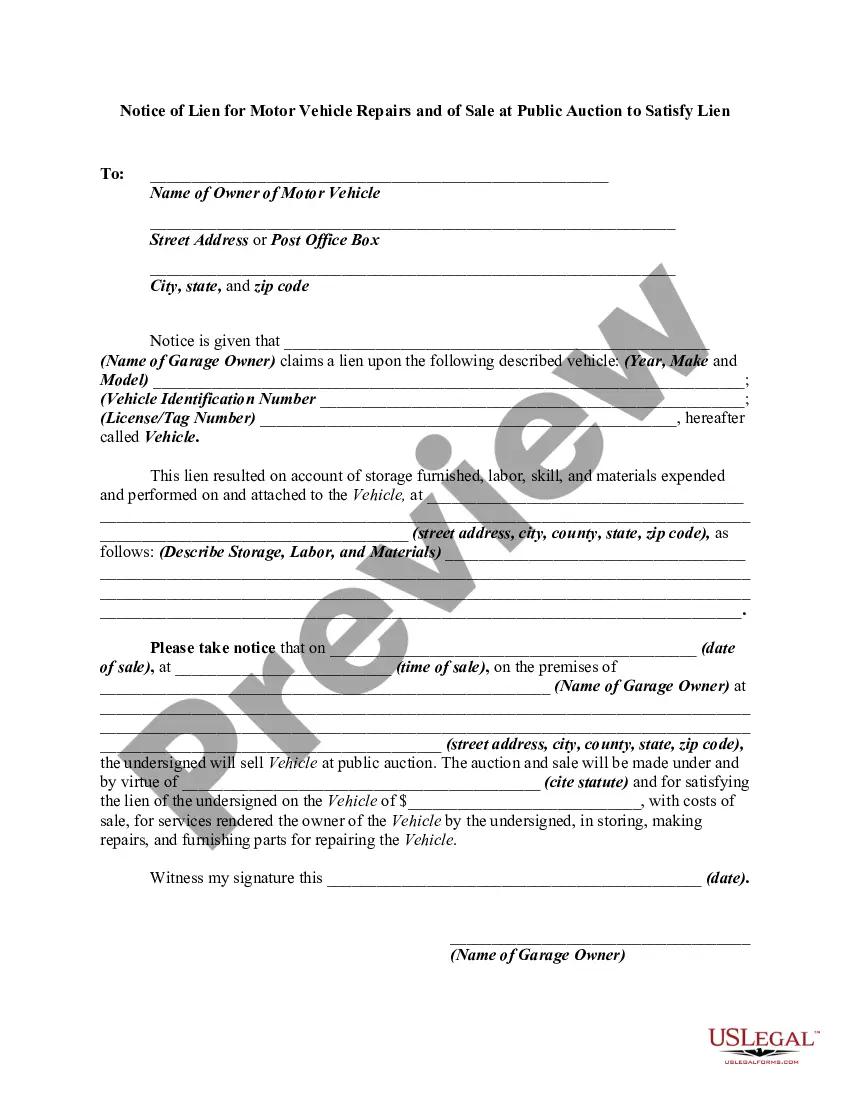
The Notice of Statutory Lien of Artisan or Craftsman and Public Sale form is a legal document that allows skilled workers, known as artisans or craftsmen, to assert a lien against property for unpaid services or materials. This form is used to notify property owners that a lien has been placed, which may lead to a public sale if payment is not made. It serves a unique purpose by combining the assertion of a lien with the notice of potential sales, distinguishing it from simple service contracts or invoices.
Form components explained
- Notice date and recipient details.
- Description of the property involved.
- Citation of the state statute empowering the lien.
- Itemization of the charges due for services or materials.
- Time period allowed for payment before public sale occurs.
- Signature of the lienholder to validate the notice.
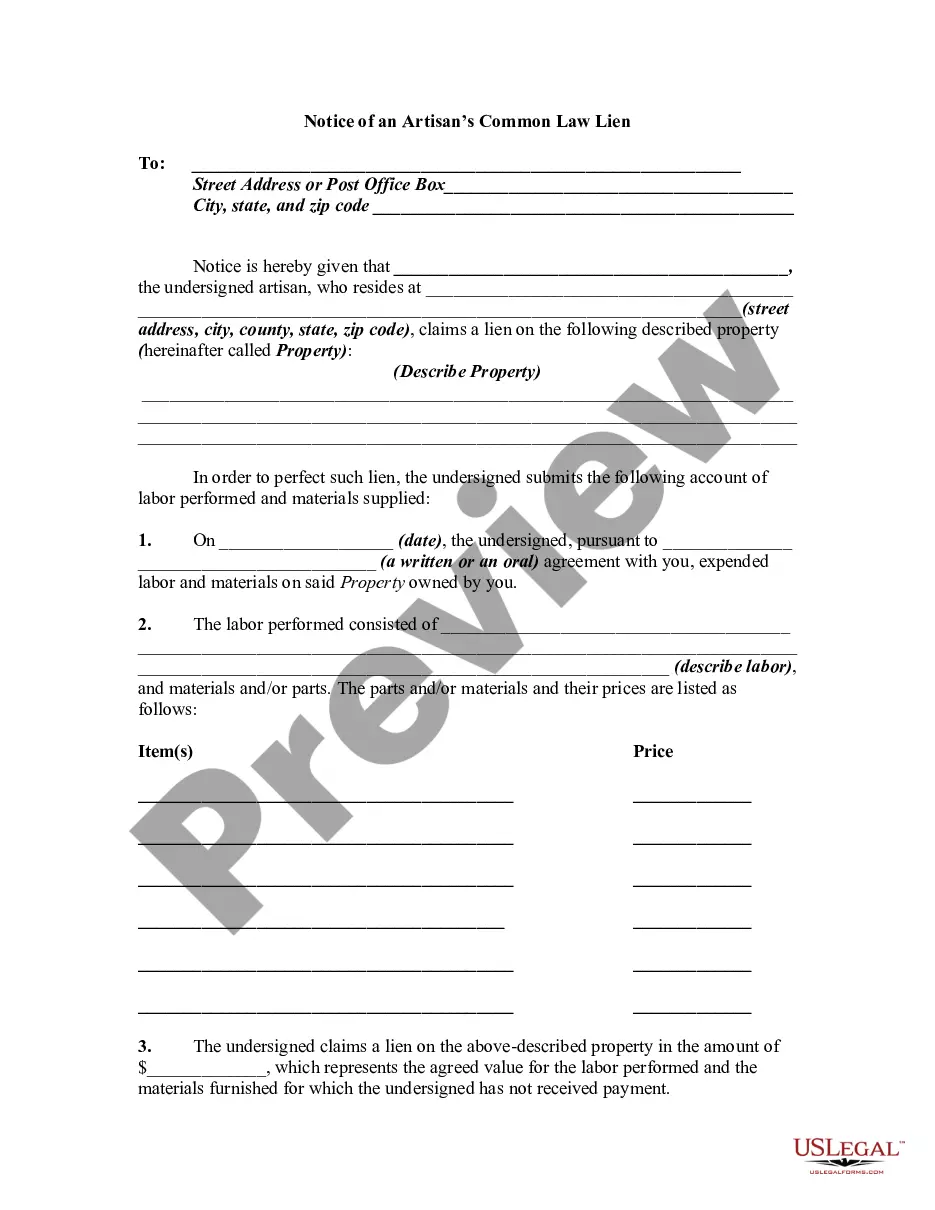
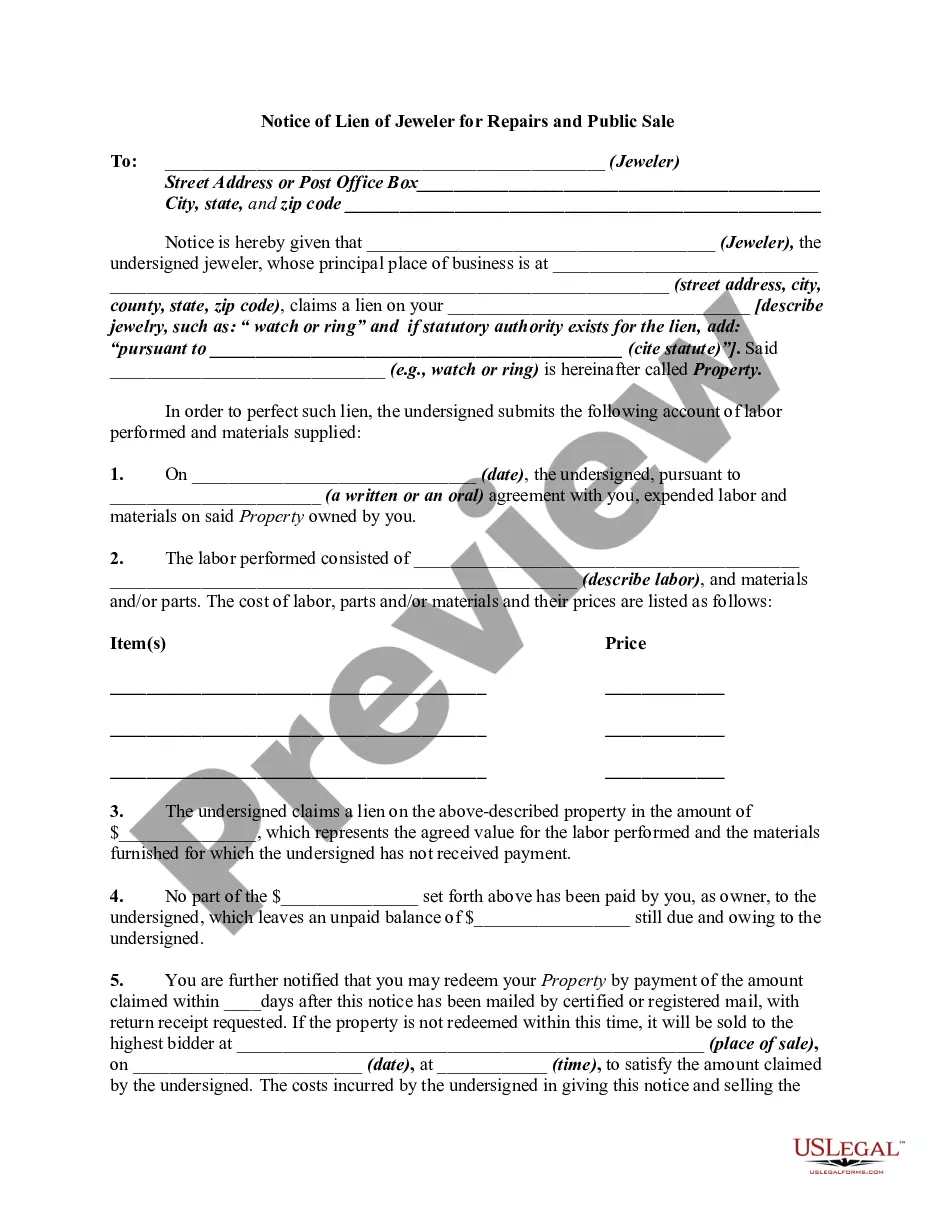

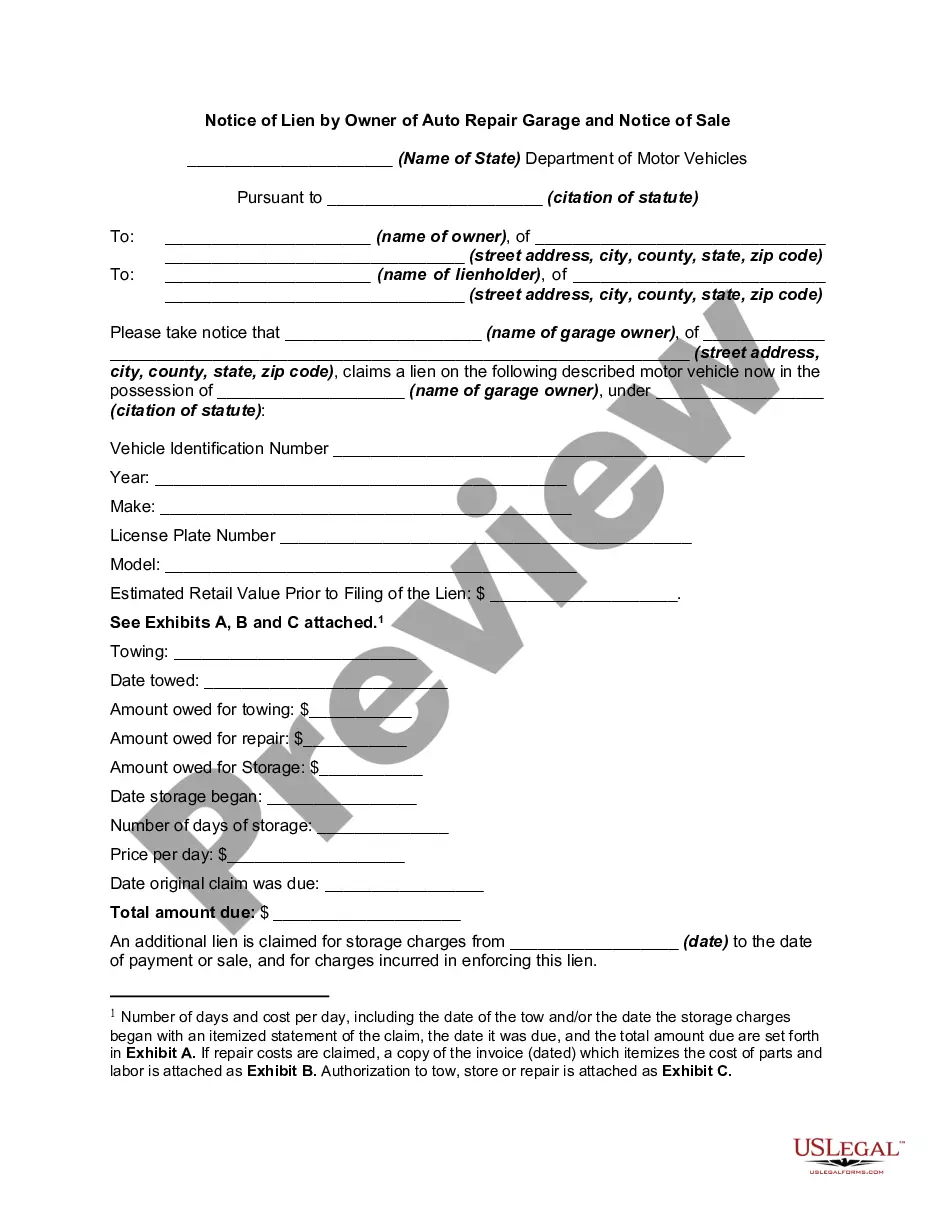
When this form is needed
This form is necessary when an artisan or craftsman has performed work on a property and has not received payment. It should be used after a defined period of non-payment, serving as an official notice to the property owner about the lien on their property. If the payment is not made in the specified timeframe, the lienholder has the right to sell the property to recover the owed amount.
Who should use this form
- Artisans or craftsmen who have provided services or materials and seek payment.
- Businesses or individuals in the construction, repair, or service industries.
- Property owners who need to notify clients of unpaid dues and potential asset reclamation.
How to complete this form
- Identify the parties involved by entering the recipient's name and address.
- Clearly describe the property subject to the lien.
- Cite the relevant state statute authorizing the lien.
- Detail the total charges due for services or materials provided.
- Specify the deadline for payment prior to the public sale.
- Sign and date the form to validate the notice.
Does this form need to be notarized?
This form usually doesn’t need to be notarized. However, local laws or specific transactions may require it. Our online notarization service, powered by Notarize, lets you complete it remotely through a secure video session, available 24/7.
Get your form ready online
Our built-in tools help you complete, sign, share, and store your documents in one place.
Make edits, fill in missing information, and update formatting in US Legal Forms—just like you would in MS Word.
Download a copy, print it, send it by email, or mail it via USPS—whatever works best for your next step.
Sign and collect signatures with our SignNow integration. Send to multiple recipients, set reminders, and more. Go Premium to unlock E-Sign.
If this form requires notarization, complete it online through a secure video call—no need to meet a notary in person or wait for an appointment.
We protect your documents and personal data by following strict security and privacy standards.

Make edits, fill in missing information, and update formatting in US Legal Forms—just like you would in MS Word.

Download a copy, print it, send it by email, or mail it via USPS—whatever works best for your next step.

Sign and collect signatures with our SignNow integration. Send to multiple recipients, set reminders, and more. Go Premium to unlock E-Sign.

If this form requires notarization, complete it online through a secure video call—no need to meet a notary in person or wait for an appointment.

We protect your documents and personal data by following strict security and privacy standards.
Mistakes to watch out for
- Failing to specify the correct property description.
- Not citing the appropriate state statute.
- Insufficient detail on the charges due.
- Missing the signature of the lienholder.
Benefits of completing this form online
- Instant access to legally drafted forms tailored for your needs.
- Editable fields to customize the form as necessary.
- Guided instructions to ensure accurate completion.
Looking for another form?







Form popularity
FAQ
To establish a lien, a contractor or subcontractor must file a petition in the circuit court for the county where the property is located within 180 days after completing work on the property or providing materials. It can be difficult to determine the work completion date.
If you have unpaid debt of any kind, this can lead the creditors that you owe money to place a lien on your assets.In other cases, liens may be placed on property by a court order as a result of legal action.
To attach the lien, the creditor files the judgment transcript with the county clerk in the New York county where the debtor's property is located.
While it's unlikely that just anyone can put a lien on your home or land, it's not unheard of for a court decision or a settlement to result in a lien being placed against a property.
In Michigan, a mechanics lien, called a Claim of Lien, must be filed with the Register of Deeds within 90 days after the lien claimant last furnished labor or materials to the project.
How long does a judgment lien last in Maryland? A judgment lien in Maryland will remain attached to the debtor's property (even if the property changes hands) for 12 years.
The Indian Contract Act, 1872 classifies the Right of Lien into two types: Particular Lien and General Lien. Section 170 of the aforesaid Act gives the exact definition of Particular Lien which states that the Bailee is free to hold control of a precise property with position to the charge which is due.
To establish a lien, a contractor or subcontractor must file a petition in the circuit court for the county where the property is located within 180 days after completing work on the property or providing materials. It can be difficult to determine the work completion date.
A lien is nothing more than a property interest that secures a debt. A statutory lien is a lien that is created by law or statute, usually in favor of a taxing authority, like the state or the IRS.