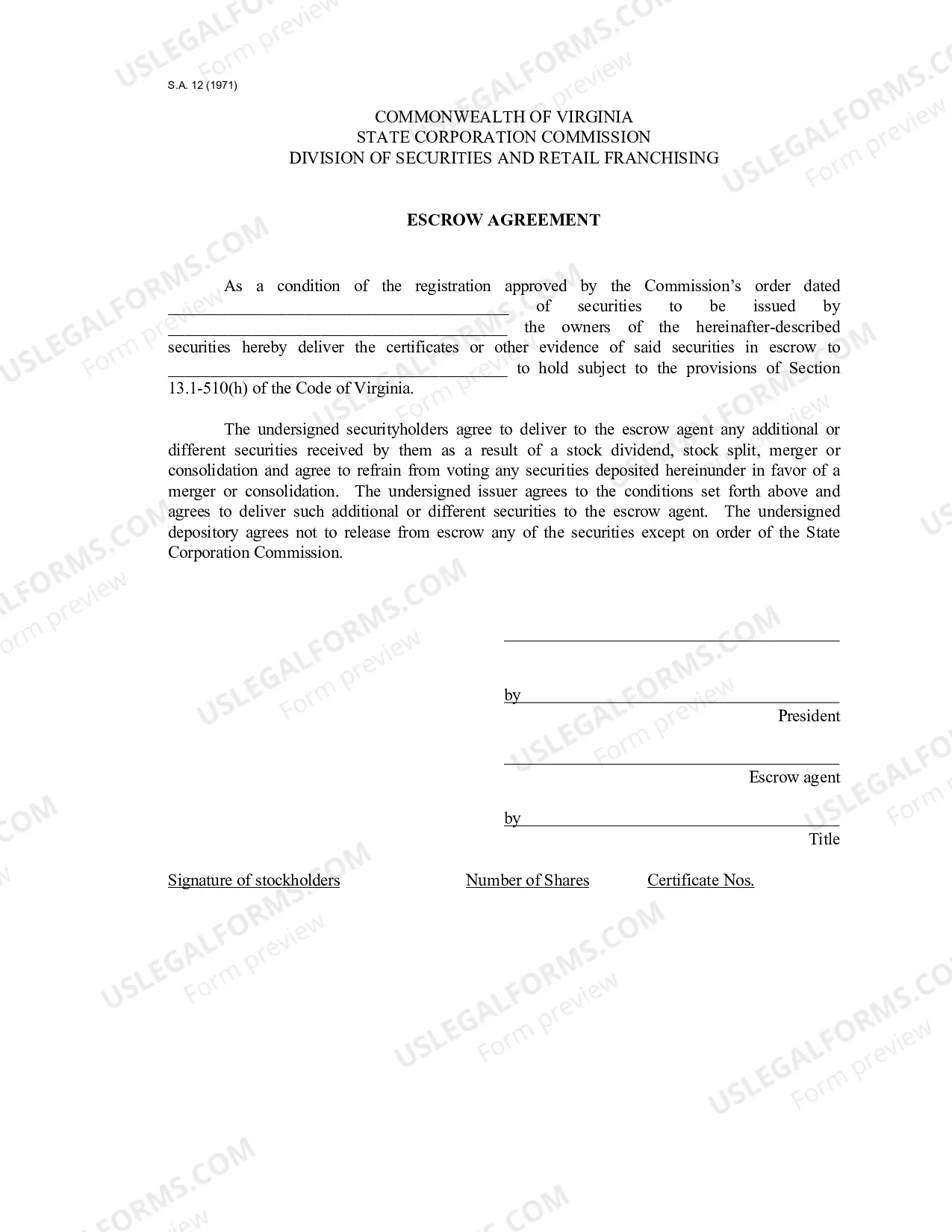
Affidavit of Defendant Supporting Defendant's Motion to Strike Affidavit Filed in Support of Plaintiff's Motion for Summary Judgment
About this form
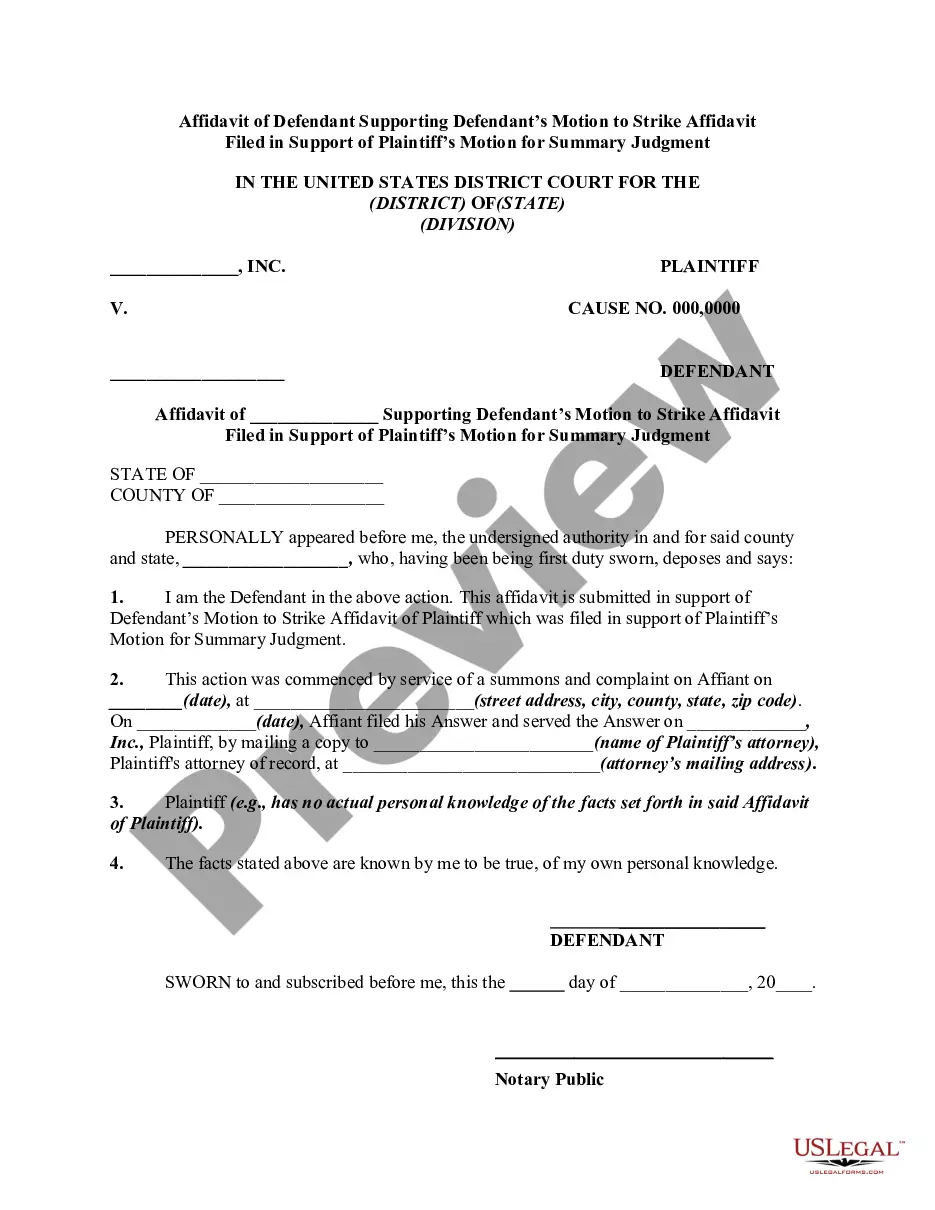
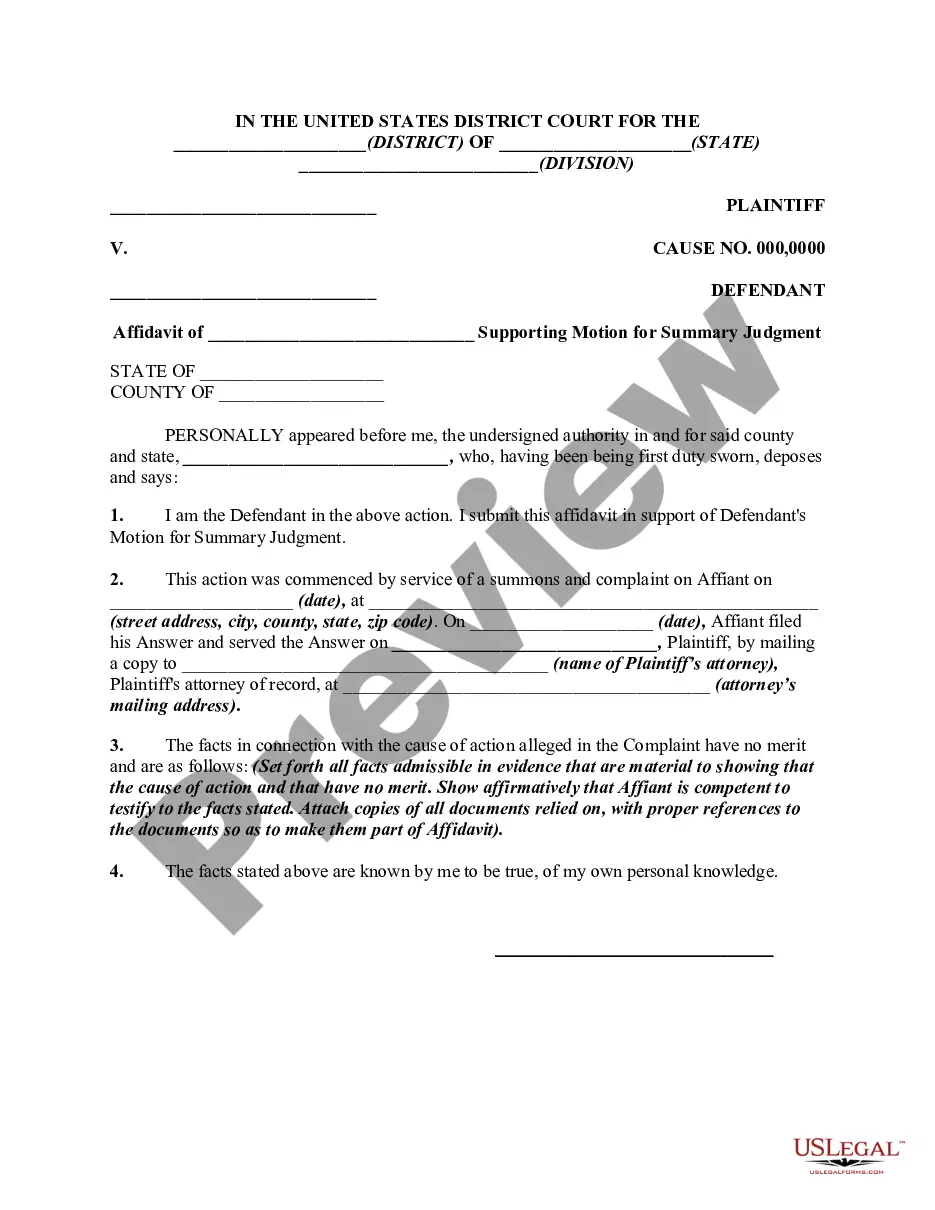
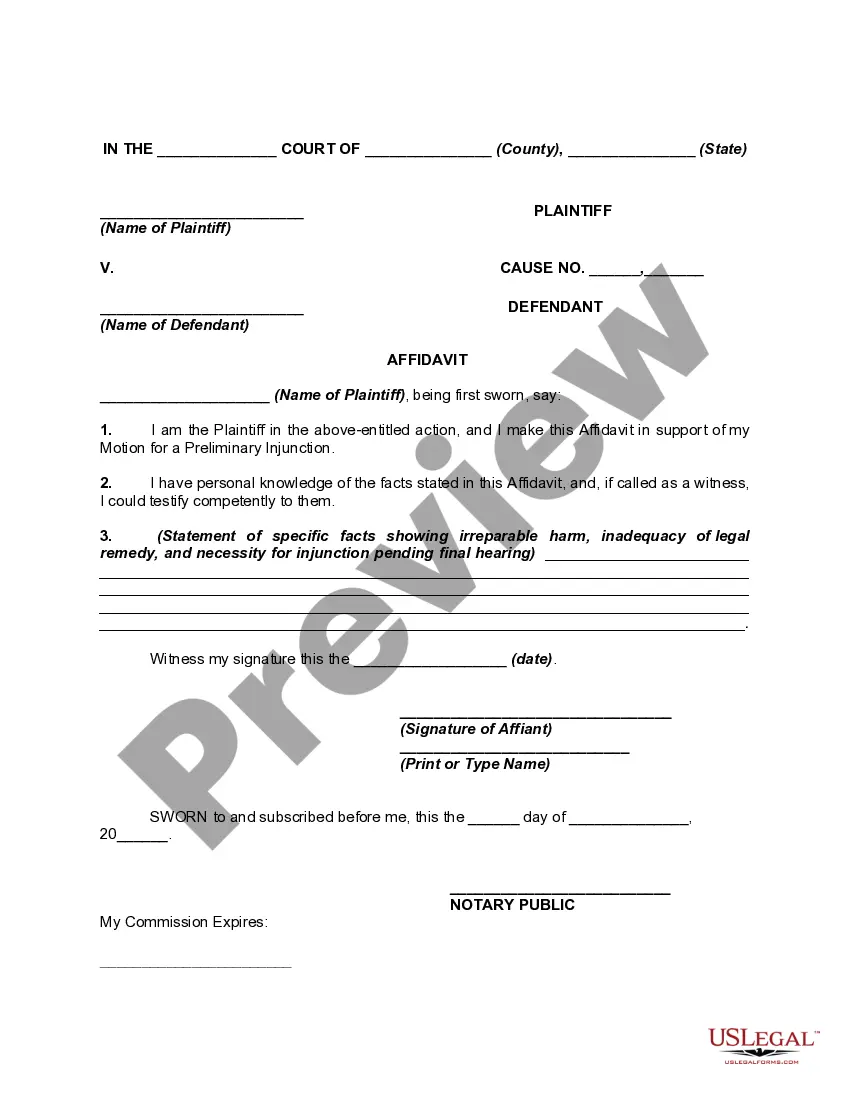
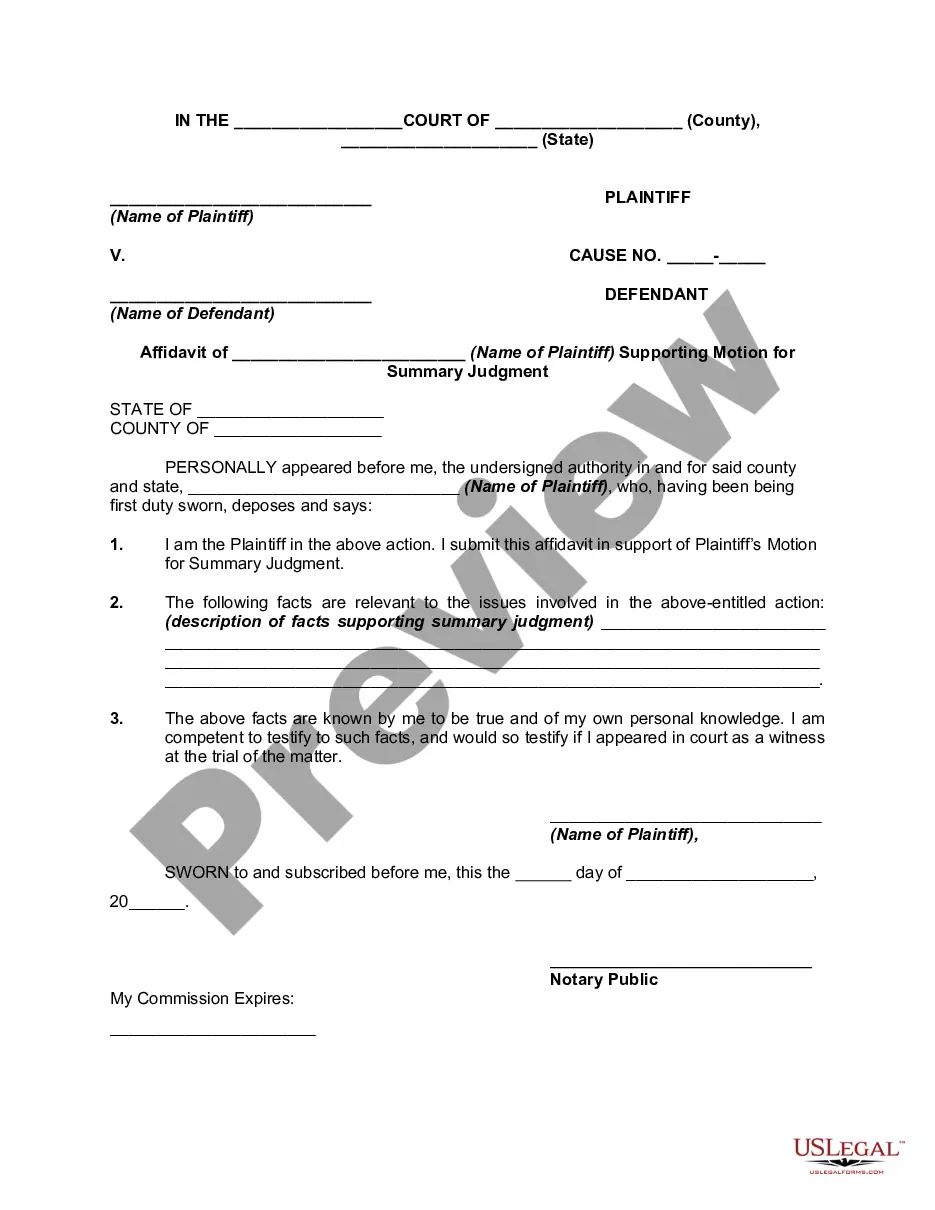
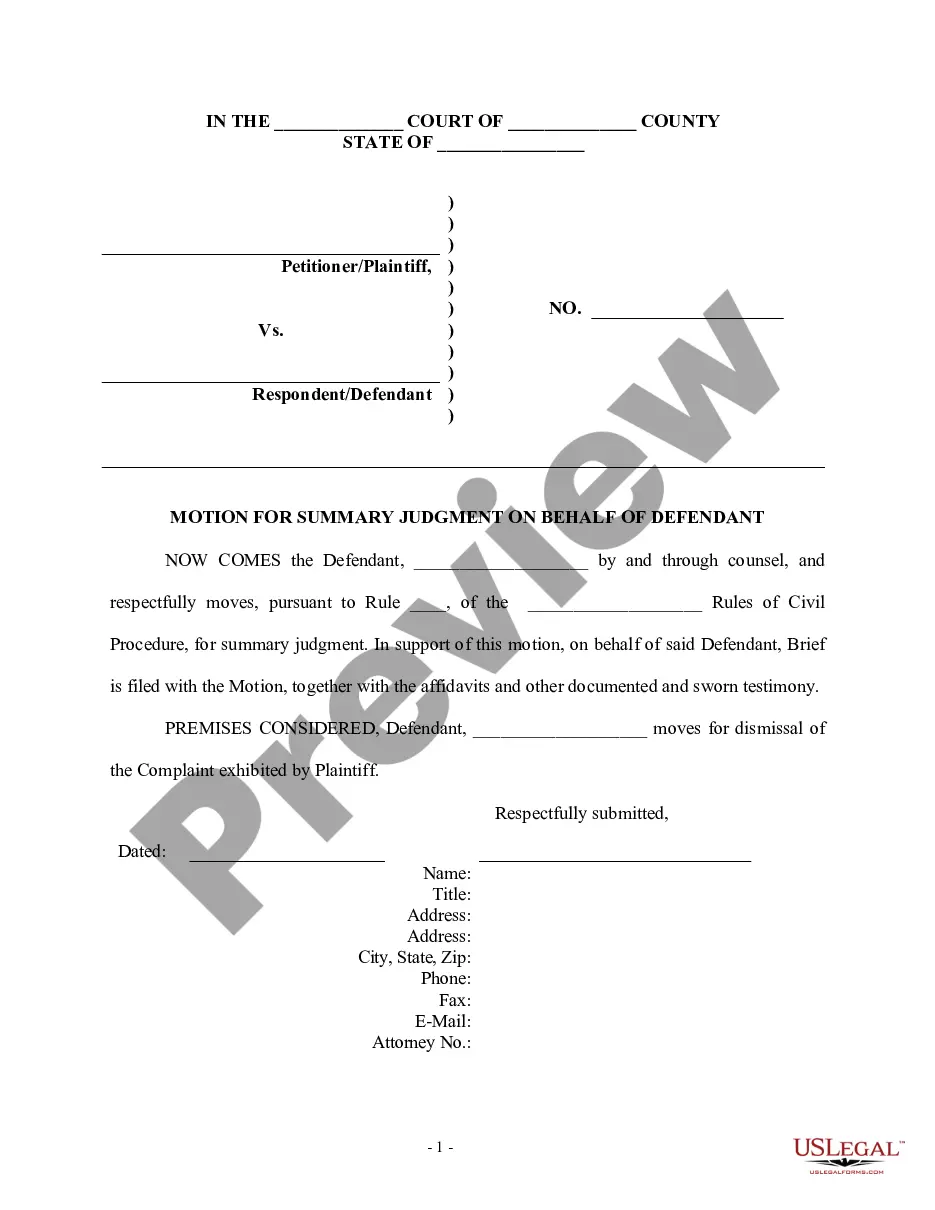
The Affidavit of Defendant Supporting Defendant's Motion to Strike Affidavit Filed in Support of Plaintiff's Motion for Summary Judgment is a legal document used by a defendant in a lawsuit. This form allows the defendant to challenge the validity of an affidavit submitted by the plaintiff in support of their motion for summary judgment. It differs from other affidavits as it specifically addresses the plaintiff's claims and aims to refute them, thereby supporting the defendantâs position in the case.
What’s included in this form
- Identification of the defendant and court case details.
- Statement affirming the defendant's personal knowledge of the facts.
- Reference to the plaintiff's affidavit and the reason for striking it.
- Notarization section for legal validation.
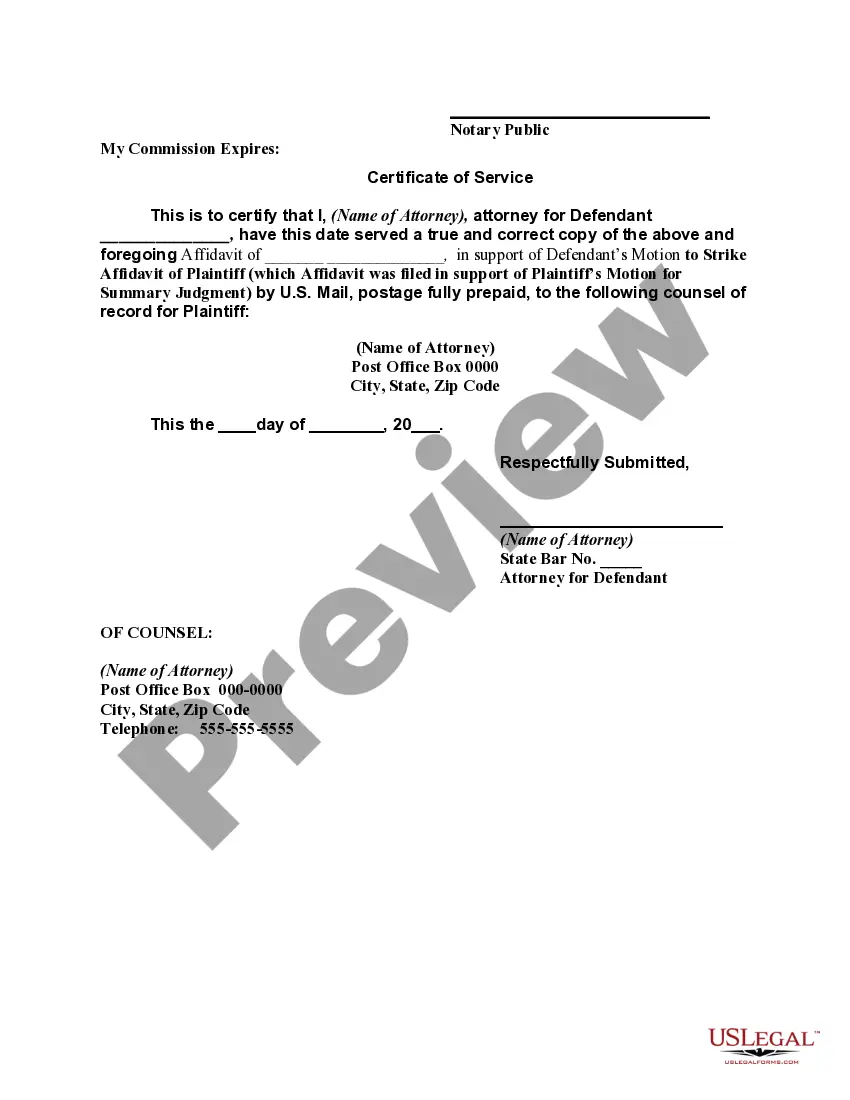
- Certificate of service indicating the distribution of the affidavit to involved parties.
When to use this document
This affidavit should be used when a defendant needs to file a motion to strike an affidavit submitted by the plaintiff that is seen as unsubstantiated or irrelevant. Situations may include instances where the plaintiff's affidavit contains information that the defendant believes is not based on actual knowledge or factual inaccuracies that could mislead the court.
Who can use this document
This form is intended for:
- Defendants in civil lawsuits who have received a motion for summary judgment from the plaintiff.
- Individuals representing themselves (pro se) in court who wish to challenge a submitted affidavit.
- Attorneys assisting clients in litigation involving contested affidavits.
Instructions for completing this form
- Identify the court and case information at the top of the affidavit.
- Fill in your name and details as the defendant, along with the corresponding plaintiff's information.
- Clearly articulate the reasons you are moving to strike the plaintiff's affidavit.
- Sign the affidavit in front of a notary public to ensure its legal validity.
- Complete the certificate of service to document how and when you served the affidavit to the plaintiff's attorney.
Does this document require notarization?
Yes, this form must be notarized to be legally valid. The notarization process adds a layer of verification that enhances the credibility of the affidavit when submitted to the court. US Legal Forms offers integrated online notarization services, available 24/7 through secure video calls, ensuring that you can complete this requirement conveniently.
Get your form ready online
Our built-in tools help you complete, sign, share, and store your documents in one place.
Make edits, fill in missing information, and update formatting in US Legal Forms—just like you would in MS Word.
Download a copy, print it, send it by email, or mail it via USPS—whatever works best for your next step.
Sign and collect signatures with our SignNow integration. Send to multiple recipients, set reminders, and more. Go Premium to unlock E-Sign.
If this form requires notarization, complete it online through a secure video call—no need to meet a notary in person or wait for an appointment.
We protect your documents and personal data by following strict security and privacy standards.

Make edits, fill in missing information, and update formatting in US Legal Forms—just like you would in MS Word.

Download a copy, print it, send it by email, or mail it via USPS—whatever works best for your next step.

Sign and collect signatures with our SignNow integration. Send to multiple recipients, set reminders, and more. Go Premium to unlock E-Sign.

If this form requires notarization, complete it online through a secure video call—no need to meet a notary in person or wait for an appointment.

We protect your documents and personal data by following strict security and privacy standards.
Mistakes to watch out for
- Failing to accurately detail the facts related to the motion to strike.
- Not providing sufficient personal knowledge regarding the claims made in the plaintiff's affidavit.
- Overlooking the notarization requirement which may render the affidavit invalid.
- Leaving out the certificate of service or not using the correct recipient information.
Benefits of completing this form online
- Easy access to a pre-drafted legal form that saves time and reduces stress.
- Editability allows for customization to fit specific case details.
- Guidance on proper completion ensures compliance with legal requirements.
- Availability for download means you can obtain the form quickly without the need for in-person visits.
Looking for another form?

Form popularity
FAQ
You've written a motion and submitted it to the court. The court has set it for oral argument - now what? Read the rules. Know the judge. Review your written motion. Shepardize your cases again. Review opposing counsel's written motion. Note cases that are directly opposed to your argument. Prepare your argument.
You must include a summary of the legal basis for your opposition, explain the reason you are opposing the motion, and state what you would like the judge to order.
Judgment on the pleadings is a motion made after pleading and before discovery; summary judgment happens after discovery and before trial; JMOL occurs during trial.Timing is very important in making a motion for JMOL; the motion can be made only after the opposing party has presented its case.
Overview. If one party to a case has filed a motion with the court, the other side can file an opposition. An opposition is a written statement explaining to the judge why the other side is not entitled to whatever he is asking for in his motion. It is your opportunity to oppose the other side's request.
A motion to strike is a request to a judge that part of a party's pleading or a piece of evidence be removed from the record.The motion can be made by a party within an allotted time frame, or can be raised by the court, called sua sponte.
A response must be in writing and include the same supporting documents as a motion for summary judgment. The opposition to the motion for summary judgment should also include a statement of facts showing the dispute and supporting documents.
Fill out the forms. You have to fill out at least 2 forms, maybe more, to file your opposition. File the forms. Turn in your completed forms by mail or efiling. Serve the other party. Get ready for the hearing. Prepare an order.
A motion is a request asking a judge to issue a ruling or order on a legal matter. An opposing motion is a motion made seeking to have the request made in the opposing party's prior motion denied.
If a defendant refuses to produce documents or witnesses for depositions, you can oppose the summary-judgment motion by submitting your declaration and showing that facts essential to justify your opposition may exist but cannot for reasons stated be presented to the court.