Cohabitation Agreement Between Parties Living Together but Remaining Unmarried
About this form
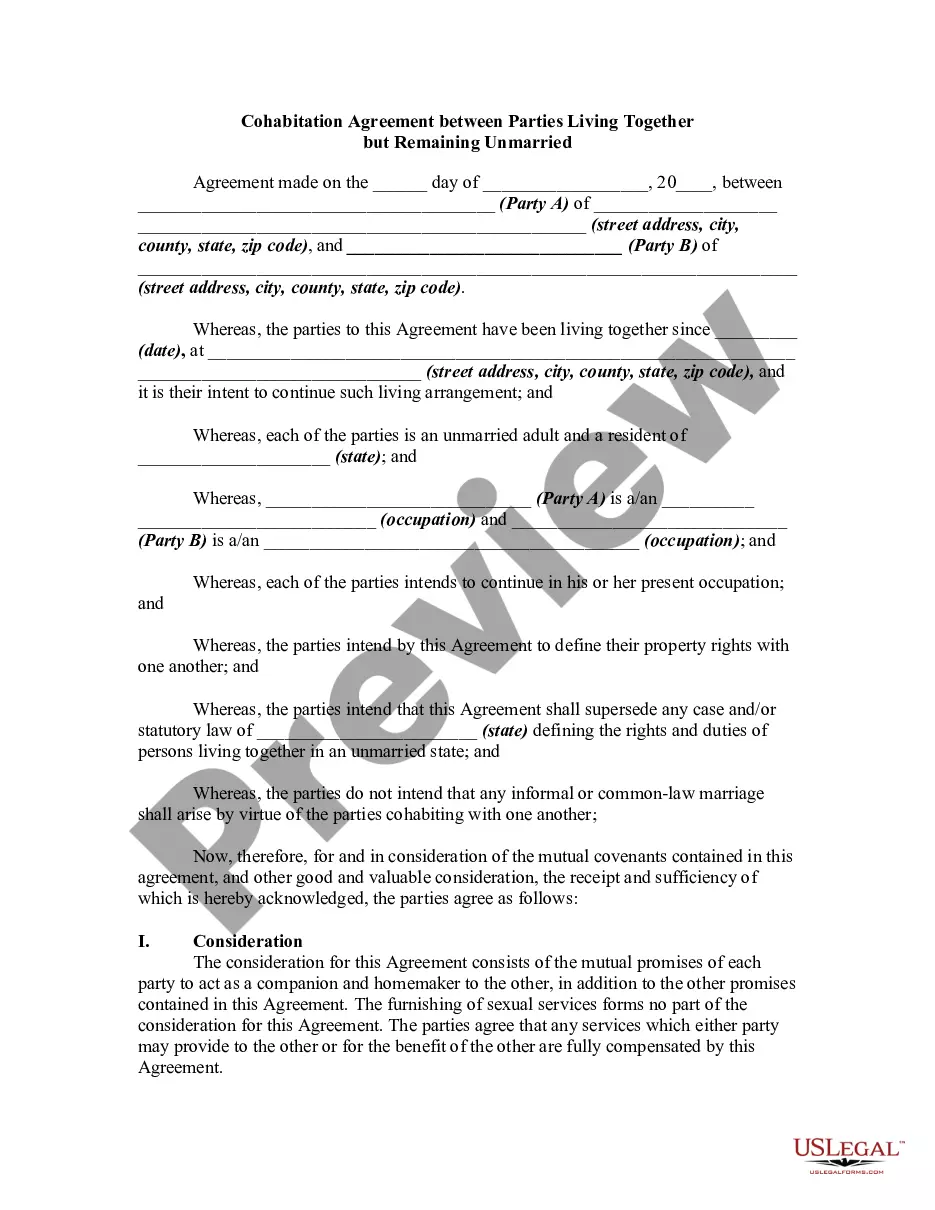
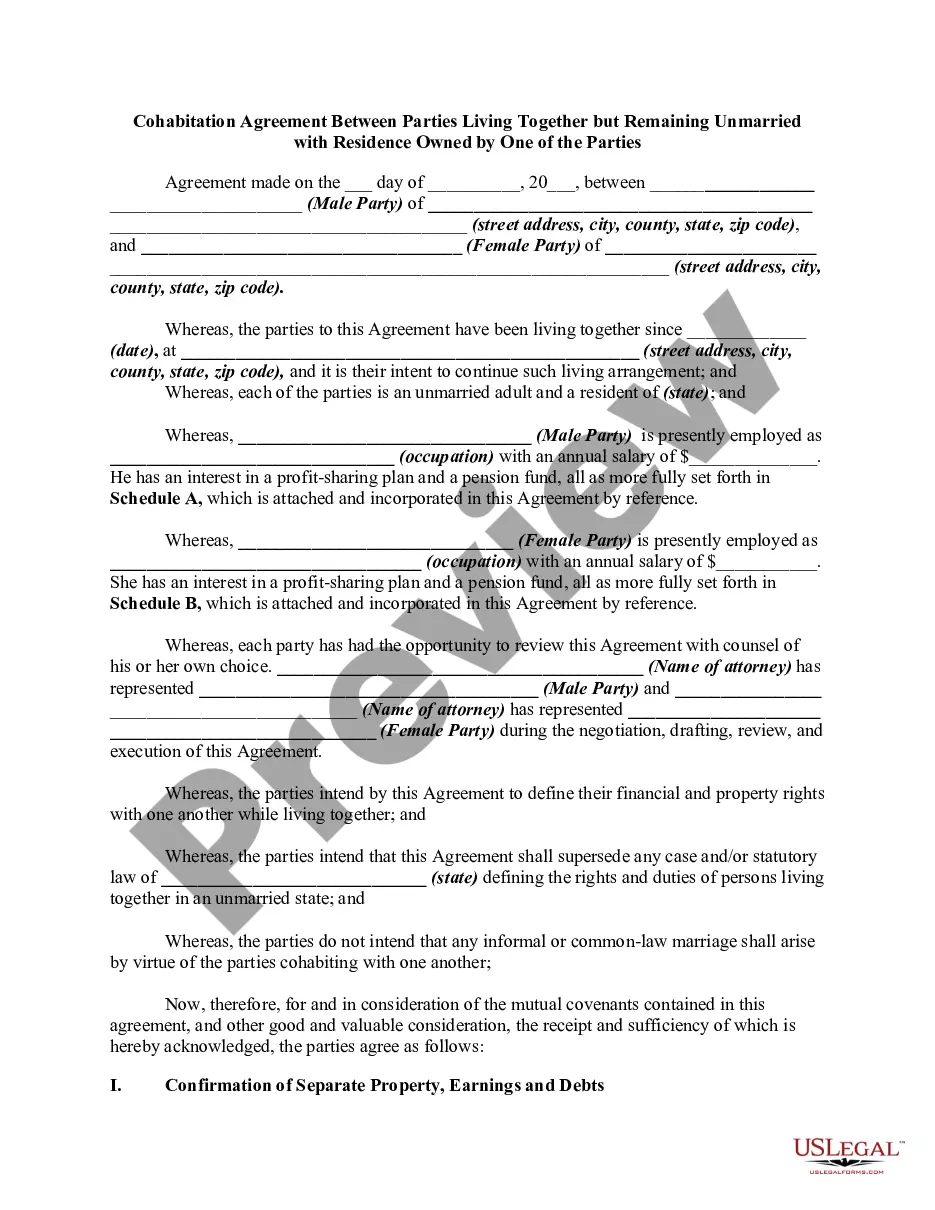
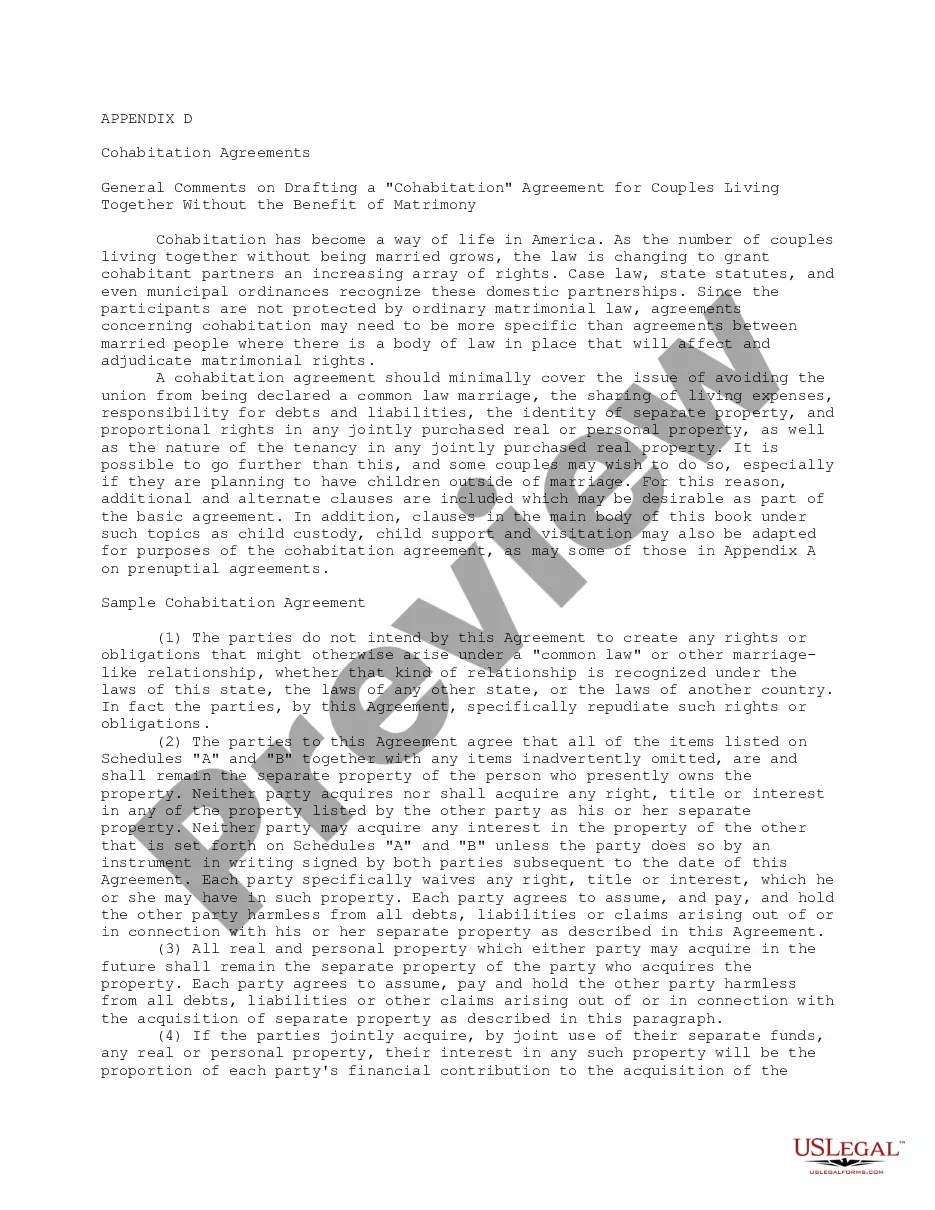
The Cohabitation Agreement Between Parties Living Together but Remaining Unmarried is a legal document designed for two unmarried individuals living together. This agreement outlines the rights and responsibilities of each party, particularly concerning property and financial matters. Unlike a marriage contract, it allows the parties to maintain their single status while providing a clear framework for their living arrangement and any financial interactions.
What’s included in this form
- Parties' identities and contact information
- Effective date and duration of the agreement
- Consideration of each party's promises as companions
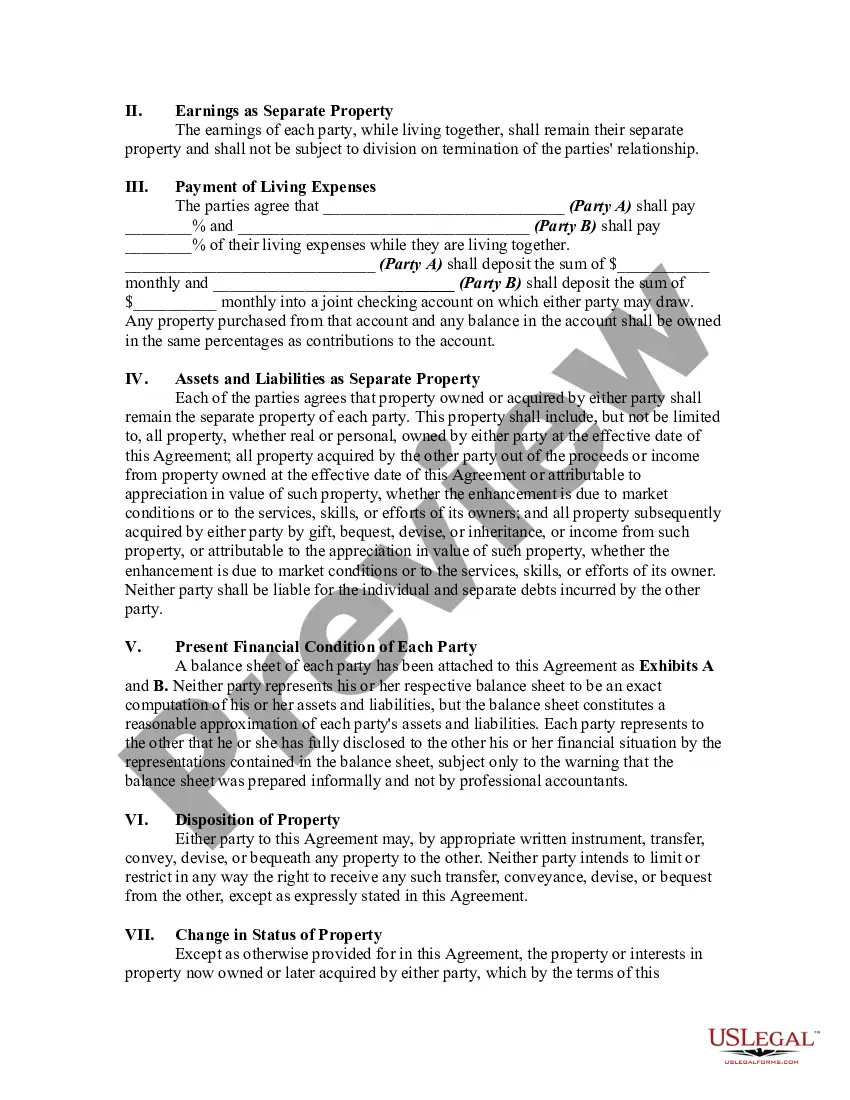
- Separate property rights regarding earnings and assets
- Agreements on payment of living expenses and joint accounts
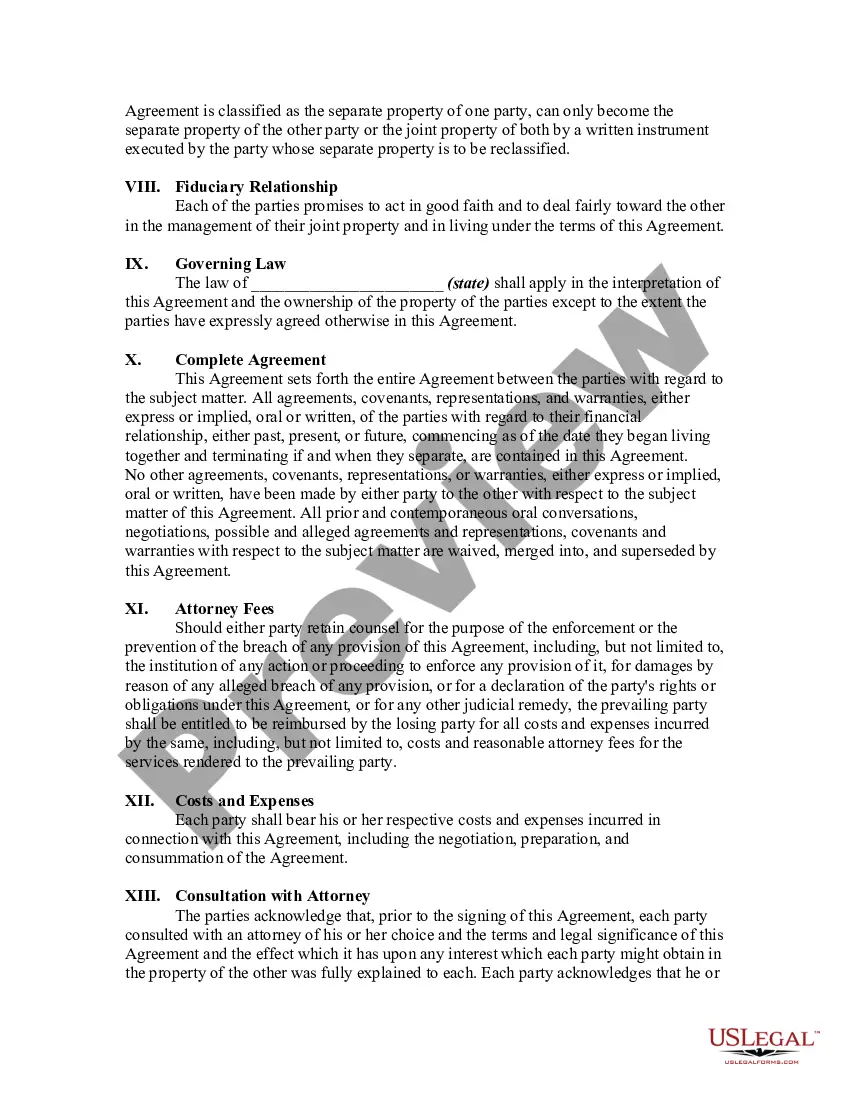
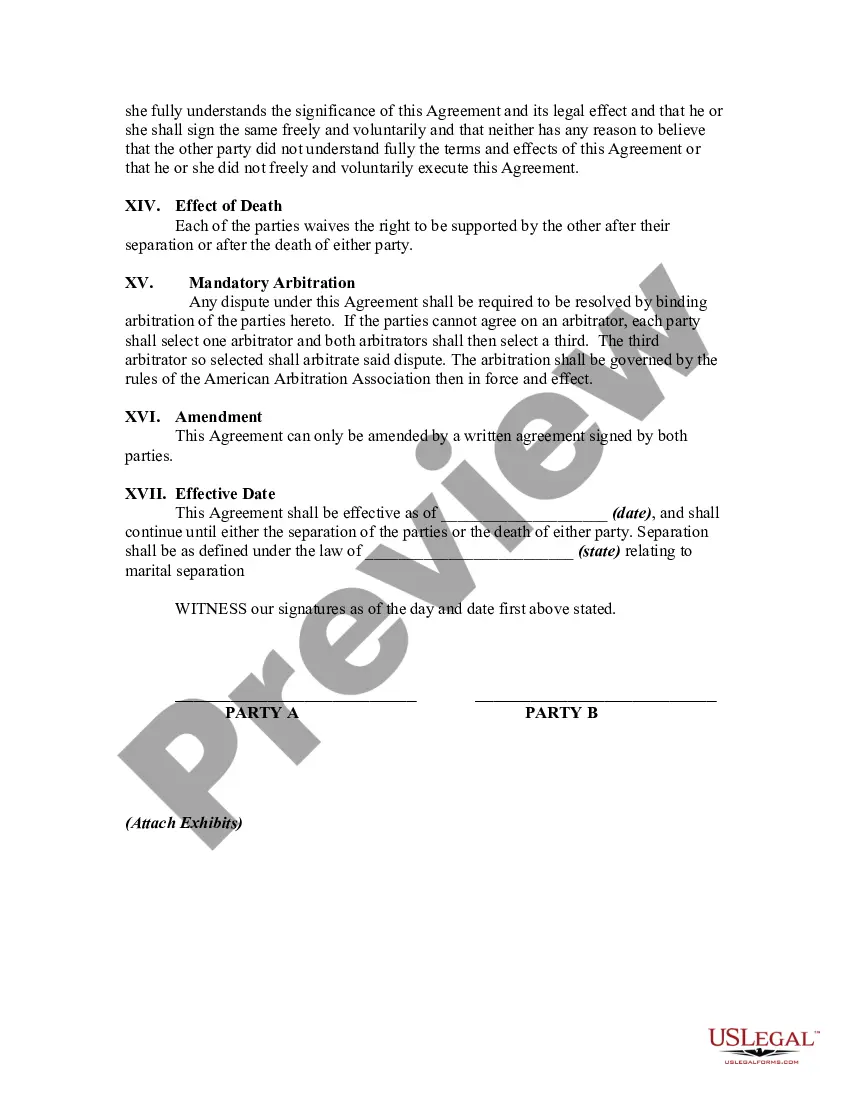
- Provisions for dispute resolution and legal fees
When this form is needed
This form is ideal for unmarried couples who choose to cohabit without formalizing their relationship through marriage. It is particularly useful when both parties wish to define financial responsibilities, property rights, and to prevent any confusion regarding the status of their assets and liabilities should the relationship end. This agreement can also help avoid the assumption of a common-law marriage.
Who needs this form
- Unmarried couples living together
- Individuals wishing to clarify their financial responsibilities
- Couples wanting to protect their separate property rights
- Parties seeking to avoid disputes related to asset division
How to prepare this document
- Identify both parties and enter their names and addresses.
- Specify the effective date of the agreement.
- Outline the division of living expenses and contributions to a joint account.
- Include any stipulations about separate property and assets.
- Ensure both parties sign the document and have it witnessed or notarized if required.
Is notarization required?
This form does not typically require notarization unless specified by local law. However, having the agreement notarized can provide additional legal protection and validation of the document.
Get your form ready online
Our built-in tools help you complete, sign, share, and store your documents in one place.
Make edits, fill in missing information, and update formatting in US Legal Forms—just like you would in MS Word.
Download a copy, print it, send it by email, or mail it via USPS—whatever works best for your next step.
Sign and collect signatures with our SignNow integration. Send to multiple recipients, set reminders, and more. Go Premium to unlock E-Sign.
If this form requires notarization, complete it online through a secure video call—no need to meet a notary in person or wait for an appointment.
We protect your documents and personal data by following strict security and privacy standards.

Make edits, fill in missing information, and update formatting in US Legal Forms—just like you would in MS Word.

Download a copy, print it, send it by email, or mail it via USPS—whatever works best for your next step.

Sign and collect signatures with our SignNow integration. Send to multiple recipients, set reminders, and more. Go Premium to unlock E-Sign.

If this form requires notarization, complete it online through a secure video call—no need to meet a notary in person or wait for an appointment.

We protect your documents and personal data by following strict security and privacy standards.
Common mistakes
- Failing to list all relevant assets and liabilities.
- Not specifying how expenses will be shared.
- Omitting the signatures of both parties.
- Neglecting to review state-specific laws that may affect the agreement.
Benefits of using this form online
- Convenient access to the form anytime, anywhere.
- Editable fields allow customization to fit specific needs.
- Secure and easy download for personal use.
Legal use & context
- Cohabitation agreements may not be legally binding in all states; it's essential to understand local laws.
- Such agreements cannot replicate the legal advantages of marriage, particularly concerning spousal rights.
- Clear documentation helps minimize ambiguity and potential disputes if the relationship ends.
Main things to remember
- A Cohabitation Agreement protects the rights and responsibilities of unmarried partners living together.
- It helps clarify financial obligations and asset ownership to prevent disputes.
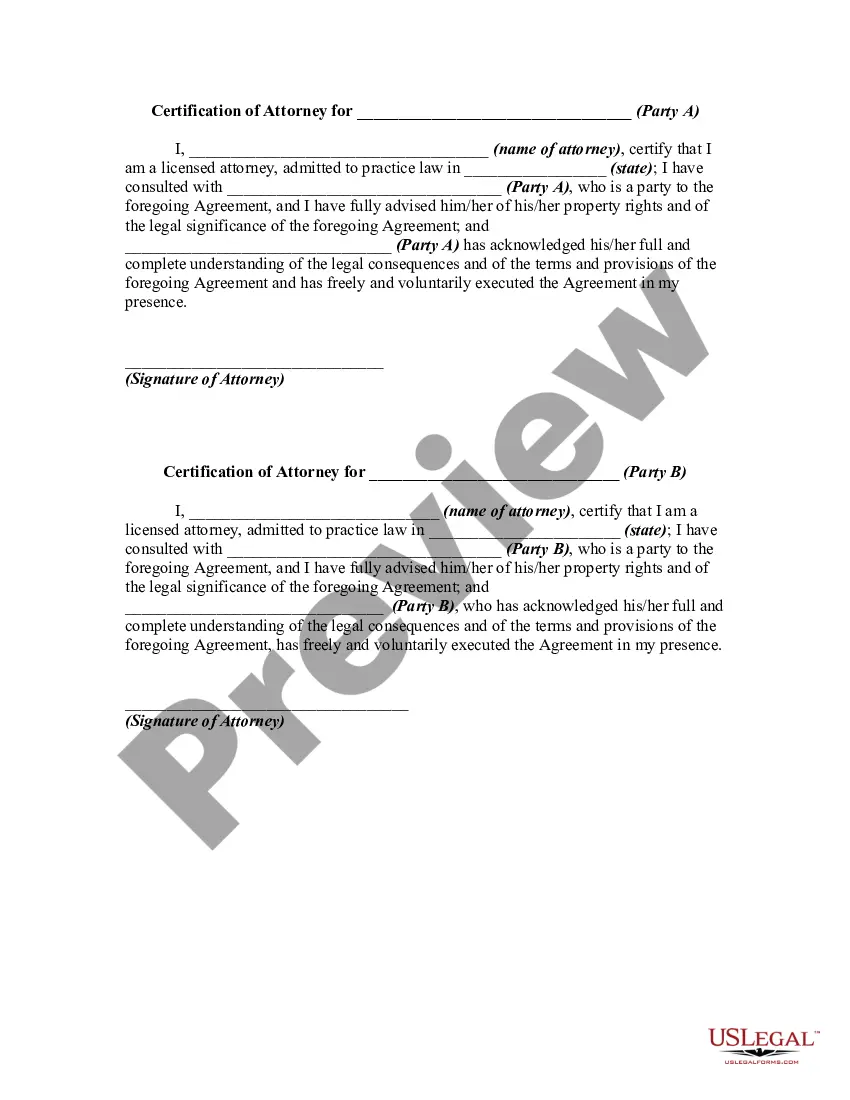
- Consulting an attorney before signing is crucial for understanding the document's legal significance.
Looking for another form?



Form popularity
FAQ
Cohabitation is an arrangement where two people are not married but live together.
While some studies show that living together before marriage increases a couple's chances of getting divorced early on in their marriage, others have found that cohabiting can actually be beneficial in the long run. Not everyone who moves in with their partner does so because they want to get married.
In light of these dramatic social changes, you may be surprised to learn that cohabitation is technically still illegal in 4 U.S. states. As it currently stands, Mississippi, Michigan, Florida, and Virginia currently have laws on the books banning cohabitation.
Spending more time together and convenience were the most strongly endorsed reasons. The degree to which individuals reported cohabiting to test their relationships was associated with more negative couple communication and more physical aggression as well as lower relationship adjustment, confidence, and dedication.
A living arrangement whereby a couple who is not married or a couple who is in a civil partnership live together in the same household. The term can apply to opposite sex or same-sex couples. The law gives cohabiting couples fewer rights on separation or death than for civil partners or married couples.