Employment of Verbatim Reporter and Transcriber Including the Transcription of Medical Records, Reporting of Trials, Depositions, Conferences and Conventions
What this document covers
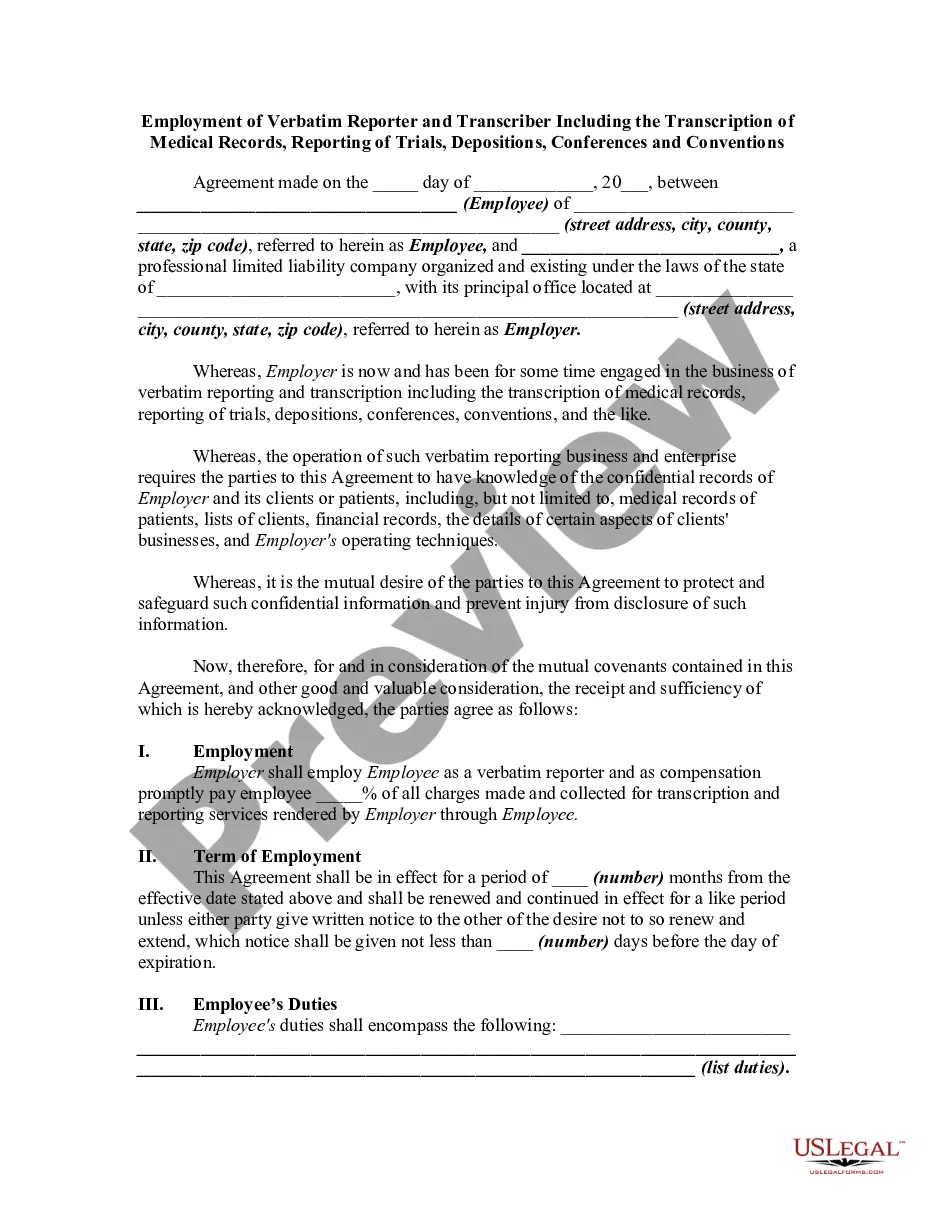
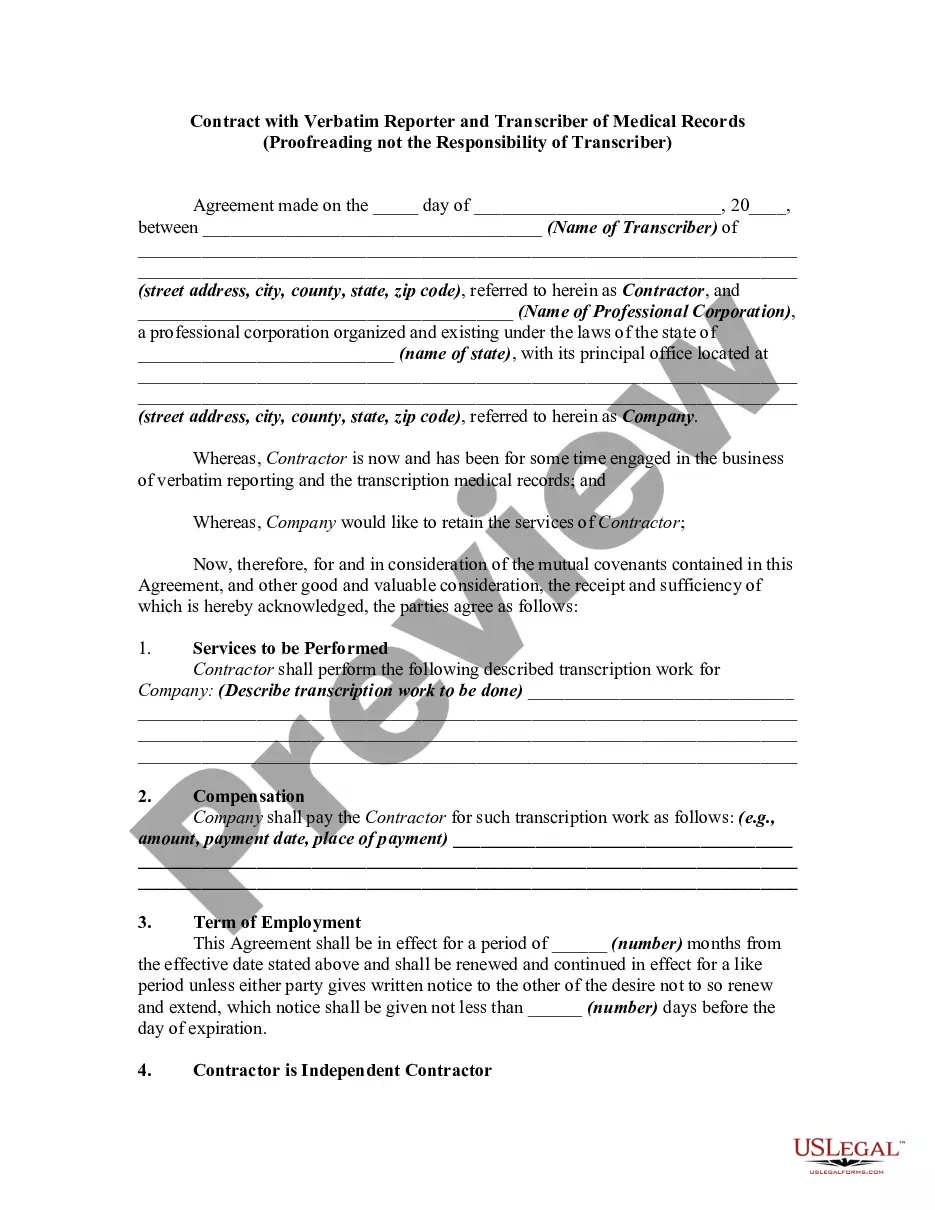
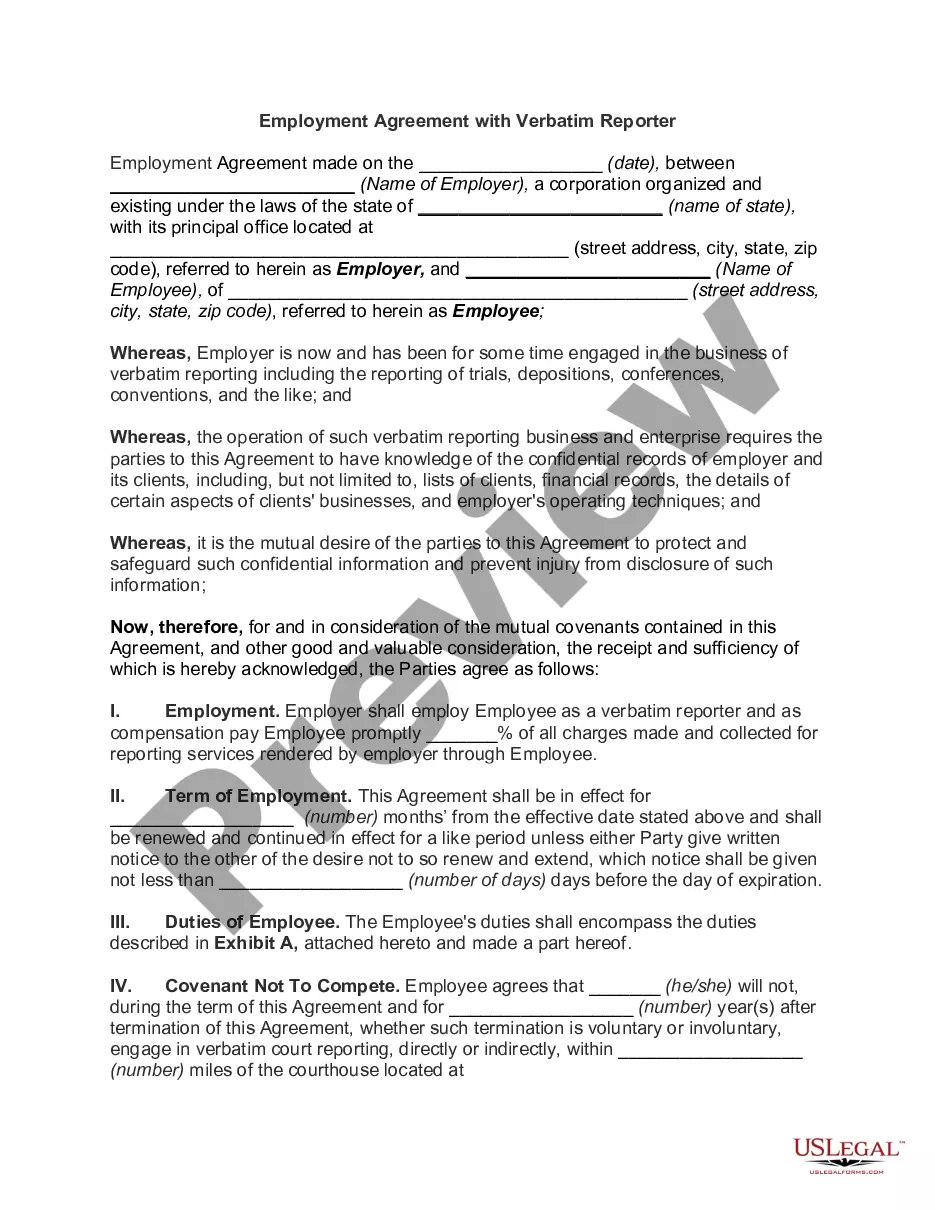
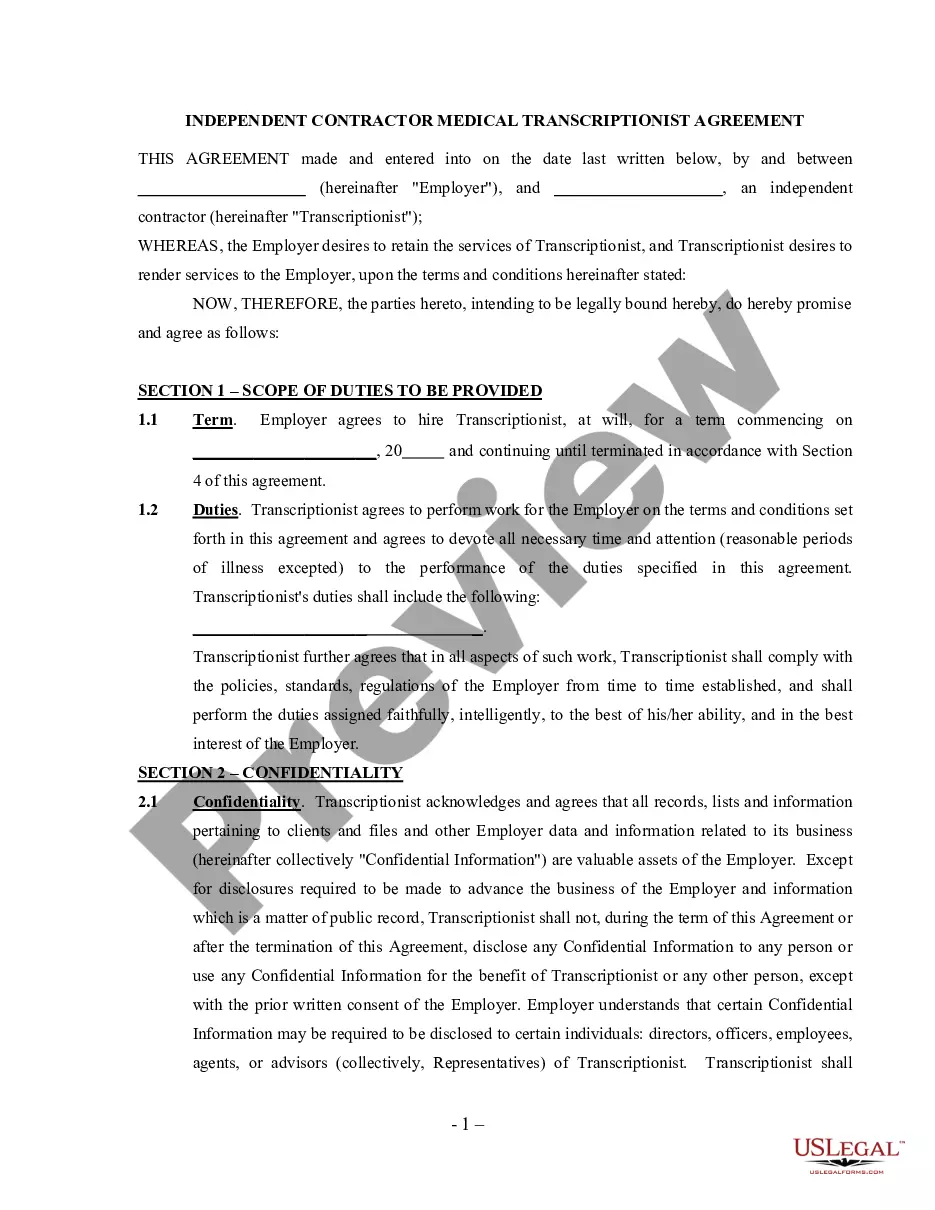
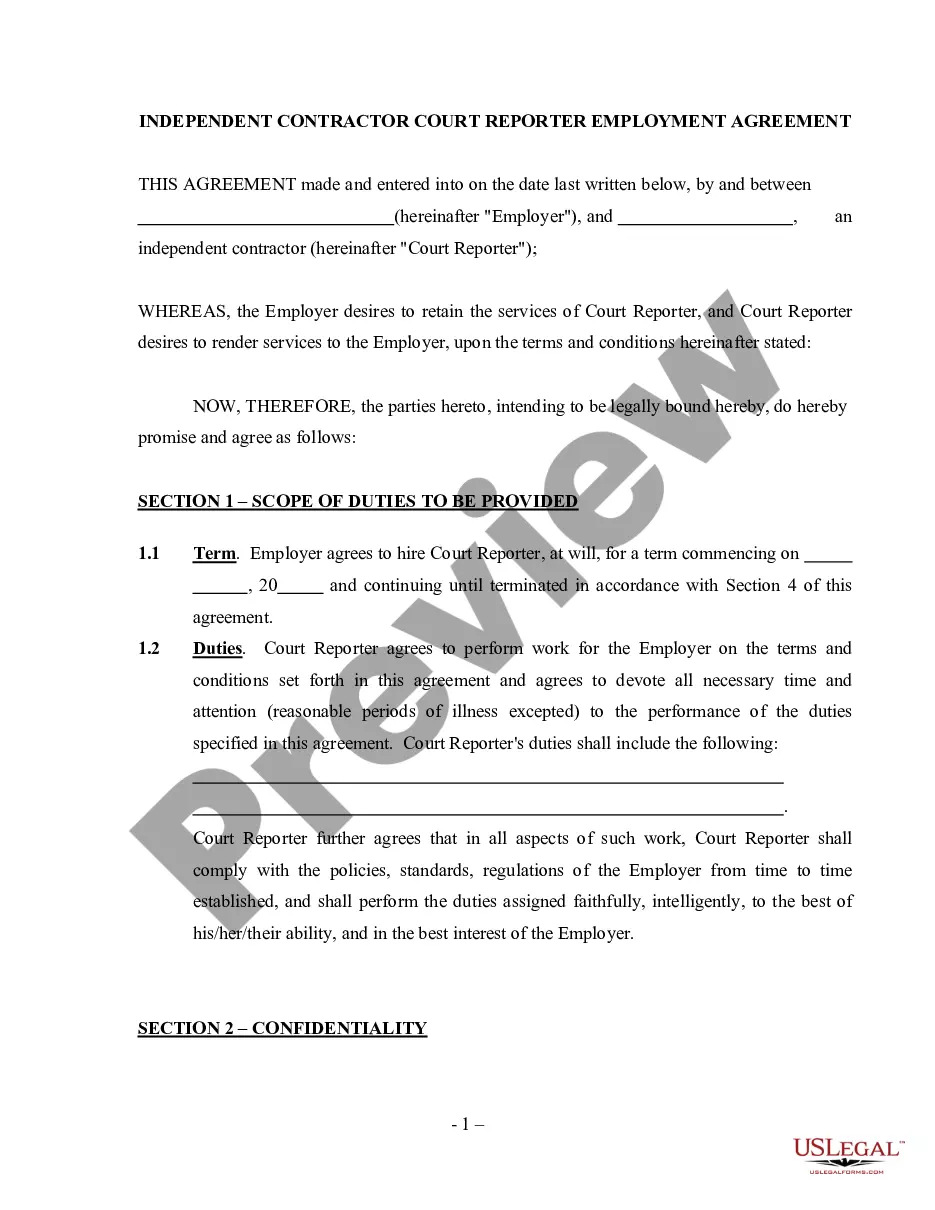
The Employment of Verbatim Reporter and Transcriber agreement is a legal document that establishes the terms of employment between a verbatim reporter and a professional employer. This form outlines the roles and responsibilities of the reporter in transcribing various types of records, including medical records, trial transcripts, and depositions. By employing this form, both parties can ensure clear communication and protection of confidential information related to their work.
Key components of this form
- Identification of the parties involved (Employee and Employer).
- Employment terms including compensation structure.
- Duration of employment and renewal terms.
- Employee's specific duties and responsibilities.
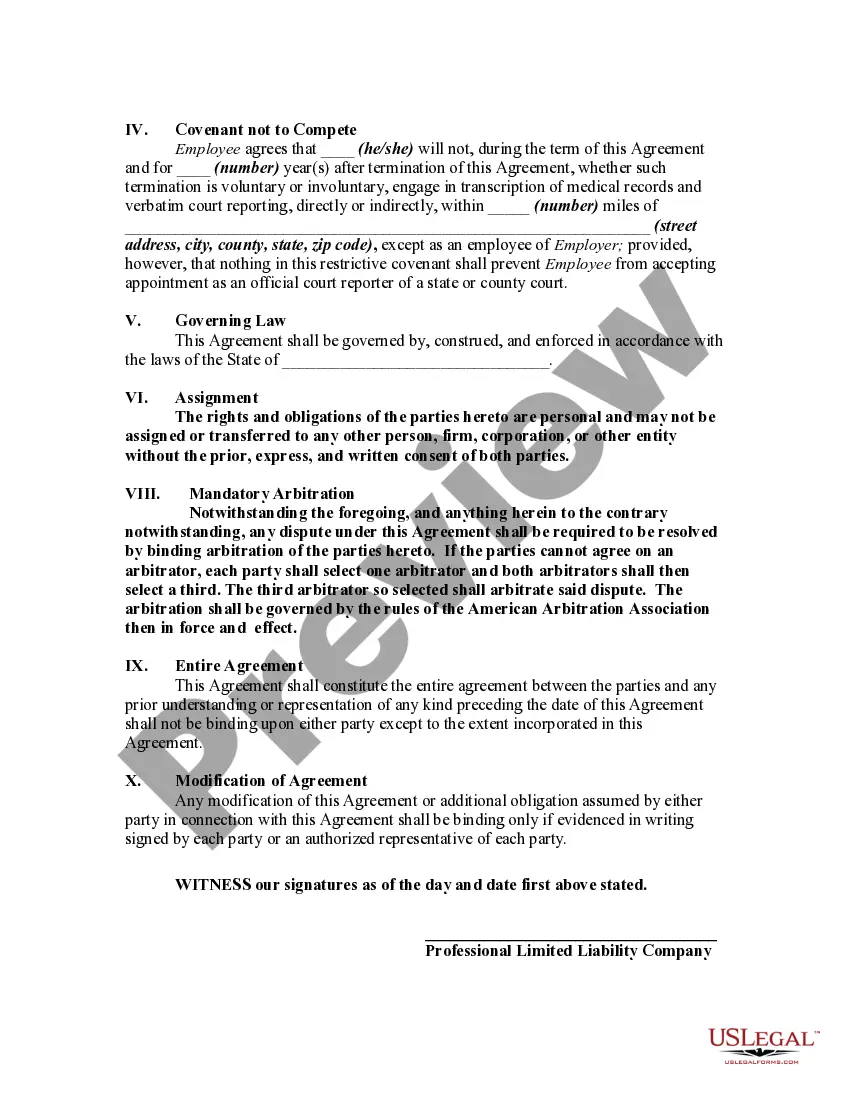
- Covenant not to compete, limiting the employee's ability to work with competitors.
- Governing law, which specifies the legal jurisdiction applicable to the agreement.
- Dispute resolution through mandatory arbitration.

Situations where this form applies
This form should be used when hiring a verbatim reporter and transcriber for specific tasks such as the transcription of medical records, reporting trials, and documenting depositions, conferences, or conventions. It is essential when there is a need to formalize the employment agreement and ensure confidentiality of sensitive information.
Who should use this form
- Employers seeking to hire verbatim reporters and transcribers.
- Professional agencies providing reporting services.
- Individuals involved in legal or medical documentation requiring transcription services.
- Any organization hosting conferences or other events needing transcript documentation.
How to complete this form
- Identify the parties by entering the names and addresses of the Employee and Employer.
- Specify the employment term, including start and renewal conditions.
- Outline the employee's duties and responsibilities in detail.
- Fill in the terms of the covenant not to compete, including distance and duration.
- Include the governing law information based on the applicable state.
- Ensure both parties sign and date the agreement to validate it.
Does this document require notarization?
Notarization is not commonly needed for this form. However, certain documents or local rules may make it necessary. Our notarization service, powered by Notarize, allows you to finalize it securely online anytime, day or night.
Get your form ready online
Our built-in tools help you complete, sign, share, and store your documents in one place.
Make edits, fill in missing information, and update formatting in US Legal Forms—just like you would in MS Word.
Download a copy, print it, send it by email, or mail it via USPS—whatever works best for your next step.
Sign and collect signatures with our SignNow integration. Send to multiple recipients, set reminders, and more. Go Premium to unlock E-Sign.
If this form requires notarization, complete it online through a secure video call—no need to meet a notary in person or wait for an appointment.
We protect your documents and personal data by following strict security and privacy standards.

Make edits, fill in missing information, and update formatting in US Legal Forms—just like you would in MS Word.

Download a copy, print it, send it by email, or mail it via USPS—whatever works best for your next step.

Sign and collect signatures with our SignNow integration. Send to multiple recipients, set reminders, and more. Go Premium to unlock E-Sign.

If this form requires notarization, complete it online through a secure video call—no need to meet a notary in person or wait for an appointment.

We protect your documents and personal data by following strict security and privacy standards.
Avoid these common issues
- Failing to specify employee duties, which can lead to misunderstandings.
- Not including the effective date of the agreement.
- Leaving out the governing law, which may cause legal issues later.
- Ignoring the notice requirements for non-renewal of the agreement.
Advantages of online completion
- Convenience of downloading and customizing the form from anywhere.
- Editability allows users to tailor the contract to specific needs.
- Access to expert-drafted templates ensures legal reliability.
- Streamlined process saves time compared to drafting from scratch.
Looking for another form?

Form popularity
FAQ
Today's stenographers use stenotype machines that enable shorthand writing. These stenotype machines work by typing in syllables rather than letters. Writing a word like calendar only requires 3 strokes instead of the 8 we use on a regular keyboard.
"Notes" usually refers to the entire stenographic record of one session. a notation which means that the original transcript plus one copy is being made of a transcript. "O & 5" would mean the original plus five copies are being ordered.
Rather than typing out words, a stenotype machine produces a phonetic code that relates to sound. The reporter's left hand types the beginning consonant sounds, thumbs produce vowel sounds, and the right hand types the final consonant sounds.
The steno has 22 keys, all of which are unmarked. Each of the keys represents a sound. So, instead of typing out the way a word is actually spelled, court reporters use combinations of keys to type the way the word sounds phonetically.
A stenographer is actually a trained transcriptionist, meaning they record spoken word into written copy; and they do it fast.This machine works by pressing multiple keys simultaneously (known as chording or stroking) to spell out whole syllables, words, and phrases with a single hand motion.
The transcripts that are generated by court reporters are used to carry out those reviews because they identify each person who spoke during the proceedings in a trial, and provide a verbatim record of exactly what each participant said.
Court reporters play a critical role in legal proceedings, which require an exact record of what was said. They are responsible for producing a complete, accurate, and secure legal transcript of courtroom proceedings, witnesses' testimonies, and depositions.
A reporter's transcript is a word-for-word typed record of everything that was said in court during the trial or hearing. A reporter's transcript is only available if a court reporter was present during the trial court proceedings and made a record of what was said in those proceedings.