Notice to Take Deposition - Discovery
Overview of this form
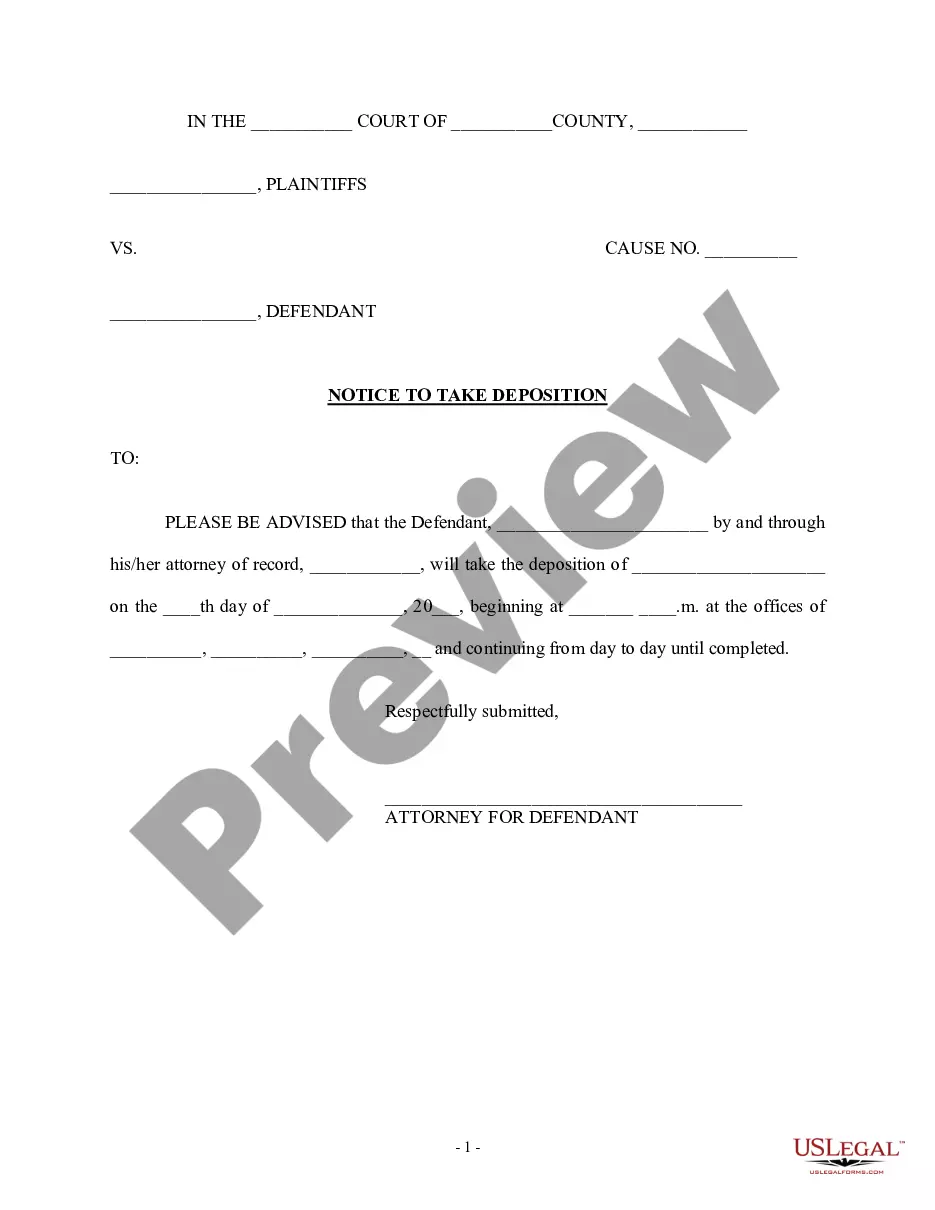
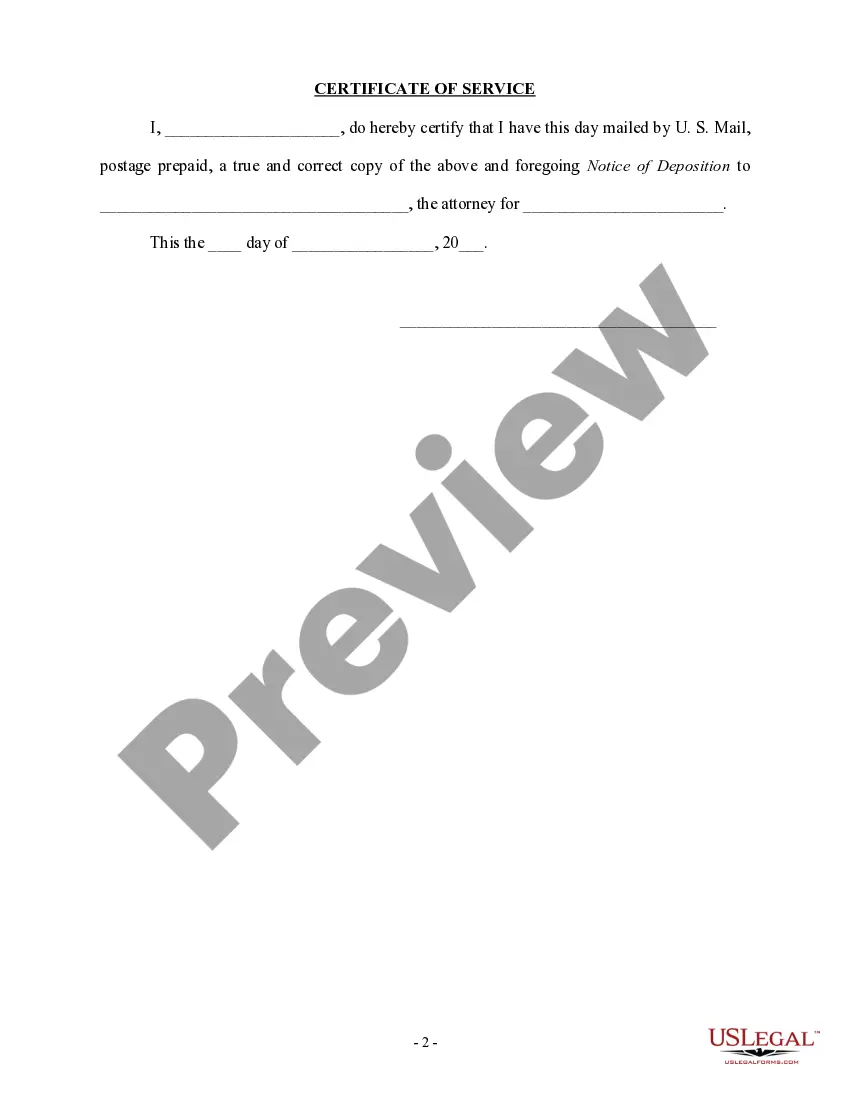
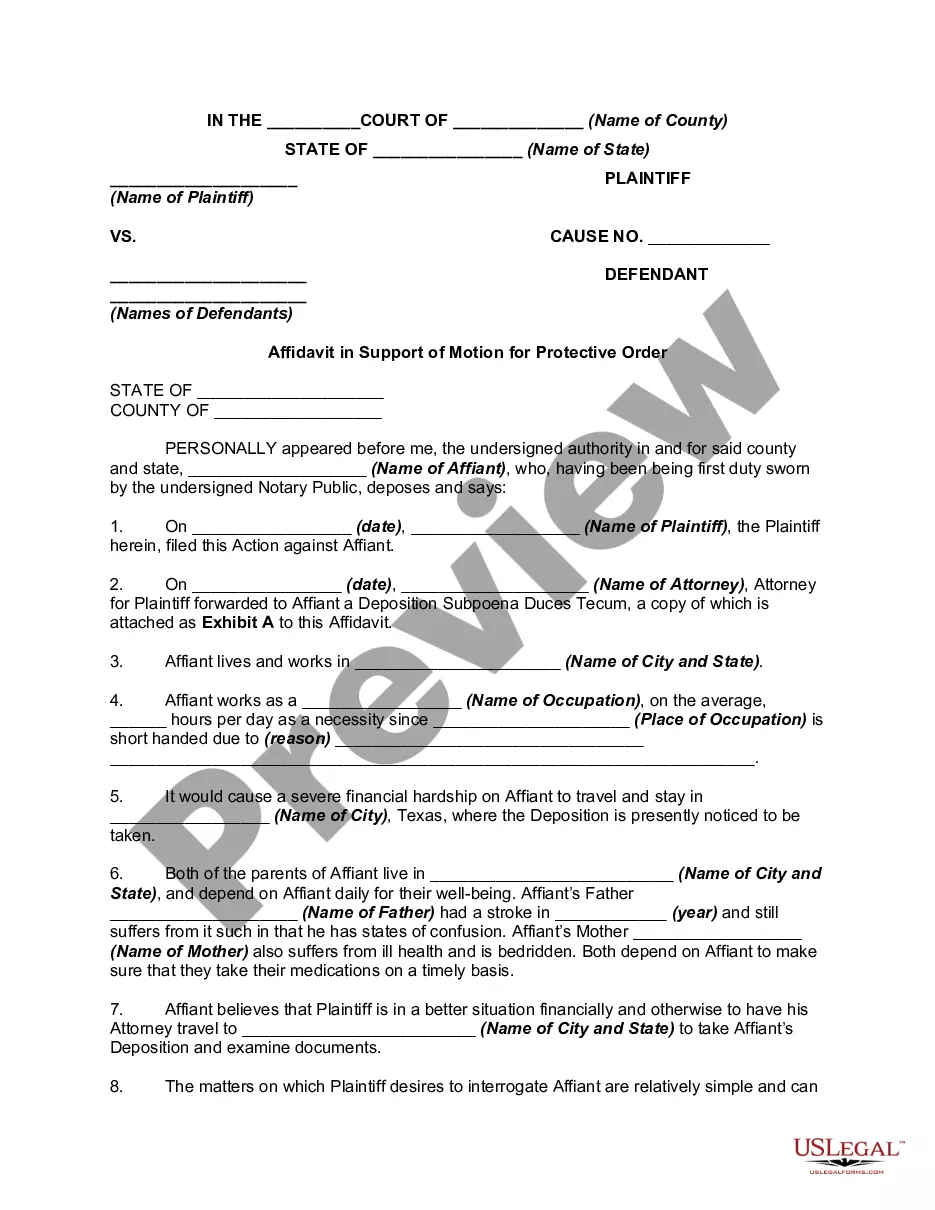
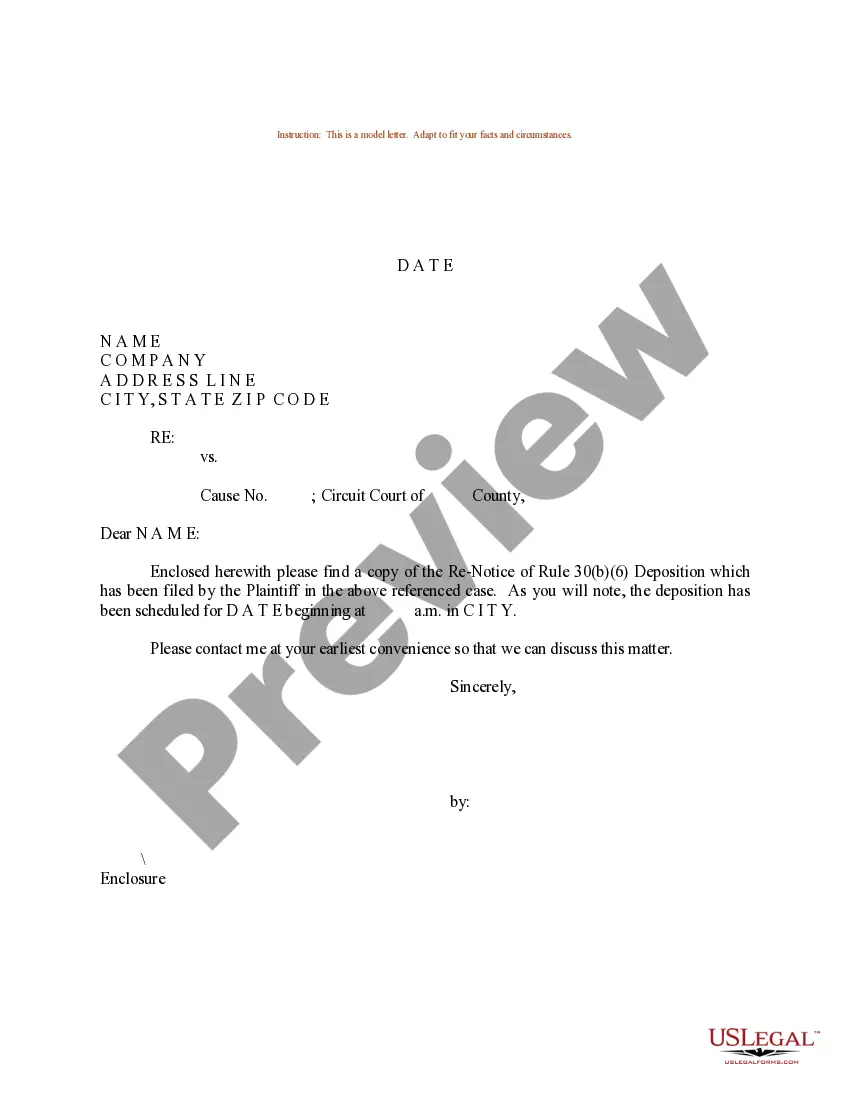
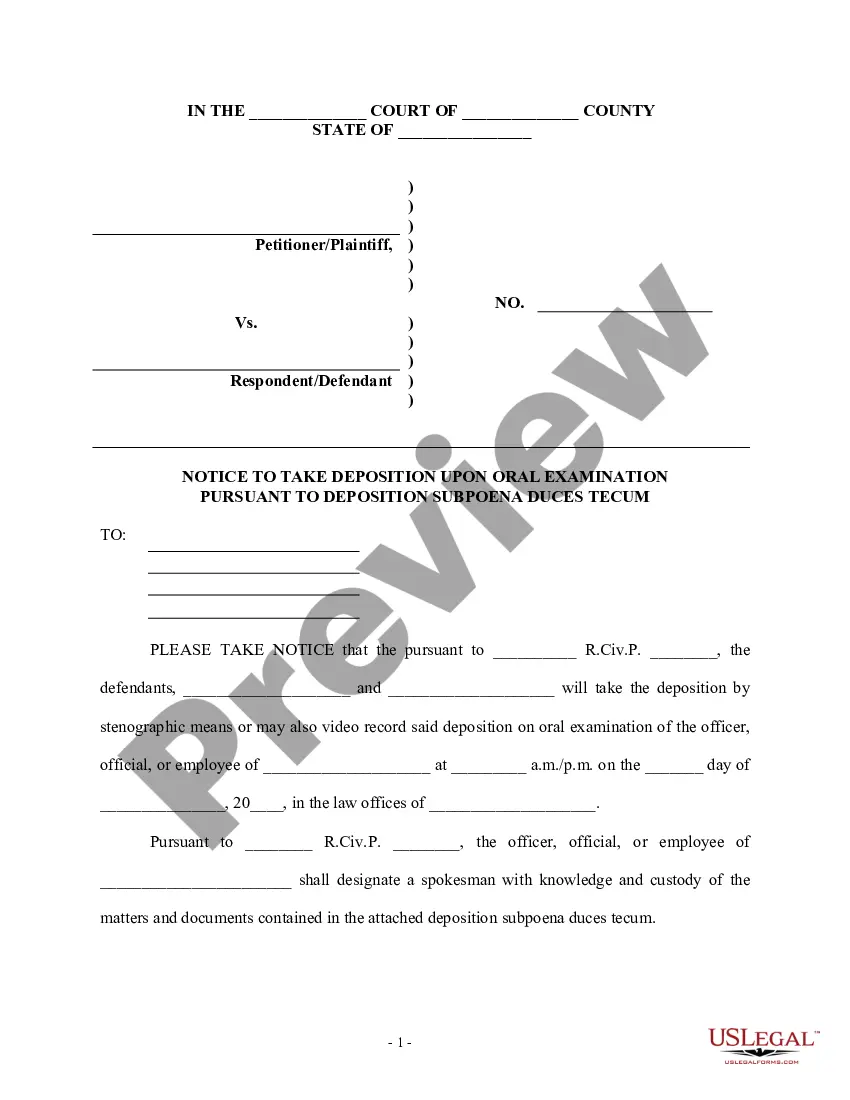
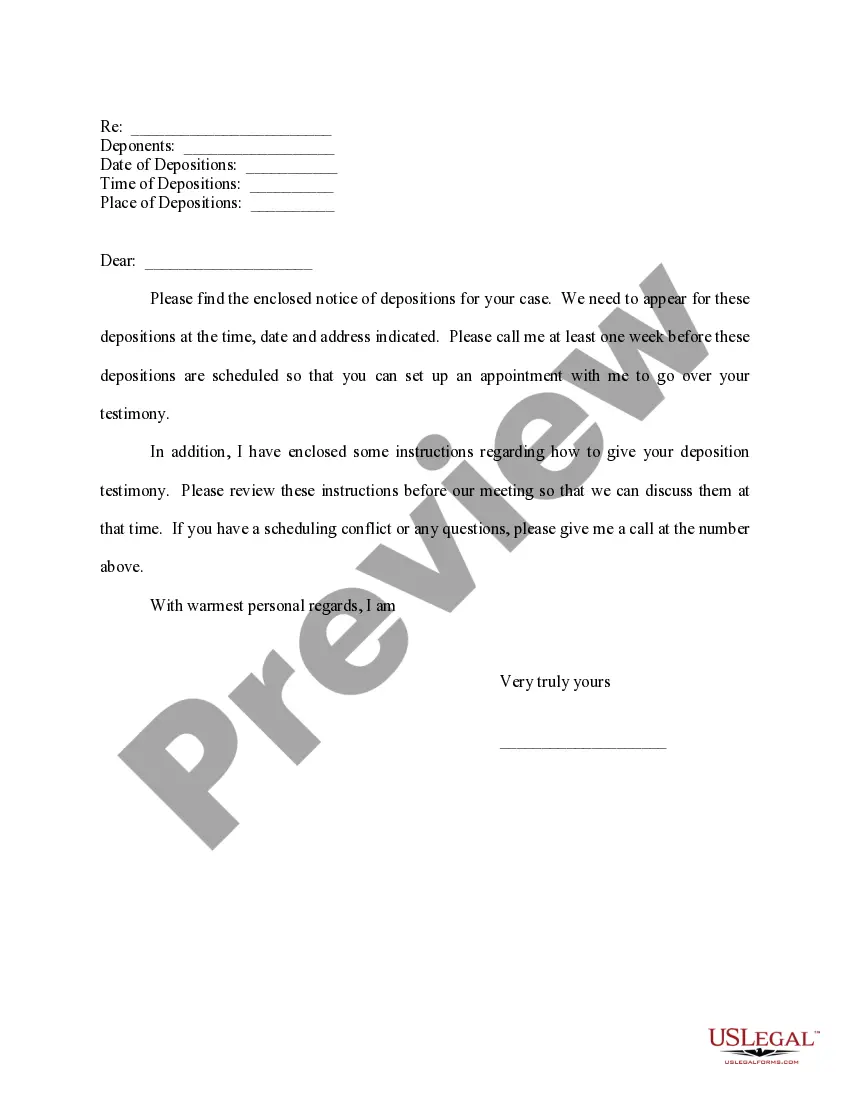
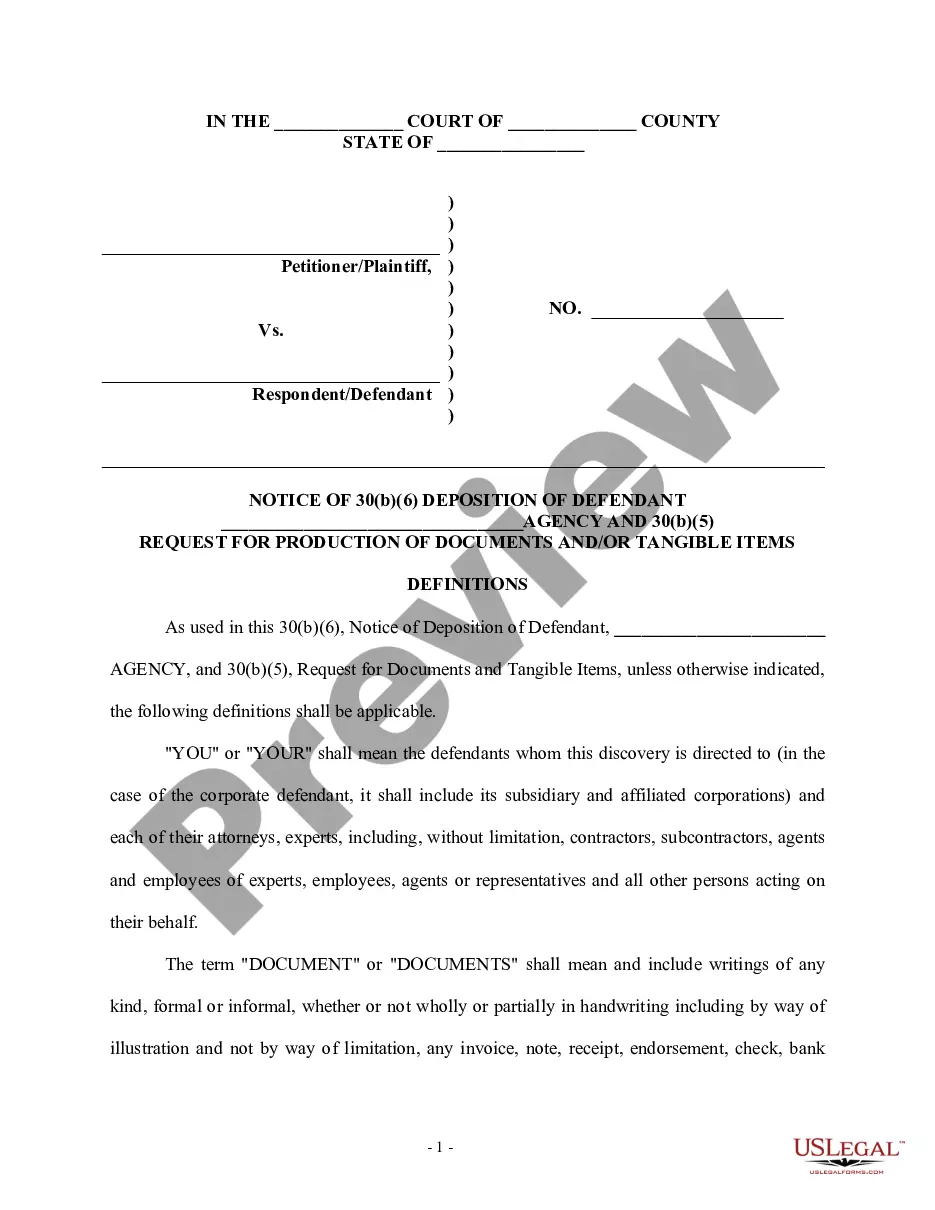
The Notice to Take Deposition is a legal document that allows the defendant to inform the other party that they will be taking depositions of witnesses. This form is essential for gathering testimony during the discovery phase of litigation. Unlike other forms related to depositions, this specific notice includes a Certificate of Service, ensuring that all parties are properly notified about the depositions planned by the defendant.
Form components explained
- Caption: Identifies the parties involved and the case number.
- Notice details: Specifies the date, time, and location of the deposition.
- Defendant's information: Includes the name of the defendant and their attorney.
- Certificate of Service: Confirms that a copy of the notice was sent to the opposing party's attorney.
When this form is needed
This form should be used when a defendant intends to take depositions as part of the legal discovery process. It is useful in various scenarios, such as preparing for trial, gathering evidence, or clarifying facts in a case. By filing this notice, the defendant ensures compliance with legal requirements and provides proper notice to all parties involved.
Who this form is for
- Defendants in a civil lawsuit seeking to take depositions.
- Attorneys representing defendants in legal matters.
- Individuals involved in litigation who need to gather witness testimonies.
How to complete this form
- Identify the parties involved in the case and fill in the caption with their names.
- Enter the case number in the designated field.
- Provide the names and contact information of the defendant and their attorney.
- Specify the date and time of the deposition, along with the location.
- Complete the Certificate of Service to confirm that the notice has been mailed to the other party's attorney.
Does this document require notarization?
This form usually doesn’t need to be notarized. However, local laws or specific transactions may require it. Our online notarization service, powered by Notarize, lets you complete it remotely through a secure video session, available 24/7.
Get your form ready online
Our built-in tools help you complete, sign, share, and store your documents in one place.
Make edits, fill in missing information, and update formatting in US Legal Forms—just like you would in MS Word.
Download a copy, print it, send it by email, or mail it via USPS—whatever works best for your next step.
Sign and collect signatures with our SignNow integration. Send to multiple recipients, set reminders, and more. Go Premium to unlock E-Sign.
If this form requires notarization, complete it online through a secure video call—no need to meet a notary in person or wait for an appointment.
We protect your documents and personal data by following strict security and privacy standards.

Make edits, fill in missing information, and update formatting in US Legal Forms—just like you would in MS Word.

Download a copy, print it, send it by email, or mail it via USPS—whatever works best for your next step.

Sign and collect signatures with our SignNow integration. Send to multiple recipients, set reminders, and more. Go Premium to unlock E-Sign.

If this form requires notarization, complete it online through a secure video call—no need to meet a notary in person or wait for an appointment.

We protect your documents and personal data by following strict security and privacy standards.
Typical mistakes to avoid
- Failing to provide the correct date and time for the deposition.
- Not including the names of all parties involved in the notice.
- Omitting the Certificate of Service or not properly documenting the mailing.
Benefits of completing this form online
- Convenient access: Download and complete the form from anywhere.
- Editability: Easily modify the form as necessary before submission.
- Reliability: Forms are drafted by licensed attorneys to ensure compliance with legal standards.
Quick recap
- The Notice to Take Deposition facilitates the gathering of witness testimonies during the discovery phase.
- Proper completion of this form ensures compliance with legal notifications and procedures.
- Understanding the requirements and timing for filing this notice is crucial for effective legal strategy.
Looking for another form?
Form popularity
FAQ
That disclosure is accomplished through a methodical process called "discovery." Discovery takes three basic forms: written discovery, document production and depositions. See 's Stages of a Personal Injury Case section for related articles and resources.
The deposition is part of the discovery process and may be used at trial. The discovery process is a pre-trial phase. It is a formal investigation conducted to uncover more about the case. It can also drive the opposing sides to come to a settlement without having to go to trial.
Step 1: Determine the Date and Location of the Deposition In most types of cases, for the deposition of a party to the case, you must provide at least 10 days' notice if personally served, and 15 days' notice if served by mail within California (California Code of Civil Procedure (CCP) § 2025.270(a), A§ 1013).
Discovery depositions are used for the purpose of exploring the facts that are not only relevant to the case, but also will lead to the discovery of additional evidence.
What Is a Notice of Deposition? A document directing a witness to appear to answer questions under oath is called a notice of deposition. The notice includes a time and place where the examination is to occur. The notice is sent to all parties in a lawsuit so that everyone involved has been given notice of the event.
Discovery enables the parties to know before the trial begins what evidence may be presented.One of the most common methods of discovery is to take depositions. A deposition is an out-of-court statement given under oath by any person involved in the case. It is to be used at trial or in preparation for trial.
A deposition is a witness's sworn out-of-court testimony. It is used to gather information as part of the discovery process and, in limited circumstances, may be used at trial. The witness being deposed is called the "deponent."
A deposition is the legal term for a formal, recorded, question and answer session which occurs when the witness is under oath. A deposition generally serves two purposes: (1) find out what you know; and (2) preserve your testimony for later use (either in motions to be filed with the Court or at trial).
Discovery, in the law of common law jurisdictions, is a pre-trial procedure in a lawsuit in which each party, through the law of civil procedure, can obtain evidence from the other party or parties by means of discovery devices such as interrogatories, requests for production of documents, requests for admissions and