Motion for State to Produce Names of Witnesses
Overview of this form
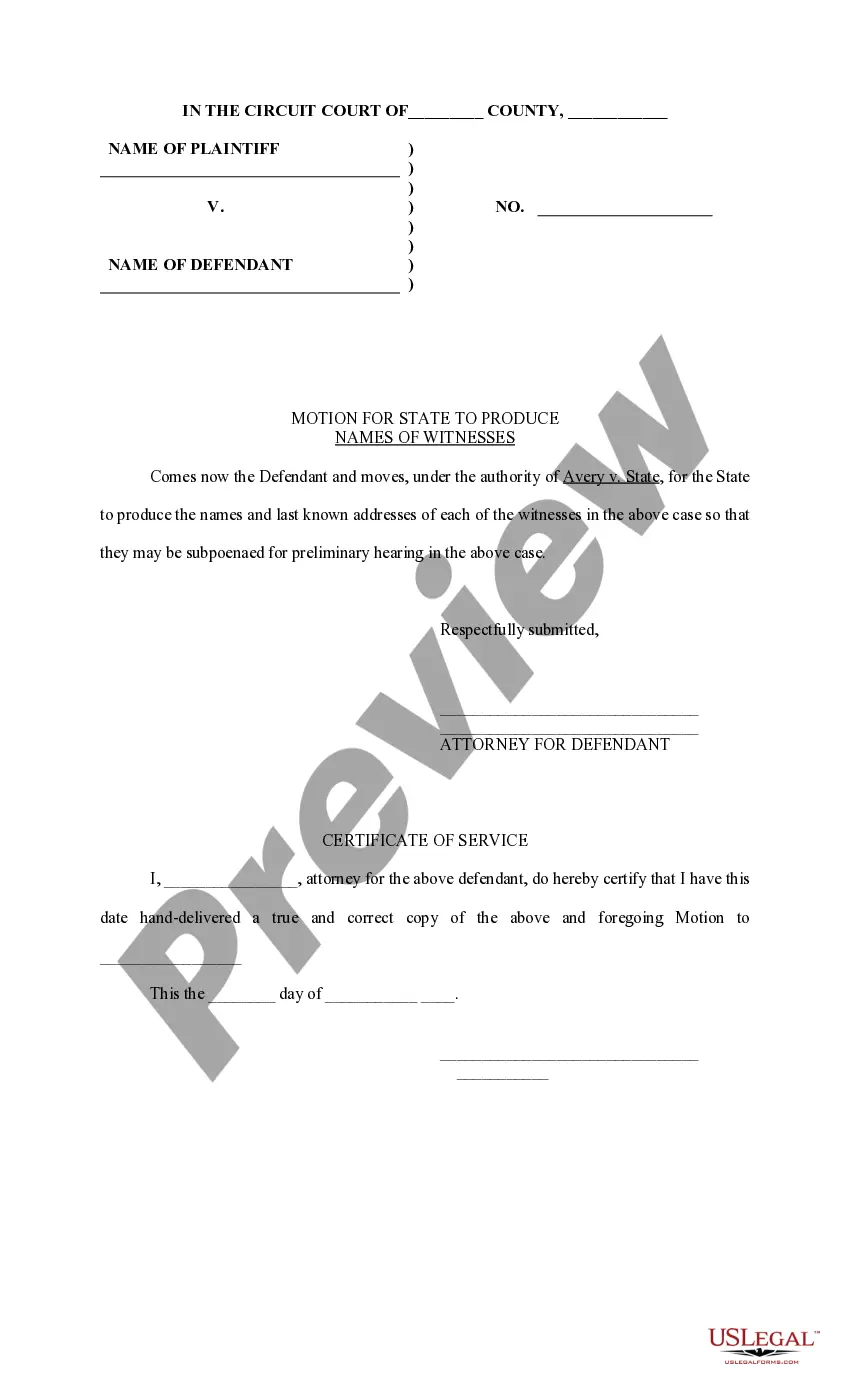
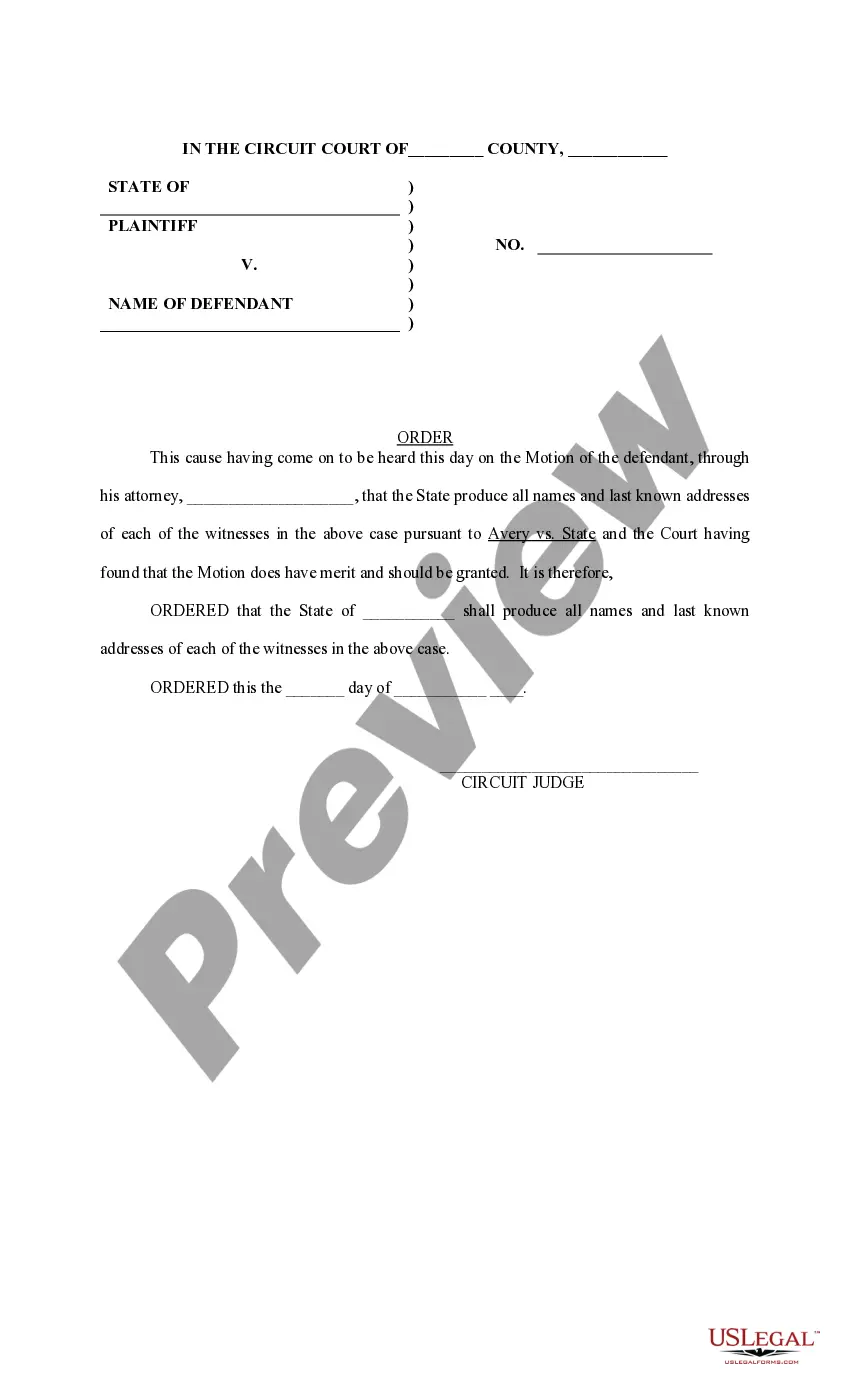
The Motion for State to Produce Names of Witnesses is a legal document that allows the Defendant to request the state to disclose the names and addresses of witnesses involved in a case. This motion is essential for the Defendant to effectively subpoena witnesses for a preliminary hearing, ensuring a fair trial process. Unlike other motions, this specific form focuses solely on obtaining witness information, which is crucial for the Defendant's legal strategy.
Form components explained
- Identification of the Defendant and case details.
- Request for the names and last known addresses of state witnesses.
- Citation of legal authority supporting the request (Avery v. State).
- Signature block for the Defendant's attorney.
- Certificate of service indicating delivery of the motion.
Situations where this form applies
This form should be used when a Defendant is preparing for a preliminary hearing and needs to obtain the names and addresses of witnesses the state intends to call. It is particularly useful in criminal cases where witness testimony is vital for the Defendant's case strategy. Filing this motion helps ensure the Defendant has the opportunity to prepare adequately for the hearing.
Who needs this form
- Defendants facing criminal charges.
- Attorneys representing defendants in need of witness information.
- Individuals involved in a legal situation where witness testimonies are critical.
Steps to complete this form
- Enter the Defendant's name and relevant case information at the top of the motion.
- Request the state to provide the names and addresses of witnesses clearly and accurately.
- Cite the legal authority, such as Avery v. State, to support your request.
- Have the Defendant's attorney sign the motion in the designated area.
- Complete the certificate of service, indicating that the motion was delivered to all relevant parties.
Does this document require notarization?
This form does not typically require notarization unless specified by local law. Always check your jurisdiction's rules for any specific requirements.
Get your form ready online
Our built-in tools help you complete, sign, share, and store your documents in one place.
Make edits, fill in missing information, and update formatting in US Legal Forms—just like you would in MS Word.
Download a copy, print it, send it by email, or mail it via USPS—whatever works best for your next step.
Sign and collect signatures with our SignNow integration. Send to multiple recipients, set reminders, and more. Go Premium to unlock E-Sign.
If this form requires notarization, complete it online through a secure video call—no need to meet a notary in person or wait for an appointment.
We protect your documents and personal data by following strict security and privacy standards.

Make edits, fill in missing information, and update formatting in US Legal Forms—just like you would in MS Word.

Download a copy, print it, send it by email, or mail it via USPS—whatever works best for your next step.

Sign and collect signatures with our SignNow integration. Send to multiple recipients, set reminders, and more. Go Premium to unlock E-Sign.

If this form requires notarization, complete it online through a secure video call—no need to meet a notary in person or wait for an appointment.

We protect your documents and personal data by following strict security and privacy standards.
Avoid these common issues
- Failing to include all necessary case details.
- Not citing the legal authority adequately.
- Missing the signature of the Defendant's attorney.
- Neglecting to properly complete the certificate of service.
Benefits of using this form online
- Convenient access from any device, allowing quick downloads.
- Editable templates that can be customized to fit specific needs.
- Reliable formats that meet legal standards across jurisdictions.
What to keep in mind
- The Motion for State to Produce Names of Witnesses is essential for obtaining witness information in criminal cases.
- Completing the form accurately is crucial to avoid common mistakes.
- The form can be used across all states but may have specific local procedures that need to be followed.
Looking for another form?



Form popularity
FAQ
Go to the courthouse where the case is pending and ask the clerk to see the court file. They should let you look at it while you are in the room.
The purpose of discovery is to allow the parties to obtain full knowledge of the issues and facts of the lawsuit before going to trial. An experienced family law attorney will use discovery to help you identify the various strengths and weaknesses of each side of the case.
Explain to the judge that you asked the plaintiff to give you documents and, they did not. Tell the judge why you need the documents. Ask the judge to order the plaintiff to give you the documents you requested.
A lay witness the most common type is a person who watched certain events and describes what they saw. An expert witness is a specialist someone who is educated in a certain area. A character witness is someone who knew the victim, the defendant, or other people involved in the case.
In the United States, such a witness is "more than likely to be true based on his/her experience, knowledge, training and appearance of honesty and forthrightness...." Some factors for determining the credibility of testimony in U.S. courts include: (1) the witness had personal knowledge, (2) he or she was actually
Discovery in a criminal case refers to the exchange of evidence and statements between opposing sides of a case.Typically, a defense attorney will file a Notice of Appearance, informing the Court and the prosecutor of his or her role in the case, and a Discovery Demand requesting particular information.
That disclosure is accomplished through a methodical process called "discovery." Discovery takes three basic forms: written discovery, document production and depositions.
Discovery, in the law of common law jurisdictions, is a pre-trial procedure in a lawsuit in which each party, through the law of civil procedure, can obtain evidence from the other party or parties by means of discovery devices such as interrogatories, requests for production of documents, requests for admissions and