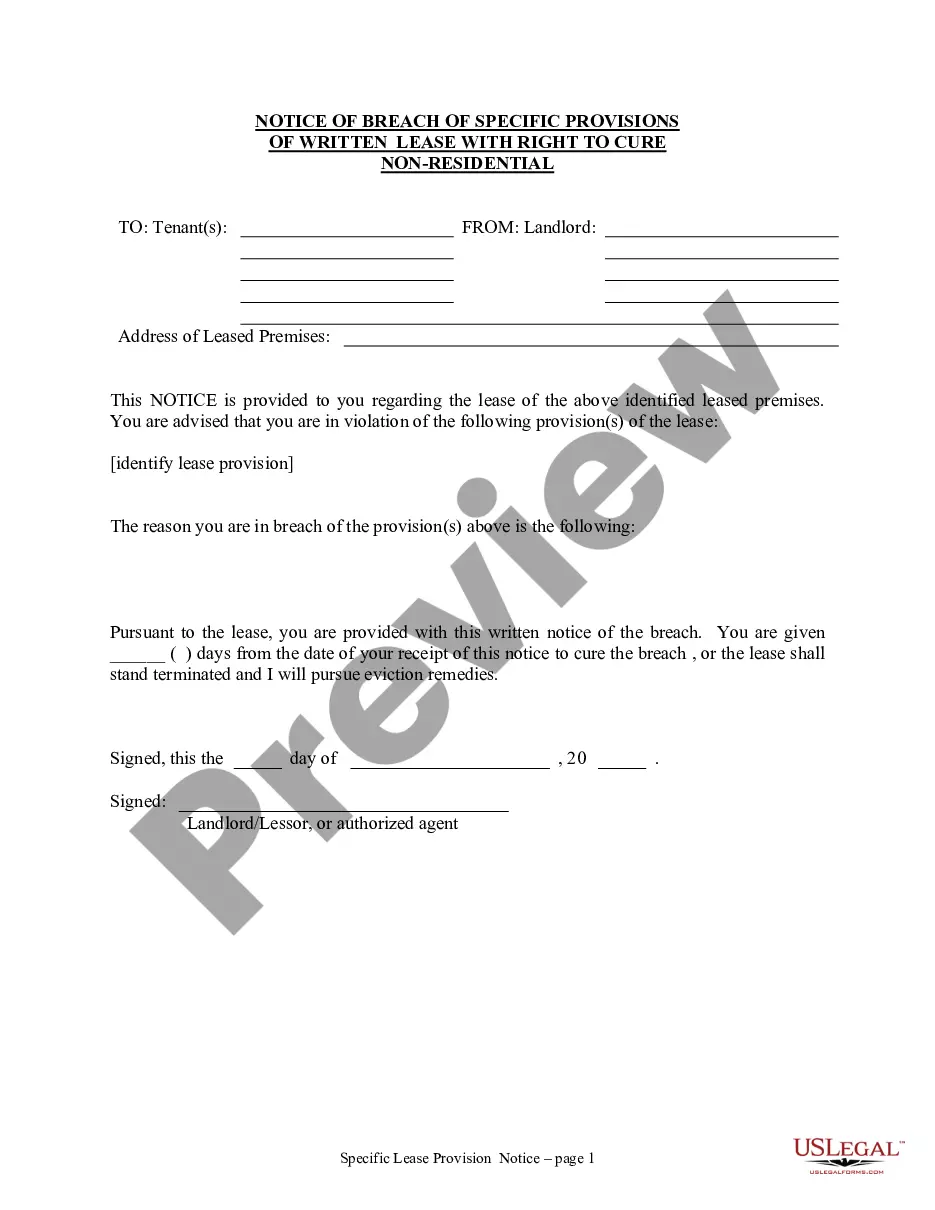
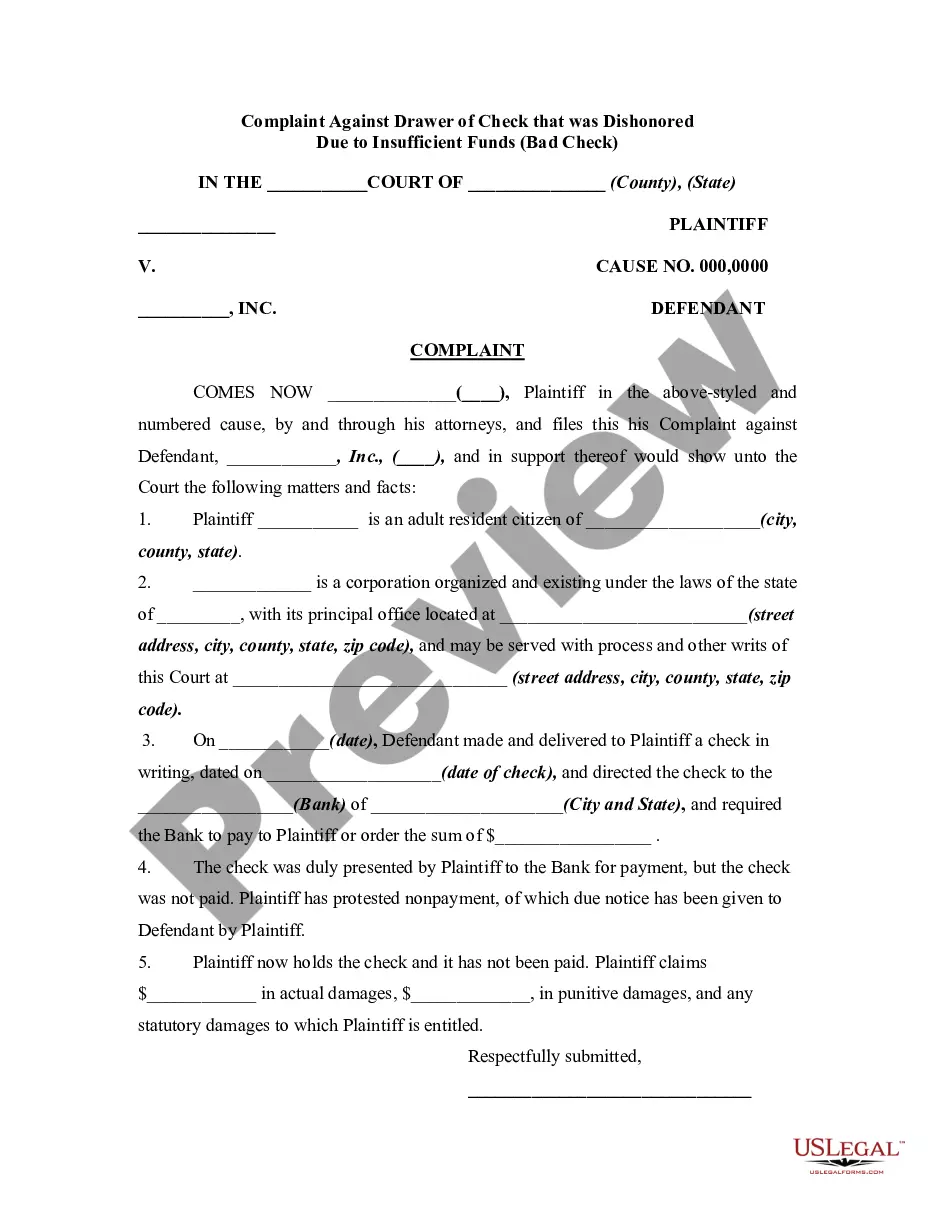
Complaint Against Drawer of Check that was Dishonored Due to Insufficient Funds (Bad Check)
About this form
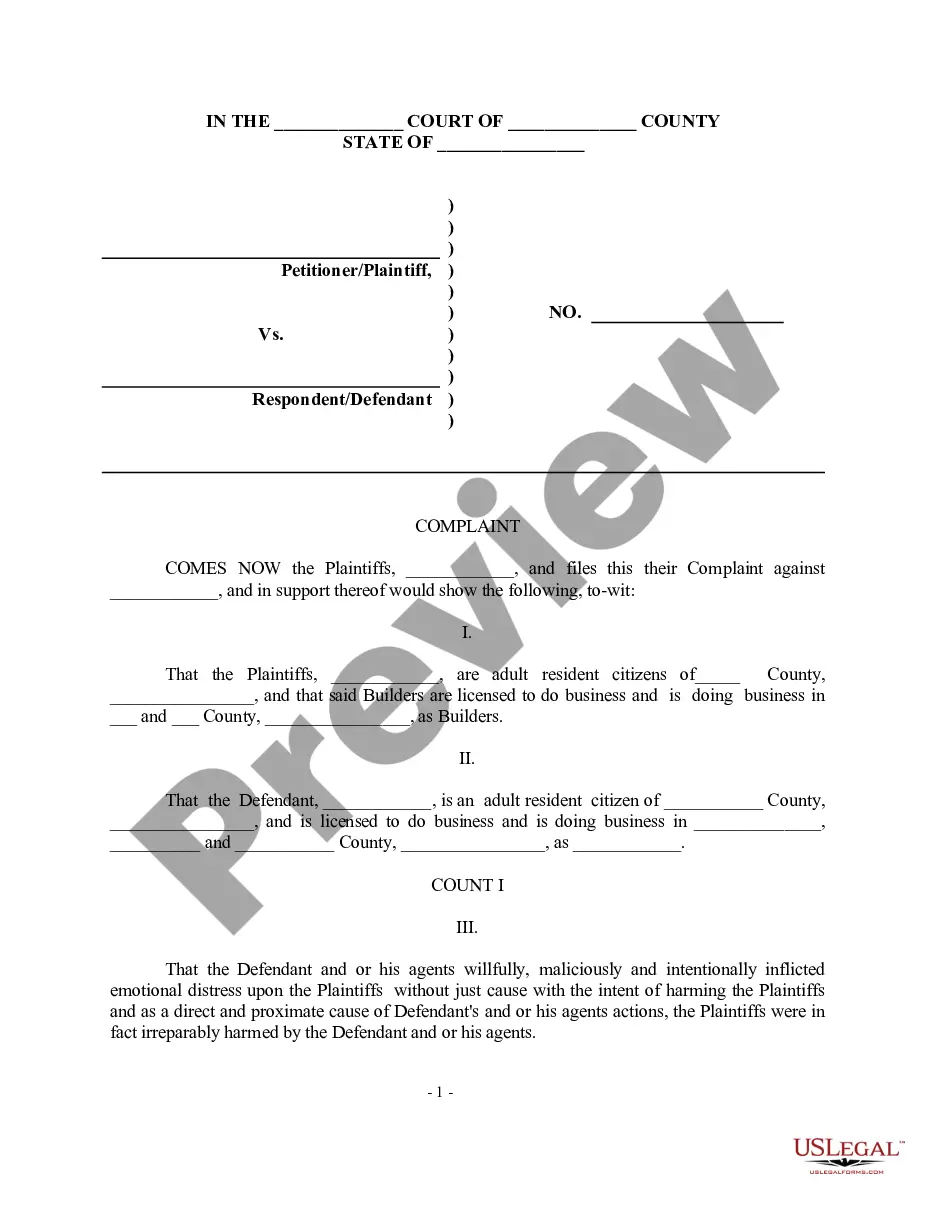
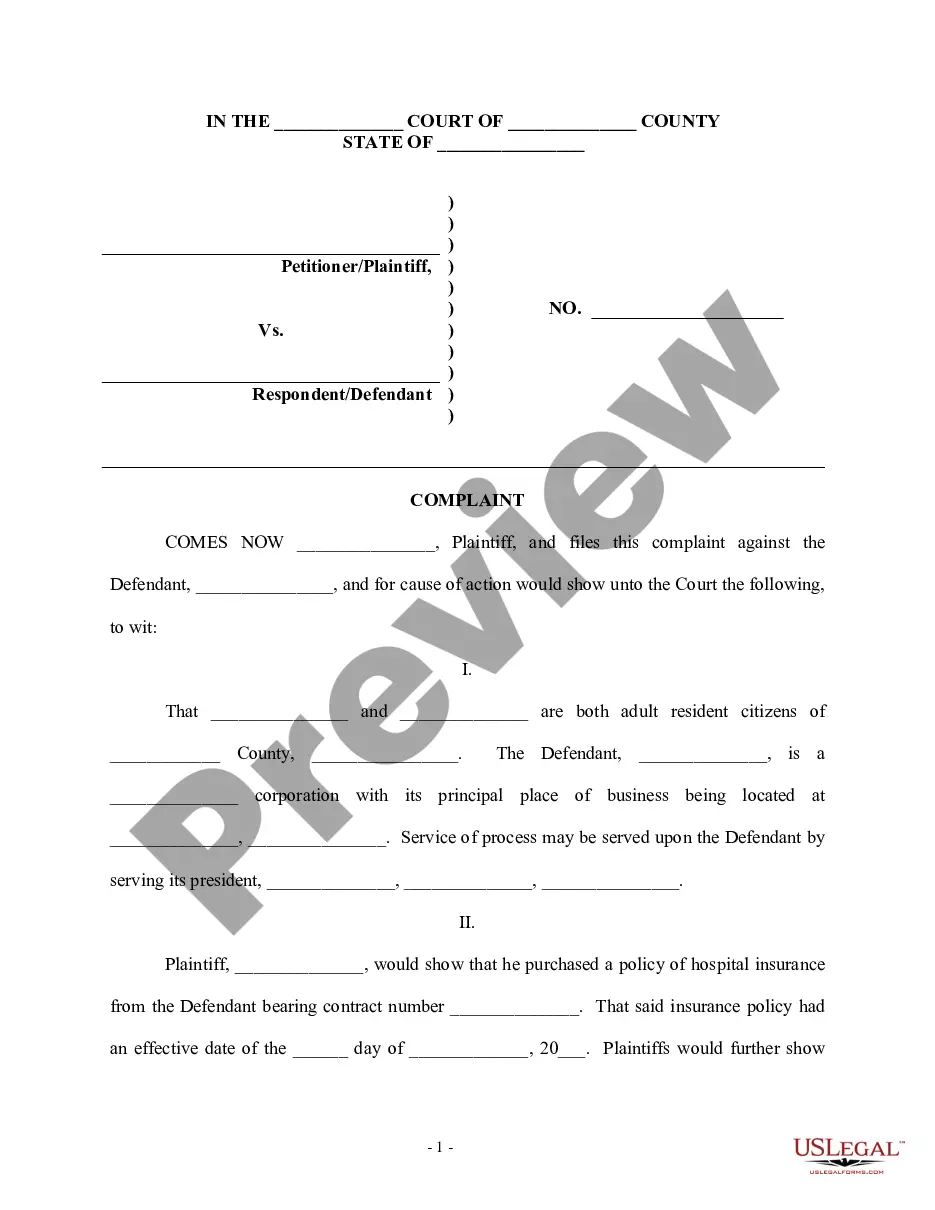
The Complaint Against Drawer of Check that was Dishonored Due to Insufficient Funds is a legal document used to initiate a lawsuit against an individual or entity that issued a check that was not honored by the bank due to insufficient funds. This form details the claim for damages resulting from the non-payment of the check, enabling the plaintiff to seek compensation for the amount owed and any additional penalties. This form differs from other forms related to checks, such as those used for bank disputes, because it specifically addresses the legal action taken against the check issuer.
Key parts of this document
- Plaintiff and defendant identification.
- Details of the check, including date and amount.
- Notification of non-payment to the defendant.
- Claim for actual and punitive damages.
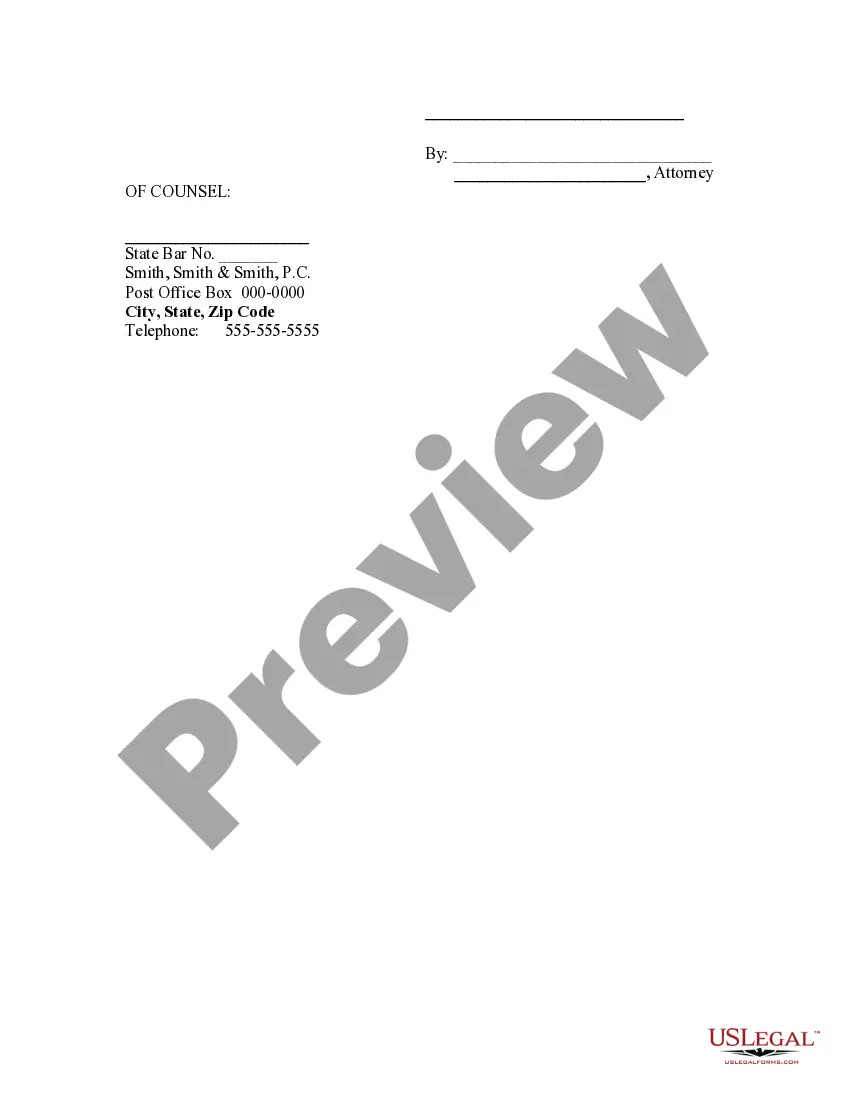
- Signature and attorney information.


When to use this document
This form should be used when an individual or a business has received a check that has been dishonored due to insufficient funds. If you have made attempts to collect on this debt through communication and payment requests but have not received payment, this complaint can be formally filed to seek legal recourse.
Who can use this document
- Individuals or businesses that have received a bounced check from a client or customer.
- Anyone who has made attempts to collect payment but has been unsuccessful.
- Plaintiffs seeking legal redress for losses due to non-payment of a check.
How to complete this form
- Identify the parties involved by filling in the plaintiff and defendant details, including their legal names and addresses.
- Enter the date when the check was written and the amount it was supposed to cover.
- Provide information about the bank on which the check was drawn and the city and state of that bank.
- Include details about any communications made to notify the defendant of the non-payment.
- Specify the amounts being claimed as damages.
- Sign the complaint and provide your attorney's contact information, if applicable.
Does this document require notarization?
Notarization is not commonly needed for this form. However, certain documents or local rules may make it necessary. Our notarization service, powered by Notarize, allows you to finalize it securely online anytime, day or night.
Get your form ready online
Our built-in tools help you complete, sign, share, and store your documents in one place.
Make edits, fill in missing information, and update formatting in US Legal Forms—just like you would in MS Word.
Download a copy, print it, send it by email, or mail it via USPS—whatever works best for your next step.
Sign and collect signatures with our SignNow integration. Send to multiple recipients, set reminders, and more. Go Premium to unlock E-Sign.
If this form requires notarization, complete it online through a secure video call—no need to meet a notary in person or wait for an appointment.
We protect your documents and personal data by following strict security and privacy standards.

Make edits, fill in missing information, and update formatting in US Legal Forms—just like you would in MS Word.

Download a copy, print it, send it by email, or mail it via USPS—whatever works best for your next step.

Sign and collect signatures with our SignNow integration. Send to multiple recipients, set reminders, and more. Go Premium to unlock E-Sign.

If this form requires notarization, complete it online through a secure video call—no need to meet a notary in person or wait for an appointment.

We protect your documents and personal data by following strict security and privacy standards.
Typical mistakes to avoid
- Failing to include accurate party information, leading to delays in processing.
- Not providing clear documentation of the check and attempts to collect payment.
- Forgetting to include the claim for damages in the form.
- Missing signatures or contact details for the attorney, if represented.
Why use this form online
- Convenience of filling out the form at your own pace from anywhere.
- Editability allows for easy corrections before final submission.
- Reliability of legally vetted templates ensuring compliance with legal standards.
Looking for another form?

Form popularity
FAQ
Dispute The Debt: Ask the debt collector to verify the debt in question. Send a certified letter (and request a return receipt) asking for verification. Keep a copy for your records. The bad check restitution program must respond to you within 30 days or drop the case.
If your bank chooses not to pay a check that you do not have enough funds to cover, it will return the check as unpaid because of nonsufficient funds. The bank will also charge an NSF fee to your account.Some banks may also charge an additional fee for each day your account remains overdrawn.
If you are given a bad check, you can sue for the amount of the check plus bank fees. You can also add damages to your claim.
Contact Your Customer. The first step to take in reporting a bad check is to contact your customer by phone or by mail. Contact the Bank. Notify Credit Reporting Services. Contact the Better Business Bureau. Contact the Police.
As defined under California Penal Code Section 476a, writing a check while knowing that funds are insufficient can be charged as a misdemeanor offense that can result in sentence of up to one year in county jail.
Whether you write or receive a bounced check also called a nonsufficient funds, or NSF, check it will cost you.If you receive and deposit a check that bounces, you'll owe a fee to your bank for returning the check, in addition to having the headache of recovering the money you're due.
Send the letter certified mail. Visit your local district attorney's office if you do not hear back from the debtor. Bring your correspondence with you and a copy of the bad check. He will take the case over, and likely prosecute the check writer.
If the bad check writer does not honor the check, you may proceed by going to small claims court to pursue the case yourself. States determine the total value of damages that fall under this type of court, which is usually $5,000. Instead, you may pursue a civil lawsuit.
When there are insufficient funds in an account, and a bank decides to bounce a check, it charges the account holder an NSF fee. If the bank accepts the check, but it makes the account negative, the bank charges an overdraft (OD) fee. If the account stays negative, the bank may charge an extended overdraft fee.