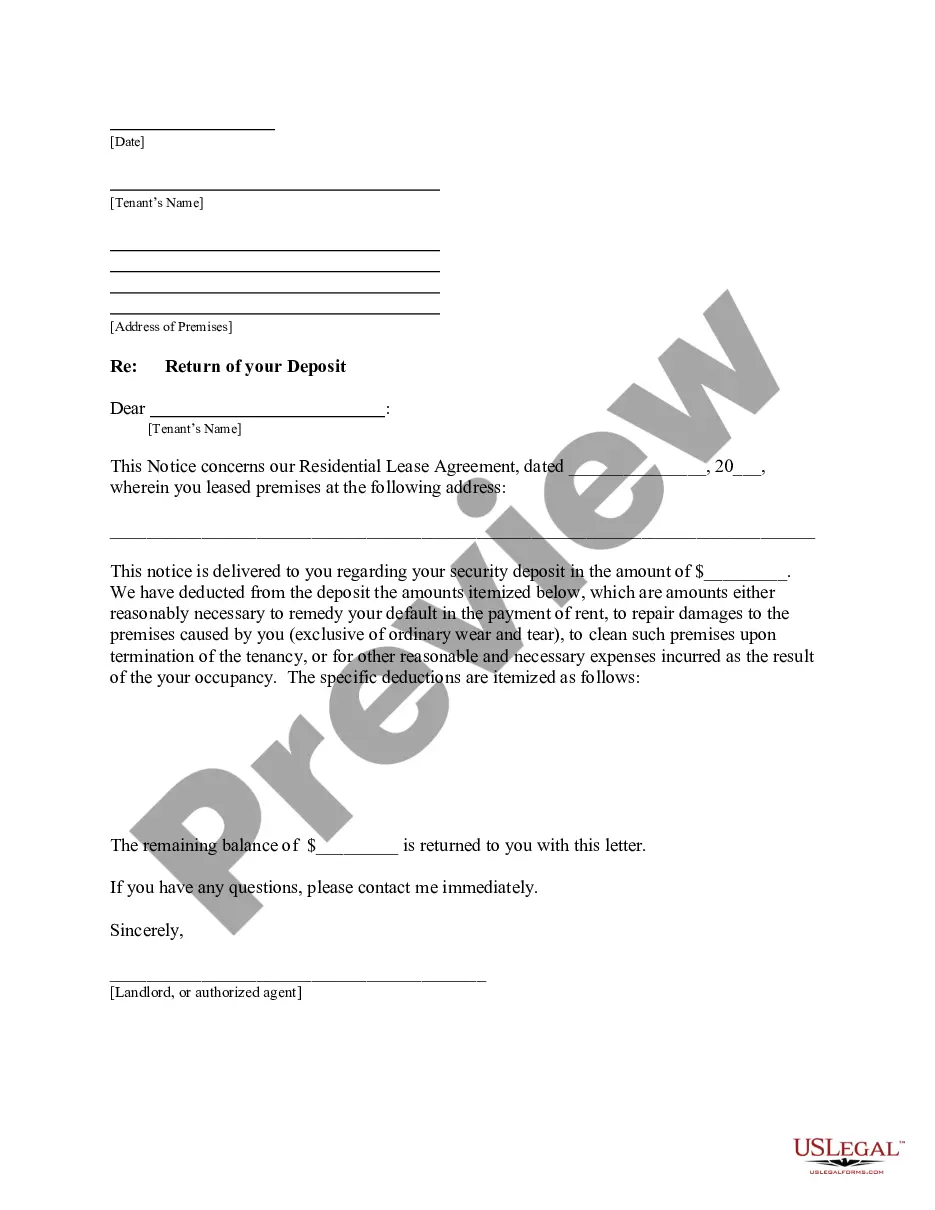
Lease of Business Premises - Real Estate Rental
What is this form?
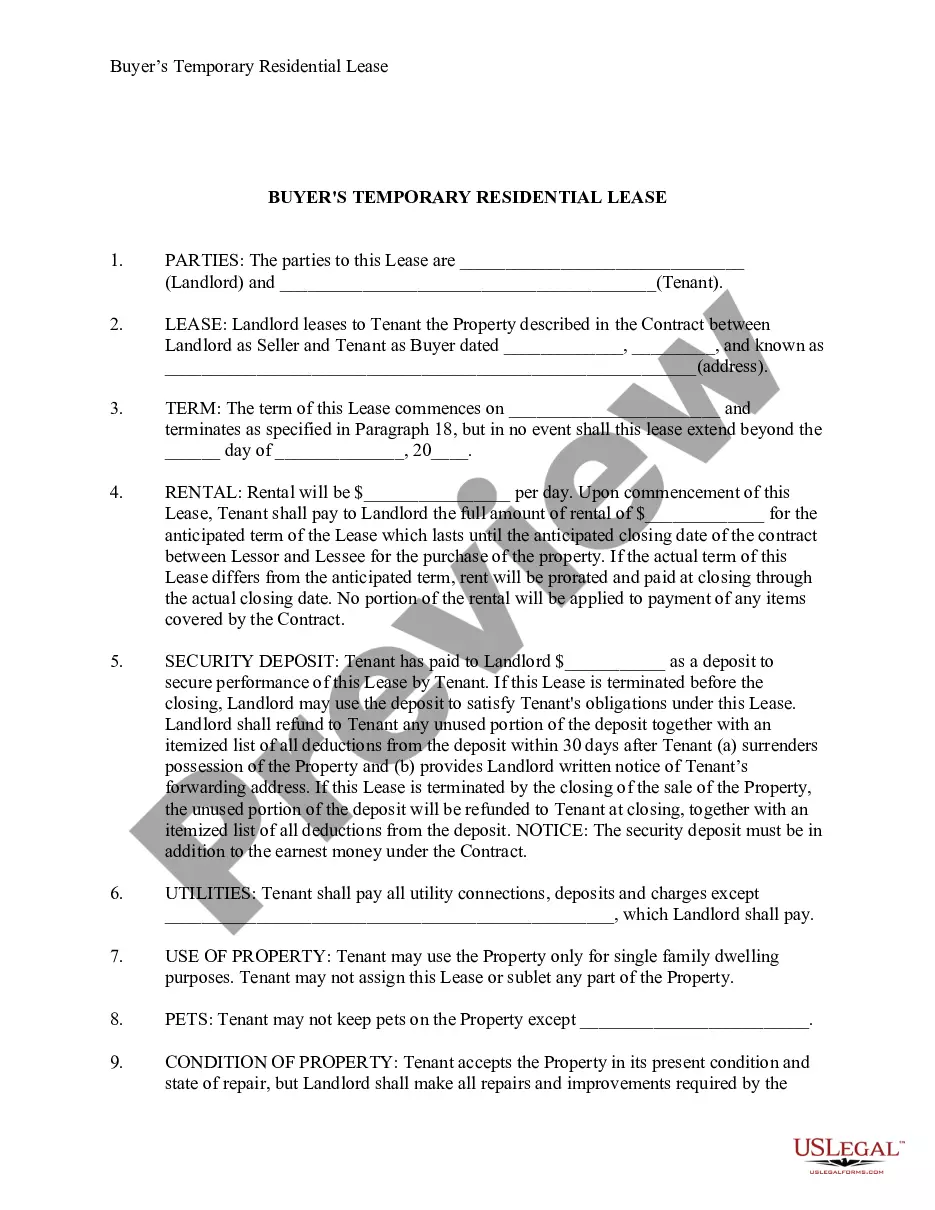
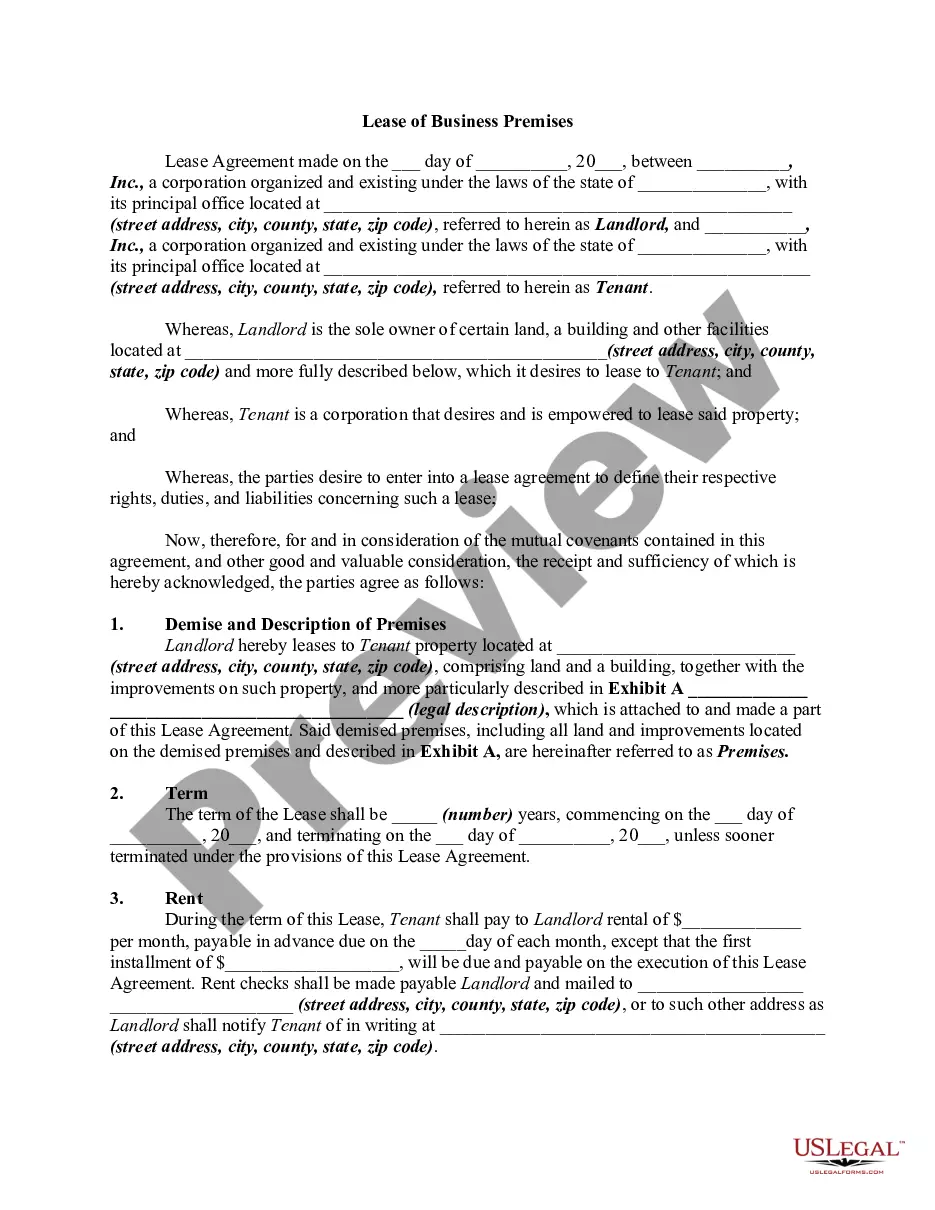
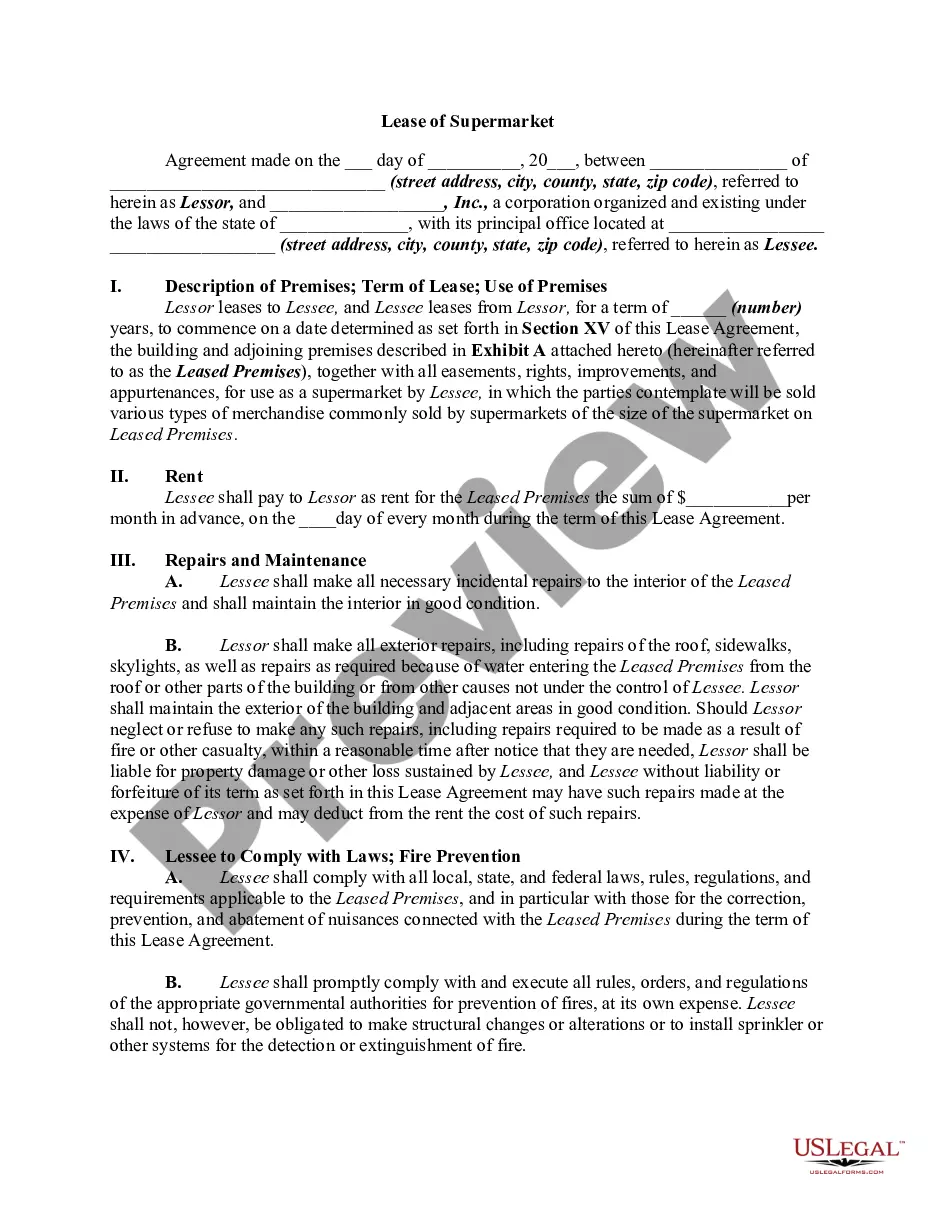
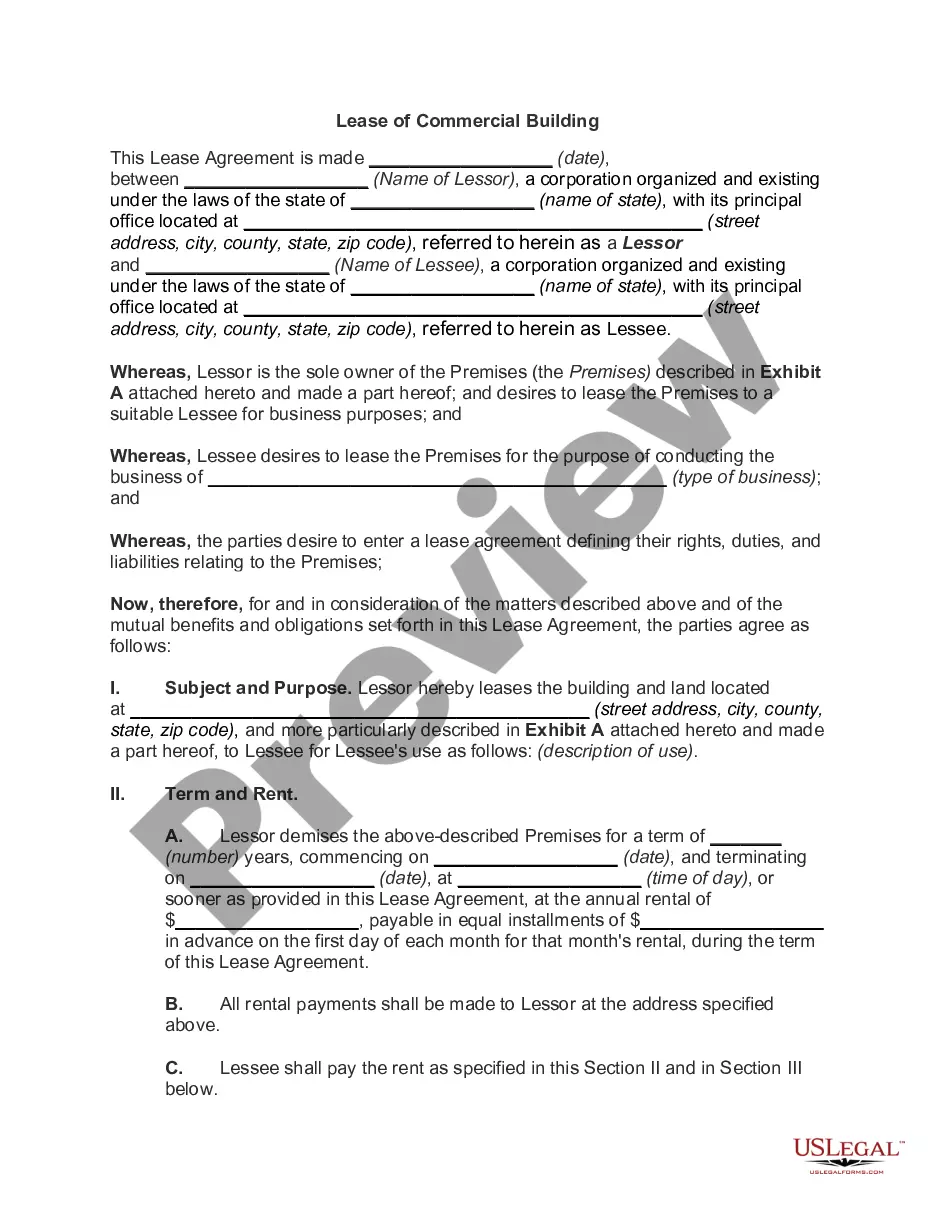
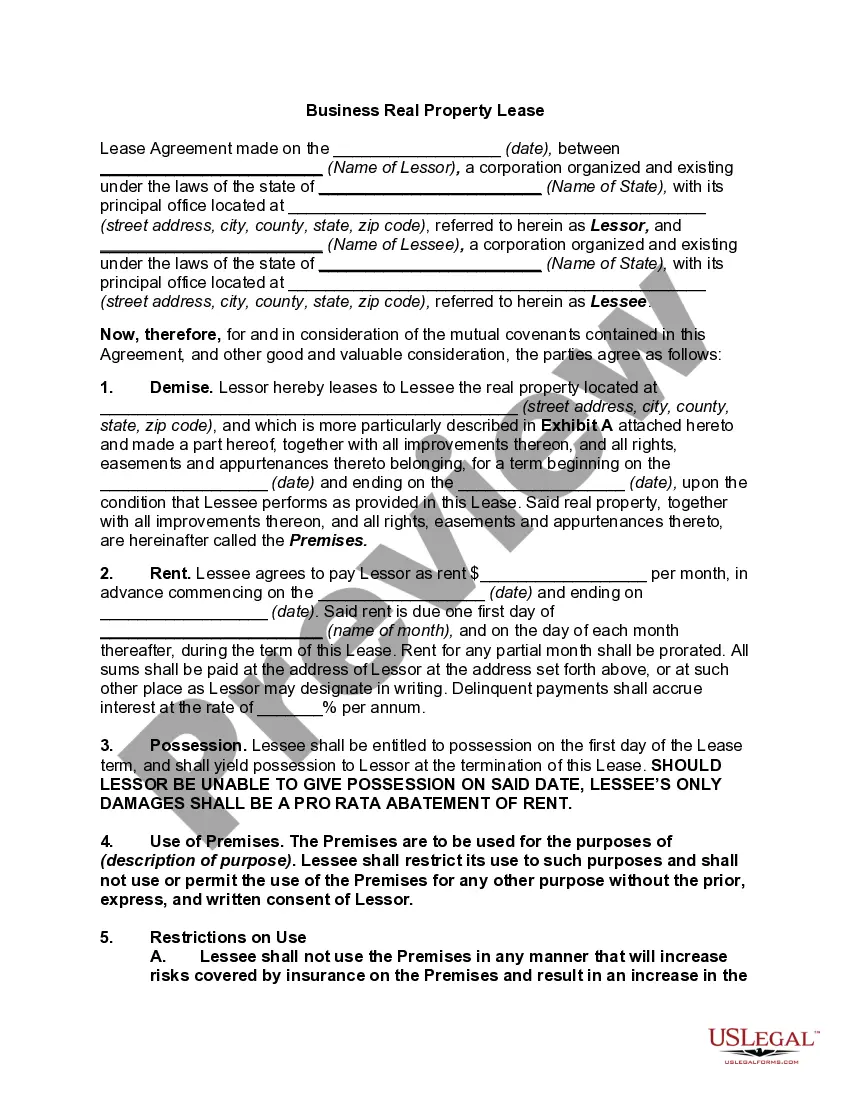
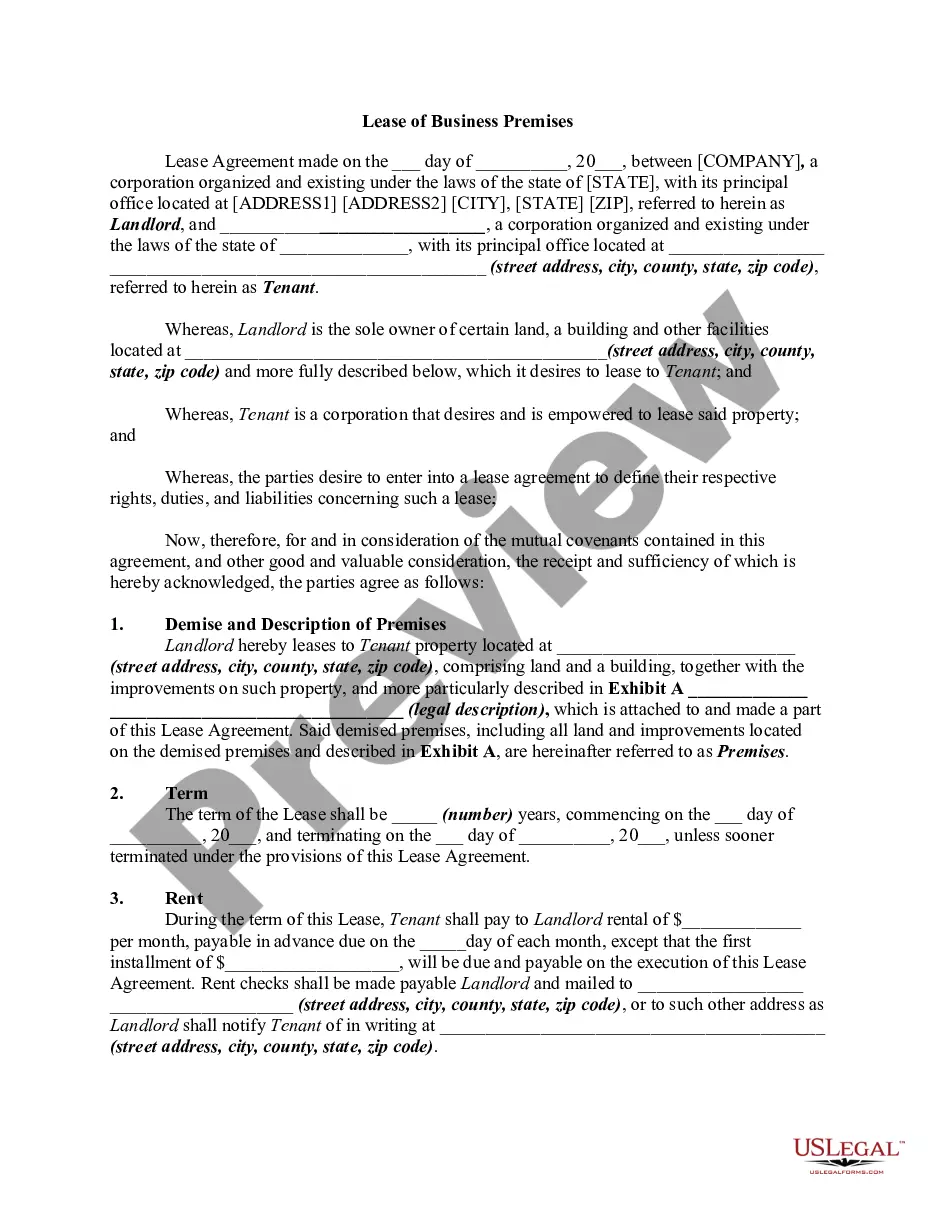
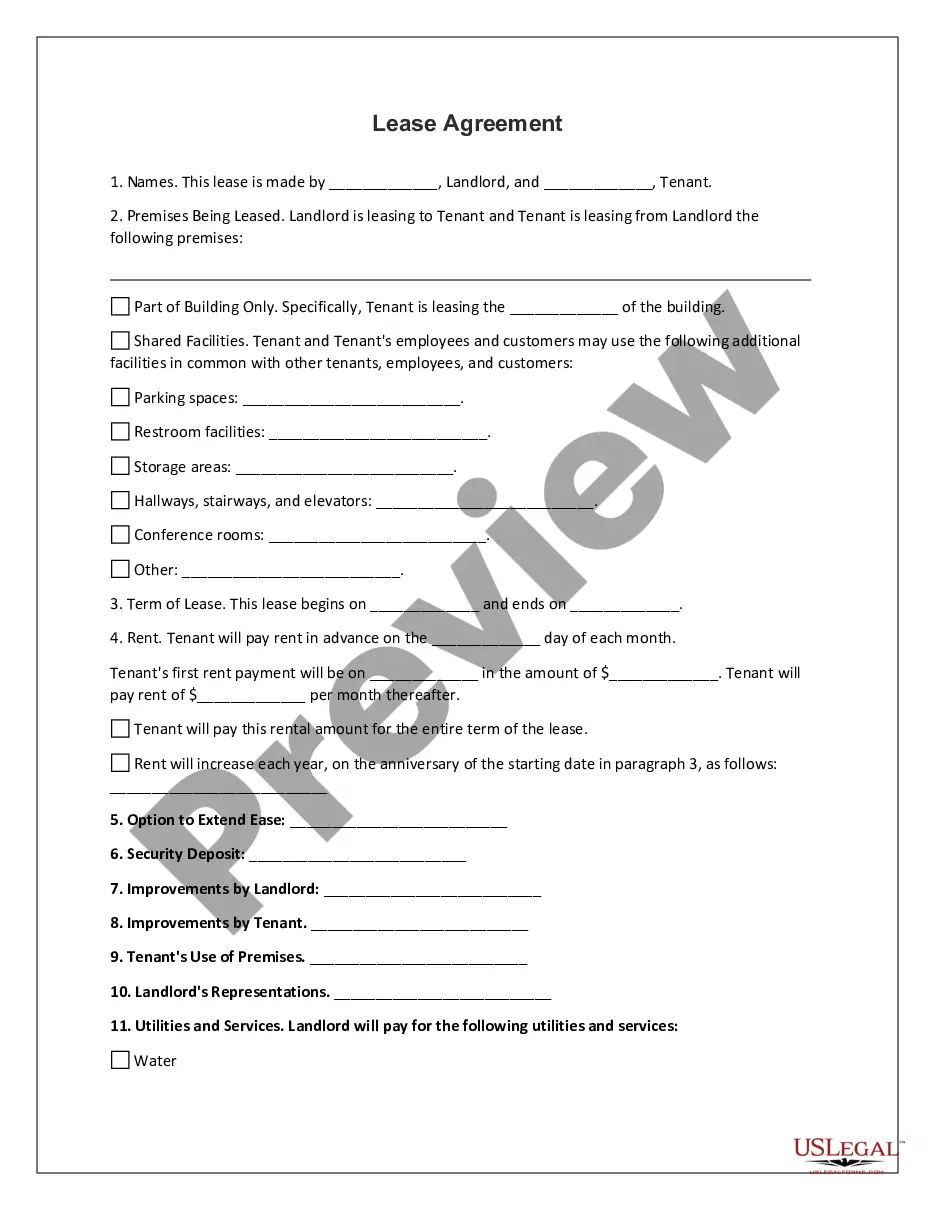
This Lease of Business Premises form is a legal document that outlines the terms under which a landlord rents property to a business tenant. Unlike residential lease agreements, this form specifically addresses commercial leasing, catering to businesses that require facilities for various purposes. The form clarifies the responsibilities, rights, and obligations of both the landlord and tenant, ensuring a clear understanding for both parties involved in the rental agreement.
Key parts of this document
- Demise and description of premises: Specifies the property being leased.
- Term: Details the duration of the lease agreement.
- Rent: Outlines rental payment terms, including amount and due dates.
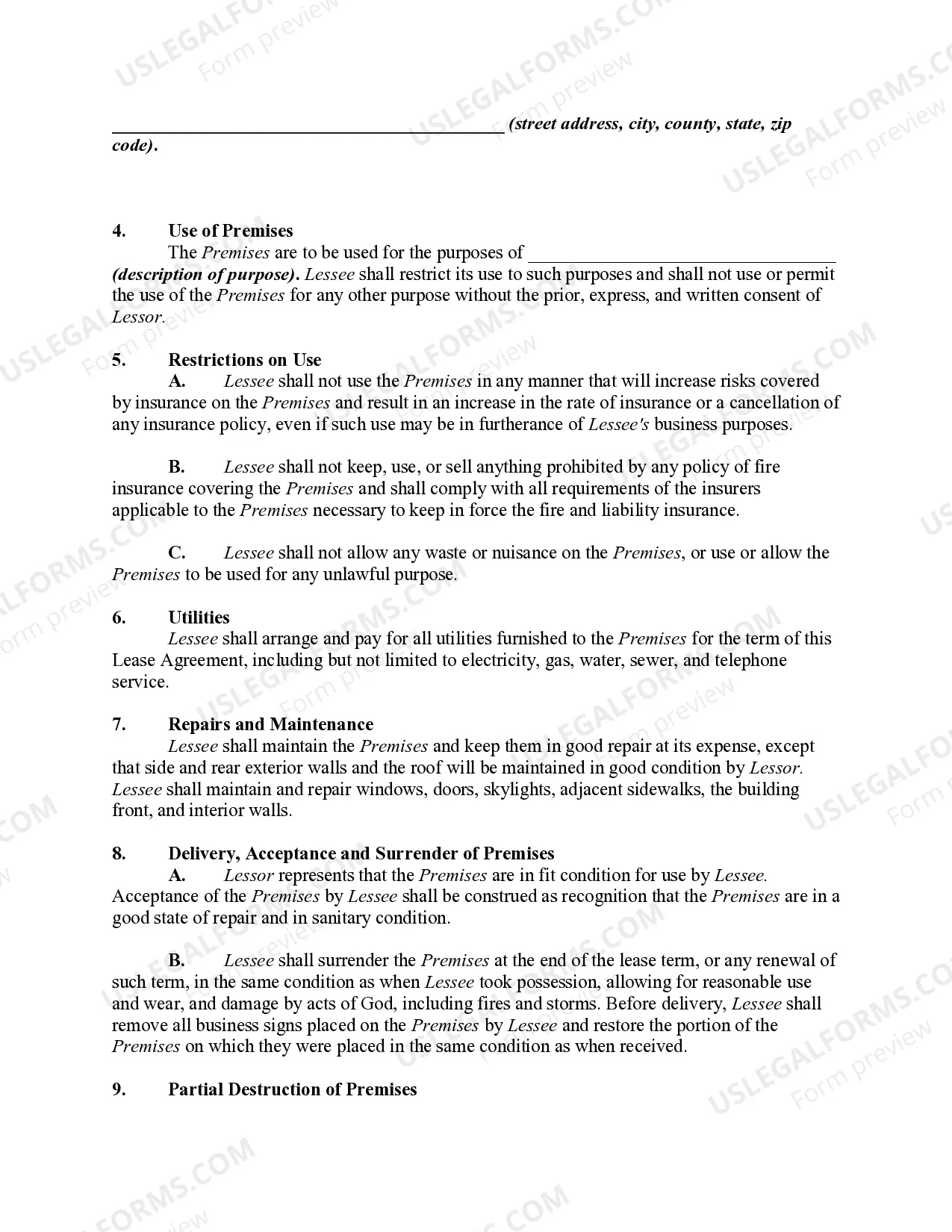
- Use of premises: Describes permissible uses of the property.
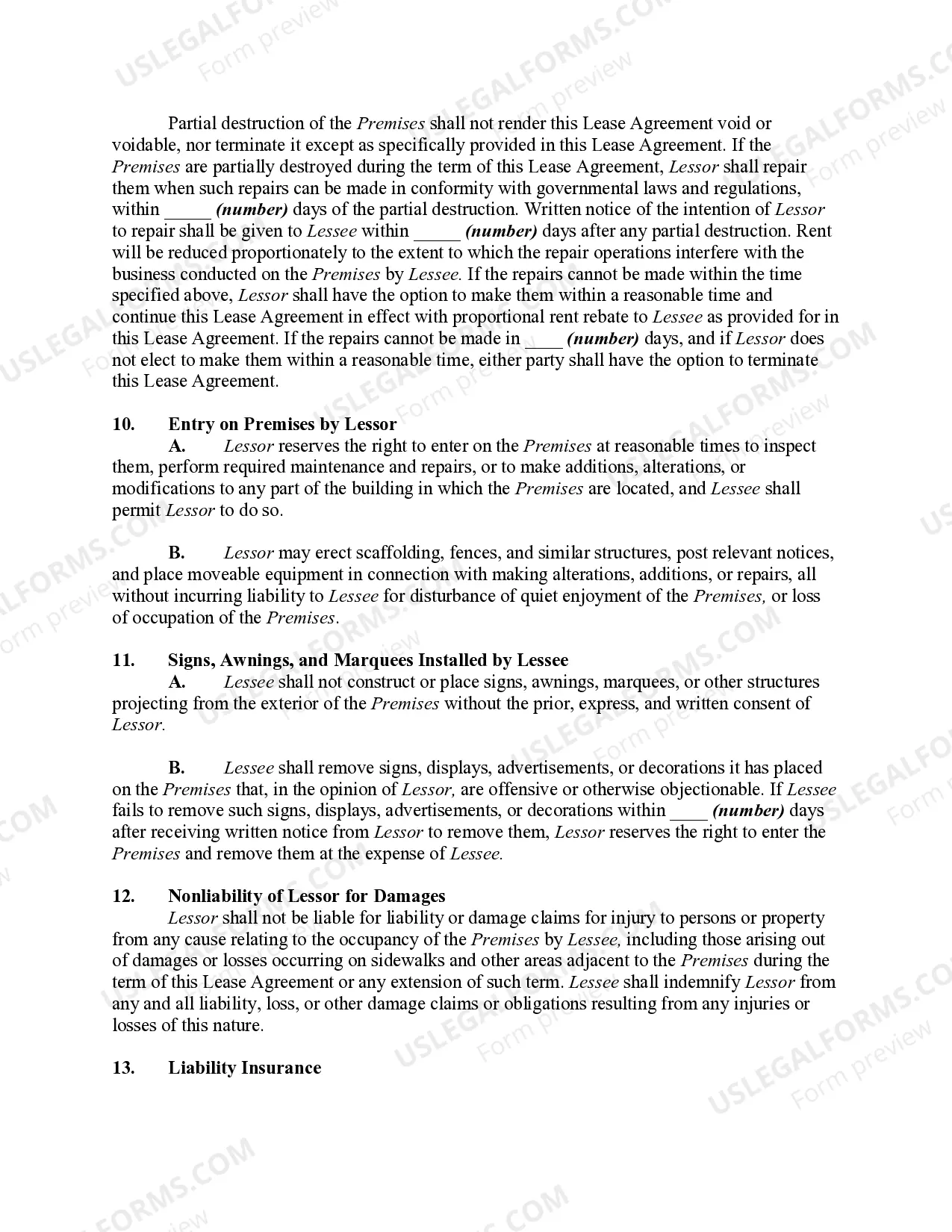
- Repairs and maintenance: Defines responsibilities for property upkeep.
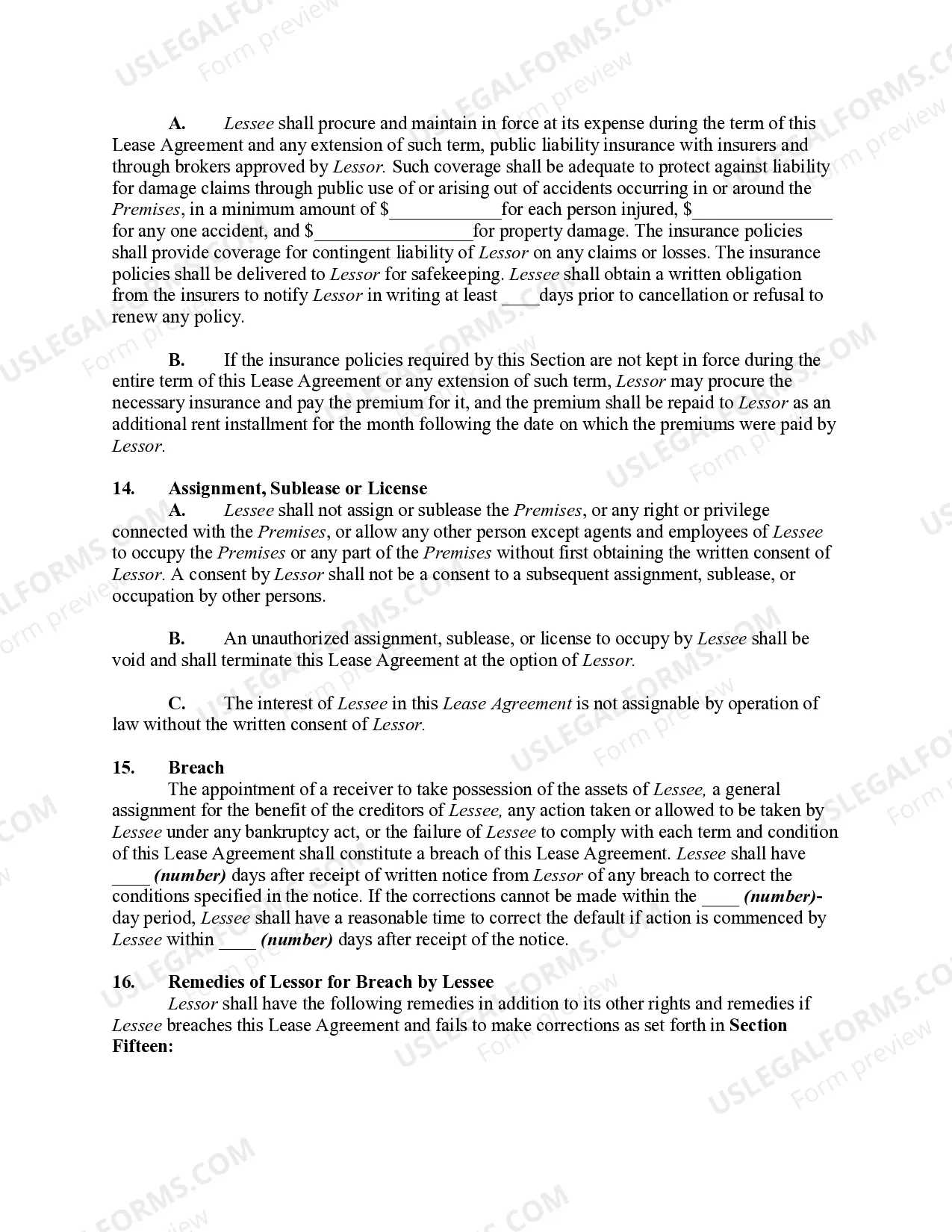
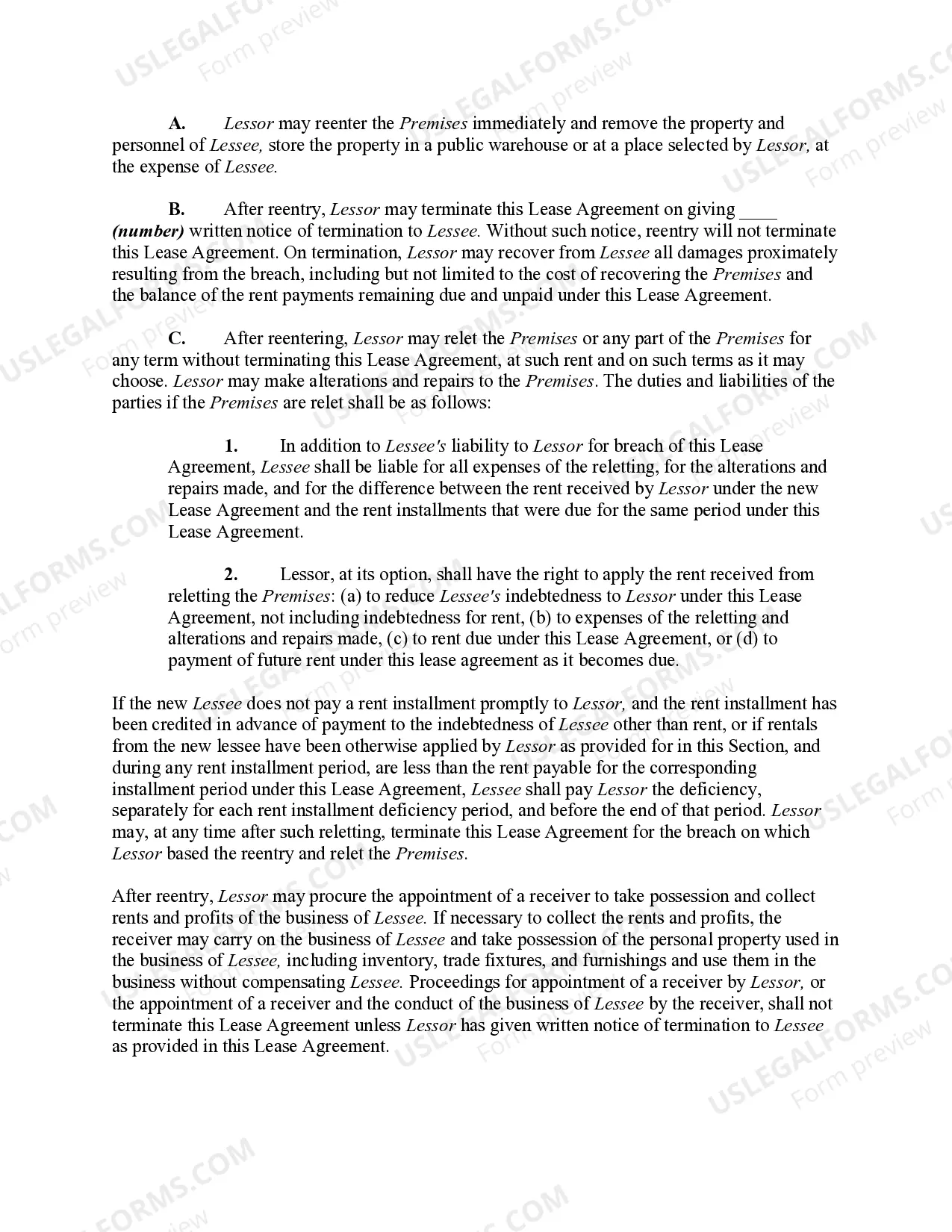
- Breach and remedies: Addresses actions in case of default or non-compliance.
Common use cases
This form should be used when a business seeks to lease commercial property for its operations. Common scenarios include rental of office space, retail locations, warehouses, or any facility necessary for business activities. It is vital for both landlords and tenants to have a documented lease to delineate their arrangements and protect their legal rights in the event of disputes.
Who this form is for
Individuals or companies engaged in business operations should consider using this form:
- Landlords who own commercial properties available for rent.
- Businesses looking to lease premises for their commercial activities.
- Real estate professionals facilitating lease agreements between landlords and tenants.
Instructions for completing this form
- Identify the parties involved: Enter the names and addresses of the landlord and tenant.
- Specify the property: Clearly describe the business premises being leased.
- Determine the lease term: Fill in the starting and ending dates of the lease duration.
- Indicate rent details: Enter the agreed monthly rental amount and payment schedule.
- Define permitted use: Specify how the premises will be utilized by the tenant.
Is notarization required?
To make this form legally binding, it must be notarized. Our online notarization service, powered by Notarize, lets you verify and sign documents remotely through an encrypted video session.
Get your form ready online
Our built-in tools help you complete, sign, share, and store your documents in one place.
Make edits, fill in missing information, and update formatting in US Legal Forms—just like you would in MS Word.
Download a copy, print it, send it by email, or mail it via USPS—whatever works best for your next step.
Sign and collect signatures with our SignNow integration. Send to multiple recipients, set reminders, and more. Go Premium to unlock E-Sign.
If this form requires notarization, complete it online through a secure video call—no need to meet a notary in person or wait for an appointment.
We protect your documents and personal data by following strict security and privacy standards.

Make edits, fill in missing information, and update formatting in US Legal Forms—just like you would in MS Word.

Download a copy, print it, send it by email, or mail it via USPS—whatever works best for your next step.

Sign and collect signatures with our SignNow integration. Send to multiple recipients, set reminders, and more. Go Premium to unlock E-Sign.

If this form requires notarization, complete it online through a secure video call—no need to meet a notary in person or wait for an appointment.

We protect your documents and personal data by following strict security and privacy standards.
Typical mistakes to avoid
- Failing to clearly define the term of the lease.
- Not specifying the permitted use of the premises, which can lead to disputes.
- Neglecting to include maintenance responsibilities, leading to misunderstandings about property upkeep.
- Overlooking signatures or contact details, making the agreement unenforceable.
Benefits of using this form online
- Convenience: Easily download and complete the lease agreement at your convenience.
- Editability: Tailor the form for your specific rental situation with editable fields.
- Reliability: Utilize a professionally drafted document ensuring legal protection and clarity.
Looking for another form?
Form popularity
FAQ
Names of all tenants. Limits on occupancy. Term of the tenancy. Rent. Deposits and fees. Repairs and maintenance. Entry to rental property. Restrictions on tenant illegal activity.
If you're thinking of renting out your property, or you're a tenant, and the current owner doesn't already have an agreement drawn up, it's possible to create your own rental contract.
Terms. The lease should state the length of the agreement. Rent. The amount of rent and when it is due. Deposits and fees. The names of all tenants. Occupancy limits. Restrictions on disruptive activity. Pets. Maintenance and repairs.
The Introduction. The beginning of the lease agreement should contain the name of the landlord and tenant, as well as a statement of the agreement into which they are entering. Rent. Deposit. Taxes. Property Insurance. Utilities and Amenities. Remodeling and Improvements. Repairs and Maintenance.
Collect each party's information. Include specifics about your property. Consider all of the property's utilities and services. Know the terms of your lease. Set the monthly rent amount and due date. Calculate any additional fees. Determine a payment method. Consider your rights and obligations.
Name the parties. A simple rental agreement form needs to name the parties signing the lease and where they live. Describe the premises. Define the term of the lease. Set how much rent is owed. Assign a security deposit amount. Finalize the lease.
As long as the contract spells out specific details and both parties have signed that they agree to the contract's terms, a handwritten contract is legally binding and enforceable in court.
Commercial leases generally fall into one of three major categories based on how the building's operating expenses are passed on to tenants: Gross or full-service lease. You pay a flat monthly rate from which the landlord pays all operating expenses, including utilities, property taxes and maintenance.