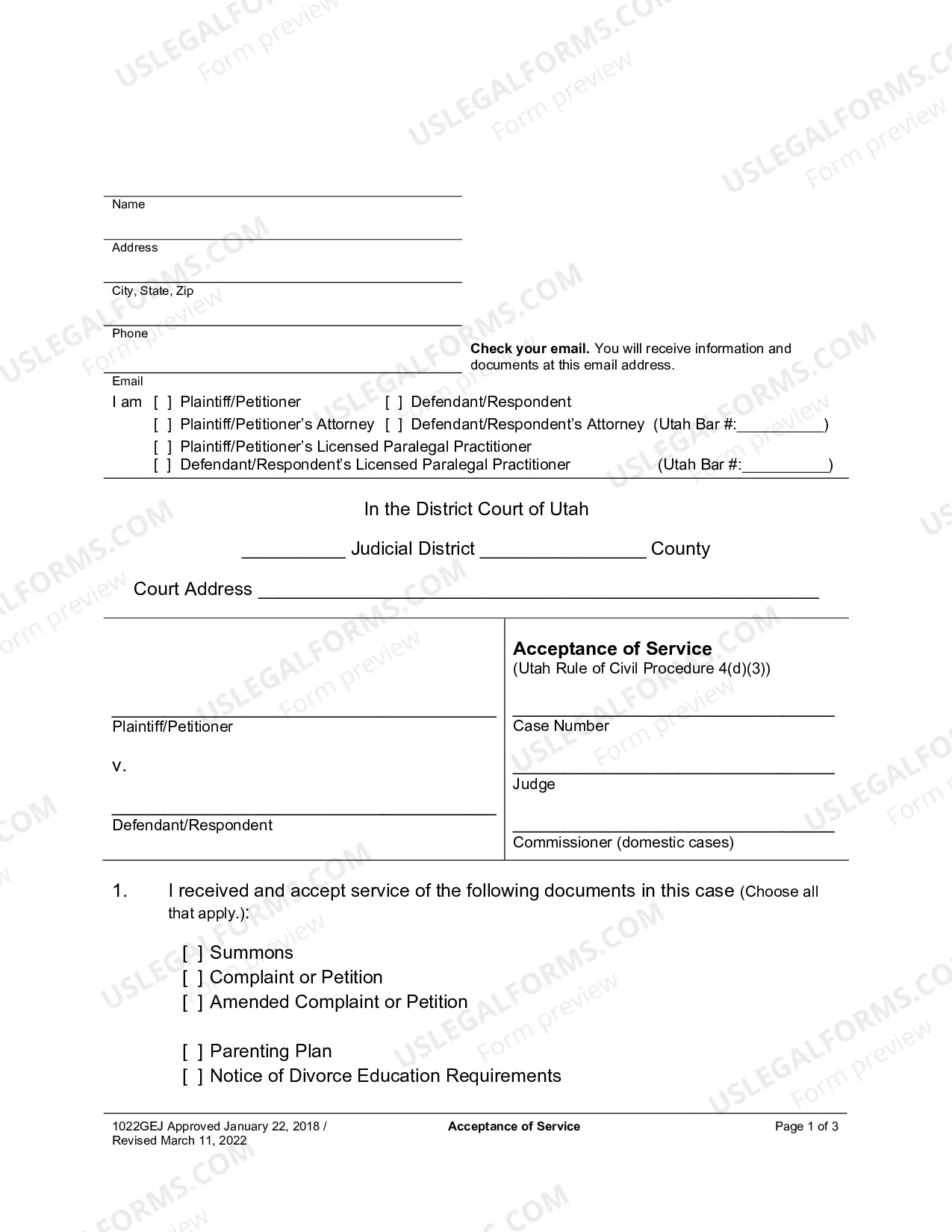
Rule 5a Petition for Permission to Appeal Order Denying Motion to Bar Reprosecution Under Double Jeopardy Clause
Overview of this form
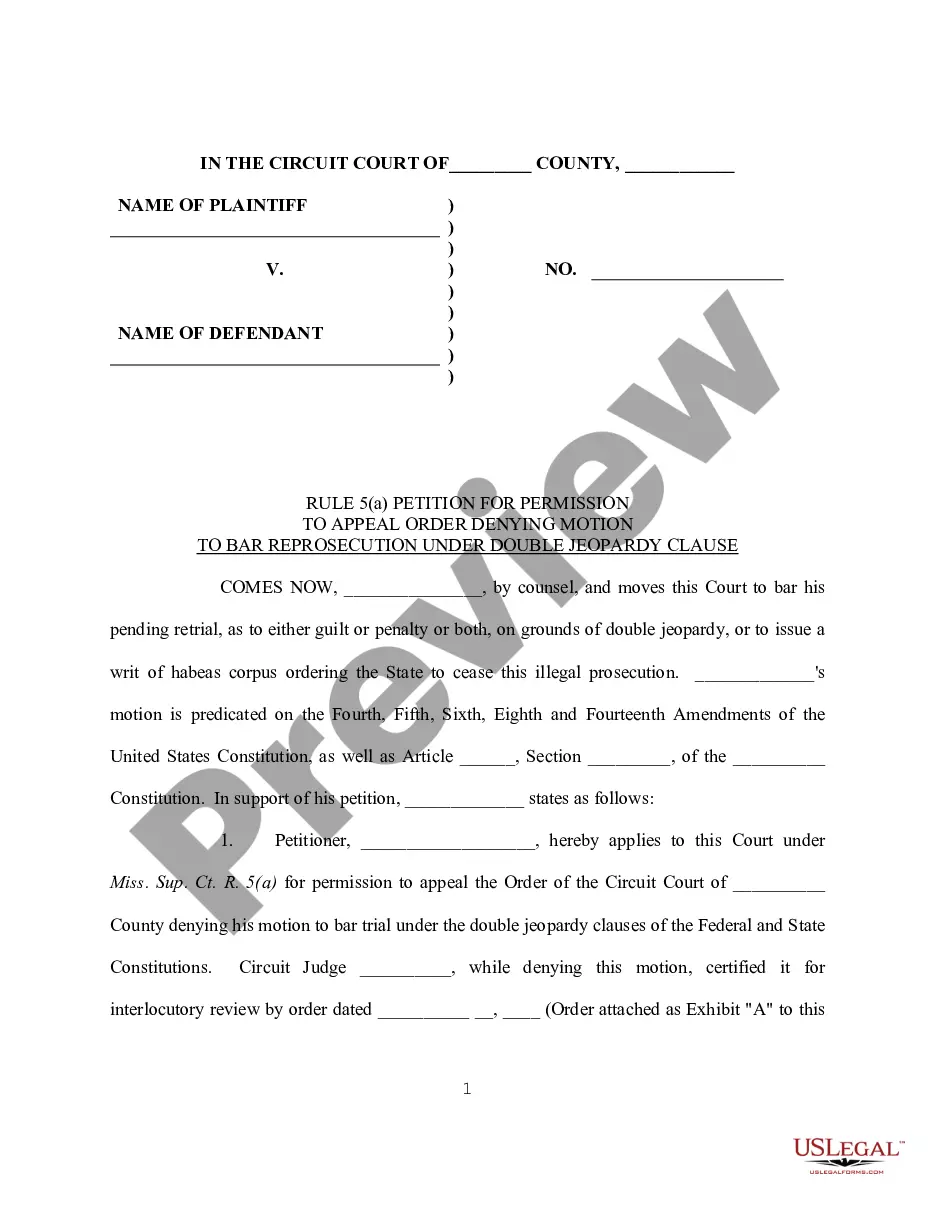
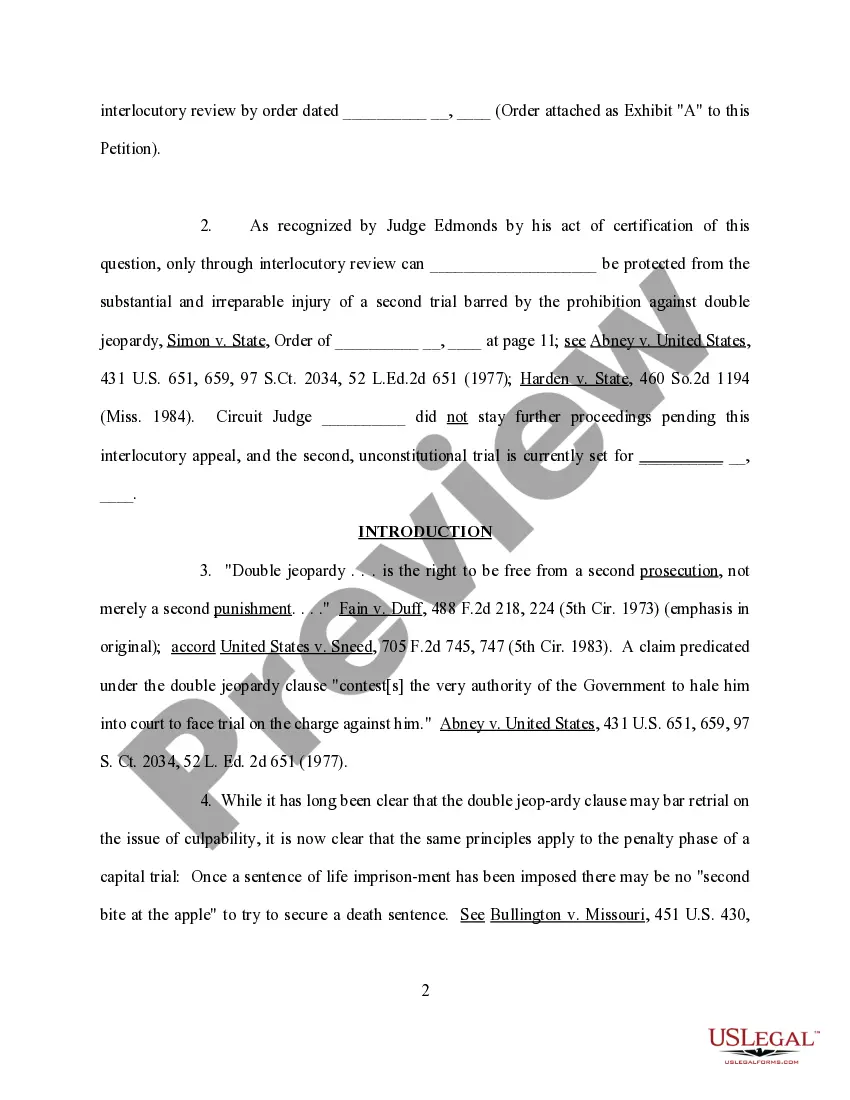
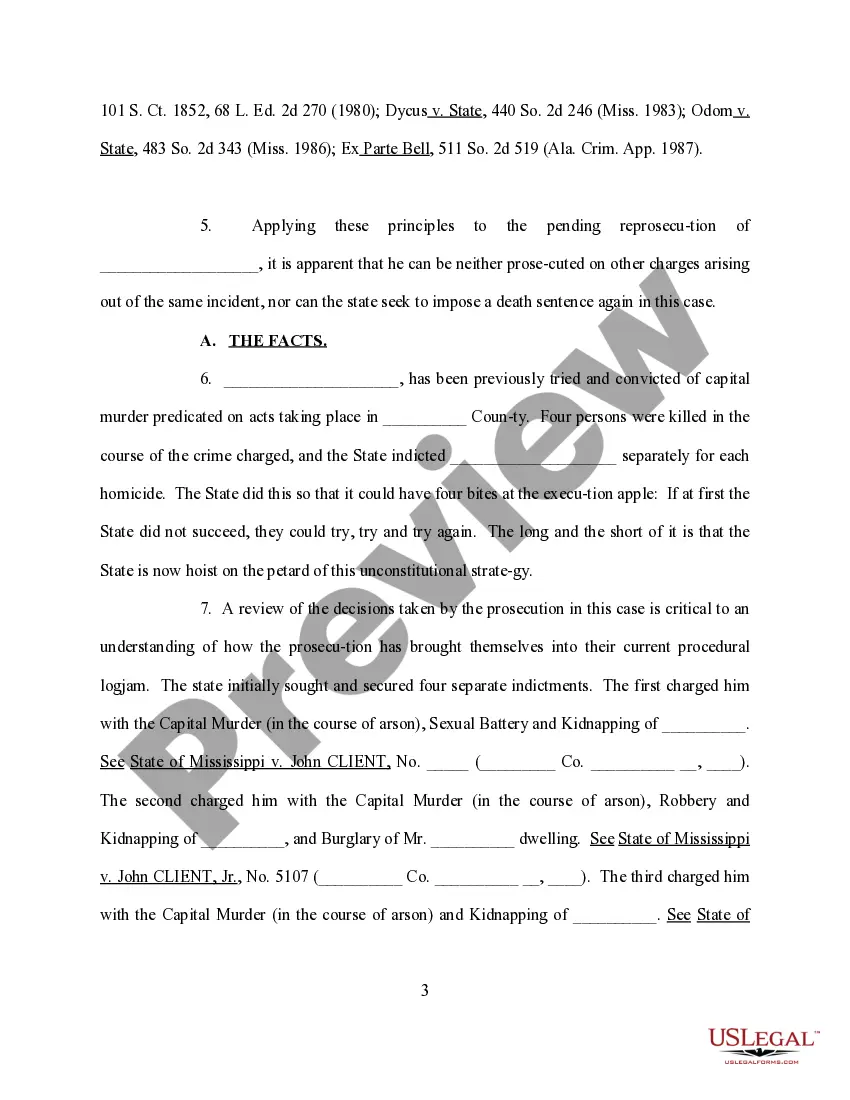
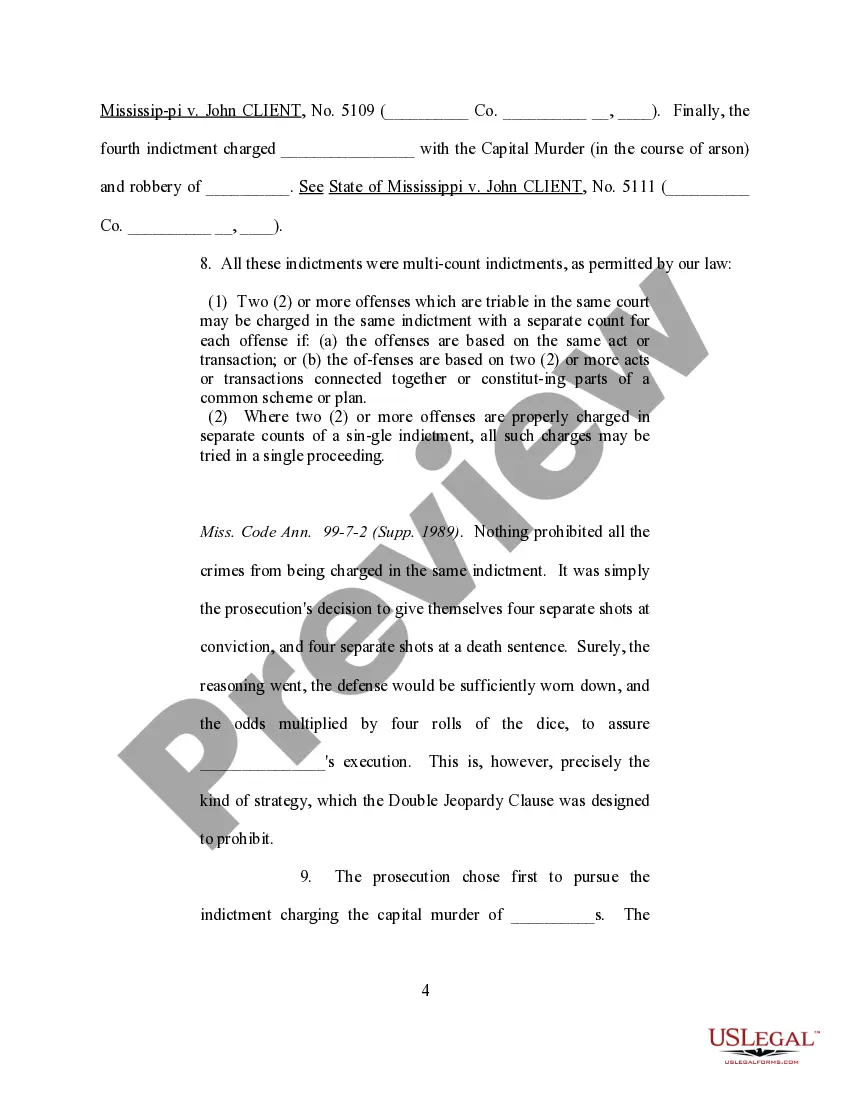
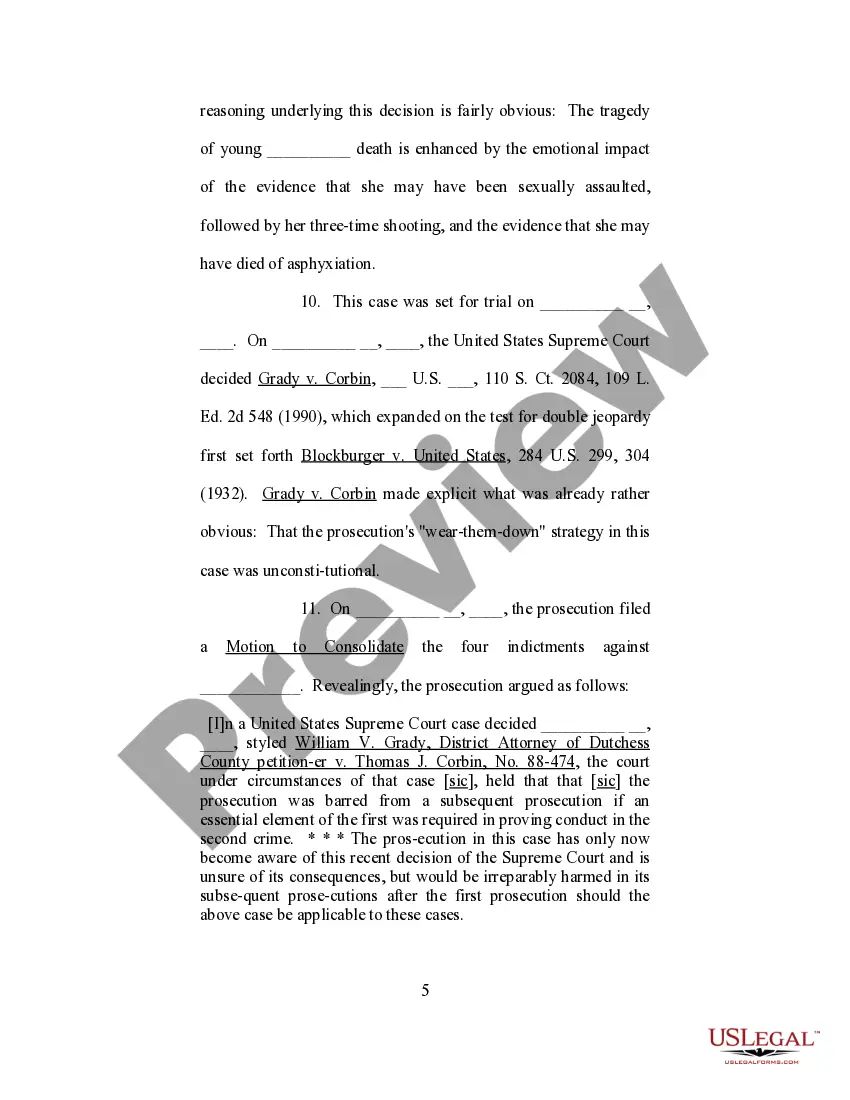
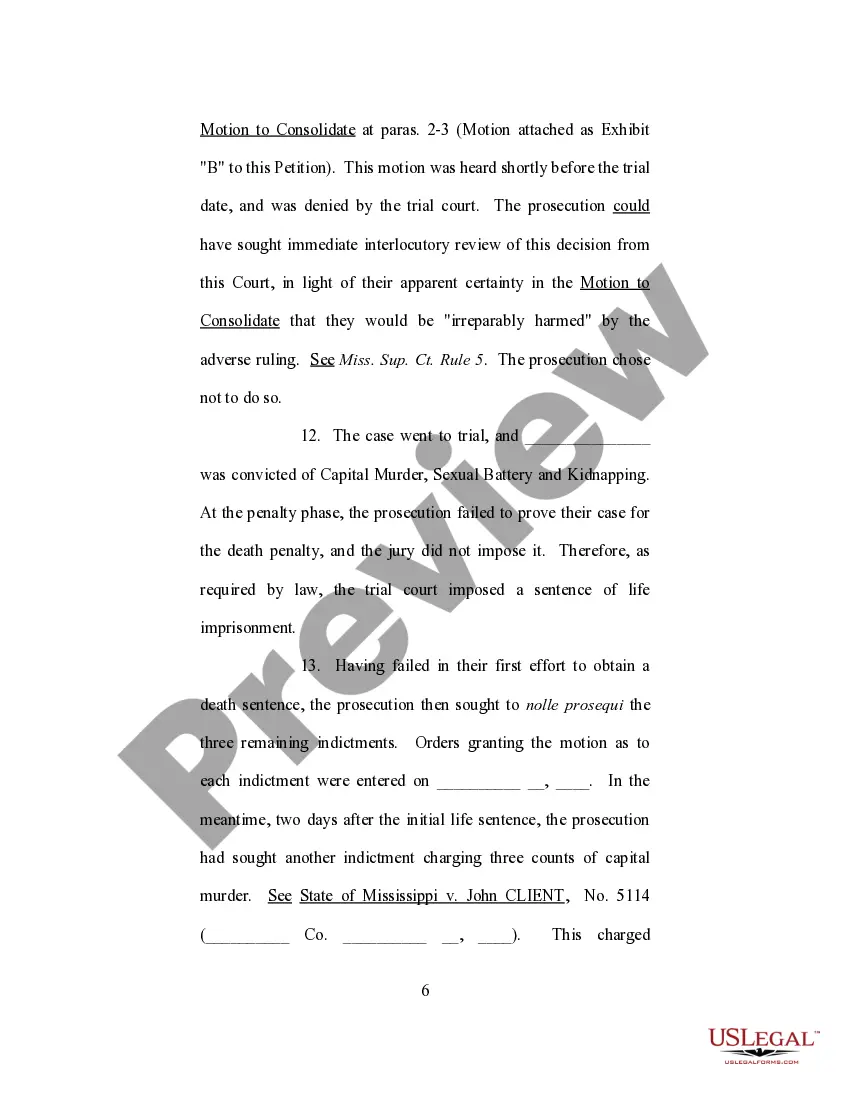
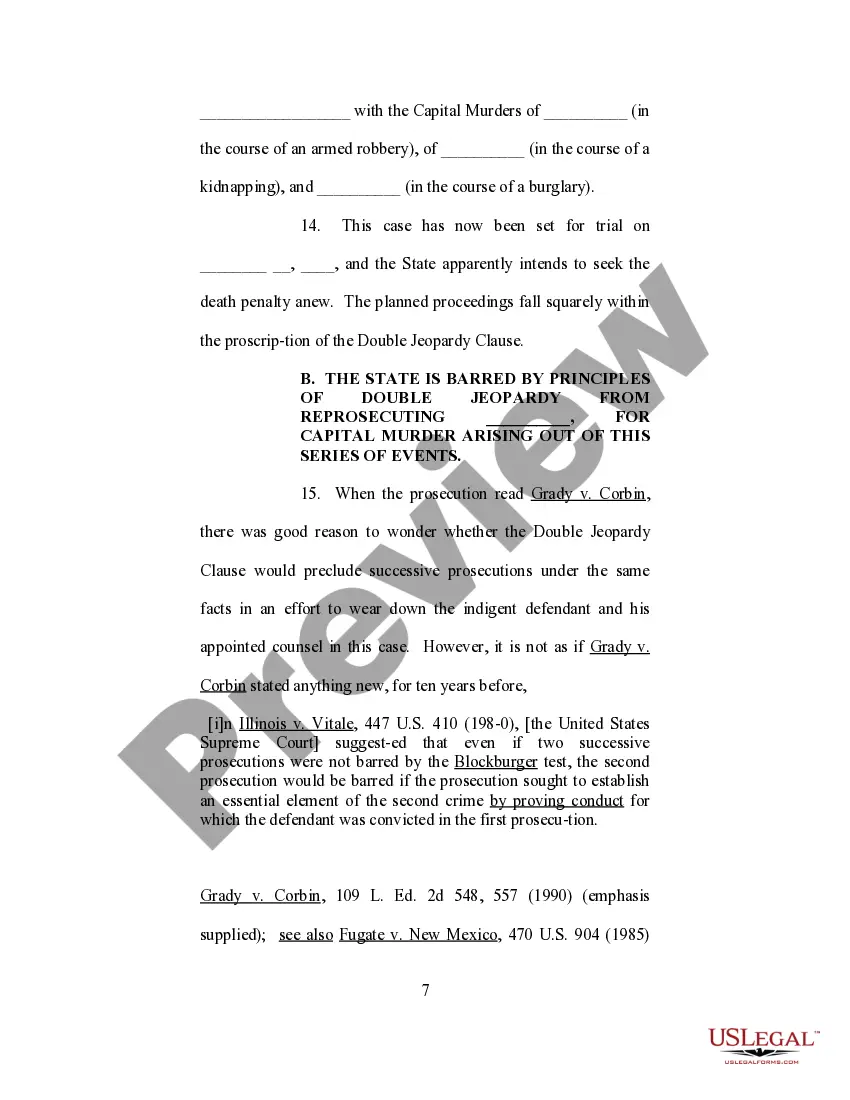
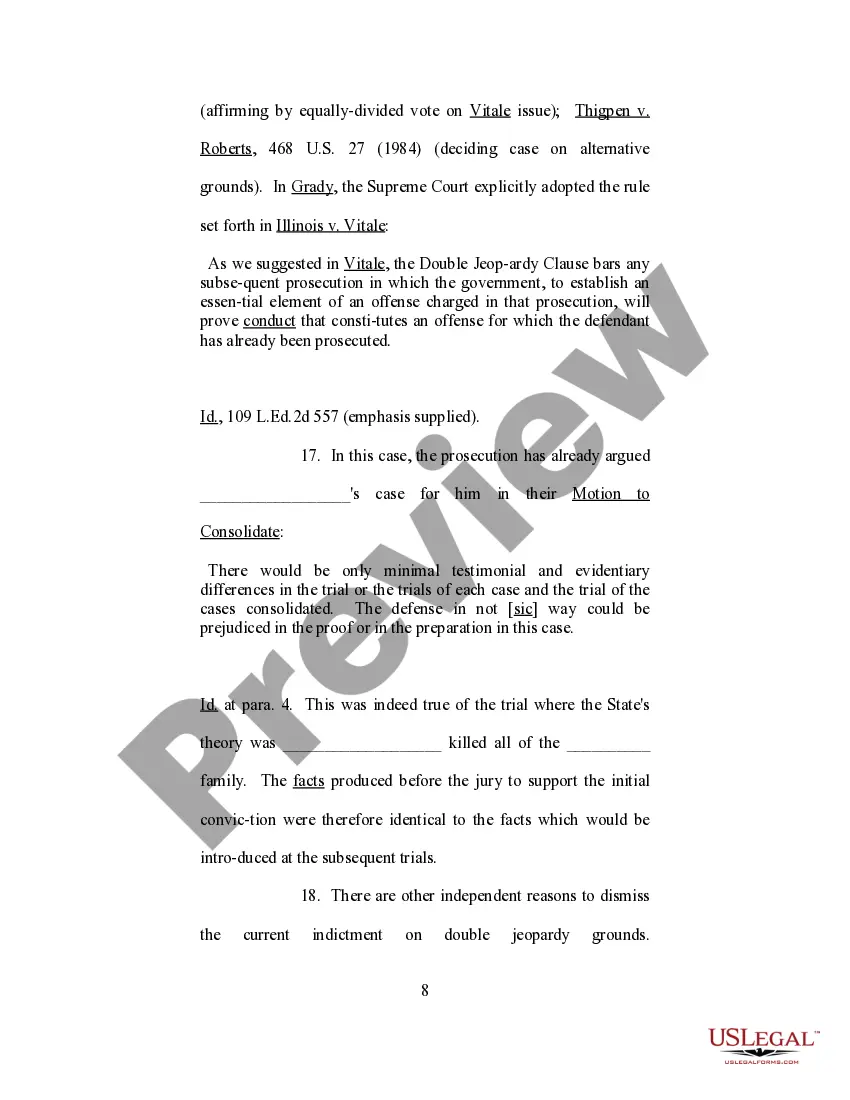
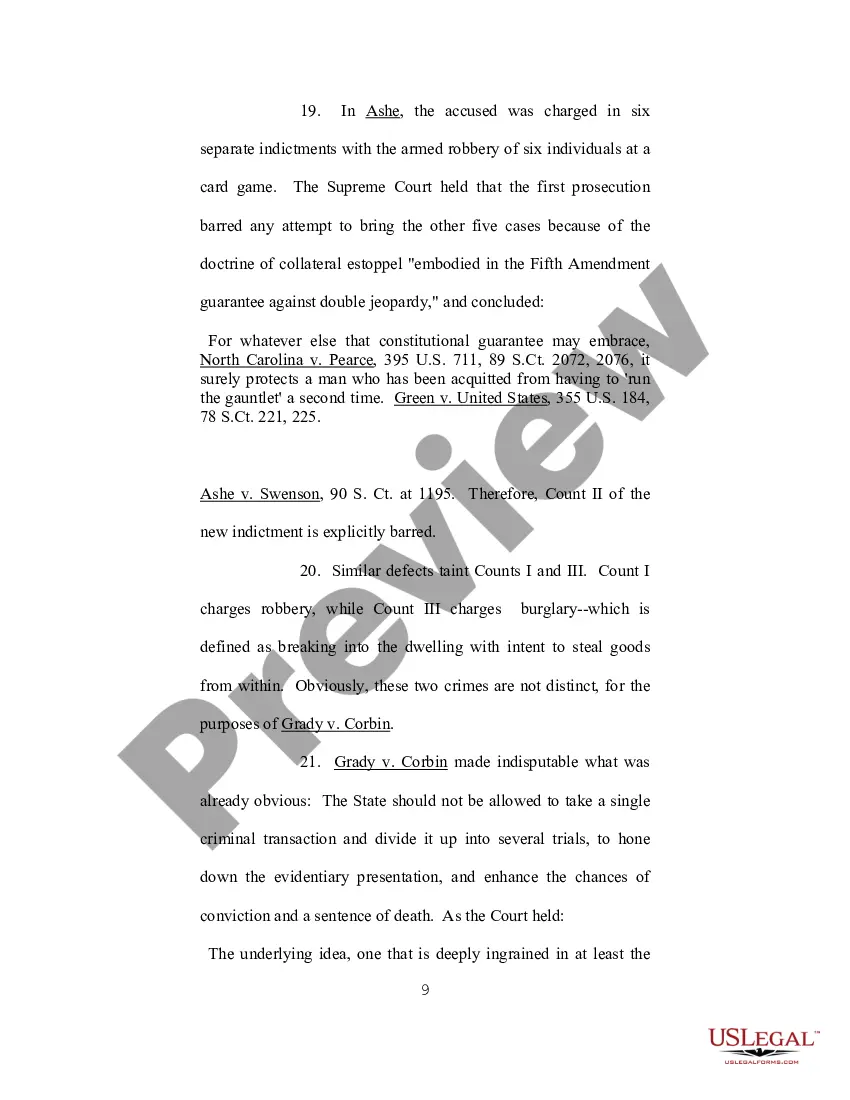
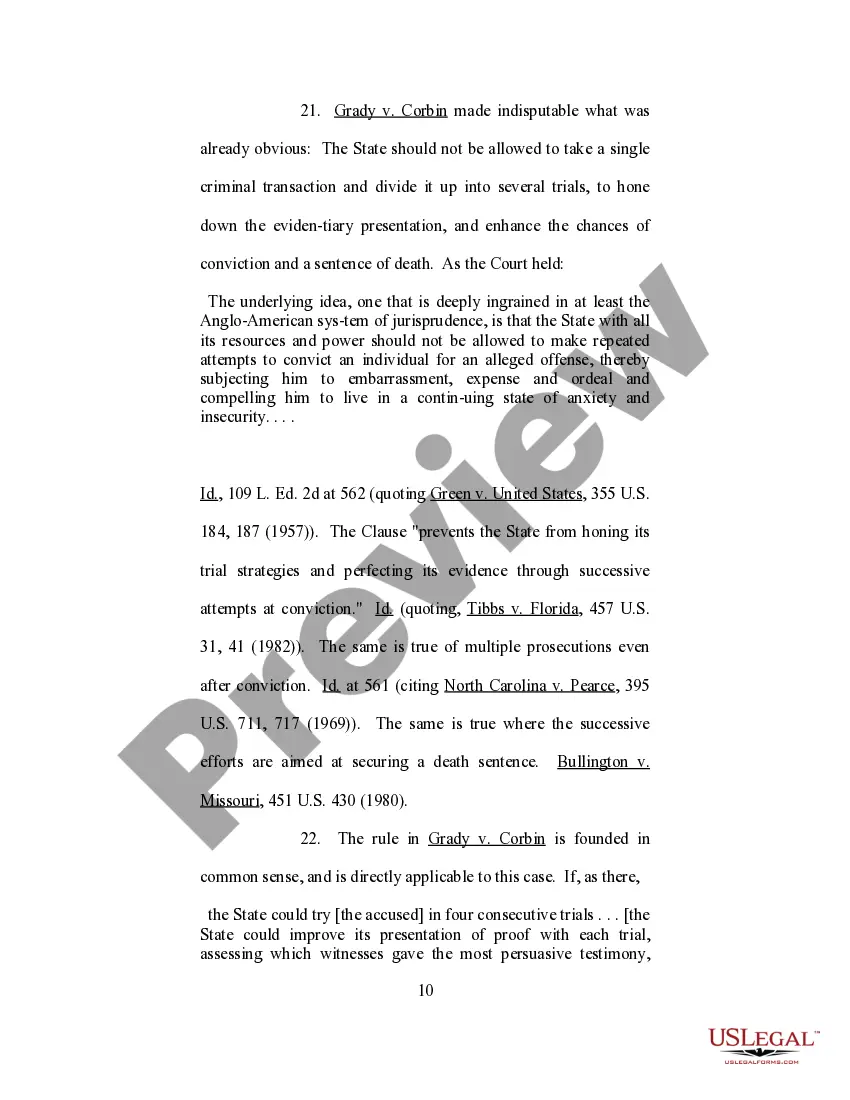
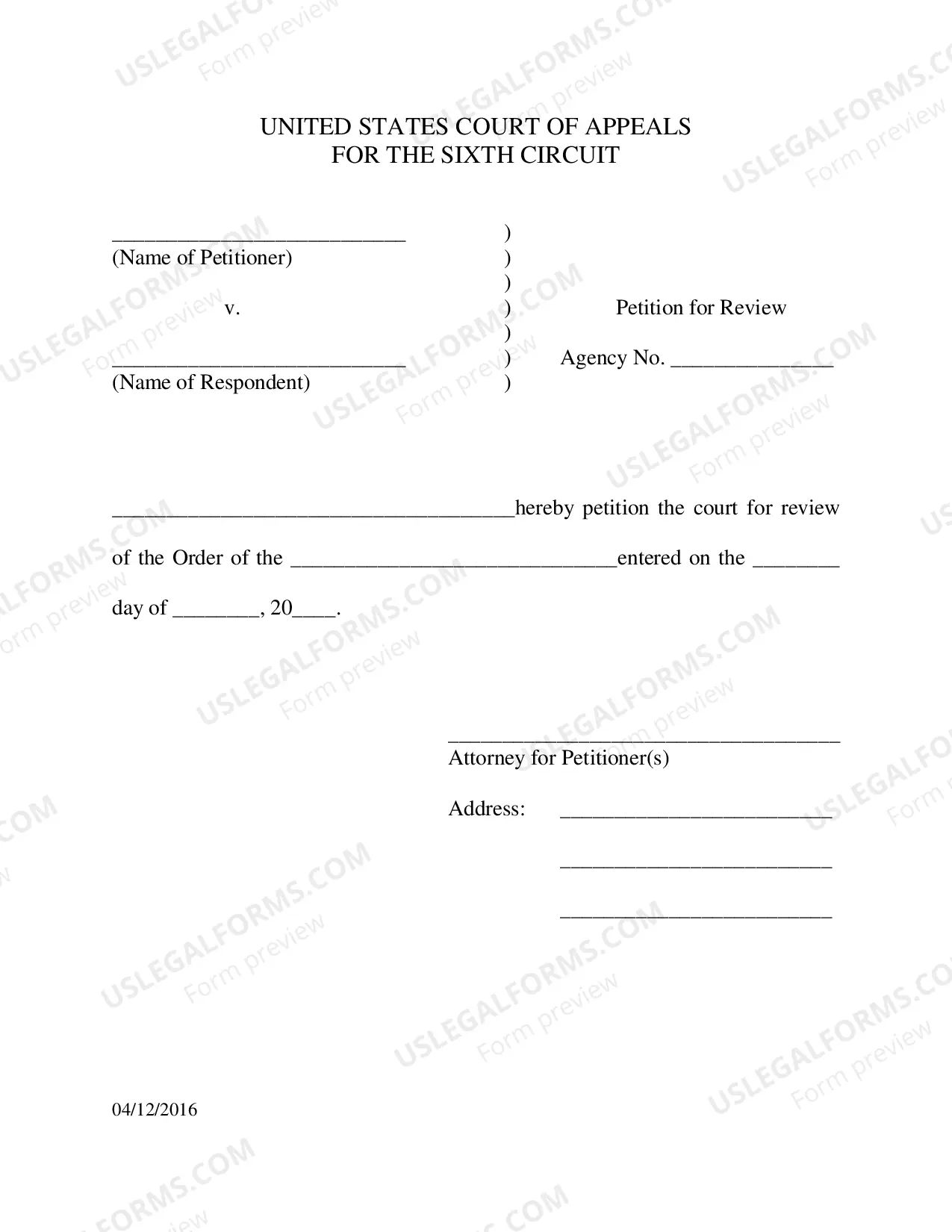
The Rule 5a Petition for Permission to Appeal Order Denying Motion to Bar Reprosecution Under Double Jeopardy Clause is a legal document used to request an appellate courtâs permission to appeal against a trial courtâs order that denies a motion to bar retrial due to double jeopardy. This petition is specific to cases in Mississippi and involves arguments that protect defendants from being tried again for the same offense after an acquittal or conviction. It helps ensure that individuals are not subjected to the stress and financial burden of repeated trials for the same alleged crime.
Form components explained
- Identification of the petitioner and involved parties.
- Statement of jurisdiction and legal basis for the petition.
- Details regarding the previous trial and outcome.
- Arguments citing relevant constitutional protections against double jeopardy.
- Request for a stay of further proceedings pending appeal.
- Certificate of service confirming that the petition has been sent to the appropriate parties.

When to use this form
Use this form when you have been subjected to a criminal trial and either acquitted or convicted but are facing retrial for the same charges. It is particularly relevant when the trial court has denied your motion to dismiss charges based on double jeopardy principles. This petition is necessary to prevent further legal action that could violate your rights under the United States Constitution.
Intended users of this form
- Defendants in criminal cases in Mississippi facing retrial after prior acquittal or conviction.
- Criminal defense attorneys representing clients on double jeopardy grounds.
- Individuals or legal representatives seeking to appeal a trial courtâs decision regarding double jeopardy motions.
How to prepare this document
- Provide the petitionerâs name and details about the trial court's order being appealed.
- Clearly state the grounds for double jeopardy and include supporting legal citations.
- Include pertinent facts and procedural history relevant to the case.
- Request a stay of prosecution while the appeal is pending.
- Sign and date the petition, and include a certificate of service indicating that copies have been sent to all involved parties.
Does this document require notarization?
This form usually doesn’t need to be notarized. However, local laws or specific transactions may require it. Our online notarization service, powered by Notarize, lets you complete it remotely through a secure video session, available 24/7.
Get your form ready online
Our built-in tools help you complete, sign, share, and store your documents in one place.
Make edits, fill in missing information, and update formatting in US Legal Forms—just like you would in MS Word.
Download a copy, print it, send it by email, or mail it via USPS—whatever works best for your next step.
Sign and collect signatures with our SignNow integration. Send to multiple recipients, set reminders, and more. Go Premium to unlock E-Sign.
If this form requires notarization, complete it online through a secure video call—no need to meet a notary in person or wait for an appointment.
We protect your documents and personal data by following strict security and privacy standards.

Make edits, fill in missing information, and update formatting in US Legal Forms—just like you would in MS Word.

Download a copy, print it, send it by email, or mail it via USPS—whatever works best for your next step.

Sign and collect signatures with our SignNow integration. Send to multiple recipients, set reminders, and more. Go Premium to unlock E-Sign.

If this form requires notarization, complete it online through a secure video call—no need to meet a notary in person or wait for an appointment.

We protect your documents and personal data by following strict security and privacy standards.
Common mistakes to avoid
- Failing to include all necessary documentation, such as previous court orders and relevant legal citations.
- Not clearly articulating the legal basis for the appeal.
- Missing deadlines for filing the petition or serving notices to involved parties.
- Neglecting to request a stay of proceedings in the petition.
Benefits of using this form online
- Convenient access to downloadable forms that can be filled out at your own pace.
- Easy editability allows for quick updates and customizations based on case specifics.
- Provides peace of mind, knowing that the forms are drafted with legal expertise.
Legal use & context
- This form is recognized as a legitimate means to appeal a trial courtâs refusal to bar reprosecution under double jeopardy principles.
- It is advisable to consult with legal counsel when utilizing this form to ensure compliance with all procedural requirements.
- Failure to adhere to the stipulations of the double jeopardy clause could result in unlawful prosecution and detrimental outcomes for the defendant.
Main things to remember
- This petition is crucial for defendants seeking to halt re-trial attempts that violate double jeopardy rights.
- The form must be completed carefully, reflecting all necessary legal and factual information.
- State-specific requirements apply, particularly under Mississippi law.
Looking for another form?

Form popularity
FAQ
The chances of winning a criminal appeal in California are low. Only about 20 percent of criminal appeals are successful.
How long does it take from the time of the notice of appeal until oral argument? For a civil appeal, approximately 12-20 months from the notice of appeal date. If briefing isn't delayed, approximately 9-12 months from completion of briefing. For a criminal appeal, approximately 4-5 months after briefing is complete.
The Constitution's double jeopardy clause generally forbids subsequent prosecutions. But the Supreme Court has made one exception. Saying that the federal government and the states are independent sovereigns, the court has allowed separate prosecutions of the same conduct in state and federal courts.
The Court Holds that a Defendant Can Waive His Double Jeopardy Protections When He Agrees to Severance of the Charges.The Court stated that the Double Jeopardy Clause was designed to protect against government oppression, not from the consequences of a defendant's voluntary choice.
Use Form 1 to appeal a District Court judgment or order. Use Form 2 to appeal a Tax Court decision. Use Form 3 to ask the Court to review an Agency, Board, Commission, or Officer order (this includes a decision from the Board of Immigration Appeals). Use Form 5 to appeal a Bankruptcy Appellate Panel judgment or order.
The Double Jeopardy Clause in the Fifth Amendment to the US Constitution prohibits anyone from being prosecuted twice for substantially the same crime. The relevant part of the Fifth Amendment states, "No person shall . . . be subject for the same offense to be twice put in jeopardy of life or limb . . . . "
This provision enshrines the concept of autrefois convict, that no one convicted of an offence can be tried or punished a second time. However, it does not extend to autrefois acquit, and so if a person is acquitted of a crime he can be retried.
When Double Jeopardy Protection Ends: Appeal Every defendant has the right to at least one appeal after conviction. If the conviction is reversed on appeal for insufficient evidence, it's treated as an acquittal and further prosecution is not permitted.