Agreement to Store Certain Personal Property in Portion of Garage
About this form
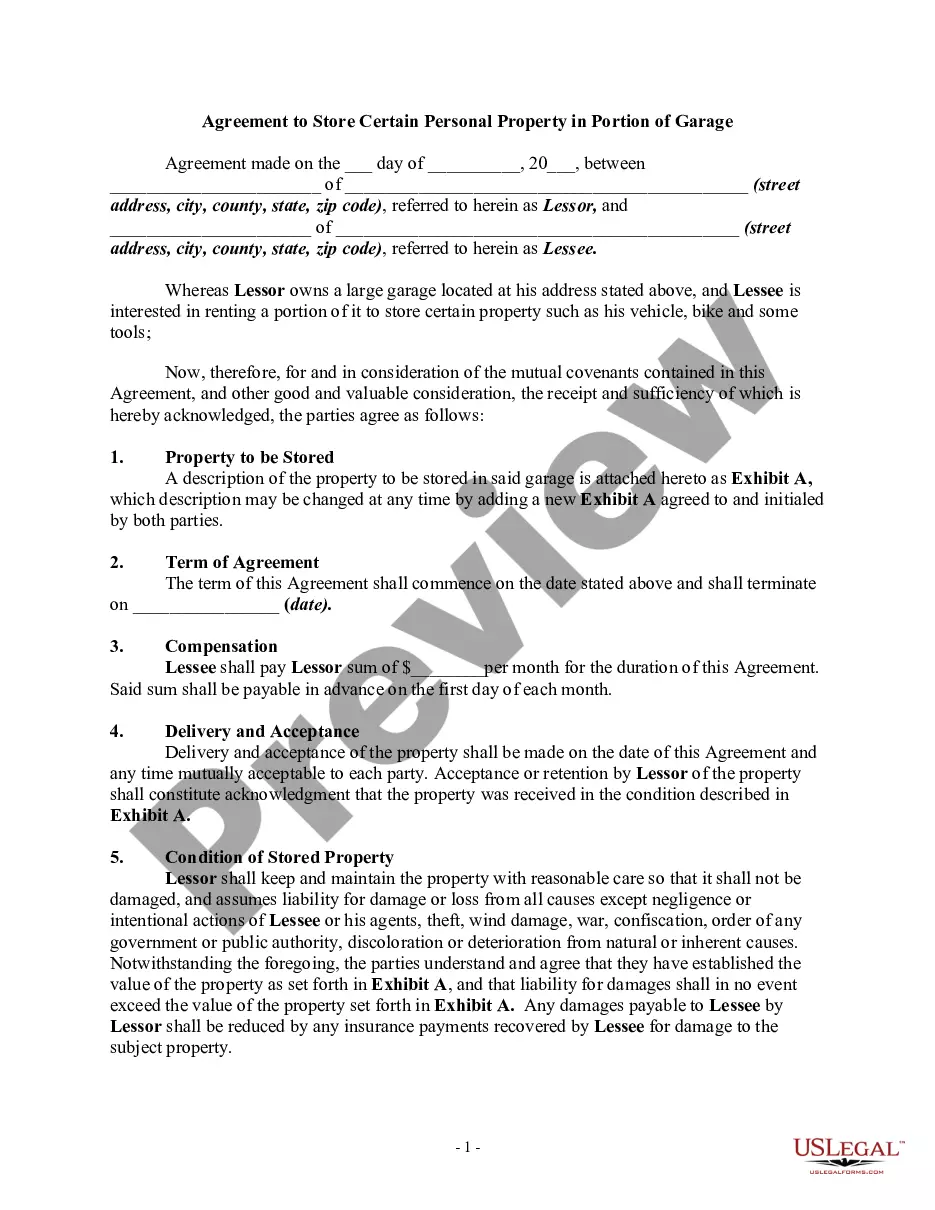
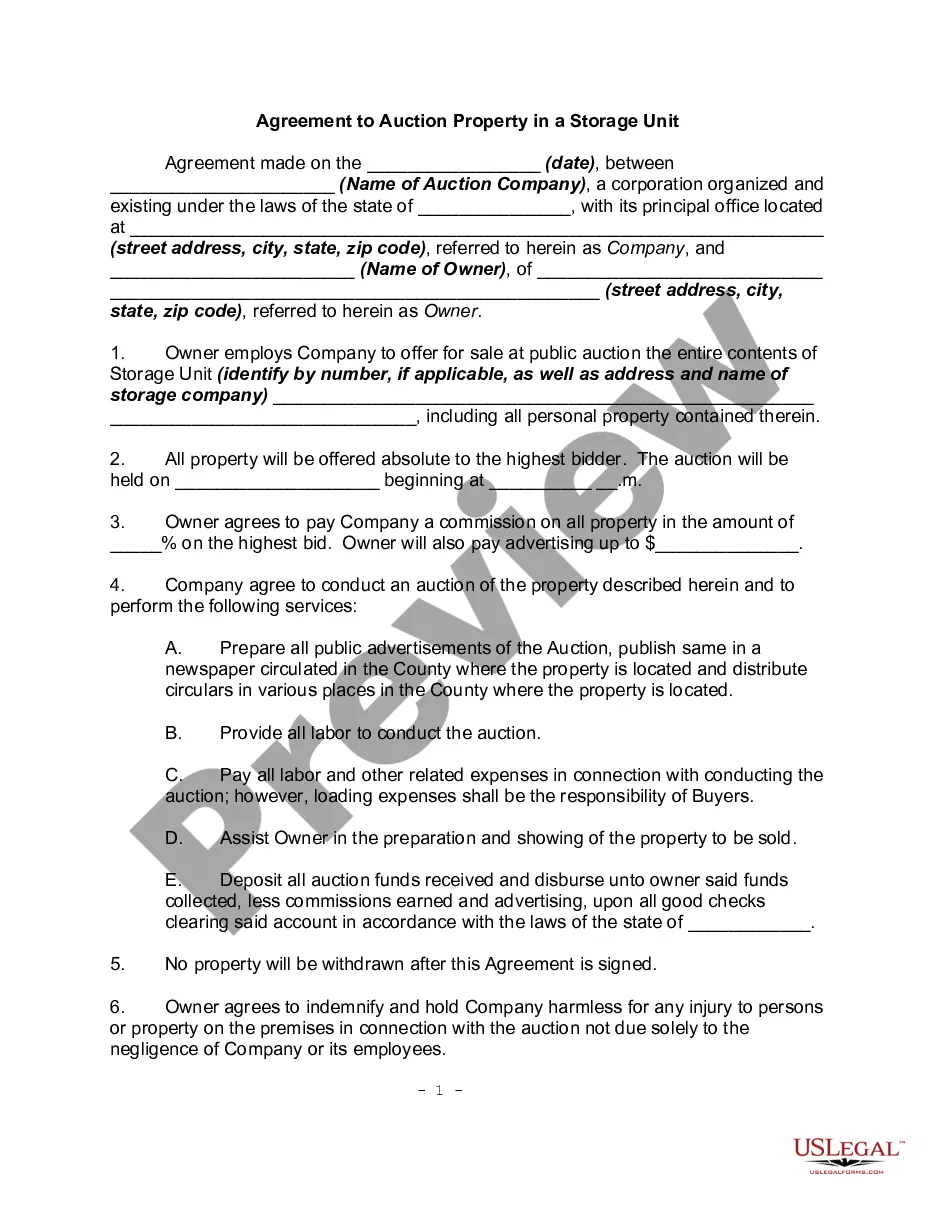
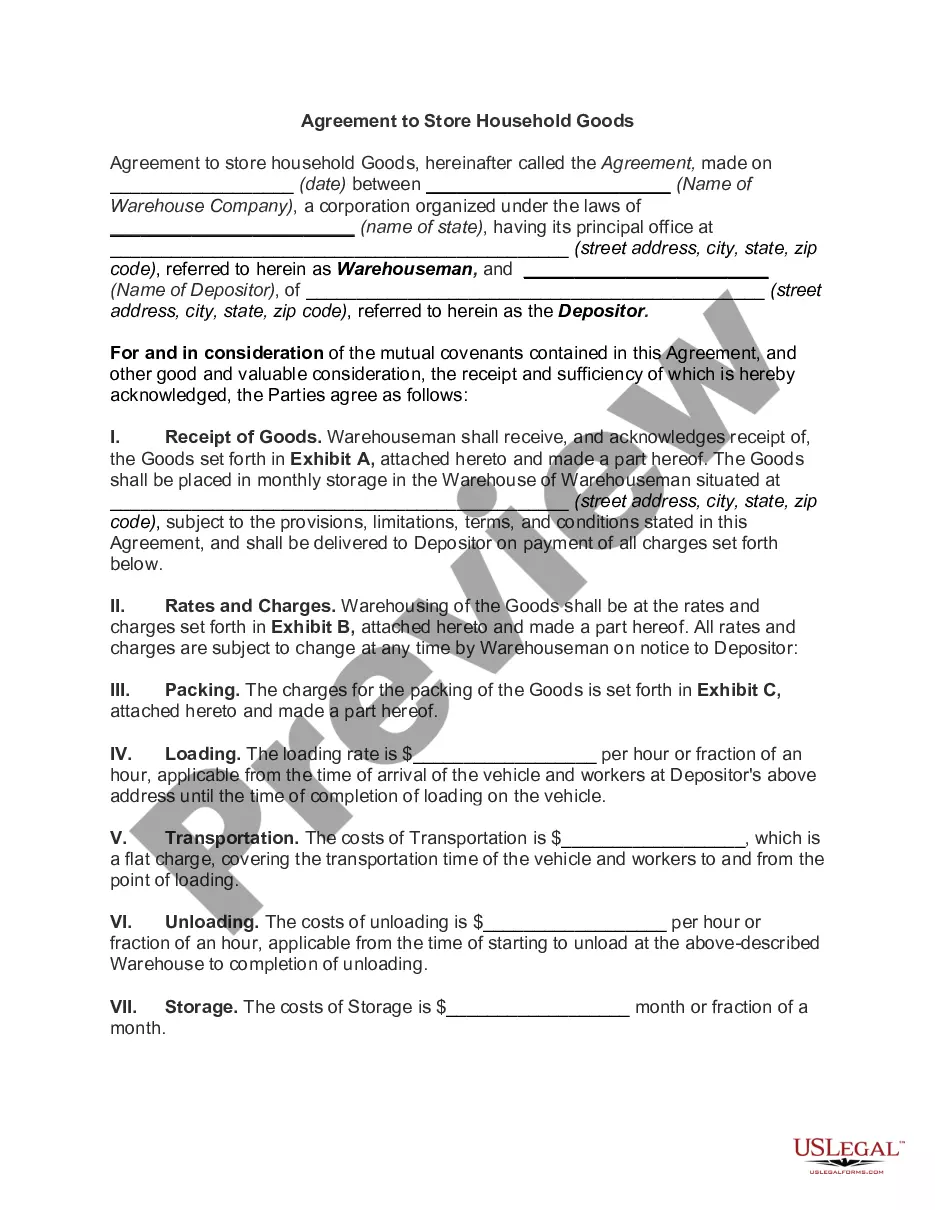
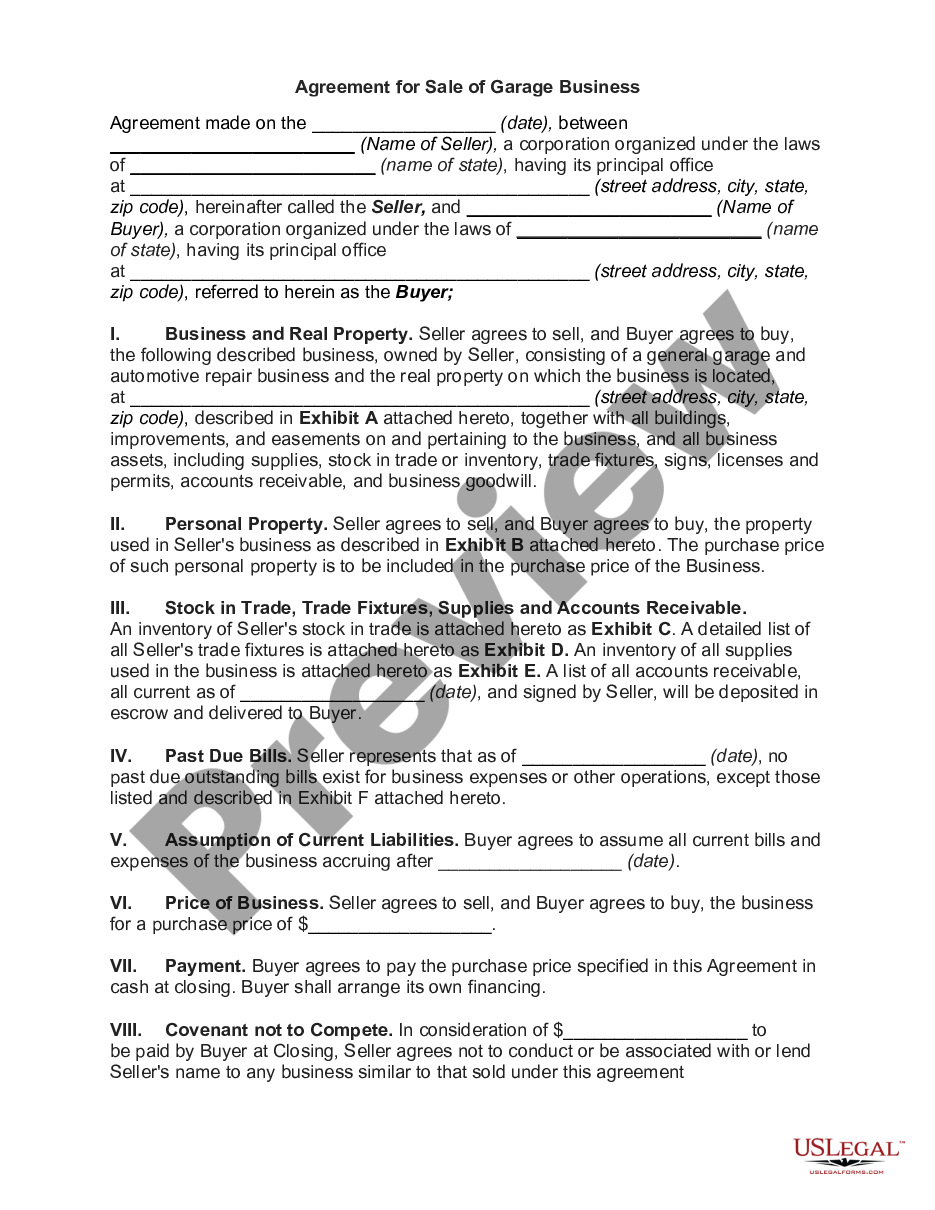
The Agreement to Store Certain Personal Property in Portion of Garage is a legal document that outlines an agreement between a property owner and a person seeking to store personal belongings in a designated area of the owner's garage. This form clearly defines the responsibilities, rights, and payment terms for both parties, ensuring a mutual understanding of what is being stored and the conditions under which it is stored. This agreement is particularly useful for individuals needing temporary storage solutions and helps to mitigate potential disputes regarding the stored items.
Key parts of this document
- Identification of parties involved: Lessor and Lessee, including their addresses.
- Description of the property to be stored, listed as Exhibit A.
- Term of the agreement including start and end dates.
- Monthly rental fee and terms of payment.
- Condition of the stored property and liability terms.
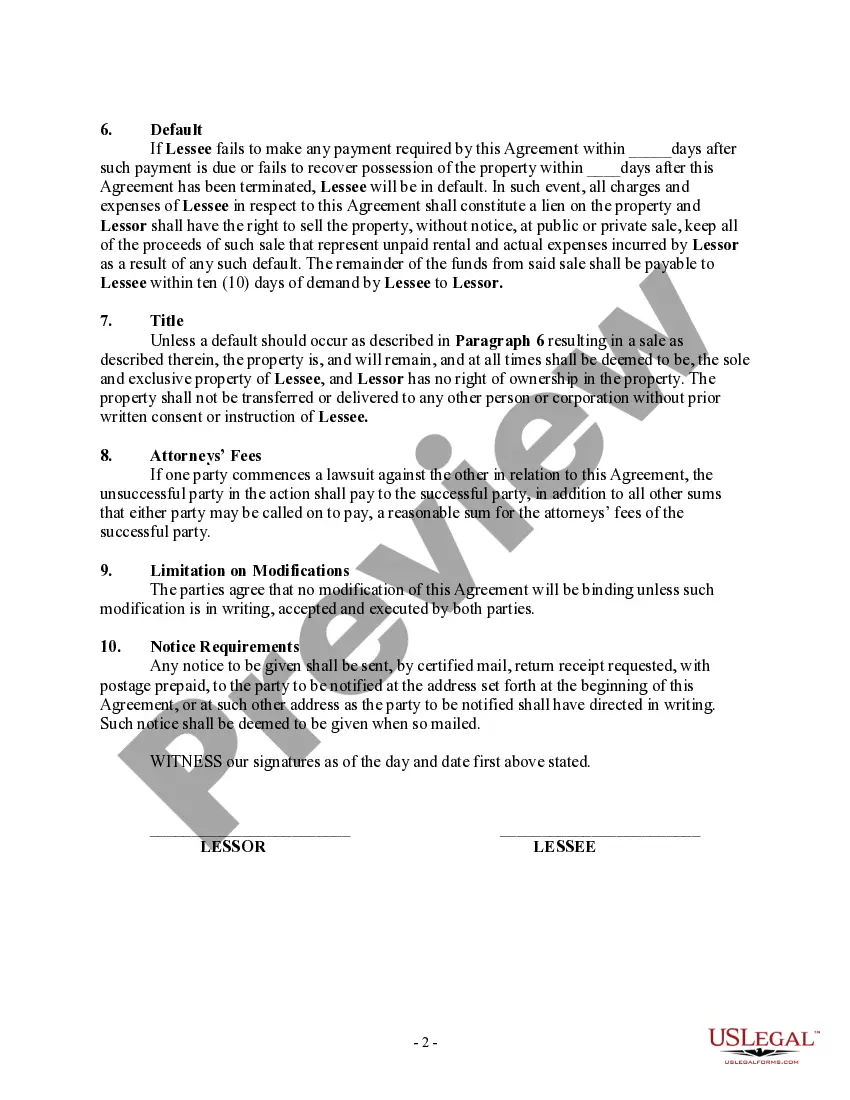
- Default clauses outlining what occurs if payments are missed.
- Modification clauses for changing the agreement terms.
When this form is needed
This form is utilized when a property owner wishes to rent out a portion of their garage for storage purposes. It is particularly beneficial for individuals who may have extra space and want to securely store items for others, such as vehicles, bicycles, or tools. It can also be used when a person needs temporary storage during a move, downsizing, or renovation, providing a clear, legal framework for the arrangement between the parties involved.
Who should use this form
This form is appropriate for:
- Property owners (Lessors) who have available garage space and want to offer it for storage.
- Individuals (Lessees) seeking a safe place to store personal belongings temporarily.
- Both parties looking for a clear, written agreement that outlines their rights and responsibilities regarding the storage arrangement.
Completing this form step by step
- Identify the parties: Fill in the names and addresses of the Lessor and Lessee at the beginning of the agreement.
- Specify the property: Clearly describe the items to be stored as Exhibit A, ensuring both parties agree on the details.
- Enter dates: Specify the start date of the agreement and the termination date for the storage arrangement.
- Detail compensation: State the rental amount to be paid each month and the due date for payments.
- Include signatures: Ensure both parties sign and date the form to validate the agreement.
Does this form need to be notarized?
This form usually doesn’t need to be notarized. However, local laws or specific transactions may require it. Our online notarization service, powered by Notarize, lets you complete it remotely through a secure video session, available 24/7.
Get your form ready online
Our built-in tools help you complete, sign, share, and store your documents in one place.
Make edits, fill in missing information, and update formatting in US Legal Forms—just like you would in MS Word.
Download a copy, print it, send it by email, or mail it via USPS—whatever works best for your next step.
Sign and collect signatures with our SignNow integration. Send to multiple recipients, set reminders, and more. Go Premium to unlock E-Sign.
If this form requires notarization, complete it online through a secure video call—no need to meet a notary in person or wait for an appointment.
We protect your documents and personal data by following strict security and privacy standards.

Make edits, fill in missing information, and update formatting in US Legal Forms—just like you would in MS Word.

Download a copy, print it, send it by email, or mail it via USPS—whatever works best for your next step.

Sign and collect signatures with our SignNow integration. Send to multiple recipients, set reminders, and more. Go Premium to unlock E-Sign.

If this form requires notarization, complete it online through a secure video call—no need to meet a notary in person or wait for an appointment.

We protect your documents and personal data by following strict security and privacy standards.
Common mistakes to avoid
- Failing to clearly describe the property in Exhibit A, leading to confusion about what is stored.
- Not specifying the term of the agreement or payment details, which can result in disputes later.
- Forgetting to sign the agreement, which can render it unenforceable.
Why complete this form online
- Convenience: Accessing and downloading the form online saves time compared to traditional legal processes.
- Editability: Users can easily customize the form to fit their specific storage arrangement needs.
- Reliability: The form is drafted by licensed attorneys, ensuring legal compliance and protection for both parties.
Legal use & context
The Agreement to Store Certain Personal Property in Portion of Garage serves as a legally binding contract that specifies the rights and obligations of both parties. It is essential for preventing disputes over stored goods and ensuring parties have clear guidelines on maintenance and liability. However, users should be aware of local laws that may impact the enforceability of this agreement.
Quick recap
- This agreement protects both the Lessor and Lessee in storage arrangements.
- Details regarding property, payment, and liability must be clearly outlined to avoid misunderstandings.
- The form is versatile and can be used in various states as long as users comply with local regulations.
Looking for another form?

Form popularity
FAQ
Accessing Your Things Once you're moved in, you can access your stuff anytime during gate access hours, which vary by location. Make sure to allow yourself enough time to finish during gate hours so you're able to exit.
Under existing law, if rent or other charges due from an occupant remain unpaid for 14 consecutive days, an owner may terminate the right of the occupant to the use of the storage space at a self-service storage facility by sending a preliminary lien notice by certified mail to the occupant's last known address, as
Pay the balance owed. Perhaps the most obvious way to get out of a lease is to just pay out what's owed. Clear it out and then wait. Try to transfer the lease contract. Submit a request for lease release.
It doesn't matter if you're renting a storage unit for a short or longer period of time. You will have to sign a contract with the company you're renting from. And since it's not that uncommon that people don't understand the papyrology, signing this contract can be stressful.
If you don't prohibit a tenant from using that garage for storage in the lease or tenant rules, and you include the garage as their area in their lease, they can do as they like with it. You didn't tell them otherwise. They can use it for storage of tons of boxes.
There's a set period of time in between going into default and going off to auction. It's usually between 30-90 days, but check your state's lien laws for an accurate number. If you live in an area where storage units are scarce and in high demand, don't expect your storage facility to wait much longer than that.
During a storage unit auction, the belongings of a storage unit are auctioned off to the highest bidder to recoup the loss of rental fees.However, occasionally a storage company will accept sealed bids, whereas bids are placed through a sealed envelope and the highest bidder wins the items.
A self-storage facility cannot be used for residential purposes. Under the terms of the California Self-Service Storage Facility Act, when rent remains unpaid for 14 consecutive days, the owner may terminate the occupant's right to use the storage space by sending a notice of termination.
A storage agreement is a contract that is set up by two parties. One party is the storer of the goods, known as the Warehouseman.This contract covers the items being stored and the rates or cost for storage, as well as information about what happens in case of damages.