Complaint in Federal Court for Violation of Civil Rights Act Denial of Necessary and Adequate Medical Care and Treatment for a State Inmate
About this form
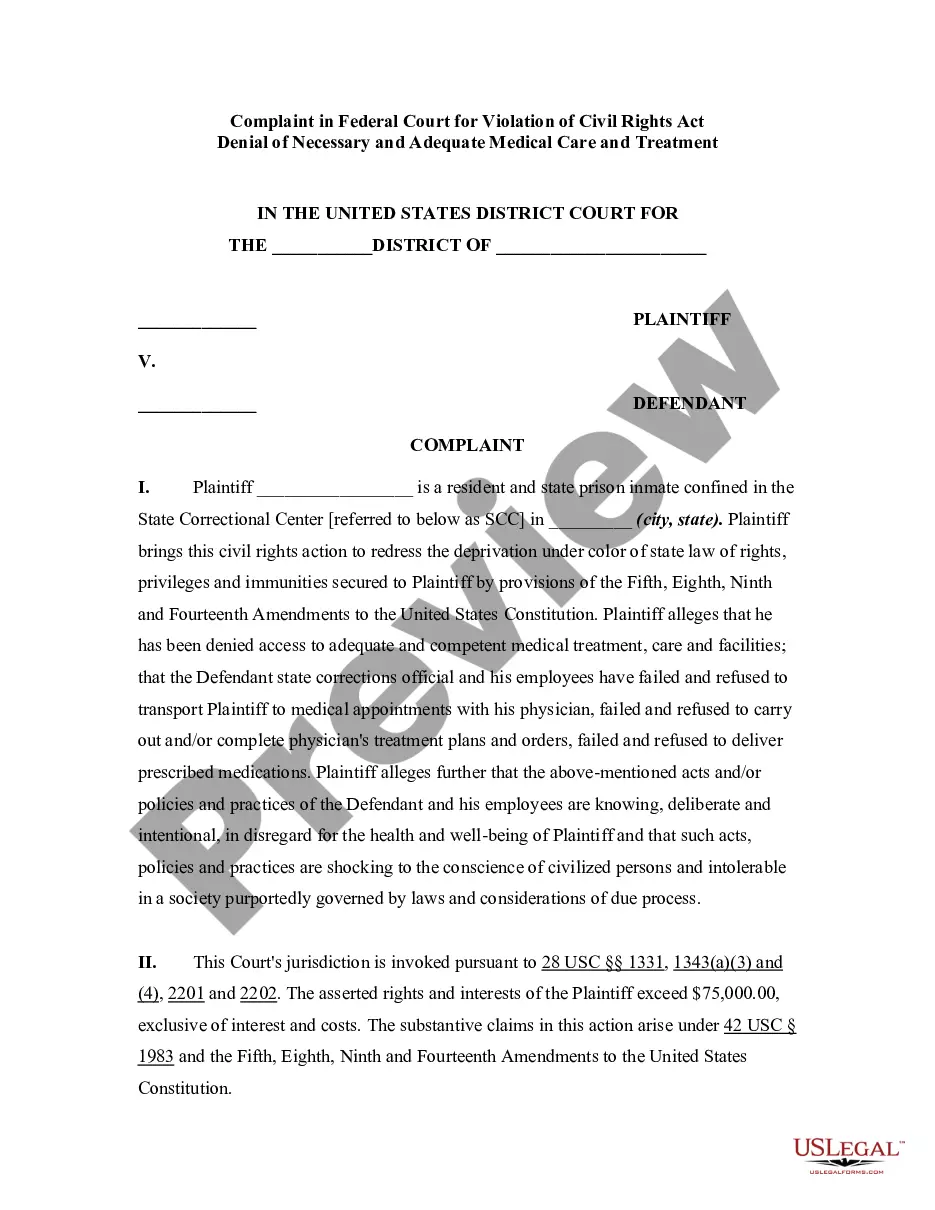
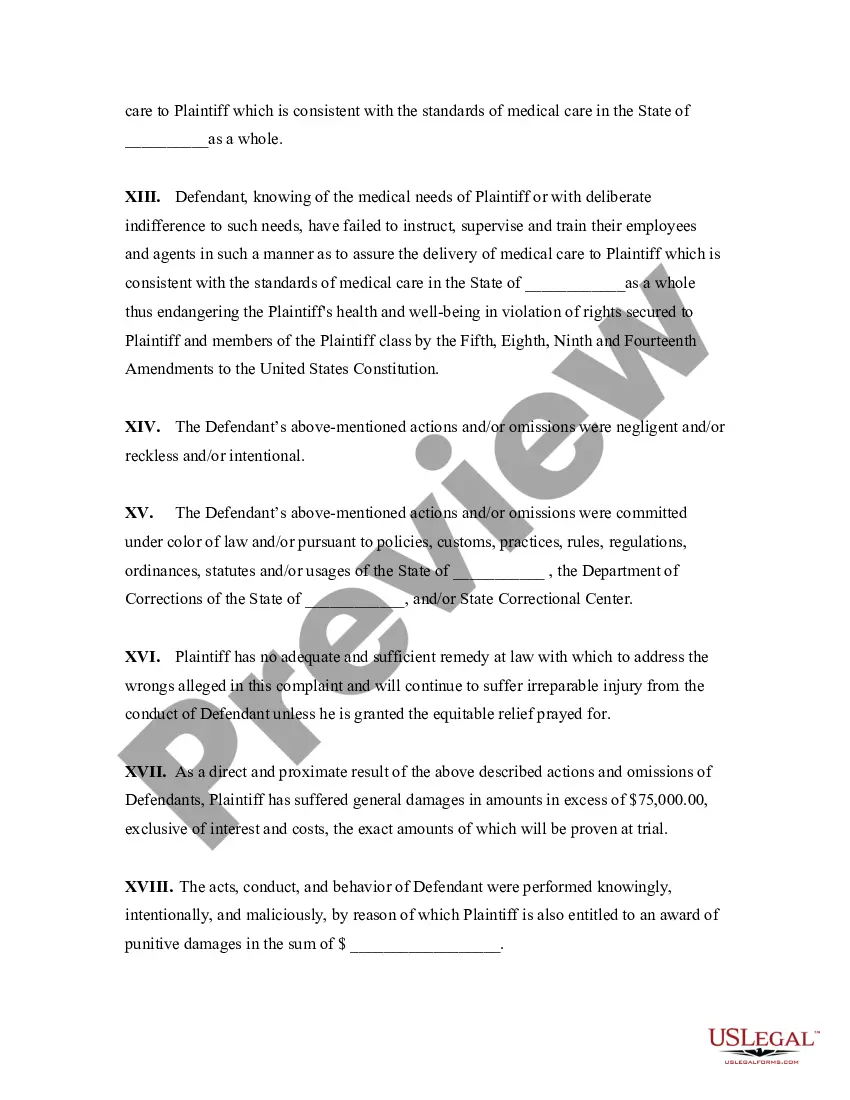
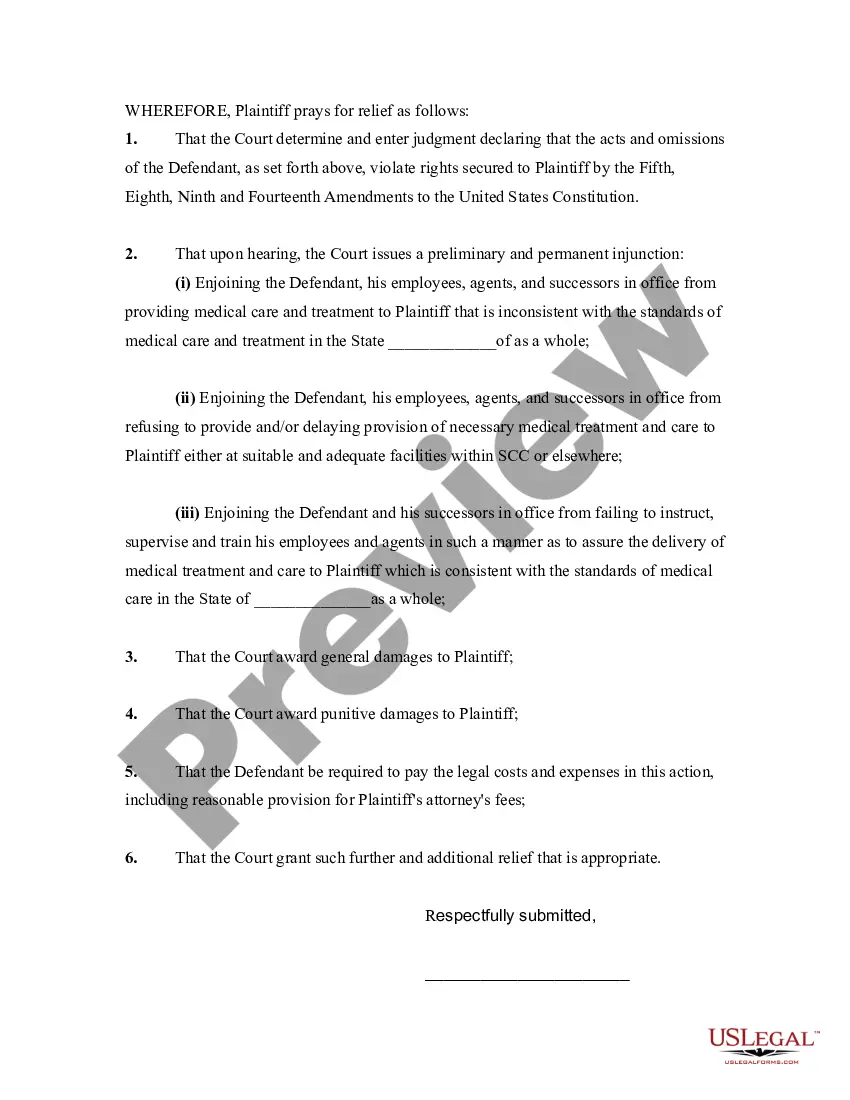
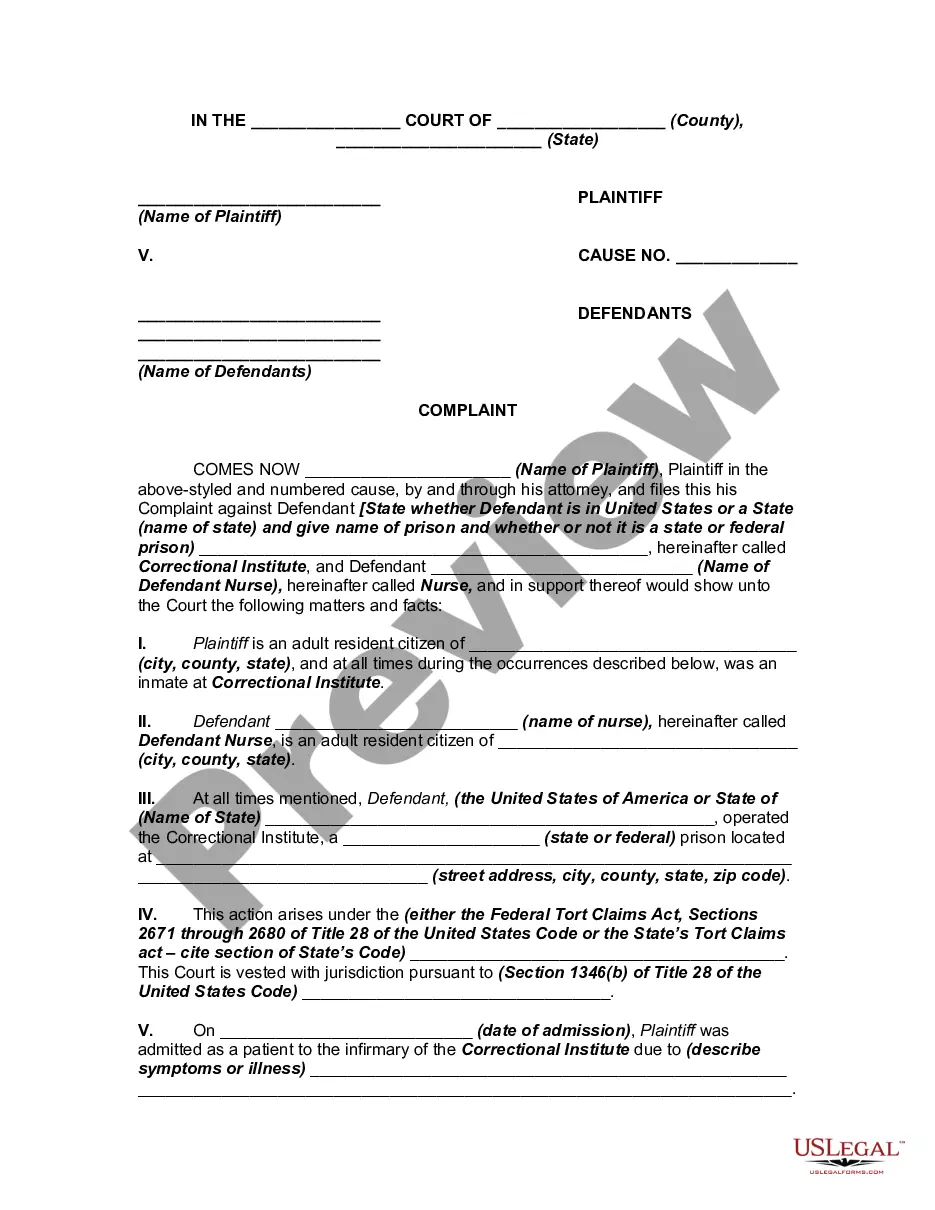
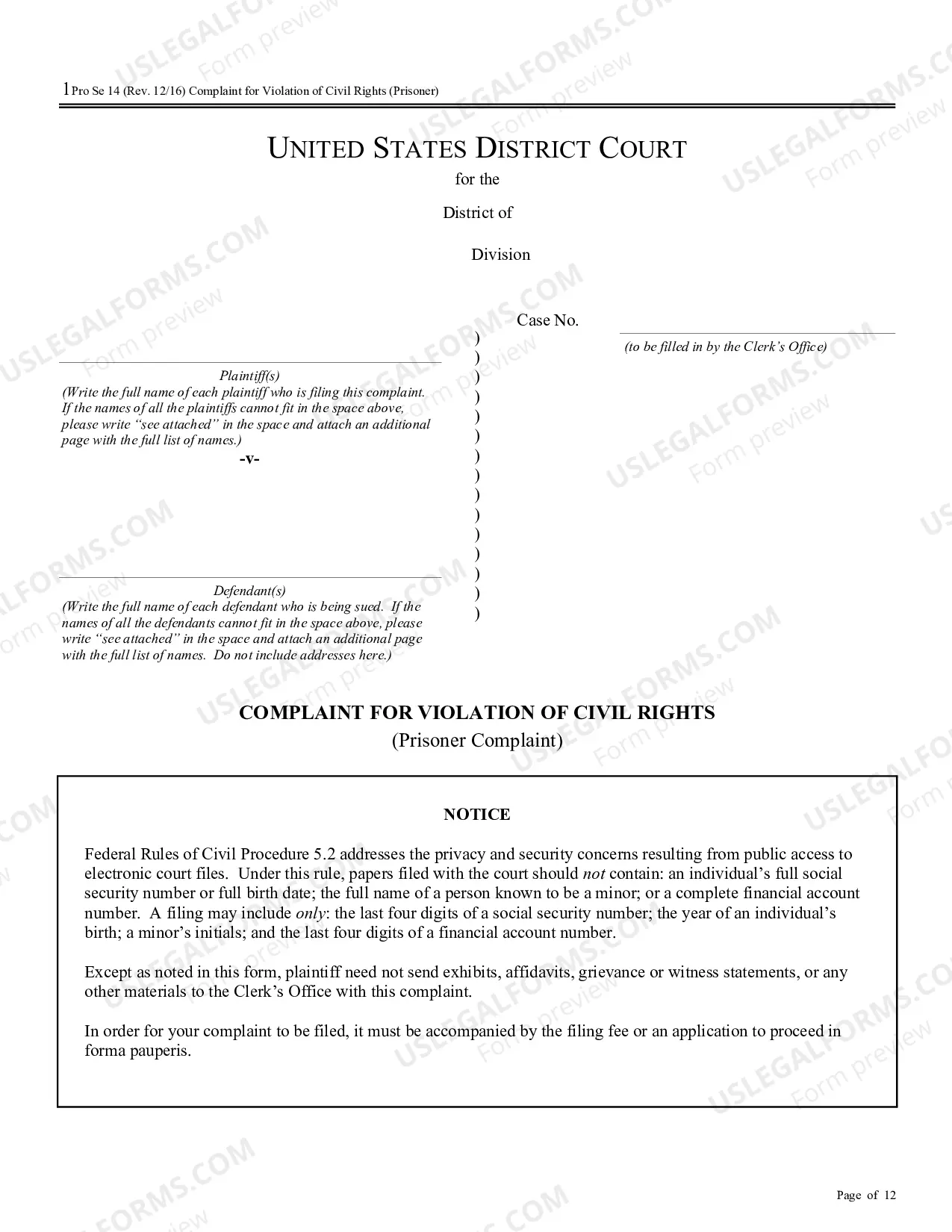
This Complaint in Federal Court for Violation of Civil Rights Act Denial of Necessary and Adequate Medical Care and Treatment for a State Inmate is a legal document used by inmates to address alleged violations of their constitutional rights regarding medical care. It is specifically designed for circumstances where the necessary medical treatment has been denied by state authorities, which can result in serious health consequences.
Key parts of this document
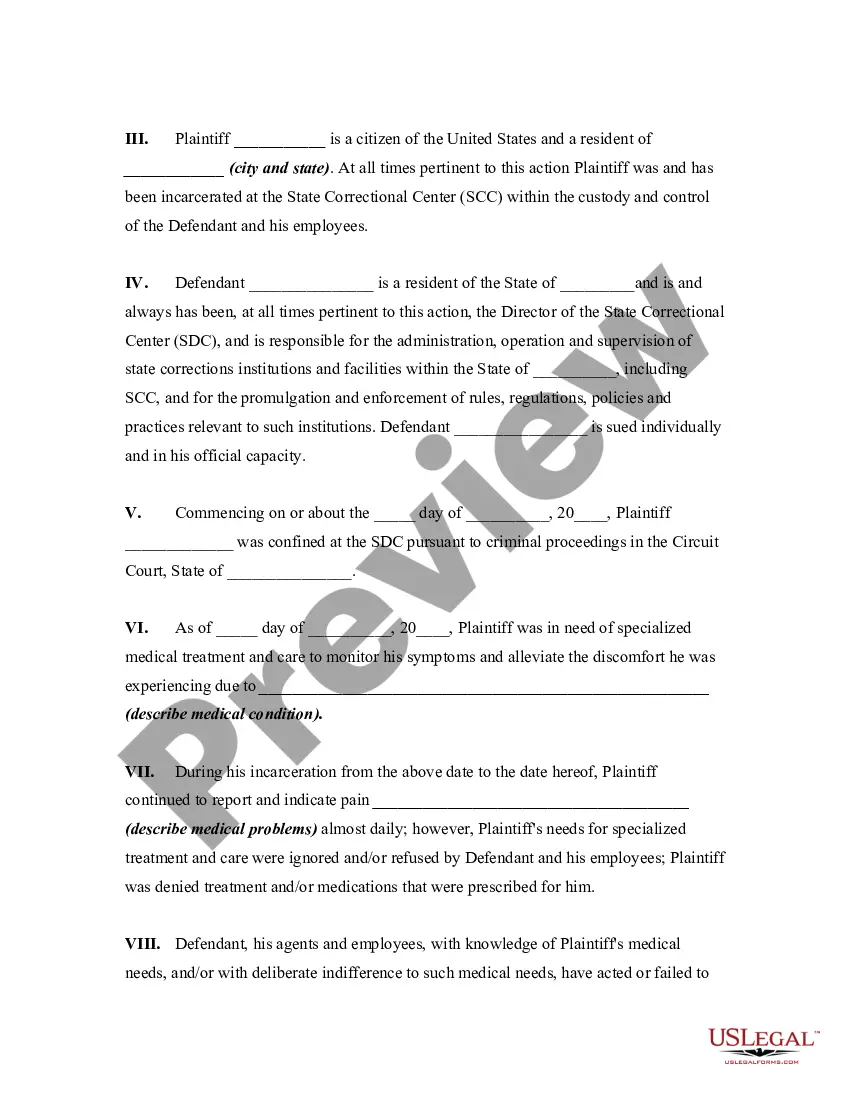
- Identification of the plaintiff and defendant, including their roles in the case.
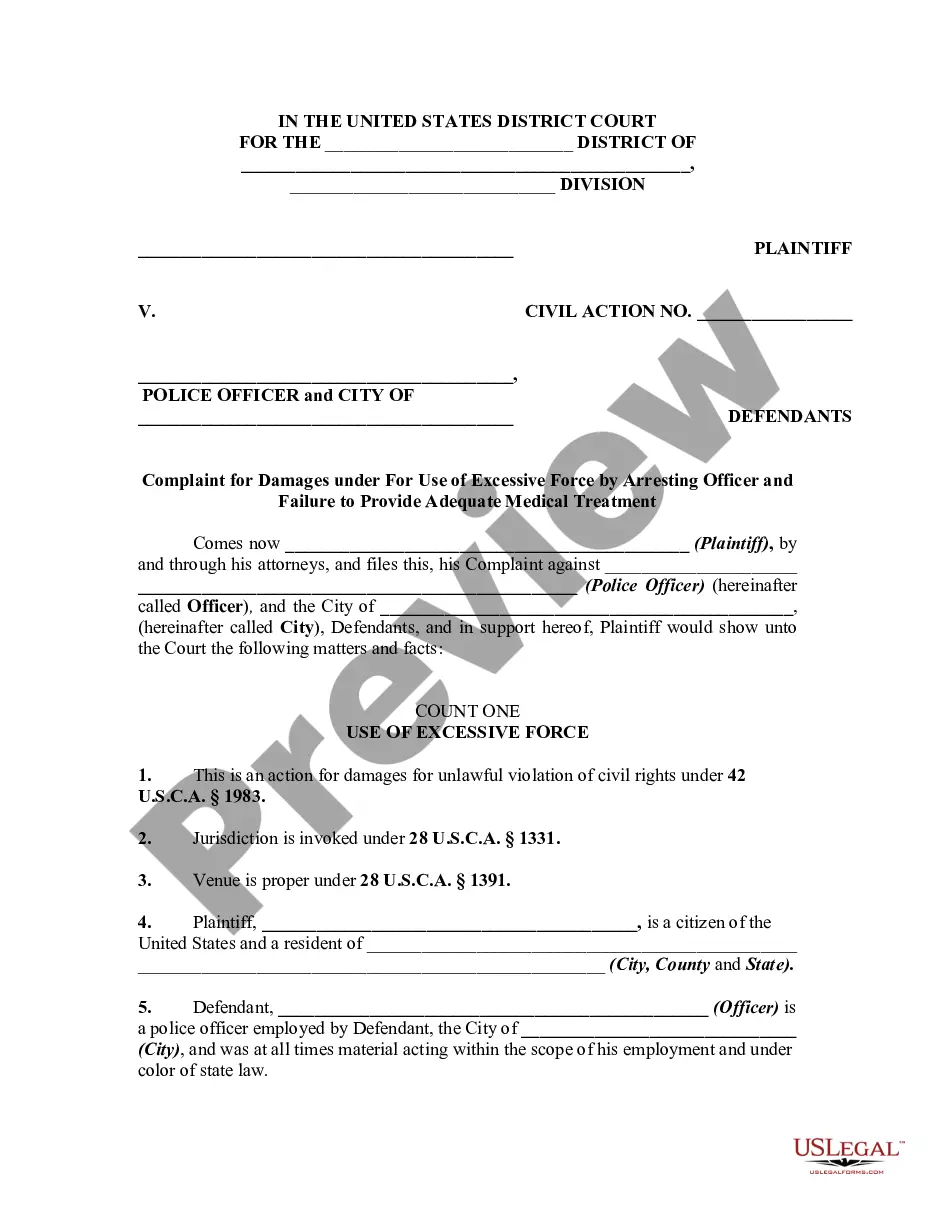
- Statement of jurisdiction and legal grounds for the complaint under 42 USC 1983.
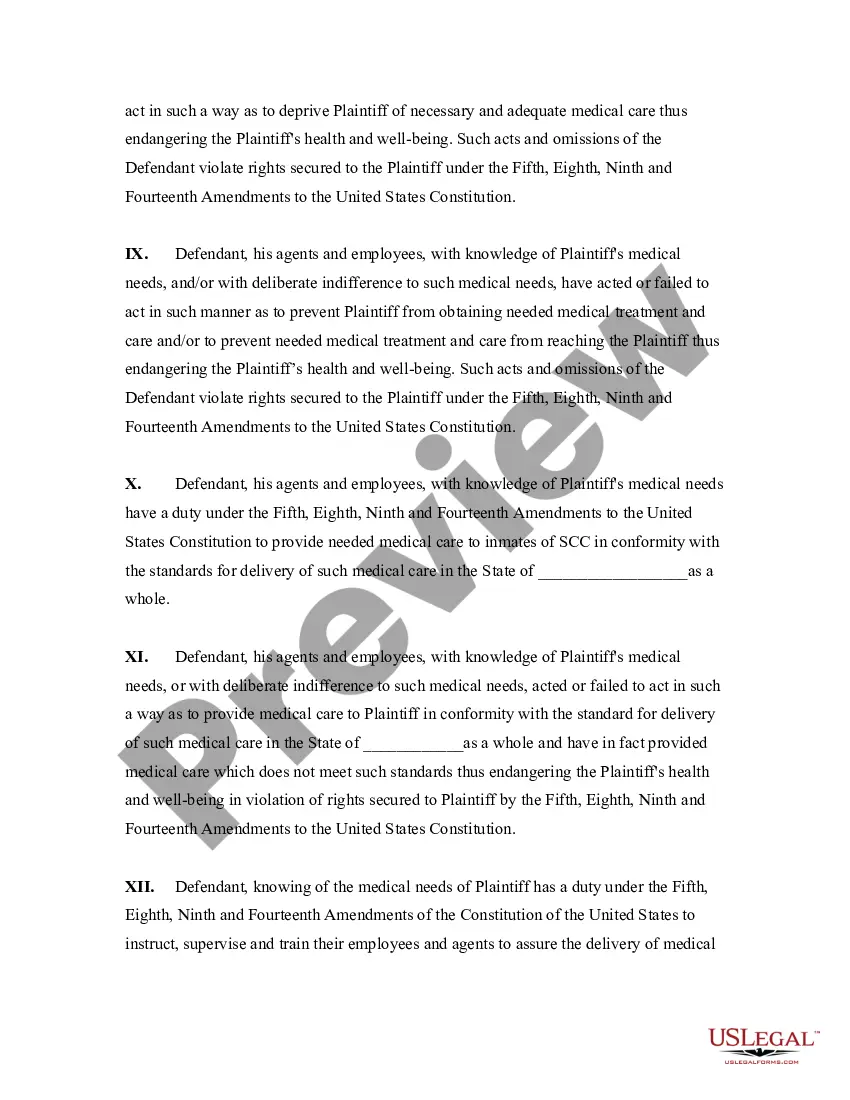
- Allegations detailing the specific denial of medical care and the impact on the inmate's health.
- Claims for damages based on the violations of constitutional rights.
- A request for equitable relief, including injunctions against future violations by the defendants.
When to use this document
This form should be used when a state inmate believes their rights have been violated due to the denial of necessary medical care. Situations may include not receiving prescribed medications, being denied transportation to medical appointments, or facing delays in treatment that could worsen existing health issues.
Who can use this document
- State inmates who have experienced denial of medical treatment.
- Attorneys representing inmates in civil rights actions.
- Individuals or advocates seeking to address health care issues within the state prison system.
How to prepare this document
- Identify and enter the names and details of the plaintiff and defendant, including their roles.
- Specify the legal basis for the complaint by citing relevant constitutional amendments.
- Describe the medical issues faced and the specific denial of care experienced.
- Include claims for damages and the relief sought from the court.
- Sign and date the complaint to validate the claim.
Does this document require notarization?
Notarization is generally not required for this form. However, certain states or situations might demand it. You can complete notarization online through US Legal Forms, powered by Notarize, using a verified video call available anytime.
Get your form ready online
Our built-in tools help you complete, sign, share, and store your documents in one place.
Make edits, fill in missing information, and update formatting in US Legal Forms—just like you would in MS Word.
Download a copy, print it, send it by email, or mail it via USPS—whatever works best for your next step.
Sign and collect signatures with our SignNow integration. Send to multiple recipients, set reminders, and more. Go Premium to unlock E-Sign.
If this form requires notarization, complete it online through a secure video call—no need to meet a notary in person or wait for an appointment.
We protect your documents and personal data by following strict security and privacy standards.

Make edits, fill in missing information, and update formatting in US Legal Forms—just like you would in MS Word.

Download a copy, print it, send it by email, or mail it via USPS—whatever works best for your next step.

Sign and collect signatures with our SignNow integration. Send to multiple recipients, set reminders, and more. Go Premium to unlock E-Sign.

If this form requires notarization, complete it online through a secure video call—no need to meet a notary in person or wait for an appointment.

We protect your documents and personal data by following strict security and privacy standards.
Avoid these common issues
- Failing to properly identify all parties involved in the complaint.
- Not including sufficient detail about the medical treatment that was denied.
- Omitting specific claims for damages or relief sought.
- Not adhering to jurisdictional requirements regarding where to file the complaint.
Benefits of completing this form online
- Convenience of completing the form from any location with internet access.
- Ability to edit and customize the form easily before final submission.
- Access to reliable templates that comply with legal standards.
Legal use & context
- This form is rooted in federal civil rights law under 42 USC 1983.
- It is designed to protect the rights of inmates to receive adequate medical care.
- Ensuring proper completion and filing may impact the outcome of the complaint.
What to keep in mind
- The form addresses serious claims of medical neglect in state correctional facilities.
- Clear and detailed allegations are crucial for a successful complaint.
- Proper filing and adherence to legal standards are key to protecting the rights of inmates.
Looking for another form?





Form popularity
FAQ
Prisoners may not refuse testing or treatment for a condition that would threaten the health and safety of the prison community, these including communicable diseases and treatable psychiatric conditions. Prisoners may also be forced to accept treatment that is necessary to protect their health from permanent injury.
Turning to legal claims for the harm that has already occurred, your daughter has potential claims for both deliberate indifference and negligence. The Eight Amendment to the U.S. Constitution protects against cruel and unusual punishment, including deliberate denial of necessary medical care in jail.
Although prisoners do not have full constitutional rights, they are protected by the Eighth Amendment's prohibition against cruel and unusual punishment.Prisoners also have rights to speech and religion, to the extent these rights do not interfere with their status as inmates.
Ignoring a situation known to exist. The legal term is used in two areas of the law: in harassment claims and in regards to due process and the Eighth Amendment to the United States Constitution in regards to the rights of persons incarcerated.
The Eighth Amendment applies to inmate medical treatment because it not only prohibits excessive force but also requires that prisoners be afforded humane conditions of confinement, so that prison officials ensure that inmates receive adequate food, clothing, shelter, and medical care. Farmer v.
What is deliberate indifference? A prison official demonstrates "deliberate indifference" if he or she recklessly disregards. a substantial risk of harm to the prisoner.4. This is a higher standard than negligence, and requires that the official knows of and disregards an excessive risk of harm to the.
Inmates generally lose their right to privacy in prison. They are not protected from warrantless searches of their person or cell. While inmates do retain their Due Process rights and are free from the intentional deprivation of their property by prison officials, this does not include any form of contraband.
To establish deliberate indifference, a Santa Fe civil rights lawyer must prove that the prison guard or other prison official was subjectively aware of the prisoners serious medical condition and chose to do nothing or to delay taking action.