Notice to Adjoining Landowner that Proposed Structure will Constitute Encroachment
About this form
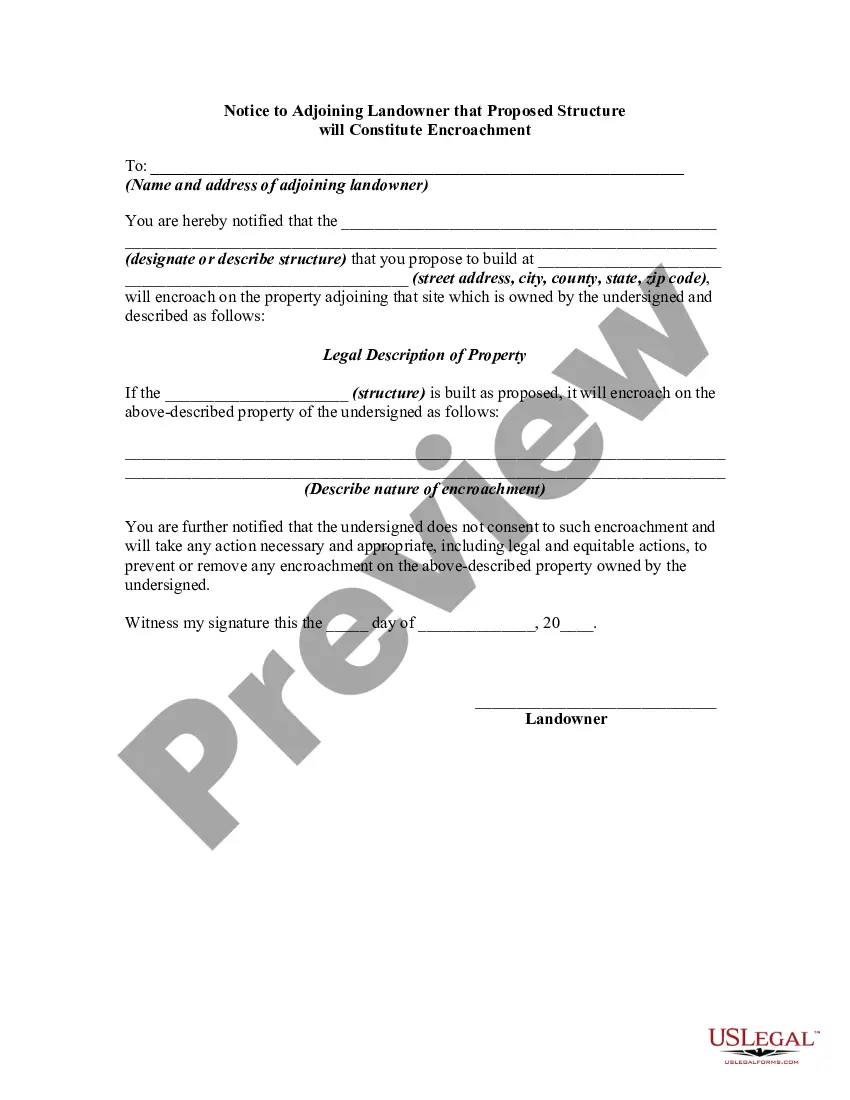
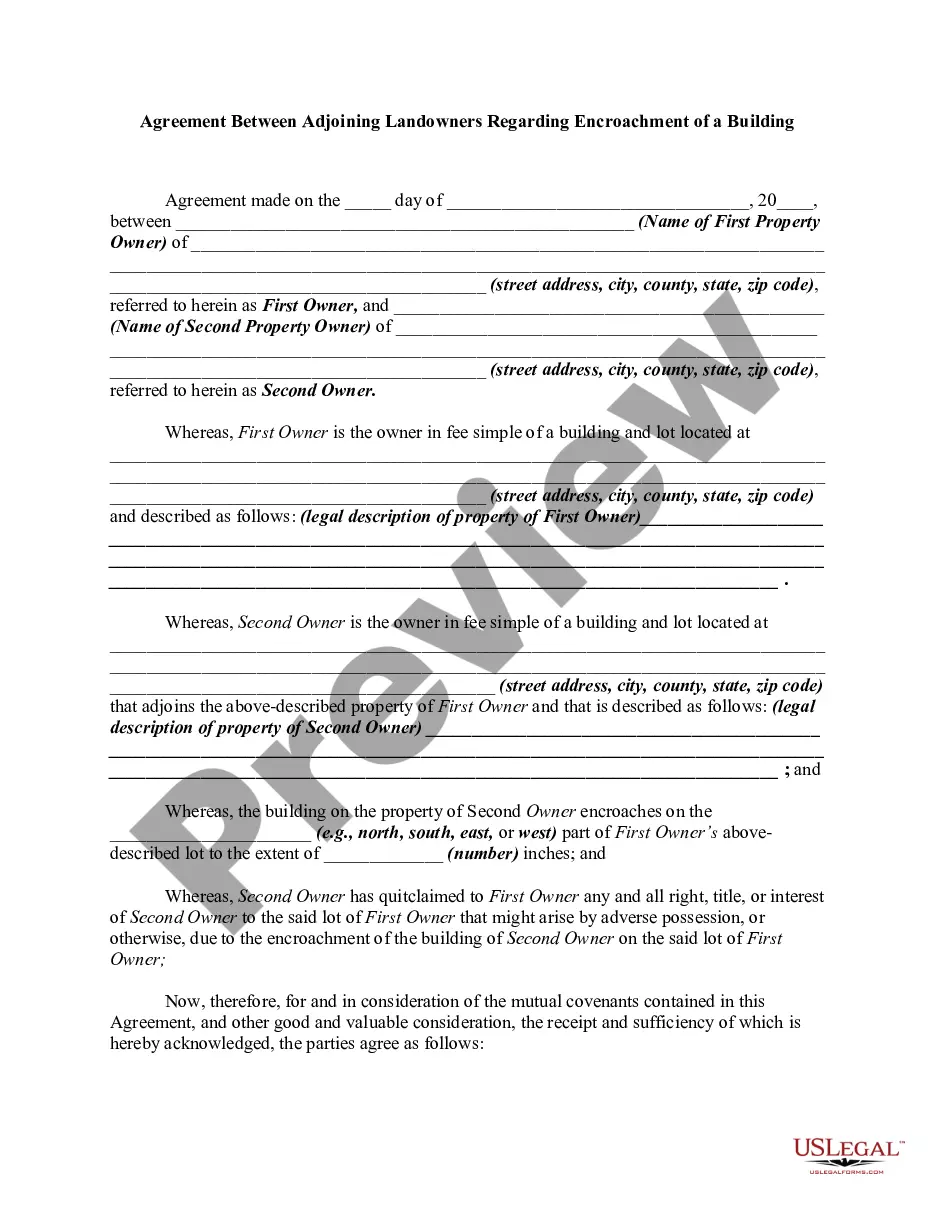
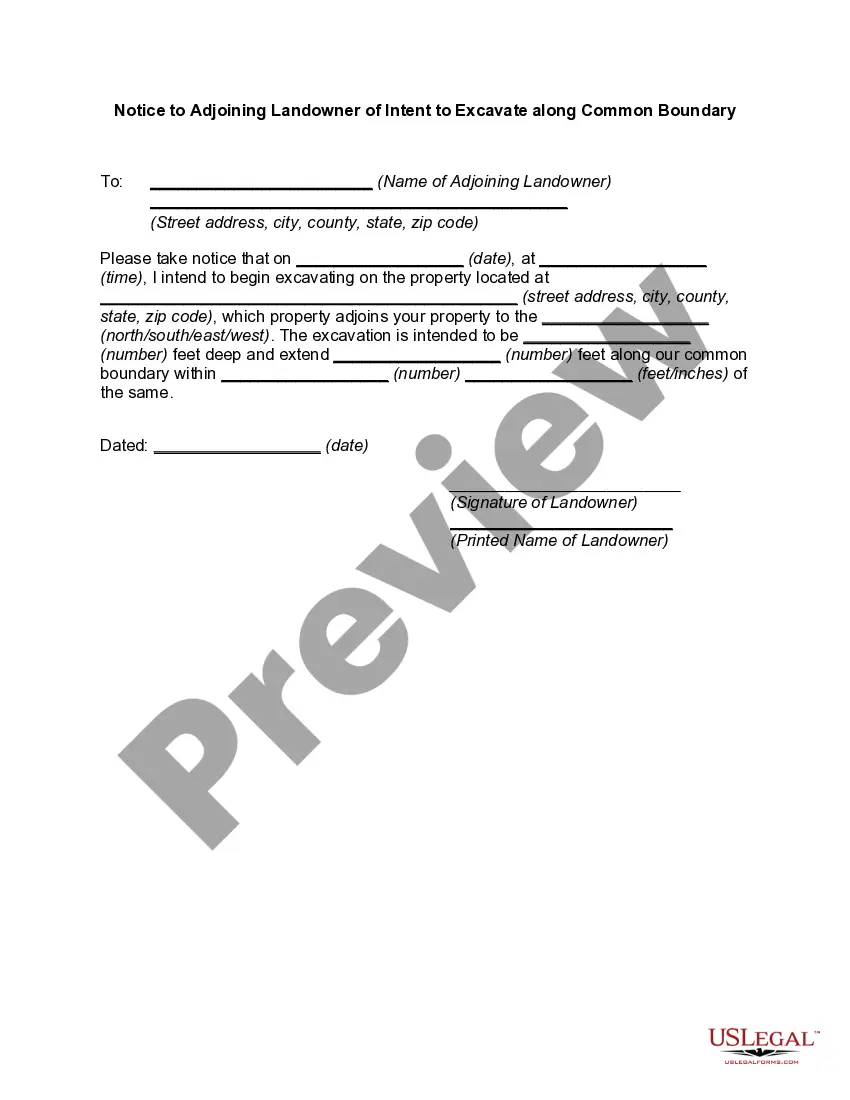
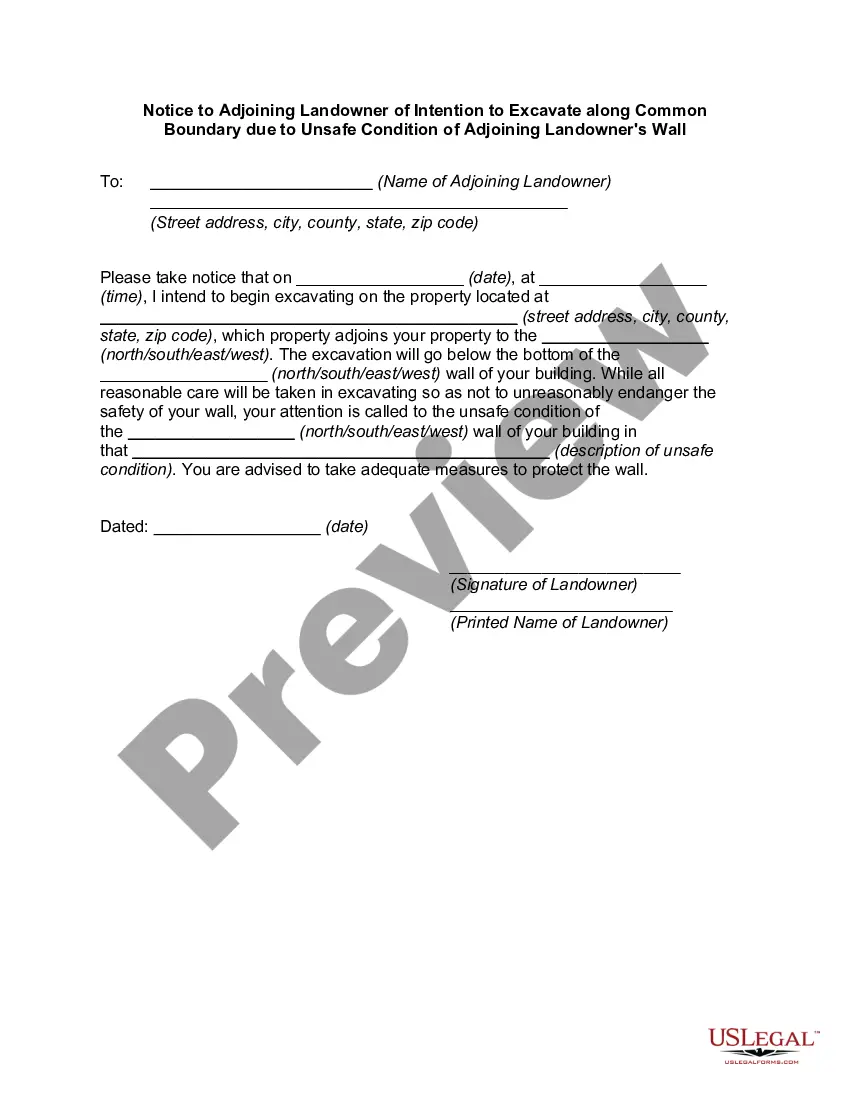
This Notice to Adjoining Landowner that Proposed Structure will Constitute Encroachment is a legal document that informs a neighboring property owner about a proposed construction project that may infringe upon their property rights. It serves as a formal notification, distinguishing it from other notices by its specific focus on encroachments, which involve physical overlaps of property lines due to construction or structures.
Main sections of this form
- Name and address of the adjoining landowner.
- Description of the proposed structure to be built.
- Address where the construction is planned.
- Legal description of the affected property.
- Description of how the proposed structure will encroach on the existing property.
- A statement of non-consent to the encroachment.
- Signature of the landowner issuing the notice.
Common use cases
This form should be used when a landowner intends to notify a neighboring property owner that their planned structure will intrude on the neighboring property. Common scenarios include building a fence, addition to a building, or any structure that may cross property lines. It is important to address such matters to avoid potential disputes and legal actions regarding property boundaries.
Who this form is for
- Homeowners contemplating new construction near property lines.
- Developers planning projects adjacent to existing properties.
- Property owners seeking to maintain clear boundaries with neighbors.
How to complete this form
- Identify the name and address of the adjoining landowner.
- Clearly describe the proposed structure that will encroach.
- Provide the full address where the construction is to take place.
- Include the legal description of your own property that will be affected.
- Describe in detail how the proposed construction will encroach on your property.
- Sign and date the document to finalize the notification.
Notarization guidance
Notarization is generally not required for this form. However, certain states or situations might demand it. You can complete notarization online through US Legal Forms, powered by Notarize, using a verified video call available anytime.
Get your form ready online
Our built-in tools help you complete, sign, share, and store your documents in one place.
Make edits, fill in missing information, and update formatting in US Legal Forms—just like you would in MS Word.
Download a copy, print it, send it by email, or mail it via USPS—whatever works best for your next step.
Sign and collect signatures with our SignNow integration. Send to multiple recipients, set reminders, and more. Go Premium to unlock E-Sign.
If this form requires notarization, complete it online through a secure video call—no need to meet a notary in person or wait for an appointment.
We protect your documents and personal data by following strict security and privacy standards.

Make edits, fill in missing information, and update formatting in US Legal Forms—just like you would in MS Word.

Download a copy, print it, send it by email, or mail it via USPS—whatever works best for your next step.

Sign and collect signatures with our SignNow integration. Send to multiple recipients, set reminders, and more. Go Premium to unlock E-Sign.

If this form requires notarization, complete it online through a secure video call—no need to meet a notary in person or wait for an appointment.

We protect your documents and personal data by following strict security and privacy standards.
Typical mistakes to avoid
- Failing to include a clear description of the proposed structure.
- Neglecting to provide the legal description of the affected property.
- Not providing the correct address for the construction location.
- Omitting the signature, which is crucial for the validity of the notice.
- Ignoring local regulations regarding property encroachment.
Why use this form online
- Convenience of immediate download and printing.
- Editability to personalize the document to specific situations.
- Access to professionally drafted templates to ensure legal compliance.
- Elimination of concerns about legality, knowing the form is created by licensed attorneys.
Looking for another form?



Form popularity
FAQ
There is a term for this battle of land: encroachment. An encroachment happens when a fence or another piece of your neighbor's property crosses the property lines. Other examples of encroachments could involve trees, parts of a building, fencing or any other fixtures located on both pieces of property.
A neighbor will not own the part of a structure that encroaches on their land. Instead, the encroachment will be viewed as an act of trespass. Also, although the neighbor will be able to sue that person for trespass, they will not automatically gain legal title to the portion of the building that is now on their land.
Have a Professional Land Survey Done. Talk Things Out and Offer Concessions. Seek Mediation or a Neutral Third Party. If all else fails, hire a qualified real estate attorney.
An encroachment occurs when part of a building or fixture from one property intrudes onto adjoining land. The encroachment may simply overhang or be physically attached to the adjoining property.
By suggesting that one party or the other should apply to the Revenue Officer to fix the limits, under section 101 (1) of the Punjab Land Revenue Act. by appointing a local Commissioner, and. by the Court itself making a local enquiry.
When you file a nuisance lawsuit against your neighbor, you essentially make the claim that your neighbor's actions are interfering with the enjoyment of your property. Nuisance claims are considered either private or public.A nuisance typically involves non-physical elements, such as odors or sounds.
A Land Survey Works Wonders for Boundary Disputes. If you feel like your neighbor has or is developing on top of your land, you may want to get a professional land survey. Talk it Over and Offer Concessions. Bring on a Neutral Third Party. Hire a Qualified Estate Attorney.
Describe the violation. Explain that you are giving the neighbor notice that she needs to remove the encroaching structure. If relevant, mention other solutions such as selling the land or giving the neighbor permission to use the encroached-upon area.