Confidentiality and Noncompetition Agreement Between Employer and Executive Recruiter
About this form
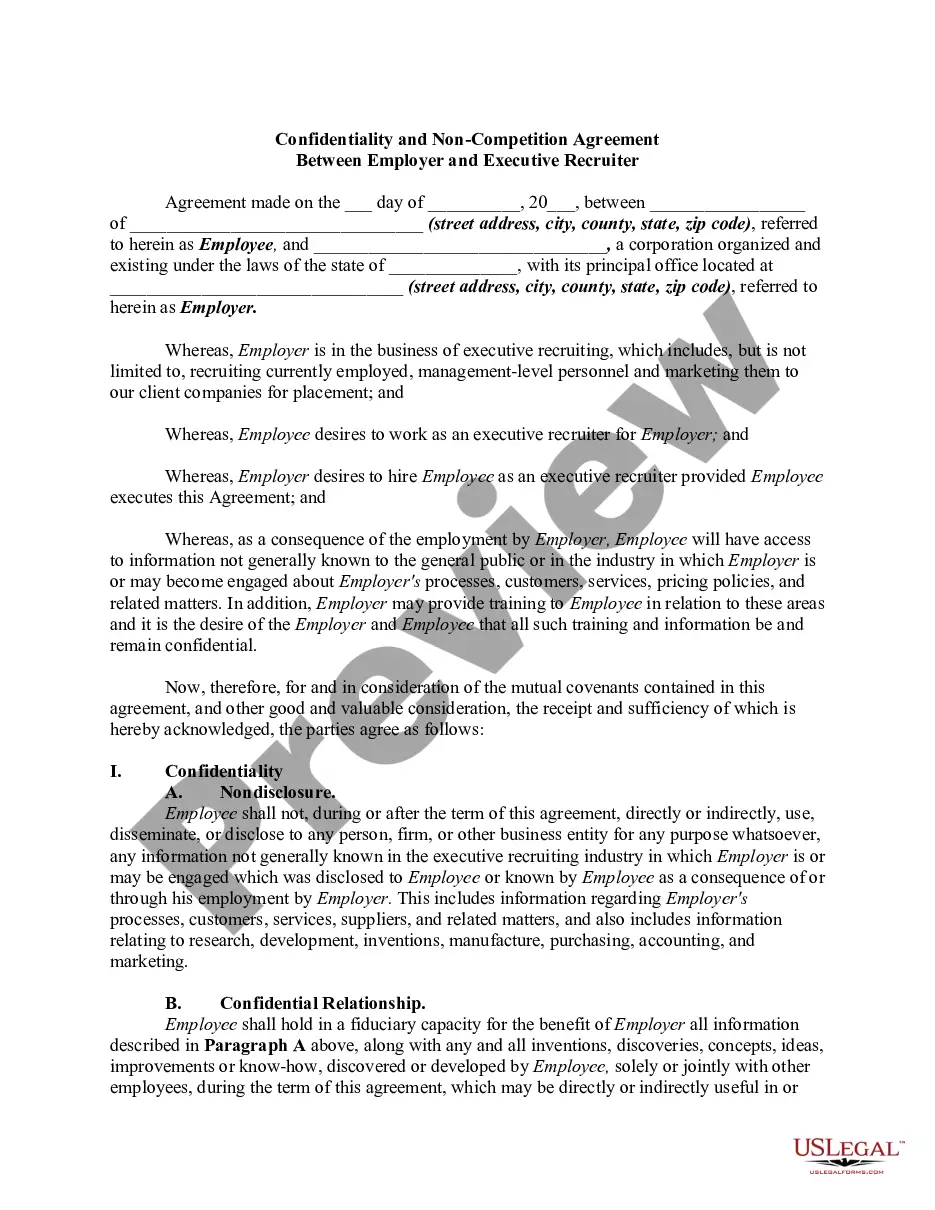
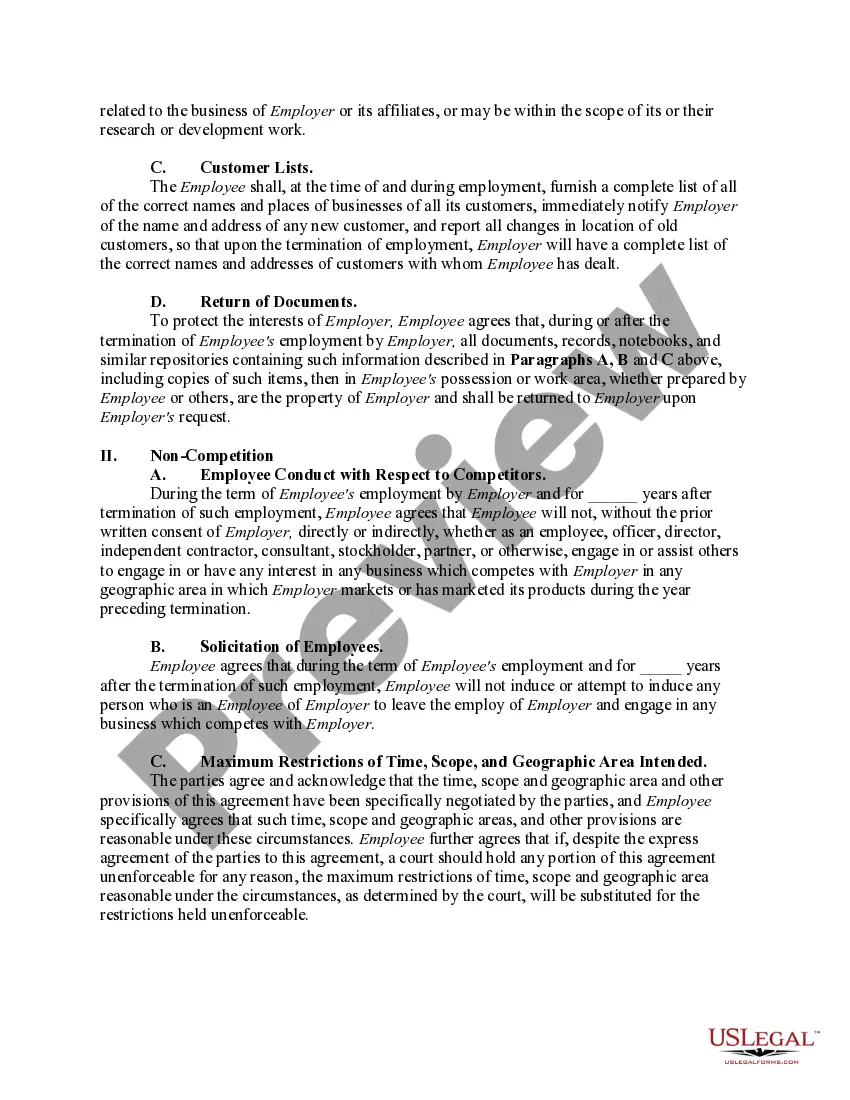
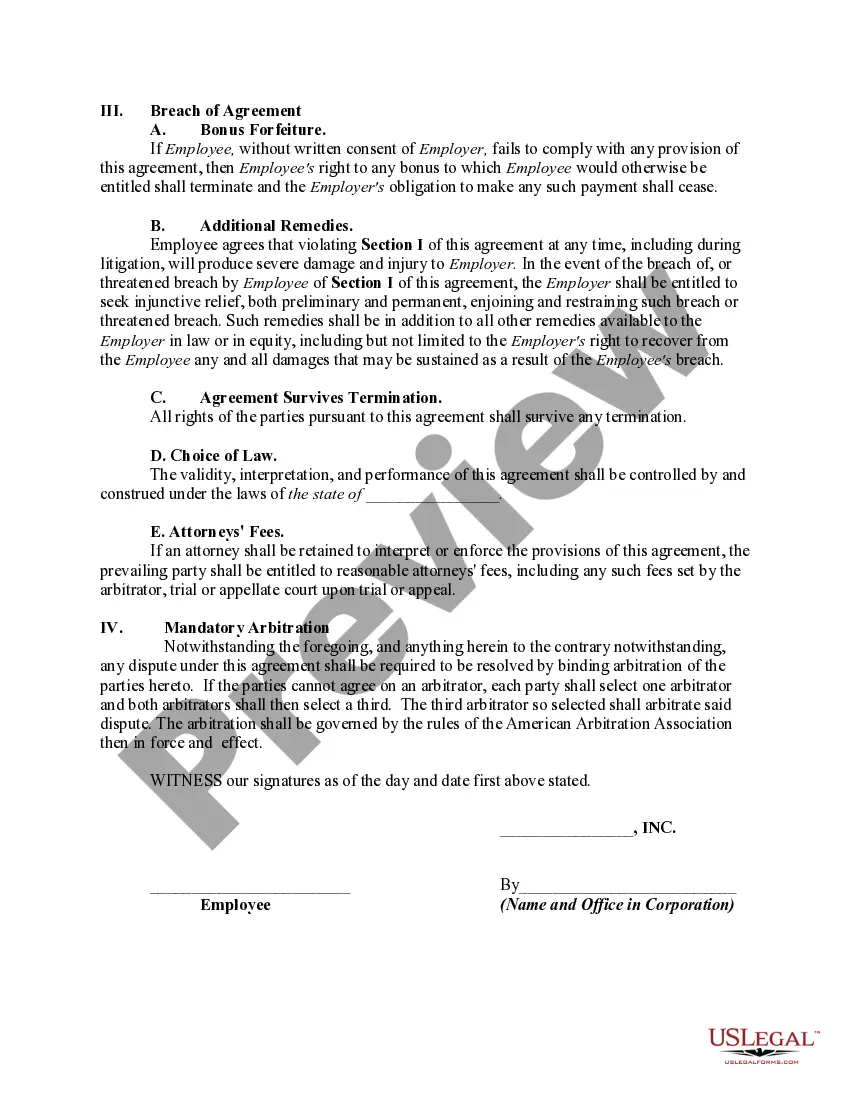
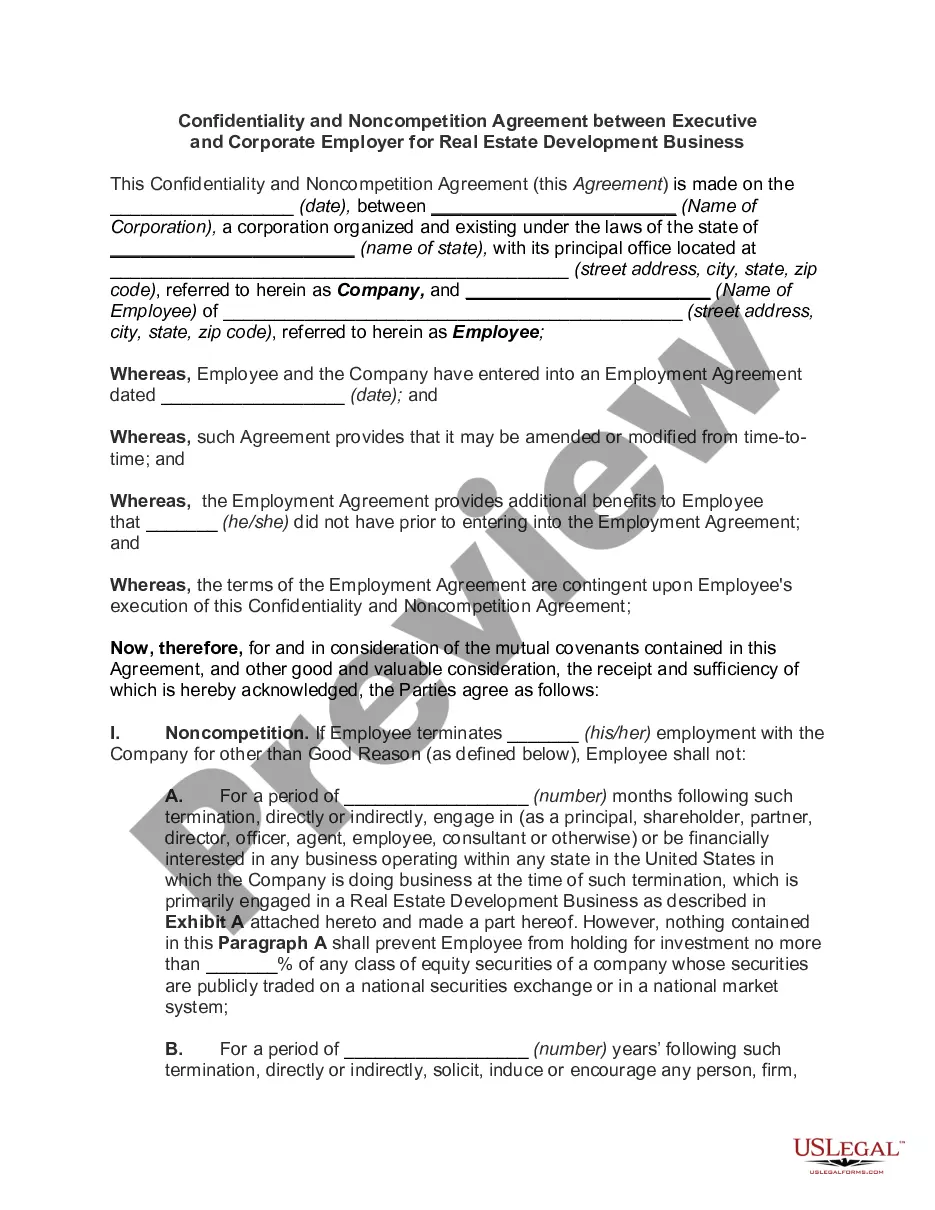
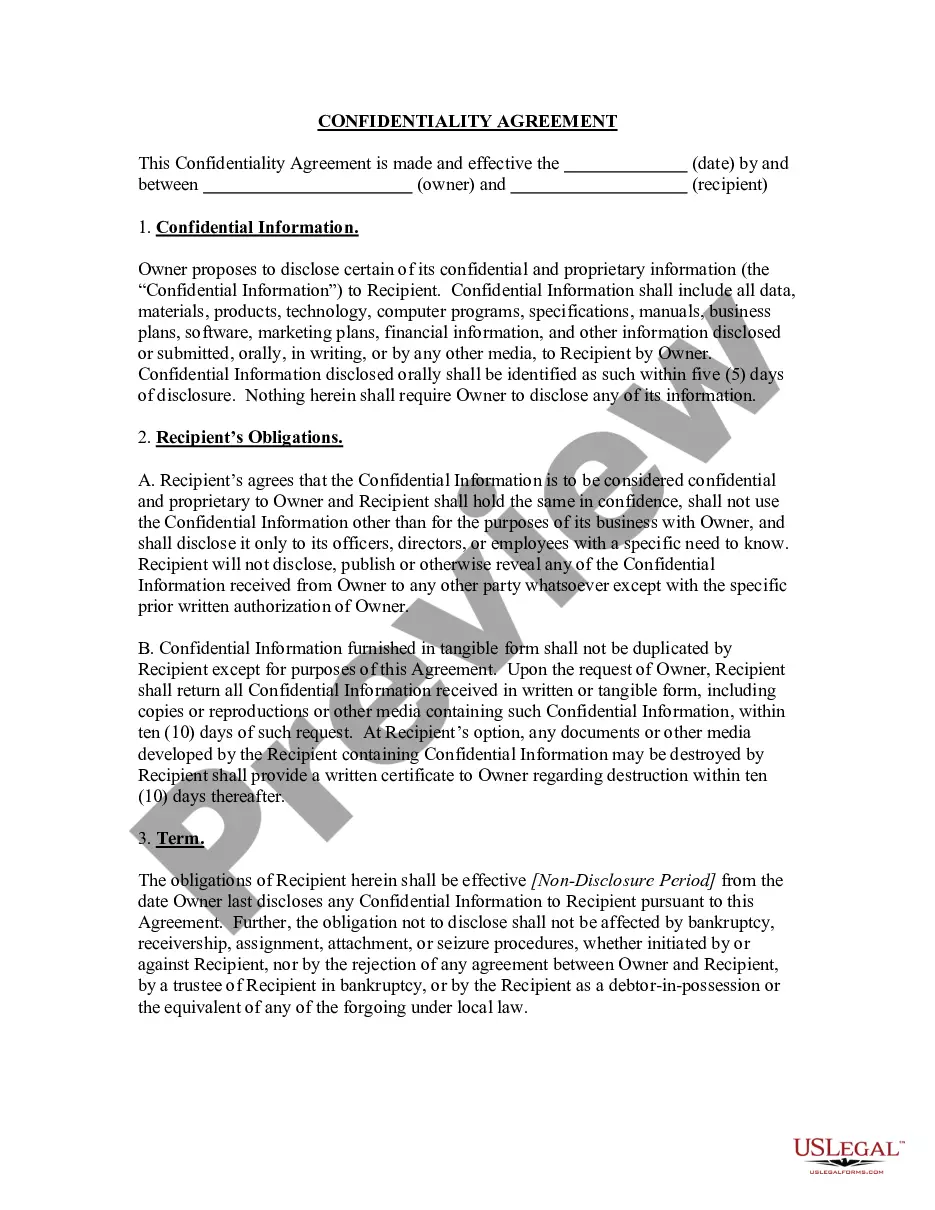
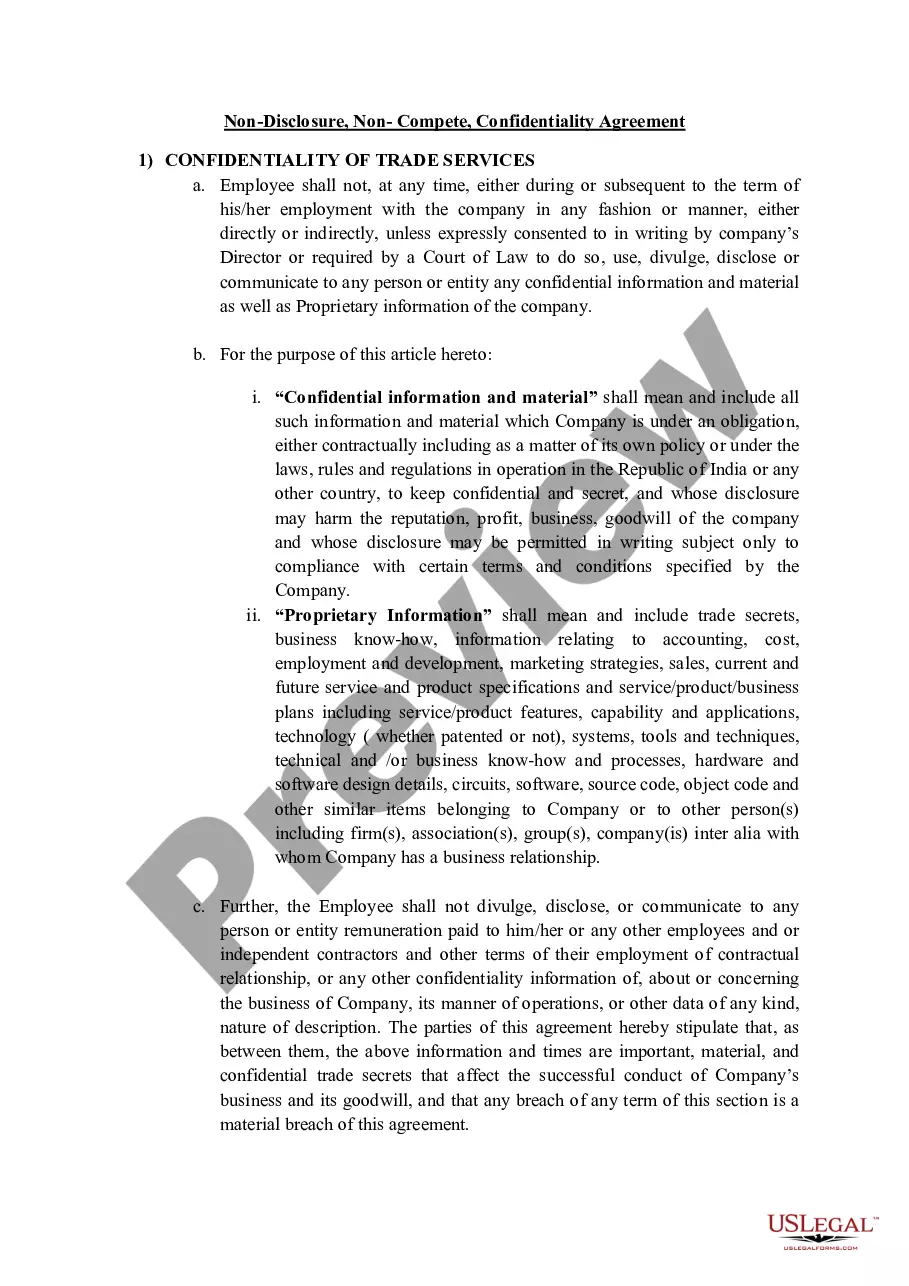
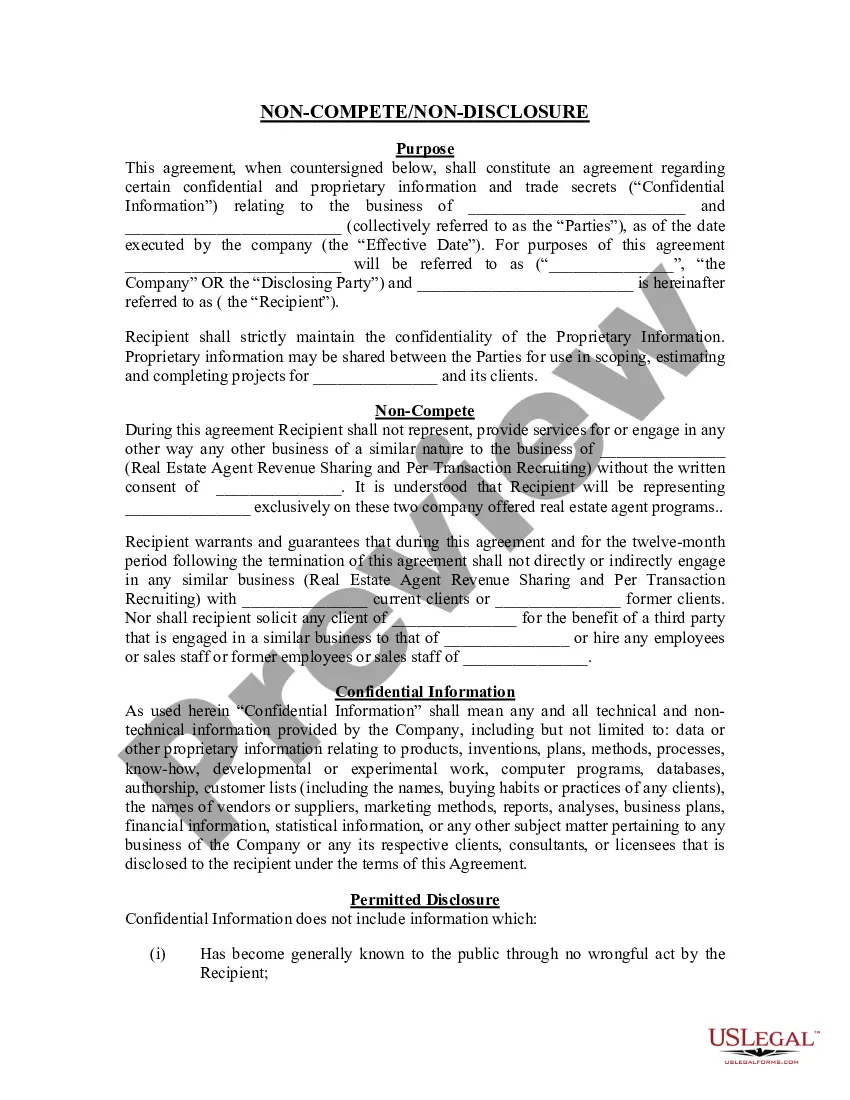
The Confidentiality and Noncompetition Agreement Between Employer and Executive Recruiter is a legal document designed to protect an employer's confidential information and prevent competition from former executive recruiters. This form establishes non-disclosure and non-competition clauses, ensuring that sensitive company information remains confidential even after the employment relationship has ended. It differs from other non-compete agreements by specifically addressing the unique nature of the executive recruiting industry.
Key parts of this document
- Confidentiality clauses outlining the nondisclosure of sensitive information.
- Non-competition terms restricting the employee's engagement with competing businesses.
- Provisions related to the return of company property upon termination of employment.
- Terms governing the solicitation of the employer's employees by the past employee.
- Agreement on mandatory arbitration for dispute resolution.
When to use this form
This agreement is typically used when an employer hires an executive recruiter and wishes to protect its confidential information and competitive advantage. Use this form when you want to ensure that the recruiter will not disclose sensitive information or compete with your company after their employment ends.
Who needs this form
- Employers in the executive recruiting industry.
- Executive recruiters being hired by an employer.
- Companies that require employees to keep proprietary information confidential.
How to complete this form
- Identify the parties involved, including the employer and employee details.
- Specify the terms of confidentiality and non-competition, including duration and geographic area.
- Fill in the completion date and additional relevant details as required.
- Ensure both parties sign the document to acknowledge agreement.
- Keep copies of the signed agreement for future reference and compliance.
Notarization guidance
This form does not typically require notarization unless specified by local law. However, it is always recommended to check the regulations in your specific state to ensure legal compliance.
Get your form ready online
Our built-in tools help you complete, sign, share, and store your documents in one place.
Make edits, fill in missing information, and update formatting in US Legal Forms—just like you would in MS Word.
Download a copy, print it, send it by email, or mail it via USPS—whatever works best for your next step.
Sign and collect signatures with our SignNow integration. Send to multiple recipients, set reminders, and more. Go Premium to unlock E-Sign.
If this form requires notarization, complete it online through a secure video call—no need to meet a notary in person or wait for an appointment.
We protect your documents and personal data by following strict security and privacy standards.

Make edits, fill in missing information, and update formatting in US Legal Forms—just like you would in MS Word.

Download a copy, print it, send it by email, or mail it via USPS—whatever works best for your next step.

Sign and collect signatures with our SignNow integration. Send to multiple recipients, set reminders, and more. Go Premium to unlock E-Sign.

If this form requires notarization, complete it online through a secure video call—no need to meet a notary in person or wait for an appointment.

We protect your documents and personal data by following strict security and privacy standards.
Avoid these common issues
- Failing to specify the duration and geographic scope of the non-competition clause.
- Not defining confidential information clearly, leading to enforceability issues.
- Leaving out details regarding the return of company property.
Benefits of using this form online
- Convenience of downloading and completing the form at your own pace.
- Editability allows customization to fit specific business needs.
- Access to legally vetted templates drafted by licensed attorneys, ensuring compliance.
Legal use & context
- Courts scrutinize non-compete agreements for reasonableness to ensure they are not overly broad.
- Enforceability varies by state; certain states have restrictions on non-competition clauses.
- Agreements that are too restrictive in time, area, or scope may be struck down by courts.
Quick recap
- This form is essential for protecting employers' interests when hiring executive recruiters.
- Ensure clarity in the terms regarding confidentiality and non-competition.
- Review and comply with state-specific laws for enforceability.
Looking for another form?
Form popularity
FAQ
A statement in an employee's contract saying that if they leave the company they will not do business with its customers and will not try to get other employees to leave it to work for someone else: Everyone had to sign a non-solicitation agreement when they started to work here.
Set the date of the agreement. Describe the two parties, sometimes called the Disclosing Party and the Receiving Party.7feff Include names and identification, so there can be no misunderstanding about who signed the agreement.
Depending on the complexity of what you need protected and the number of parties involved, the cost of having an NDA drafted can vary significantly. When you hire a lawyer in the Priori network, drafting an NDA typically costs anywhere from $175-$1,500.
It is now standard practice for companies to include 'non-compete' provisions in contracts of employment. It restricts an employee from competing with the employer or joining a competitor during the term of the employment and for a period thereafter.
While an employer has the right to demand its employees sign a NDA when those employees have access to valuable company data (e.g. product formulas, private customer lists, financial reports, etc.), the employer should not ask an employee to sign a confidentiality agreement if the purpose is to protect information that
A confidentiality agreement (also called a nondisclosure agreement or NDA) is a legally binding contract in which a person or business promises to treat specific information as a trade secret and promises not to disclose the secret to others without proper authorization.
While an employer has the right to demand its employees sign a NDA when those employees have access to valuable company data (e.g. product formulas, private customer lists, financial reports, etc.), the employer should not ask an employee to sign a confidentiality agreement if the purpose is to protect information that
A definition of confidential information. Who is involved. Why the recipient knows the information. Exclusions or limits on confidential information. Receiving party's obligations. Time frame or term. Discloser to the recipient.
It is a contract through which the parties agree not to disclose information covered by the agreement. An NDA creates a confidential relationship between the parties, typically to protect any type of confidential and proprietary information or trade secrets. As such, an NDA protects non-public business information.