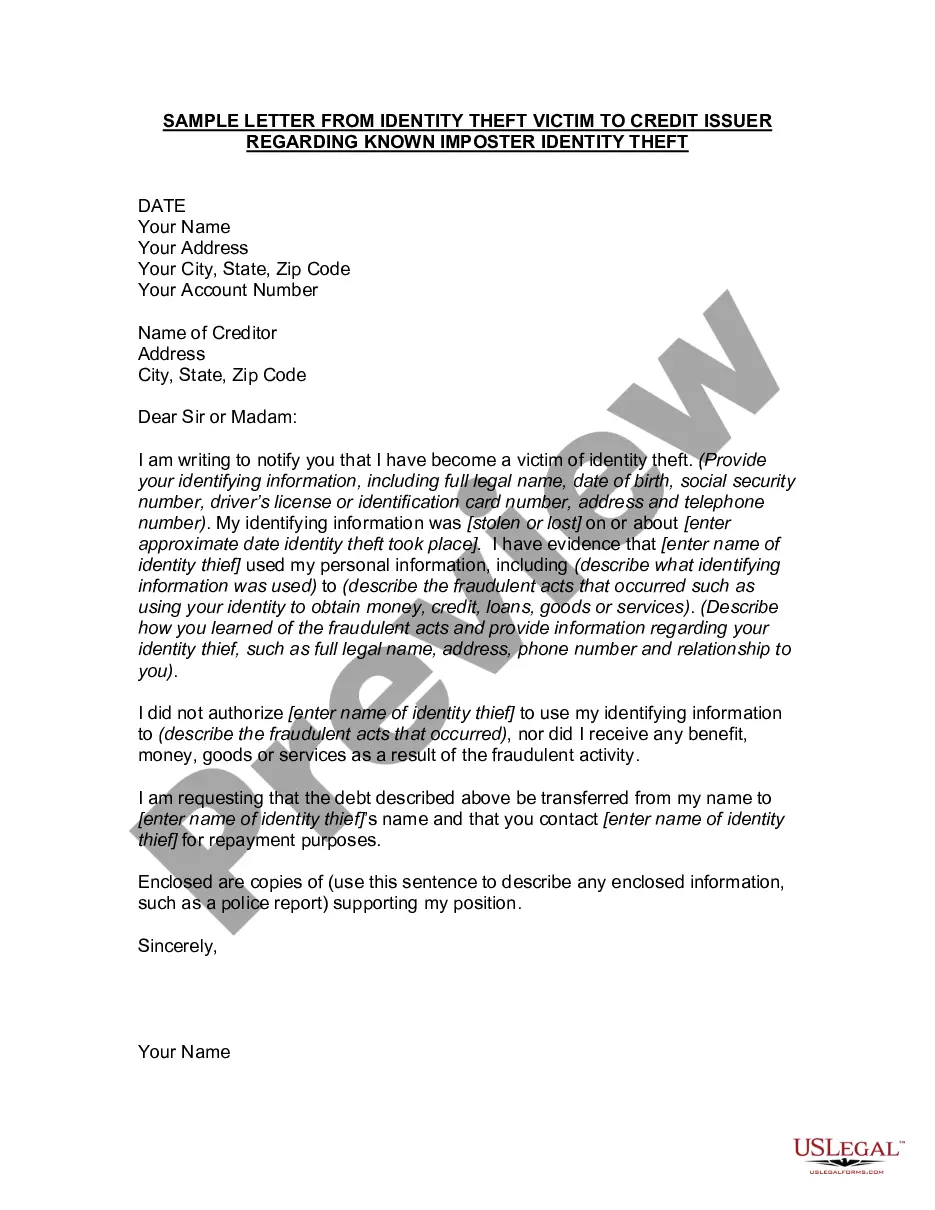
Letter from Identity Theft Victim to Credit Issuer Regarding Known Imposter Identity Theft
Understanding this form
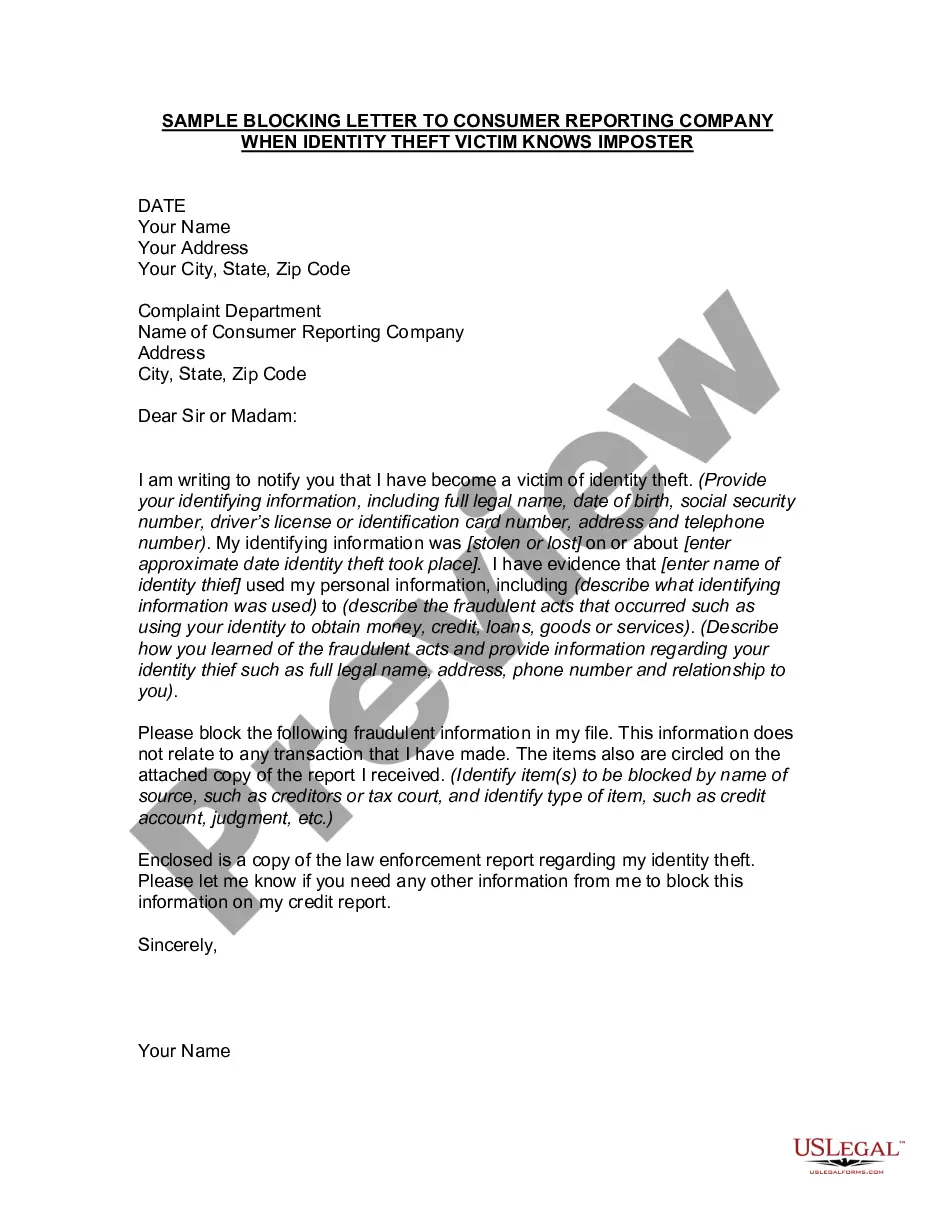
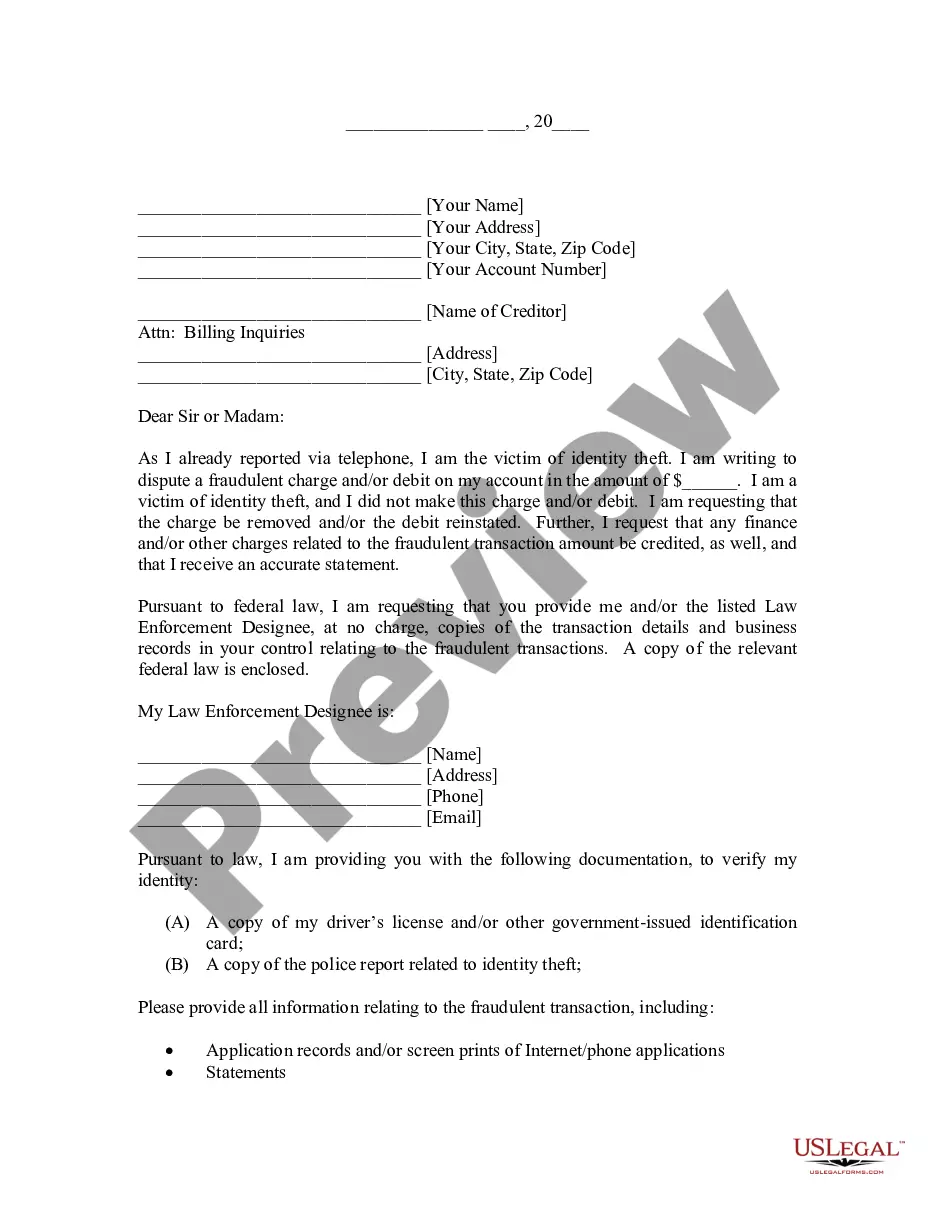
The Letter from Identity Theft Victim to Credit Issuer Regarding Known Imposter Identity Theft is a letter used by individuals whose identity has been stolen by someone they know. This form allows the victim to inform the credit issuer of the identity theft, request the transfer of the debt from their name to the imposterâs name, and seek contact with the imposter for repayment. This form is specifically tailored for cases where the victim is aware of the identity of the thief, distinguishing it from other general identity theft letters that may not require such specific information.
Form components explained
- Date of the letter
- Victim's name and contact information
- Creditor's name and address
- Account number related to the identity theft
- Detailed description of the identity theft and fraudulent activities
- Request for debt transfer and contact with the identity thief
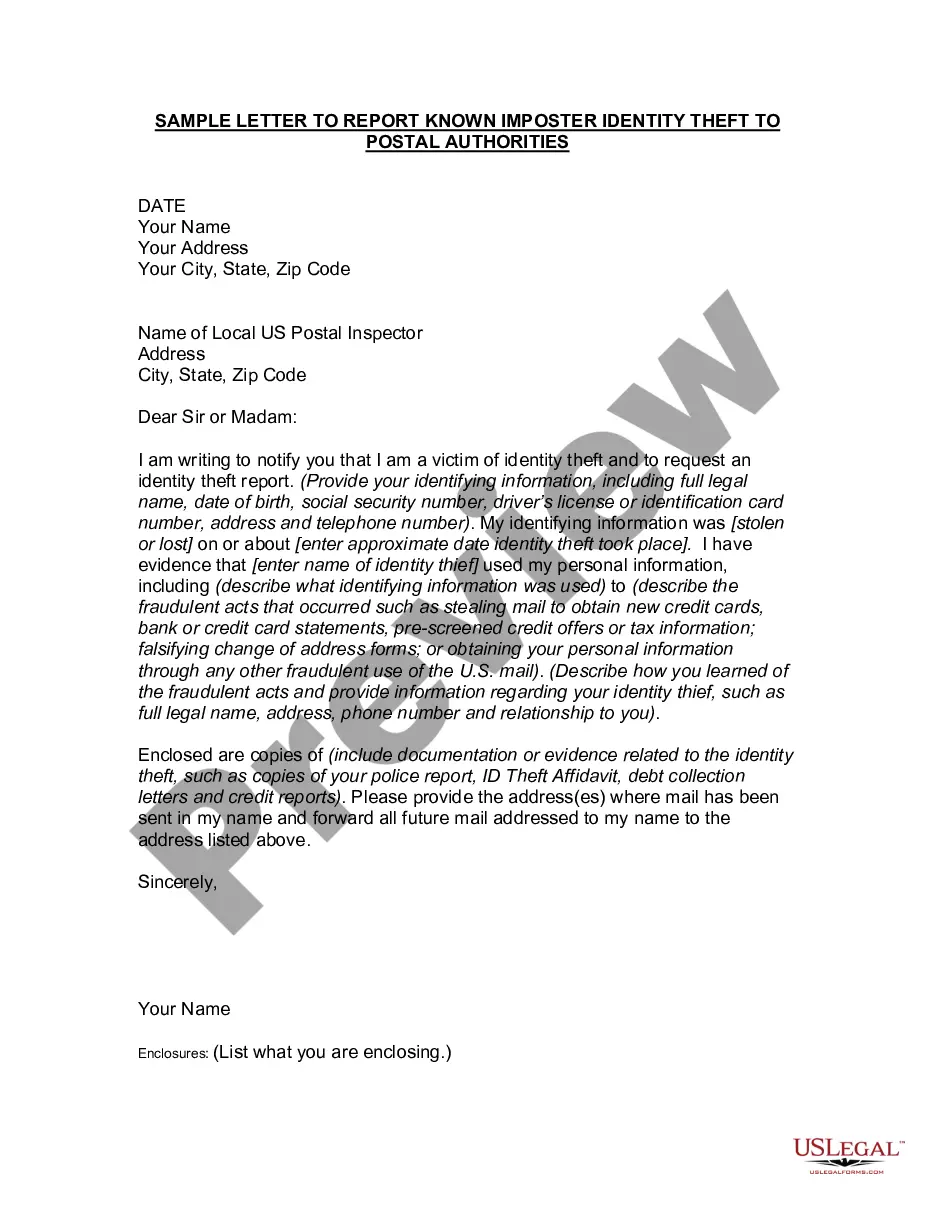
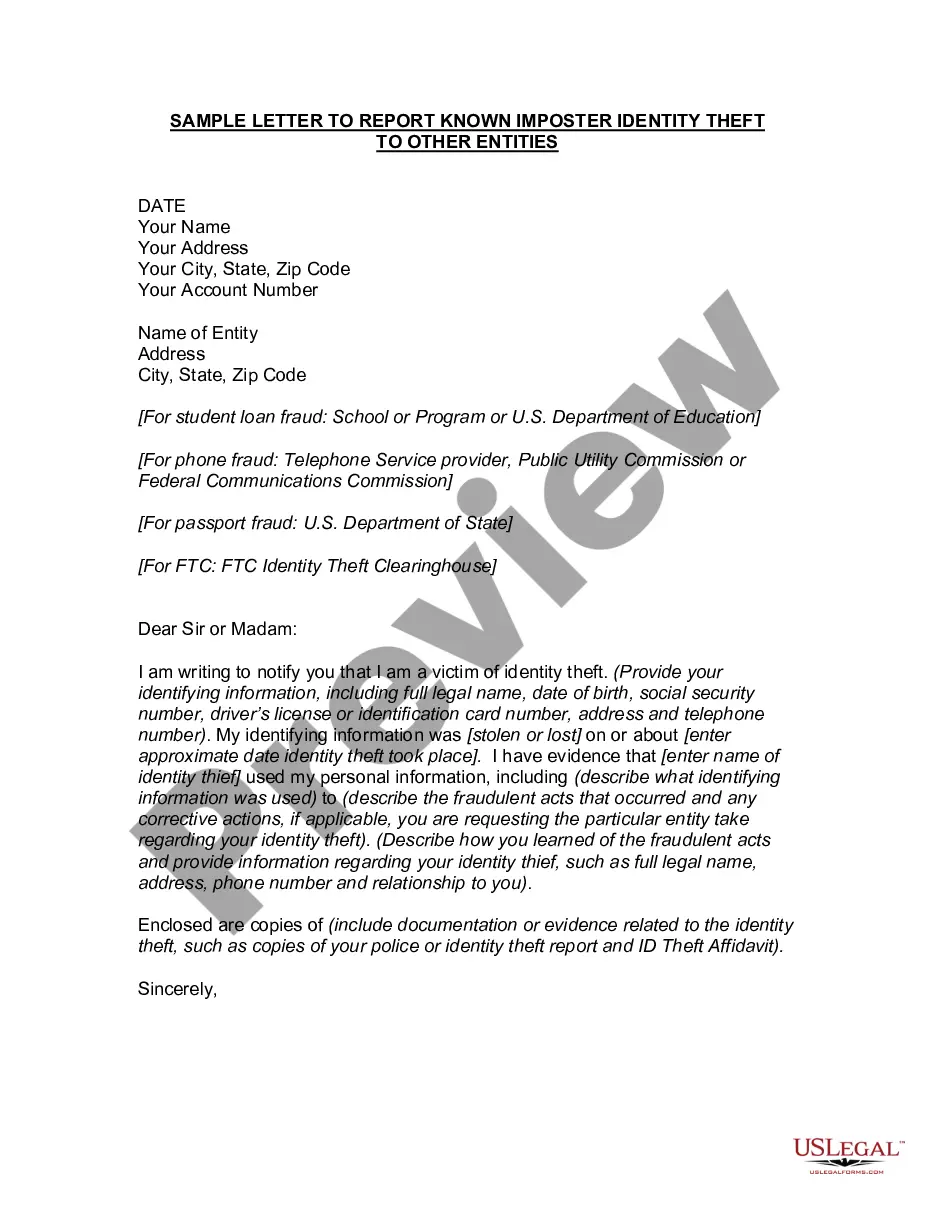
- Attachments supporting the claim, such as a police report

Situations where this form applies
This form should be used when an individual discovers that they have been a victim of identity theft, specifically when they know the identity of the person committing the fraud. Common scenarios include instances where the victim finds unauthorized charges on their credit account from someone they know or learns that their personal information was used without consent for financial gain by an acquaintance or family member.
Who needs this form
- Individuals who have been victims of identity theft
- Those who know the identity of the person misusing their information
- Anyone seeking to formally notify their credit issuer and request action regarding fraudulent debt
- Victims who have supporting documentation, such as police reports, to substantiate their claims
How to complete this form
- Enter the date of writing the letter at the top.
- Fill in your full name and contact information, including your address and phone number.
- Include the creditor's name, address, and your account number.
- Provide details about the identity theft, including how your personal information was used and any evidence you may have.
- Clearly state your request for the debt to be transferred to the imposter's name.
- Attach any supporting documents, such as a police report, and mention them in the letter.
Does this document require notarization?
This form does not typically require notarization unless specified by local law. However, you may choose to have it notarized to strengthen its legal standing when submitting to a credit issuer.
Get your form ready online
Our built-in tools help you complete, sign, share, and store your documents in one place.
Make edits, fill in missing information, and update formatting in US Legal Forms—just like you would in MS Word.
Download a copy, print it, send it by email, or mail it via USPS—whatever works best for your next step.
Sign and collect signatures with our SignNow integration. Send to multiple recipients, set reminders, and more. Go Premium to unlock E-Sign.
If this form requires notarization, complete it online through a secure video call—no need to meet a notary in person or wait for an appointment.
We protect your documents and personal data by following strict security and privacy standards.

Make edits, fill in missing information, and update formatting in US Legal Forms—just like you would in MS Word.

Download a copy, print it, send it by email, or mail it via USPS—whatever works best for your next step.

Sign and collect signatures with our SignNow integration. Send to multiple recipients, set reminders, and more. Go Premium to unlock E-Sign.

If this form requires notarization, complete it online through a secure video call—no need to meet a notary in person or wait for an appointment.

We protect your documents and personal data by following strict security and privacy standards.
Avoid these common issues
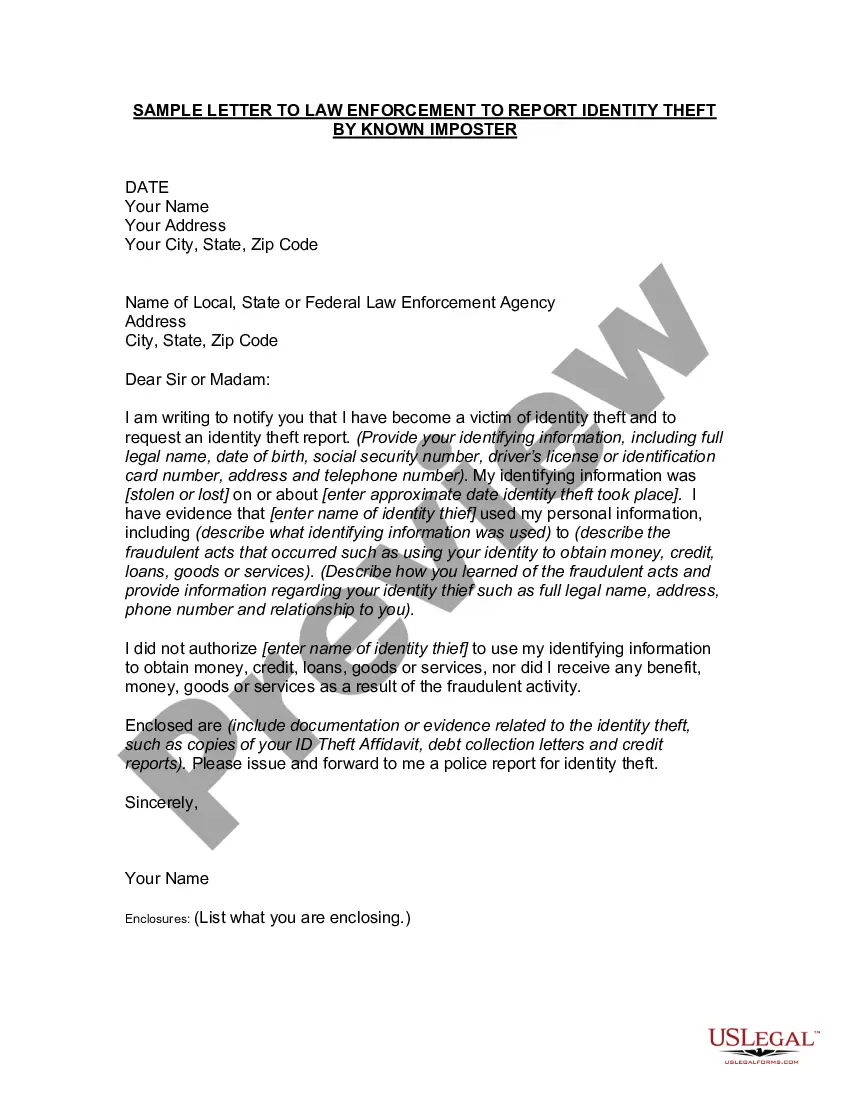
- Failing to include evidence of identity theft, such as a police report.
- Not providing complete details about the identity thief, which could lead to delays in processing the request.
- Omitting important personal information, making it difficult for the creditor to identify the account in question.
- Neglecting to keep a copy of the letter and any sent documents for personal records.
Benefits of completing this form online
- Easy access to a professionally drafted legal document.
- Immediate download and printing capability.
- Customizable fields to suit your particular situation.
- Legal peace of mind knowing the document is created by licensed attorneys.
Summary of main points
- The letter is specifically designed for notifying credit issuers about identity theft involving a known imposter.
- Accurate and complete information is crucial for a successful request with the credit issuer.
- Supporting documentation, such as police reports, substantiates claims of identity theft.
- This form helps initiate the process of protecting your credit and transferring fraudulent debt.
Looking for another form?
Form popularity
FAQ
A 609 letter is a method of requesting the removal of negative information (even if it's accurate) from your credit report, thanks to the legal specifications of section 609 of the Fair Credit Reporting Act.
Option 1: Online. You can upload the documentation verifying your identity online along with your request to have the alert removed. Option 2: Mail. You can mail your request to Experian along with copies of documentation verifying your identity.
You may be able to have your identity theft charges dropped if: You didn't obtain use a person's information unlawfully If you did not obtain or use someone else's personal information unlawfully, you are not guilty of identity theft.
The Identity Theft Affidavit you filed with the FTC; Government-issued photographic ID (such as a state ID card or driver's license); Proof of your home address (like a utility bill or rent agreement); Proof of the theft (bills from creditors or notices from the IRS); and.
Track what bills you owe and when they're due. If you stop getting a bill, that could be a sign that someone changed your billing address. Review your bills. Check your bank account statement. Get and review your credit reports.
Equifax. Equifax.com/personal/credit-report-services. 800-685-1111. Experian. Experian.com/help. 888-EXPERIAN (888-397-3742) TransUnion. TransUnion.com/credit-help. 888-909-8872.
Send this letter to each of the 3 Credit Bureaus: Dispute Letter to a Credit Bureau. If someone opened a new account in your name, send this letter to the company: If someone misused one of your existing accounts, send this letter to the company:
Step 1: Call the companies where you know fraud occurred. Call the fraud department. Step 2: Place a fraud alert and get your credit reports. Place a free, one-year fraud alert by contacting one of the three credit bureaus. Step 3: Report identity theft to the FTC.
The act of disputing items on your credit report does not hurt your score. However, the outcome of the dispute could cause your score to adjust. If the negative item is verified to be correct, for example, your score might take a dip.