Sample Letter for Request for Credit Report of a Minor
About this form
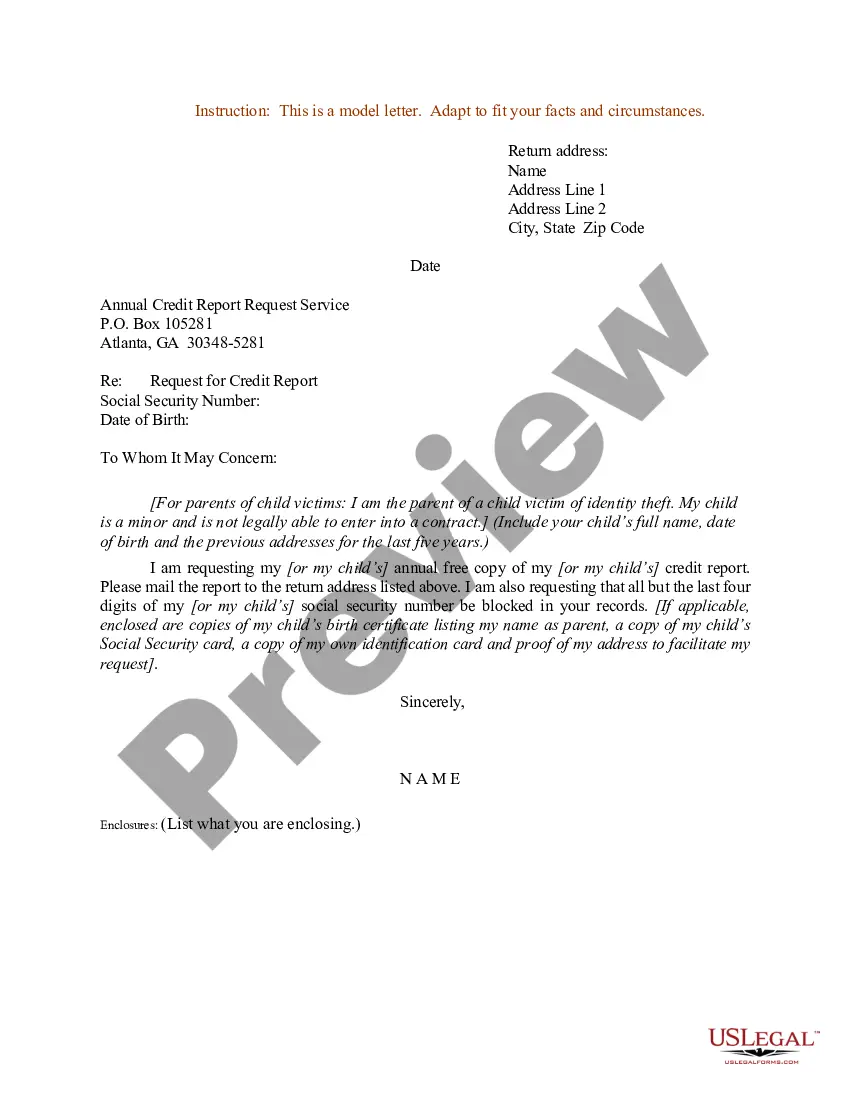
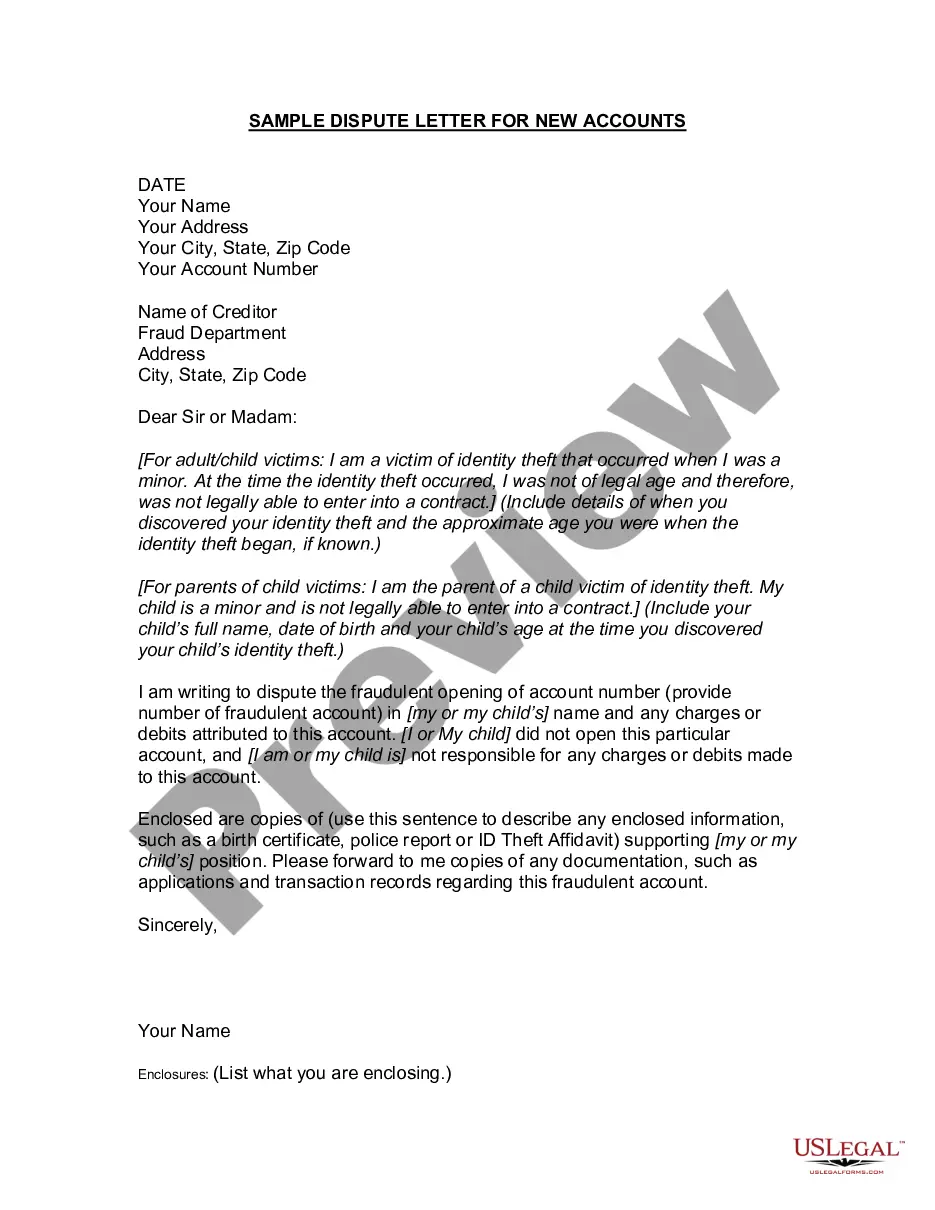
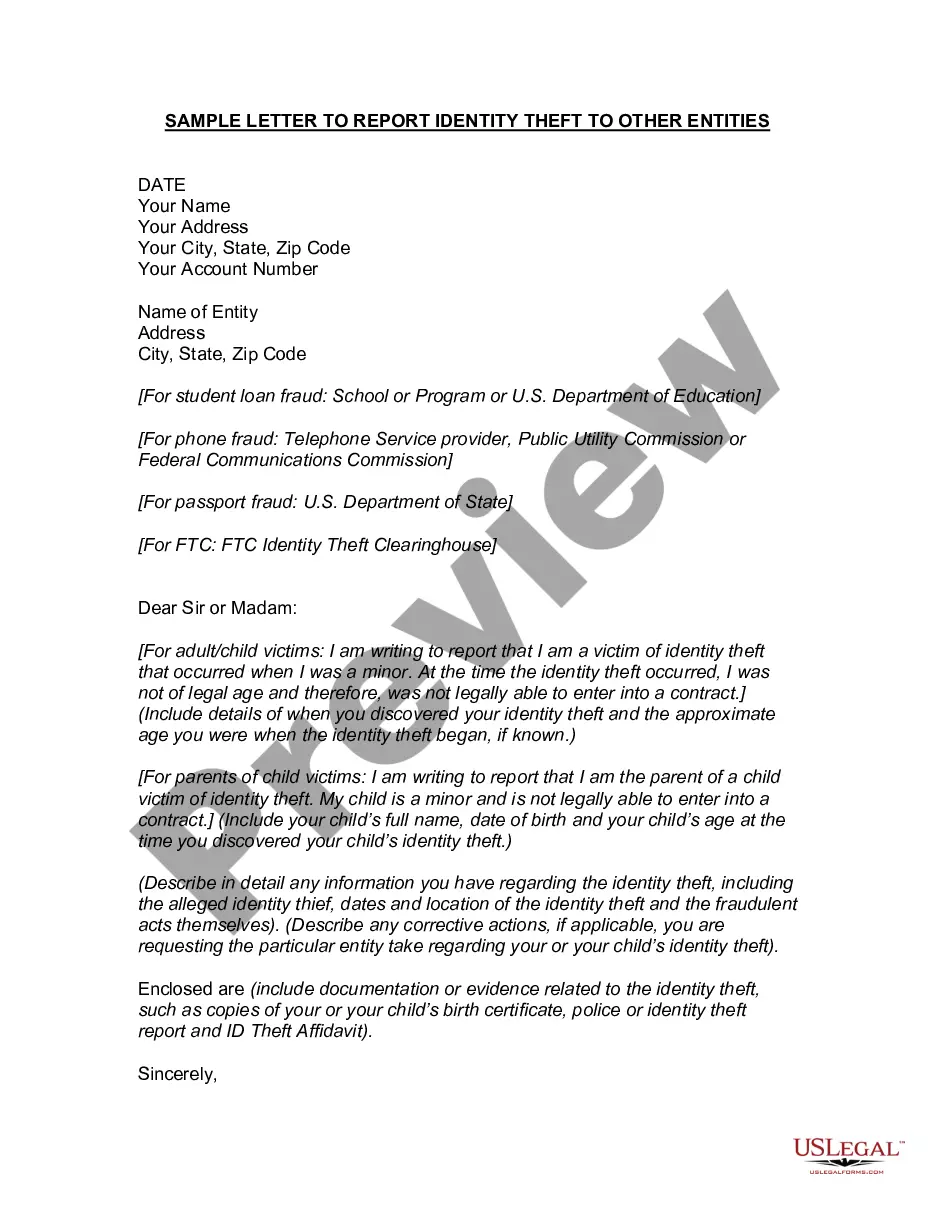
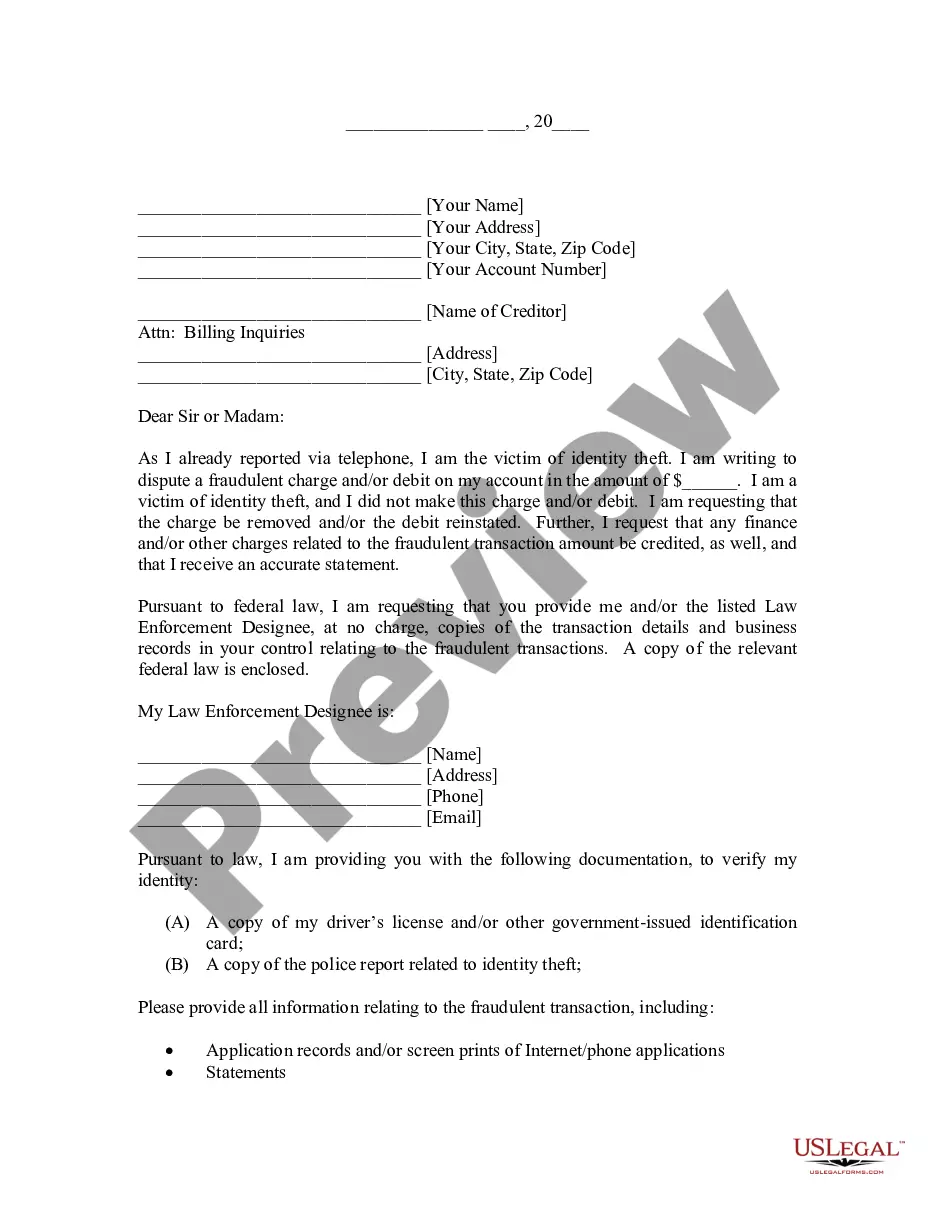
The Sample Letter for Request for Credit Report of a Minor is a legal document designed for parents or guardians to request a credit report for their child. This letter is essential for monitoring any potential fraudulent activity or identity theft that may affect a minor's credit history. Unlike standard credit report requests, this form focuses specifically on the rights and protections for minors, ensuring that their financial identity is safeguarded.
Key parts of this document
- Return address: Where to send the request.
- Date: When the letter is being sent.
- Recipient name and address: Identifies the credit reporting agency.
- Subject line: Clearly states the purpose of the request.
- Signature: Confirms the identity of the requester (parent or guardian).
- Enclosures: Any supporting documents included with the letter.
When to use this form
This form should be used when a parent or guardian suspects that a minor may be a victim of identity theft or wants to monitor their credit report for any inaccuracies. Situations could include noticing suspicious activity on the childâs Social Security number or simply wanting to take proactive steps to protect the minorâs identity before they reach adulthood.
Intended users of this form
- Parents or legal guardians of minors.
- Individuals concerned about potential identity theft affecting a child.
- Anyone seeking to establish or maintain a credit history for a minor.
Completing this form step by step
- Identify the parties involved by filling in the return address and your name as the requester.
- Enter the date of the request for accurate record-keeping.
- Provide the name and address of the credit reporting agency you are contacting.
- Briefly state the subject of the letter to indicate you are requesting a credit report for a minor.
- Sign the letter to validate the request.
- List any enclosures, such as identification or additional documentation, to support your request.
Is notarization required?
This form does not typically require notarization unless specified by local law. However, it is always a good idea to check with the relevant credit reporting agency or local regulations to confirm specific requirements.
Get your form ready online
Our built-in tools help you complete, sign, share, and store your documents in one place.
Make edits, fill in missing information, and update formatting in US Legal Forms—just like you would in MS Word.
Download a copy, print it, send it by email, or mail it via USPS—whatever works best for your next step.
Sign and collect signatures with our SignNow integration. Send to multiple recipients, set reminders, and more. Go Premium to unlock E-Sign.
If this form requires notarization, complete it online through a secure video call—no need to meet a notary in person or wait for an appointment.
We protect your documents and personal data by following strict security and privacy standards.

Make edits, fill in missing information, and update formatting in US Legal Forms—just like you would in MS Word.

Download a copy, print it, send it by email, or mail it via USPS—whatever works best for your next step.

Sign and collect signatures with our SignNow integration. Send to multiple recipients, set reminders, and more. Go Premium to unlock E-Sign.

If this form requires notarization, complete it online through a secure video call—no need to meet a notary in person or wait for an appointment.

We protect your documents and personal data by following strict security and privacy standards.
Common mistakes
- Failing to include the correct address for the credit reporting agency.
- Not providing sufficient identification or documentation to prove relationship to the minor.
- Omitting to sign the letter, which renders it invalid.
- Sending the request to the wrong department or agency.
Advantages of online completion
- Convenience: Easily fill out and download the form from your home.
- Editability: Customize the letter according to your specific needs before finalizing it.
- Reliability: Access forms drafted by licensed attorneys, ensuring legal compliance.
Summary of main points
- The Sample Letter for Request for Credit Report of a Minor is essential for safeguarding a minorâs credit.
- Properly completing the form ensures that the request is processed efficiently.
- Itâs important to monitor a minor's credit to prevent identity theft and fraudulent activity.
Looking for another form?

Form popularity
FAQ
Your letter should clearly identify each item in your report you dispute, state the facts and explain why you dispute the information, and request that it be removed or corrected. You may want to enclose a copy of your report with the items in question circled.
First, you need to check with the Social Security Administration once a year to make sure no one is using your child's SSN. Secondly, you need to check your child's credit report (free Equifax -1-800-525-6285; Experian-1-888-397-3742; TransUnion-1-800-680-7289.) You can also report fraud to them.
Start early. Teach the difference between a debit card and a credit card. Incentivize saving. Help them save early for a secured credit card. Co-sign a loan or a lease. Have them report all possible forms of credit. Add your child as an authorized user.
Order online from annualcreditreport.com, the only authorized website for free credit reports, or call 1-877-322-8228. You will need to provide your name, address, social security number, and date of birth to verify your identity.
Children 13 and older can check their credit the same way adults do. By visiting AnnualCreditReport.com the only website federally authorized to provide credit reports from Experian, Equifax and TransUnion for free your child can enter his or her personal information to receive a copy of each report.
Address the letter with either a "To whom it may concern" or use the term "Dear Sir or Madam." Since there is no way of knowing who will be receiving the letter, generalities are best here. Next, it is important to clearly state that you want a copy of your credit report and why.
Does your child have a credit score? Typically, only people over the age of 18 have a credit score - but it is possible for minors to have a credit report. A person under 18 can have a credit report if : Their identity was stolen and used to open one or more credit accounts.
Unless you've taken action to help your young child develop a credit history, he or she most likely doesn't have a credit report. These reports begin when a person applies for and receives credit products, such as loans and credit cards.
Children 13 and older can check their credit the same way adults do. By visiting AnnualCreditReport.com the only website federally authorized to provide credit reports from Experian, Equifax and TransUnion for free your child can enter his or her personal information to receive a copy of each report.