License to Operate a Kiosk - Booth Rentals or Renters for Vending, Farmers Markets or Flea Markets
Understanding this form
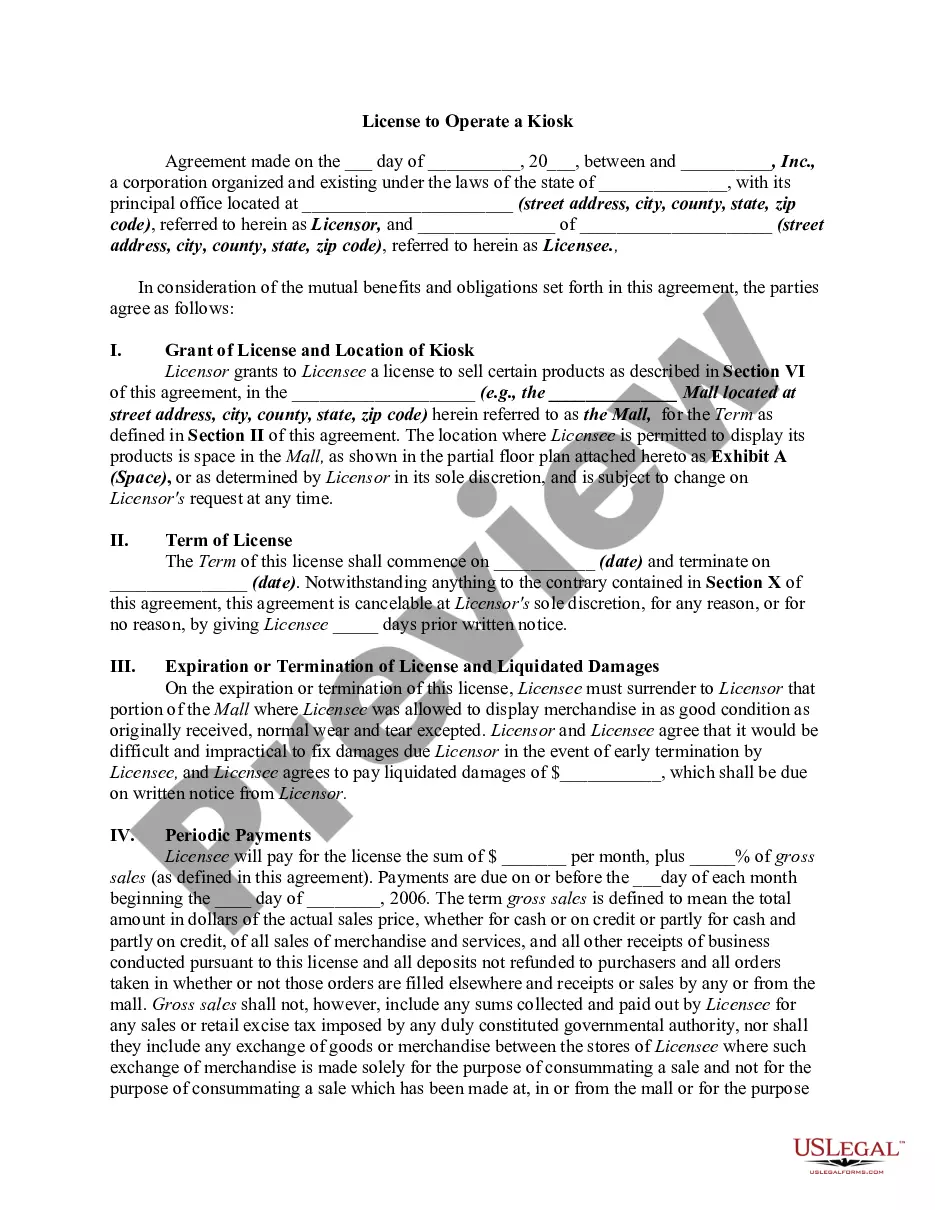
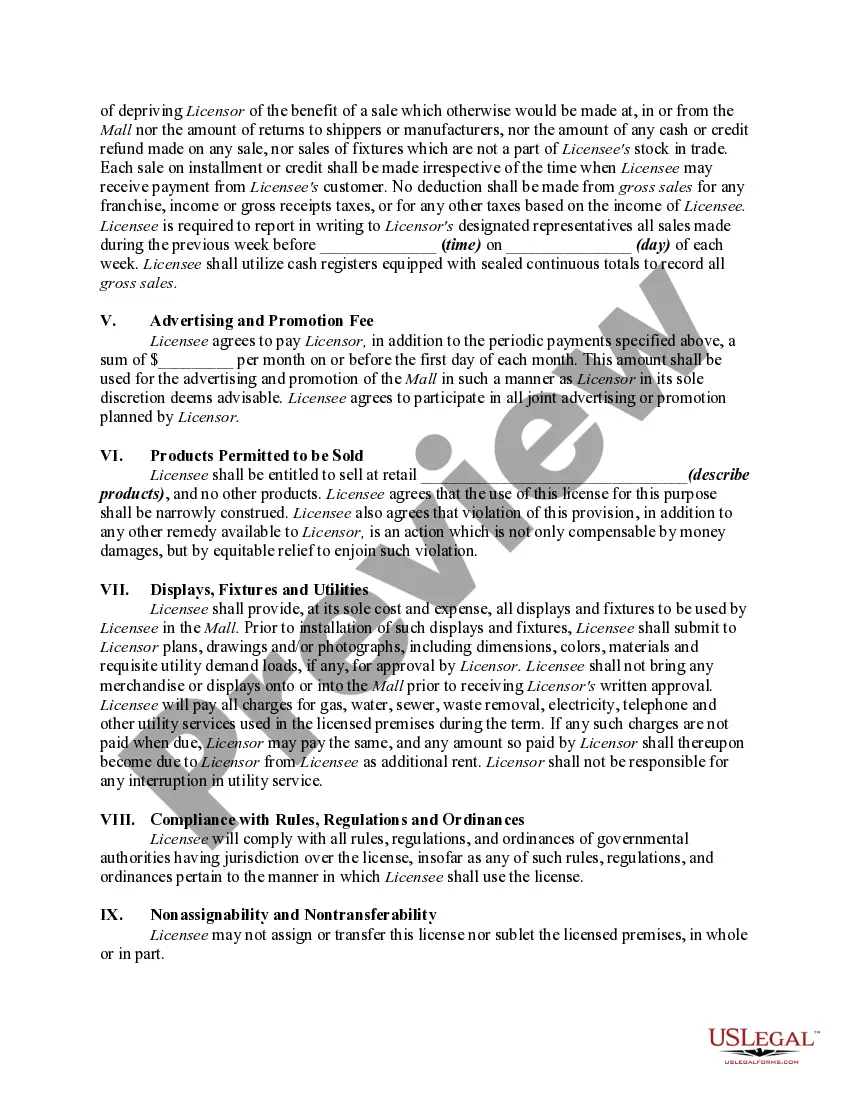
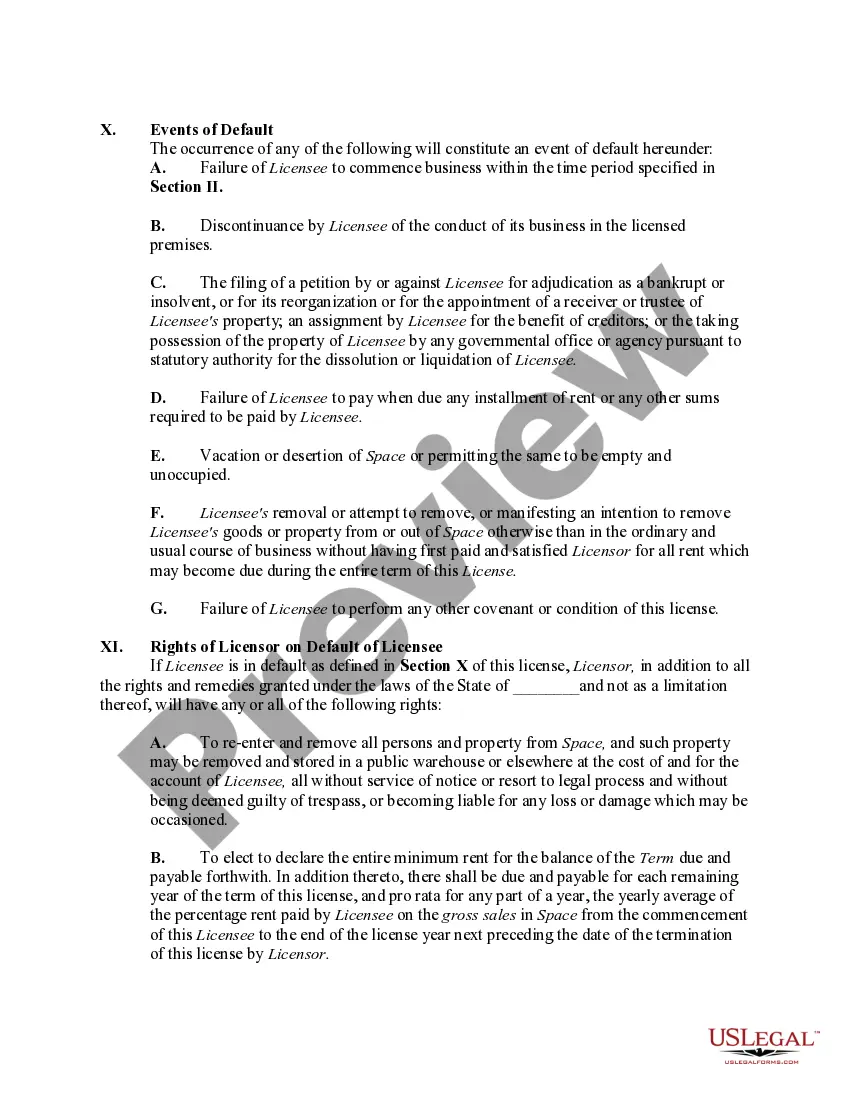
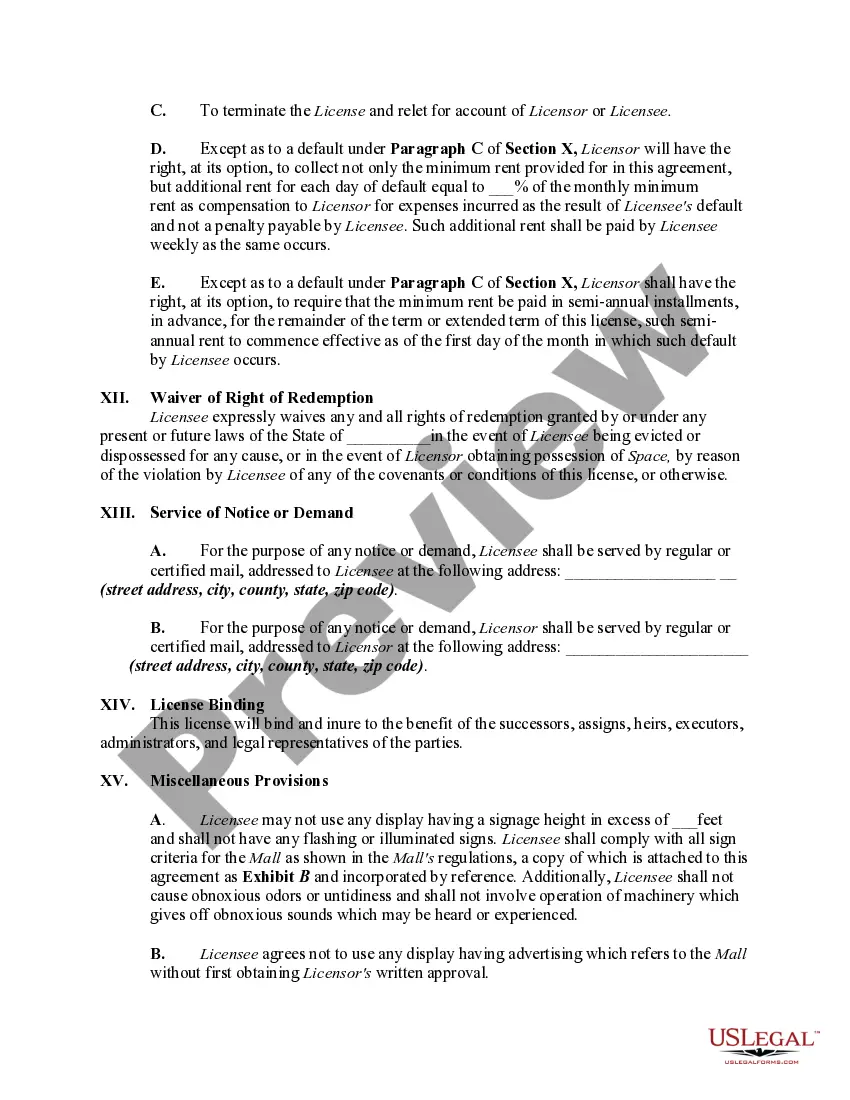
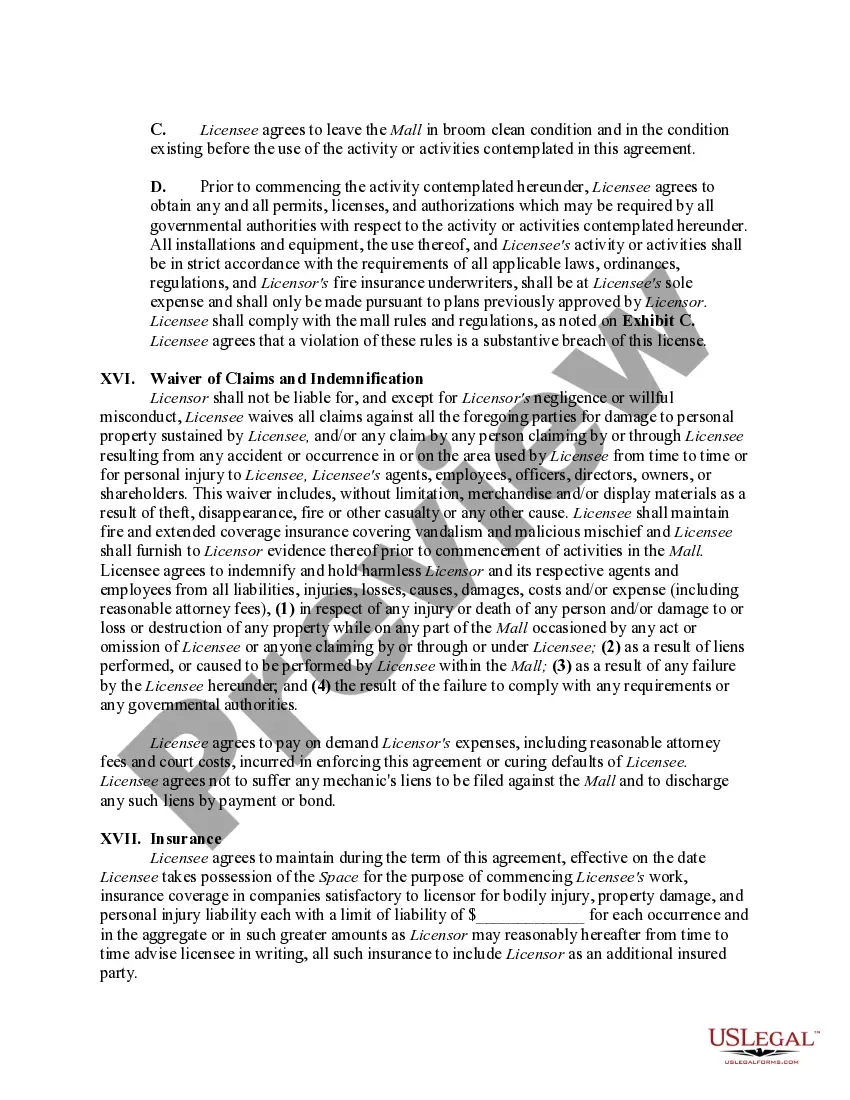
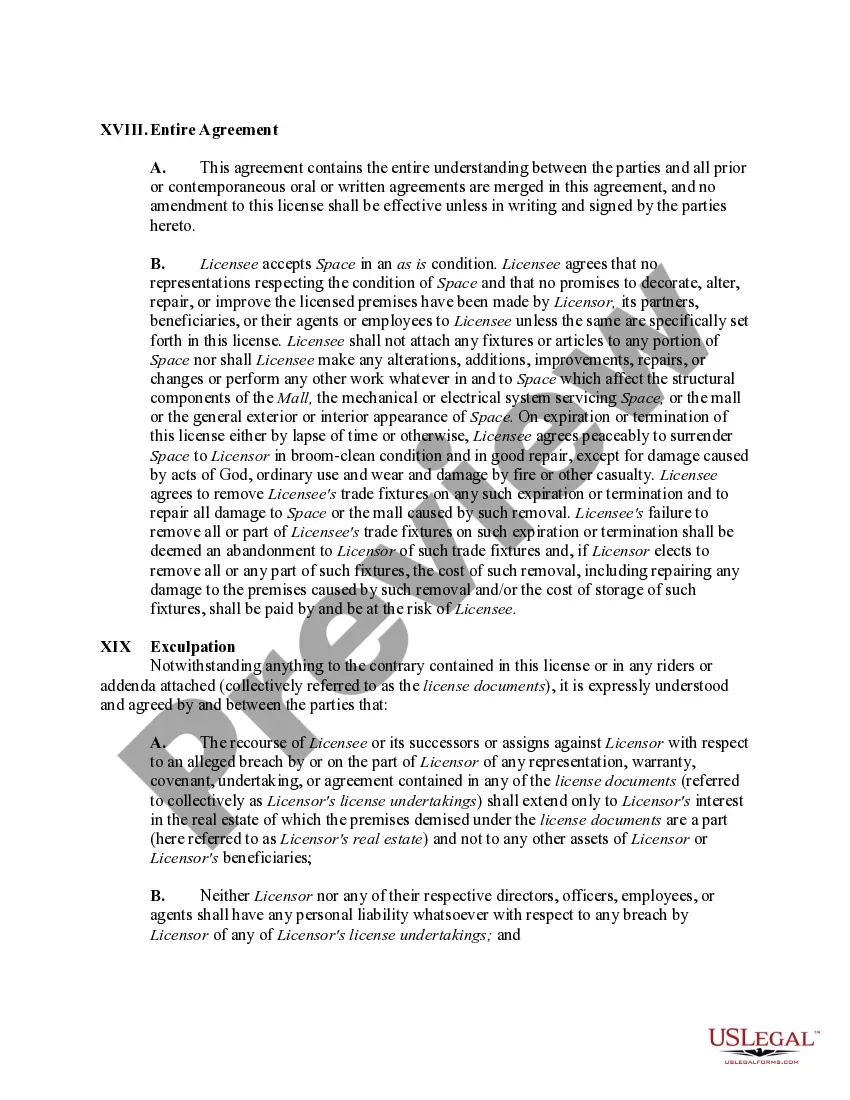
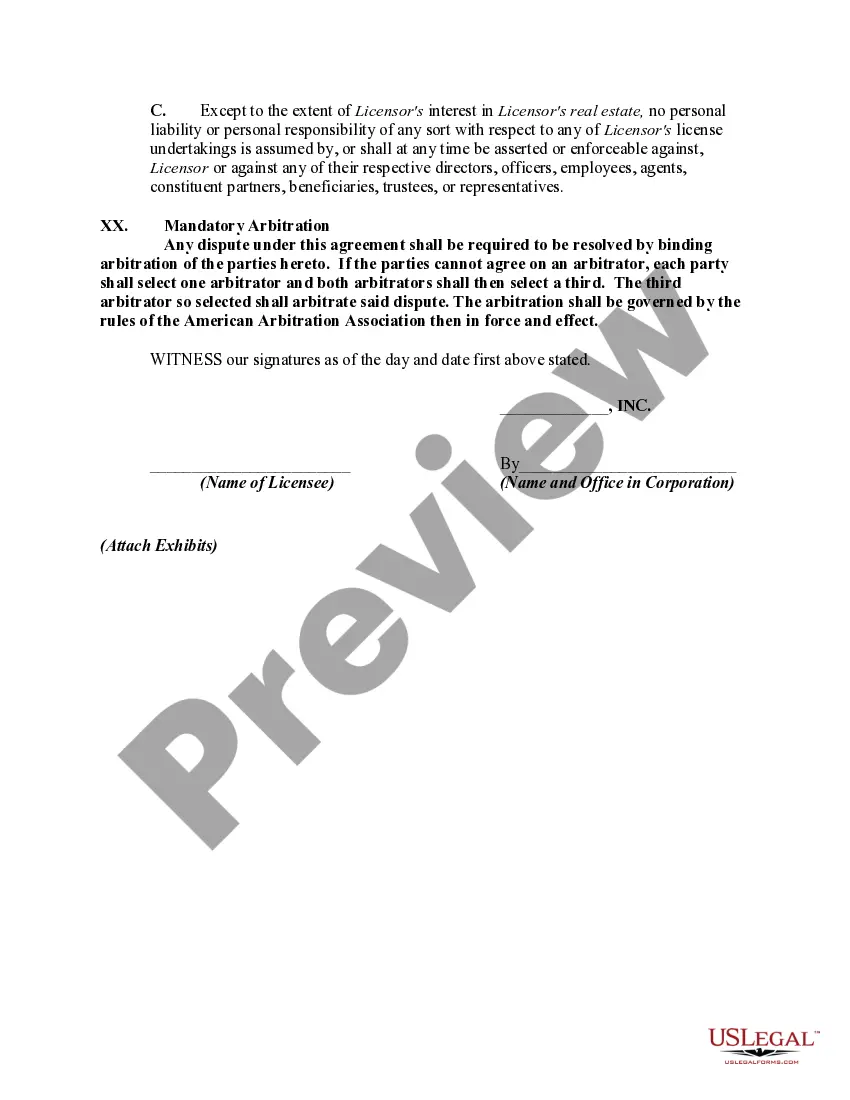
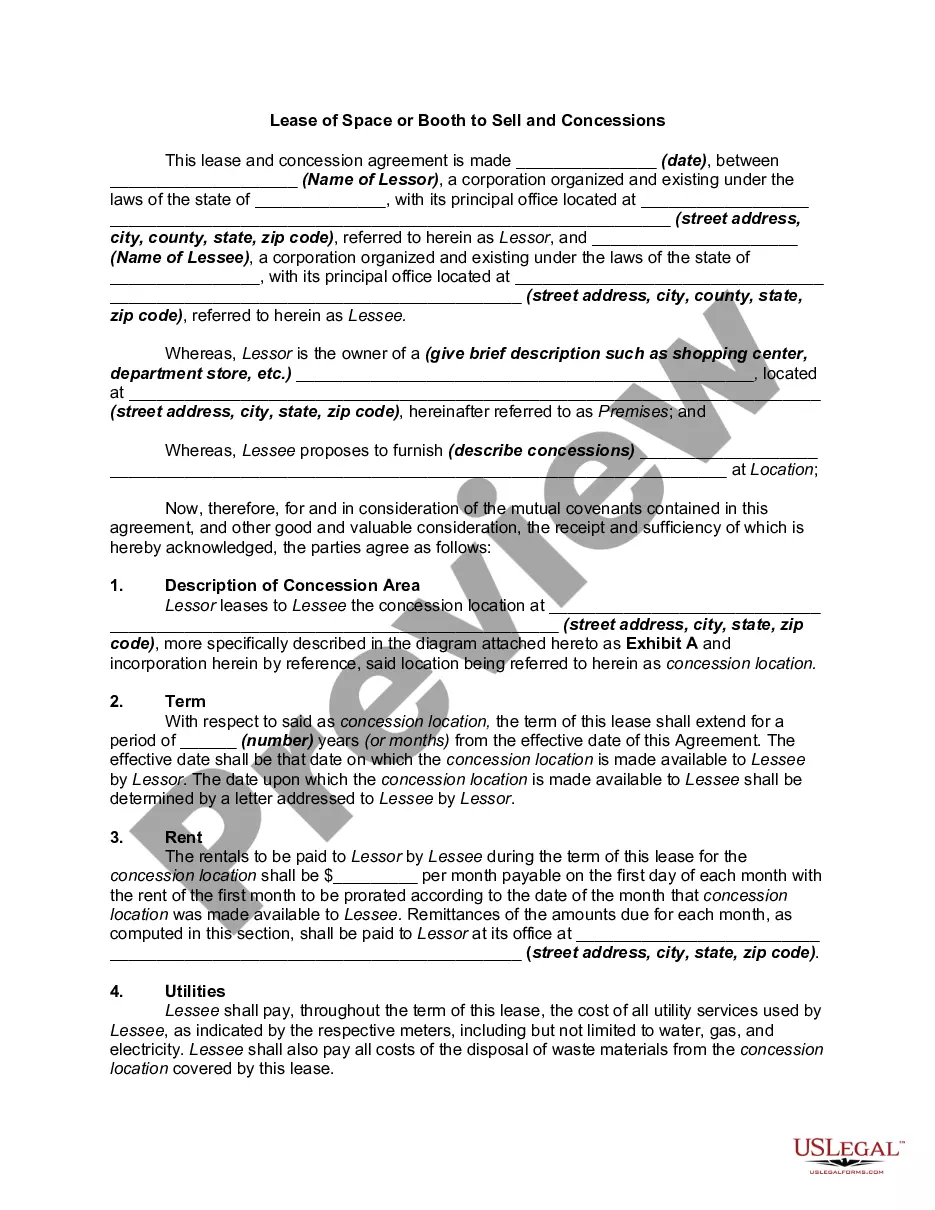
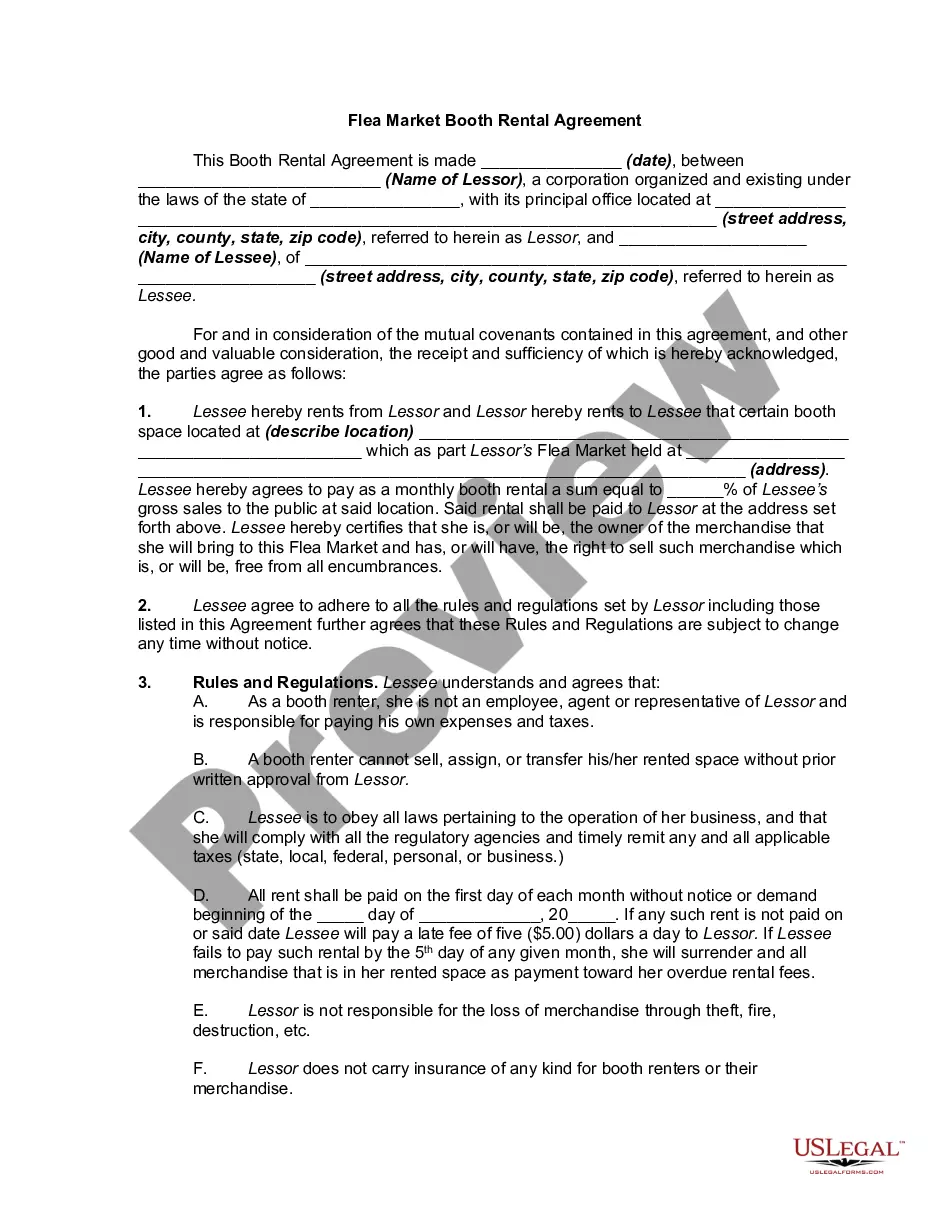
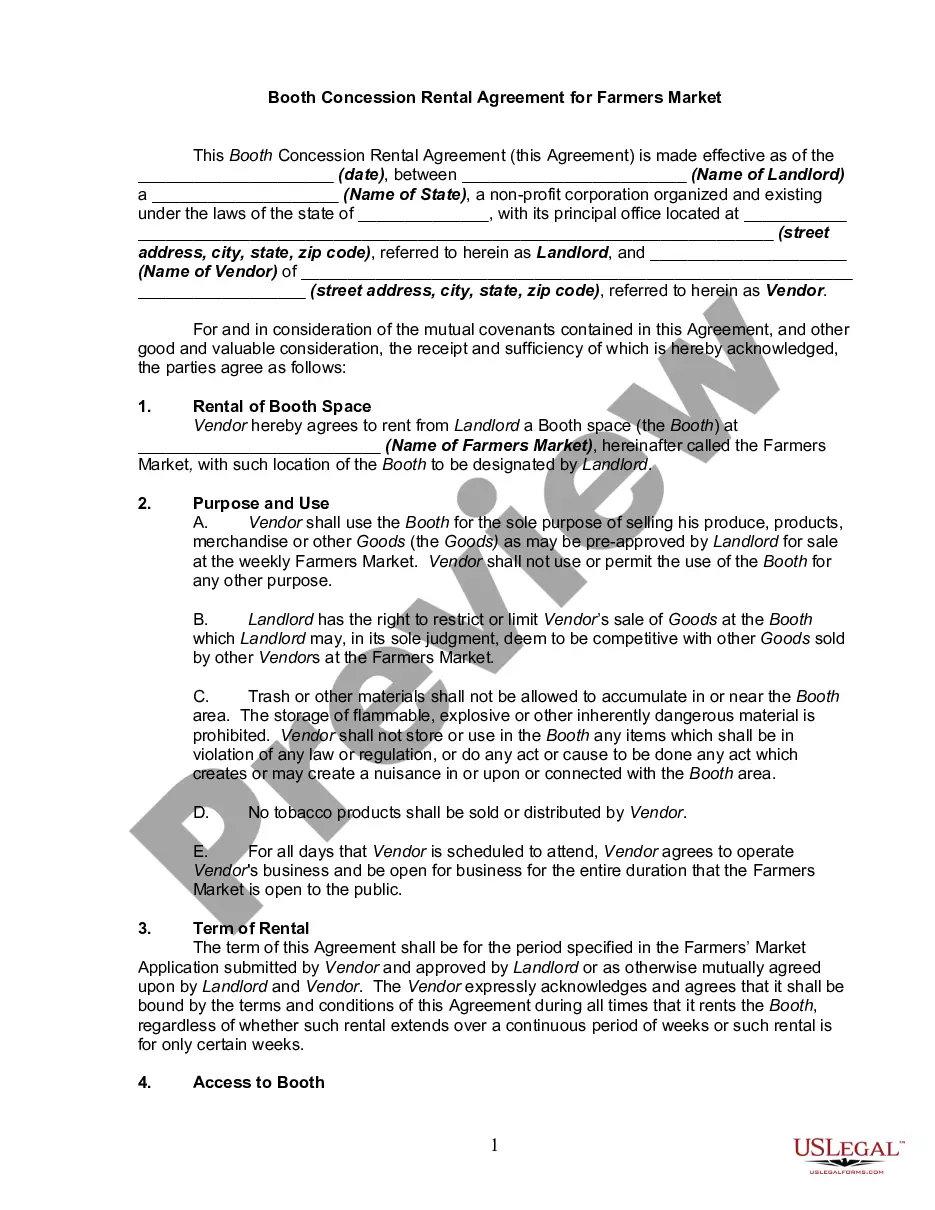
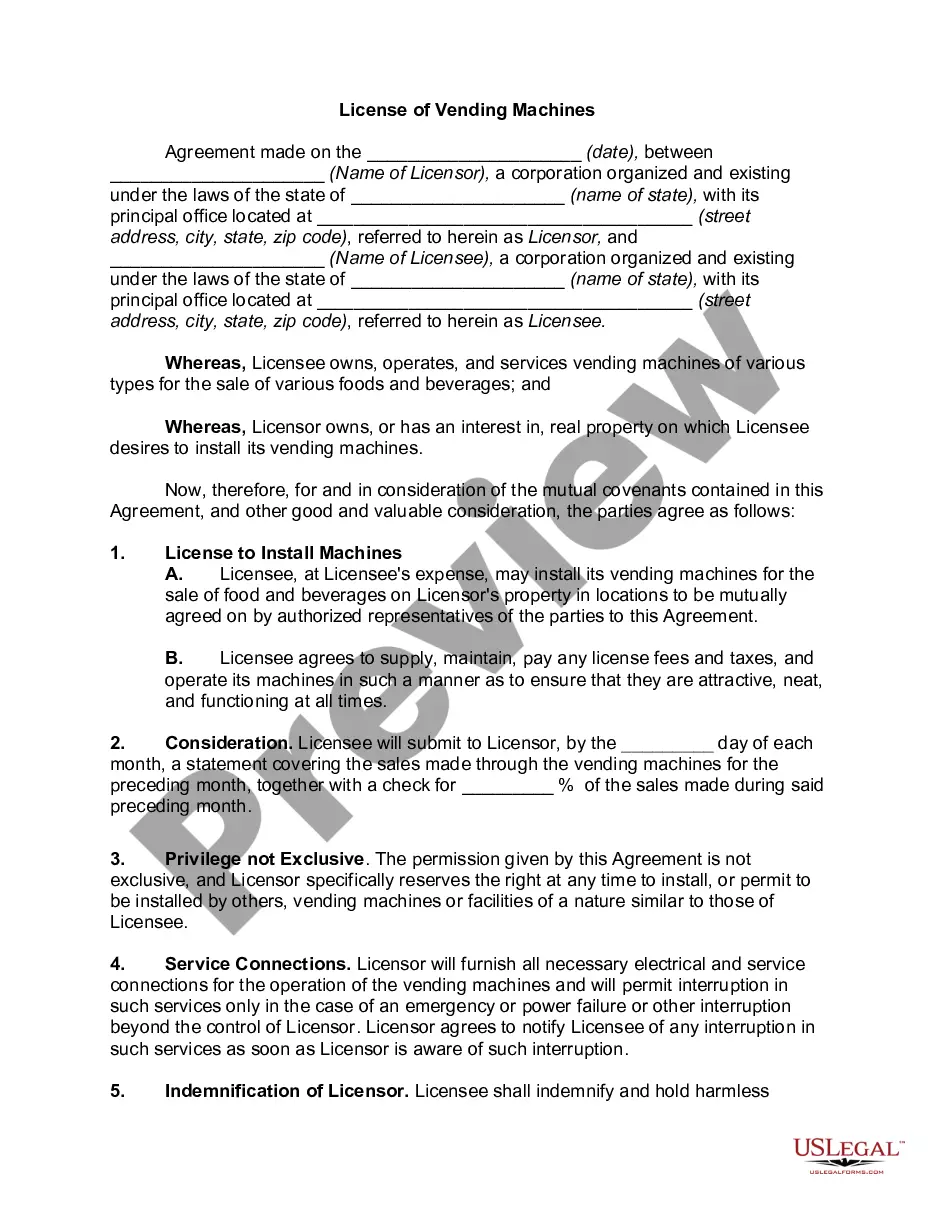
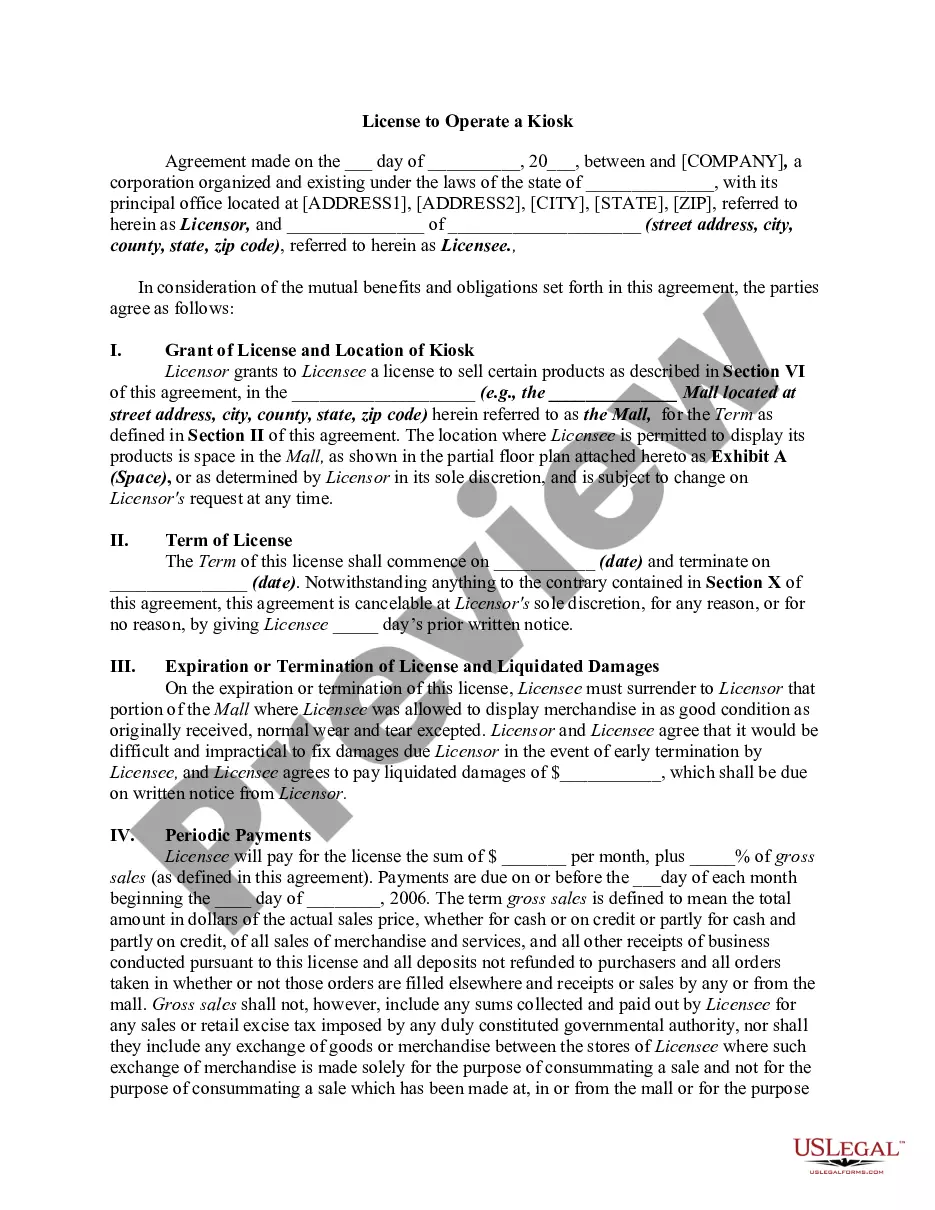
This form is a License to Operate a Kiosk, specifically designed for vendors who intend to sell products in a mall or at events like farmers markets and flea markets. It grants the vendor the legal right to operate a kiosk or booth space to conduct their business legally. This form outlines the terms and conditions of the rental arrangement, making it distinct from temporary vendor agreements by establishing a formal license.
Key components of this form
- Agreement date and parties involved (Licensor and Licensee).
- Details of the location where the kiosk will be set up.
- The term length of the license, including commencement and termination dates.
- Payment obligations for rent and a percentage of gross sales.
- Permitted products for sale and compliance requirements.
- Conditions for termination of license and potential liquidated damages.
Common use cases
This form should be used when a vendor wants to operate a kiosk or booth at a commercial location such as a shopping mall, farmers market, or flea market. It serves as a legal document when entering into a business agreement with a property owner or mall management to ensure proper licensing and adherence to specified rules and regulations.
Who can use this document
- Vendors looking to sell products at defined public events or commercial venues.
- Small business owners aiming to establish a presence at markets or malls.
- Entrepreneurs seeking a formal arrangement to operate a kiosk or booth effectively.
Completing this form step by step
- Identify and provide the date of the agreement.
- Fill in the parties involved, including names and addresses of the Licensor and Licensee.
- Specify the location of the kiosk as designated in the agreement.
- Enter the dates marking the start and end of the license term.
- Detail the payment amounts along with any percentage of gross sales to be paid.
Notarization requirements for this form
This form does not typically require notarization unless specified by local law. It is always advisable to verify local regulations to determine if any additional steps are needed for legal validity.
Get your form ready online
Our built-in tools help you complete, sign, share, and store your documents in one place.
Make edits, fill in missing information, and update formatting in US Legal Forms—just like you would in MS Word.
Download a copy, print it, send it by email, or mail it via USPS—whatever works best for your next step.
Sign and collect signatures with our SignNow integration. Send to multiple recipients, set reminders, and more. Go Premium to unlock E-Sign.
If this form requires notarization, complete it online through a secure video call—no need to meet a notary in person or wait for an appointment.
We protect your documents and personal data by following strict security and privacy standards.

Make edits, fill in missing information, and update formatting in US Legal Forms—just like you would in MS Word.

Download a copy, print it, send it by email, or mail it via USPS—whatever works best for your next step.

Sign and collect signatures with our SignNow integration. Send to multiple recipients, set reminders, and more. Go Premium to unlock E-Sign.

If this form requires notarization, complete it online through a secure video call—no need to meet a notary in person or wait for an appointment.

We protect your documents and personal data by following strict security and privacy standards.
Avoid these common issues
- Failing to include the exact dates for the license term.
- Not specifying the location for the kiosk clearly.
- Omitting information about allowed products for sale.
- Overlooking the payment structure or not calculating the percentage of gross sales correctly.
Why complete this form online
- Convenient access to templates that can be downloaded and filled out quickly.
- Editability allows for customization to meet specific vendor needs.
- Integration with legal expertise ensures compliance with relevant laws.
Summary of main points
- The License to Operate a Kiosk legally establishes the terms for vendor operations.
- Understanding the key components of this form is crucial for compliance and success.
- Using this form can protect your business operations from potential legal issues.
Looking for another form?
Form popularity
FAQ
Traditional Farming and Produce Sales. The fact that farming would come into play at a farmers market is no surprise. Beekeeping and Honey Sales. Honey is money when it comes to farmers markets. Selling Jams and Jellies.
Step 1: Locate a Flea Market That You Want to Set Up At. Step 2:Find Some Flea Market Products to Sell. Step 3: Make Your Flea Market Business Legal. Step 4: Start Selling Your Flea Market Items. Things You'll Need to Become a Flea Market Vendor:
The amount you can expect to bring in per weekend or day depends on your location and the type of merchandise you're selling. After paying rental fees and other expenses, many flea market vendors make between $200 and $500 per day. Meanwhile, many crafts fair vendors make upwards of $1,000 per day.
Step 1: Locate a Flea Market That You Want to Set Up At. Step 2:Find Some Flea Market Products to Sell. Step 3: Make Your Flea Market Business Legal. Step 4: Start Selling Your Flea Market Items. Things You'll Need to Become a Flea Market Vendor:
Be Out of Season. Wait, what? Pile It High and Kiss It Goodbye. This old saying is a farmer favorite because it's accurate. Have Visible Signs. Use Tablecloths and Tent Canvases. Be Clean and Organized. Stand Up and Greet Customers.
Decide how you'll exchange the stuff. Among our small, polite and well-behaved group, no fist fights broke out over hot items up for grabs. Pick a date and time. Pick a place. Encourage pre-swap swapping. Figure out where to spread everything out. Figure out what to do with what's left at the end.
Because farmers' markets keep money local, and because vendors can retain 100 percent of their profits, a local economic impact can be quite robust.
Determine What You're Going to Sell. Plan Your Stall and Make a Startup Budget. Secure All Necessary Permits and Licenses. Confirm That You Meet Target Markets' Selection Criteria. Get Your Spot at the Market.
So just because you have access to a farmers market doesn't mean it's the best thing for your business. A farmers market has to be a viable part of your business model. If you're investing five to eight hours every weekend to sell food, it should sell. If it doesn't sell, that's not viable.