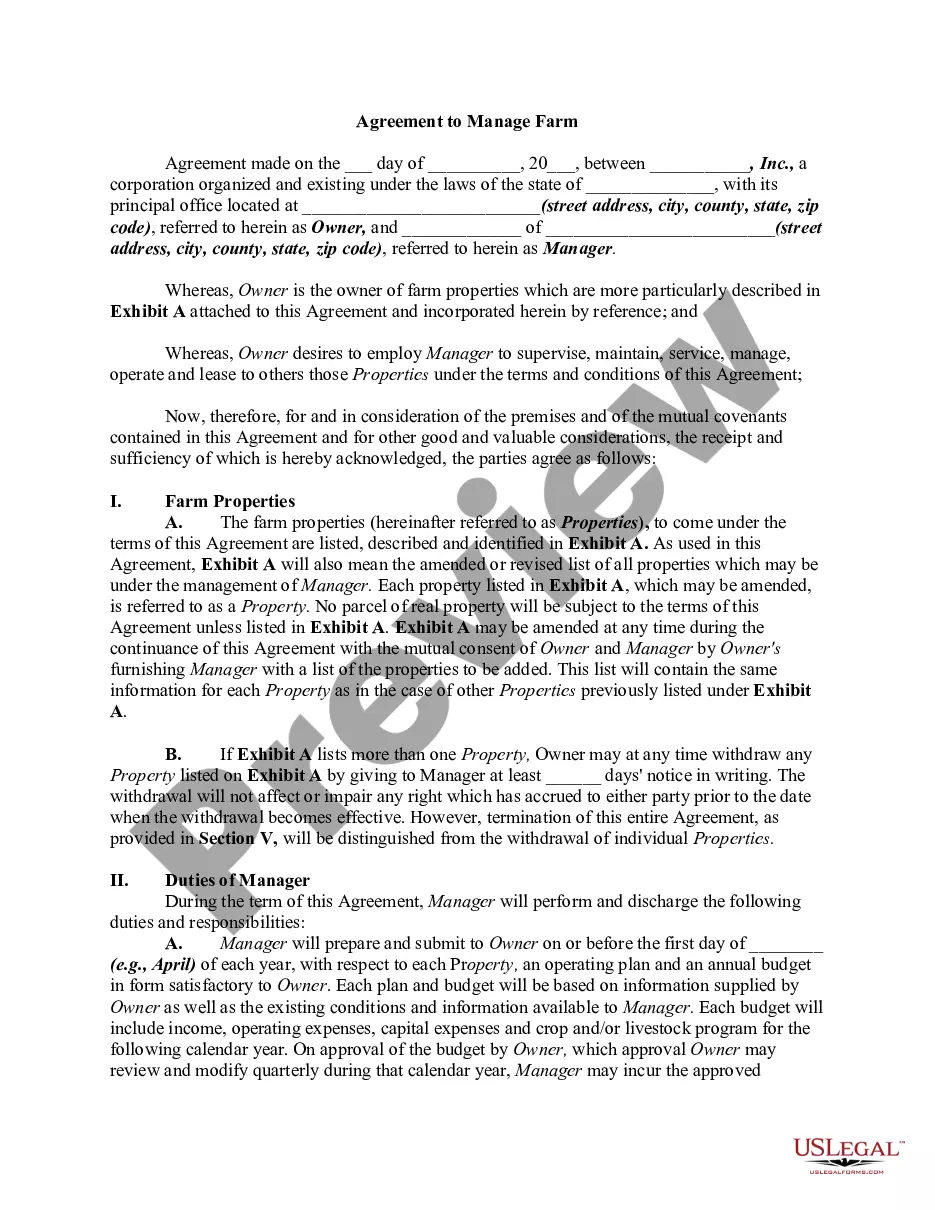
Agreement to Manage Farm
Overview of this form
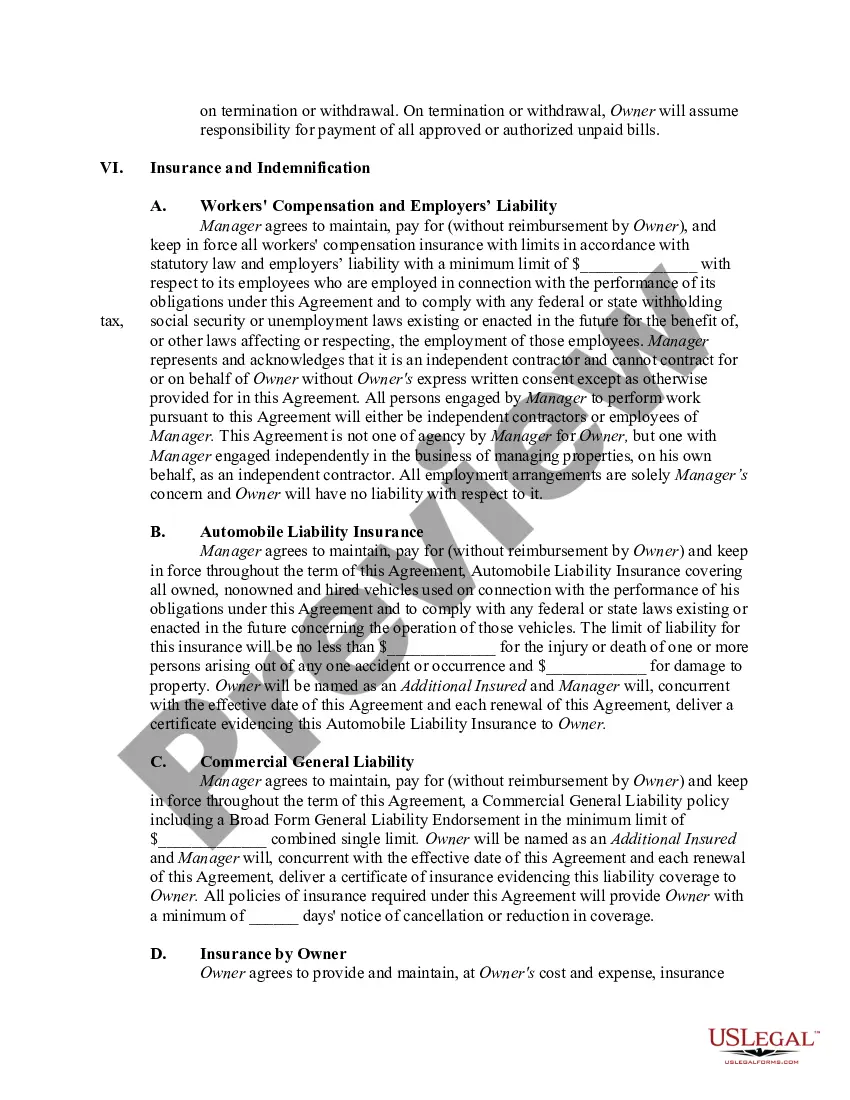
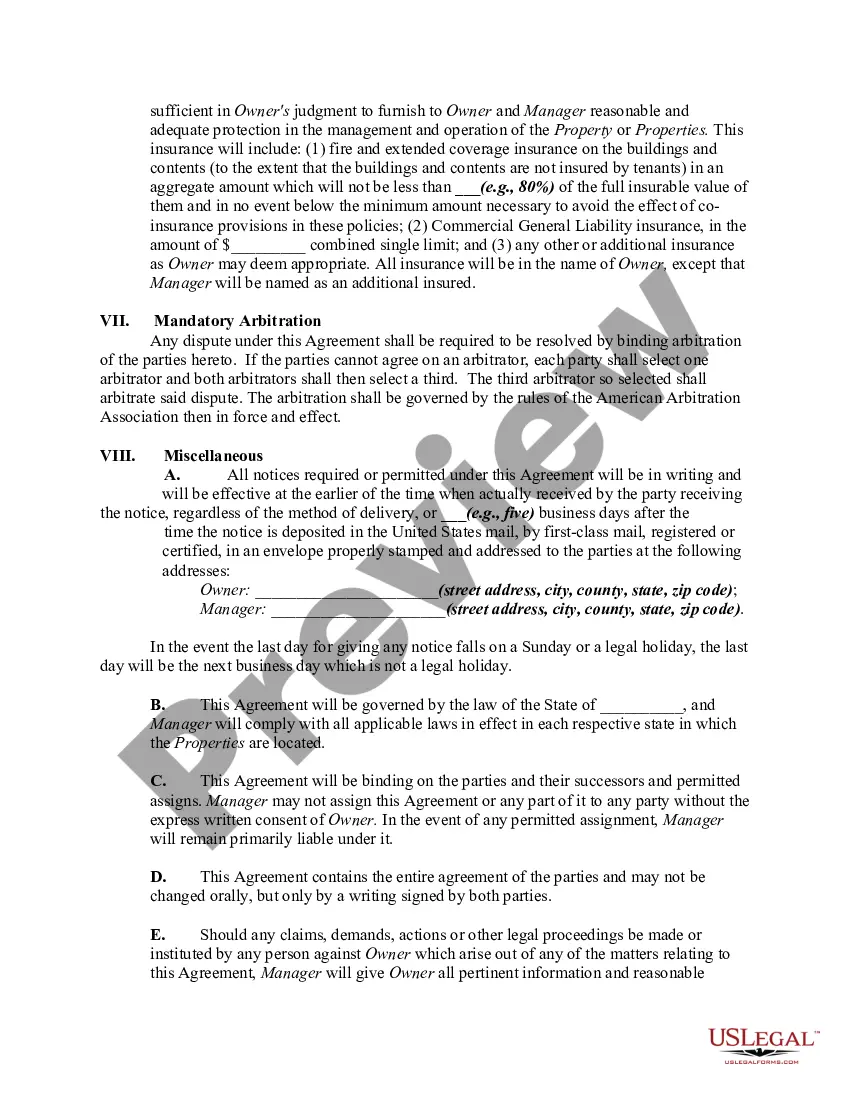
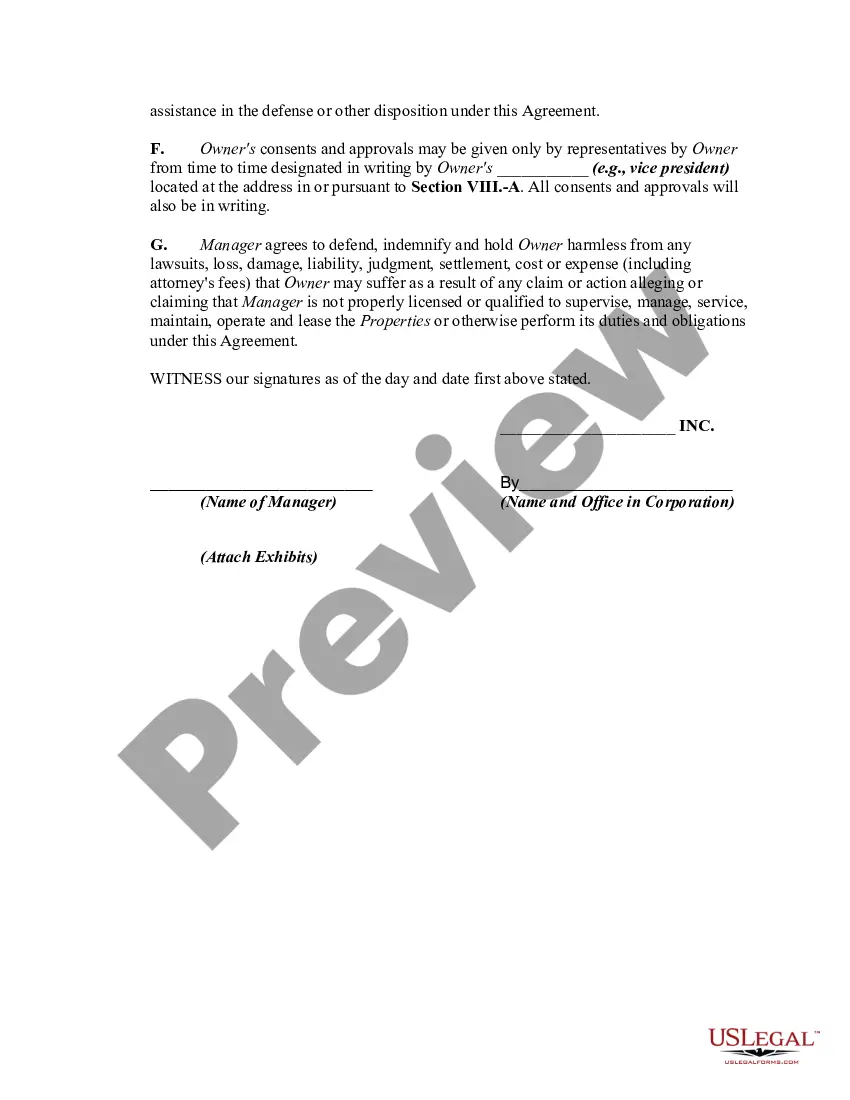
The Agreement to Manage Farm is a legal document that outlines the terms under which a manager will manage and operate a farm on behalf of the property owner. This agreement is crucial for establishing the roles and responsibilities of both parties. Unlike standard leasing agreements, this form emphasizes the independent contractor relationship, making it clear that the manager acts independently rather than as an agent of the owner.
Key parts of this document
- Parties Involved: Identifies the owner and the manager.
- Farm Properties: Details the properties to be managed, including provisions for addition or withdrawal of properties.
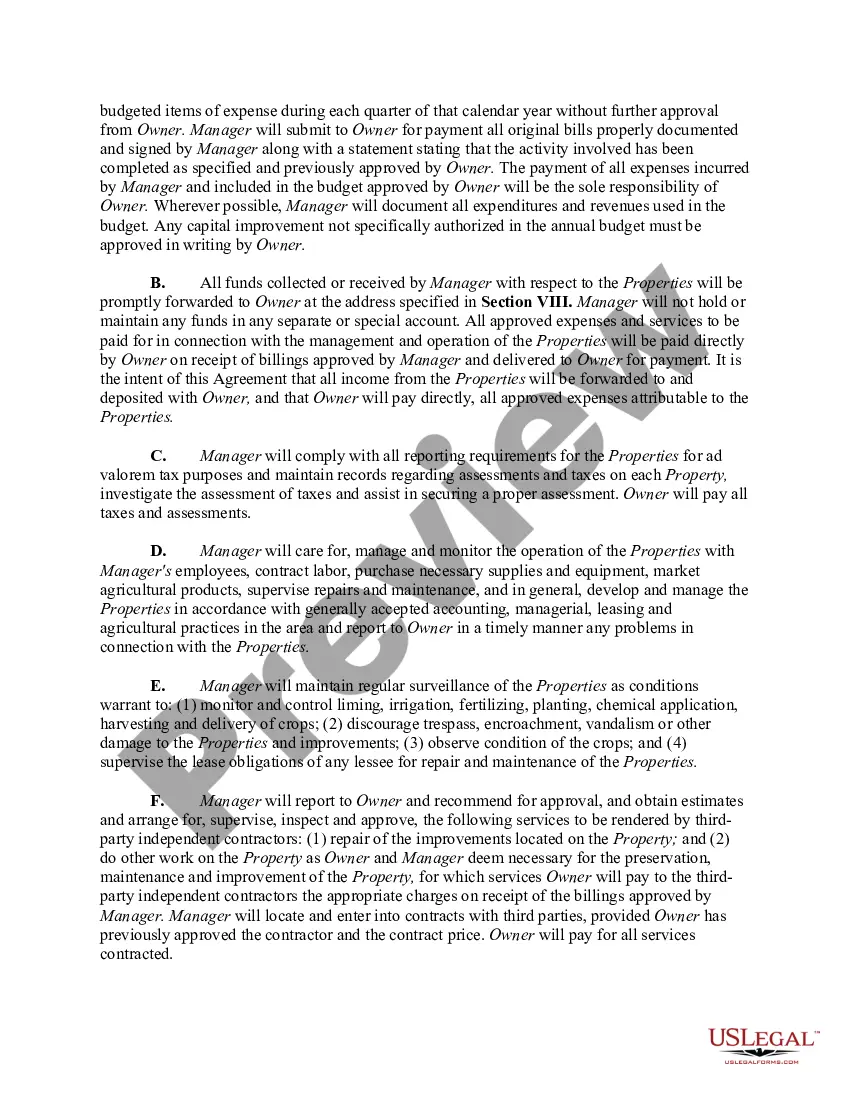
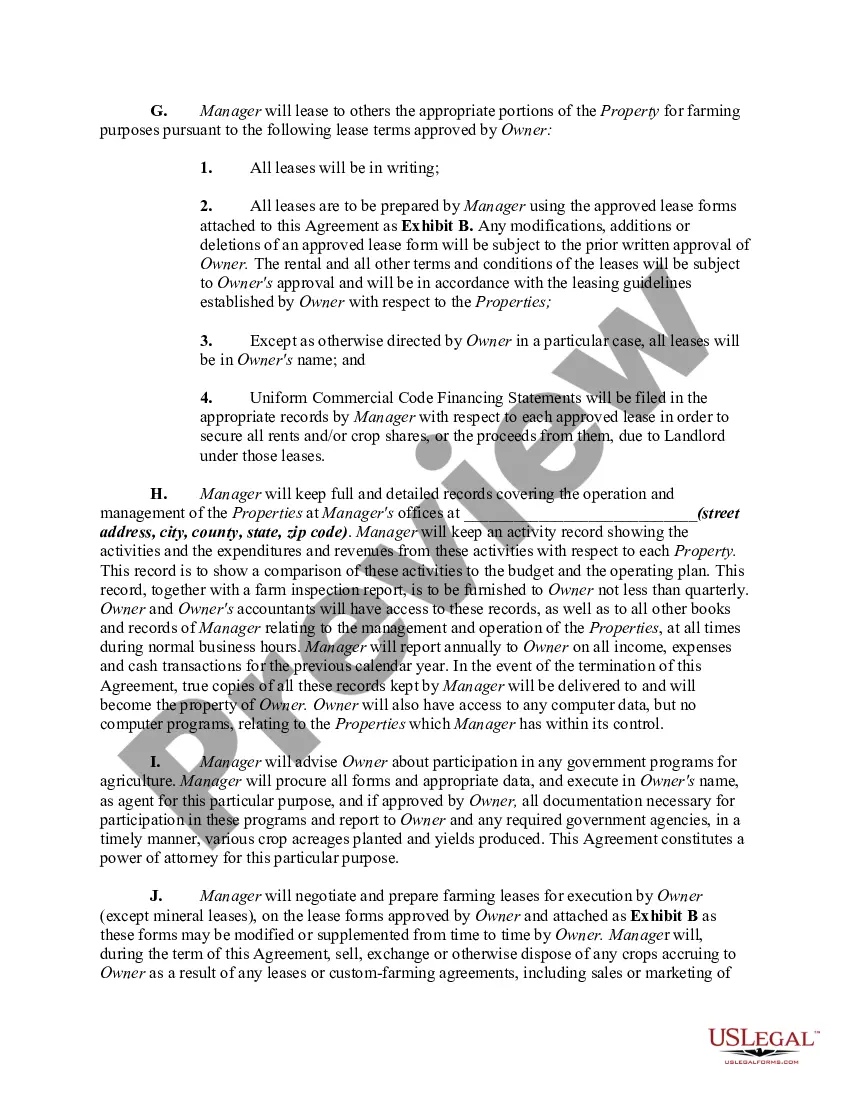
- Duties of Manager: Specifies the responsibilities, including managing operations, maintaining records, and overseeing financial aspects.
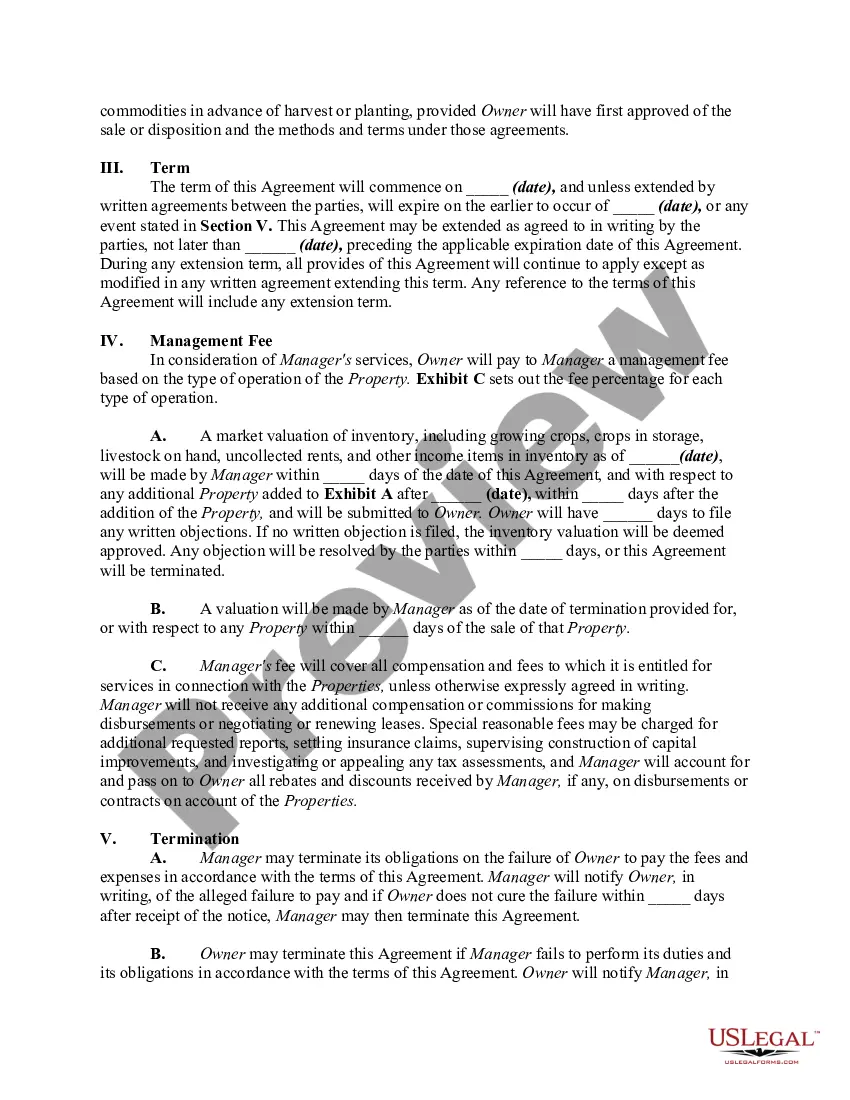
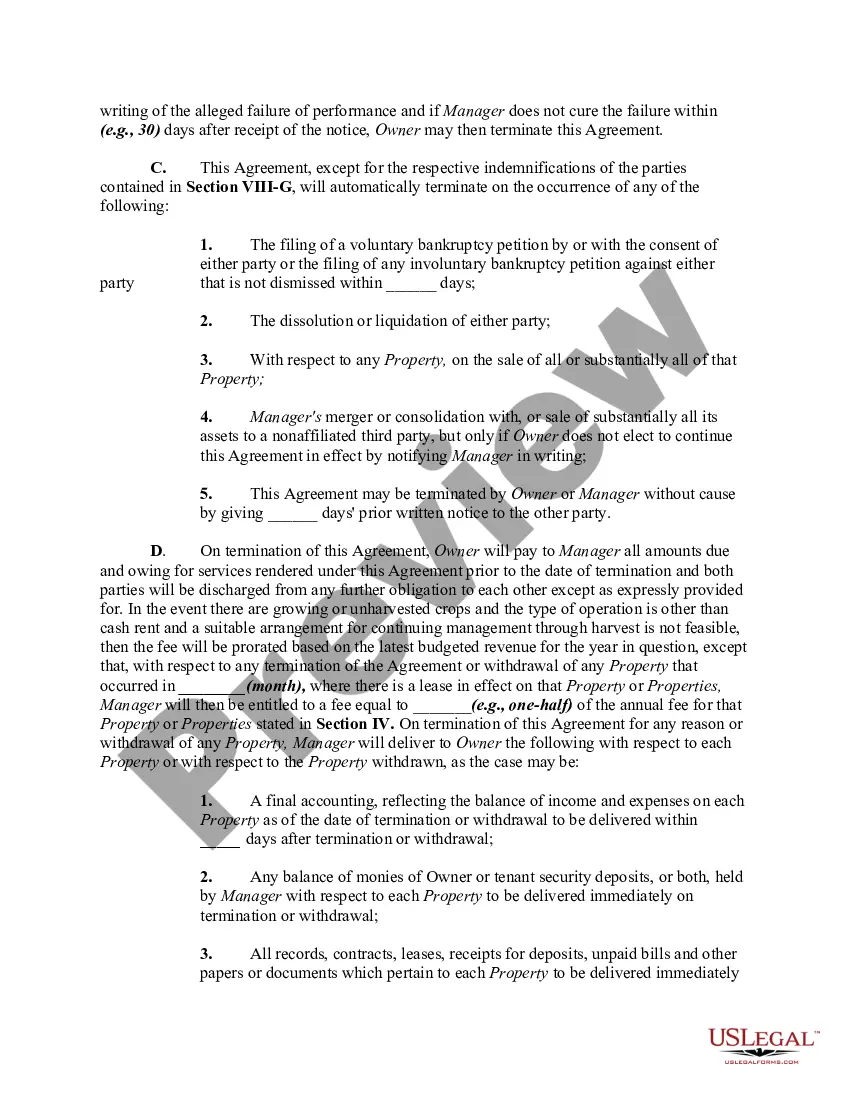
- Management Fee: Outlines how the management fee is calculated based on the type of operation.
- Termination Conditions: Lists the conditions under which the agreement can be terminated by either party.
When this form is needed
This form is ideal for situations where a property owner wants to employ a professional manager to oversee farm operations. Use this form if you are an owner looking to formalize the management relationship or a manager who needs to establish clear terms with the owner regarding duties, fees, and expectations.
Who needs this form
This Agreement is intended for:
- Farm owners who wish to hire a manager for their agricultural properties.
- Individuals or businesses acting as managers who require an agreement to clearly define their responsibilities and compensation.
How to complete this form
- Identify the parties: Fill in the full legal names and addresses of both the owner and the manager.
- Specify the farm properties: List the properties to be managed in Exhibit A.
- Define duties: Clearly outline the responsibilities of the manager in the Duties of Manager section.
- Fill in management fees: Indicate the fee structure according to the type of farm operation in Exhibit C.
- Sign and date: Ensure both parties sign and date the agreement to make it legally binding.
Does this document require notarization?
This form does not typically require notarization unless specified by local law. Ensure to check local regulations to confirm notarization requirements.
Get your form ready online
Our built-in tools help you complete, sign, share, and store your documents in one place.
Make edits, fill in missing information, and update formatting in US Legal Forms—just like you would in MS Word.
Download a copy, print it, send it by email, or mail it via USPS—whatever works best for your next step.
Sign and collect signatures with our SignNow integration. Send to multiple recipients, set reminders, and more. Go Premium to unlock E-Sign.
If this form requires notarization, complete it online through a secure video call—no need to meet a notary in person or wait for an appointment.
We protect your documents and personal data by following strict security and privacy standards.

Make edits, fill in missing information, and update formatting in US Legal Forms—just like you would in MS Word.

Download a copy, print it, send it by email, or mail it via USPS—whatever works best for your next step.

Sign and collect signatures with our SignNow integration. Send to multiple recipients, set reminders, and more. Go Premium to unlock E-Sign.

If this form requires notarization, complete it online through a secure video call—no need to meet a notary in person or wait for an appointment.

We protect your documents and personal data by following strict security and privacy standards.
Avoid these common issues
- Failing to accurately identify the properties listed in Exhibit A.
- Not clearly defining the duties and responsibilities of the manager.
- Leaving out essential details regarding the management fee structure.
- Failing to have both parties sign the agreement, which could make it unenforceable.
Why use this form online
- Easy access to customizable templates that fit your needs.
- Immediate downloading to avoid delays in getting started.
- Reliability from forms drafted by licensed attorneys ensuring legal compliance.
Main things to remember
- The Agreement to Manage Farm clearly defines the relationship between the owner and manager.
- It is essential for outlining duties, management fees, and termination conditions.
- Proper completion and execution of this form can prevent disputes and clarify roles.
Looking for another form?


Form popularity
FAQ
Management practices to be considered are:Tillage practices: tillage refers to the manipulation of soil that promotes good germination of seed and crop growth on an FMU. Tillage occurs prior to planting (ploughing) as well as during crop growth (weeding).
Contract farming involves agricultural production being carried out on the basis of an agreement between the buyer and farm producers. Sometimes it involves the buyer specifying the quality required and the price, with the farmer agreeing to deliver at a future date.
Soil preparation. Before raising a crop, the soil in which it is to be grown is prepared by ploughing, levelling, and manuring. Sowing. Selection of seeds of good quality crop strains is the primary stage of sowing. Manuring. Irrigation. Weeding. Harvesting. Storage.
Take stock of the family. Assess individuals' goals, strengths, and also weaknesses. Analyze the business and set business goals. Write a mission statement. Write a business plan. Plan for retirement. Plan a transition strategy.
Farm management fees typically range from 5% to 10% of annual gross rent revenue or net proceeds from crop sales, depending on the local competition among managers, lease type and range of services.
The survey results show that the average revenue of a contract farm is about 11 percent higher than an average non-contract farm. The per hectare cost of production in a contract farm is about 13 percent lower and as a result the average profit margin under contract is more than 50 percent above those without contract.
A contract farming agreement is a joint venture between a landowner or occupier and a contractor. Each party provides different capital inputs, sharing the cost of variable inputs and the surplus. CFAs are mainly used on arable land, but can also work for dairy and some other livestock enterprises.
Land availability constraints; social and cultural constraints; farmer discontent; extra-contractual marketing; and. input diversion.
Contract farming can be defined as an agreement between farmers and processing and/or marketing firms for the production and supply of agricultural products under forward agreements, frequently at predetermined prices.