Identity Theft Checklist
What this document covers
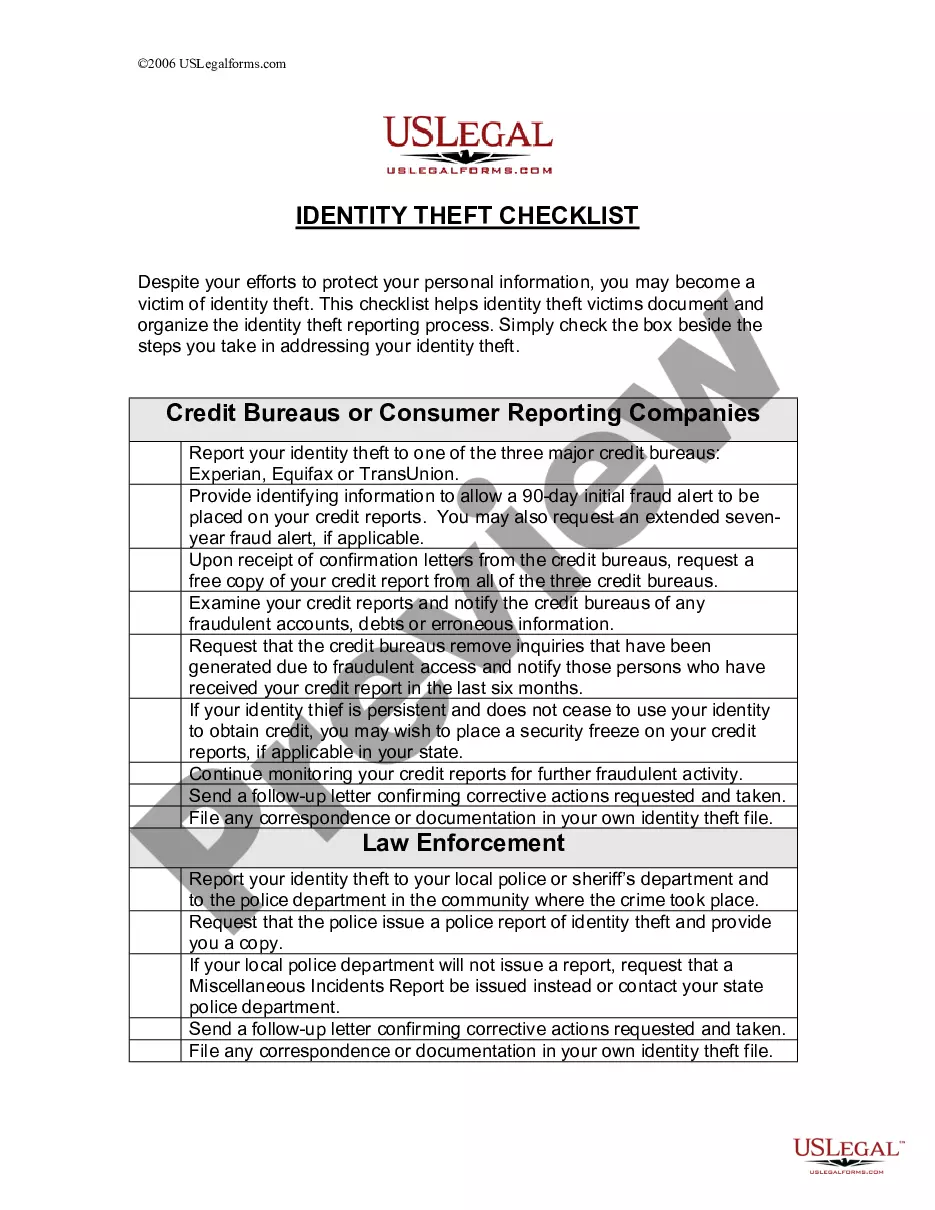
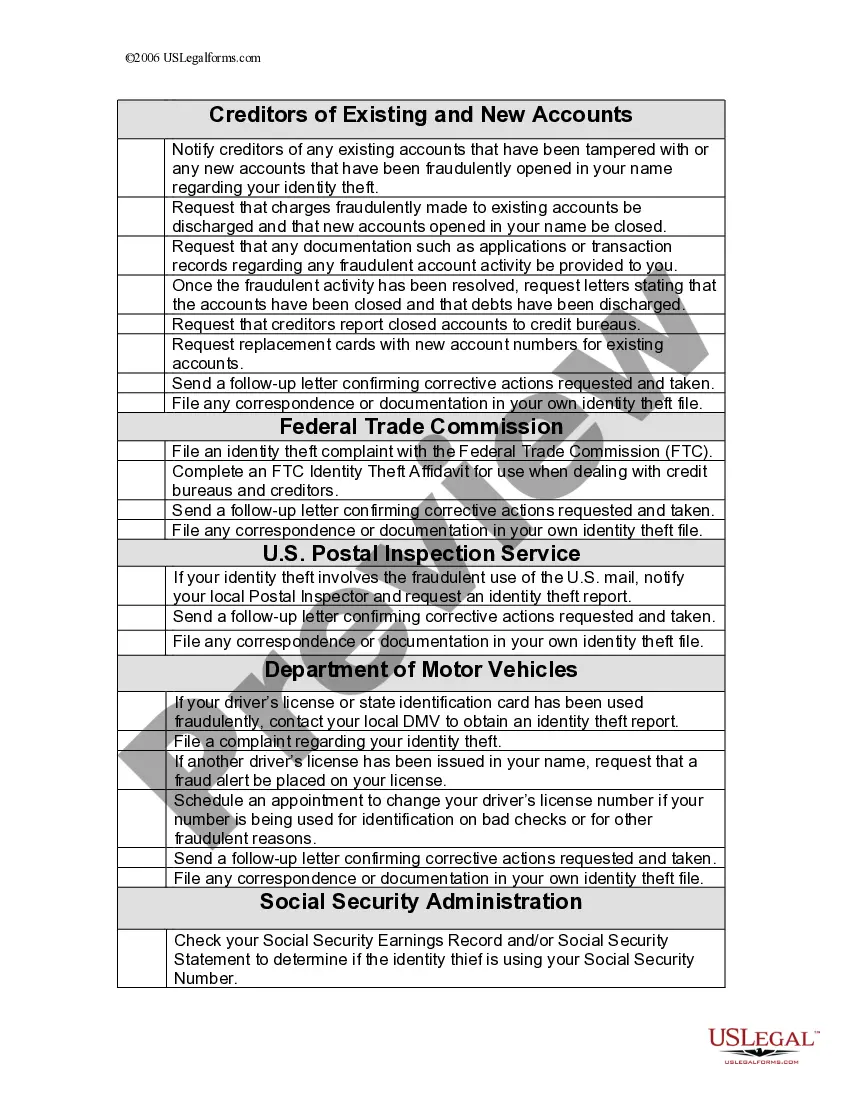
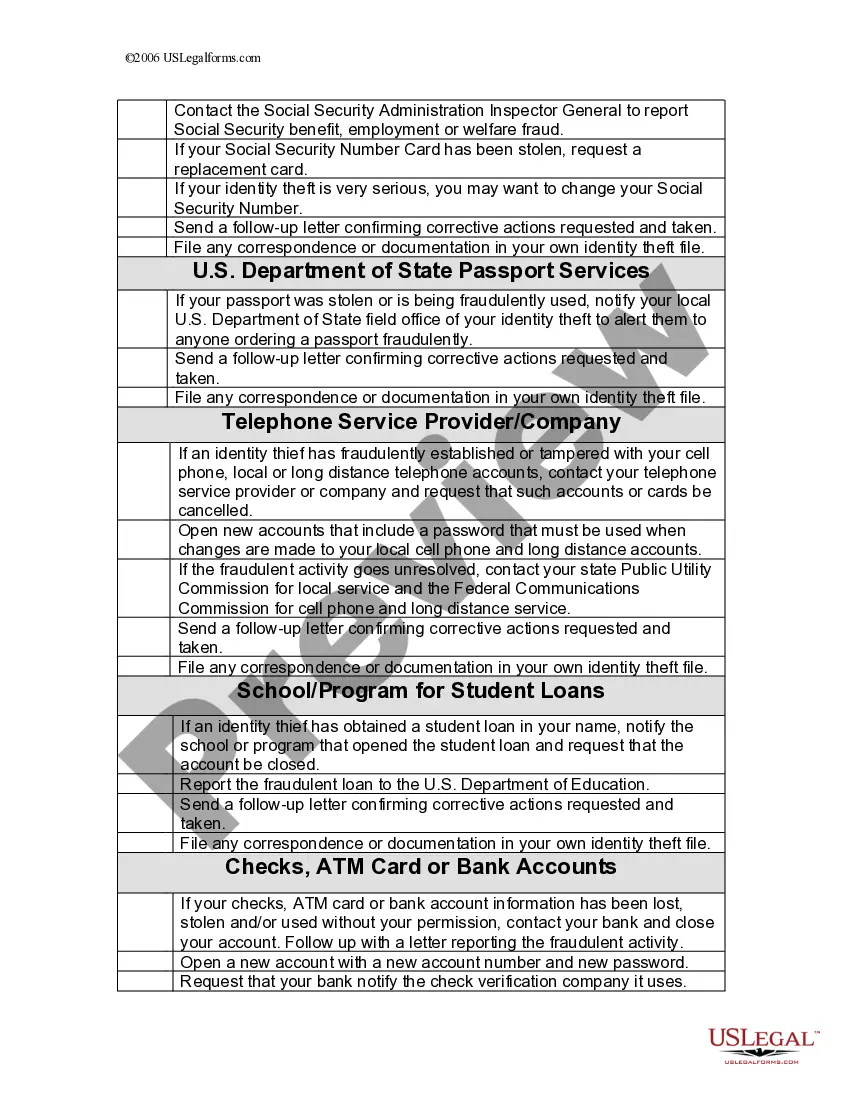
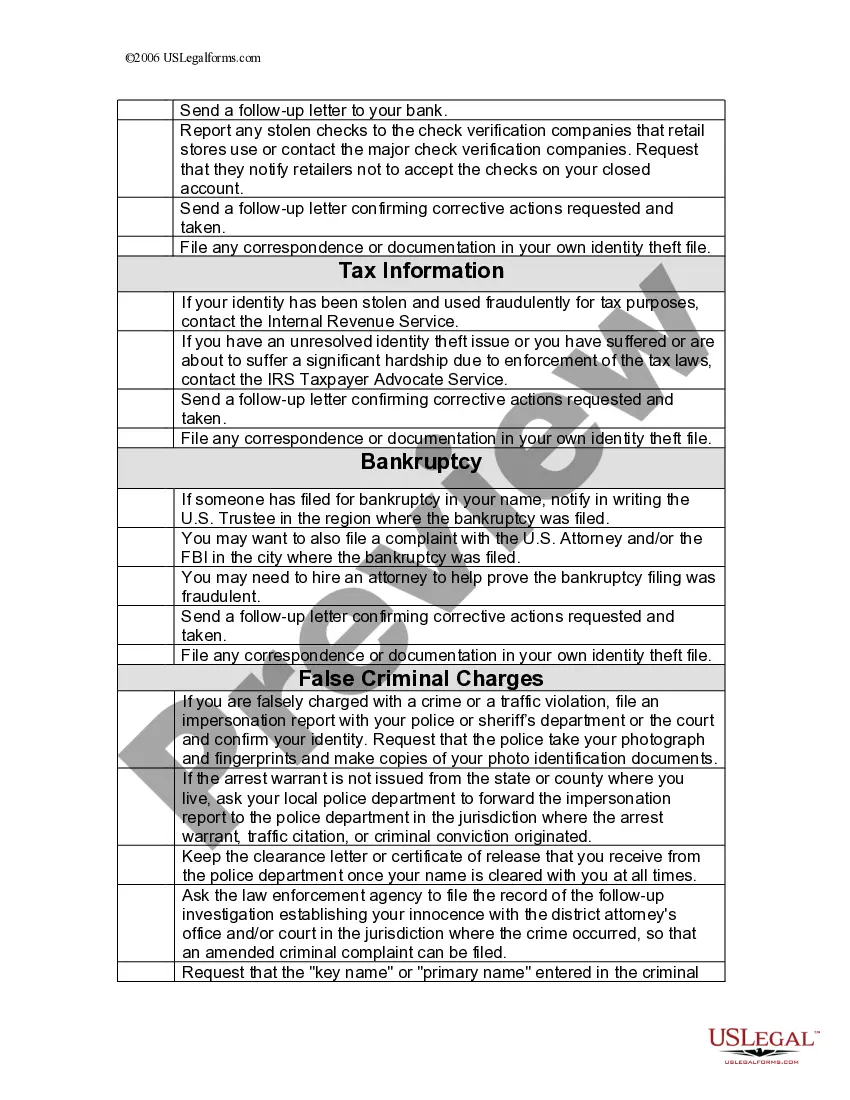
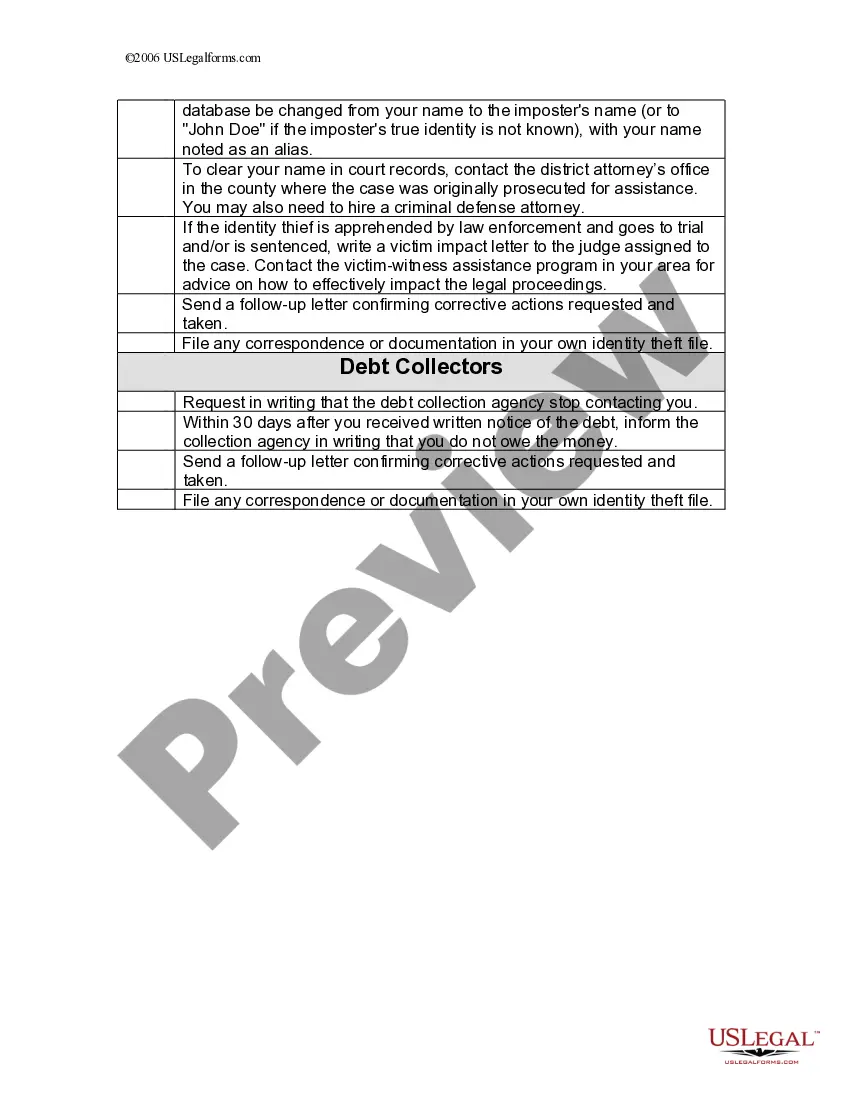
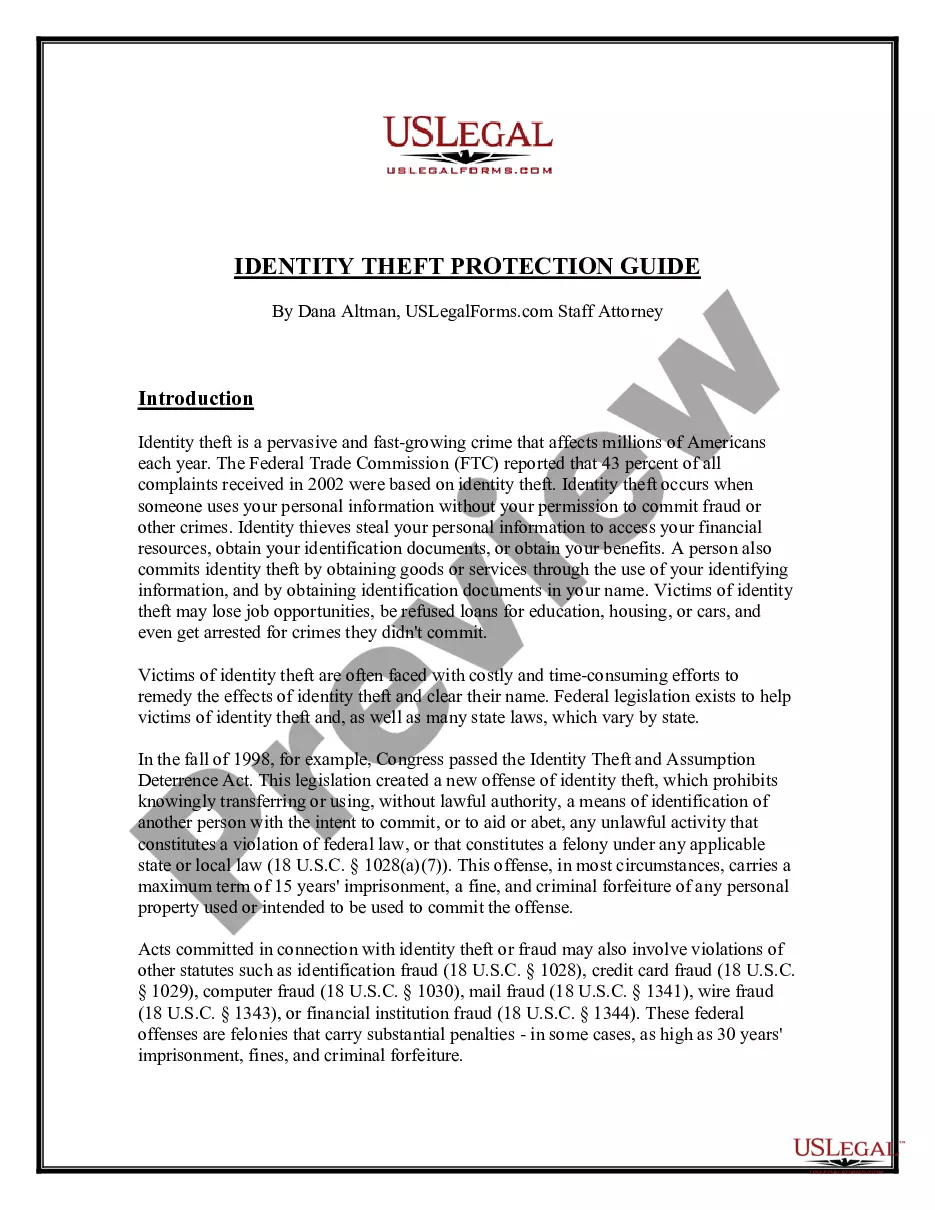
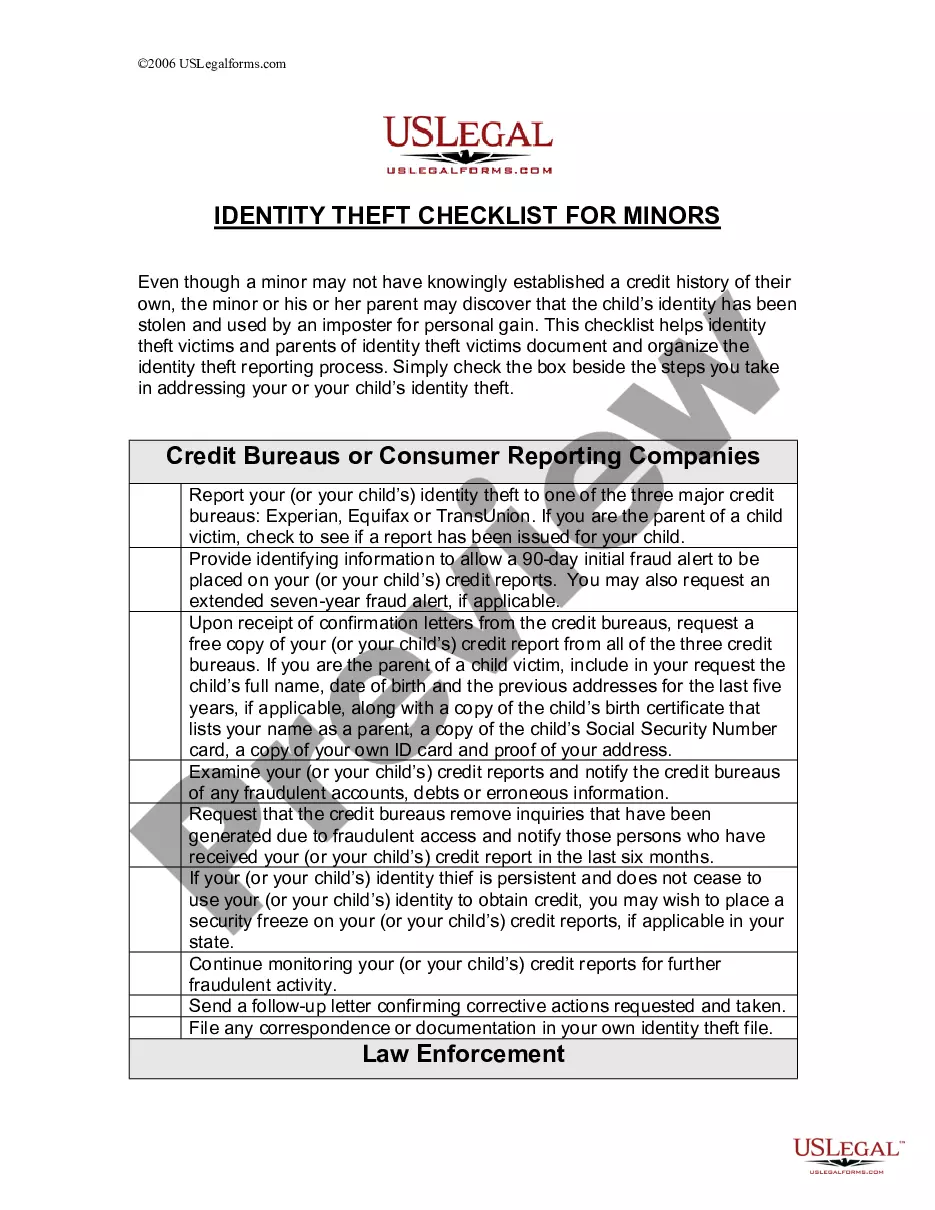
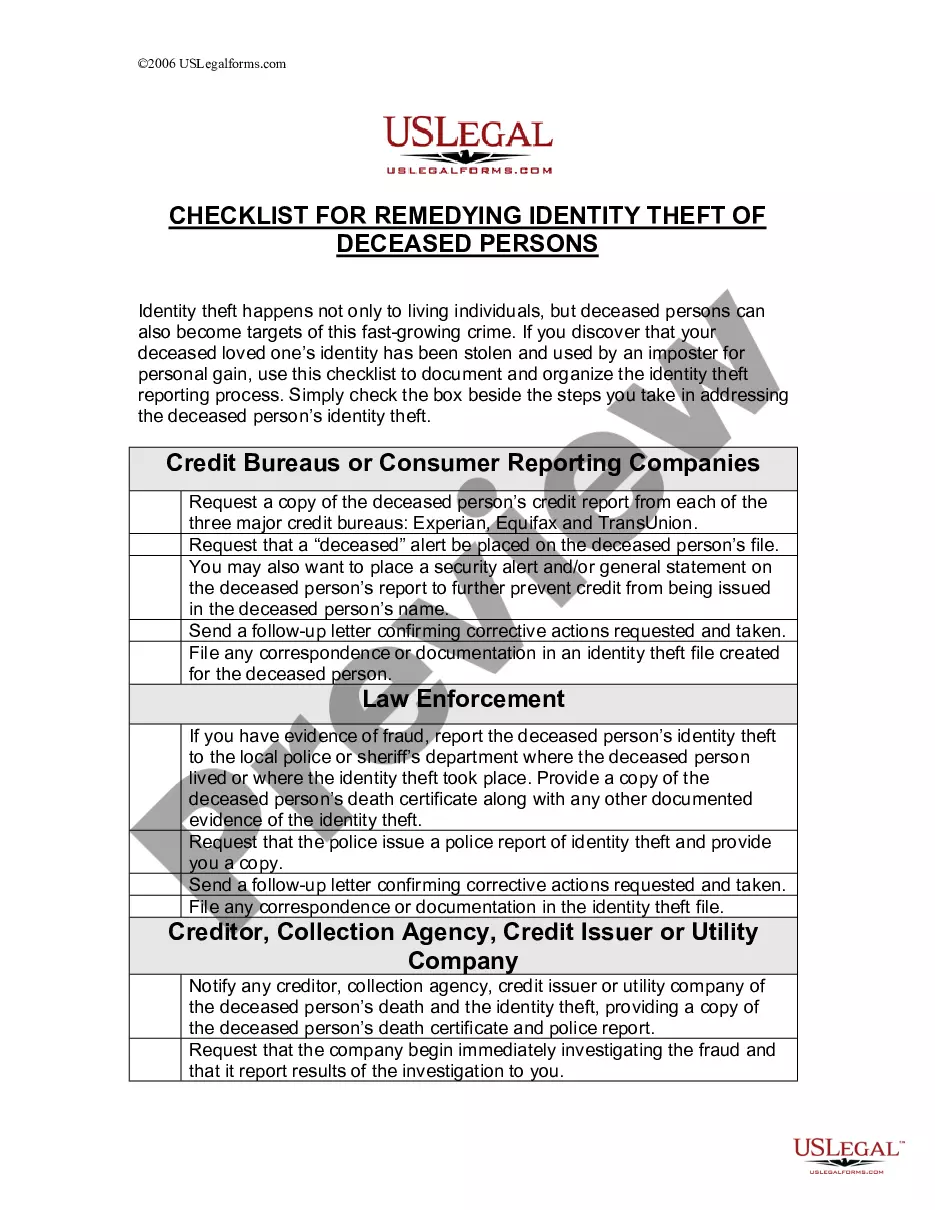
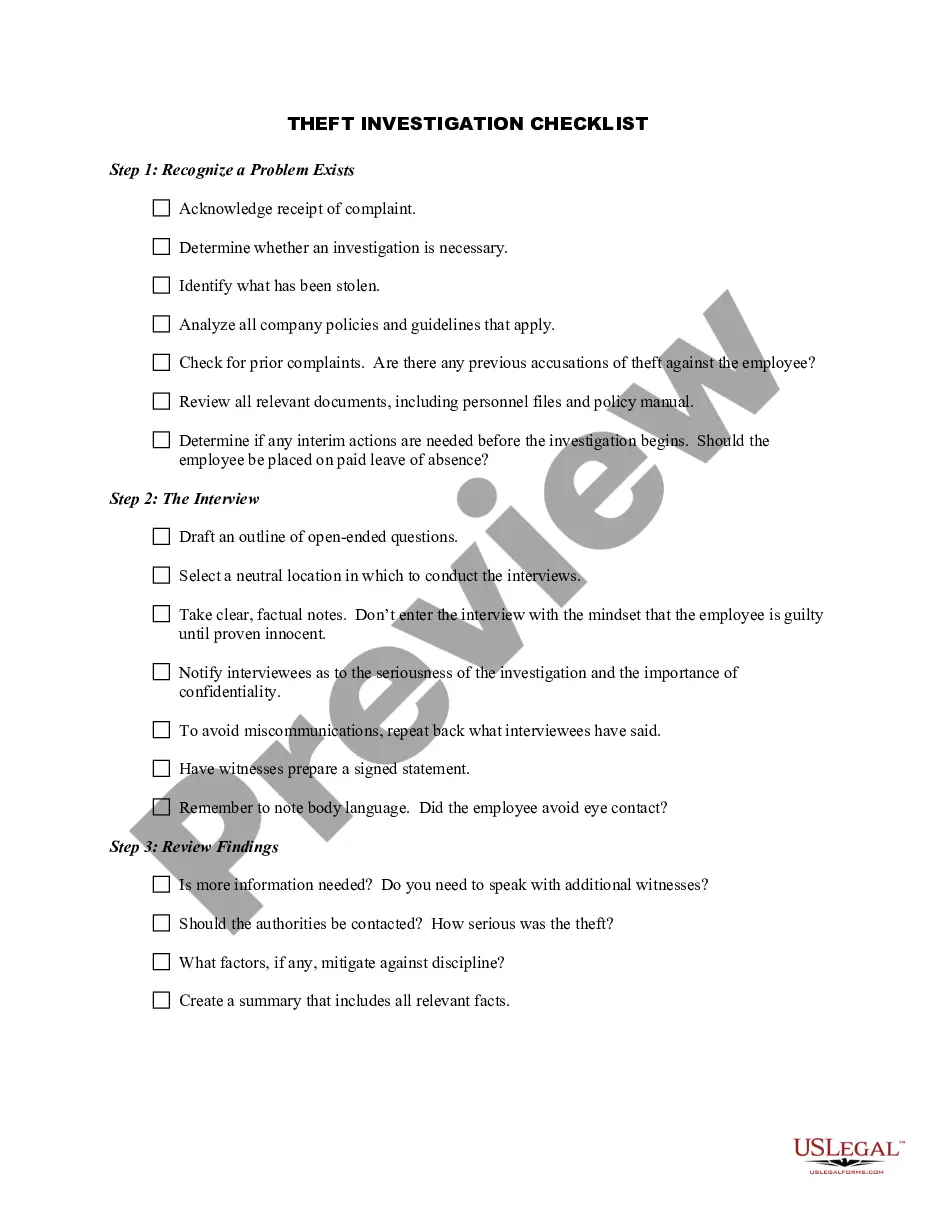
The Identity Theft Checklist is a comprehensive tool designed to assist victims of identity theft in documenting and organizing the reporting process. This checklist outlines essential steps to take when addressing identity theft issues with creditors, credit reporting agencies, law enforcement, and other relevant entities. Unlike typical forms, this checklist offers a step-by-step approach specifically tailored to guide individuals through the often overwhelming recovery process.
Form components explained
- Checklist format for ease of tracking actions taken against identity theft.
- Instructions for reporting to credit bureaus and placing fraud alerts.
- Guidance for notifying creditors and managing fraudulent accounts.
- Steps for filing reports with law enforcement and the Federal Trade Commission.
- Resources for addressing issues with specific entities like the DMV and IRS.
When this form is needed
This form is essential in situations where an individual discovers their personal information has been compromised and misused. It is particularly useful when handling various notifications required to start the process of recovery, ensuring that all important steps are taken to mitigate damage and restore oneâs identity.
Who can use this document
The Identity Theft Checklist is intended for:
- Individuals who have experienced identity theft.
- Consumers needing to organize their actions and communications concerning identity theft.
- Anyone unfamiliar with the identity theft reporting process.
- Victims seeking to protect their credit and personal information effectively.
Instructions for completing this form
To complete the Identity Theft Checklist, follow these steps:
- Identify the events of identity theft and select the corresponding actions you have taken.
- Report your identity theft to at least one of the three major credit bureaus and request a fraud alert.
- Notify law enforcement and obtain a police report.
- Contact creditors for existing and new accounts that may have been compromised.
- File necessary reports with relevant agencies such as the Federal Trade Commission and the Social Security Administration.
Notarization guidance
This form does not typically require notarization unless specified by local law. Users should verify local requirements to ensure compliance.
Get your form ready online
Our built-in tools help you complete, sign, share, and store your documents in one place.
Make edits, fill in missing information, and update formatting in US Legal Forms—just like you would in MS Word.
Download a copy, print it, send it by email, or mail it via USPS—whatever works best for your next step.
Sign and collect signatures with our SignNow integration. Send to multiple recipients, set reminders, and more. Go Premium to unlock E-Sign.
If this form requires notarization, complete it online through a secure video call—no need to meet a notary in person or wait for an appointment.
We protect your documents and personal data by following strict security and privacy standards.

Make edits, fill in missing information, and update formatting in US Legal Forms—just like you would in MS Word.

Download a copy, print it, send it by email, or mail it via USPS—whatever works best for your next step.

Sign and collect signatures with our SignNow integration. Send to multiple recipients, set reminders, and more. Go Premium to unlock E-Sign.

If this form requires notarization, complete it online through a secure video call—no need to meet a notary in person or wait for an appointment.

We protect your documents and personal data by following strict security and privacy standards.
Common mistakes
- Failing to document each step taken, which can lead to confusion.
- Neglecting to follow up with agencies after initial reports are filed.
- Not placing a fraud alert with all three credit bureaus.
- Forgetting to request copies of credit reports to monitor further activity.
Advantages of online completion
- Conveniently downloadable checklist to keep track of actions.
- Structured guidance reduces the overwhelm often associated with recovery.
- Ensures that no critical steps are overlooked during the reporting process.
- Designed by legal experts to meet the needs of victims effectively.
Key takeaways
- The Identity Theft Checklist is a vital tool for victims of identity theft.
- It provides organized steps for reporting and recovery.
- Completing the checklist can help safeguard your financial future.
- Using this checklist minimizes the risk of overlooking important actions.
Looking for another form?
Form popularity
FAQ
Police departments can do very little to investigate and prosecute identity theft.You can use the Identity Theft Report to help get false information taken off your credit reports, stop a company from collecting debts and place an extended fraud alert on your credit reports.
Periodically check your credit reports. Coming across suspicious activity on your credit reports, such as new accounts you don't recognize, is a quick way to identify potential fraud. You can get free copies of your credit reports from all three major credit bureaus through AnnualCreditReport.com.
Identity theft in California can be charged as either a felony or a misdemeanor depending on (1) the defendant's criminal history, and (2) the specific facts of the case. A person convicted of misdemeanor identity theft faces up to one year in county jail, a fine of up to $1,000, or both.
The stress can even take a toll on you physically. For example, a study by the Identity Theft Resource Center found that 41% of identity theft victims experience sleep disturbances, and 29% develop other physical symptoms, including aches and pains, heart palpitations, sweating and stomach issues.
The four types of identity theft include medical, criminal, financial and child identity theft.
File a claim with your identity theft insurance, if applicable. Notify companies of your stolen identity. File a report with the FTC. Contact your local police department. Place a fraud alert on your credit reports. Freeze your credit. Sign up for a credit monitoring service, if offered.
Under California law, you can report identity theft to your local police department. Ask the police to issue a police report of identity theft. Give the police as much information on the theft as possible. One way to do this is to provide copies of your credit reports showing the items related to identity theft.
Notify affected creditors or banks. Put a fraud alert on your credit report. Check your credit reports. Freeze your credit. Report the identity theft to the FTC. Go to the police. Remove fraudulent info from your credit report.