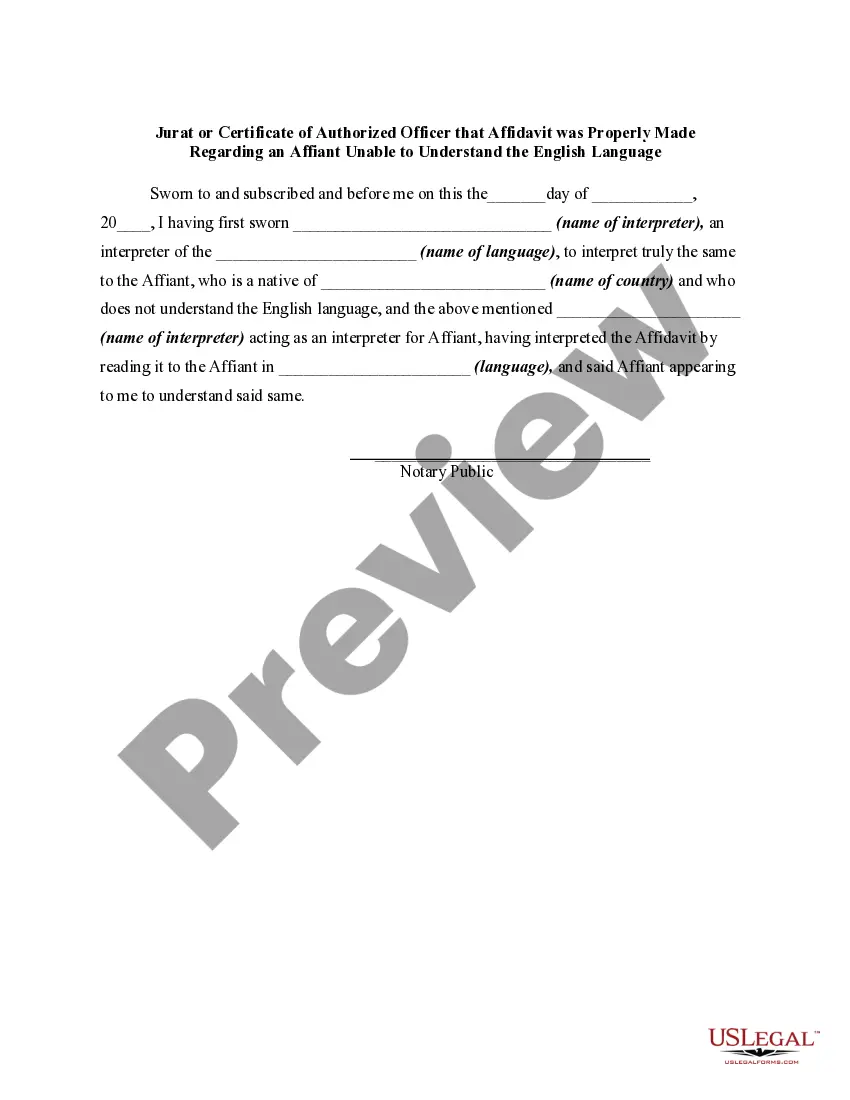
Jurat or Certificate of Authorized Officer that Affidavit was Properly Made Regarding an Affiant Unable to Understand the English Language
Understanding this form
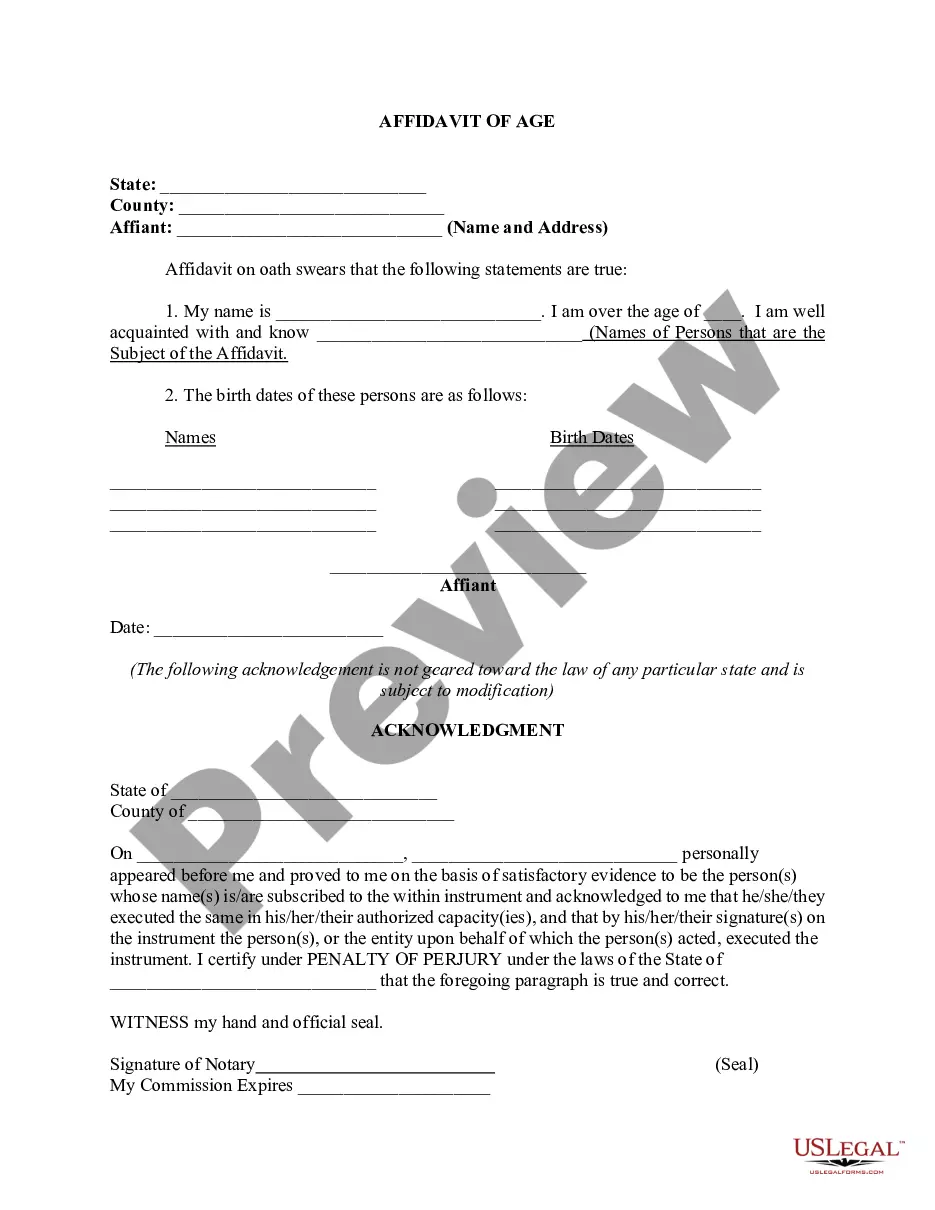
This form, known as a jurat or Certificate of Authorized Officer that Affidavit was Properly Made Regarding an Affiant Unable to Understand the English Language, serves as a certification confirming that an affidavit was properly executed before a qualified official. It is particularly important when an affiant does not comprehend English and requires a certified interpreter to ensure accurate translation and understanding. This form is necessary to uphold the integrity of legal documents by documenting the process and ensuring all parties understand the content being sworn to under oath.
Key components of this form
- Identification of the affiant and interpreter, including names and languages spoken.
- Certification statement signed by the notary public or authorized officer.
- Date of the oath or affirmation being sworn.
- Confirmation that the interpreter read the affidavit to the affiant in their native language.
- A declaration stating that the affiant appeared to understand the affidavit.
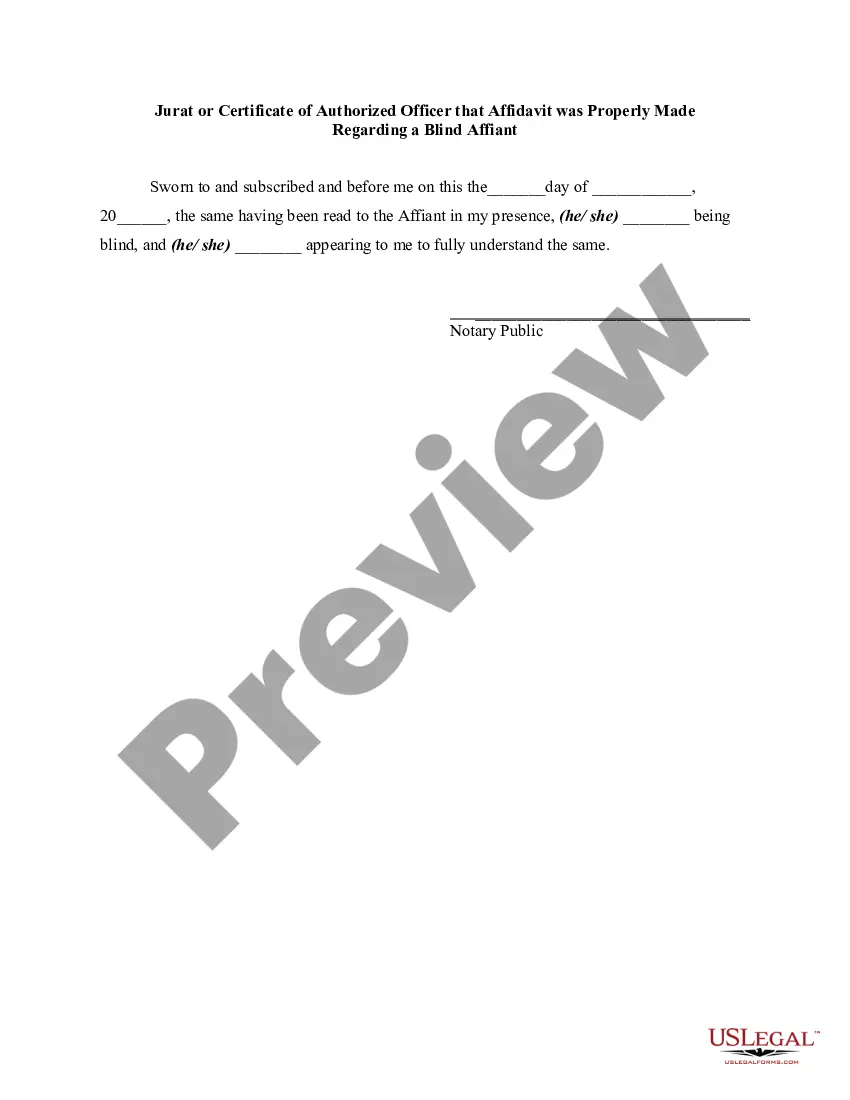
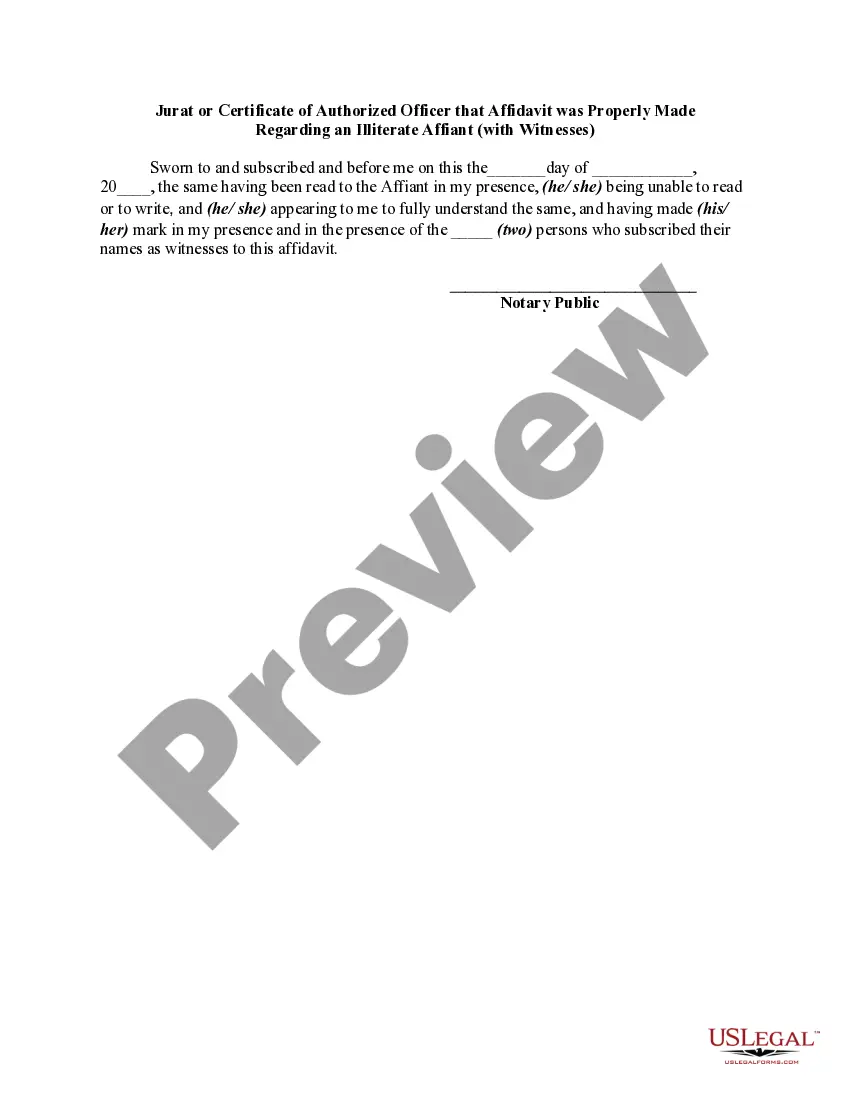
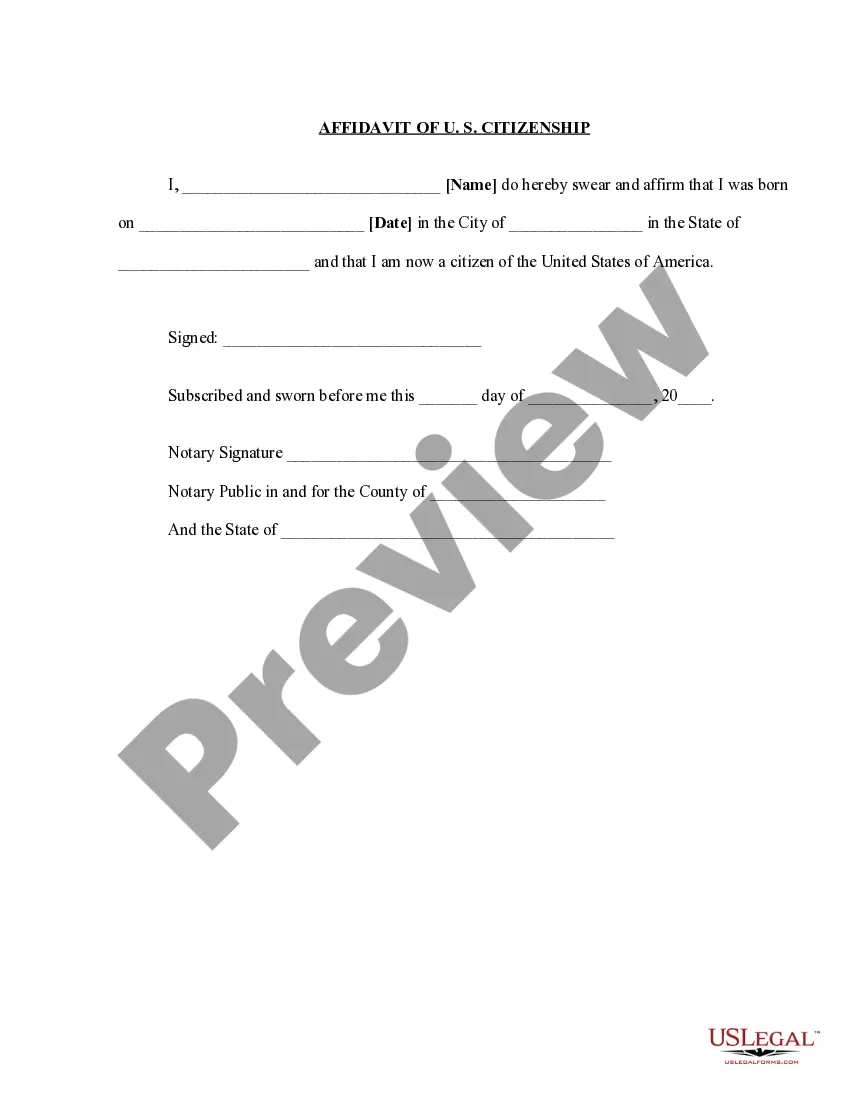

Situations where this form applies
This form should be used when an individual, an affiant, does not understand English and needs to provide an affidavit. It is commonly utilized in legal situations where non-English speakers must swear an affidavit or provide testimony. This includes situations like immigration applications, court testimonies, or other legal proceedings where an affidavit is required, and the affiant's understanding of the document is crucial to maintain its validity.
Who can use this document
- Affiants who do not understand the English language.
- Interpreters who are assisting non-English speaking affiants.
- Notaries public or authorized officers who are responsible for certifying affidavits.
- Legal professionals requiring affidavits from clients who are non-native English speakers.
Steps to complete this form
- Enter the names of the affiant and the interpreter in the appropriate fields.
- Specify the language that the interpreter will be translating.
- Fill in the date when the affidavit is sworn.
- Have the interpreter read the affidavit to the affiant in their native language.
- Ensure the notary public signs and dates the document, confirming the affidavit's execution.
Notarization guidance
To make this form legally binding, it must be notarized. Our online notarization service, powered by Notarize, lets you verify and sign documents remotely through an encrypted video session.
Get your form ready online
Our built-in tools help you complete, sign, share, and store your documents in one place.
Make edits, fill in missing information, and update formatting in US Legal Forms—just like you would in MS Word.
Download a copy, print it, send it by email, or mail it via USPS—whatever works best for your next step.
Sign and collect signatures with our SignNow integration. Send to multiple recipients, set reminders, and more. Go Premium to unlock E-Sign.
If this form requires notarization, complete it online through a secure video call—no need to meet a notary in person or wait for an appointment.
We protect your documents and personal data by following strict security and privacy standards.

Make edits, fill in missing information, and update formatting in US Legal Forms—just like you would in MS Word.

Download a copy, print it, send it by email, or mail it via USPS—whatever works best for your next step.

Sign and collect signatures with our SignNow integration. Send to multiple recipients, set reminders, and more. Go Premium to unlock E-Sign.

If this form requires notarization, complete it online through a secure video call—no need to meet a notary in person or wait for an appointment.

We protect your documents and personal data by following strict security and privacy standards.
Typical mistakes to avoid
- Failing to accurately record the language spoken by the affiant.
- Not having the interpreter sign the form or providing incomplete details about their qualifications.
- Omitting the date of swearing the affidavit.
- Forgetting to have the notary public sign and stamp the document, rendering it invalid.
Advantages of online completion
- Accessible and easy to navigate, making it simple to fill out correctly.
- Editable and customizable, allowing users to tailor the document to their specific needs.
- Convenient download options, letting users save and print forms quickly.
- Designed by licensed attorneys to ensure reliability and compliance with legal standards.
Quick recap
- The jurat confirms that an affidavit was properly executed with the help of an interpreter.
- It is essential for individuals who do not understand English to ensure their legal rights are protected.
- Accurate completion and notarization of the form are crucial for legal validity.
Looking for another form?
Form popularity
FAQ
Jurats. A jurat is used when the signer is swearing to the content of the document. The notary must administer an oath or affirmation to the signer in order to complete the jurat. A jurat also requires that the signer signs in the presence of the notary.
The appropriate verbal wording for an oath for a jurat is as follows: Do you solemnly swear that the statements in this document are true to the best of your knowledge and belief, so help you God?
(jur-at) From the Latin "to swear." A jurat is the portion of an affidavit or deposition in which a person swears that the contents of the written statement are true.
Jurat/affidavit certificates are used for a signer to swear or affirm to a notary public the truthfulness of the contents of a specified document.
What Is A Jurat? The purpose of a jurat also known in some states as a verification upon oath or affirmation is for a signer to swear to or affirm the truthfulness of the contents of a document to a Notary or notarial officer.
As nouns the difference between oath and jurat is that oath is a solemn pledge or promise to a god, king, or another person, to attest to the truth of a statement or contract while jurat is (legal) the written statement by a notary public that he or she has administered and witnessed an oath or affirmation.
The signer was physically in front of you when you performed the notarization. You verified the signer's identity, if required by your state, using a method acceptable in your state. You witnessed the signer sign the document in front of you.
The signer must appear in person before you and sign the document in your presence. In some states, you are required to positively identify the signer. You must administer a spoken oath or an affirmation, and the signer must respond out loud.