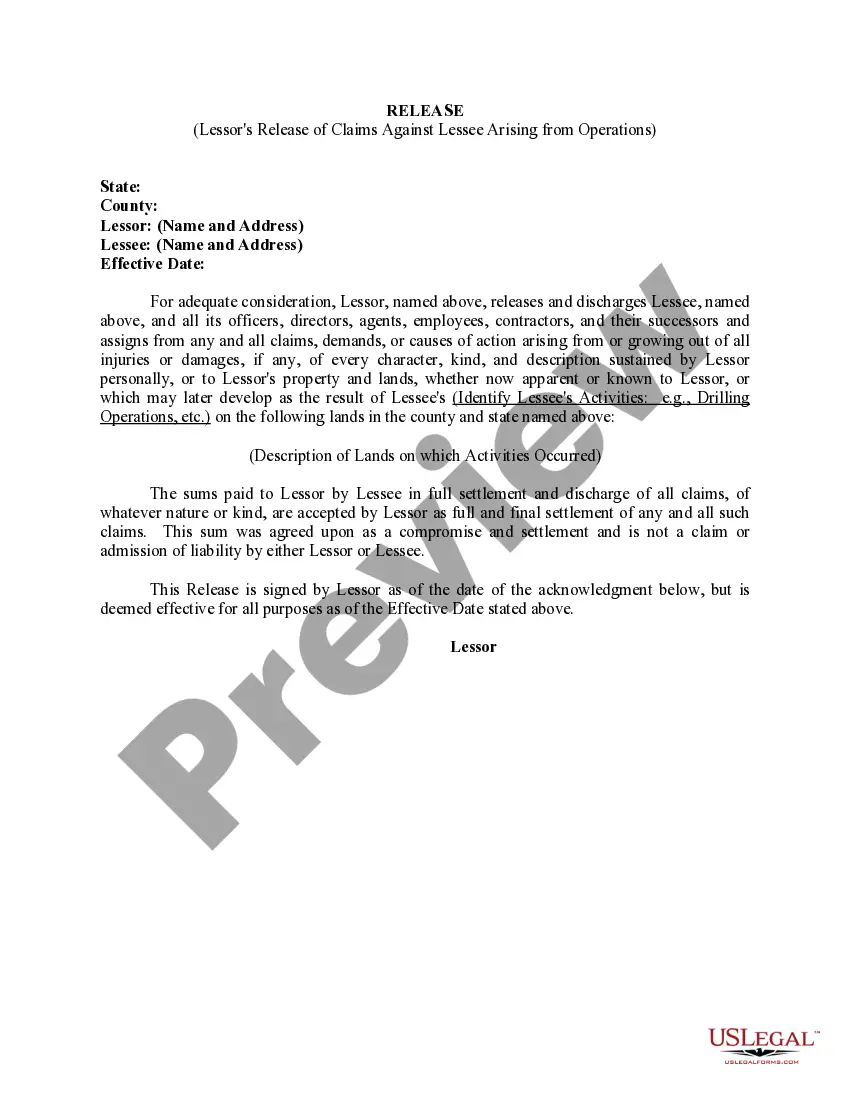
License, Rental, or Lease Agreement for Grazing on Public Lands - Real Estate
Understanding this form
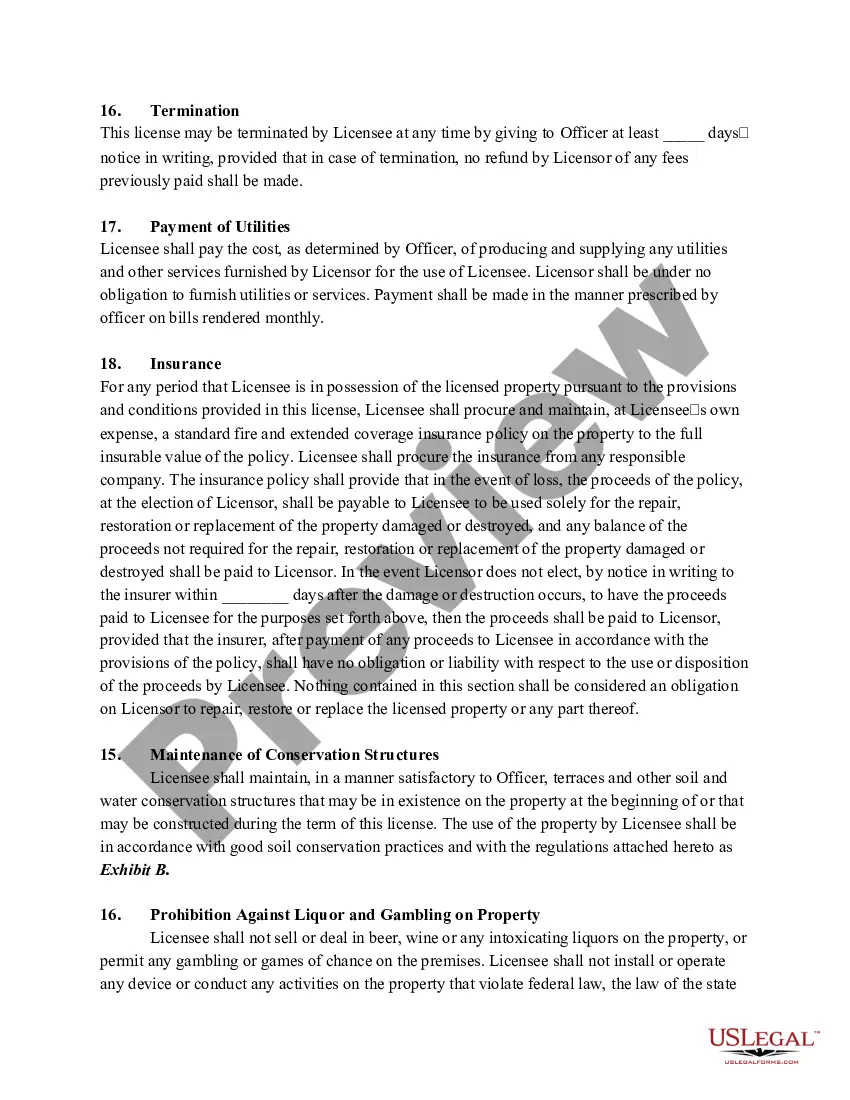
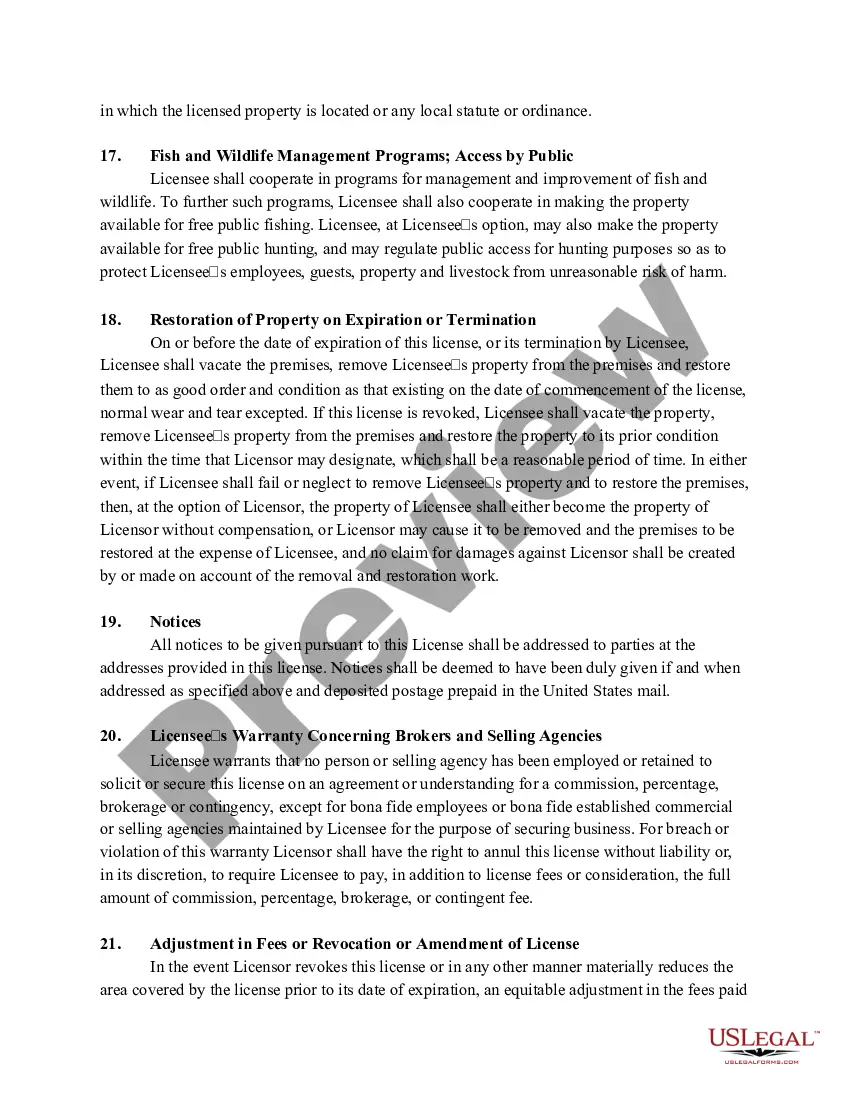
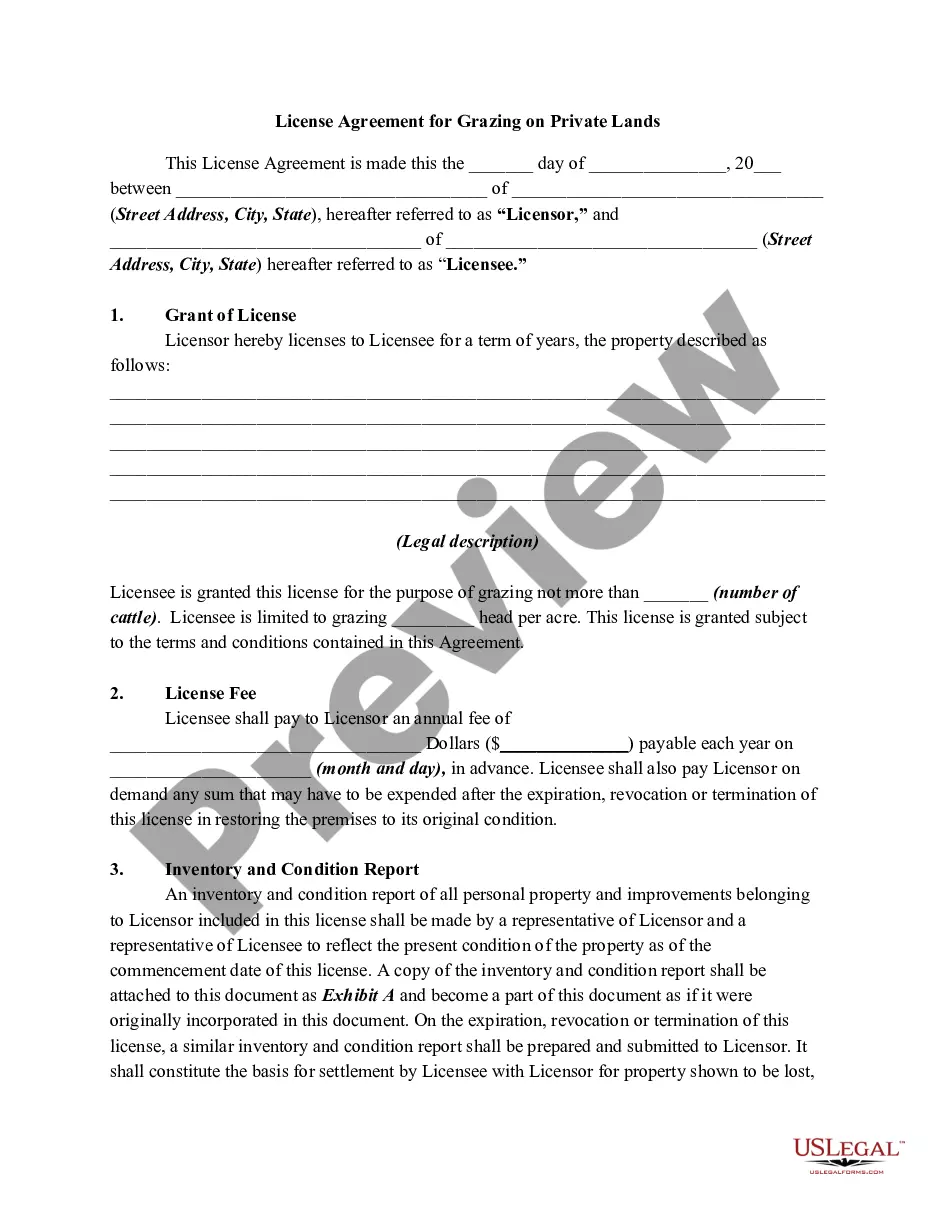
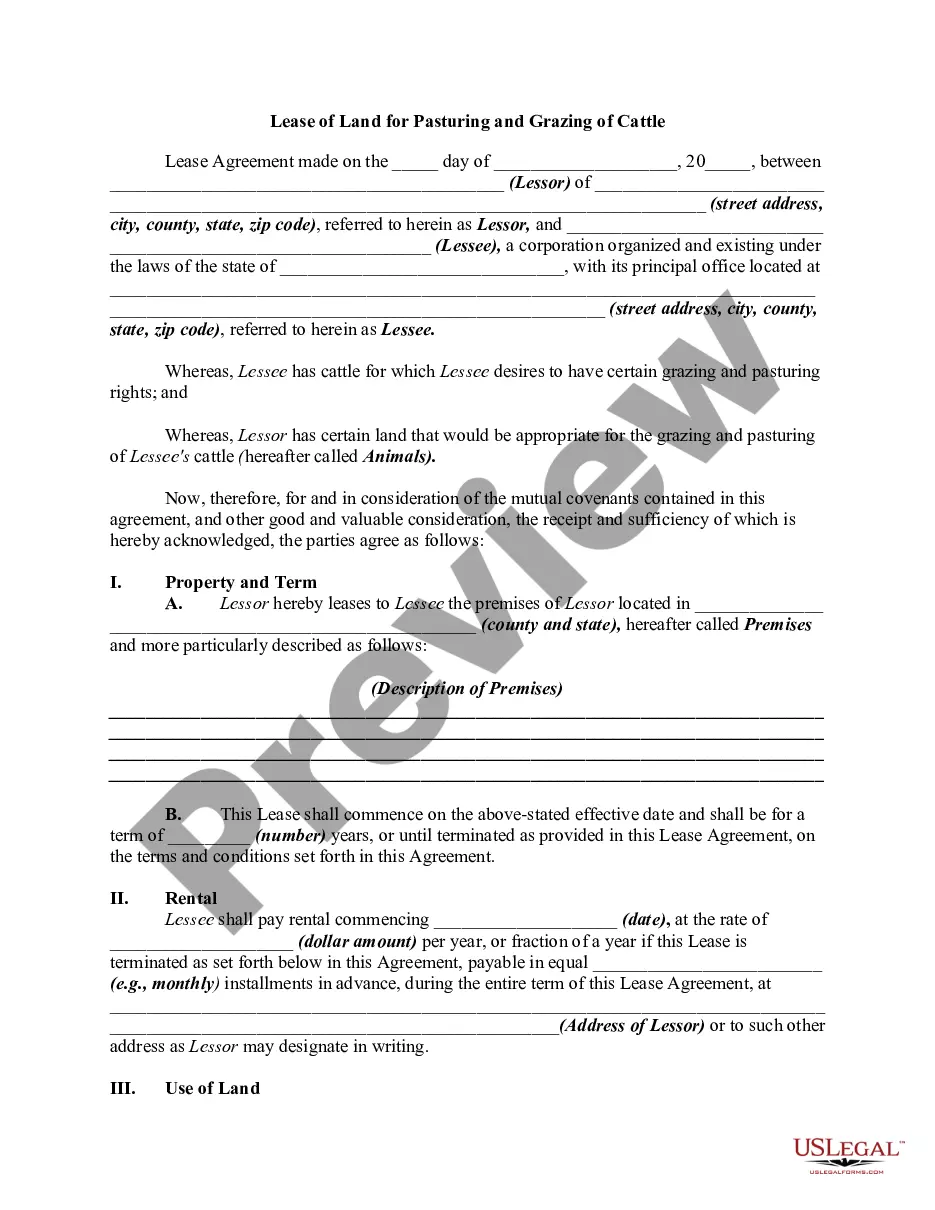
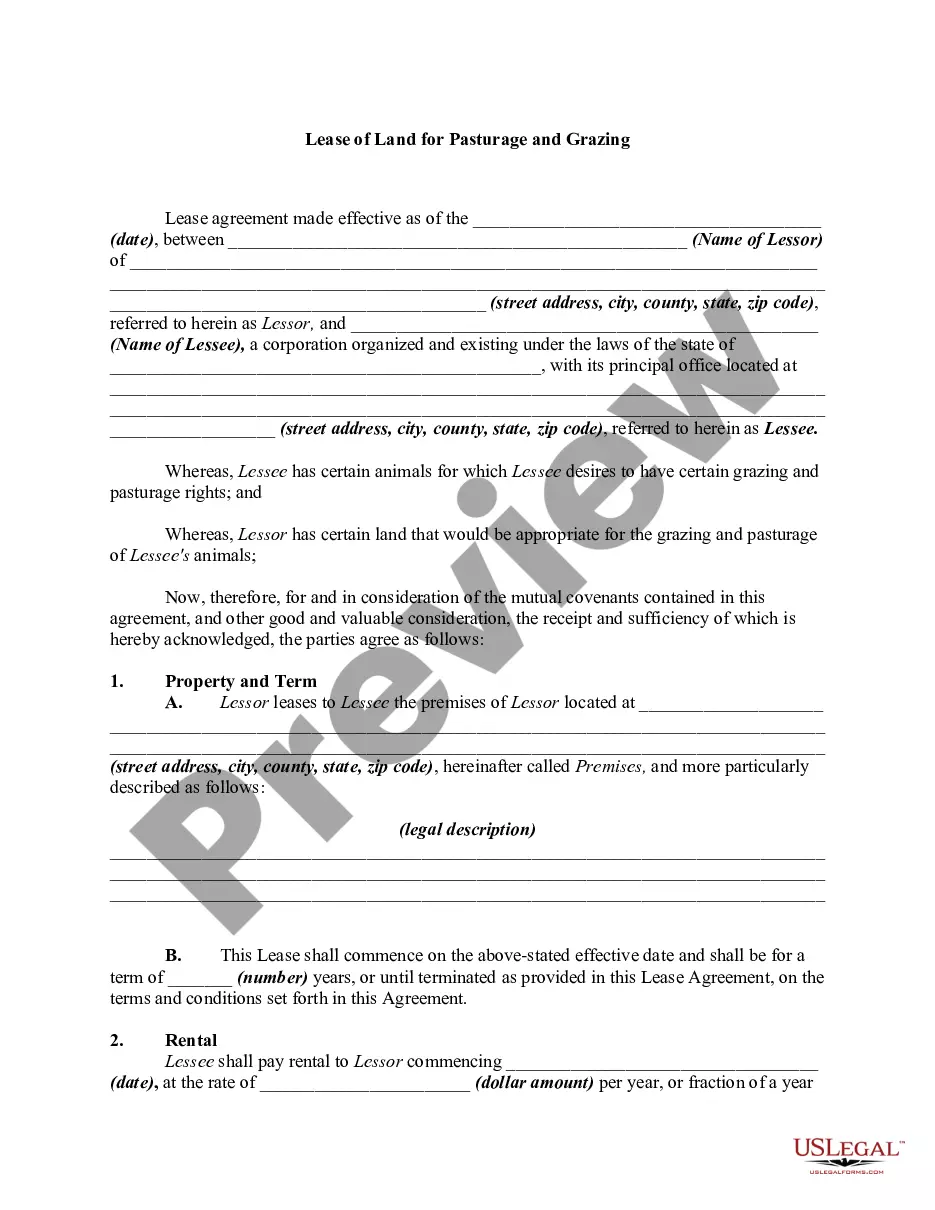
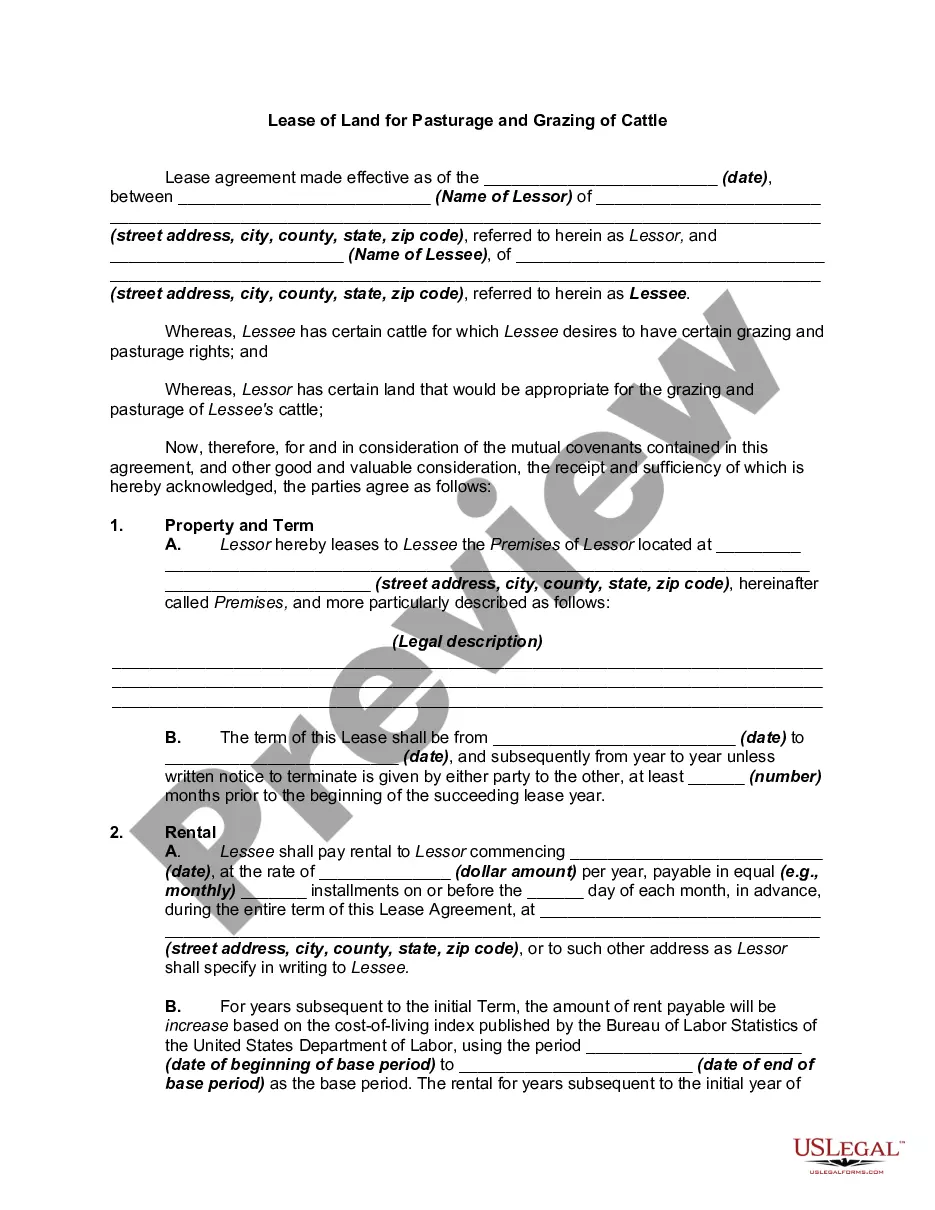
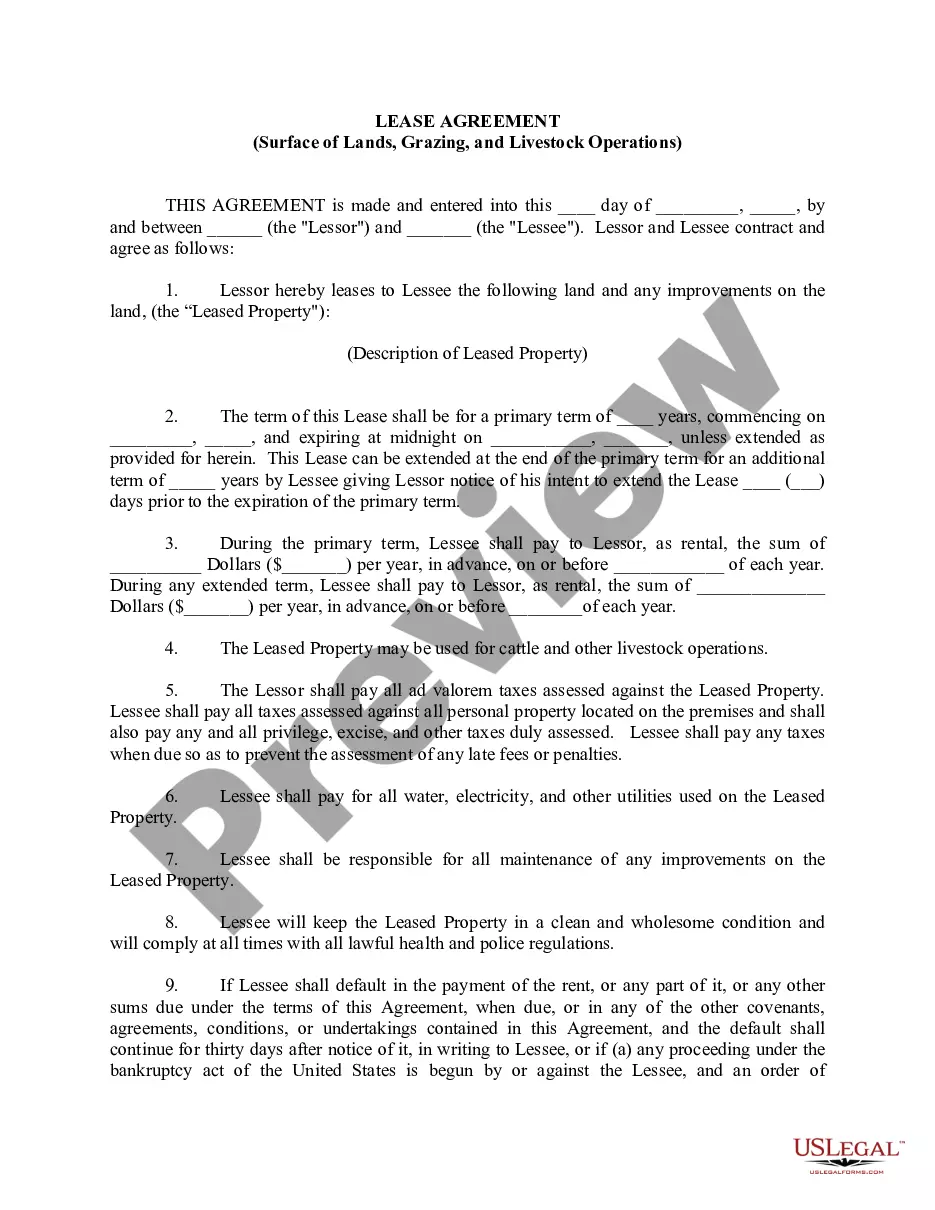
The License, Rental, or Lease Agreement for Grazing on Public Lands is a legal document that establishes a formal relationship between a state and a livestock owner, permitting the grazing of livestock on public lands. This form is specifically designed for livestock, such as sheep or cattle, distinguishing it from other rental agreements by its focus on grazing rights and land use regulations.
Key components of this form
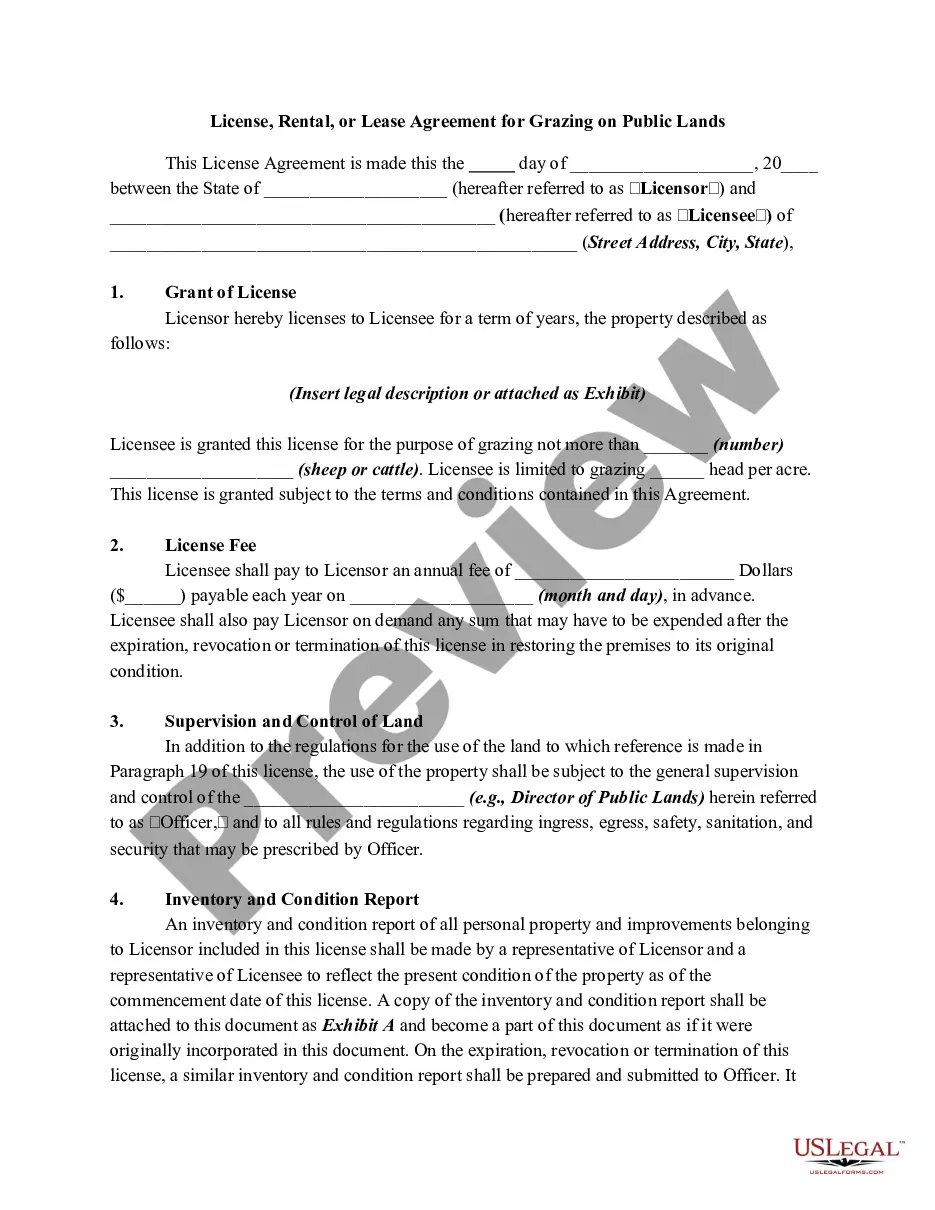
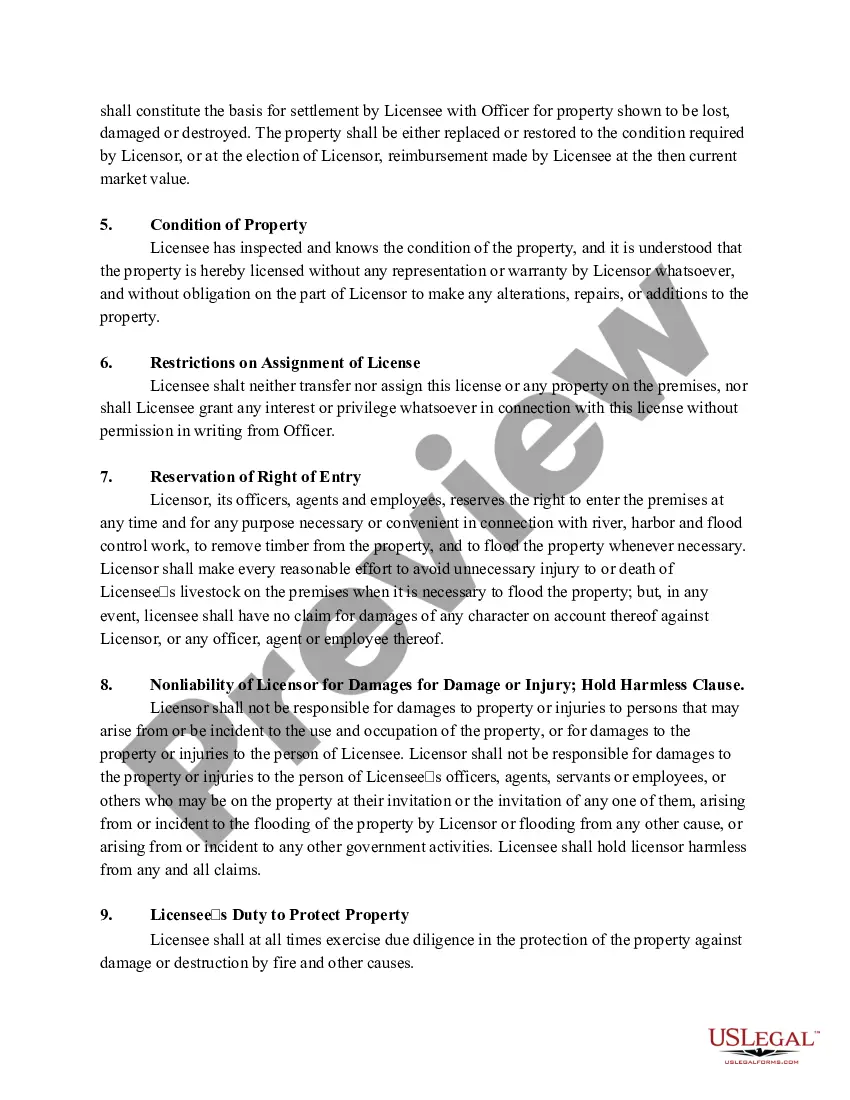
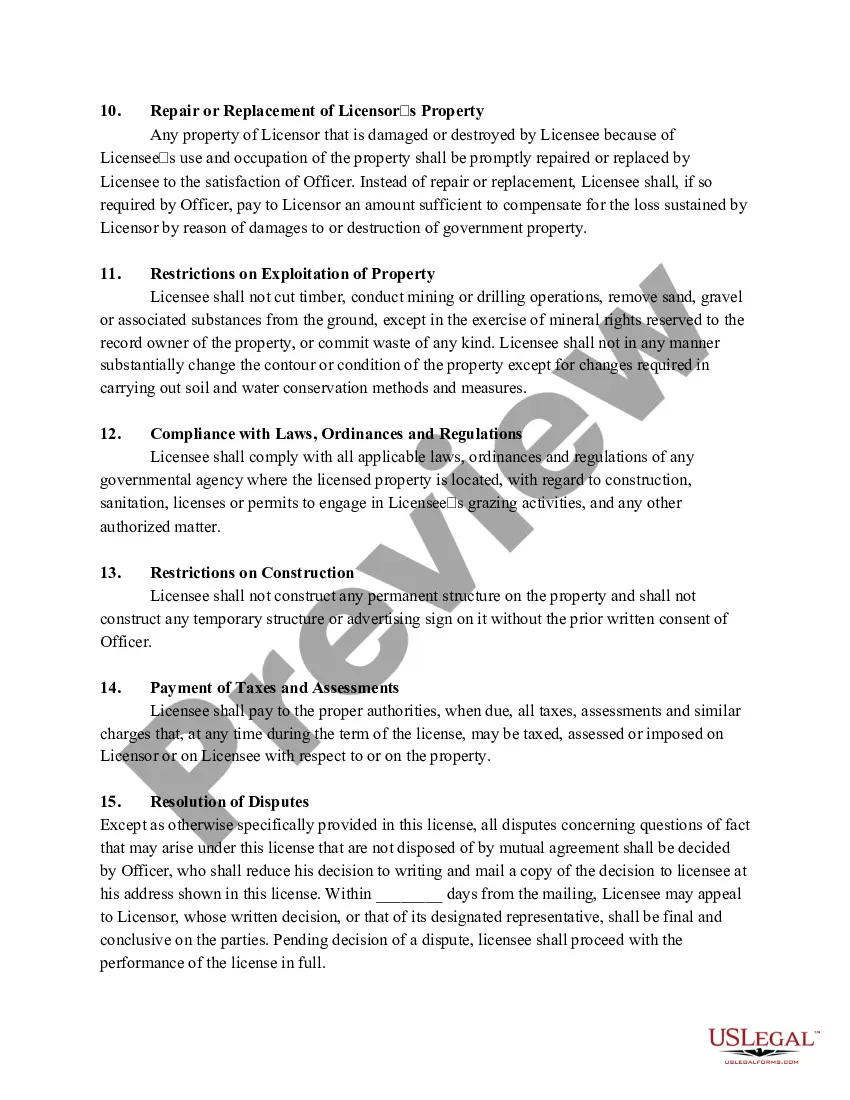
- Grant of License: Outlines the terms under which the livestock may graze.
- License Fee: Details the annual fee the licensee must pay for grazing rights.
- Supervision and Control: Specifies oversight and regulatory compliance requirements.
- Inventory and Condition Report: Documents the state of the property before and after the license period.
- Nonliability Clause: States that the licensor is not liable for damages or injuries related to property use.
When to use this document
This form is appropriate when a livestock owner needs to graze animals on public land. Use this agreement when the state provides access to certain public lands for agricultural purposes or when a grazing lease is required legally to ensure proper use and management of the land. It's a necessary document to formalize the agreement and protect the interests of both parties involved.
Who should use this form
- Livestock owners looking to graze sheep or cattle on public lands.
- State or governmental agencies responsible for property management and land use.
- Agricultural professionals seeking to clarify usage rights and responsibilities.
Instructions for completing this form
- Identify the parties: Fill in the names of the licensor (state) and licensee (livestock owner).
- Specify the property: Enter the legal description of the public land where grazing will occur.
- Detail the fee: Indicate the annual license fee and the payment schedule.
- Document inventory: Conduct and attach an inventory and condition report of the land and any improvements.
- Review restrictions: Ensure compliance with all clauses regarding land use and responsibilities.
Notarization guidance
In most cases, this form does not require notarization. However, some jurisdictions or signing circumstances might. US Legal Forms offers online notarization powered by Notarize, accessible 24/7 for a quick, remote process.
Get your form ready online
Our built-in tools help you complete, sign, share, and store your documents in one place.
Make edits, fill in missing information, and update formatting in US Legal Forms—just like you would in MS Word.
Download a copy, print it, send it by email, or mail it via USPS—whatever works best for your next step.
Sign and collect signatures with our SignNow integration. Send to multiple recipients, set reminders, and more. Go Premium to unlock E-Sign.
If this form requires notarization, complete it online through a secure video call—no need to meet a notary in person or wait for an appointment.
We protect your documents and personal data by following strict security and privacy standards.

Make edits, fill in missing information, and update formatting in US Legal Forms—just like you would in MS Word.

Download a copy, print it, send it by email, or mail it via USPS—whatever works best for your next step.

Sign and collect signatures with our SignNow integration. Send to multiple recipients, set reminders, and more. Go Premium to unlock E-Sign.

If this form requires notarization, complete it online through a secure video call—no need to meet a notary in person or wait for an appointment.

We protect your documents and personal data by following strict security and privacy standards.
Typical mistakes to avoid
- Failing to accurately describe the property being licensed for grazing.
- Not specifying the number of livestock allowed under the agreement.
- Neglecting to complete the inventory and condition report thoroughly.
- Ignoring local regulations or state-specific rules that may affect the agreement.
Advantages of online completion
- Convenient access to a legally compliant format tailored for grazing agreements.
- Editability allows users to customize the agreement according to specific needs.
- Reliable legal language drafted by licensed attorneys ensures enforceability.
Legal use & context
- This form serves as a binding agreement once signed by both parties and can be used for the enforcement of grazing rights.
- It is governed by state laws, so it may not be enforceable if not completed according to local regulations.
What to keep in mind
- The agreement is crucial for livestock owners needing access to public lands for grazing.
- Understanding the key components of the form ensures compliance and minimizes disputes.
- State-specific guidelines must be followed to ensure the validity of the license.
Looking for another form?


Form popularity
FAQ
Collect each party's information. Include specifics about your property. Consider all of the property's utilities and services. Know the terms of your lease. Set the monthly rent amount and due date. Calculate any additional fees. Determine a payment method. Consider your rights and obligations.
Under its multiple-use and sustained yield mandates, the BLM manages public rangelands for various uses and values, including livestock grazing, recreational opportunities, healthy watersheds, and wildlife habitat. These lands preserve the open spaces that continue to shape the character of the West.
The average rate to rent irrigated and non-irrigated cropland in 2018 was $215 and $125 per acre, respectively. The average rate to rent pastureland was $12.50 per acre in 2018. These cropland rental rates and pasture lease rates vary greatly by state, with Iowa and Illinois near the top of the list (not surprising).
Leasing land to another person for grazing purposes can benefit both the landowner and lessee by allowing an additional source of income for the landowner and by permitting the lessee to run livestock on land without incurring the long-term debt associated with purchasing property.
The law initially permitted 80 million acres (32 million hectares) of previously unreserved public lands of the United States to be placed into grazing districts to be administered by the Department of the Interior.
When renting land for grazing cows and calves, the most common option is a cash rent by the acre. Issues in the agreement would typically address such things as stocking rate, maintenance of fences and improvements, weed and brush management, lease terms, and the rate per acre.
The Bureau of Land Management (BLM) administers nearly 18,000 grazing permits and leases.Throughout the life of the permit, BLM and other regulators monitor the health of the leased land and may temporarily alter permits in response to changes in land quality.
Agricultural land cannot be leased for any period whatsoever, except in the districts of Uttara Kannada and Dakshina Kannada for the purpose of utilizing the land for aquaculture for a period not exceeding 20 years.However there is no problem in getting the agricultural landed property on lease.