Special Stockholders Meeting Minutes - Corporate Resolutions
What is this form?
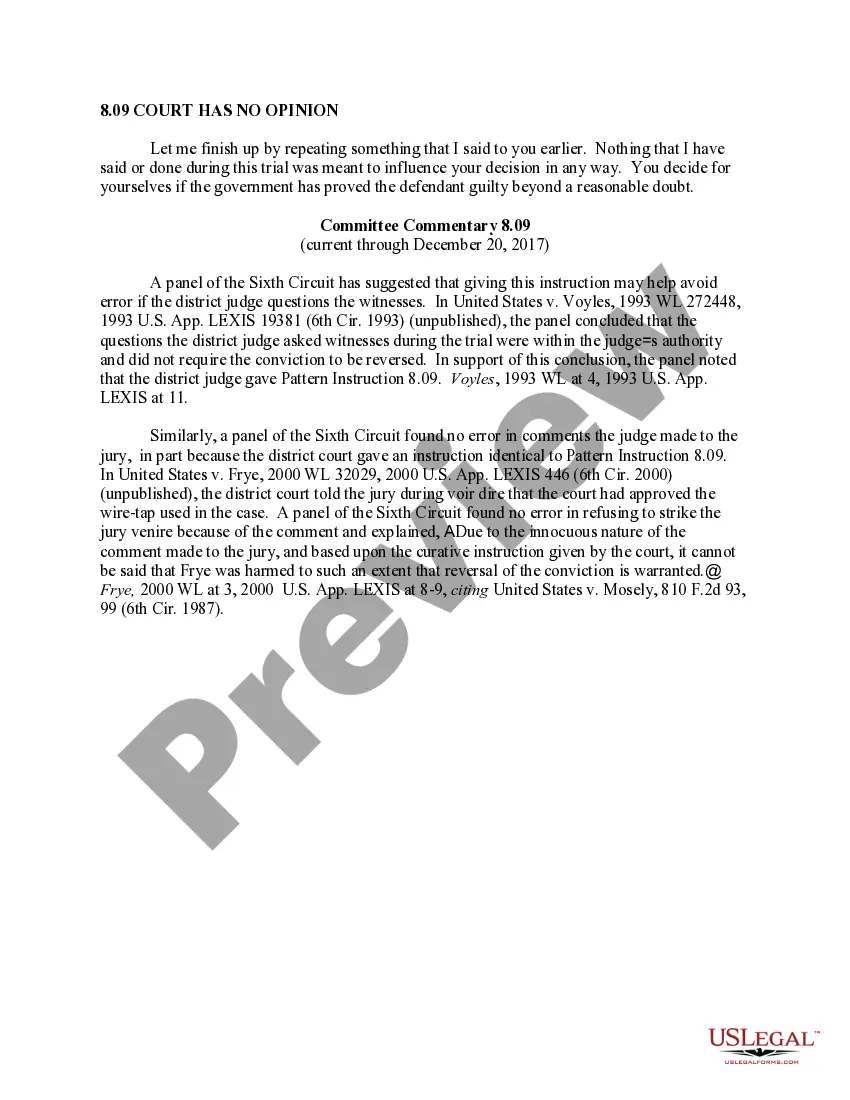
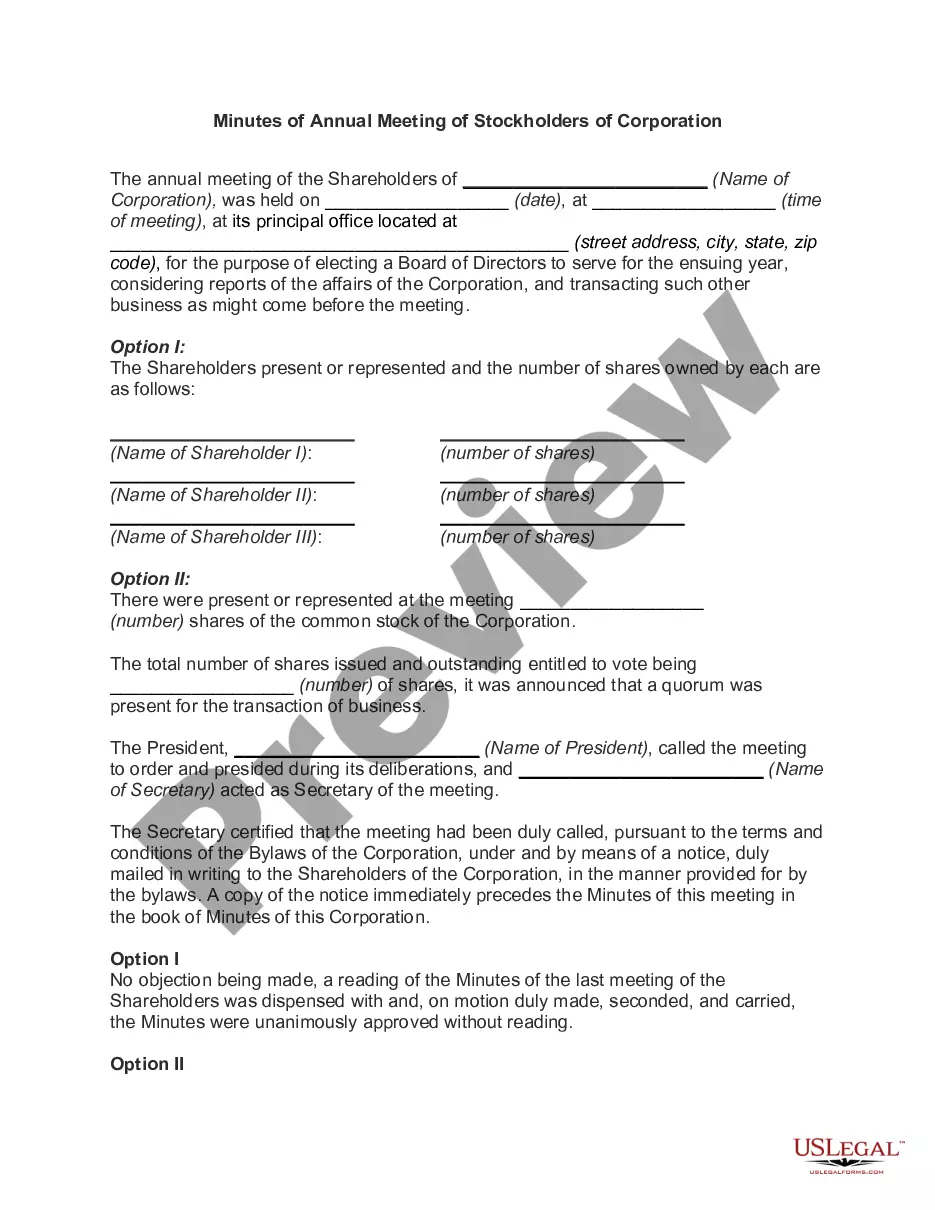
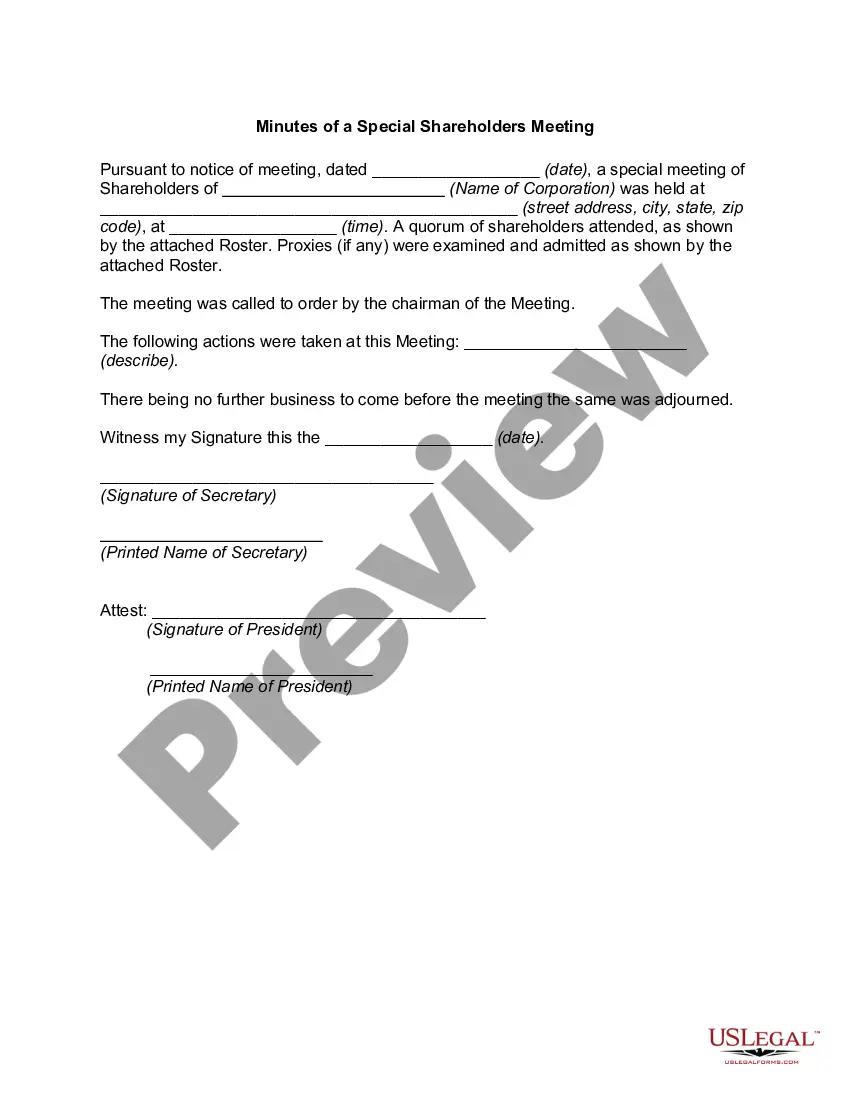
The Special Stockholders Meeting Minutes - Corporate Resolutions form is a legal document used by the stockholders of a corporation to formally record the proceedings and decisions made during a special meeting. This form captures critical details such as the date and location of the meeting, the attendees, and the resolutions passed. Unlike regular meeting minutes, this document is specifically tailored for special stockholder meetings, where unique matters need to be addressed, ensuring the corporation is compliant with legal requirements and that all shareholders are informed of the discussions and outcomes.
Main sections of this form
- Meeting details, including date, time, and location.
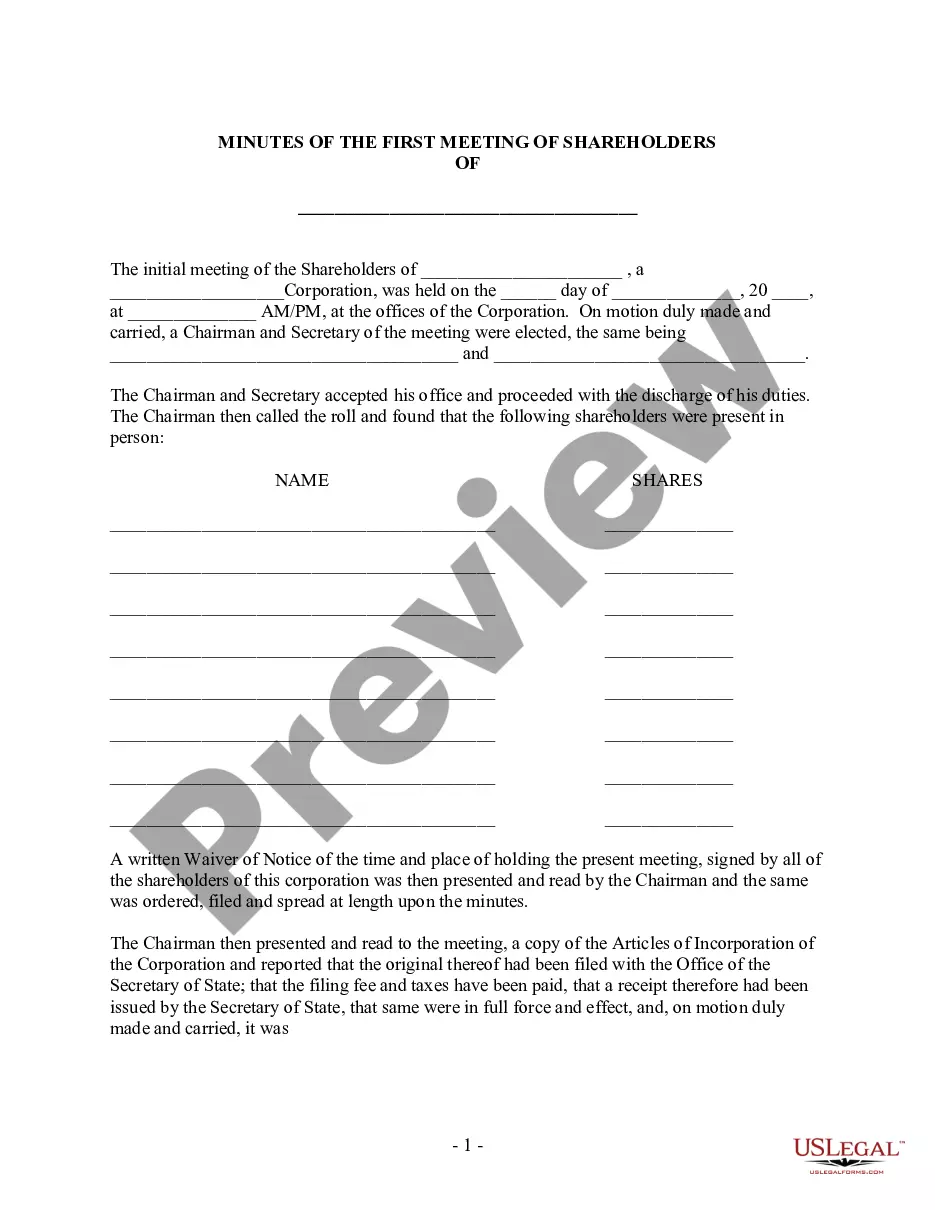
- Names of the stockholders present at the meeting.
- Quorum information detailing shares represented in person and by proxy.
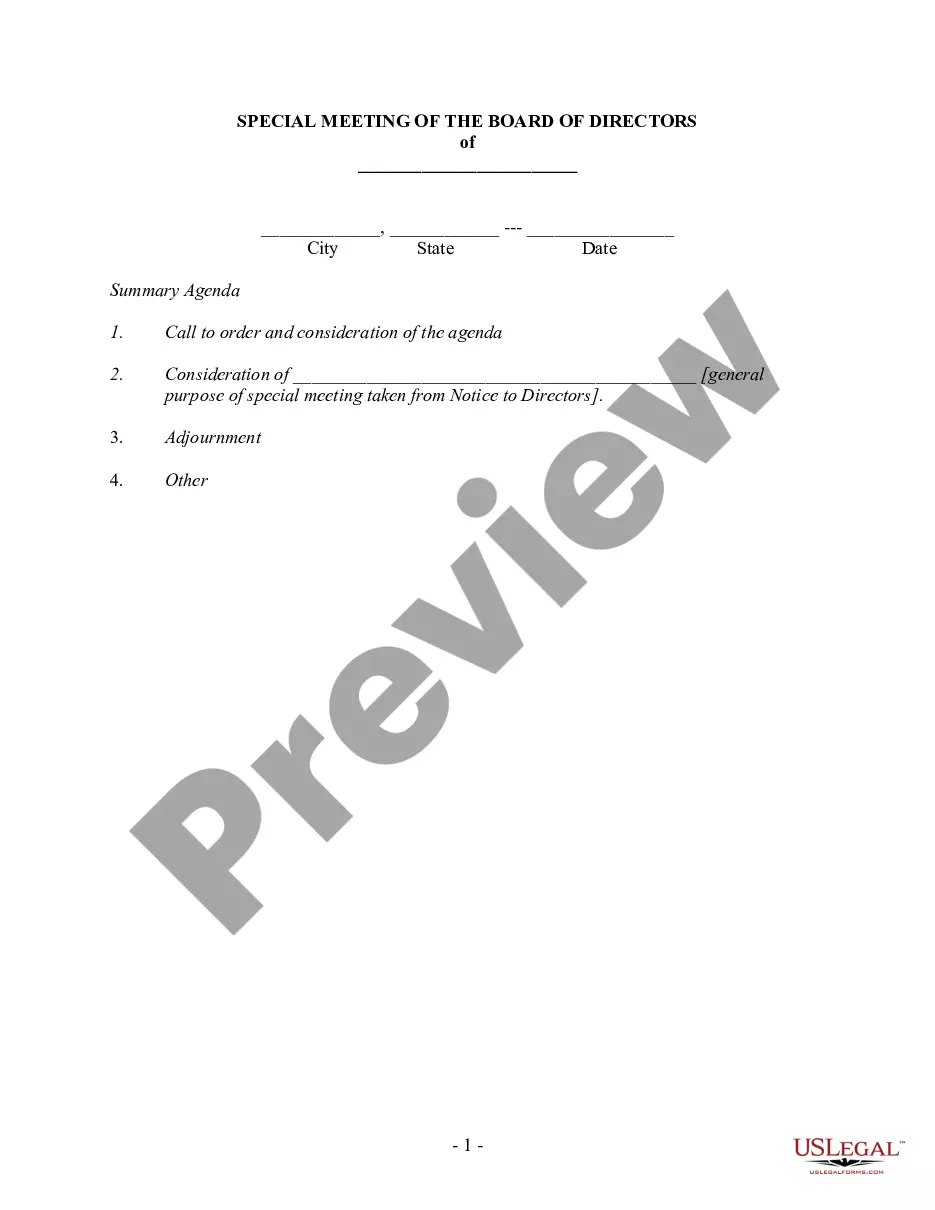
- Business transactions and resolutions voted on during the meeting.
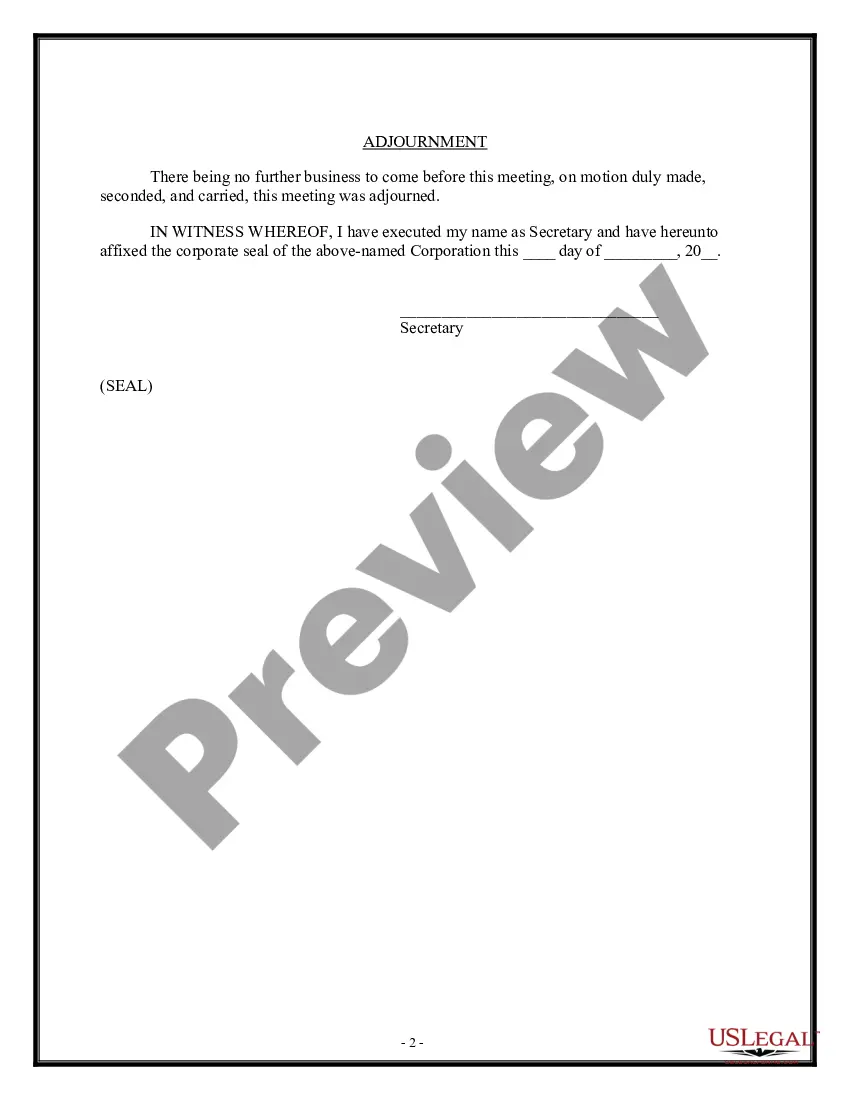
- Signatures of the Secretary and any necessary corporate seal.


Situations where this form applies
This form should be used whenever a corporation holds a special stockholders meeting to discuss and vote on important issues such as amendments to bylaws, mergers, or significant business decisions that require shareholder approval. It's essential for documenting the meetingâs outcomes and ensuring compliance with corporate governance laws.
Who should use this form
This form is intended for:
- Corporation managers and executives organizing special stockholders meetings.
- Corporate secretaries responsible for documenting meeting minutes.
- Shareholders wanting a formal record of meeting decisions and discussions.
How to prepare this document
- Enter the name of the corporation at the top of the form.
- Fill in the date and time of the special meeting along with the location.
- List the names of shareholders present at the meeting.
- Detail the business transactions and resolutions that were discussed and voted on.
- Have the Secretary fill in their name, sign the form, and affix the corporate seal.
Does this form need to be notarized?
This form does not typically require notarization unless specified by local law. It is important to verify any specific requirements in your jurisdiction to ensure legal validity.
Get your form ready online
Our built-in tools help you complete, sign, share, and store your documents in one place.
Make edits, fill in missing information, and update formatting in US Legal Forms—just like you would in MS Word.
Download a copy, print it, send it by email, or mail it via USPS—whatever works best for your next step.
Sign and collect signatures with our SignNow integration. Send to multiple recipients, set reminders, and more. Go Premium to unlock E-Sign.
If this form requires notarization, complete it online through a secure video call—no need to meet a notary in person or wait for an appointment.
We protect your documents and personal data by following strict security and privacy standards.

Make edits, fill in missing information, and update formatting in US Legal Forms—just like you would in MS Word.

Download a copy, print it, send it by email, or mail it via USPS—whatever works best for your next step.

Sign and collect signatures with our SignNow integration. Send to multiple recipients, set reminders, and more. Go Premium to unlock E-Sign.

If this form requires notarization, complete it online through a secure video call—no need to meet a notary in person or wait for an appointment.

We protect your documents and personal data by following strict security and privacy standards.
Common mistakes to avoid
- Failing to list all shareholders who attended the meeting.
- Not accurately reflecting the number of shares represented.
- Neglecting to include detailed descriptions of resolutions passed.
- Forgetting to have the form signed by the Secretary or missing the corporate seal.
Advantages of online completion
- Immediate access to professionally drafted templates ensuring legal compliance.
- Convenient download and print options for easy distribution.
- Editability allows customization to meet specific requirements.
- Clear structure helps users track and document meetings effectively.
What to keep in mind
- The Special Stockholders Meeting Minutes - Corporate Resolutions form is essential for documenting special shareholder meetings.
- Complete all required sections accurately to ensure compliance with corporate laws.
- Regularly store and organize these minutes for future reference and audits.
Looking for another form?
Form popularity
FAQ
If you run an S corporation, you are not required by law to keep meeting minutes. However, they can be a good way to record the progress your company makes toward meeting corporate objectives. Minutes can also be useful as a legal record of corporate activities in the event of a lawsuit or tax audit.
Member #1: Motion to approve minutes from DATE. Include amendments if present. Member #2: I second the motion. Presiding Officer: States motion to assembly. Asks for discussion on the motion.
Use a template. Check off attendees as they arrive. Do introductions or circulate an attendance list. Record motions, actions, and decisions as they occur. Ask for clarification as necessary. Write clear, brief notes-not full sentences or verbatim wording.
Minutes of resolution: Minutes of resolution means the written statement of the decisions that have been taken and approved by the participating members of the meeting. Only the main conclusions which are reached at the meeting are recorded in minutes of resolution.
The names of the participants and those who would be unable attend. Agenda items and topics for discussion. Objective or purpose of the meeting. Actions and tasks that have been defined and agreed to be undertaken. A Calendar or due dates for action plans.
Use a template. Check off attendees as they arrive. Do introductions or circulate an attendance list. Record motions, actions, and decisions as they occur. Ask for clarification as necessary. Write clear, brief notes-not full sentences or verbatim wording.
Meeting name and place. Date and time of the meeting. List of meeting participants. Purpose of the meeting. For each agenda items: decisions, action items, and next steps. Next meeting date and place. Documents to be included in the meeting report.
- Minutes are always written in the past tense and should be clear and concise. - Remember to use active or specific and not passive or vague phrases. - Examples of expressions used: members agreed, the chairman requested, the members resolved, suggested, etc. - Look at the sample of minutes below.