Annual Board of Directors Meeting Minutes - Corporate Resolutions
What is this form?
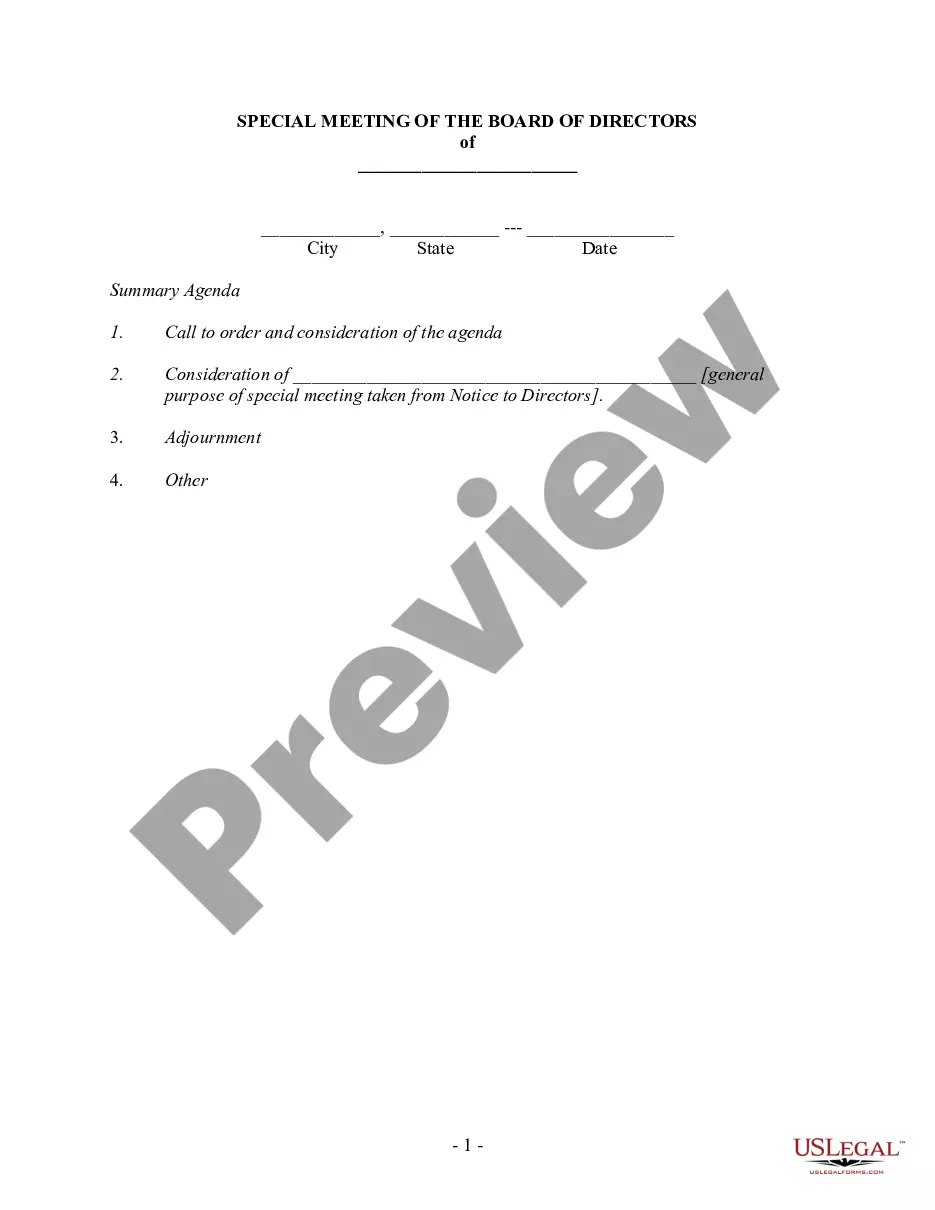
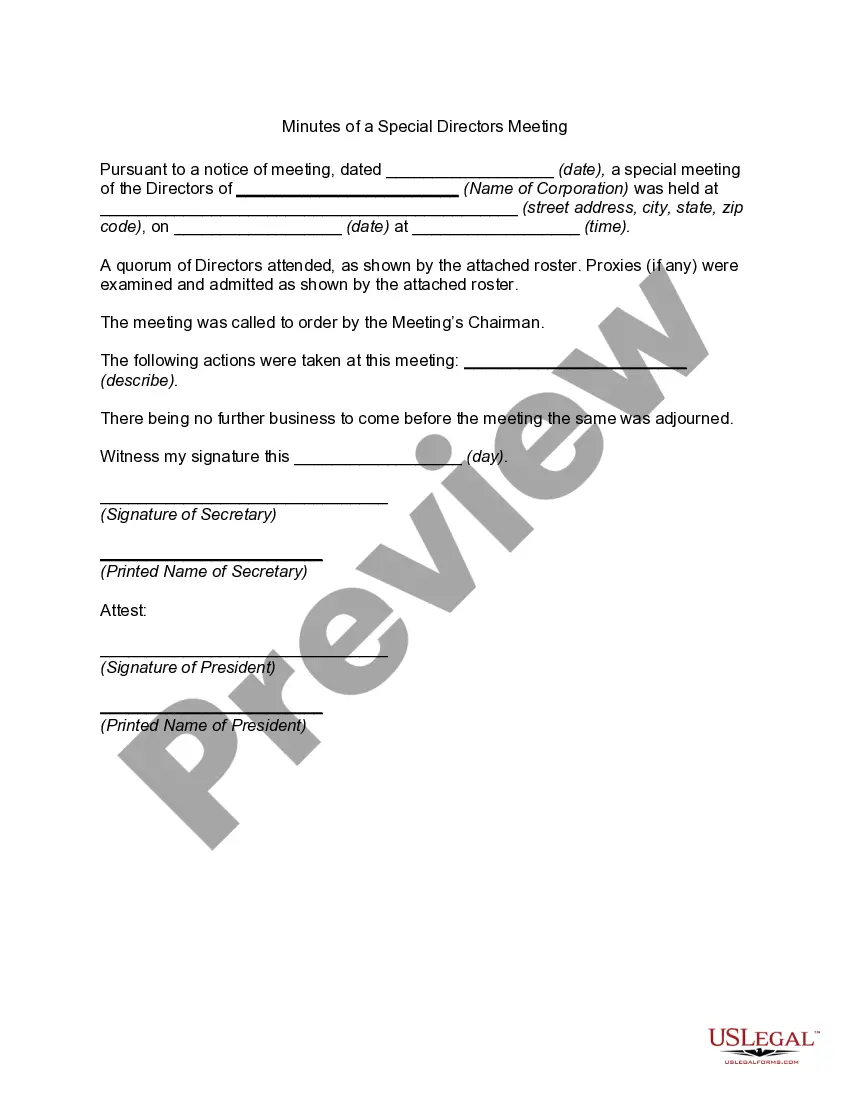
The Annual Board of Directors Meeting Minutes - Corporate Resolutions form is a legal document that formally records the proceedings and decisions made during a corporation's annual board meeting. This form is essential for maintaining accurate corporate governance records and differs from other minutes by specifically addressing the resolutions and actions taken by the board, ensuring compliance with legal requirements for corporations.
Form components explained
- Date and time of the meeting.
- List of directors present at the meeting.
- Election and appointment of officers.
- Approval of the minutes from the annual shareholder meeting.
- Corporate seal and signatures of the Secretary.



When to use this document
This form should be used during the annual meeting of the board of directors of a corporation to officially document the meeting's proceedings, including the resolutions passed and the officers elected. It's critical for maintaining corporate records and ensuring transparency and governance compliance.
Who this form is for
- Corporation's board of directors.
- Secretaries of corporations tasked with maintaining meeting records.
- Corporate officers preparing for shareholder accountability.
How to prepare this document
- Identify the corporation's name and type of corporation.
- Enter the date of the annual meeting.
- List the directors present during the meeting.
- Document the election of corporate officers in their respective positions.
- Affix the corporate seal and include the Secretary's signature to finalize the minutes.
Does this form need to be notarized?
This form does not typically require notarization unless specified by local law. However, ensuring proper completion and documentation is crucial for legal validity.
Get your form ready online
Our built-in tools help you complete, sign, share, and store your documents in one place.
Make edits, fill in missing information, and update formatting in US Legal Forms—just like you would in MS Word.
Download a copy, print it, send it by email, or mail it via USPS—whatever works best for your next step.
Sign and collect signatures with our SignNow integration. Send to multiple recipients, set reminders, and more. Go Premium to unlock E-Sign.
If this form requires notarization, complete it online through a secure video call—no need to meet a notary in person or wait for an appointment.
We protect your documents and personal data by following strict security and privacy standards.

Make edits, fill in missing information, and update formatting in US Legal Forms—just like you would in MS Word.

Download a copy, print it, send it by email, or mail it via USPS—whatever works best for your next step.

Sign and collect signatures with our SignNow integration. Send to multiple recipients, set reminders, and more. Go Premium to unlock E-Sign.

If this form requires notarization, complete it online through a secure video call—no need to meet a notary in person or wait for an appointment.

We protect your documents and personal data by following strict security and privacy standards.
Mistakes to watch out for
- Failing to include all directors present at the meeting.
- Not documenting essential resolutions that were passed.
- Leaving out the date and time of the meeting.
- Not having the Secretary sign the document.
Advantages of online completion
- Convenient access to templates that can be easily downloaded and printed.
- Editability allows customization to fit specific corporate needs.
- Reliability through forms prepared by licensed attorneys.
Legal use & context
- This form serves as an official record of board decisions, which is essential for legal compliance.
- Properly executed minutes can protect the corporation by demonstrating adherence to governance protocols.
Key takeaways
- Annual Board of Directors Meeting Minutes are vital for corporate accountability.
- This form ensures all resolutions and director appointments are officially recorded.
- Compliance with state requirements may vary, so it's important to check local regulations.
Looking for another form?

Form popularity
FAQ
Format the resolution by putting the date and resolution number at the top. Form a title of the resolution that speaks to the issue that you want to document. Use formal language in the body of the resolution, beginning each new paragraph with the word, whereas.
Date, time, and location of the meeting. Who attended and who was absent from the meeting. Meeting agenda items with a brief description of each. Details about what was discussed during the meeting.
Prepare corporate minutes. Notes kept at each shareholder and board meeting held by a corporation provide a written record of what occurred at the meeting. Approve corporate minutes. File the minutes with internal corporate records. In limited circumstances, file the corporate minutes with the state.
Minutes typically include: Meeting date, time, and location. Names of attendees and whether they missed any part of the meeting. List of those absent. Agenda items and brief descriptions. Any voting actions and how each individual voted. Time that meeting was adjourned.
Note the subject of the discussion. Include the name of the person who led the discussion. Include motions. Note voting outcomes. Include any decisions made.
Meeting name and place. Date and time of the meeting. List of meeting participants. Purpose of the meeting. For each agenda items: decisions, action items, and next steps. Next meeting date and place. Documents to be included in the meeting report.
In general, however, most corporations are required to have at least one shareholders' meeting per year. Corporations are also required to prepare and retain minutes of these meeting. There is often a legally based recordkeeping requirement for meeting minutes, but the exact length of time will vary by state.
Use a template. Check off attendees as they arrive. Do introductions or circulate an attendance list. Record motions, actions, and decisions as they occur. Ask for clarification as necessary. Write clear, brief notes-not full sentences or verbatim wording.