Texas Revocation of Anatomical Gift Donation
About this form
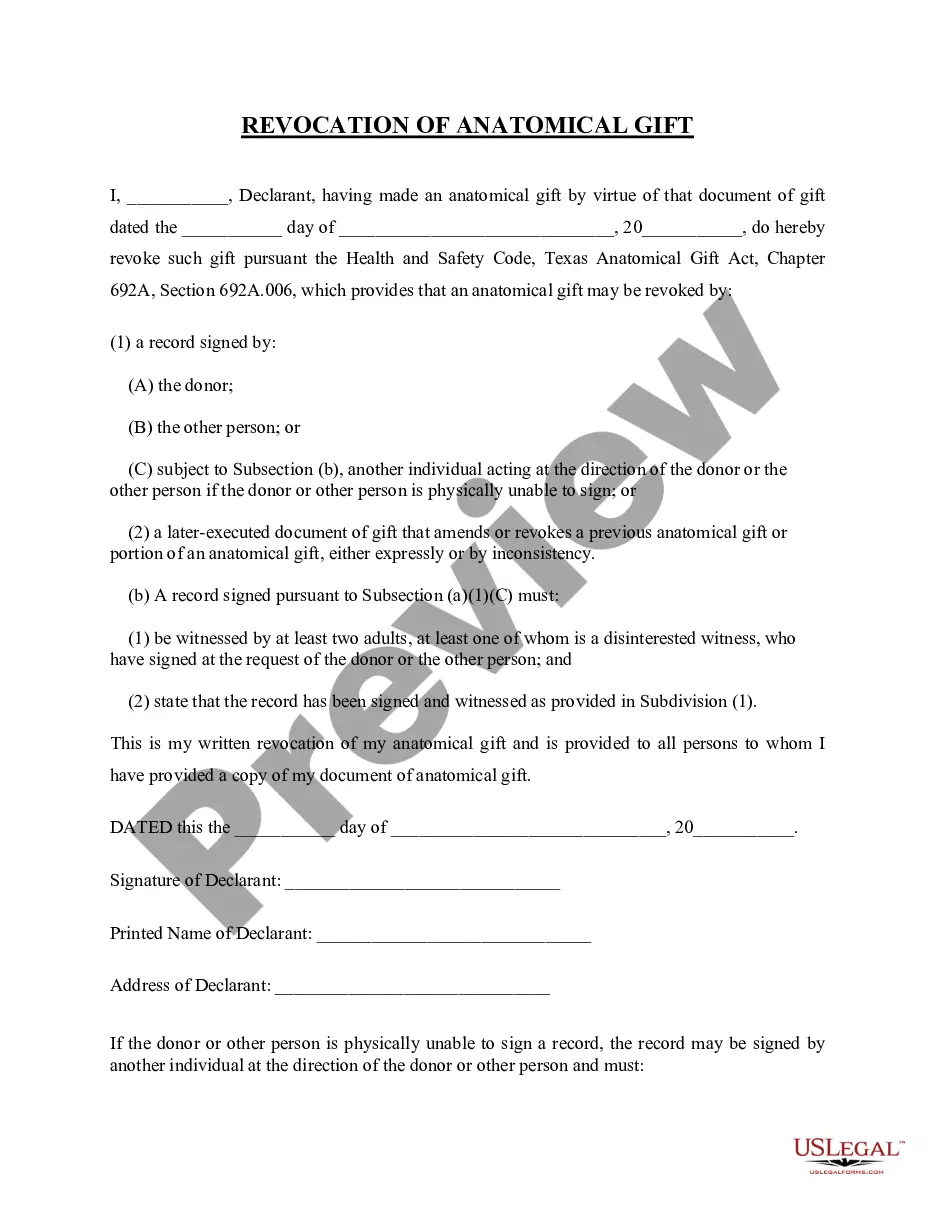
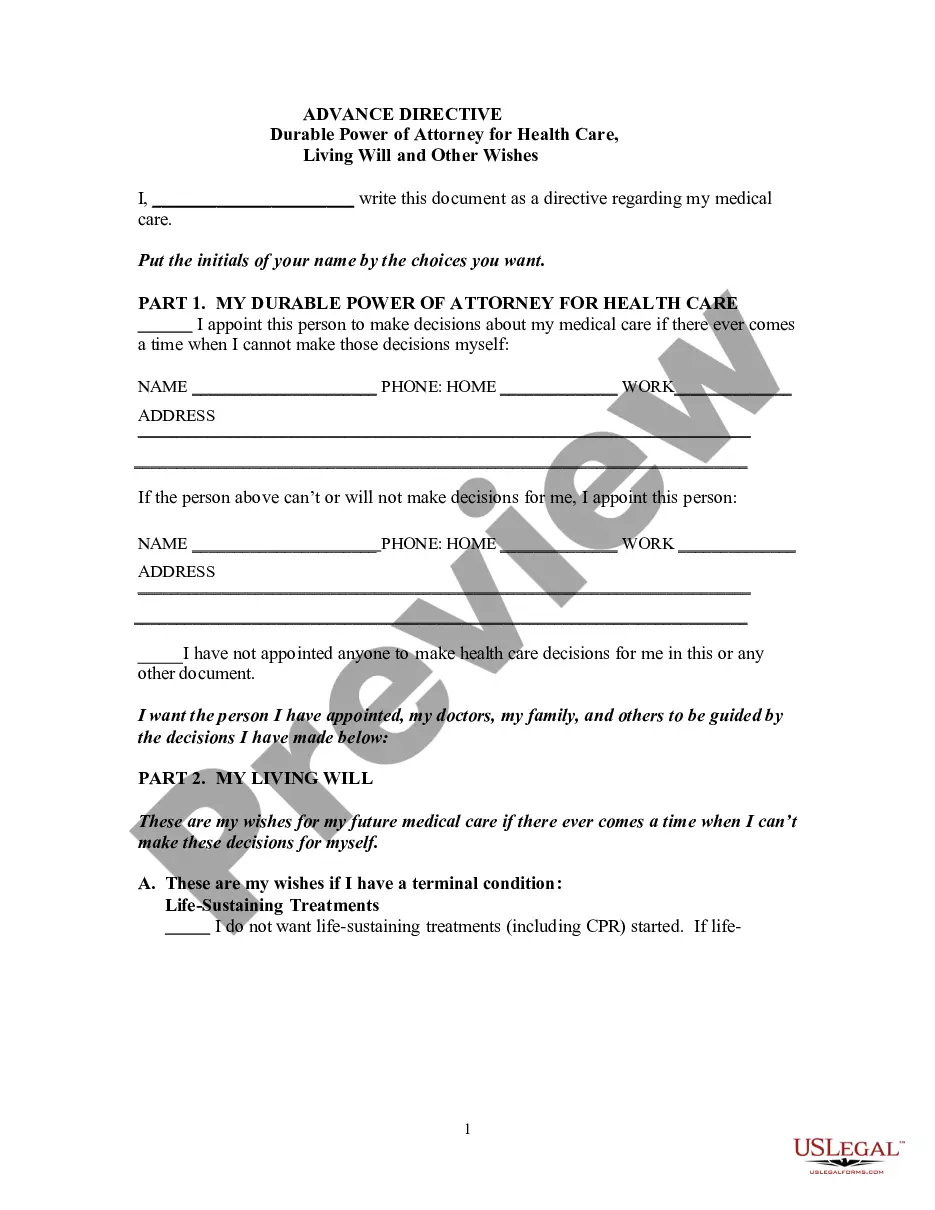
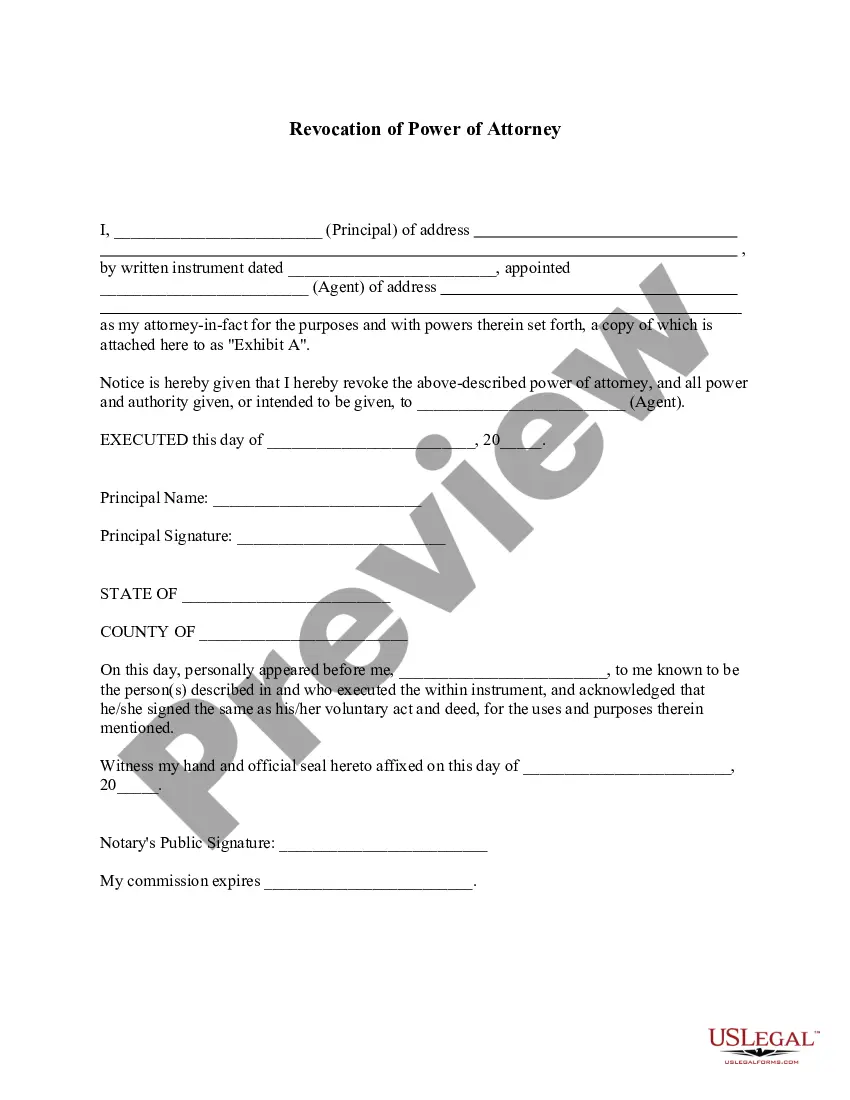
The Revocation of Anatomical Gift Donation form allows an individual to revoke a previously made decision regarding the donation of their body parts and organs upon death. This form is essential for those who wish to change their mind about anatomical donations, providing a clear and legally valid way to communicate their current intentions. Unlike the original anatomical gift document, this revocation specifically nullifies earlier directives, ensuring that the individual's wishes are up to date and respected by all relevant parties.
Form components explained
- Declarant's full name and date of revocation.
- Statement confirming the annulment of the anatomical gift.
- Signature of the declarant to validate the revocation.
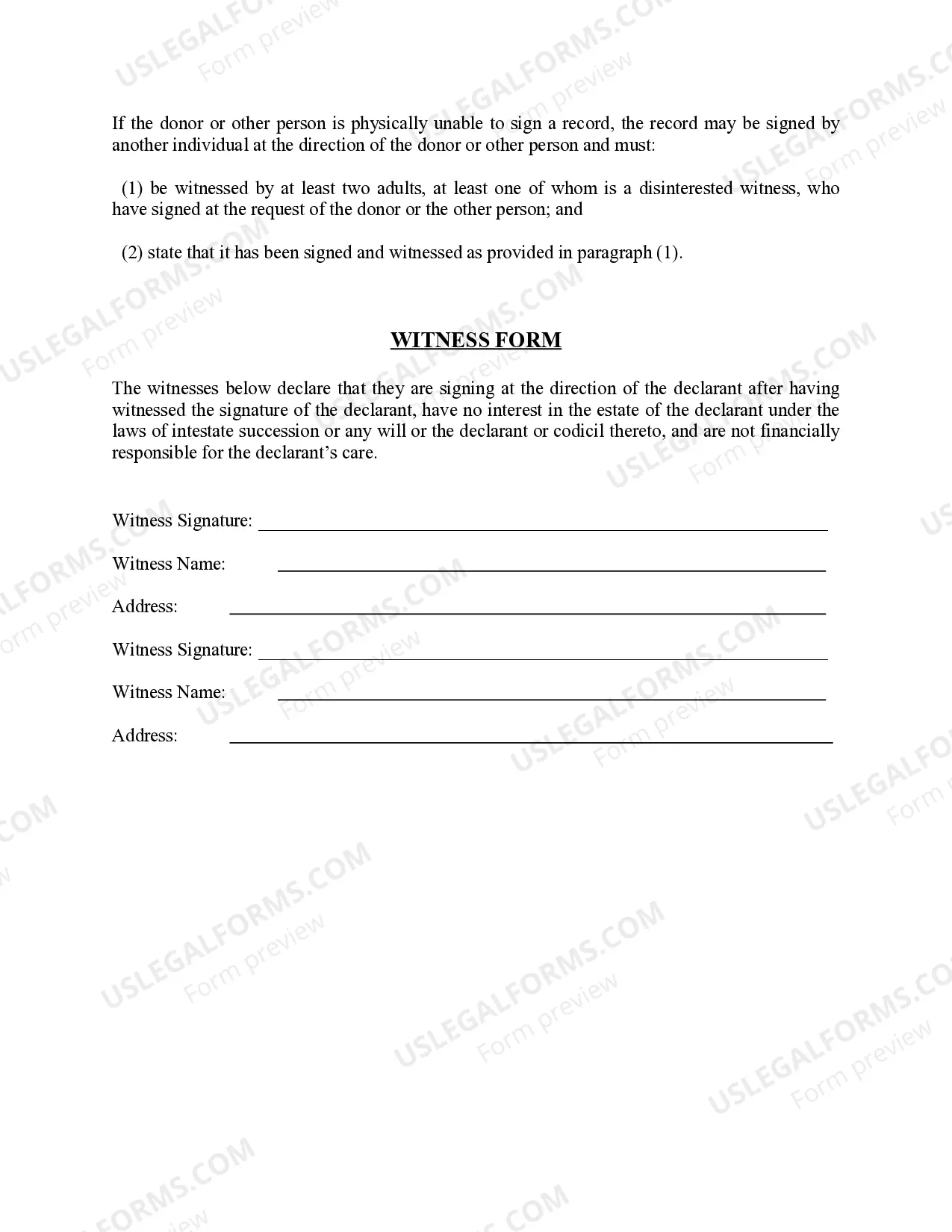
- Witness signatures to confirm the process was followed correctly.
Common use cases
This form should be used when an individual who has previously made an anatomical gift decides to revoke that decision. Scenarios include changes in personal beliefs, medical conditions, or simply a reconsideration of the decision to donate. It is crucial to use this form to ensure that healthcare providers and family members are aware of and respect the individual's current wishes.
Who can use this document
- Individuals who have previously executed an anatomical gift document.
- Anyone looking to revoke their intention to donate their body parts or organs upon death.
- Family members or legal representatives looking to ensure that a loved one's current wishes are documented clearly.
Completing this form step by step
- Enter your full name and the date of revocation at the top of the form.
- Clearly state your intention to revoke the anatomical gift, referencing the original document.
- Sign the document to validate your decision.
- Have at least two witnesses sign the form, confirming they have witnessed your signature and have no interest in your estate.
- Provide copies of the revocation to any parties who received the original anatomical gift document.
Is notarization required?
Notarization is not commonly needed for this form. However, certain documents or local rules may make it necessary. Our notarization service, powered by Notarize, allows you to finalize it securely online anytime, day or night.
Get your form ready online
Our built-in tools help you complete, sign, share, and store your documents in one place.
Make edits, fill in missing information, and update formatting in US Legal Forms—just like you would in MS Word.
Download a copy, print it, send it by email, or mail it via USPS—whatever works best for your next step.
Sign and collect signatures with our SignNow integration. Send to multiple recipients, set reminders, and more. Go Premium to unlock E-Sign.
If this form requires notarization, complete it online through a secure video call—no need to meet a notary in person or wait for an appointment.
We protect your documents and personal data by following strict security and privacy standards.

Make edits, fill in missing information, and update formatting in US Legal Forms—just like you would in MS Word.

Download a copy, print it, send it by email, or mail it via USPS—whatever works best for your next step.

Sign and collect signatures with our SignNow integration. Send to multiple recipients, set reminders, and more. Go Premium to unlock E-Sign.

If this form requires notarization, complete it online through a secure video call—no need to meet a notary in person or wait for an appointment.

We protect your documents and personal data by following strict security and privacy standards.
Mistakes to watch out for
- Failing to have the document signed in the presence of witnesses.
- Not providing copies to all relevant parties after revocation.
- Omitting critical information or details about the original anatomical gift.
Benefits of using this form online
- Convenient access to the form that you can complete from home.
- Editable fields allow for easy customization of your specific situation.
- Guaranteed compliance with current state laws, increasing the reliability of your legal documents.
Quick recap
- The Revocation of Anatomical Gift Donation form is essential for changing organ donation preferences.
- Proper signing and witnessing are critical to ensure legal validity.
- This form specifically complies with Texas law regarding anatomical gifts.
Looking for another form?
Form popularity
FAQ
The surgical team removes the organs and tissues from the donor's body in an operating room. First, organs are recovered, and then additional authorized tissues such as bone, cornea, and skin. All incisions are surgically closed. Organ donation does not interfere with open-casket funerals.
Only you can do this by logging onto www.donatelifetexas.org or contacting a Donate Life Texas representative. You may call 1-800-633-6562. If you wish to be removed from the registry, you must submit your request in writing.
Can I remove myself from the registered donors list? Yes, you can change your donor status at any time. Look for an option such as "updating your status" on your state's site. If you have a donor designation on your driver's license, removing yourself from the registry will not change that.
You can remove your registration online at any time by visiting www.donateLIFEcalifornia.org. Additionally, you can contact us by calling us at 866-797-2366, emailing us at info@donatelifecalifornia.org, or sending us a letter at. Donate Life California. 3940 Industrial Blvd.
Deciding to donate your organs is an enormous gift.If you are in an accident and are declared legally dead, a member of the organ procurement organization (OPO) must obtain consent from your family to donate your organs.
Donor Life Texas, the state's organ and tissue registry, opposes House Bill 1938. What can you do to prevent organ donation chaos?Remember, if you are a registered organ donor, your family cannot override your consent, so it is a good idea for them to be aware of your decision in advance.
If you have registered that you don't want to donate any of your organs or tissue, this may not be overruled by anyone. If you have registered that you want to be a donor, your relatives may overrule this only if they have compelling reasons to do so.
If you have registered that you don't want to donate any of your organs or tissue, this may not be overruled by anyone. If you have registered that you want to be a donor, your relatives may overrule this only if they have compelling reasons to do so.