Confidentiality Agreement for Offshore Operations with Limited Disclosure Clause
Understanding this form
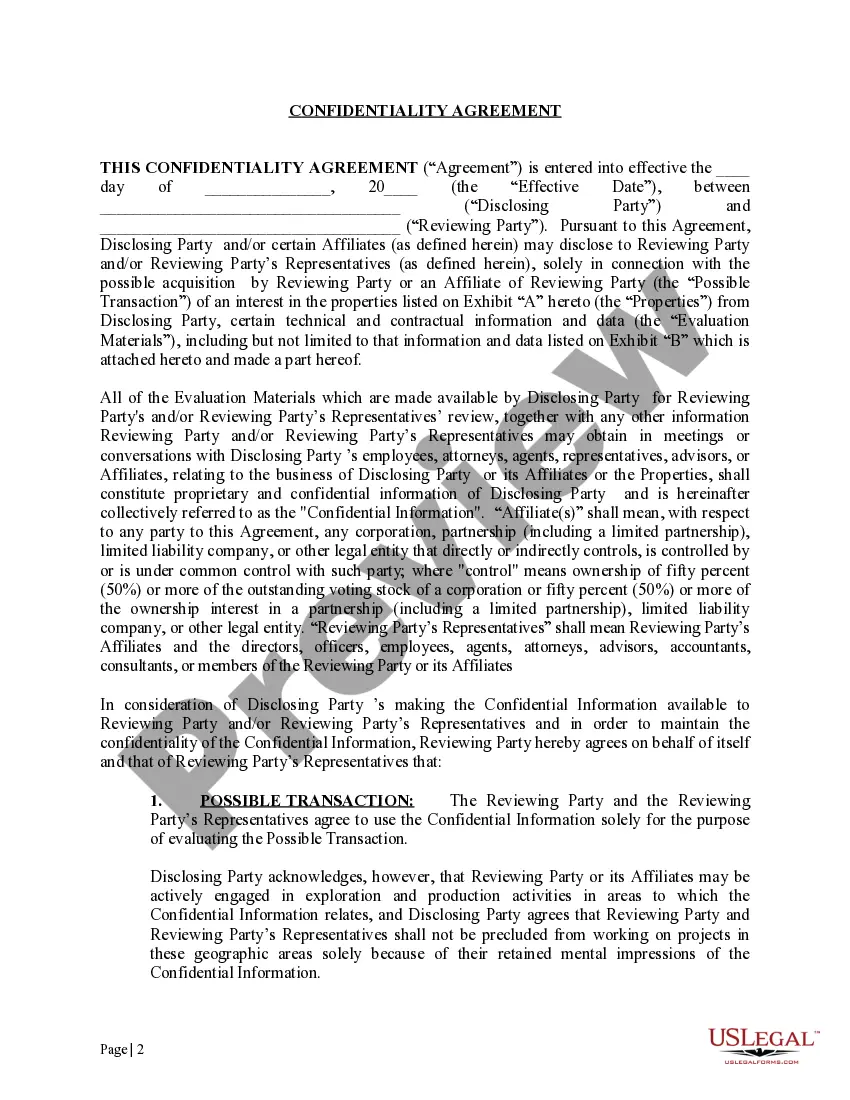
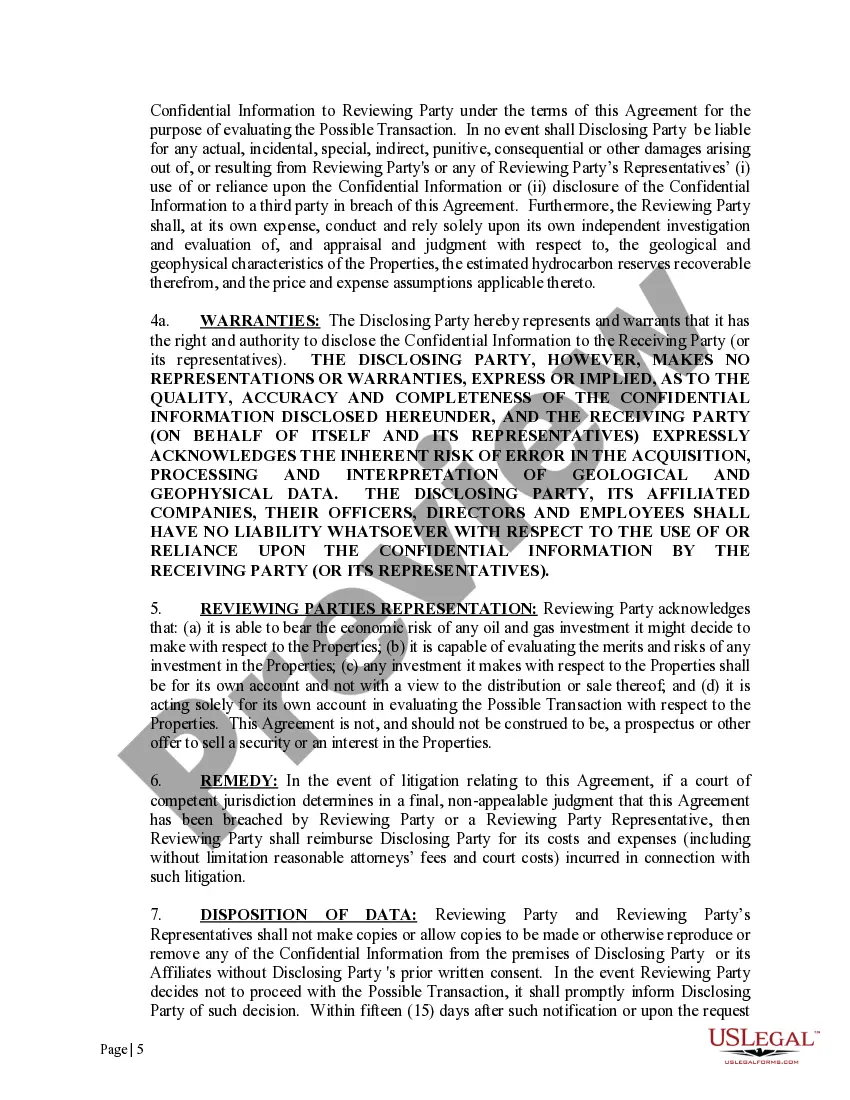
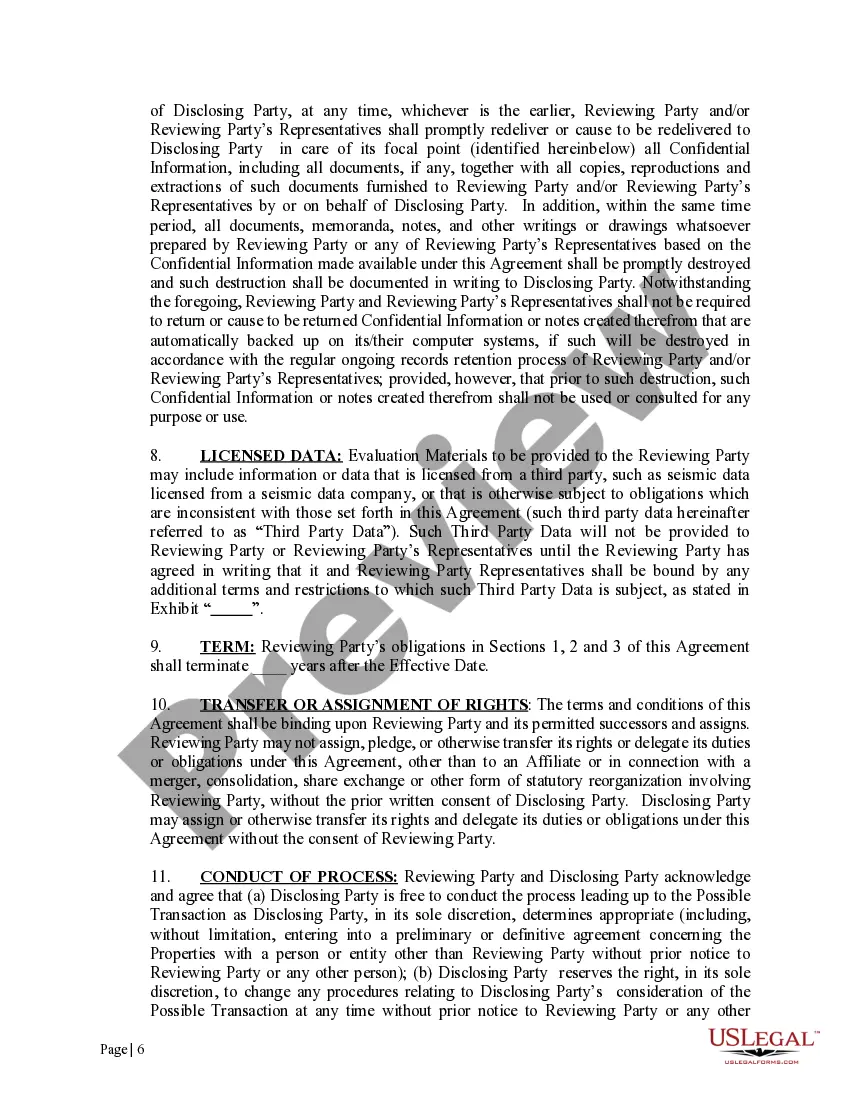
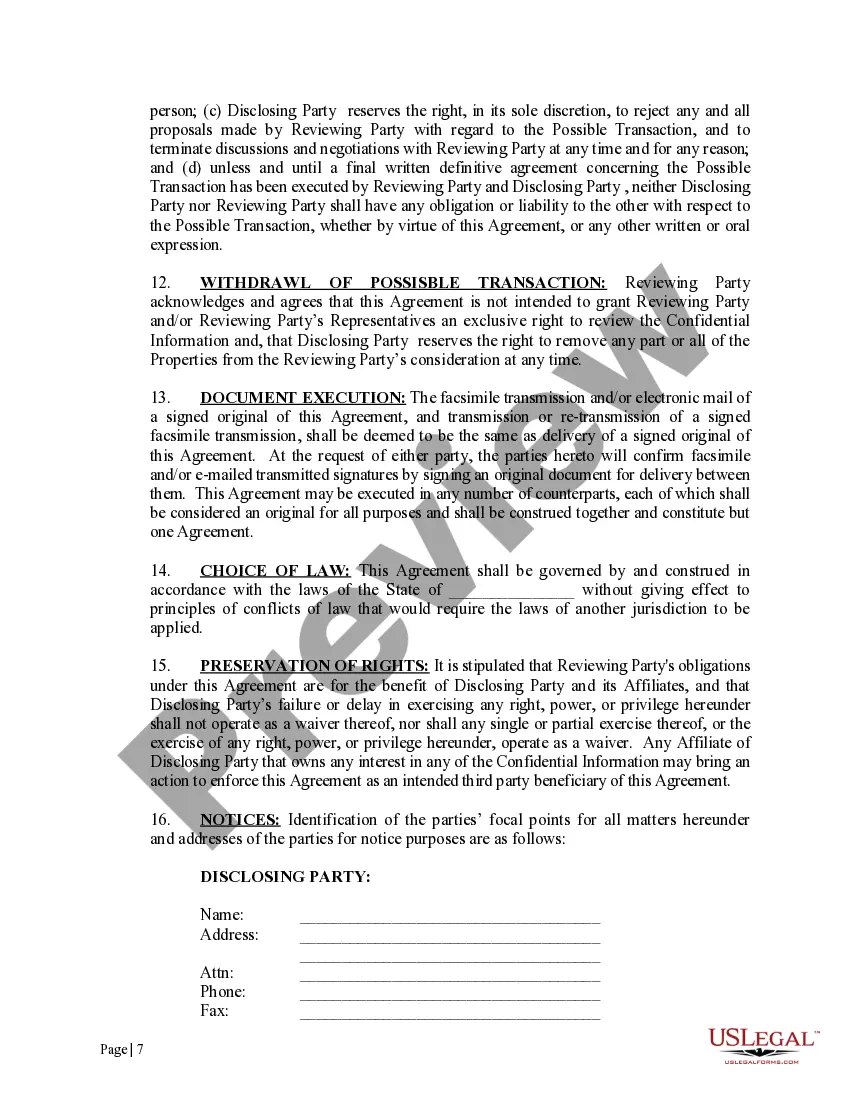
The Confidentiality Agreement for Offshore Operations with Limited Disclosure Clause is a legal document designed to protect confidential information exchanged between parties involved in offshore operations, particularly in evaluating geological and geophysical data. This agreement ensures that proprietary information remains confidential and outlines the terms under which the information can be disclosed, differing from general confidentiality agreements by emphasizing limited disclosure and specific warranties related to geological data.
Form components explained
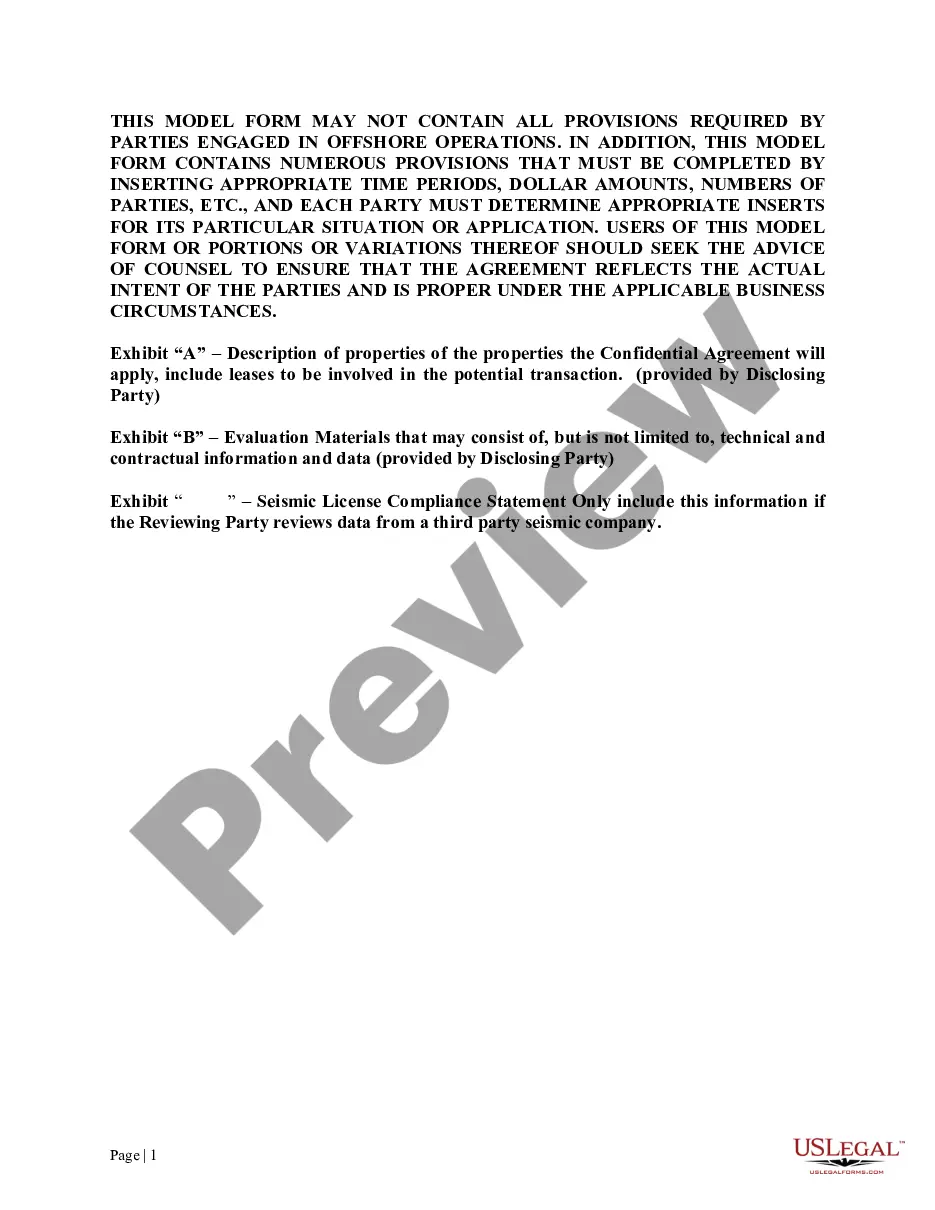
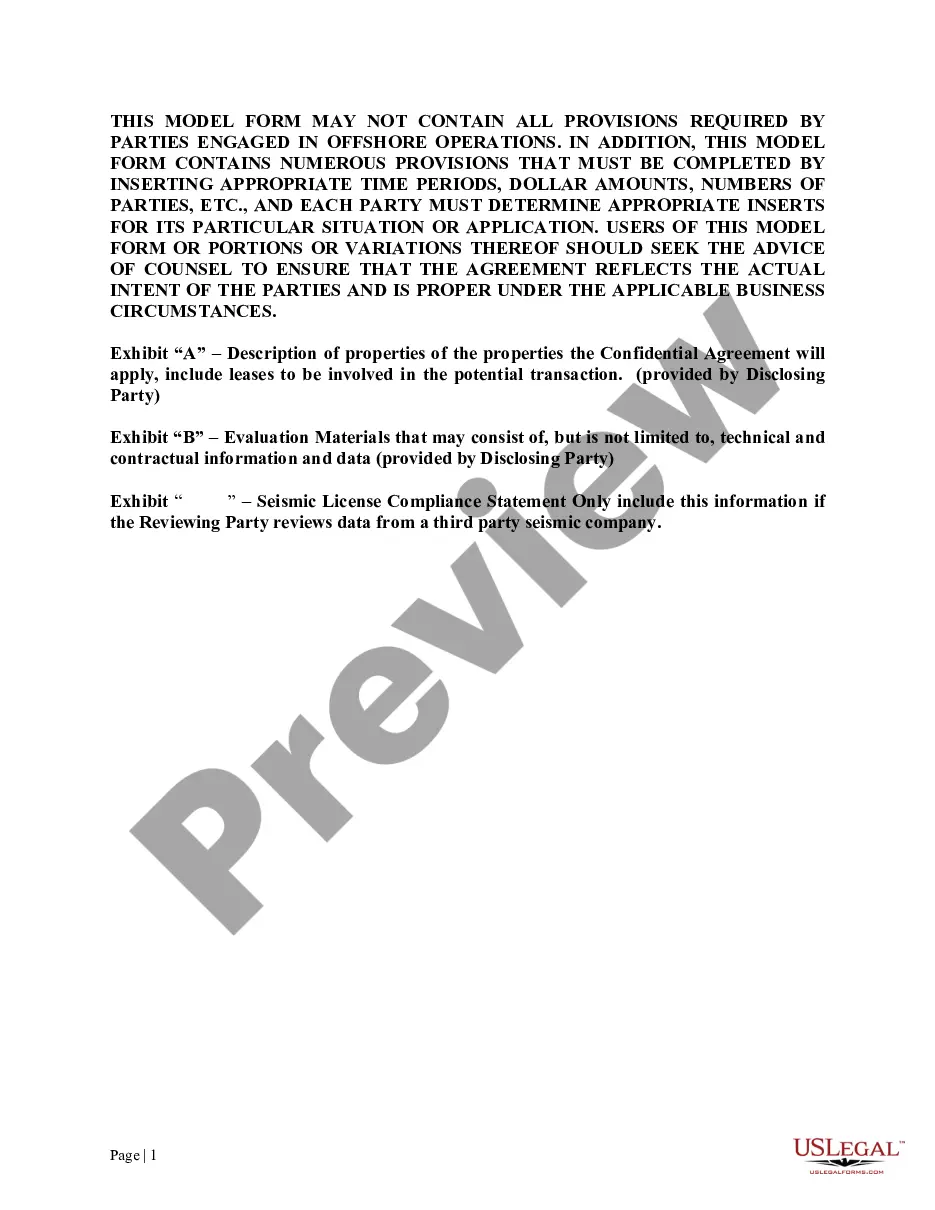
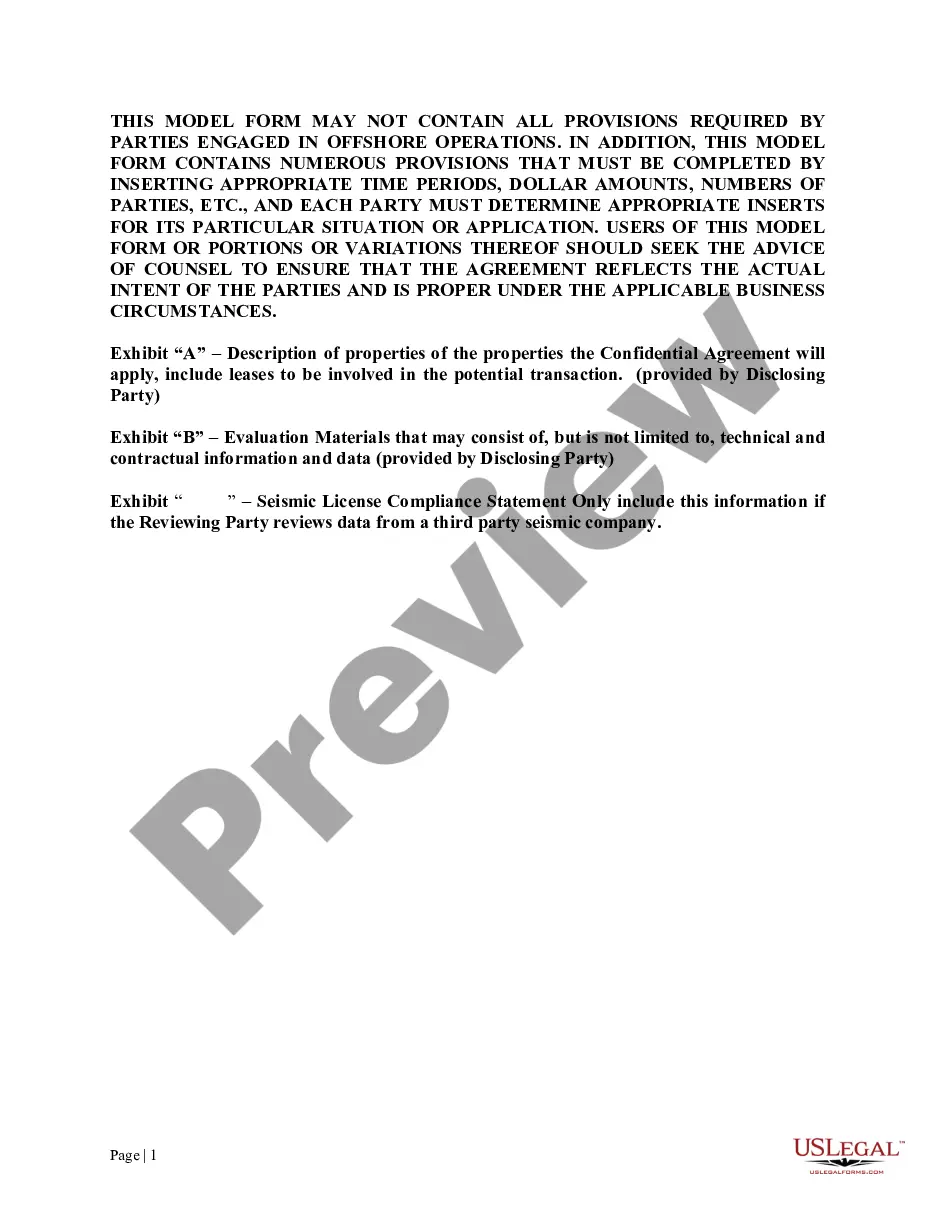
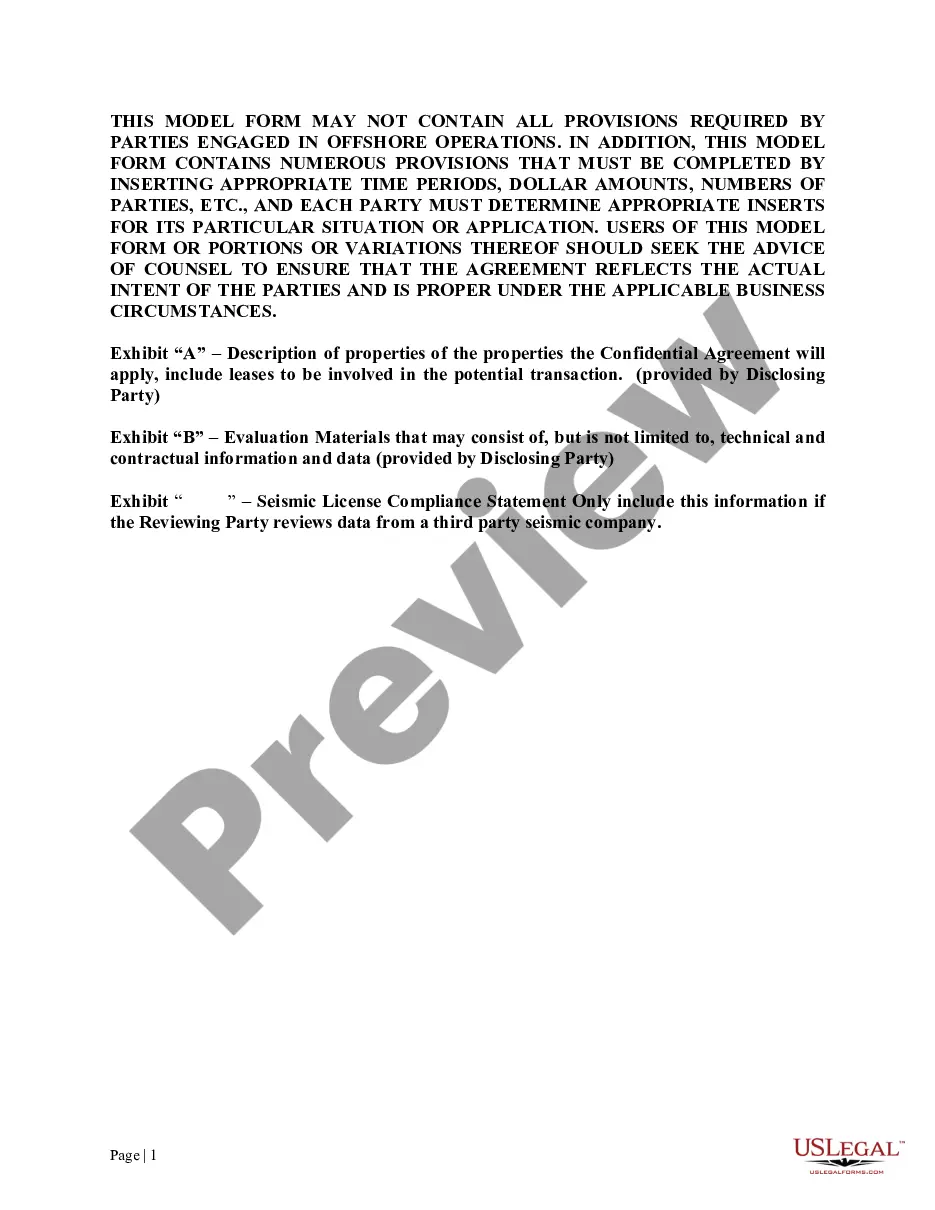
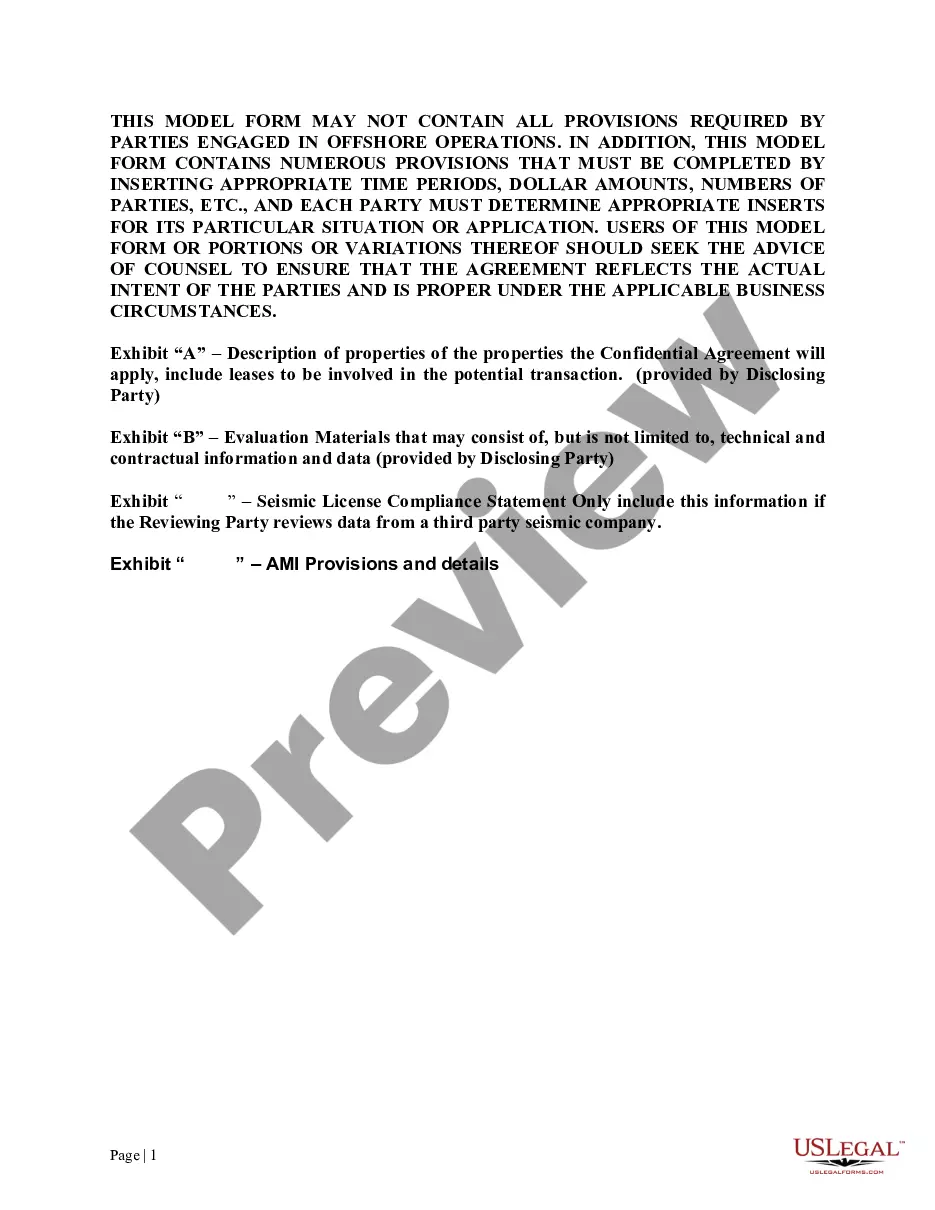
- Description of Properties: Identifies the properties applicable to the agreement.
- Evaluation Materials: Details what materials are considered confidential and proprietary.
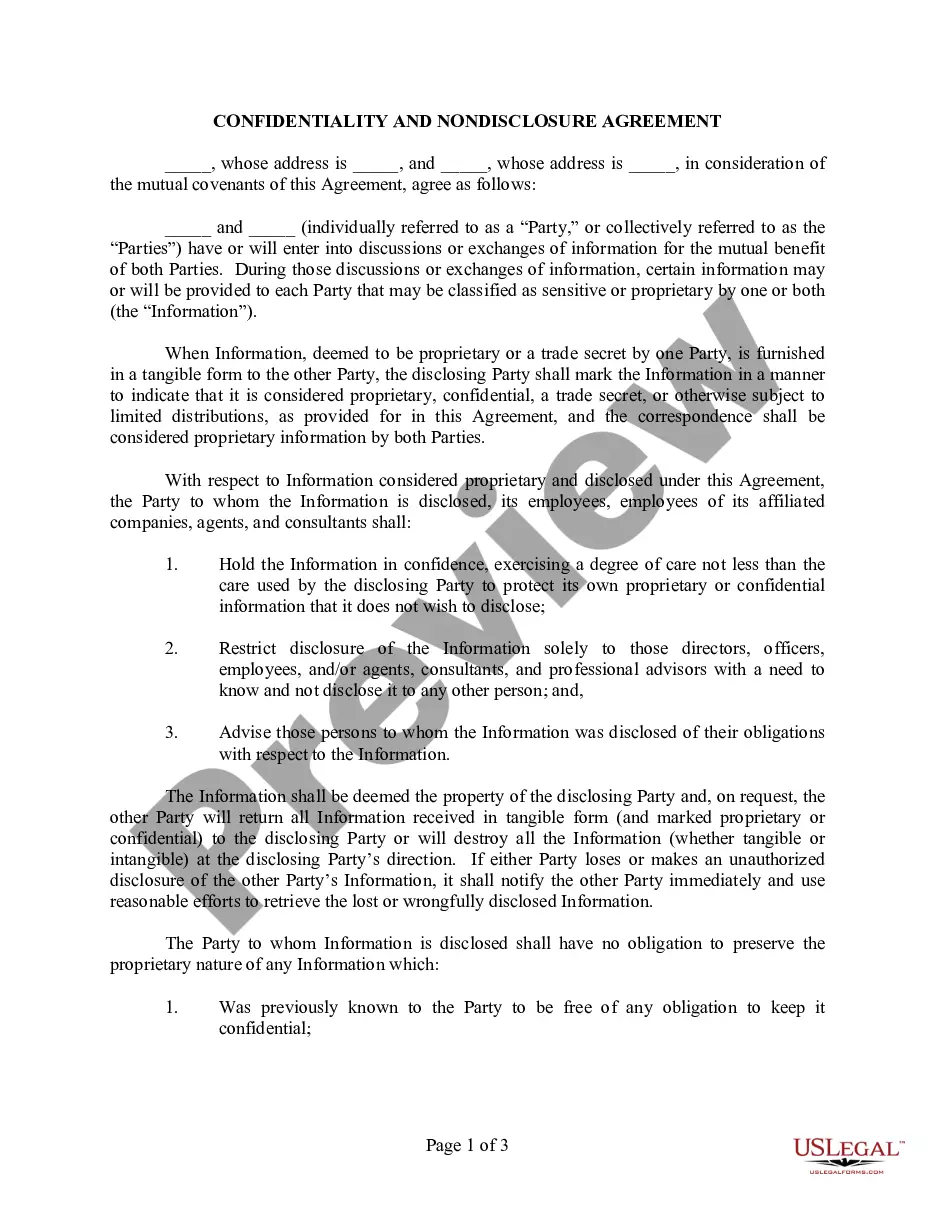
- Confidential Information Clause: Defines what constitutes confidential information.
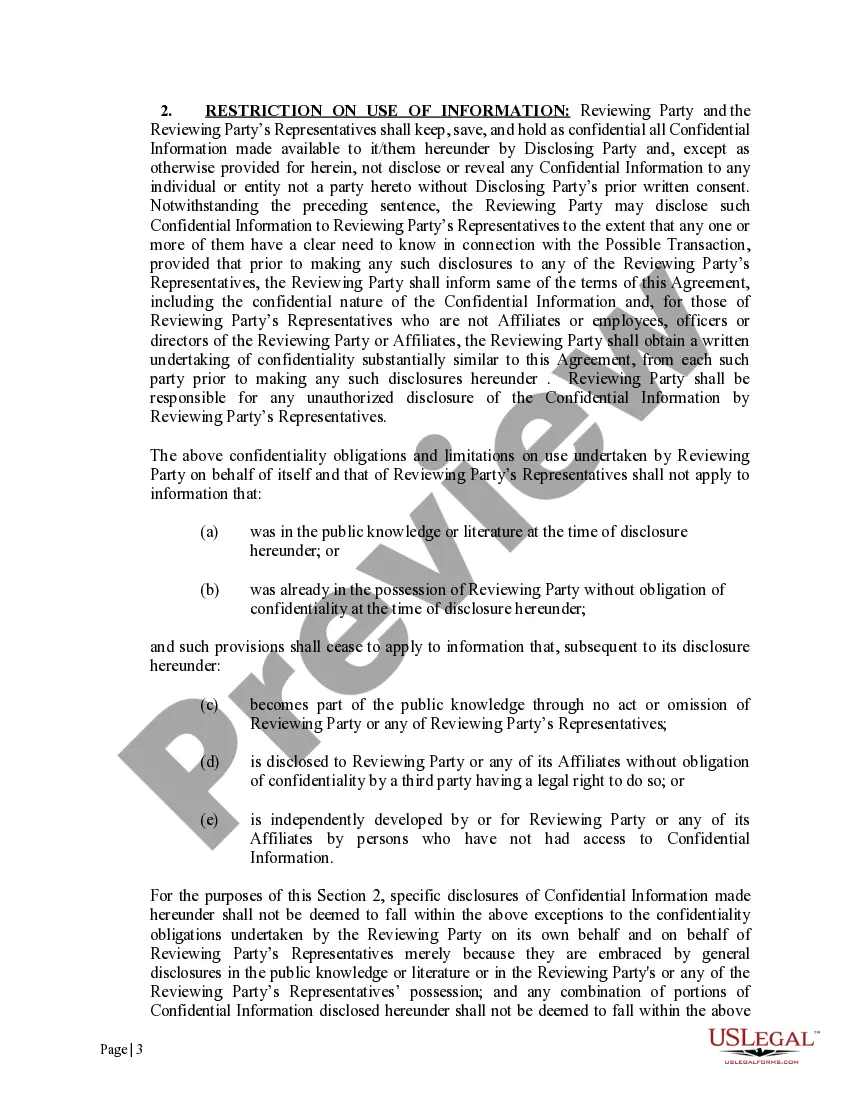
- Restriction on Use: Outlines how the confidential information can be used and disclosed.
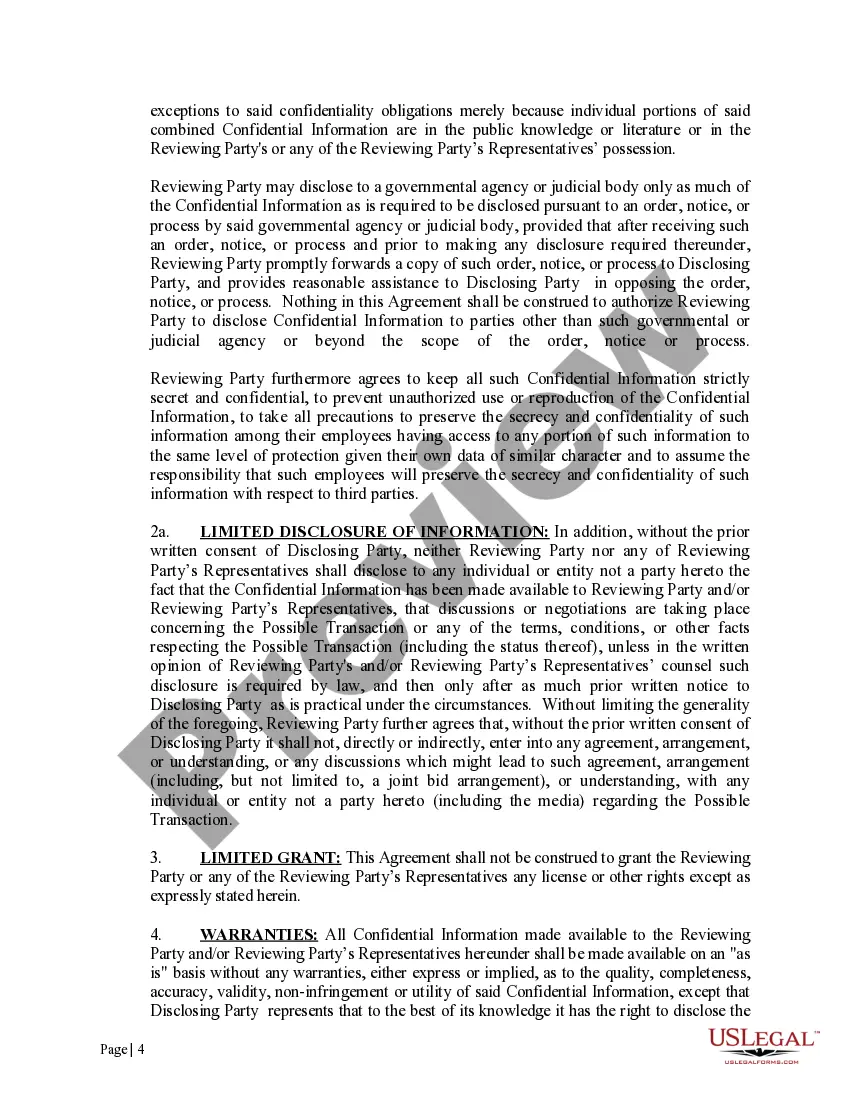
- Indemnity Clause: Specifies liability protections regarding wrongful disclosure.
- Warranties Clause: States the limitations of warranties concerning the provided confidential information.

When to use this form
This form should be used when parties are considering a potential transaction involving offshore operations that require the exchange of sensitive geological and geophysical data. It is essential in situations where companies need to protect proprietary information while negotiating or discussing business opportunities related to oil and gas investments.
Intended users of this form
- Companies engaged in offshore oil and gas exploration or production.
- Investors seeking to evaluate potential acquisitions or partnerships in offshore operations.
- Legal professionals advising clients on confidentiality matters related to sensitive business transactions.
- Parties involved in negotiating contracts that involve sharing proprietary geological data.
Completing this form step by step
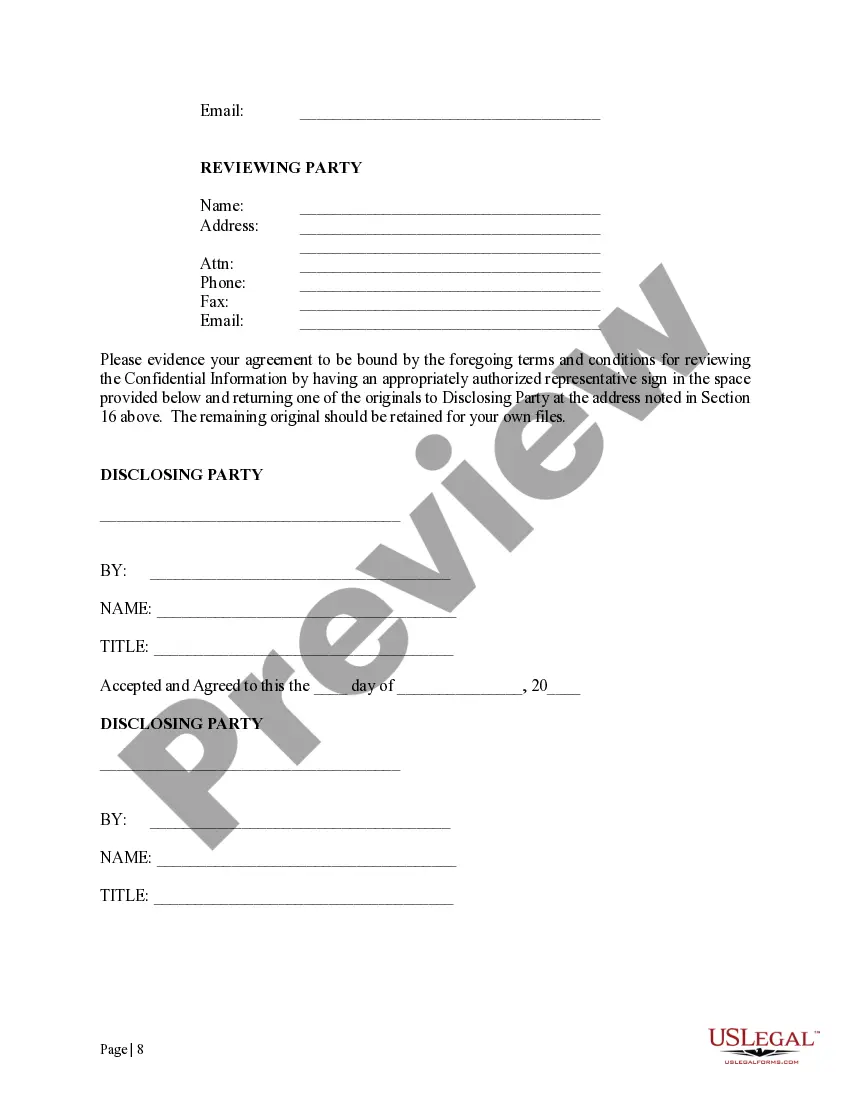
- Identify the parties involved by providing their names and addresses.
- Specify the properties to which the confidentiality agreement applies in Exhibit A.
- Detail the evaluation materials considered confidential in Exhibit B.
- Have a representative from each party sign and date the agreement.
- Retain a copy of the signed agreement for your records.
Does this document require notarization?
This form does not typically require notarization unless specified by local law. However, having it notarized can add an extra layer of validity and verification.
Get your form ready online
Our built-in tools help you complete, sign, share, and store your documents in one place.
Make edits, fill in missing information, and update formatting in US Legal Forms—just like you would in MS Word.
Download a copy, print it, send it by email, or mail it via USPS—whatever works best for your next step.
Sign and collect signatures with our SignNow integration. Send to multiple recipients, set reminders, and more. Go Premium to unlock E-Sign.
If this form requires notarization, complete it online through a secure video call—no need to meet a notary in person or wait for an appointment.
We protect your documents and personal data by following strict security and privacy standards.

Make edits, fill in missing information, and update formatting in US Legal Forms—just like you would in MS Word.

Download a copy, print it, send it by email, or mail it via USPS—whatever works best for your next step.

Sign and collect signatures with our SignNow integration. Send to multiple recipients, set reminders, and more. Go Premium to unlock E-Sign.

If this form requires notarization, complete it online through a secure video call—no need to meet a notary in person or wait for an appointment.

We protect your documents and personal data by following strict security and privacy standards.
Avoid these common issues
- Failing to define all confidential information clearly.
- Neglecting to have all parties sign the agreement before sharing sensitive information.
- Overlooking state-specific laws that may affect the agreement's enforceability.
- Not updating or customizing exhibits with relevant details specific to the transaction.
Why complete this form online
- Convenient and quicker access to legally drafted templates from licensed attorneys.
- Edit and customize the form easily to meet specific needs before downloading.
- Ensures compliance with legal standards by using a reliable and standard format.
Looking for another form?
Form popularity
FAQ
A typical confidentiality clause might say, "The phrases and circumstances of this Agreement are completely confidential between the parties and shall not be disclosed to anybody else. Any disclosure in violation shall be deemed a breach of this Agreement."
The agreement should identify the purpose to which the recipient can put the confidential information. All other uses of the confidential information should be prohibited. Sometimes a confidentiality agreement states that no rights are licensed by the confidentiality agreement. This is stating the obvious.
Confidentiality Clauses for Simple Agreements A confidentiality clause binds parties to nondisclosure of proprietary or confidential information within the larger confines of a contract or agreement. Its scope is generally limited in time and type of information.
Confidentiality Clause Defined Confidentiality clauses, also known as non-disclosure agreements, prevent the signing party from divulging sensitive information, personally identifiable information (PII), and trade secrets. These protections are for documents as well as verbal communications.
The agreement should identify the purpose to which the recipient can put the confidential information. All other uses of the confidential information should be prohibited. Sometimes a confidentiality agreement states that no rights are licensed by the confidentiality agreement. This is stating the obvious.
Here is a common example: CONFIDENTIALITY NOTICE: This message and any accompanying documents contain information belonging to the sender which may be confidential and legally privileged. This information is only for the use of the individual or entity to which it was intended.
Neither can the agreement guard against accidental or unintentional disclosure of information. One of the limitations of a confidentiality agreement is that it is a compromise between the discloser's desire to secure their information and the recipient's wish to be free from legal repercussions.
Except as expressly provided in this Agreement, the Party receiving Confidential Information (?Receiving Party?) shall not use the Confidential Information in any manner or disclose the Confidential Information to any third party without prior written consent of the Party making the disclosure (?Disclosing Party?).