Texas Landlord Tenant Closing Statement to Reconcile Security Deposit
Overview of this form
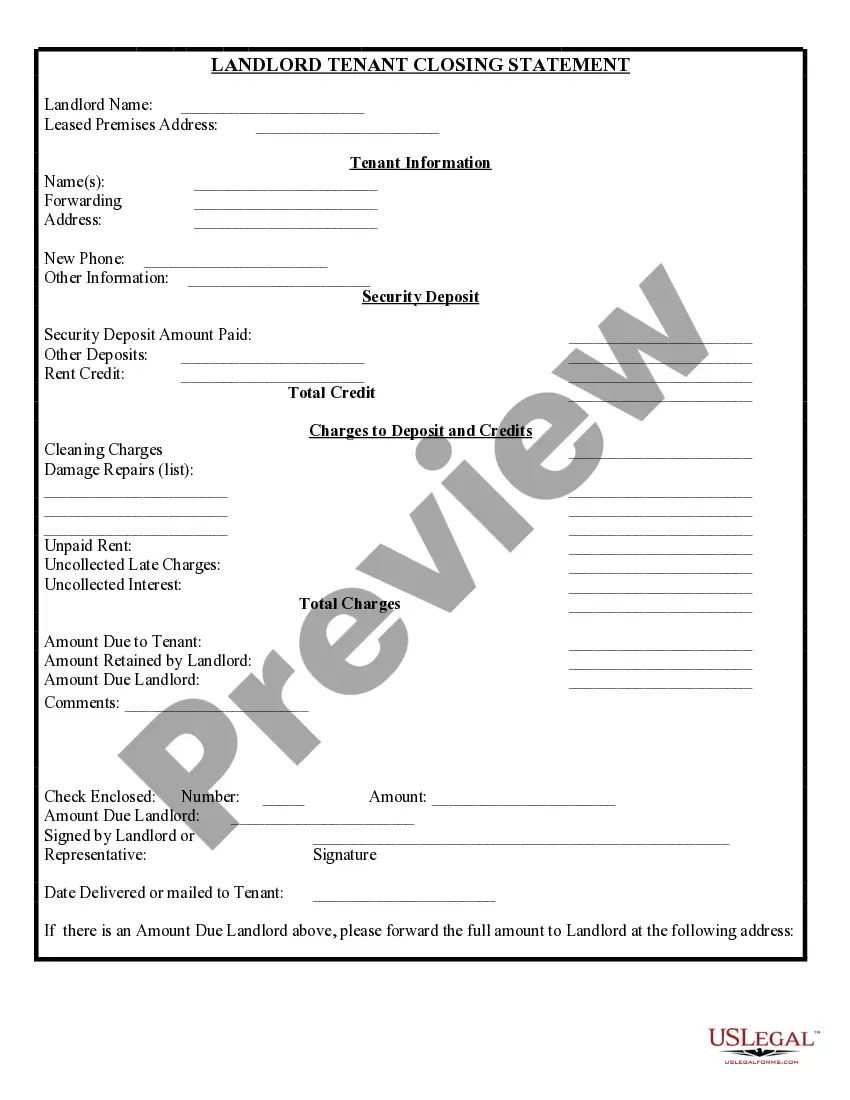
The Landlord Tenant Closing Statement to Reconcile Security Deposit is a legal document that helps landlords and tenants review and finalize the financial aspects of a security deposit. This form outlines the deposits made, the credits applied, and any deductions due to damage or unpaid rent. It differs from other rental agreements by focusing specifically on the reconciliation of the security deposit after a tenant vacates the property.
Key parts of this document
- Identification of parties involved: landlord and tenant details.
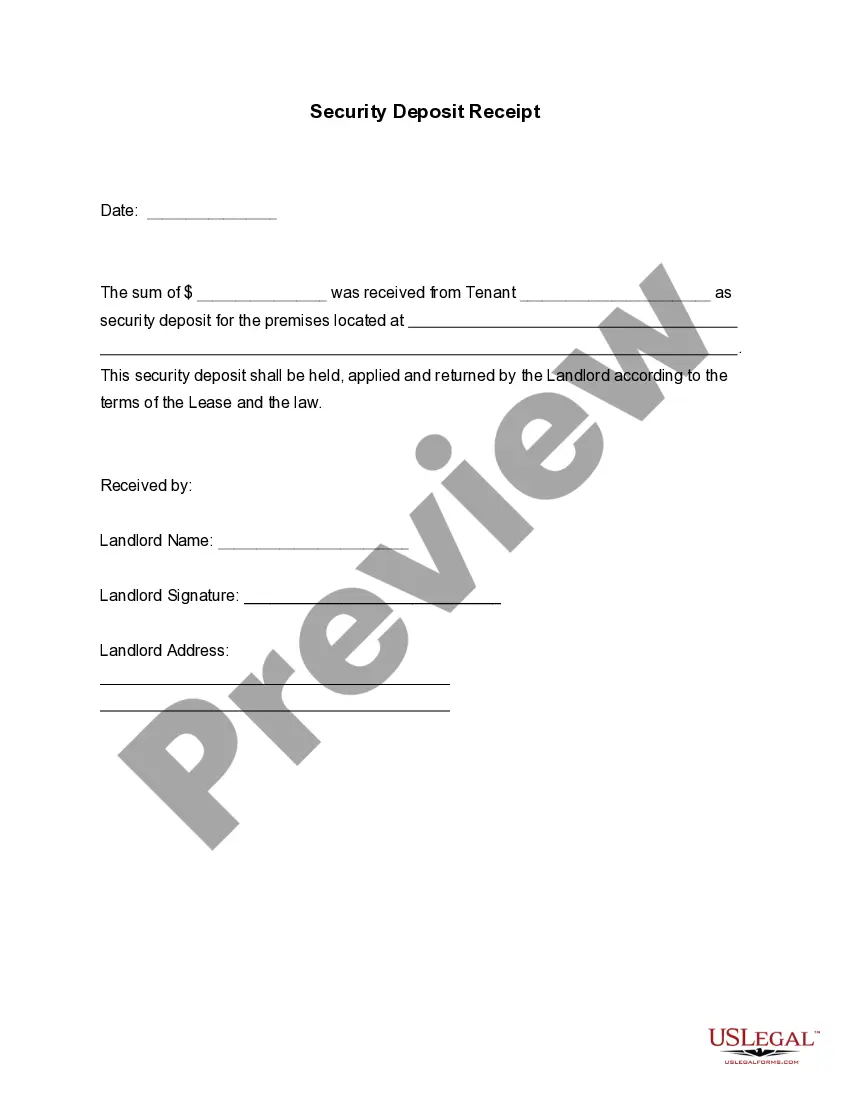
- List of security deposit amounts received from the tenant.
- Record of deductions for damages beyond normal wear and tear.
- Credits applied, including any charges for unpaid rent.
- Total balance to be refunded to the tenant after deductions.
Situations where this form applies
This form is necessary when a tenant moves out of a rental property, and the landlord needs to reconcile the security deposit. It helps ensure that both parties are clear about financial transactions related to any damages or charges that might affect the security deposit return, thus preventing disputes and ensuring transparency.
Who needs this form
- Landlords who are finalizing accounts with tenants after a lease ends.
- Tenants wanting to understand deductions made from their security deposit.
- Real estate professionals managing rental properties on behalf of landlords.
Instructions for completing this form
- Identify the parties involved by entering the names and addresses of the landlord and tenant.
- Document the total amount of the security deposit received from the tenant.
- Clearly specify any deductions for repairs or unpaid rent to provide detailed transparency.
- Calculate the total credits applied and any balance due to the tenant after deductions.
- Both parties should review, sign, and date the document to confirm its accuracy.
Is notarization required?
This form does not typically require notarization to be legally valid. However, some jurisdictions or document types may still require it. US Legal Forms provides secure online notarization powered by Notarize, available 24/7 for added convenience.
Get your form ready online
Our built-in tools help you complete, sign, share, and store your documents in one place.
Make edits, fill in missing information, and update formatting in US Legal Forms—just like you would in MS Word.
Download a copy, print it, send it by email, or mail it via USPS—whatever works best for your next step.
Sign and collect signatures with our SignNow integration. Send to multiple recipients, set reminders, and more. Go Premium to unlock E-Sign.
If this form requires notarization, complete it online through a secure video call—no need to meet a notary in person or wait for an appointment.
We protect your documents and personal data by following strict security and privacy standards.

Make edits, fill in missing information, and update formatting in US Legal Forms—just like you would in MS Word.

Download a copy, print it, send it by email, or mail it via USPS—whatever works best for your next step.

Sign and collect signatures with our SignNow integration. Send to multiple recipients, set reminders, and more. Go Premium to unlock E-Sign.

If this form requires notarization, complete it online through a secure video call—no need to meet a notary in person or wait for an appointment.

We protect your documents and personal data by following strict security and privacy standards.
Common mistakes to avoid
- Failing to keep proper records of damages or repairs.
- Not providing sufficient documentation for deductions taken from the deposit.
- Missing signatures from either party, which can make the form unenforceable.
Why use this form online
- Convenient access to forms at any time, ensuring you can complete them when needed.
- Editable templates allowing customization based on your specific situation.
- Reliability and peace of mind knowing the form has been drafted by licensed attorneys.
Legal use & context
- This form serves as a legal record of the security deposit reconciliation, which can be important if disputes arise.
- Maintaining accurate records can protect landlords from potential legal issues related to deposit returns.
- Tenants can reference this document should they need to challenge any deductions made from their security deposit.
What to keep in mind
- The Landlord Tenant Closing Statement is crucial for reconciling security deposits at the end of a lease.
- It provides transparency for both landlords and tenants regarding financial transactions linked to the deposit.
- Properly completing and signing this form helps prevent disputes and ensures lawful handling of the security deposit.
Looking for another form?
Form popularity
FAQ
Concisely review the main facts and lay out the reasons your landlord owes you money. Include copies of relevant letters and agreements, such as your notice to move out. Ask for exactly what you want, such as the full amount of your deposit within ten days. Cite state security deposit law.
If a landlord does not return the entire amount of the tenant's security deposit within the 21 days required by law, and the tenant disputes the deductions from the deposit: The tenant can write a letter to the landlord explaining why he or she believes he or she is entitled to a larger refund.
If the security deposit is for a residential property without furniture, the security deposit may equal 2 times the rent. If the residence is furnished, the landlord may charge up to 3 times the rent. There is no restriction on the amount of the security deposit for the rental of a commercial property.
Security Deposit Received: $1,000. Interest on Deposit (if required by lease or law): $N/A. TOTAL CREDIT (sum of lines 1 and 2): $1,000. Itemized Repairs and Related Losses: Necessary Cleaning: Total Cleaning & Repair (sum of lines 4 and 5) $400. Amount Owed (line 3 minus the sum of line 6)
Mail your landlord a letter requesting that she return your deposit. Be polite and simply inform the landlord that you have vacated the property and would appreciate the return of your deposit once she has had a chance to complete any checks and paperwork.
A deposit forms part of any commercial tenancy agreement and when you leave a property at the end of your tenancy, you are entitled to receive it back. You should usually receive your deposit back within 10 days of the end of your tenancy agreement, providing there is no damage to the property or its contents.
5 Times a Landlord Does Not Have to Return a Tenant's Security Deposit. Breaking or Terminating a Lease Early. Nonpayment of Rent. Damage to the Property. Cleaning Costs. Unpaid Utilities.
Security deposits are assets or liabilities, so you cannot deduct them as expenses as a tenant and you need not declare them as income on income tax returns as a landlord until you use them.
Before returning a security deposit, the landlord may deduct from the deposit damages and charges for which the tenant is legally liable under Texas security deposit laws or as a result of breaching the lease. The landlord may not retain any portion of a security deposit to cover normal wear and tear.