Texas Notice of Default in Payment of Rent as Warning Prior to Demand to Pay or Terminate for Nonresidential or Commercial Property
Understanding this form
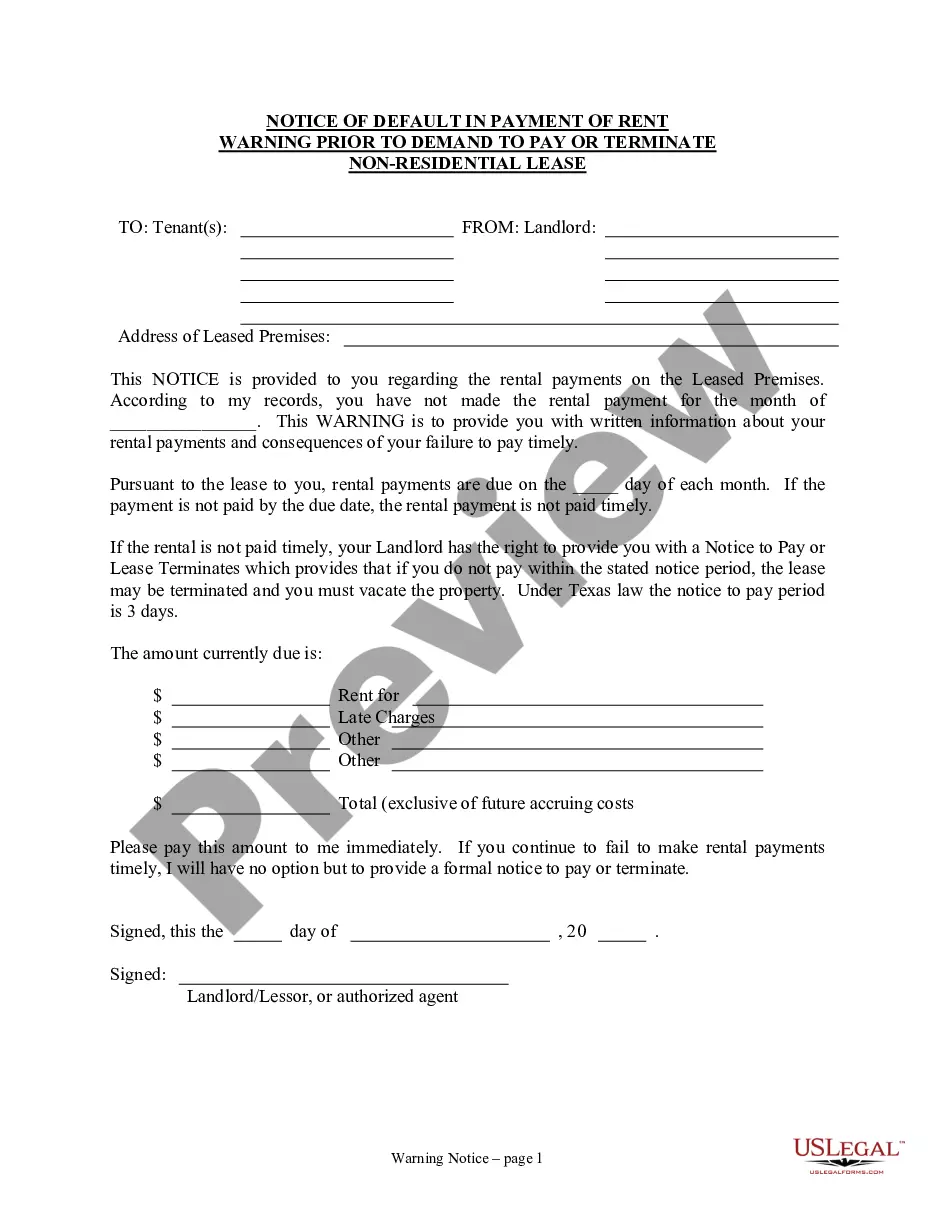
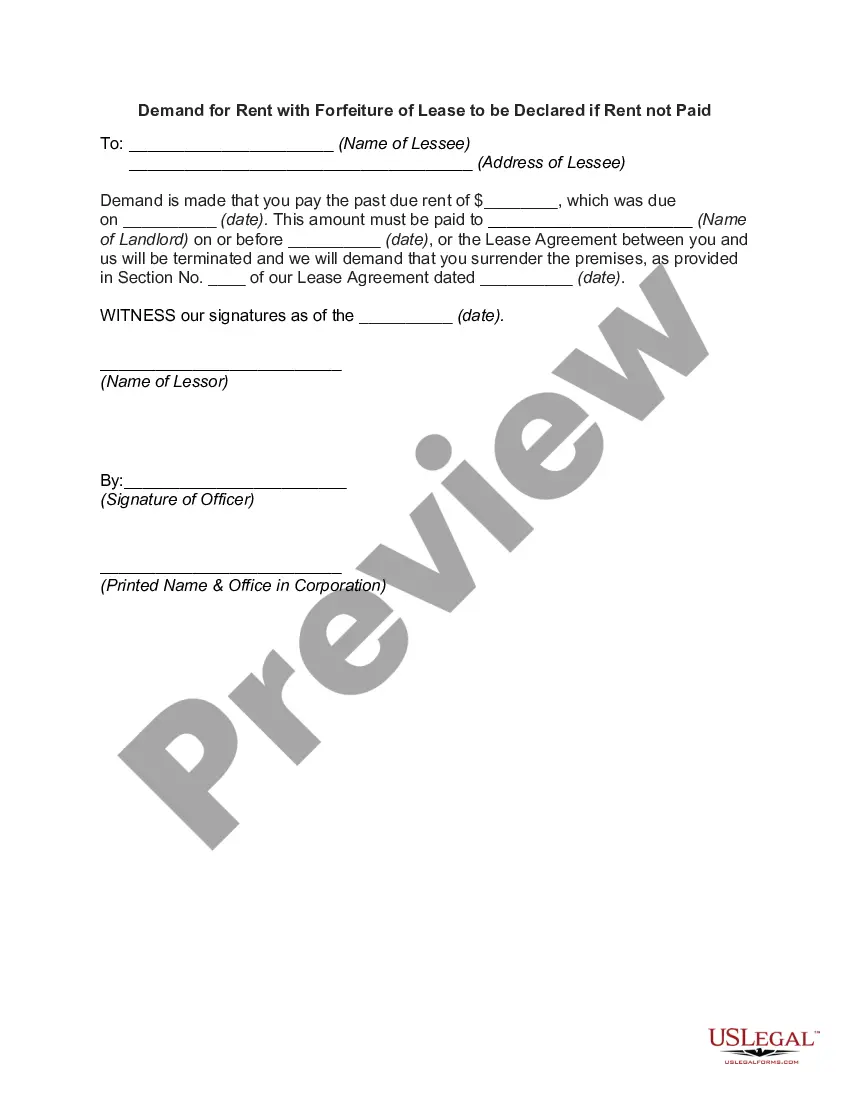
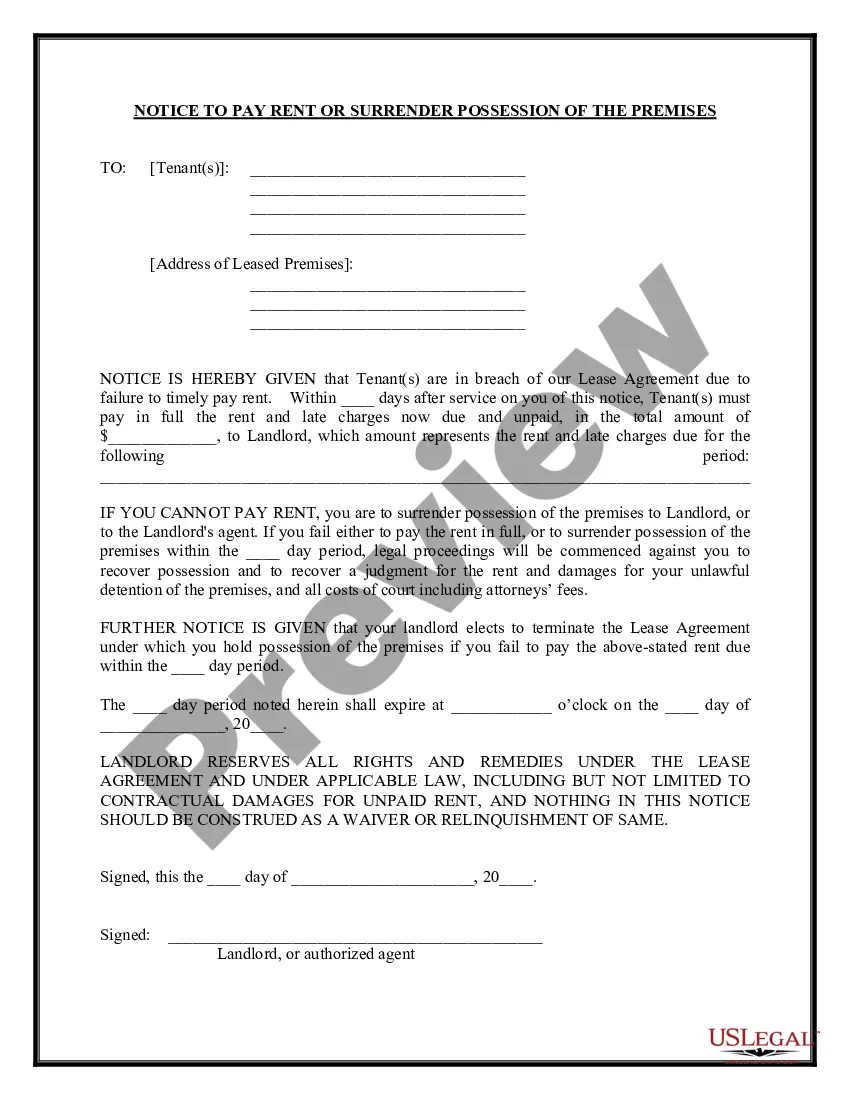
The Notice of Default in Payment of Rent as Warning Prior to Demand to Pay or Terminate for Nonresidential or Commercial Property is a legal document used by landlords to notify tenants about overdue rent payments. This form serves as a warning before more severe actions, such as a demand for payment or lease termination. Unlike other lease-related notices, this specific form focuses on notifying the tenant of their default status and the potential consequences, helping landlords communicate effectively and adhere to legal requirements.
Main sections of this form
- Identification of the landlord and tenant.
- Address of the leased premises.
- Details of the overdue rental payment.
- Due date for rent according to the lease agreement.
- Consequences of failing to pay rent on time.
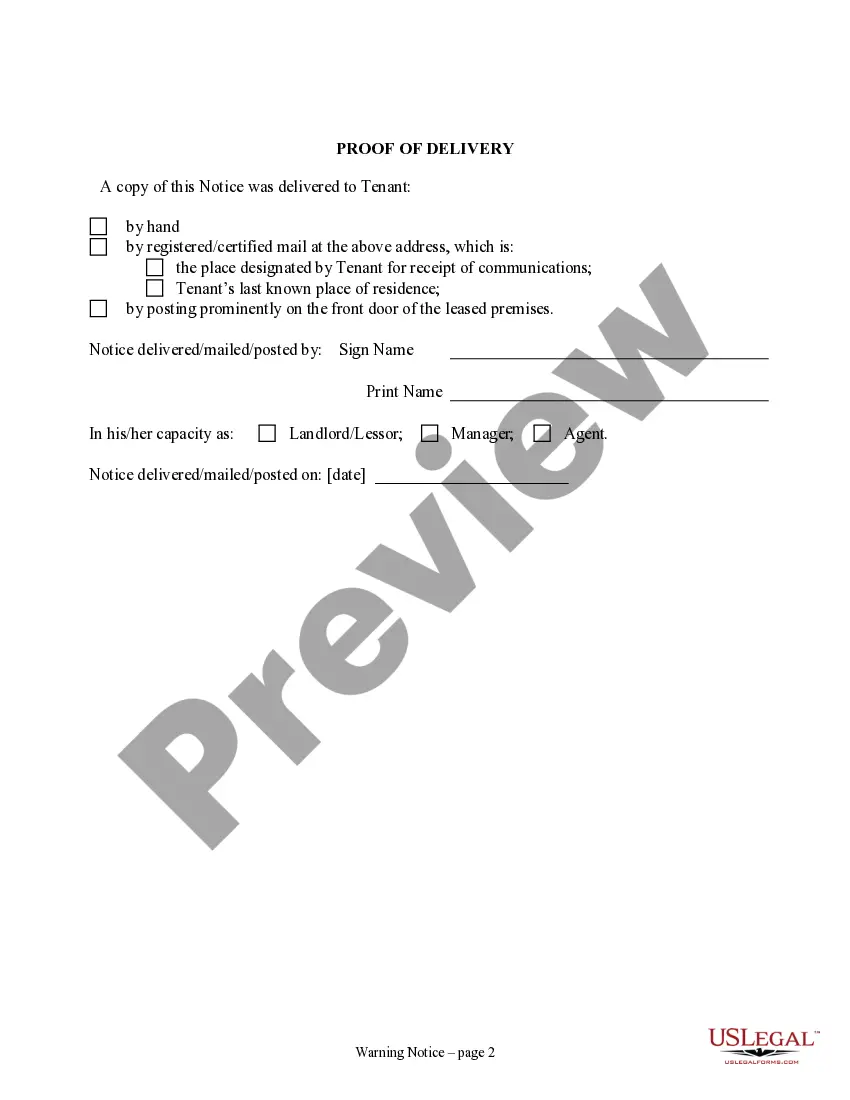
- Proof of delivery of the notice to the tenant.
When this form is needed
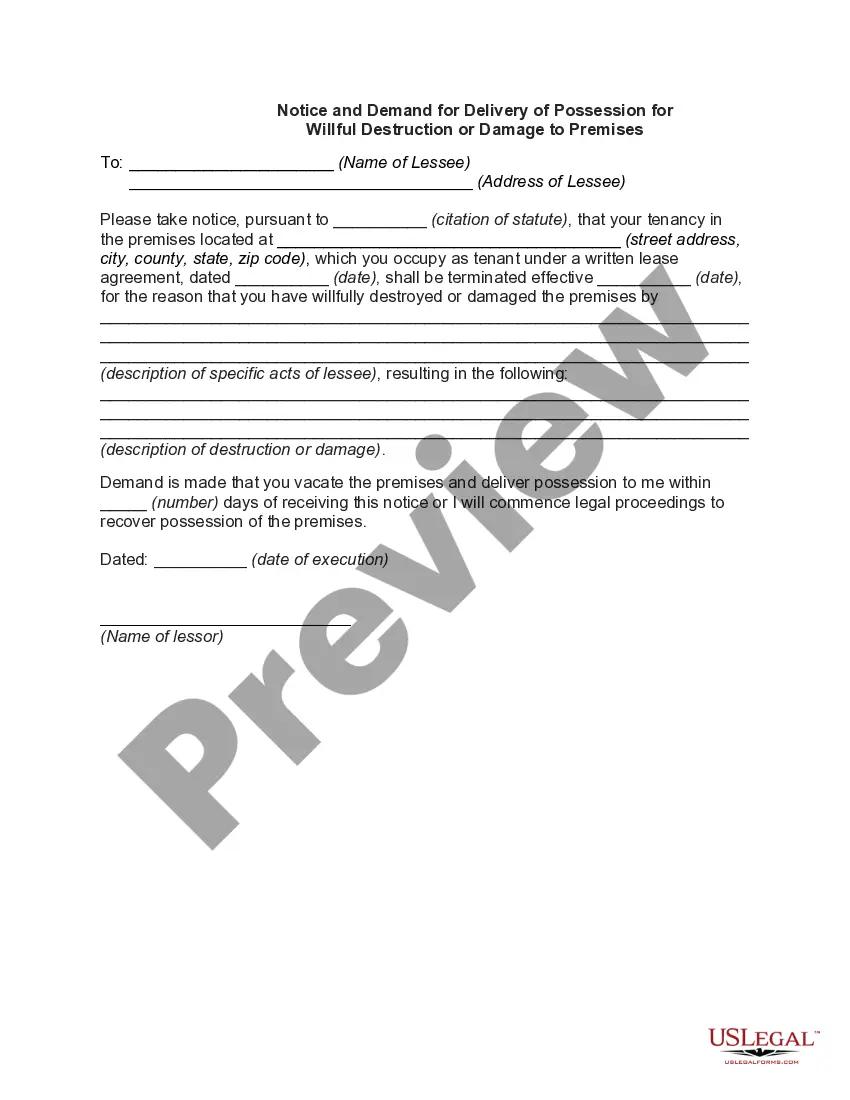
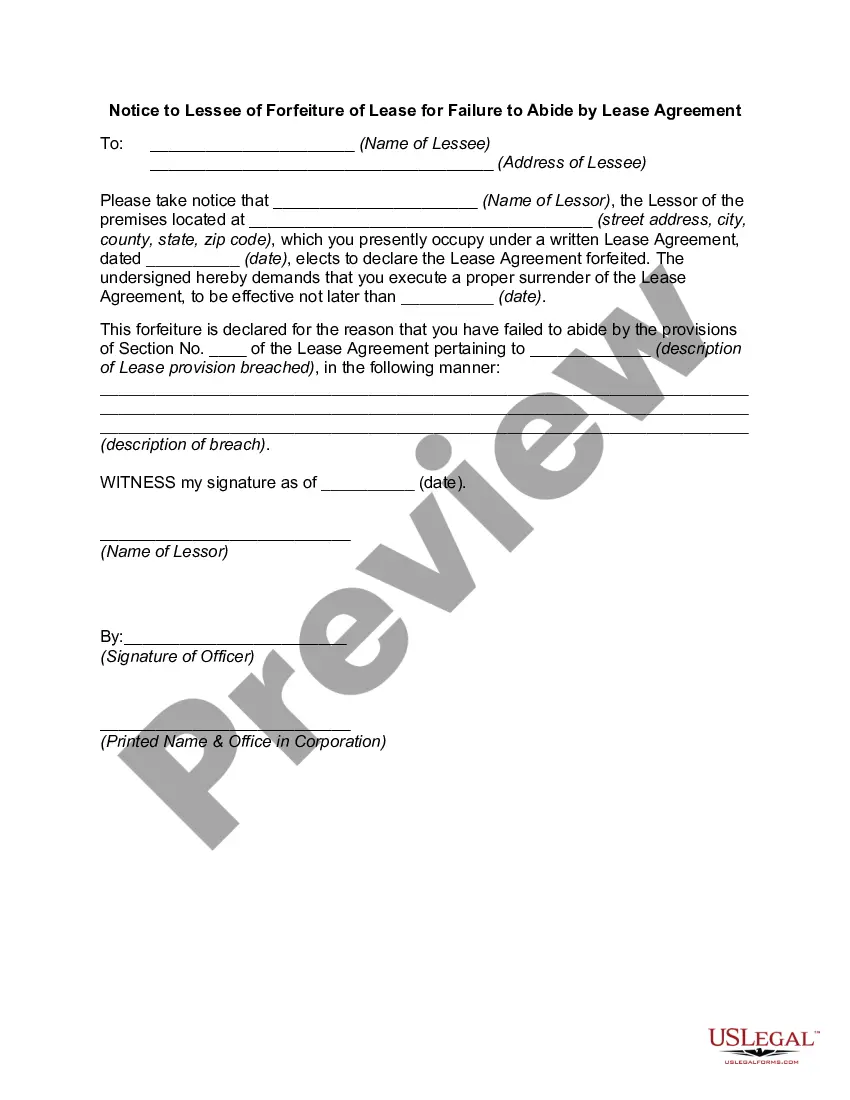
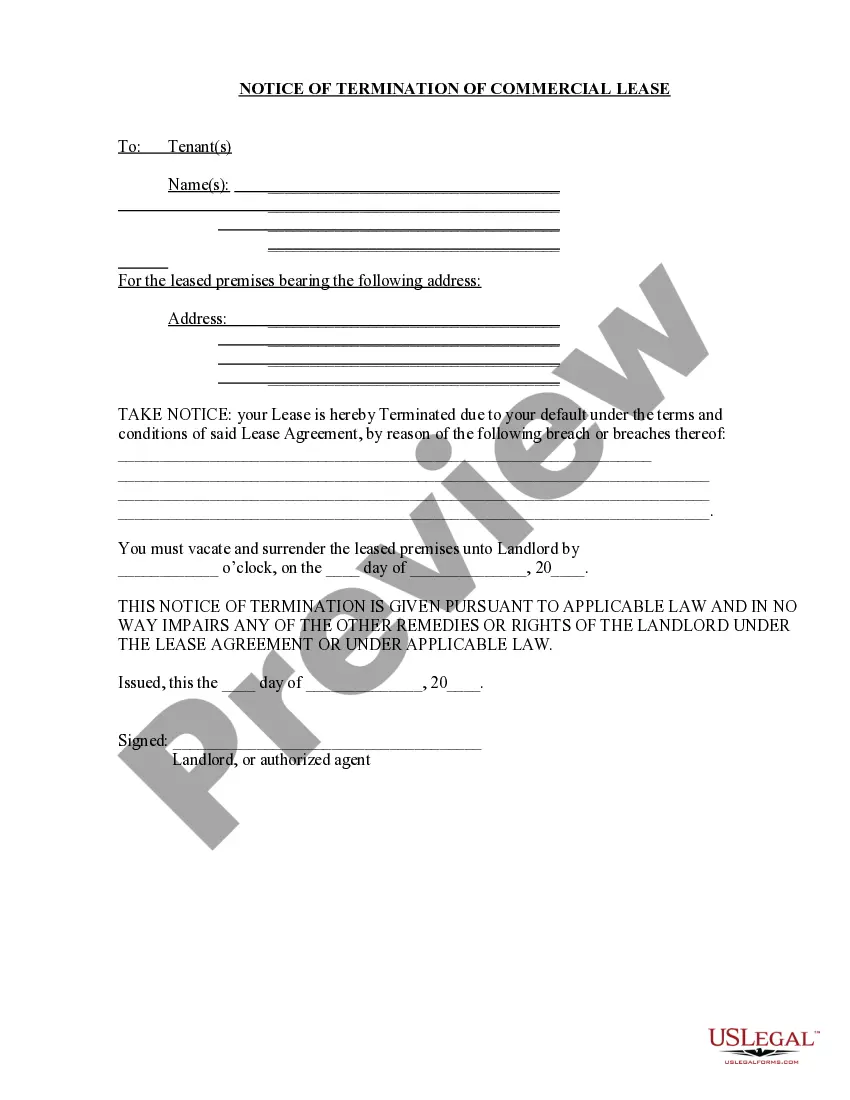
This form should be used when a landlord needs to formally notify a tenant of their failure to pay rent for a nonresidential or commercial property. It is appropriate to use this notice prior to taking further action, such as issuing a demand for payment or terminating the lease. This formal notice helps establish a record of communication and is an important step in the eviction process, should it become necessary.
Who this form is for
This form is intended for use by:
- Commercial landlords seeking to address tenant payment issues.
- Property managers acting on behalf of the landlord.
- Landlords looking to ensure compliance with legal requirements in lease agreements.
- Any individual or entity leasing commercial space who requires a formal means of notifying tenants of default in payment.
How to complete this form
- Identify and enter the names of the landlord and tenant at the top of the form.
- Specify the address of the leased premises in the designated section.
- Fill in the month in which the rent was due and the exact due date according to the lease.
- List the total amount of overdue rent and any late charges.
- Sign the form with the date to validate the notice.
- Choose the method of delivery and complete the proof of delivery section as required.
Does this form need to be notarized?
This form does not typically require notarization unless specified by local law. Most landlords complete and deliver this notice without the need for notary services, ensuring a straightforward process.
Get your form ready online
Our built-in tools help you complete, sign, share, and store your documents in one place.
Make edits, fill in missing information, and update formatting in US Legal Forms—just like you would in MS Word.
Download a copy, print it, send it by email, or mail it via USPS—whatever works best for your next step.
Sign and collect signatures with our SignNow integration. Send to multiple recipients, set reminders, and more. Go Premium to unlock E-Sign.
If this form requires notarization, complete it online through a secure video call—no need to meet a notary in person or wait for an appointment.
We protect your documents and personal data by following strict security and privacy standards.

Make edits, fill in missing information, and update formatting in US Legal Forms—just like you would in MS Word.

Download a copy, print it, send it by email, or mail it via USPS—whatever works best for your next step.

Sign and collect signatures with our SignNow integration. Send to multiple recipients, set reminders, and more. Go Premium to unlock E-Sign.

If this form requires notarization, complete it online through a secure video call—no need to meet a notary in person or wait for an appointment.

We protect your documents and personal data by following strict security and privacy standards.
Common mistakes
- Failing to specify the exact amount due, including late fees.
- Not providing the correct address of the leased premises.
- Omitting the delivery method, which is crucial for proof of receipt.
- Not signing and dating the notice, which could render it invalid.
- Ignoring state-specific requirements that may affect notification timeframes.
Why use this form online
- Convenient access to downloadable forms without needing to visit a lawyer.
- Edit the templates easily to match your specific situation.
- Provide legal peace of mind with professionally drafted templates.
- Avoid delays by electronically delivering the notice to tenants.
Legal use & context
This notice serves as a formal warning to tenants and establishes a record of compliance with lease agreements and local laws. It is an essential tool for landlords to demonstrate due diligence in their efforts to collect rent before taking more severe actions, such as eviction.
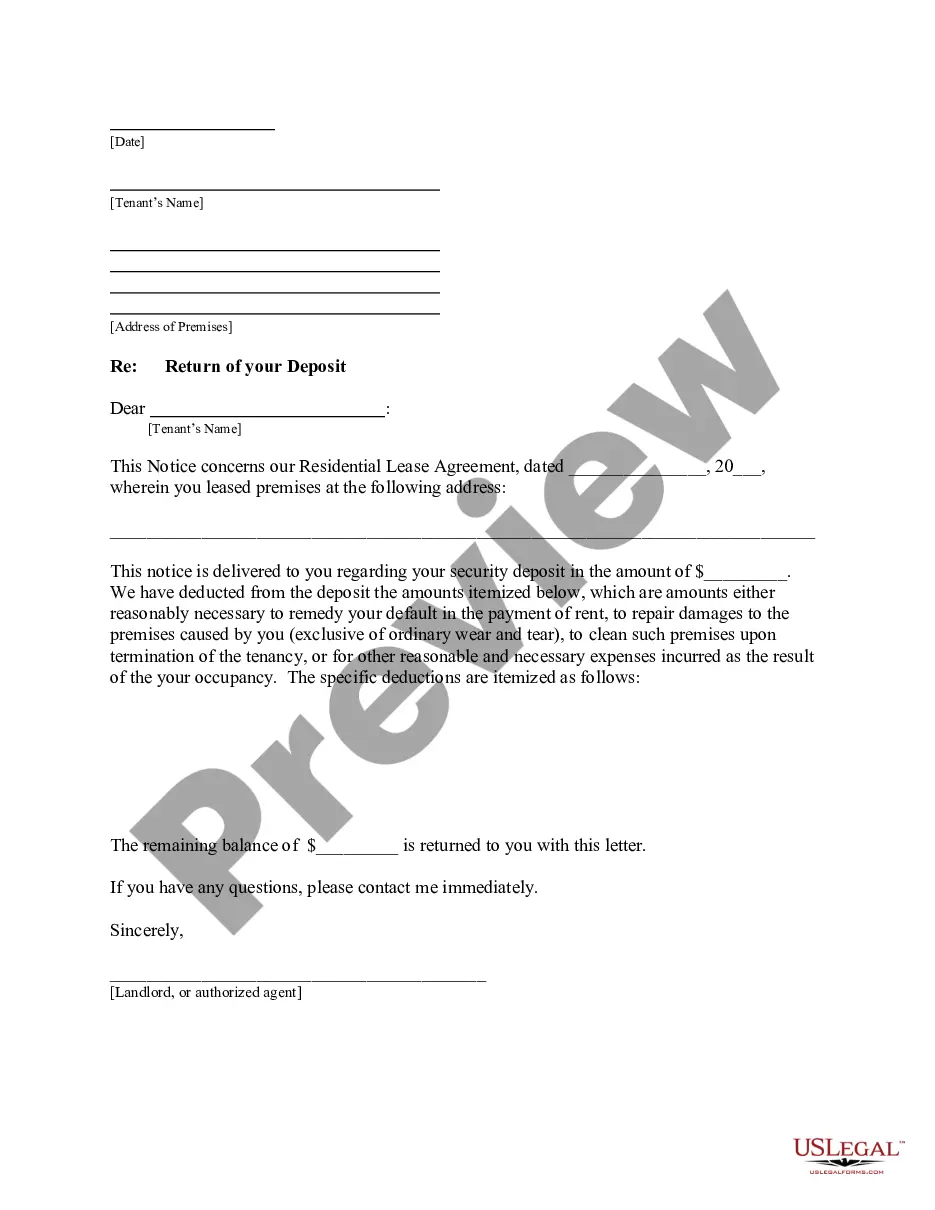
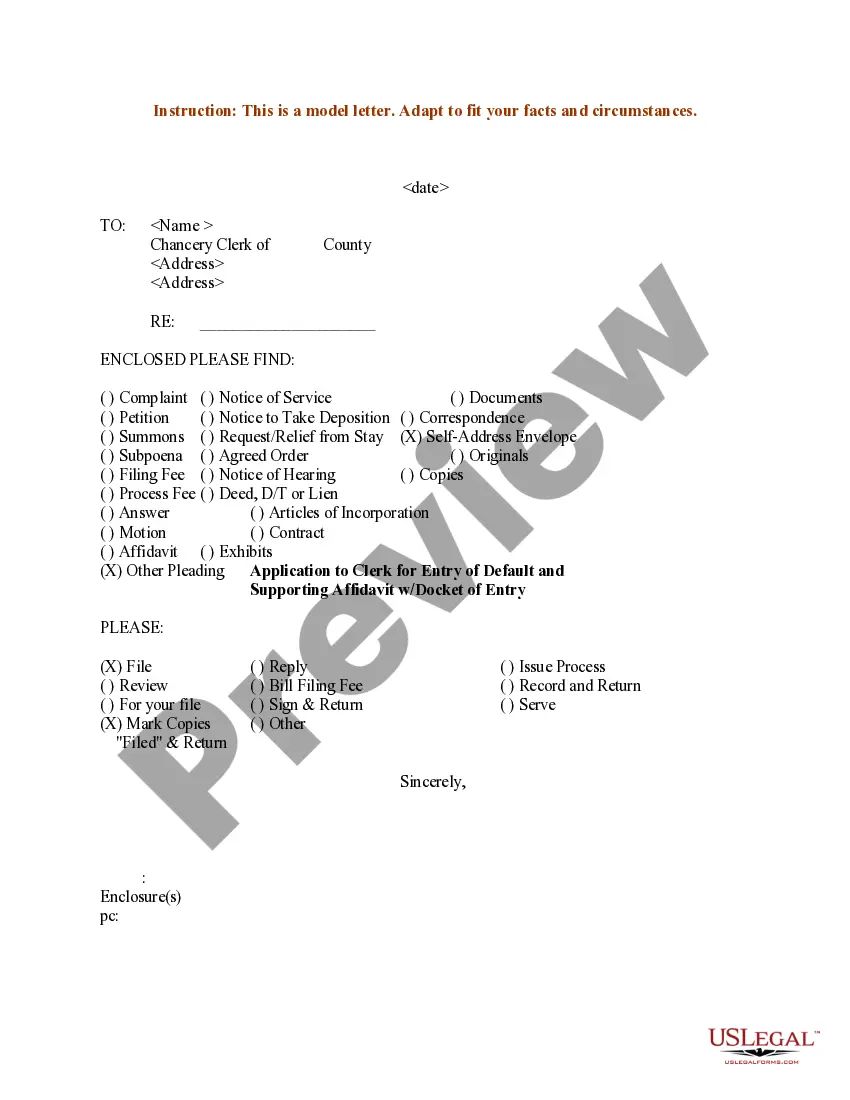
Looking for another form?








Form popularity
FAQ
How long does it take to evict someone in Texas? From start to finish approximately three weeks 2022 3 days from notice to vacate to filing of suit 2022 8-10 days to serve the citation -The law requires the defendant have a least six days no more than 10 days notice before the hearing.
There are circumstances where an eviction is simply illegal as a matter of law in Texas. A landlord cannot evict a tenant based on race, sex, national origin, disability or family status or to retaliate against a tenant who files maintenance requests or complaints about the condition of the property.
To remove a holdover tenant in Texas, the landlord must give the tenant a three-day notice to vacate. If the tenant does not move out by the end of the three-day period, then the landlord can file an eviction lawsuit with the court.
Notice to Vacate The amount of time the tenant has to move out or fix a certain problem before an eviction suit is filed. This must be at least 3 days unless the lease specifically states otherwise.
In Texas, landlords must give tenants 30 days' notice before terminating the lease.Often, month-to-month leases are verbal, so the terms can seem murky. But Texas law is clearboth landlords and tenants can end their agreement at any time, as long as they give the other person 30 days' advance notice.
It should be noted that is it best practice to not accept partial payments from a tenant.If your tenant has not paid rent in compliance with the terms of the lease, you should start the eviction process by delivering a proper eviction notice as soon as possible.
Your rights as a tenant include the right to "quiet enjoyment," a legal term. This means your landlord cannot evict you without cause or otherwise disturb your right to live in peace and quiet. If other tenants in your building are disturbing you, you should complain to the landlord.
In Texas, a landlord can evict a tenant for a variety of reasons, including not paying rent on time or violating a portion of the lease or rental agreement. In some cases, a tenant might have cause (legal grounds) to fight the eviction.