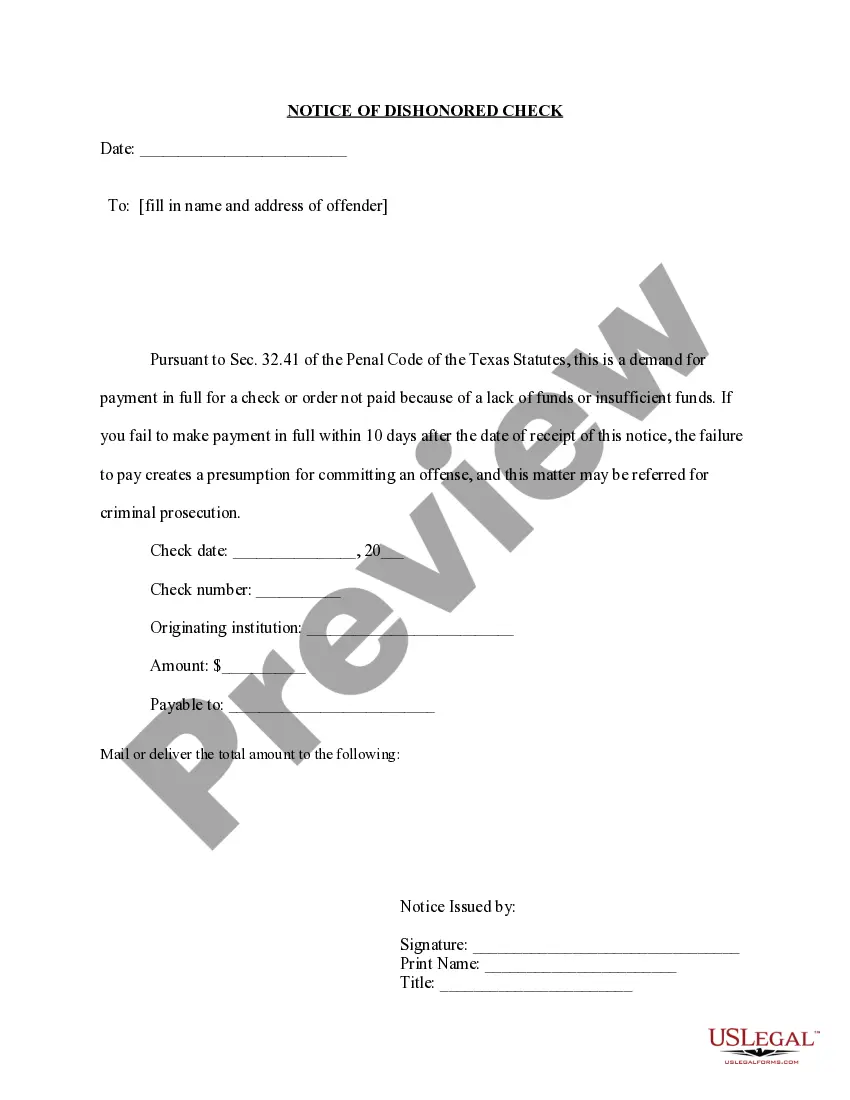
Texas Warranty Deed from two Individuals to Corporation
What is this form?
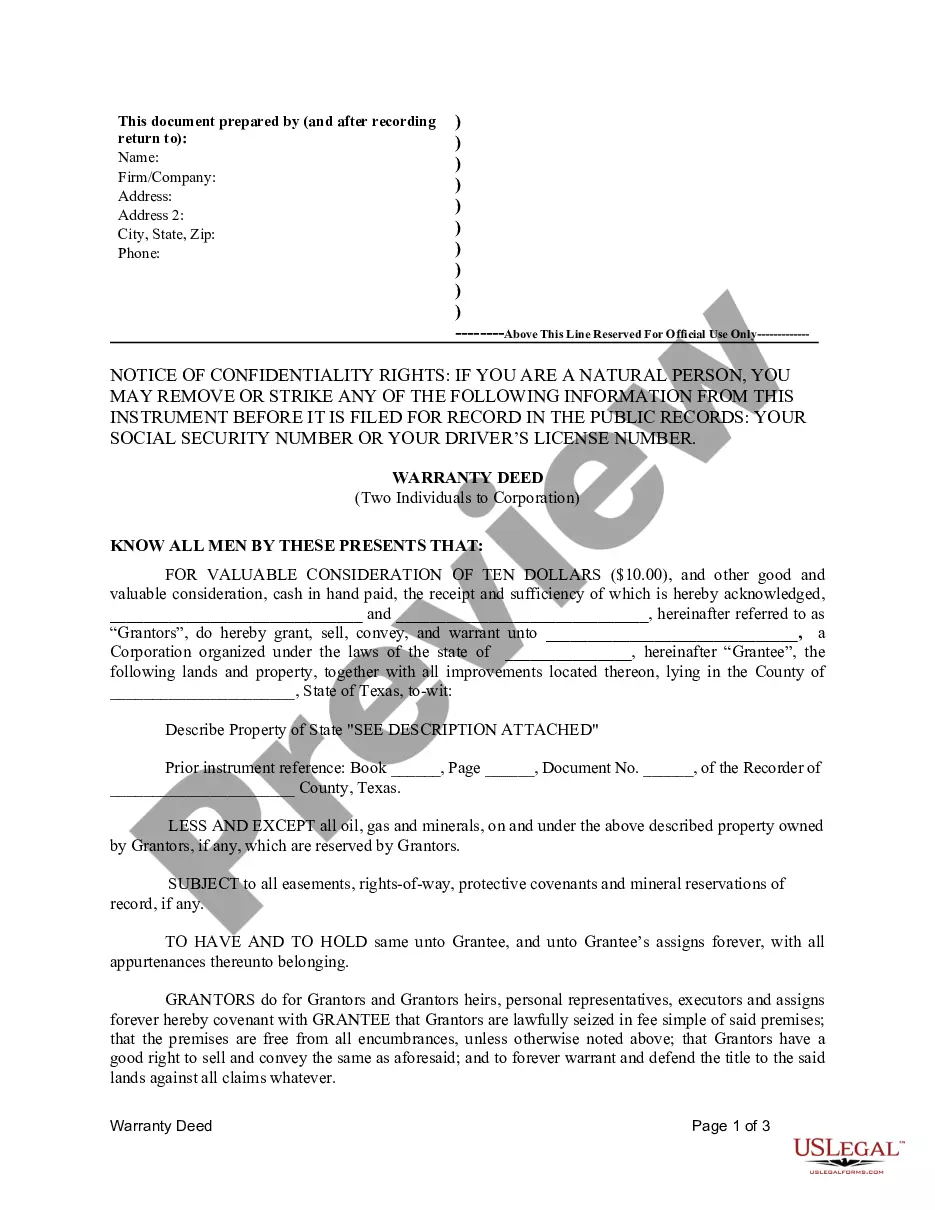
The Warranty Deed from two Individuals to Corporation is a legal document that allows two individuals (Grantors) to transfer ownership of property to a corporation (Grantee). This form legally conveys the property while reserving any rights the Grantors might possess concerning oil, gas, and minerals associated with the property. It is distinct from other types of deeds, such as quitclaim deeds, as it provides a warranty of title, ensuring that the property is free from encumbrances.
Key components of this form
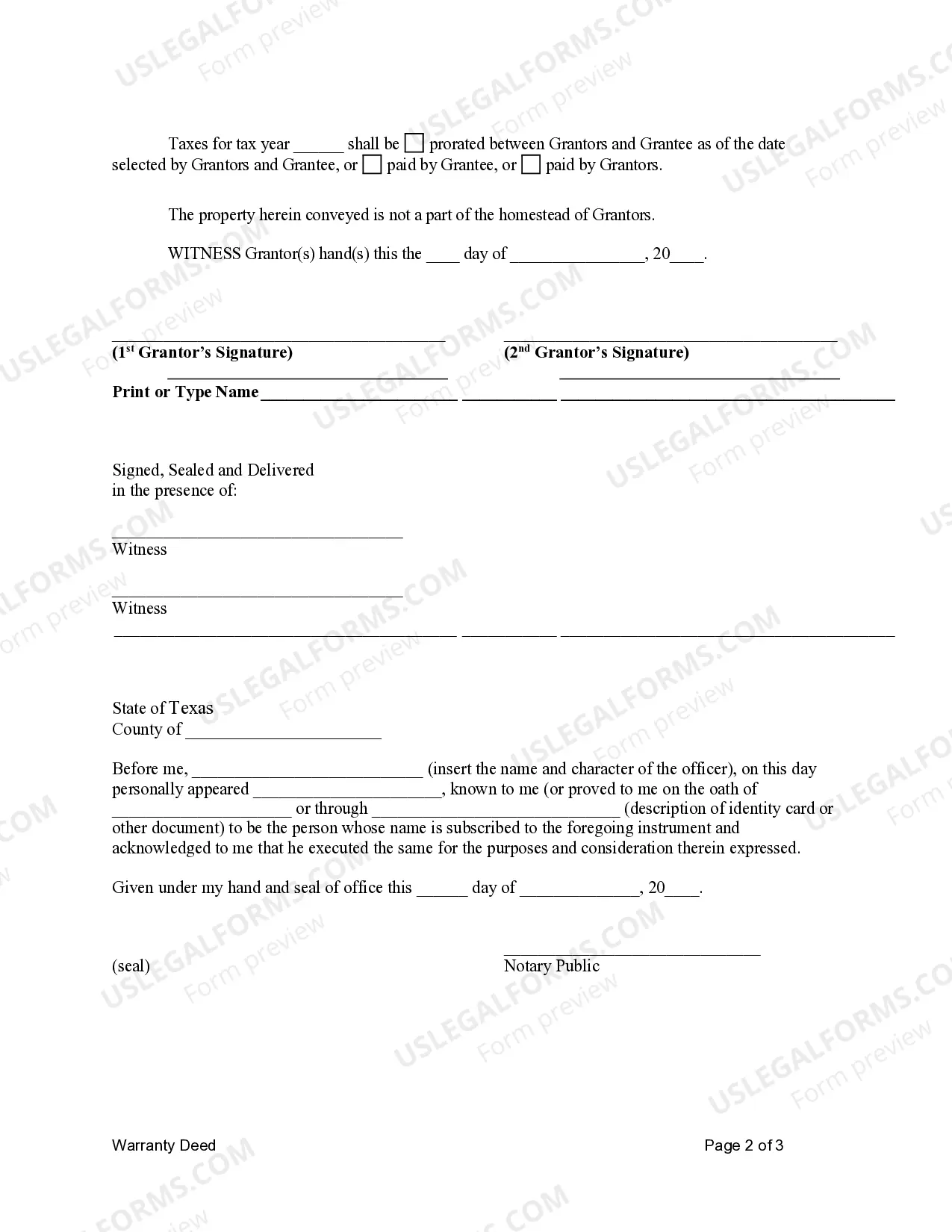
- Grantors' details: Names and signatures of the two individuals transferring ownership.
- Grantee's details: Name of the corporation receiving the property.
- Description of the property: A clear description of the property being conveyed.
- Reservation clause: A clause stating that all oil, gas, and minerals are reserved by the Grantors.
- Covenant of Title: Assurance that the Grantors have the legal right to sell the property.
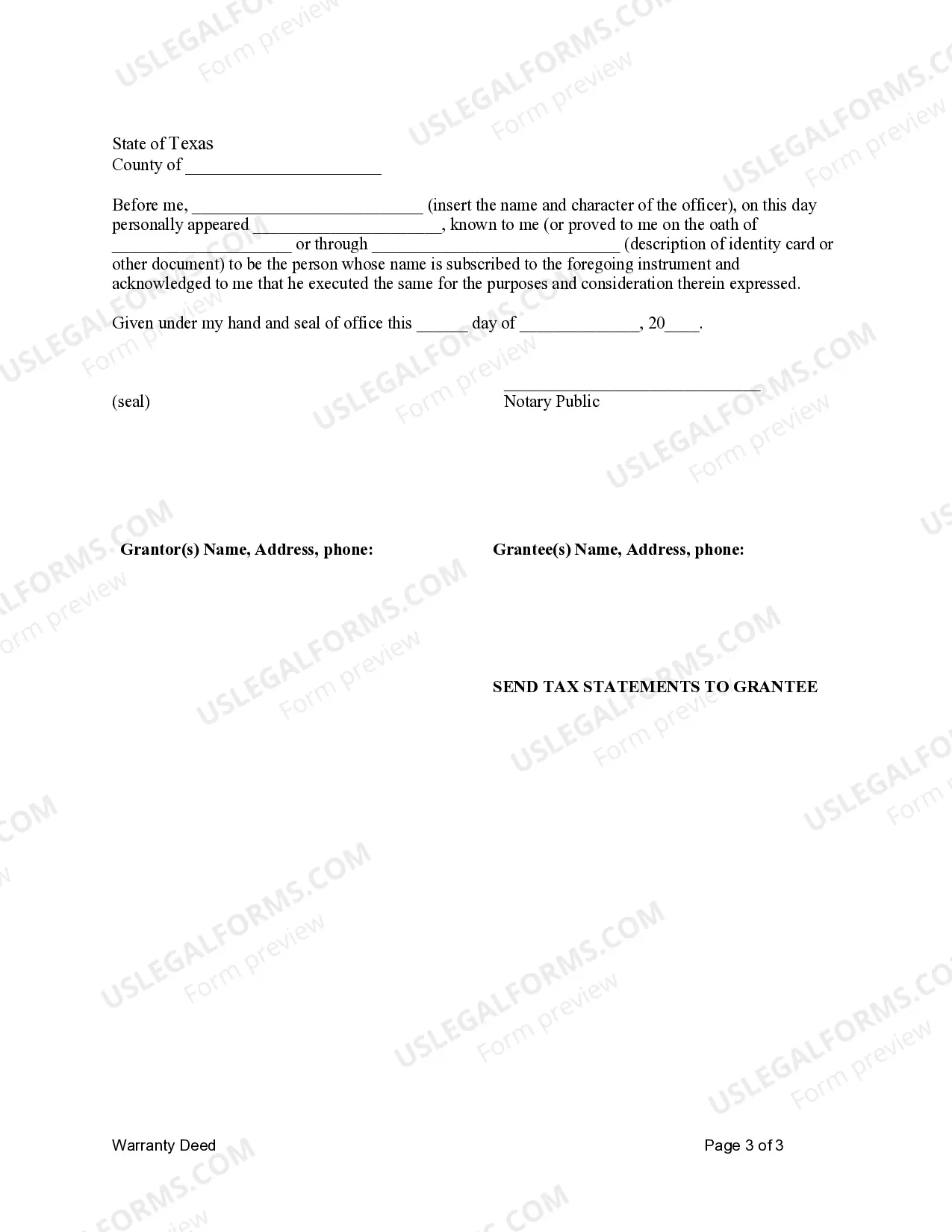
- Notary acknowledgment: Required affirmation of the Grantors' signatures by a notary public.


When to use this form
This form is typically used when two individual owners wish to transfer property ownership to a corporation. Scenarios may include business partnerships, real estate investments, or other situations where property is held jointly and needs to be conveyed to a corporate entity for operational or financial reasons.
Who should use this form
- Individuals who jointly own property and wish to transfer it to a corporation.
- Business partners looking to formalize property ownership under their corporation.
- Real estate investors requiring a legal method to transfer property ownership.
- Corporate officers or attorneys acting on behalf of a corporation acquiring property.
Steps to complete this form
- Identify the parties: Enter the names of the Grantors and the Grantee corporation.
- Specify the property: Provide a detailed description of the property being transferred.
- Include the reservation clause: Confirm the exclusion of oil, gas, and mineral rights, as necessary.
- Enter tax details: Specify how property taxes for the year will be divided between the Grantors and Grantee.
- Obtain signatures: Ensure all Grantors sign the document and it is notarized.
Notarization requirements for this form
Yes, this form must be notarized to be legally valid. US Legal Forms provides integrated online notarization options, making the process seamless and secure, allowing you to complete your notarization via a video call at your convenience.
Get your form ready online
Our built-in tools help you complete, sign, share, and store your documents in one place.
Make edits, fill in missing information, and update formatting in US Legal Forms—just like you would in MS Word.
Download a copy, print it, send it by email, or mail it via USPS—whatever works best for your next step.
Sign and collect signatures with our SignNow integration. Send to multiple recipients, set reminders, and more. Go Premium to unlock E-Sign.
If this form requires notarization, complete it online through a secure video call—no need to meet a notary in person or wait for an appointment.
We protect your documents and personal data by following strict security and privacy standards.

Make edits, fill in missing information, and update formatting in US Legal Forms—just like you would in MS Word.

Download a copy, print it, send it by email, or mail it via USPS—whatever works best for your next step.

Sign and collect signatures with our SignNow integration. Send to multiple recipients, set reminders, and more. Go Premium to unlock E-Sign.

If this form requires notarization, complete it online through a secure video call—no need to meet a notary in person or wait for an appointment.

We protect your documents and personal data by following strict security and privacy standards.
Avoid these common issues
- Failing to include a complete and accurate property description.
- Not reserving rights to oil, gas, and minerals, if applicable.
- Omitting signatures from all Grantors before notarization.
- Incorrectly addressing the tax responsibilities related to the transfer.
Benefits of using this form online
- Convenience of completing the form at any time without visiting an office.
- Editability allows for easy adjustments to suit specific needs.
- Reliable access to attorney-drafted templates ensures legal validity.
Looking for another form?

Form popularity
FAQ
A warranty deed guarantees that: The grantor is the rightful owner of the property and has the legal right to transfer the title.The title would withstand third-party claims to ownership of the property. The grantor will do anything to ensure the grantee's title to the property.
The original deed is returned to the owner of the property from the office of the recorder after proper entry. The office of the Recorder of Deeds maintains a set of indexes about each deed recorded, for an easy search. Almost all states have a grantor-grantee index including a reference to all documents recorded.
Joint owners have rights that are defined by the type of ownership method chosen. The term "co-owner" implies that more than one person has an ownership percentage of the property. Joint ownership, in its three common forms, refines and defines the rights of the co-owners.
Retrieve your original deed. Get the appropriate deed form. Draft the deed. Sign the deed before a notary. Record the deed with the county recorder. Obtain the new original deed.
Find the most recent deed to the property. It is best to begin with a copy of the most recent deed to the property (the deed that transferred the property to the current grantor). Create a new deed. Sign and notarize the deed. File the documents in the county land records.
It's important to note that a warranty deed does not actually prove the grantor has ownership (a title search is the best way to prove that), but it is a promise by the grantor that they are transferring ownership and if it turns out they don't actually own the property, the grantor will be responsible for compensating
The deed must be presented to and accepted by the grantee, and it should be filed of record in the county clerk's office to put the public on notice of the transfer. Failure to file the deed can subject the property to future claims by other parties. Most commonly, a grantor provides a general warranty deed.
Typically, the lender will provide you with a copy of the deed of trust after the closing. The original warranty deeds are often mailed to the grantee after they are recorded. These are your original copies and should be kept in a safe place, such as a fireproof lockbox or a safe deposit box at a financial institution.