Tennessee Middle District Bankruptcy Guide and Forms Package for Chapters 7 or 13
What is this form?
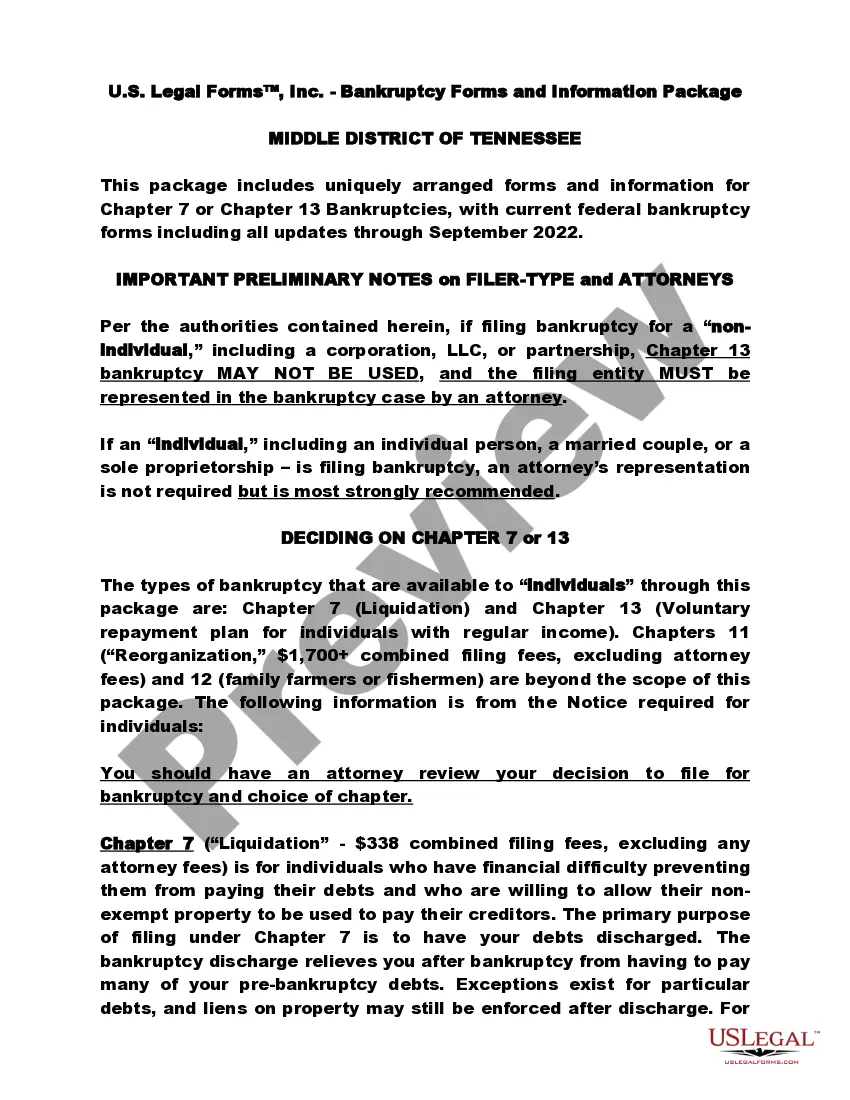
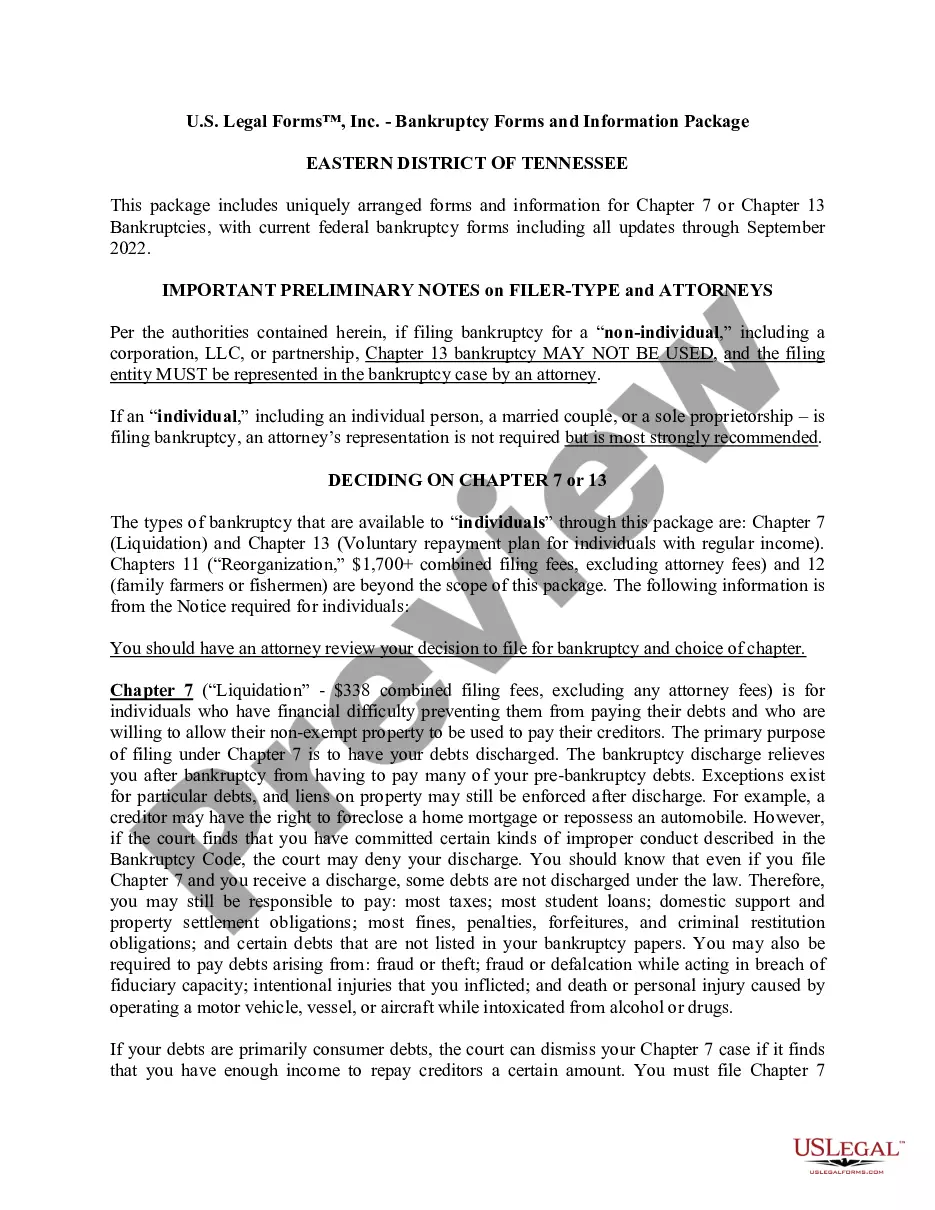
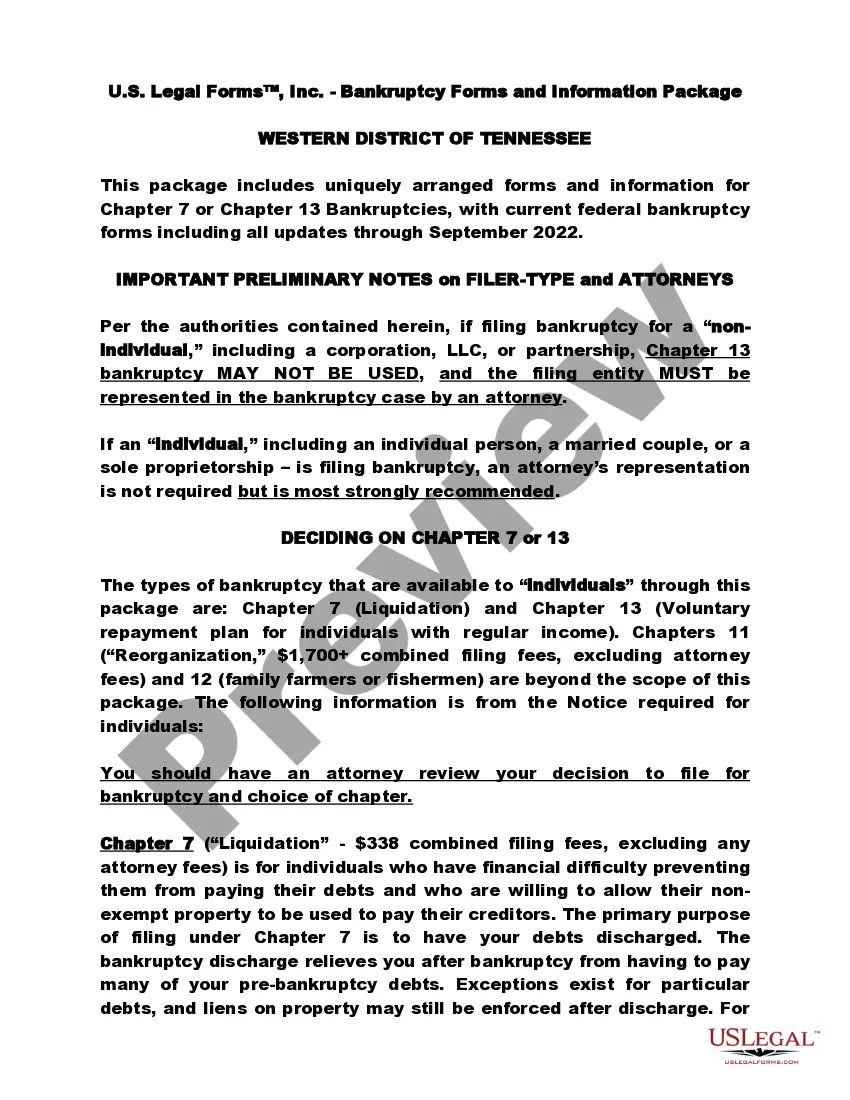
The Tennessee Middle District Bankruptcy Guide and Forms Package for Chapters 7 or 13 provides essential legal documents for individuals considering filing for bankruptcy. This package includes the necessary forms and detailed instructions for both Chapter 7, which allows for debt liquidation, and Chapter 13, a repayment plan for individuals with a regular income. It is specifically designed to assist users through the bankruptcy process in Tennessee with resources tailored to their needs.
Form components explained
- Chapter 7 Statement of Your Current Monthly Income (Official Form 122A-1)
- Chapter 7 Means Test Calculation (Official Form 122A-2)
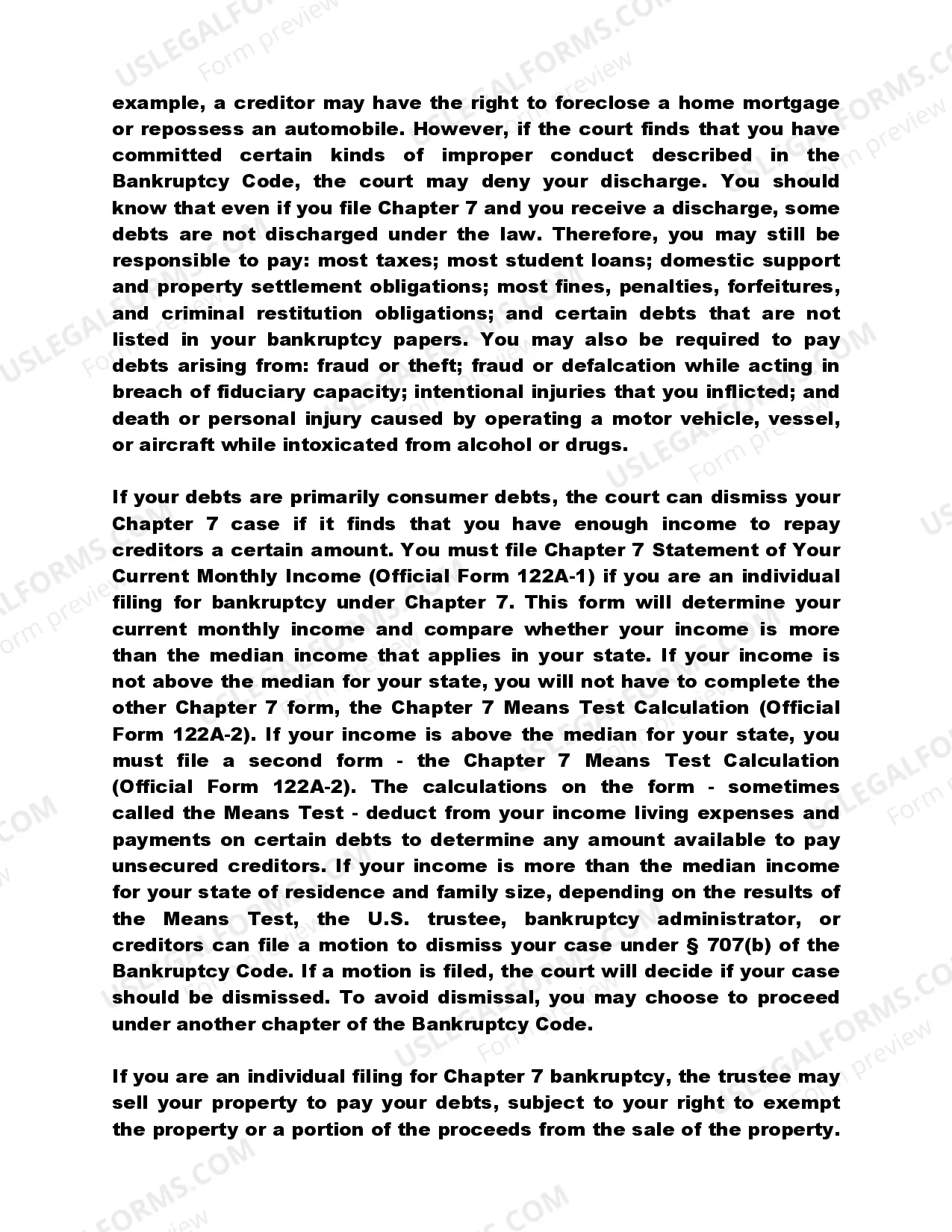
- Schedule C - The Property You Claim as Exempt (Official Form 106C)
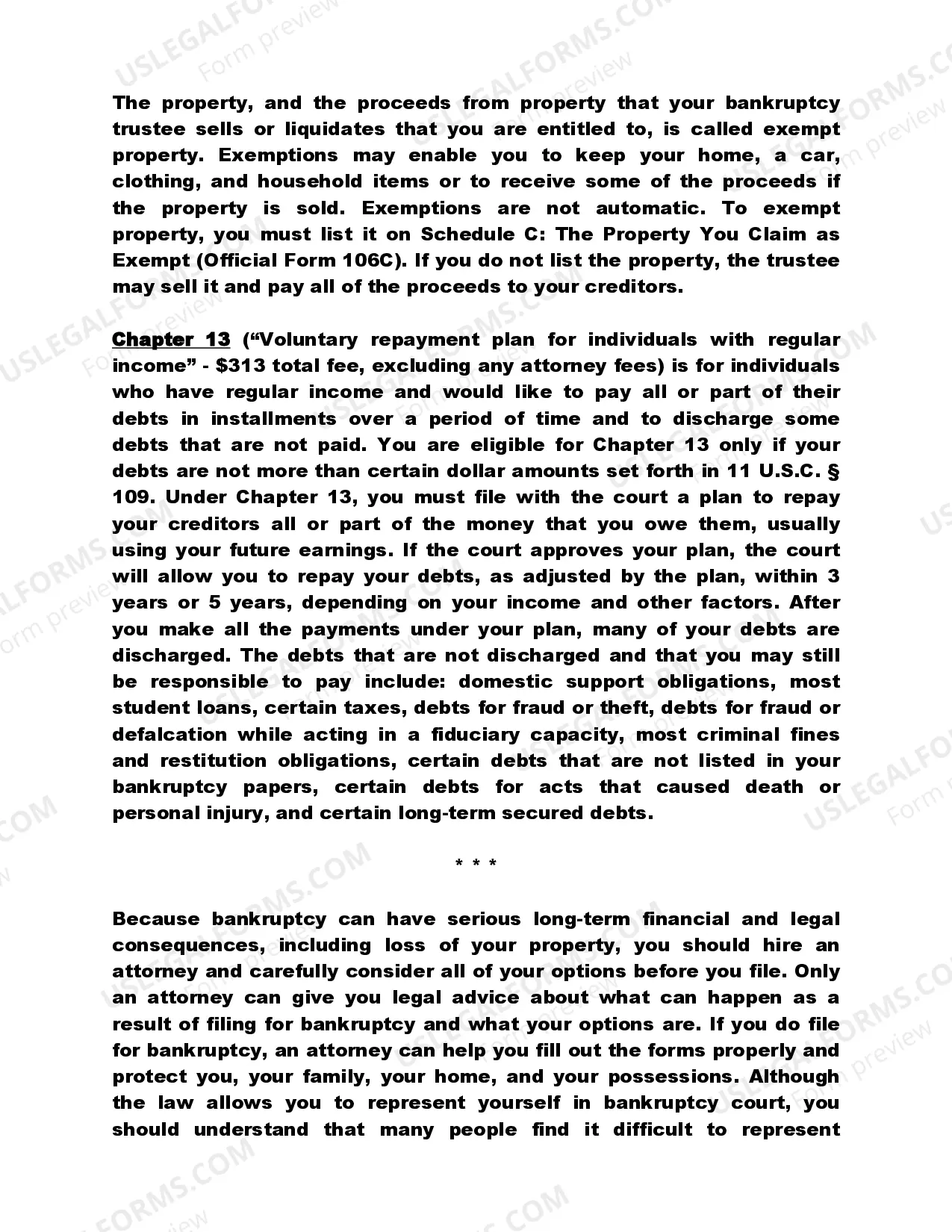
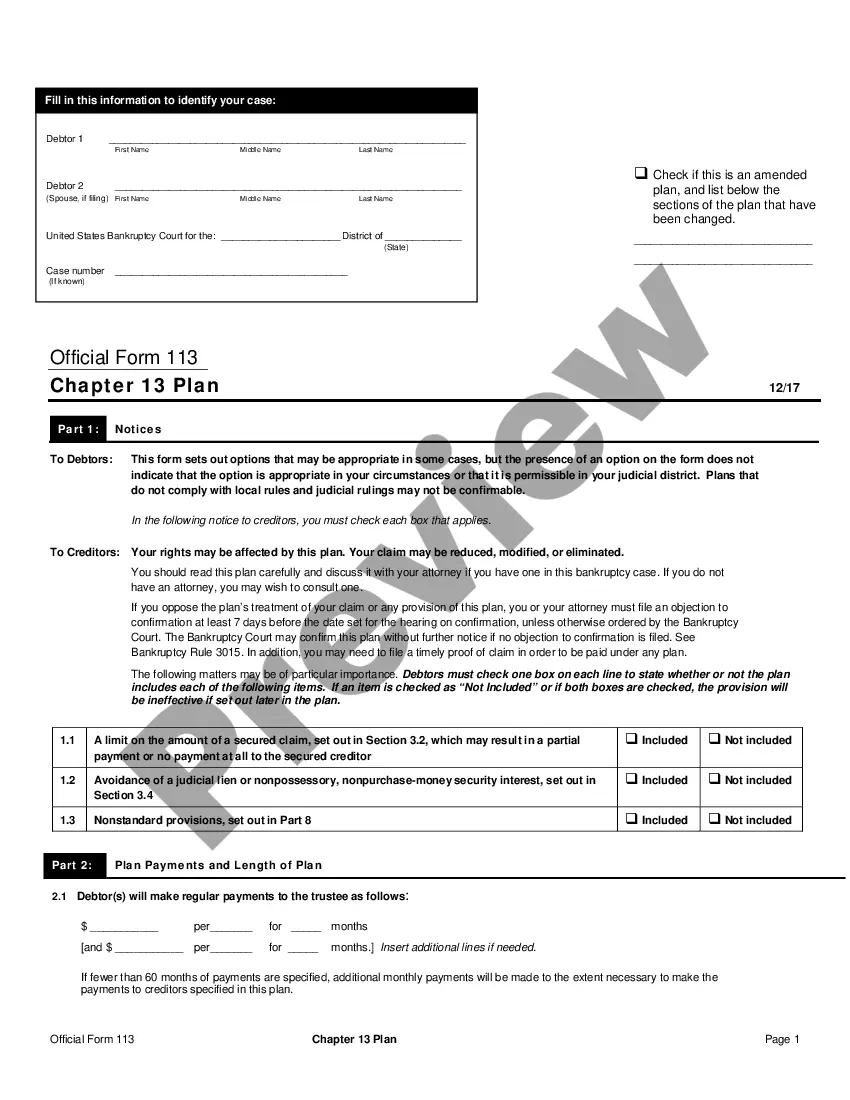
- Chapter 13 repayment plan proposal
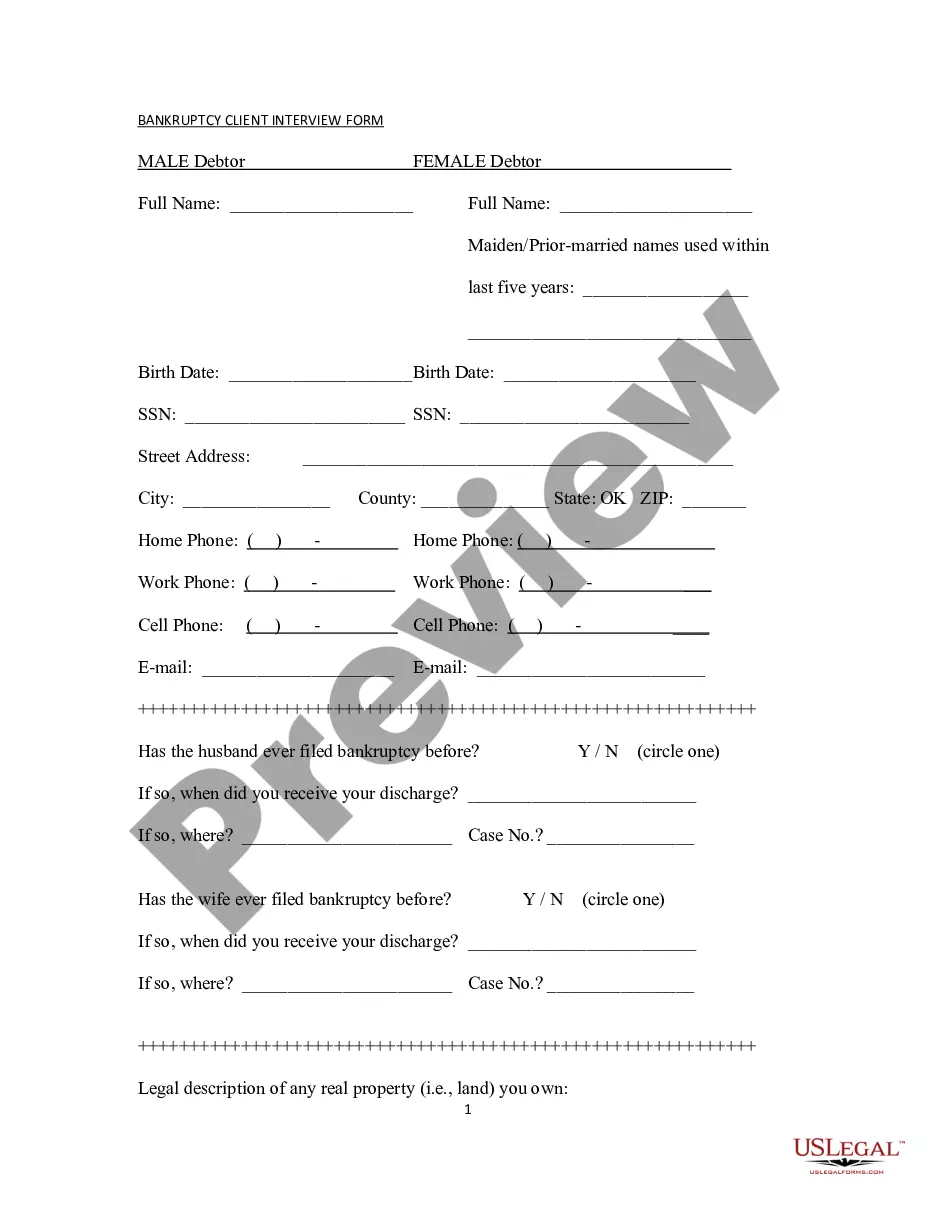
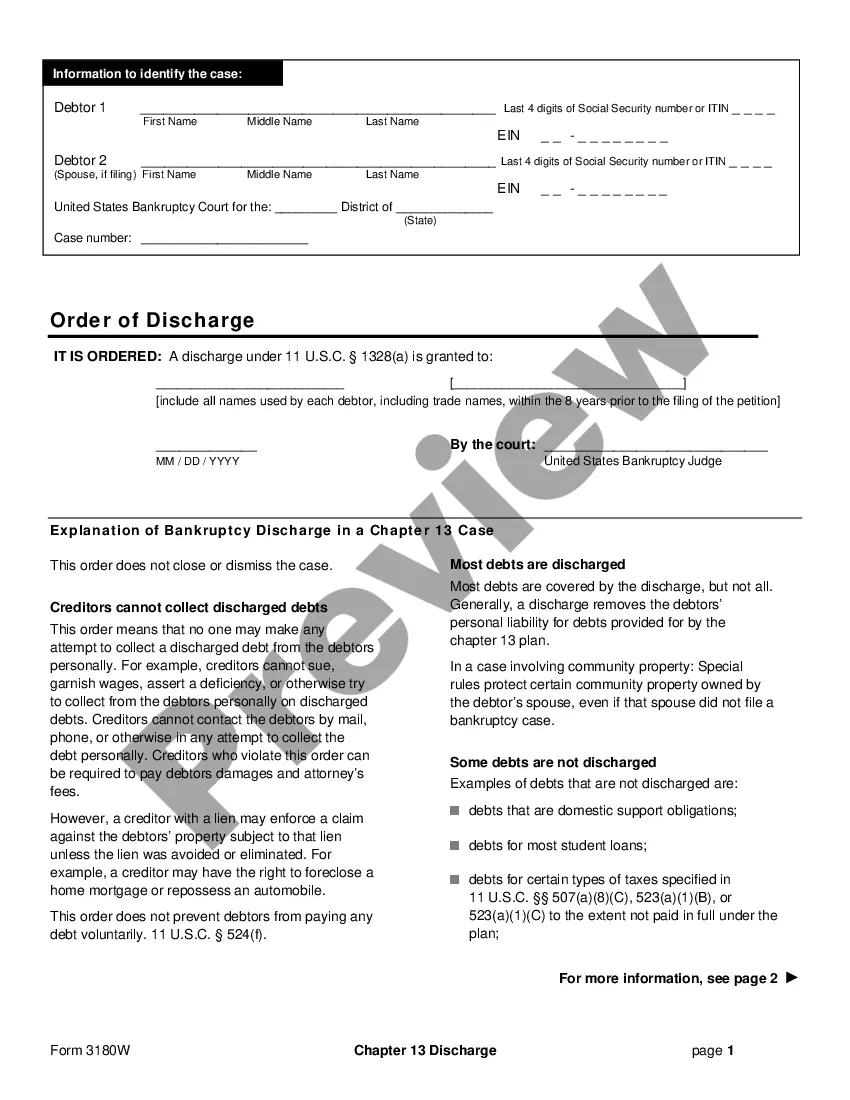
- Guidelines and instructions for completing each form
Common use cases
This form package is ideal for individuals facing significant financial difficulties and considering bankruptcy as a solution. Use it when you are uncertain about how to navigate the bankruptcy process, whether you are seeking debt discharge under Chapter 7 or establishing a repayment plan under Chapter 13. It is recommended to use these forms if you are ready to take legal steps to address your debts and start fresh financially.
Who should use this form
- Individuals filing for Chapter 7 bankruptcy who cannot pay their debts.
- Individuals with a regular income considering Chapter 13 bankruptcy for debt repayment.
- Anyone in Tennessee seeking guidance and legal forms specific to bankruptcy filings.
- Individuals who prefer to self-file but may benefit from legal guidance.
Instructions for completing this form
- Determine your filing type: Review if you are filing for Chapter 7 or Chapter 13 based on your financial situation.
- Gather financial information: Collect details regarding your income, debts, and living expenses.
- Complete the forms: Fill out the required forms accurately, including the Chapter 7 Statement of Your Current Monthly Income or Chapter 13 repayment plan.
- List exempt property: If filing Chapter 7, complete Schedule C to identify any property you wish to exempt from liquidation.
- File with the court: Submit your completed forms to the bankruptcy court along with any required fees.
Is notarization required?
Notarization is not commonly needed for this form. However, certain documents or local rules may make it necessary. Our notarization service, powered by Notarize, allows you to finalize it securely online anytime, day or night.
Get your form ready online
Our built-in tools help you complete, sign, share, and store your documents in one place.
Make edits, fill in missing information, and update formatting in US Legal Forms—just like you would in MS Word.
Download a copy, print it, send it by email, or mail it via USPS—whatever works best for your next step.
Sign and collect signatures with our SignNow integration. Send to multiple recipients, set reminders, and more. Go Premium to unlock E-Sign.
If this form requires notarization, complete it online through a secure video call—no need to meet a notary in person or wait for an appointment.
We protect your documents and personal data by following strict security and privacy standards.

Make edits, fill in missing information, and update formatting in US Legal Forms—just like you would in MS Word.

Download a copy, print it, send it by email, or mail it via USPS—whatever works best for your next step.

Sign and collect signatures with our SignNow integration. Send to multiple recipients, set reminders, and more. Go Premium to unlock E-Sign.

If this form requires notarization, complete it online through a secure video call—no need to meet a notary in person or wait for an appointment.

We protect your documents and personal data by following strict security and privacy standards.
Common mistakes
- Failing to provide accurate income details, leading to denial of discharge.
- Missing deadlines for filing necessary forms with the court.
- Not listing all debts or exempt property, which can impact the outcome.
- Choosing the wrong chapter based on individual circumstances.
Benefits of using this form online
- Convenience of downloading and completing forms at your own pace.
- Editability, allowing you to make changes easily before final submission.
- Access to detailed instructions and resources that guide you through the process.
- Reliable and up-to-date forms that comply with Tennessee state law.
Looking for another form?


Form popularity
FAQ
Make nonexempt property available to the trustee. Handle any reaffirmed debts. If you have debts that won't be affected by your bankruptcy filing, such as back taxes or child support obligations, you should continue making payments on those debts. Wait for creditors to file challenges.
In this case, the automatic stay will last only 30 days unless you, your case trustee, the U.S. trustee, or your creditor request that the stay remain in effect, and you can prove good faith (e.g., you followed all bankruptcy rules and did not commit fraud) in your most recent filing.
The automatic stay goes into effect for only 30 days after you file bankruptcy. Two or more previous bankruptcy cases dismissed within the past year.
Your creditors have 60 days from the date of your initial meeting of creditors to object to your discharge. If no creditors object and you've completed all other requirements (such as filing your certificate of debtor education), then you'll receive your discharge after the deadline for filing objections passes.
The Chapter 7 meeting of creditors (also called the 341 hearing) is a meeting at which the bankruptcy trustee and your creditors get to ask you questions under oath about your bankruptcy petition and the documents you're required to provide the trustee.
Assuming that everything goes according to schedule, you can expect to receive your bankruptcy discharge (the court order that wipes out your debts) about 60 days after your 341 meeting of creditors hearing, plus a few days for mailing.
In most cases, creditors rarely appear at the meeting of creditors. The meeting of creditors (also called the 341 hearing) is a mandatory hearing almost all bankruptcy debtors must attend.But in most cases, creditors rarely attend 341 hearings.
If the court grants a creditor or trustee's objection to a debt discharge, you'll remain responsible for paying the debt.Interested parties such as creditors or the trustee still have time to object to your bankruptcy discharge after your initial hearing.
When you file for Chapter 7 or Chapter 13 bankruptcy, the automatic stay immediately goes into effect. The automatic stay prohibits most creditors from continuing with collection activities, which can provide welcome relief to debtors as well the opportunity to regroup during bankruptcy.