Tennessee Assignment of Lease and Rent from Borrower to Lender
About this form
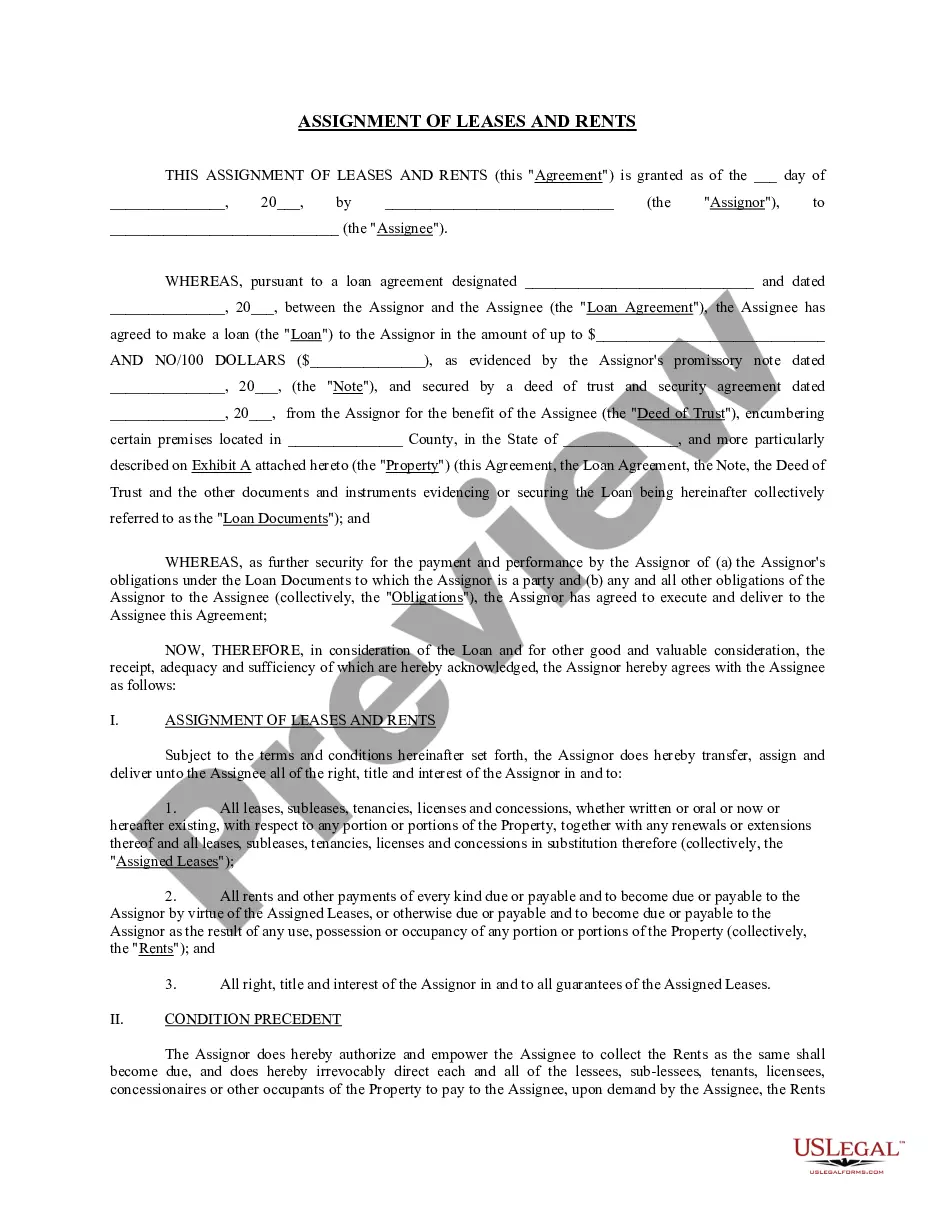
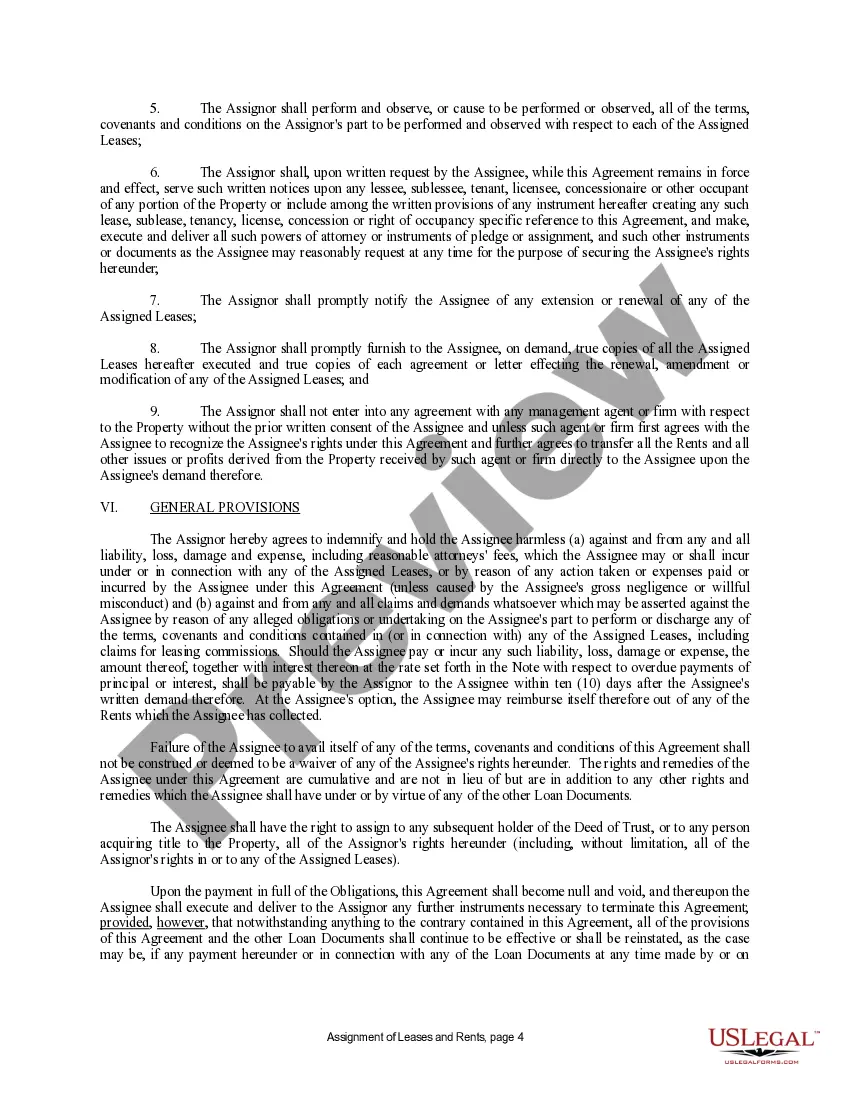
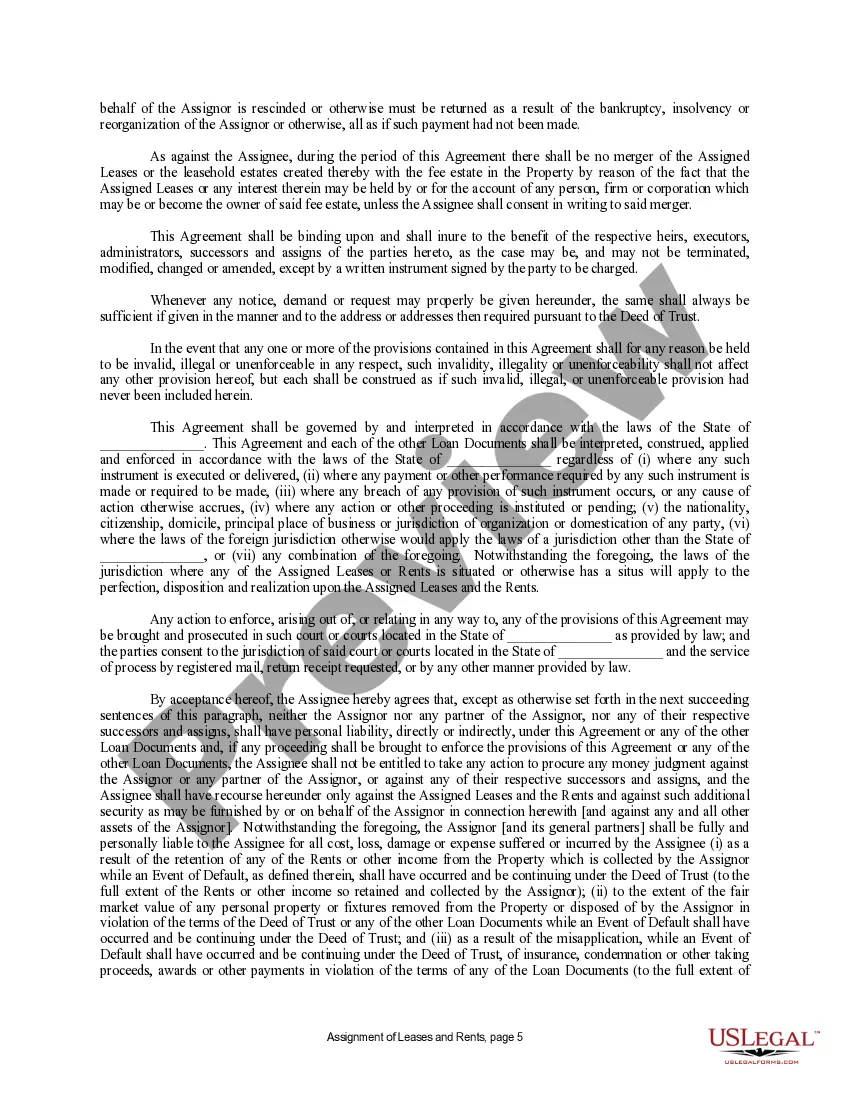
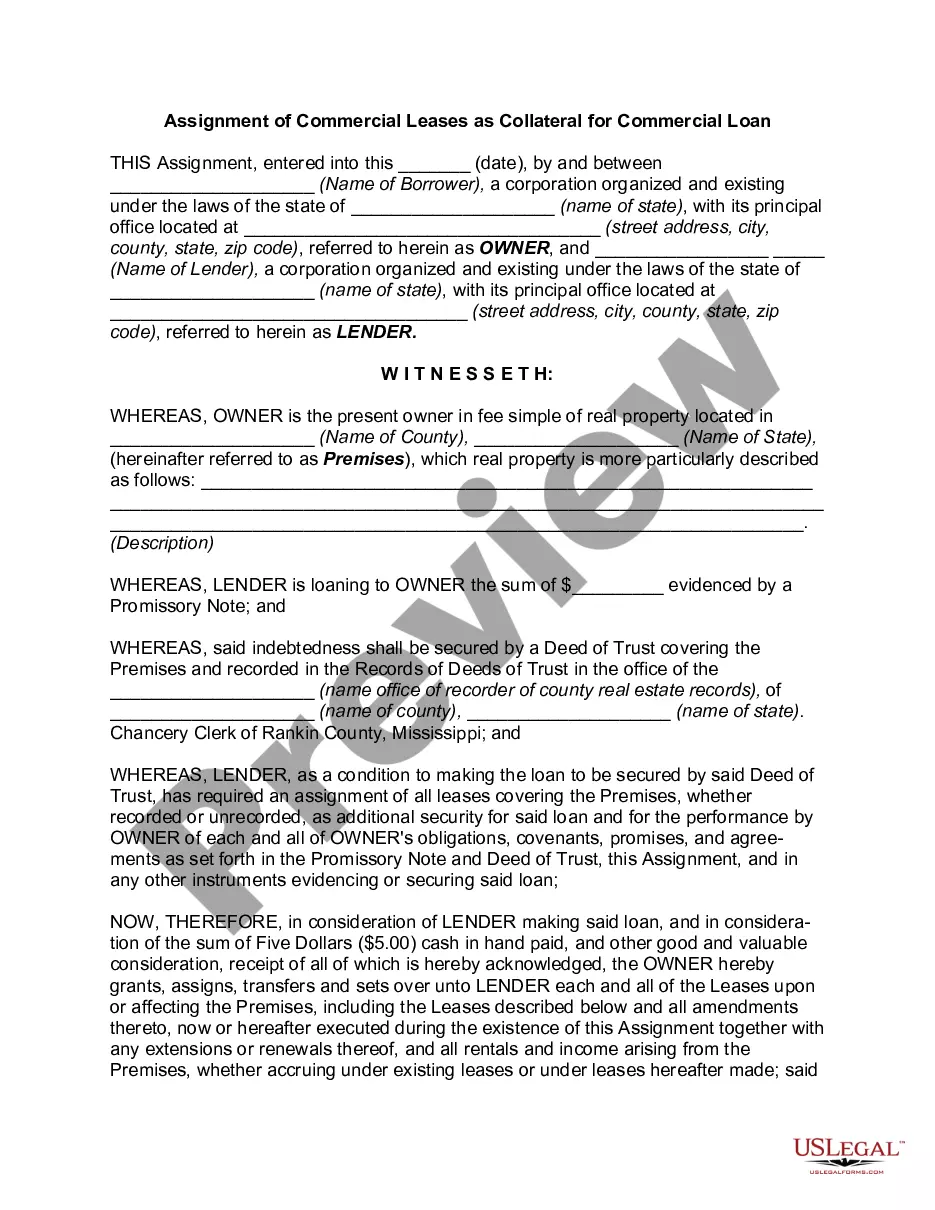
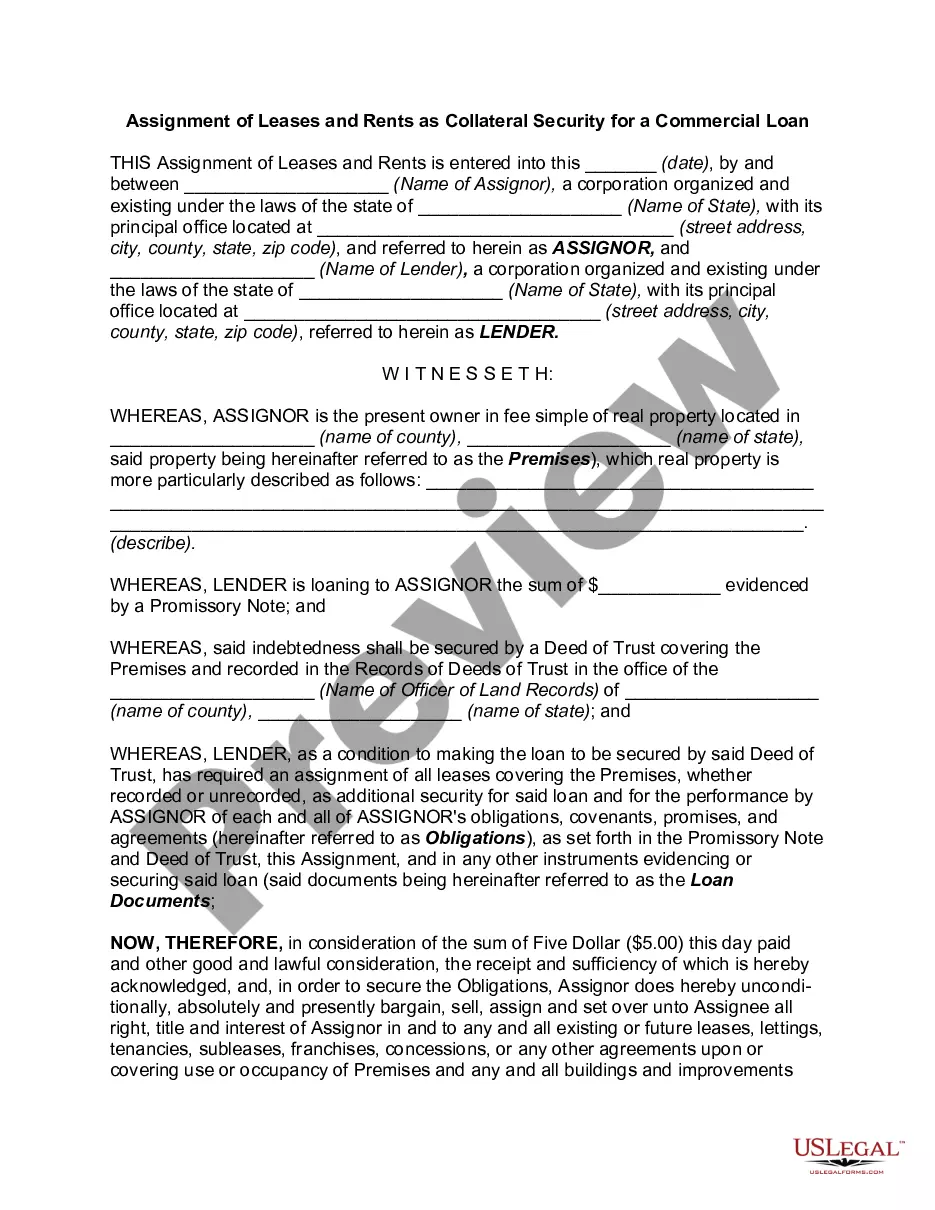
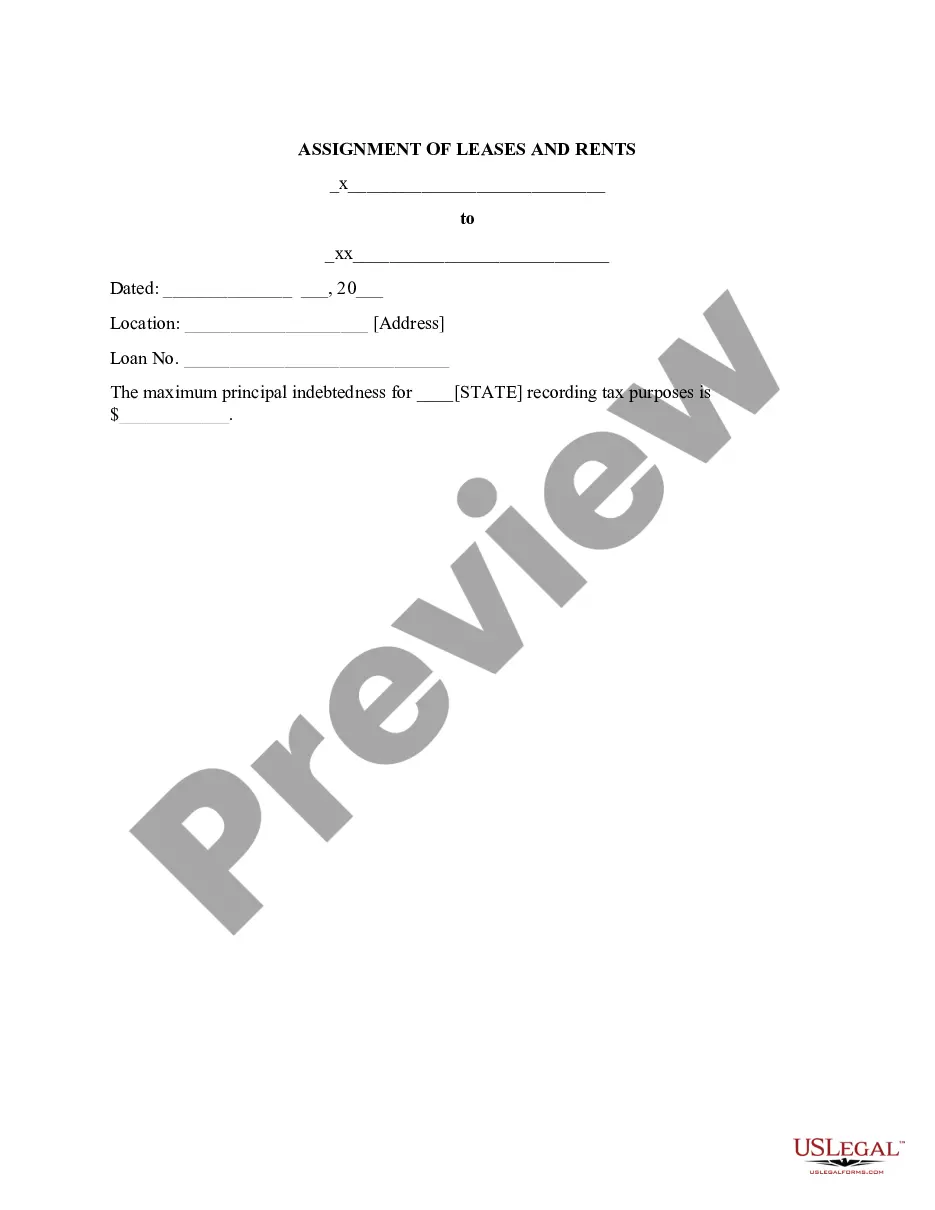
The Assignment of Lease and Rent from Borrower to Lender is a legal document that allows a borrower (the Assignor) to transfer their rights to lease agreements and rental income to a lender (the Assignee). This assignment serves as a form of security for a loan provided by the lender to the borrower, ensuring that the lender has a claim to the lease payments in case of default. This form is distinct from a lease agreement, as it specifically addresses the assignment of rental income rather than the lease itself.
Main sections of this form
- Identification of the Assignor and Assignee
- Details of the loan being secured by the lease and rent assignment
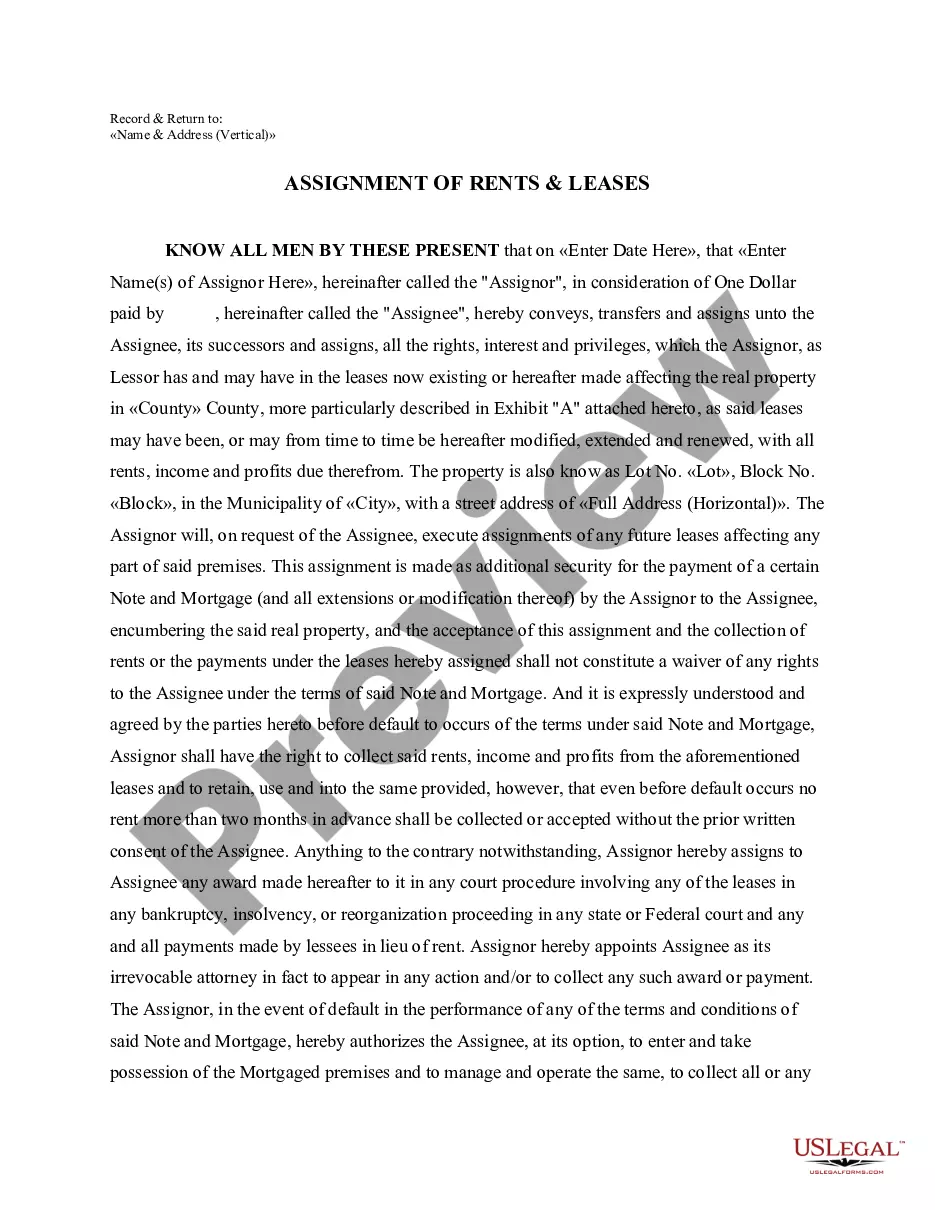
- Transfer of any existing leases and rents to the Assignee
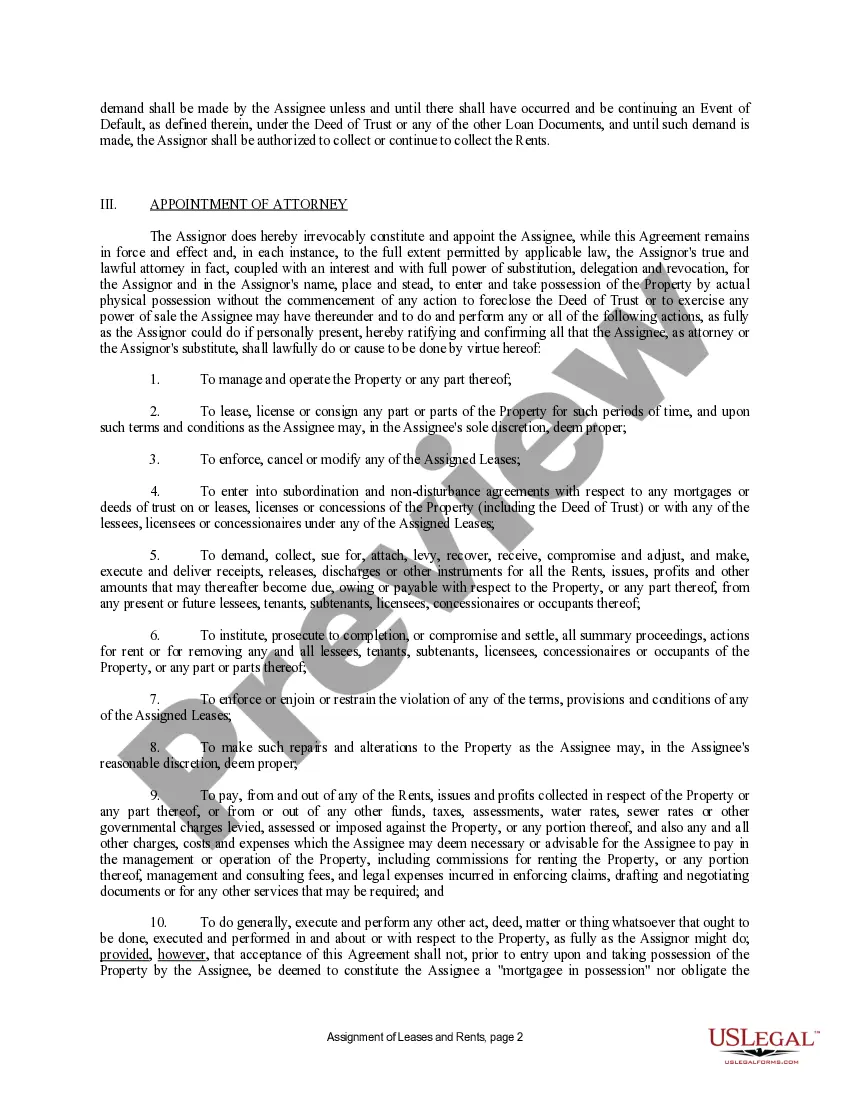
- Conditions for the Assignee to collect rents and manage the property
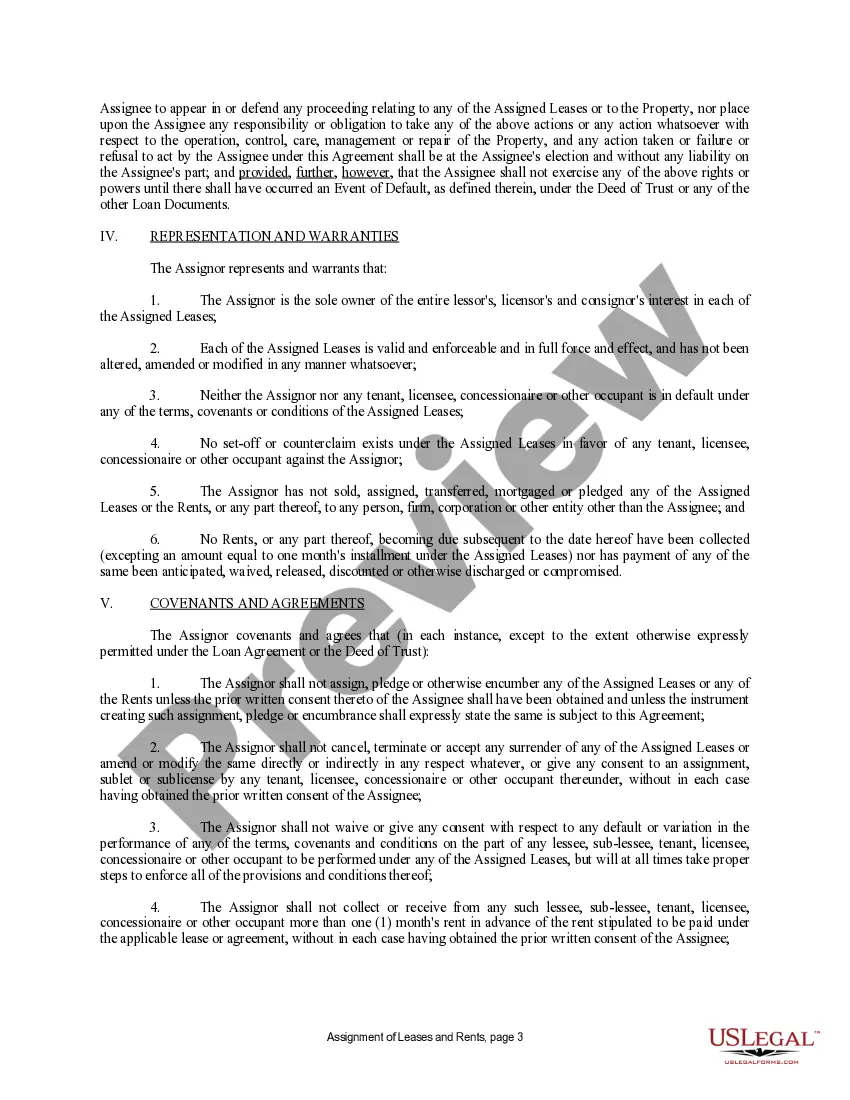
- Representations and warranties by the Assignor regarding the leases
- Covenants prohibiting the Assignor from making changes without consent from the Assignee

When to use this form
This form is typically used when a borrower is securing a loan using their rental income as collateral. It is appropriate in scenarios where the borrower has existing leases and wants to ensure that the lender has a direct claim to these rents for loan repayment. Common situations include property owners looking to refinance, secure a new mortgage, or require an influx of cash while risking default on their current loans.
Who this form is for
This form is suitable for:
- Property owners or landlords needing to assign rental income as collateral for a loan
- Lenders offering loans secured by rental income
- Borrowers looking to establish a formal agreement with lenders
- Real estate investors managing multiple properties with rental income
How to prepare this document
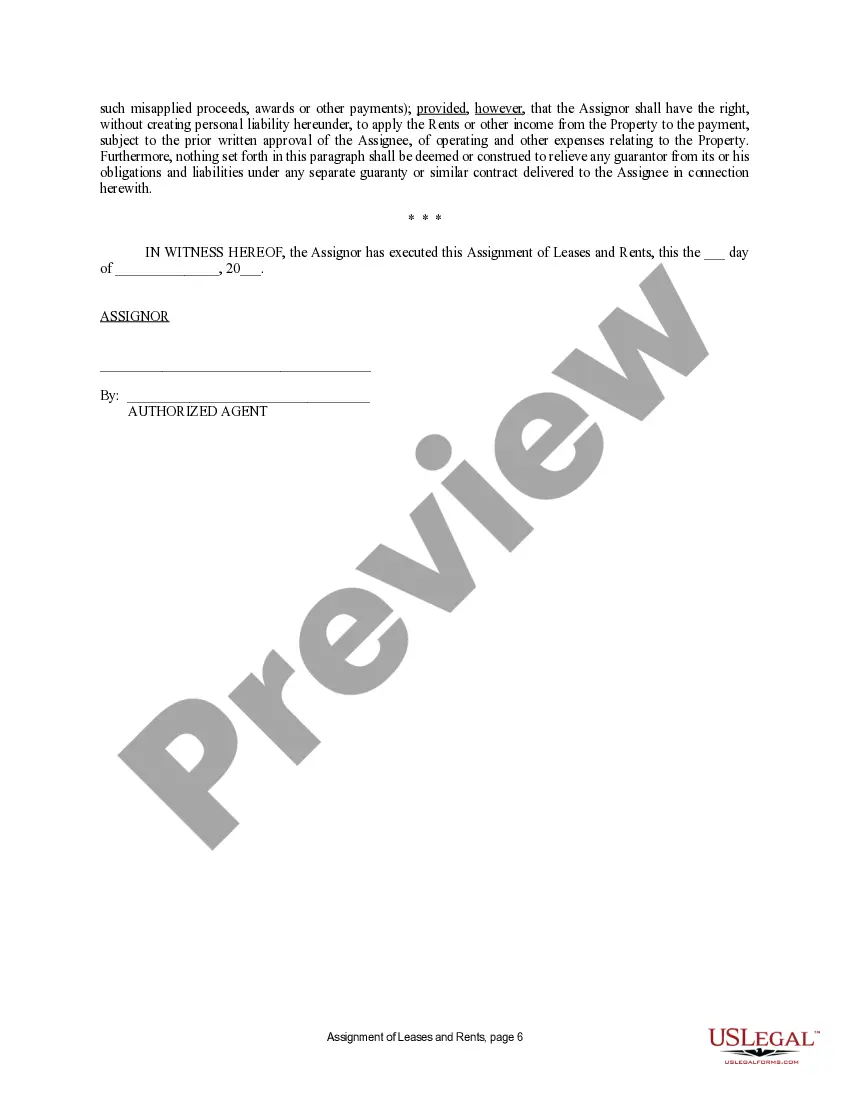
- Identify the parties involved by filling in the names of the Assignor and Assignee.
- Specify the amount of the loan and include any relevant loan agreement details.
- List the property being assigned, including its location and any legal descriptions.
- Complete all sections regarding the assignment of leases and rents, ensuring accurate details are provided.
- Sign and date the form in the appropriate areas, including notarization if required.
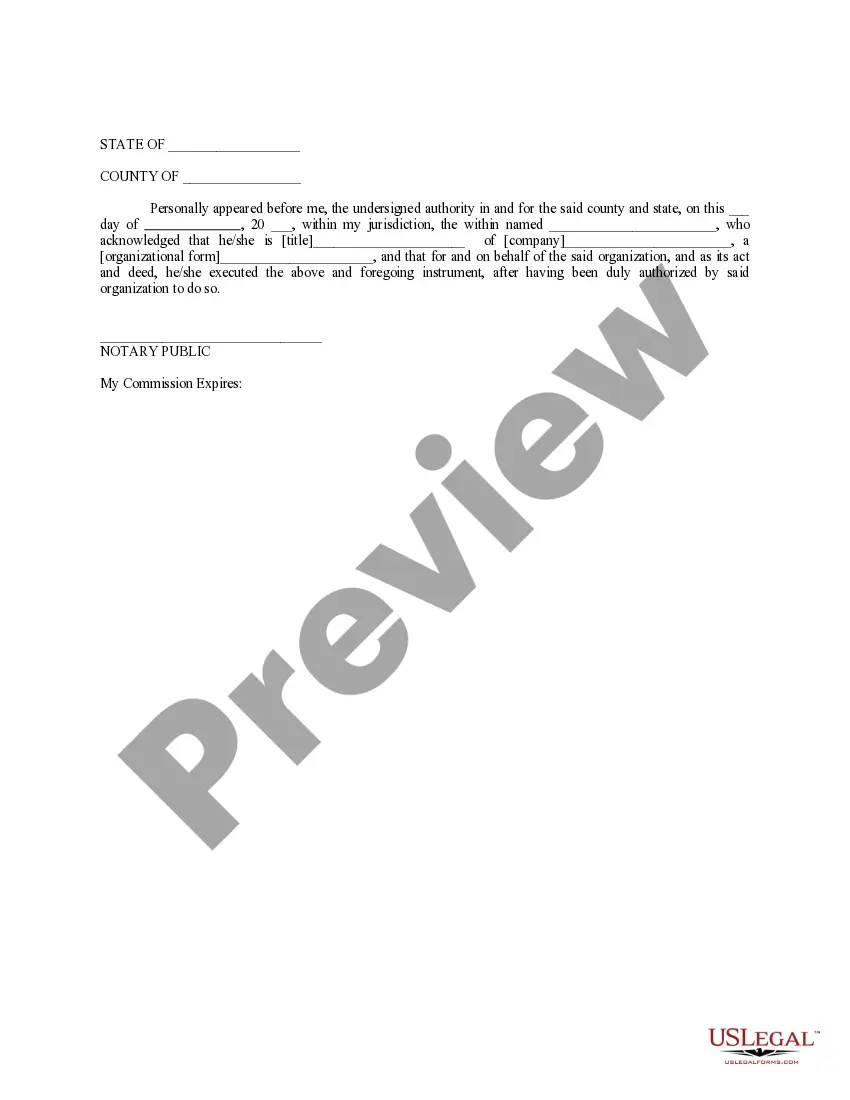
Is notarization required?
This form does not typically require notarization unless specified by local law. However, it is advisable to have the document notarized to ensure it is legally binding and accepted by all parties involved.
Get your form ready online
Our built-in tools help you complete, sign, share, and store your documents in one place.
Make edits, fill in missing information, and update formatting in US Legal Forms—just like you would in MS Word.
Download a copy, print it, send it by email, or mail it via USPS—whatever works best for your next step.
Sign and collect signatures with our SignNow integration. Send to multiple recipients, set reminders, and more. Go Premium to unlock E-Sign.
If this form requires notarization, complete it online through a secure video call—no need to meet a notary in person or wait for an appointment.
We protect your documents and personal data by following strict security and privacy standards.

Make edits, fill in missing information, and update formatting in US Legal Forms—just like you would in MS Word.

Download a copy, print it, send it by email, or mail it via USPS—whatever works best for your next step.

Sign and collect signatures with our SignNow integration. Send to multiple recipients, set reminders, and more. Go Premium to unlock E-Sign.

If this form requires notarization, complete it online through a secure video call—no need to meet a notary in person or wait for an appointment.

We protect your documents and personal data by following strict security and privacy standards.
Mistakes to watch out for
- Omitting important details about the loan and property description.
- Failing to have the form notarized when required by state law.
- Not ensuring all parties properly sign and date the form.
- Assuming prior verbal agreements are sufficient without documentation.
- Not consulting a legal professional if unsure about the terms.
Advantages of online completion
- Convenience of completing the form from anywhere with internet access.
- Editability ensures you can easily revise details before finalizing.
- Reliability of using professionally drafted forms created by licensed attorneys.
- Access to templates that comply with current legal standards.
- Time-saving compared to drafting a document from scratch.
Looking for another form?

Form popularity
FAQ
The landlord's lawyer usually prepares the agreement. However, the outgoing tenant or the incoming tenant pays these costs, not the landlord.
The difference between assignment and transfer is that assign means it's legal to transfer property or a legal right from one person to another, while transfer means it's legal to arrange for something to be controlled by or officially belong to another person.
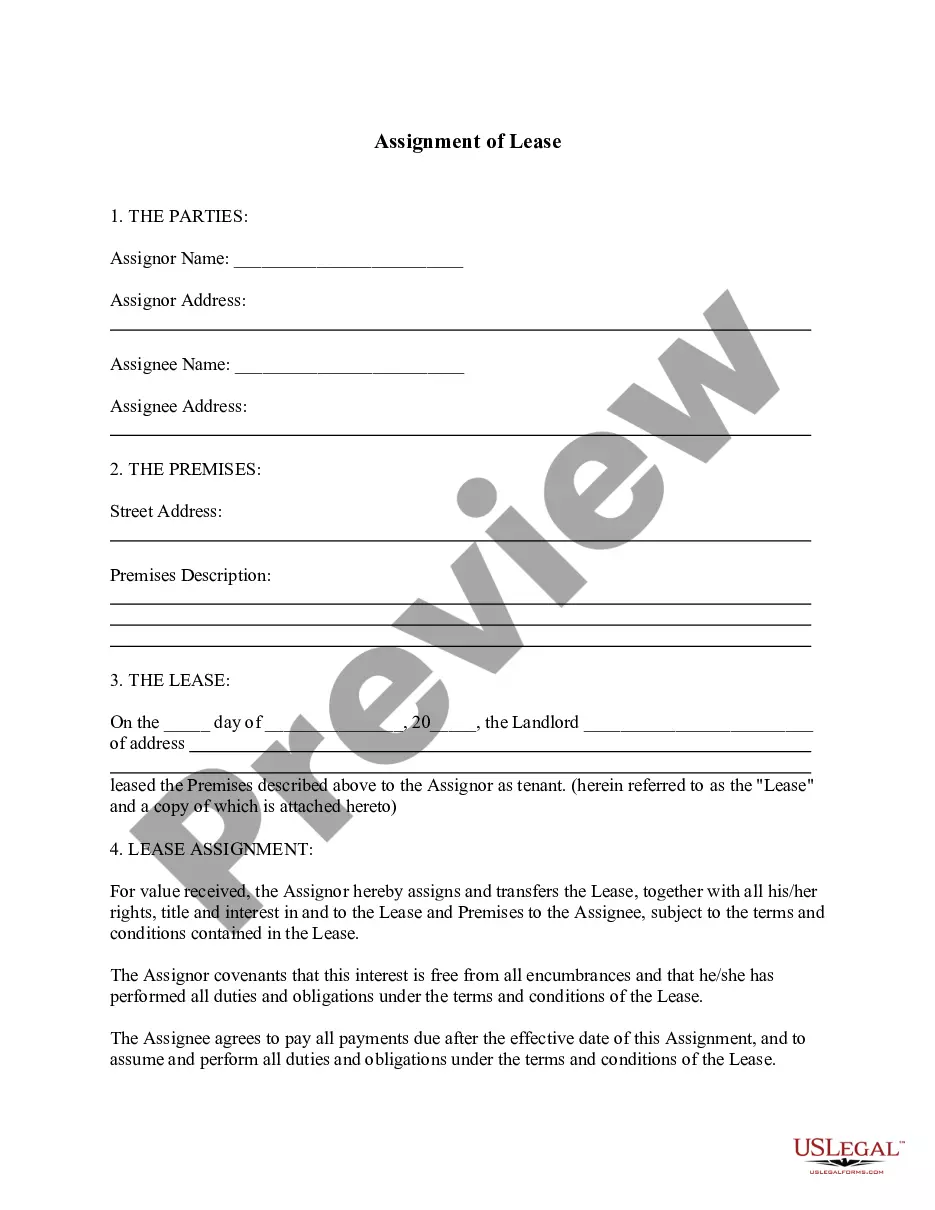
An assignment of a lease is effectively selling the lease to a third party known as an assignee. The assignee will then take your place as the tenant and they will be responsible for complying with all of the tenant's obligations in the lease.
An assignment is the transfer of the a party's entire interest in a lease. When a tenant assigns its lease, the assignee takes over the tenant's obligations under the lease and deals directly with the landlord.A sublease is the transfer of all or a portion of the premises for less than the entire term of the lease.
Sometimes called Assignment of Leases, Rents and Profits or simply Assignment of Rents, this is a document attached to a mortgage loan agreement which entitles the lender to any income (from leases, rents, etc.) derived from the property once the owner defaults on the loan.
Simply put, it is a transfer of an existing lease by the current tenant to a new tenant with the consent of the landlord.The Assignee is the crucial factor that makes Assignment work. He or it is the newcomer to whom the existing lease will be assigned or passed or transferred to.
If the lease is silent on the point, an assignment of part will be permitted.
This might include financial statements, business history and professional references; and. there is an agreement about who is liable for the costs of the deed of assignment. The landlord's lawyer usually prepares the agreement. However, the outgoing tenant or the incoming tenant pays these costs, not the landlord.