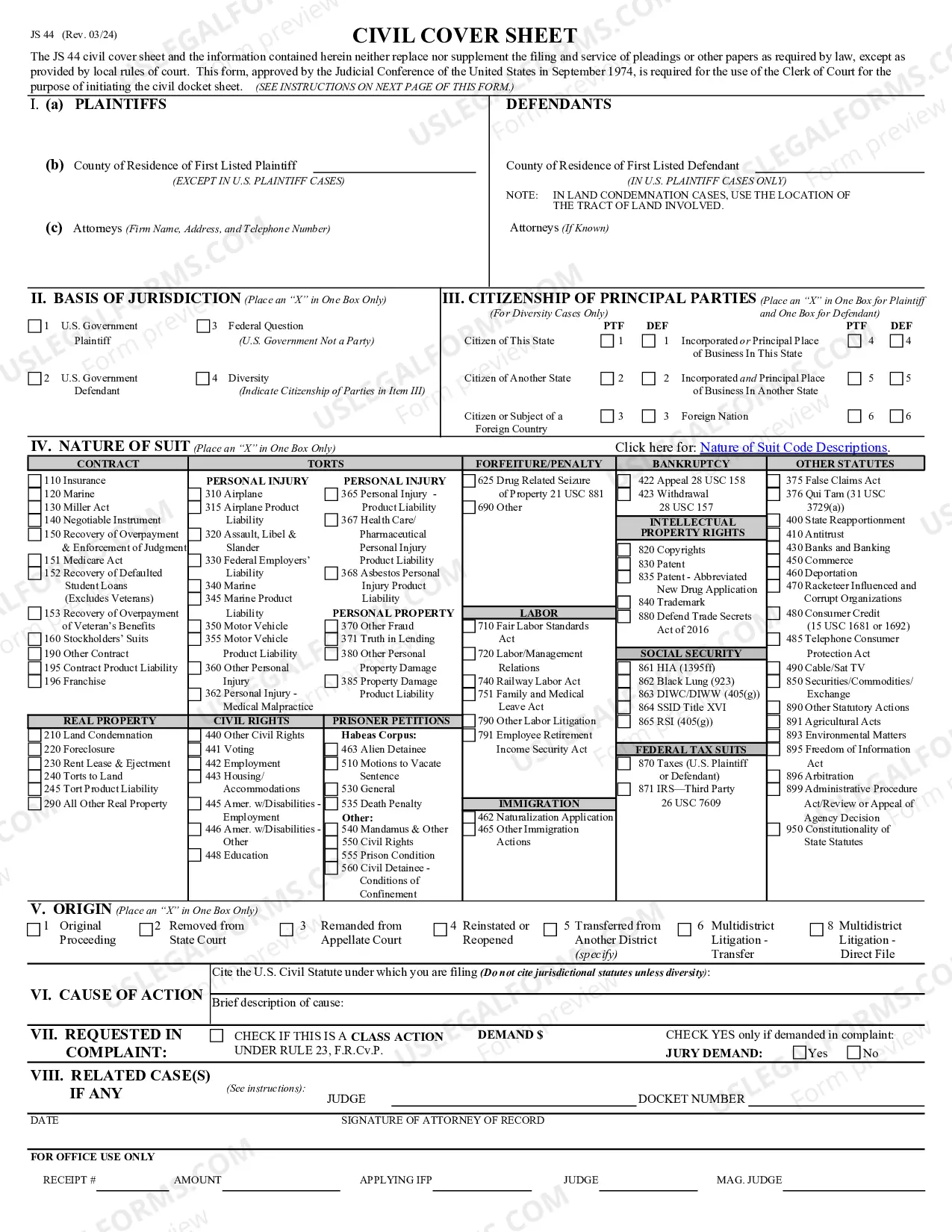
Tennessee Warranty Deed from Individual to Individual
Overview of this form
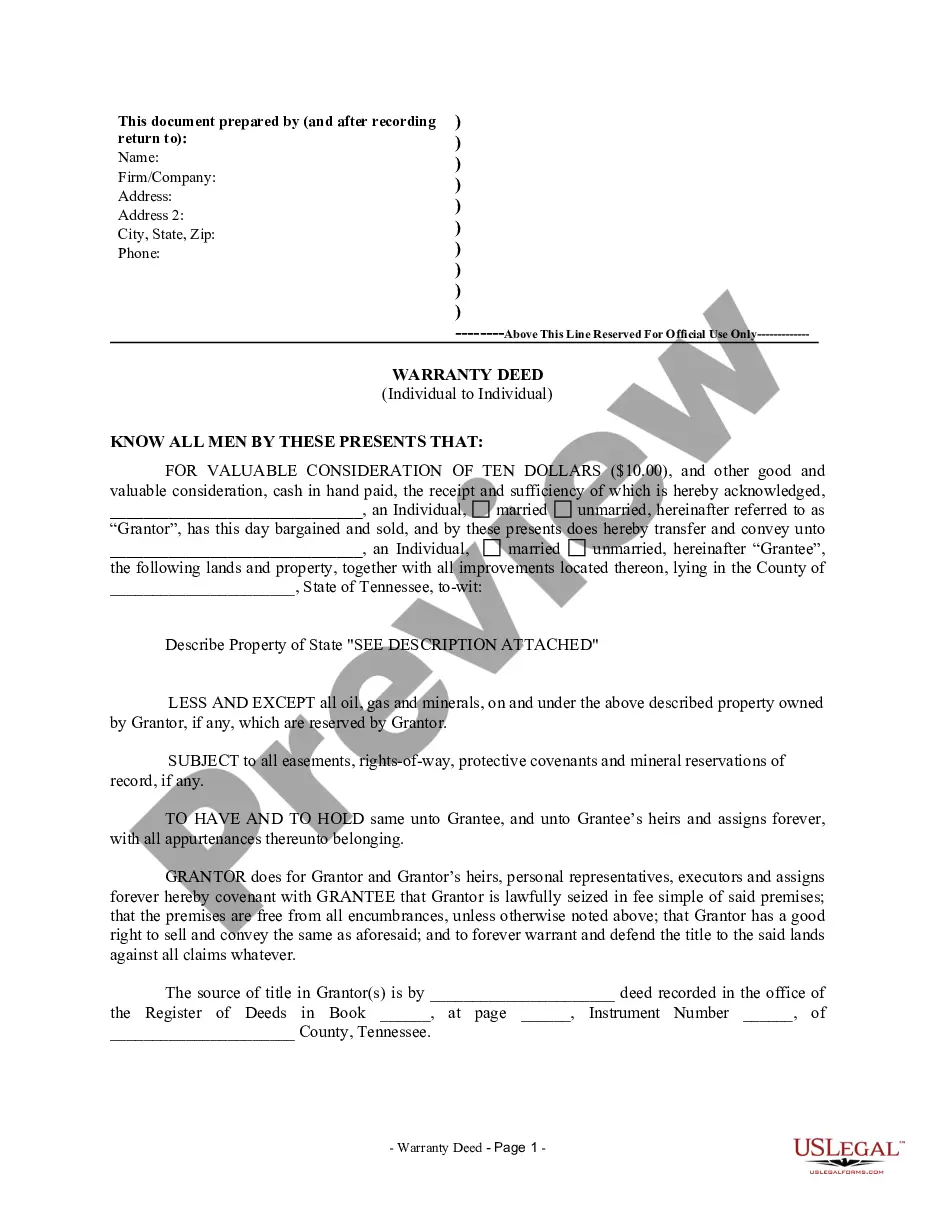
The Warranty Deed from Individual to Individual is a legal document used to transfer property ownership between two individuals. It offers a guarantee from the Grantor (the person conveying the property) that they hold clear title to the property, and it protects the Grantee (the person receiving the property) from future claims against that title. This form specifically includes a reservation of all oil, gas, and minerals beneath the property, which is an important distinction from other types of deeds.
Key parts of this document
- Description of the property being conveyed.
- Identification of the Grantor and Grantee.
- Clause specifying reservation of oil, gas, and minerals.
- Guarantee that the Grantor has legally clear title to the property.
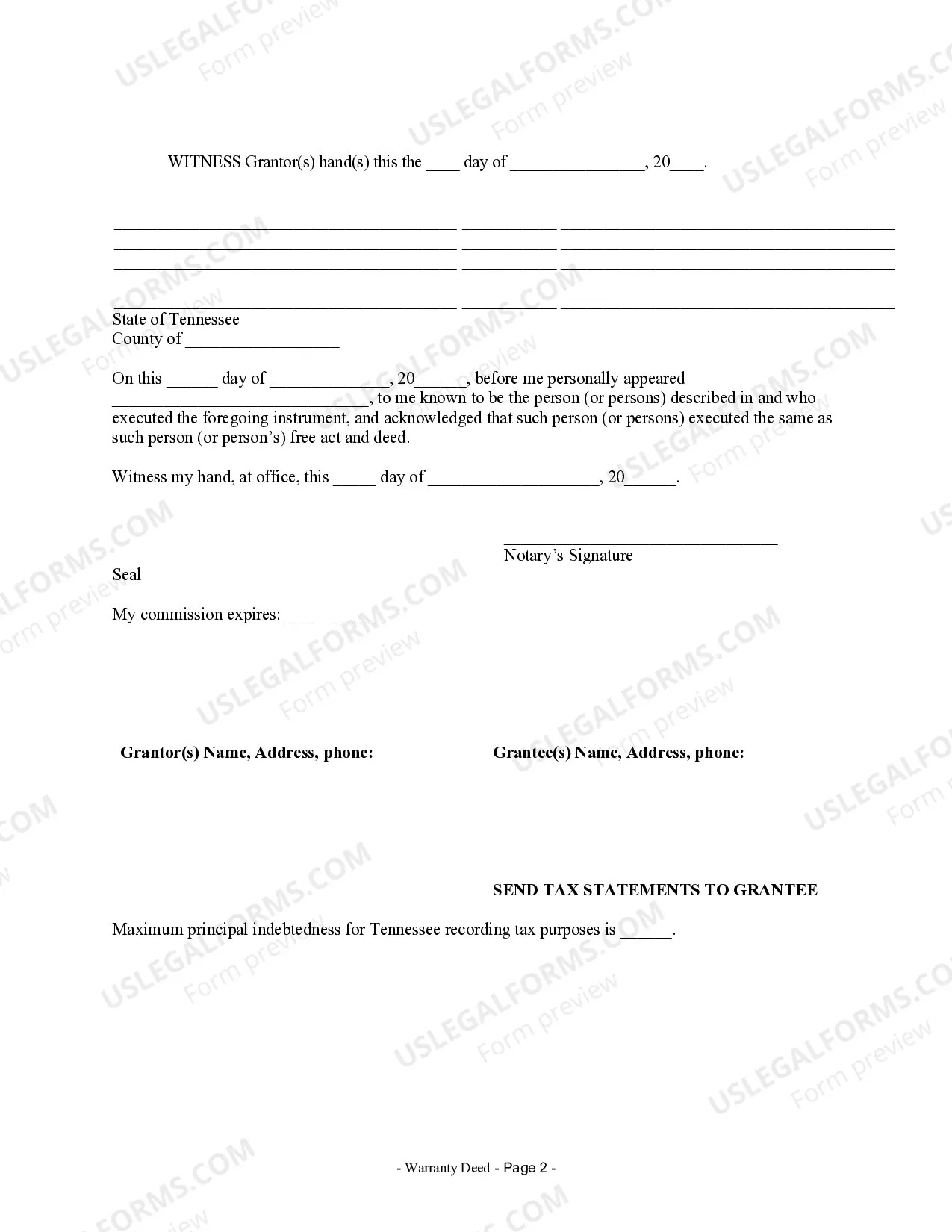
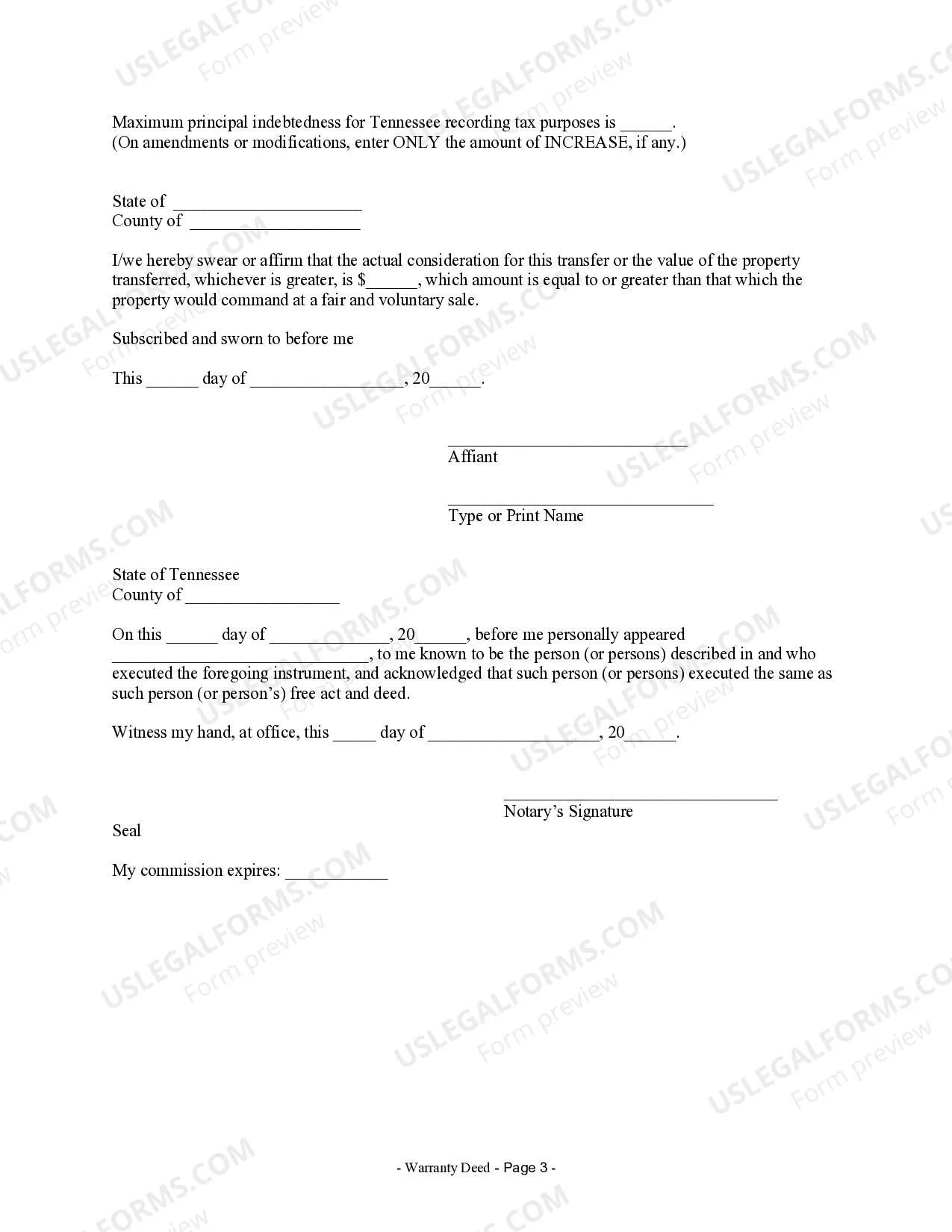
- Signatures of the Grantor and a notary public.
- Recording information for title verification.



When to use this document
This form is needed when an individual wishes to transfer property ownership to another individual without involving a third party. Common situations include selling or gifting real estate, passing property to a family member, or making a property transfer in a personal agreement. It is particularly useful when the Grantor wants to ensure that the Grantee receives clear title to the property being transferred.
Who this form is for
- Individuals transferring real property to another individual.
- Homeowners who wish to sell their property directly to a buyer.
- Parents wanting to gift property to their children.
- Anyone needing to formalize a personal property exchange without a real estate agent or attorney.
Completing this form step by step
- Identify the Grantor and Grantee by including their full names and contact information.
- Clearly describe the property being conveyed, including any attached descriptions.
- Specify any reservations for oil, gas, and minerals beneath the property.
- Have the Grantor sign and date the form in the presence of a notary public.
- Fill in the recording information including county, book, page, and instrument number.
Does this document require notarization?
Yes, this form must be notarized to be legally valid. Notarization ensures that the signatures on the document are legitimate and helps to prevent fraud. US Legal Forms provides an integrated online notarization service, available 24/7, allowing for secure video calls and ensuring legal equivalence without the need to travel.
Get your form ready online
Our built-in tools help you complete, sign, share, and store your documents in one place.
Make edits, fill in missing information, and update formatting in US Legal Forms—just like you would in MS Word.
Download a copy, print it, send it by email, or mail it via USPS—whatever works best for your next step.
Sign and collect signatures with our SignNow integration. Send to multiple recipients, set reminders, and more. Go Premium to unlock E-Sign.
If this form requires notarization, complete it online through a secure video call—no need to meet a notary in person or wait for an appointment.
We protect your documents and personal data by following strict security and privacy standards.

Make edits, fill in missing information, and update formatting in US Legal Forms—just like you would in MS Word.

Download a copy, print it, send it by email, or mail it via USPS—whatever works best for your next step.

Sign and collect signatures with our SignNow integration. Send to multiple recipients, set reminders, and more. Go Premium to unlock E-Sign.

If this form requires notarization, complete it online through a secure video call—no need to meet a notary in person or wait for an appointment.

We protect your documents and personal data by following strict security and privacy standards.
Mistakes to watch out for
- Failing to accurately describe the property.
- Not including the reservation of oil, gas, and minerals if applicable.
- Omitting signatures or notary acknowledgment.
- Using incorrect recording information for the property.
Why complete this form online
- Convenient access to legal document templates anytime and anywhere.
- Editable forms that allow customization to meet specific needs.
- Preparation by licensed attorneys ensures compliance with legal standards.
Key takeaways
- This form is crucial for a legal property transfer between individuals.
- It includes protections for the Grantee regarding the property title.
- Accurate completion and notarization are essential for legality.
- Potential users include anyone involved in such a personal property transfer.
Looking for another form?






Form popularity
FAQ
The Tennessee general warranty deed is a form that conveys real estate with a guarantee from a Seller to a Buyer that the title shall be free and clear of all liens and encumbrances (fee simple).
When recorded, a special warranty deed conveys an interest in real property to the named grantee with limited warranties of title. In Tennessee, special warranty deeds are statutory.This means that the deed will not protect the grantee against title issues that arose prior to the time the grantor acquired title.
The mortgage company usually prepares this deed as part of the loan package and delivers it to the title company for you to sign at closing. The title company is commonly the trustee to the deed and holds legal title to the property until the loan gets fully repaid.
A warranty deed is a higher level of protection produced by the seller upon the real estate closing. It includes a full legal description of the property, and confirms the title is clear and free from all liens, encumbrances, or title defects. Most property sales make use of a warranty deed.Our title agents can help.
Key Takeaways. A property deed is a legal document that transfers the ownership of real estate from a seller to a buyer.General warranty deeds give the grantee the most protection, special warranty deeds give the grantee more limited protection, and a quitclaim deed gives the grantee the least protection under the law
In order to convey any real property or an interest in property in Tennessee, the deed must be in writing, acknowledged by the grantor, and registered in the county where the property is located. The Annotated Code of Tennessee allows for the transfer of real property through the usage of a variety of deeds.
A warranty deed, also known as a general warranty deed, is a legal real estate document between the seller (grantor) and the buyer (grantee). The deed protects the buyer by pledging that the seller holds clear title to the property and there are no encumbrances, outstanding liens, or mortgages against it.
Tennessee deed forms convey interest in property from one party (the Grantor) to another (the Grantee). The documents can be prepared by anyone as long as the required information is written in the deed as outlined in § 66-5-103.
Adding someone to your house deed requires the filing of a legal form known as a quitclaim deed. When executed and notarized, the quitclaim deed legally overrides the current deed to your home. By filing the quitclaim deed, you can add someone to the title of your home, in effect transferring a share of ownership.