Tennessee Seller's Disclosure of Financing Terms for Residential Property in connection with Contract or Agreement for Deed a/k/a Land Contract
Understanding this form
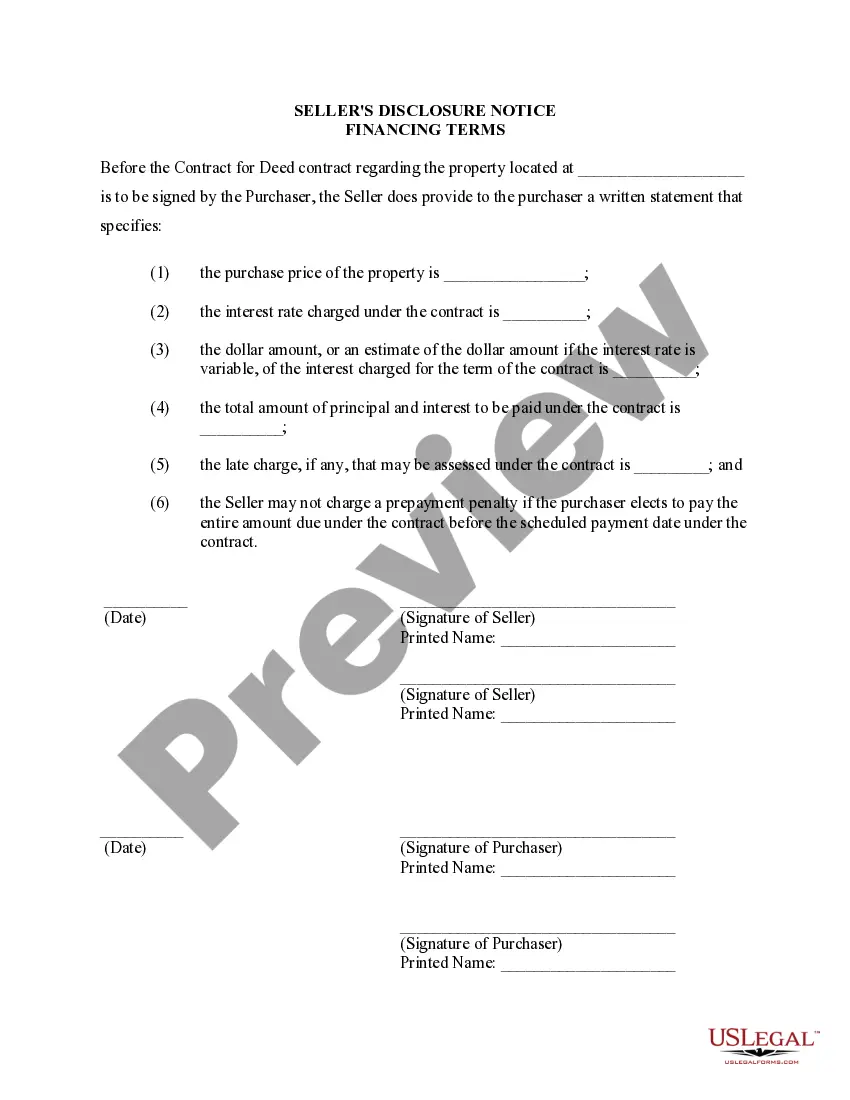
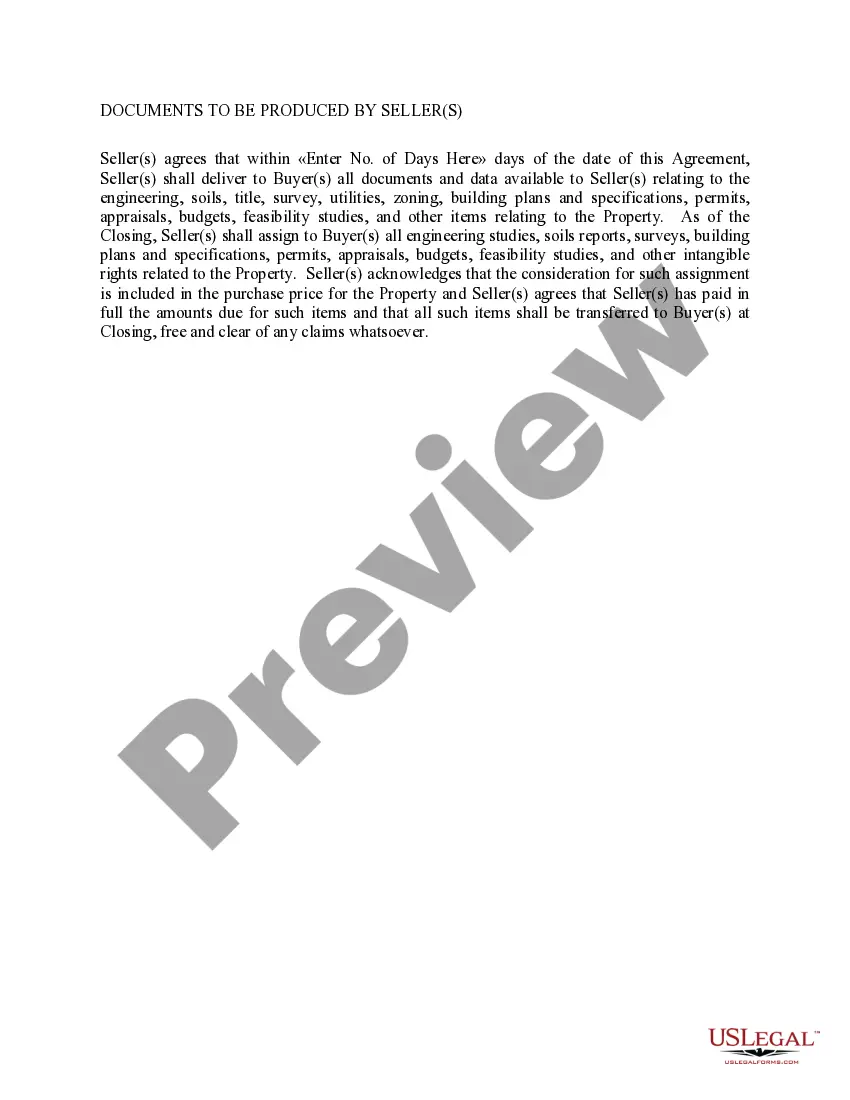
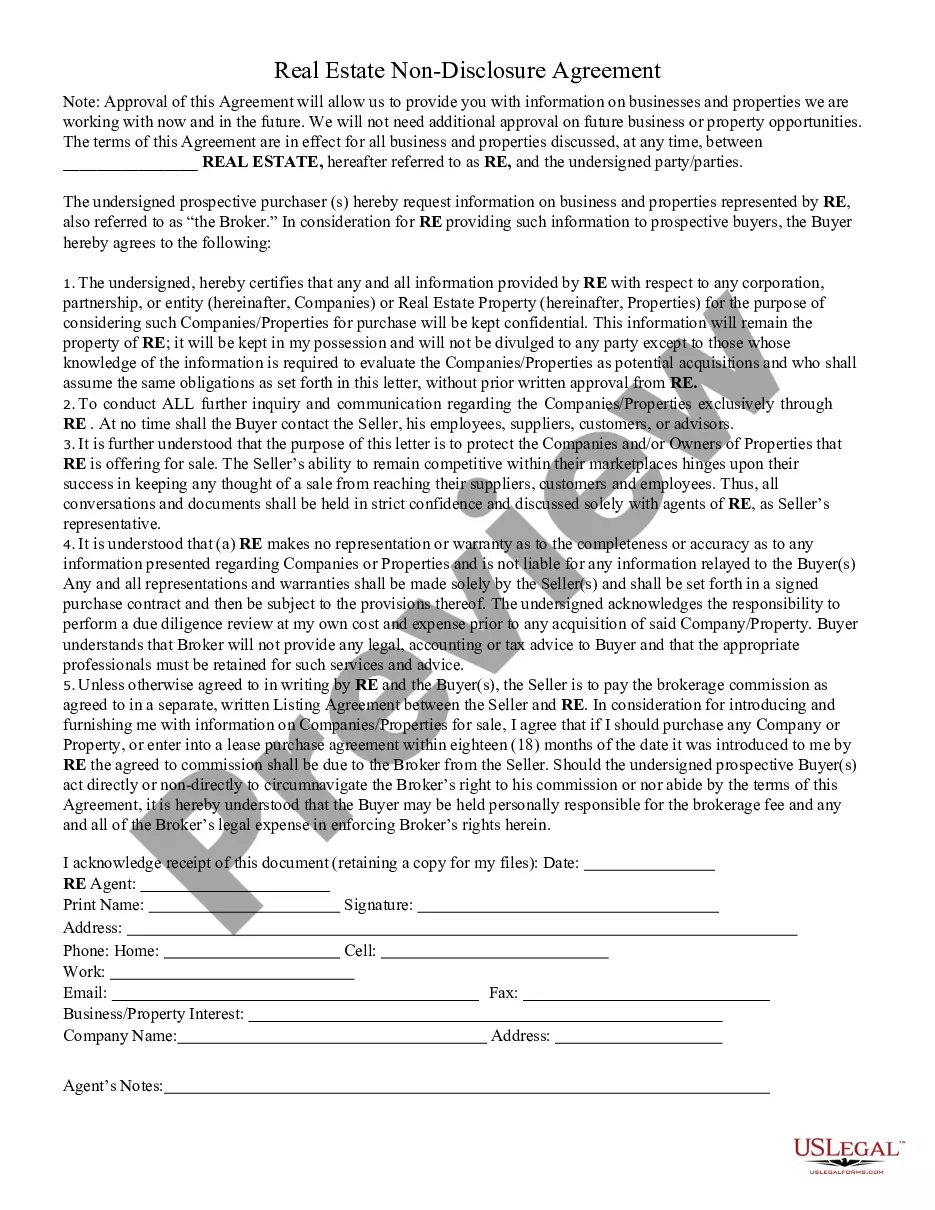
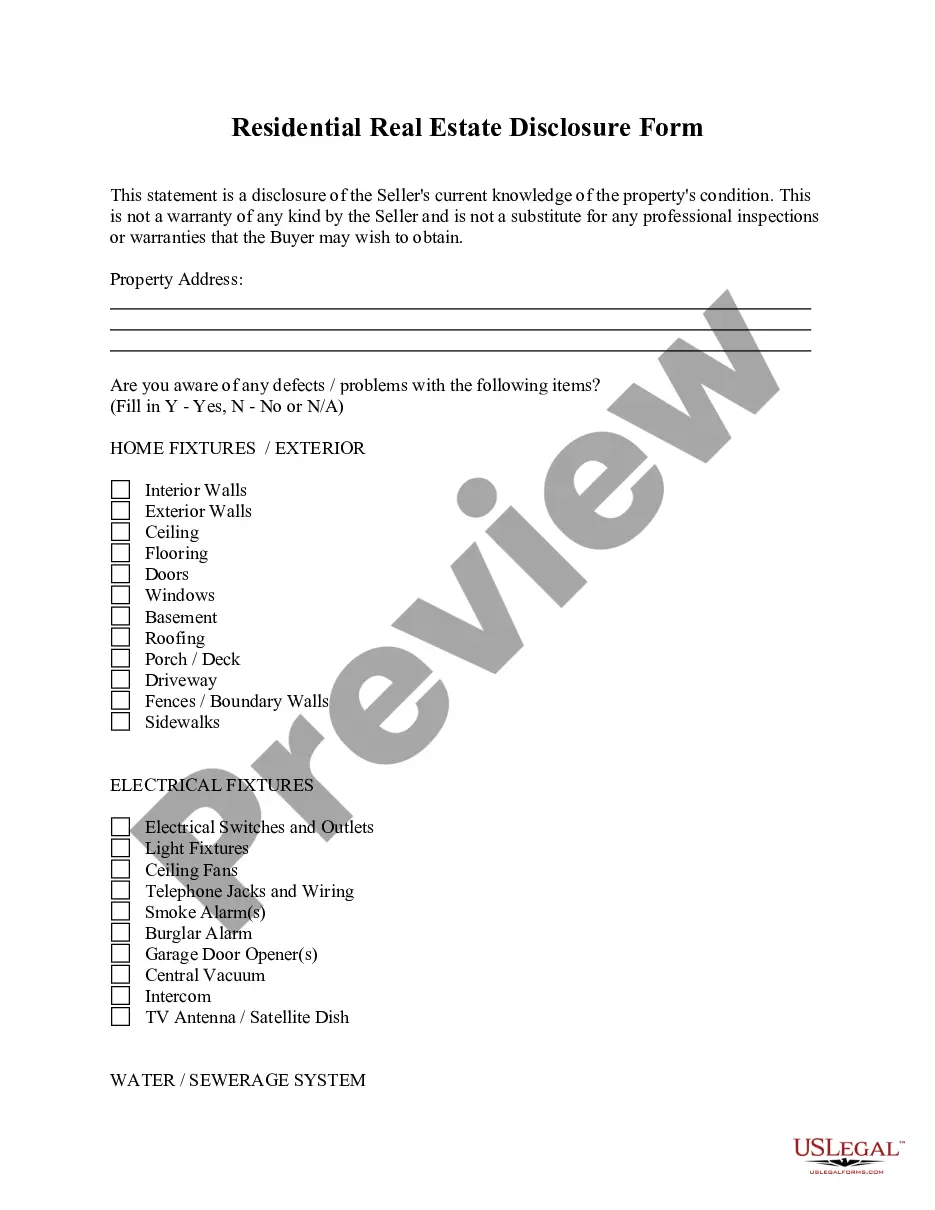
The Seller's Disclosure of Financing Terms for Residential Property serves as an official notice to the purchaser regarding the financial terms associated with a property sale under a contract for deed, also known as a land contract. This form provides clarity on essential financing details, such as the purchase price and payment terms, ensuring that both parties understand their obligations in the transaction. Unlike other real estate forms, this document is specific to the financing arrangements agreed upon by the seller and the buyer.
Key components of this form
- Purchase price of the property.
- Interest rate charged under the contract.
- Total interest charged for the contract term.
- Total amount of principal and interest due under the contract.
- Any late charges applicable under the contract.
- Statement regarding prepayment penalties, if applicable.
Situations where this form applies
This form should be used when a seller and purchaser are finalizing a contract for deed, which is a unique financing option for purchasing residential property. It is essential to complete this document before signing the contract to ensure both parties understand the financial terms and obligations. Situations that may prompt the use of this form include private sales between individuals, or sales where traditional financing methods are not employed.
Who should use this form
This form is intended for:
- Property sellers engaging in a contract for deed.
- Buyers looking to understand the financing terms of their purchase.
- Real estate agents facilitating private sales.
- Individuals involved in the transaction who seek clarity on financial obligations.
Completing this form step by step
- Identify the property location and enter it in the designated field.
- Specify the purchase price of the property.
- Enter the applicable interest rate and total interest amount.
- Calculate and detail the total principal and interest payments to be made.
- Include any late charge amounts and terms regarding prepayment penalties.
- Ensure both the seller and purchaser sign and date the form.
Does this document require notarization?
This form does not typically require notarization unless specified by local law. Always check with a legal professional if you are unsure about the notarization requirements in your jurisdiction.
Get your form ready online
Our built-in tools help you complete, sign, share, and store your documents in one place.
Make edits, fill in missing information, and update formatting in US Legal Forms—just like you would in MS Word.
Download a copy, print it, send it by email, or mail it via USPS—whatever works best for your next step.
Sign and collect signatures with our SignNow integration. Send to multiple recipients, set reminders, and more. Go Premium to unlock E-Sign.
If this form requires notarization, complete it online through a secure video call—no need to meet a notary in person or wait for an appointment.
We protect your documents and personal data by following strict security and privacy standards.

Make edits, fill in missing information, and update formatting in US Legal Forms—just like you would in MS Word.

Download a copy, print it, send it by email, or mail it via USPS—whatever works best for your next step.

Sign and collect signatures with our SignNow integration. Send to multiple recipients, set reminders, and more. Go Premium to unlock E-Sign.

If this form requires notarization, complete it online through a secure video call—no need to meet a notary in person or wait for an appointment.

We protect your documents and personal data by following strict security and privacy standards.
Avoid these common issues
- Failing to accurately calculate the total interest and principal payments.
- Not providing the completed form before signing the contract.
- Omitting signatures or dates from the form.
- Forgetting to clarify terms regarding late charges or prepayment penalties.
Benefits of using this form online
- Convenient access to legal forms without the need for in-person visits.
- Editability allows users to customize the form to fit their specific transaction.
- Reliability featuring templates drafted by licensed attorneys.
- This form outlines essential financing terms and helps prevent disputes.
- Signing this document demonstrates mutual agreement on financial obligations.
- Incorporating clear terms is crucial for enforceability of the contract.
Summary of main points
- The Seller's Disclosure of Financing Terms ensures transparency in real estate transactions.
- It is vital for sellers to provide this document before signing a Contract for Deed.
- Correctly filling out this form protects both seller and purchaser interests.
Looking for another form?
Form popularity
FAQ
A contract for deed, also called a land contract or contract for sale, is a financing option for buyers who do not qualify for a mortgage loan to purchase property. In a contract for deed, the seller finances the purchase of the property, much like a mortgage company in a more traditional mortgage situation.
The Tennessee Residential Property Disclosure Act requires a seller of residential property which is covered by the Act to provide a potential purchaser of the property with a completed and signed disclosure form.Under the Act, a seller must disclose material defects of which the seller has knowledge.
Some states can hold a listing agent liable if they didn't disclose problems they saw in the home or that the seller discussed with the agent.Some states will strip agents of their licenses if they are caught being deceitful to make a sale.
What does Tennessee law say about disclosure? The Residential Property Disclosure Act in Tennessee Code Annotated § 66-5-201 to 210 requires most sellers of residential real estate to complete a disclosure statement. The disclosure statement lets the buyers know about the condition of the property.
You will need to include information about all appliances in the home, including which are included in the sale as well as whether they are operational. You will also need to disclose any room additions, damage, or neighborhood noise problems.
One such alternative is the contract for deed. In a contract for deed, the purchase of property is financed by the seller rather than a third-party lender such as a commercial bank or credit union.
Which of these transactions is exempt from the disclosure requirements of the Tennessee Residential Property Disclosure Act? A newly constructed home. Newly constructed homes are exempt from disclosure requirements, although a builder warranty must be provided.
A contract for deed is a legal agreement for the sale of property in which a buyer takes possession and makes payments directly to the seller, but the seller holds the title until the full payment is made.
Other benefits include: no loan qualifying, low or flexible down payment, favorable interest rates and flexible terms, and a quicker settlement. The biggest risk when buying a home contract for deed is that you really don?t have a legal claim to the property until you have paid off the entire purchase price.