South Dakota Complex Will with Credit Shelter Marital Trust for Large Estates
About this form
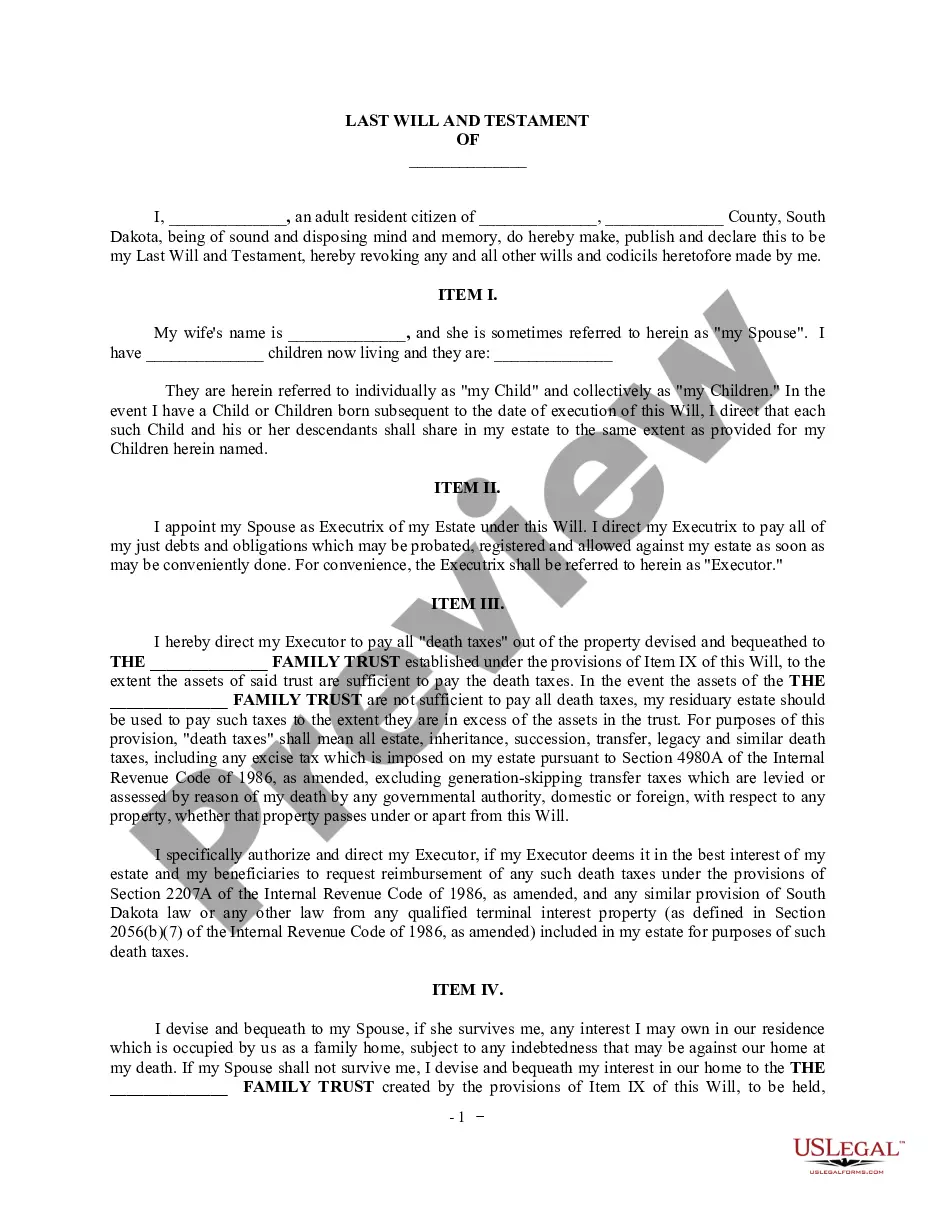
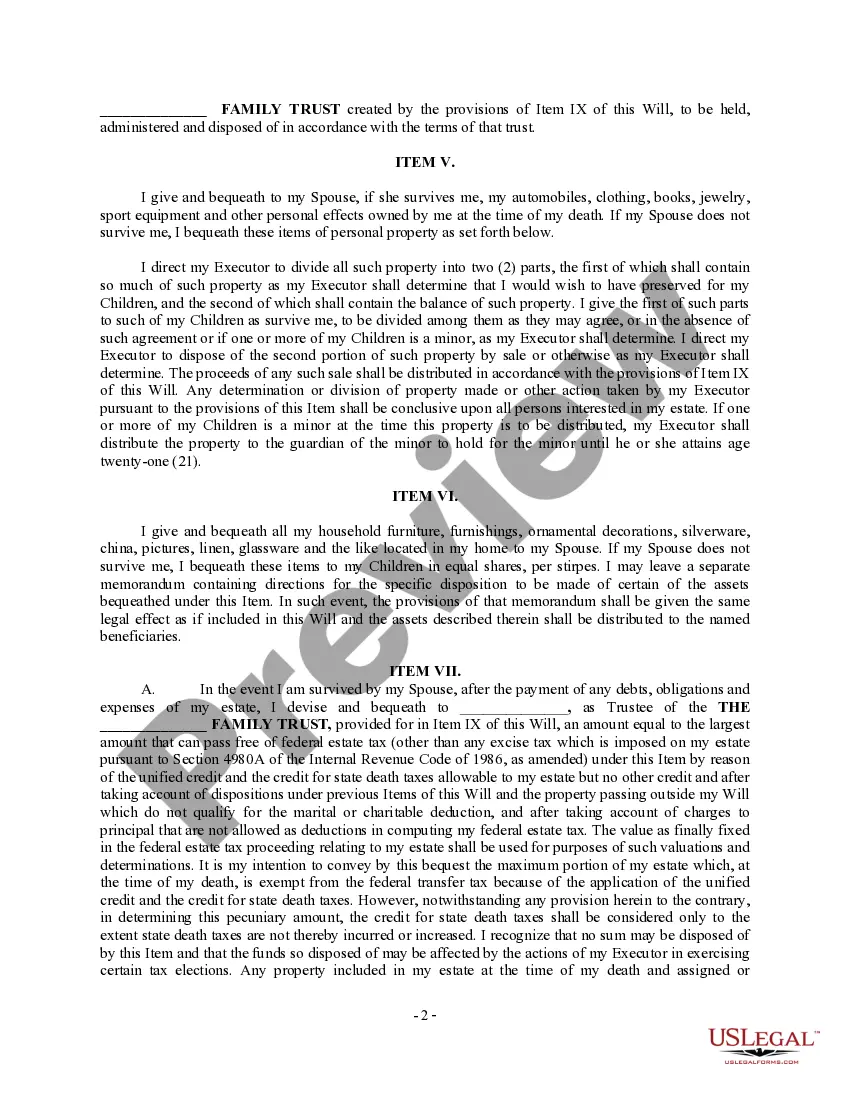
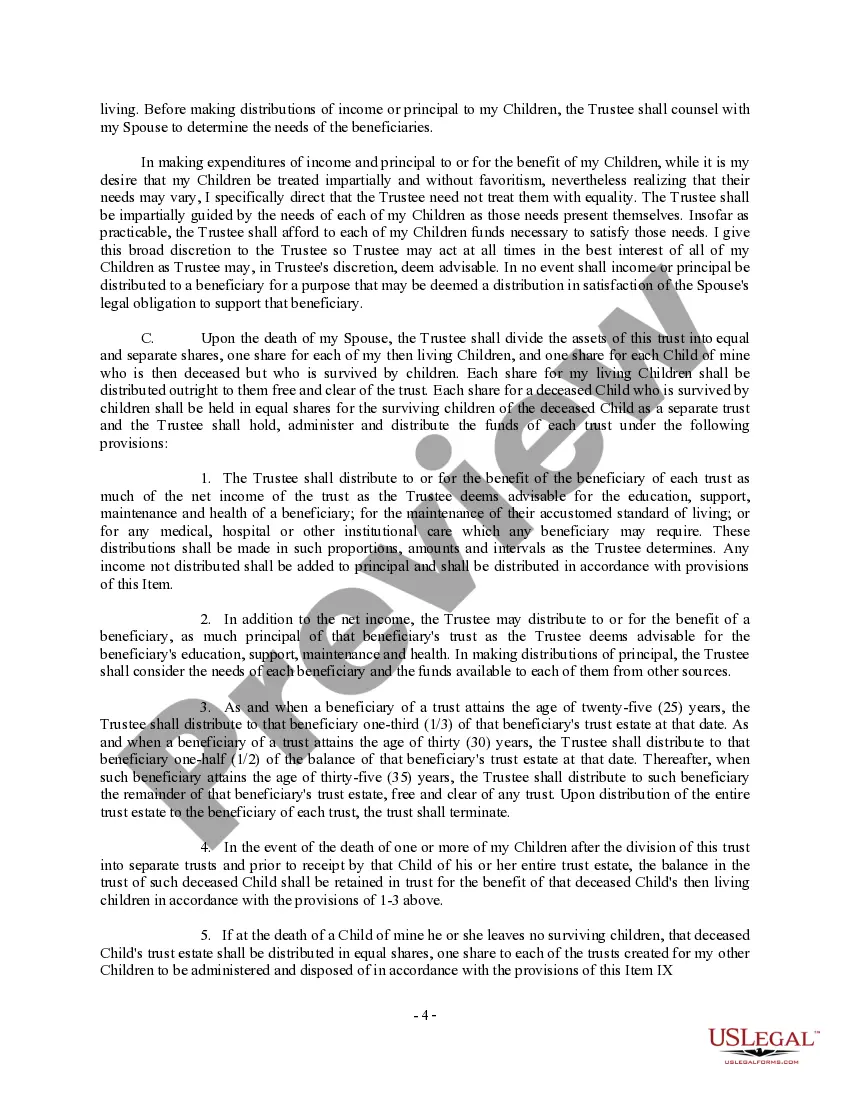
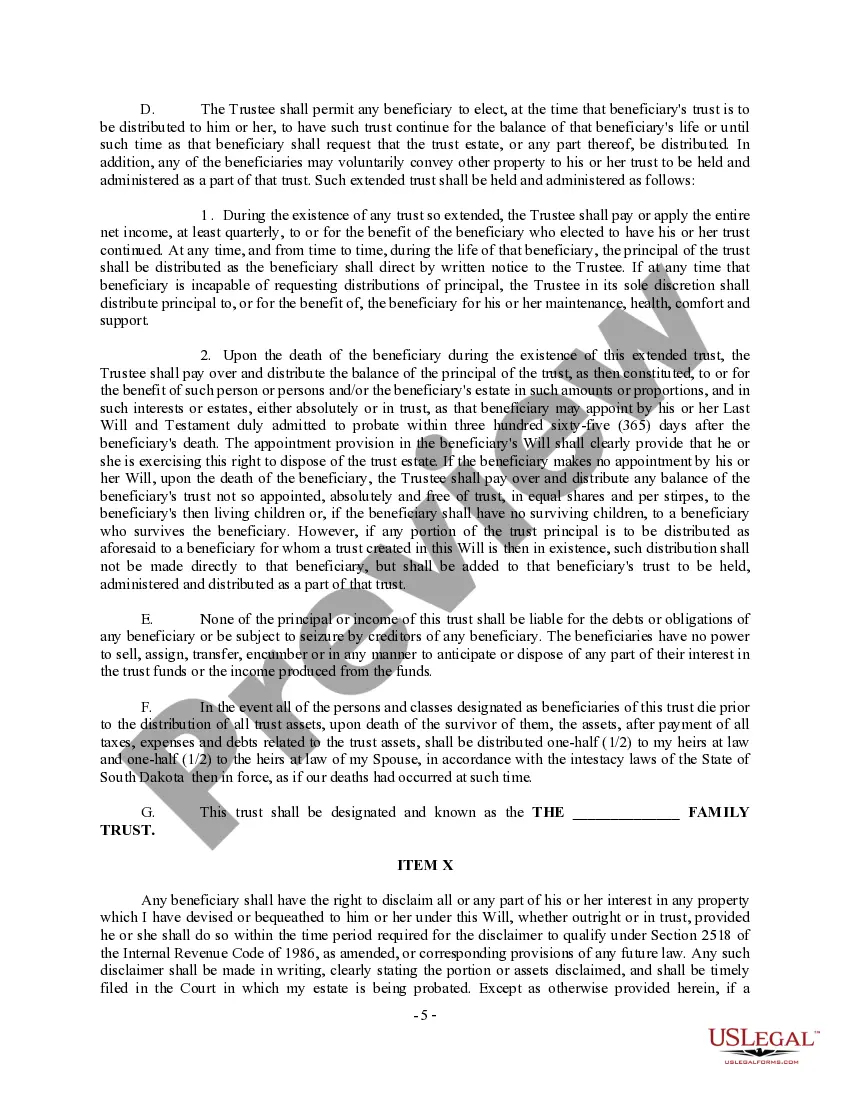
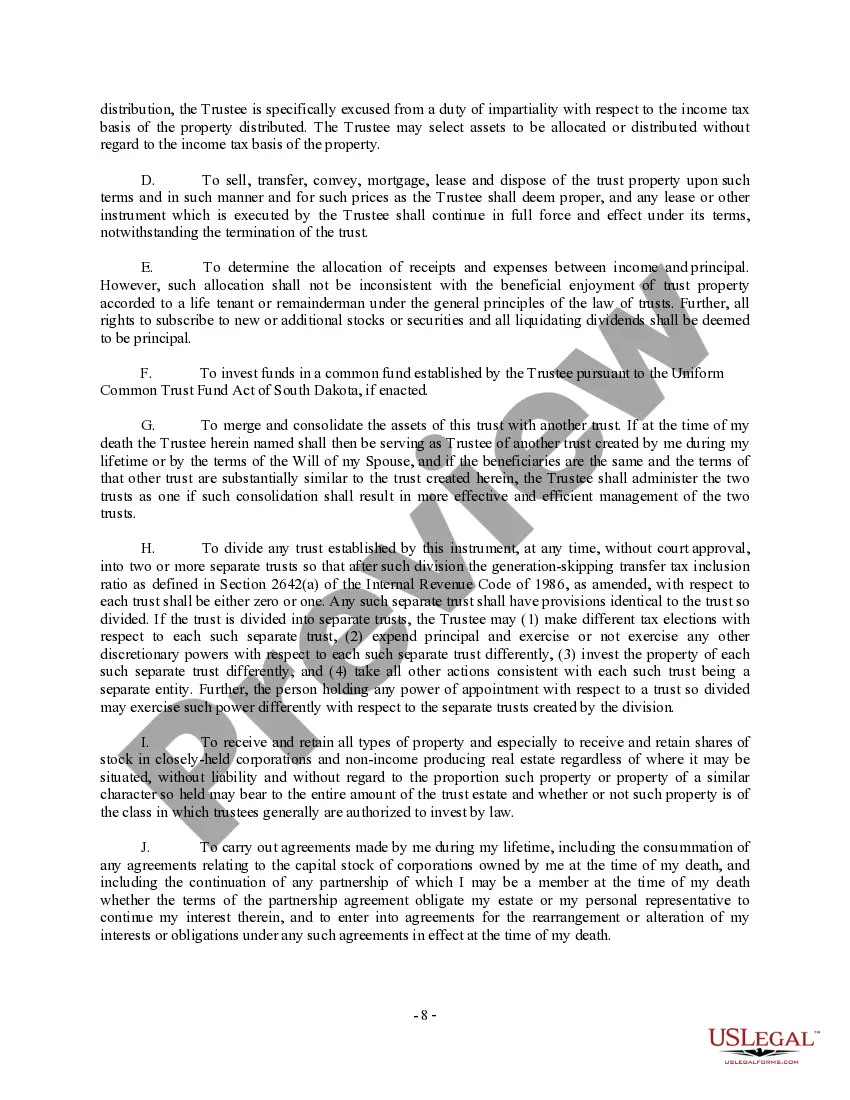
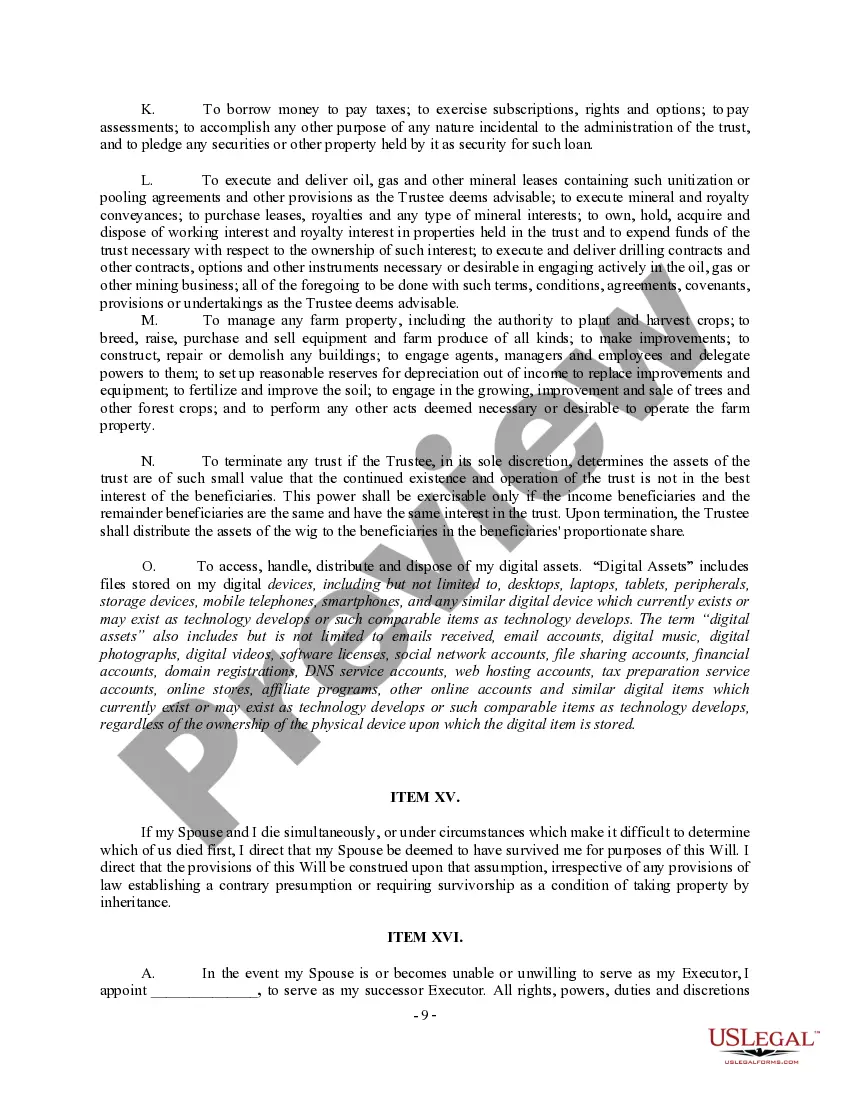
The Complex Will with Credit Shelter Marital Trust for Large Estates is a sophisticated legal document designed for married couples with significant assets. This type of Will establishes a trust to minimize estate taxes and distributes assets strategically between the surviving spouse and children. It allows couples to maximize estate tax exemptions while providing for their loved ones efficiently, ensuring that wealth can be passed on without incurring excessive tax liabilities.
What’s included in this form
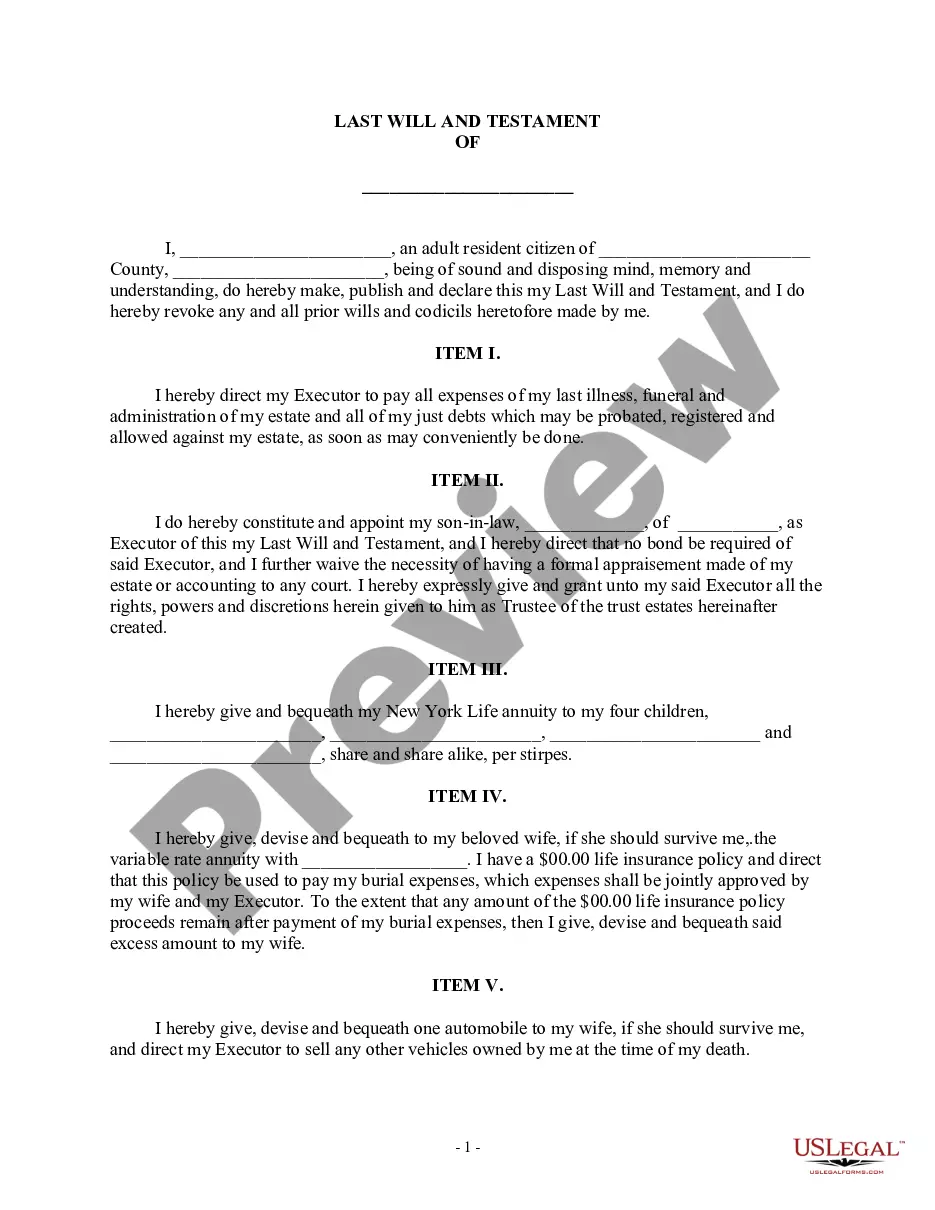
- Last Will and Testament: Establishes the individual's final wishes regarding asset distribution.
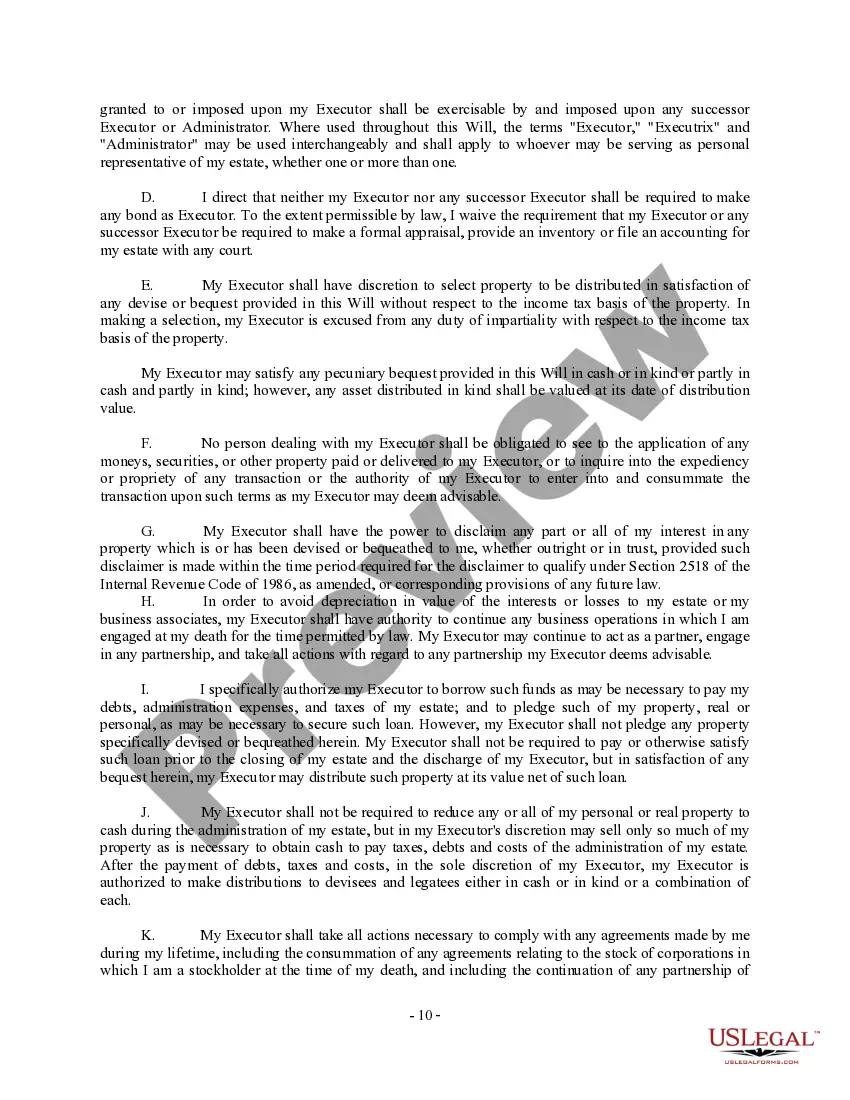
- Executor Appointment: Designates a responsible individual to manage the estate according to the Will's terms.
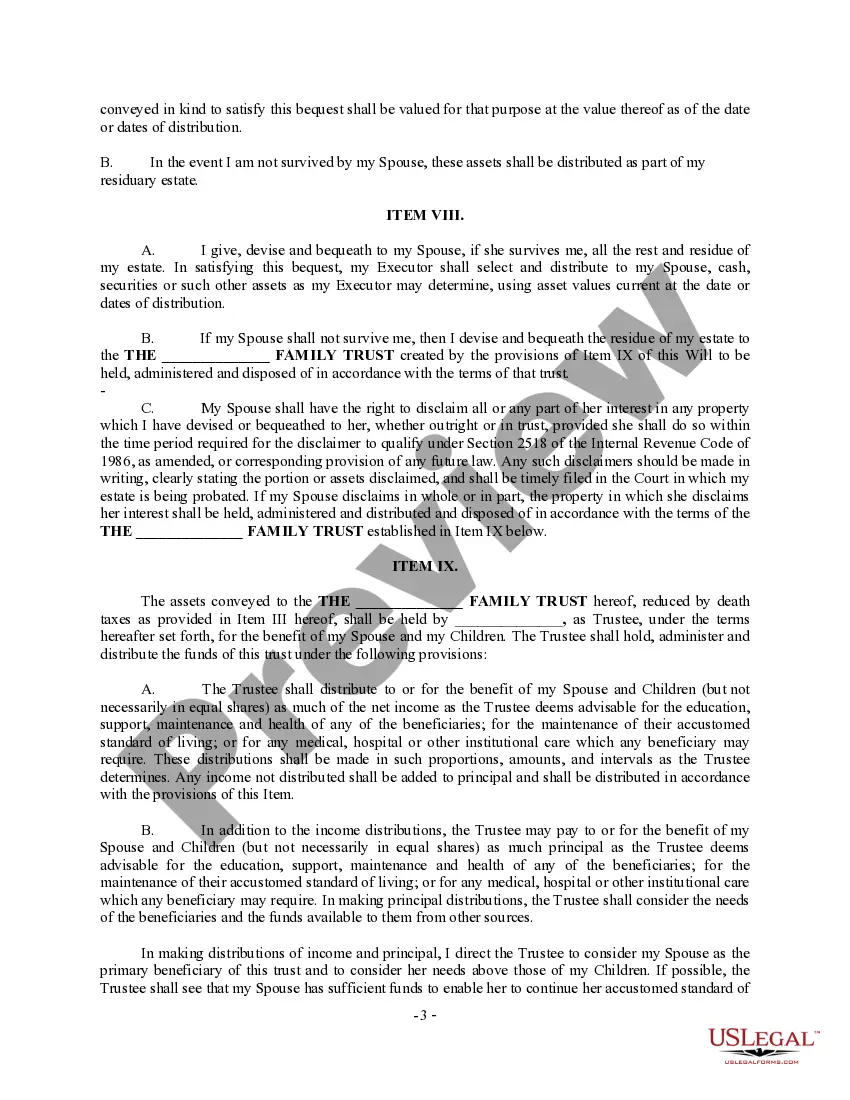
- Credit Shelter Trust: Allows a specified amount of money to be placed in a trust, free from estate taxes, for the benefit of beneficiaries.
- Property Bequests: Specifies how various assets, including a family residence and personal belongings, should be distributed.
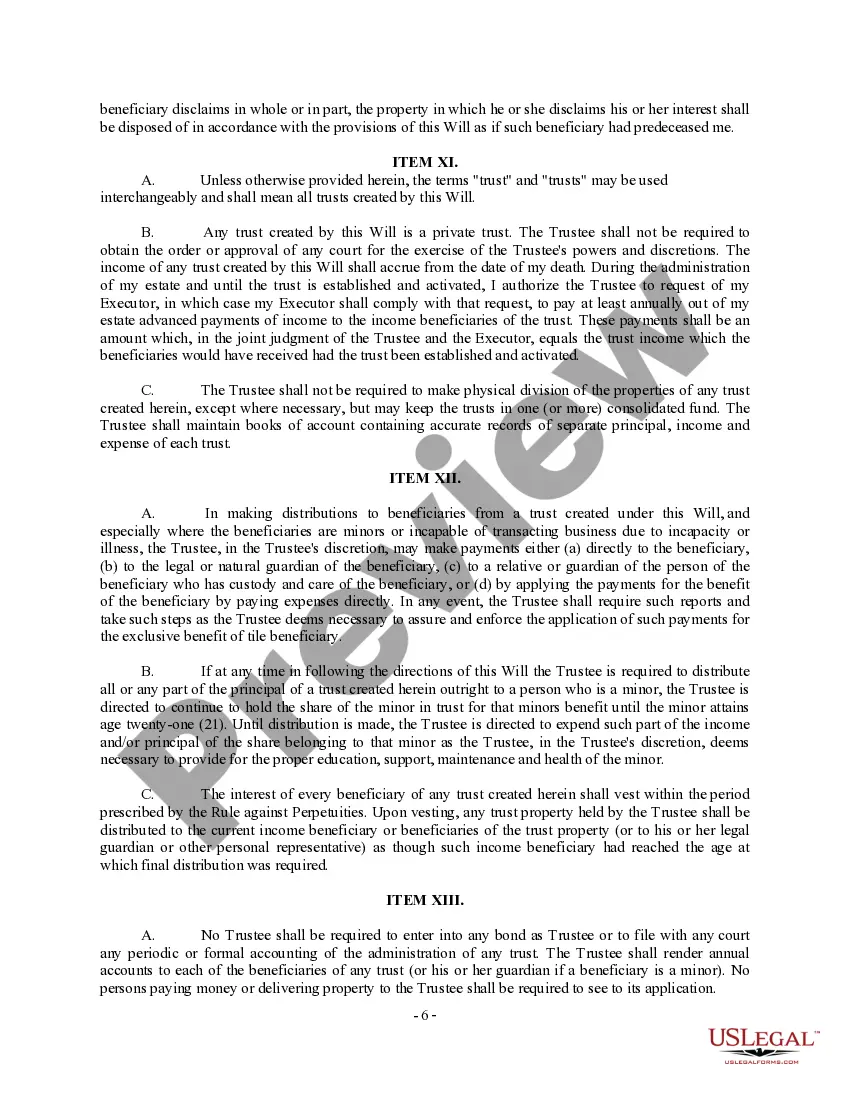
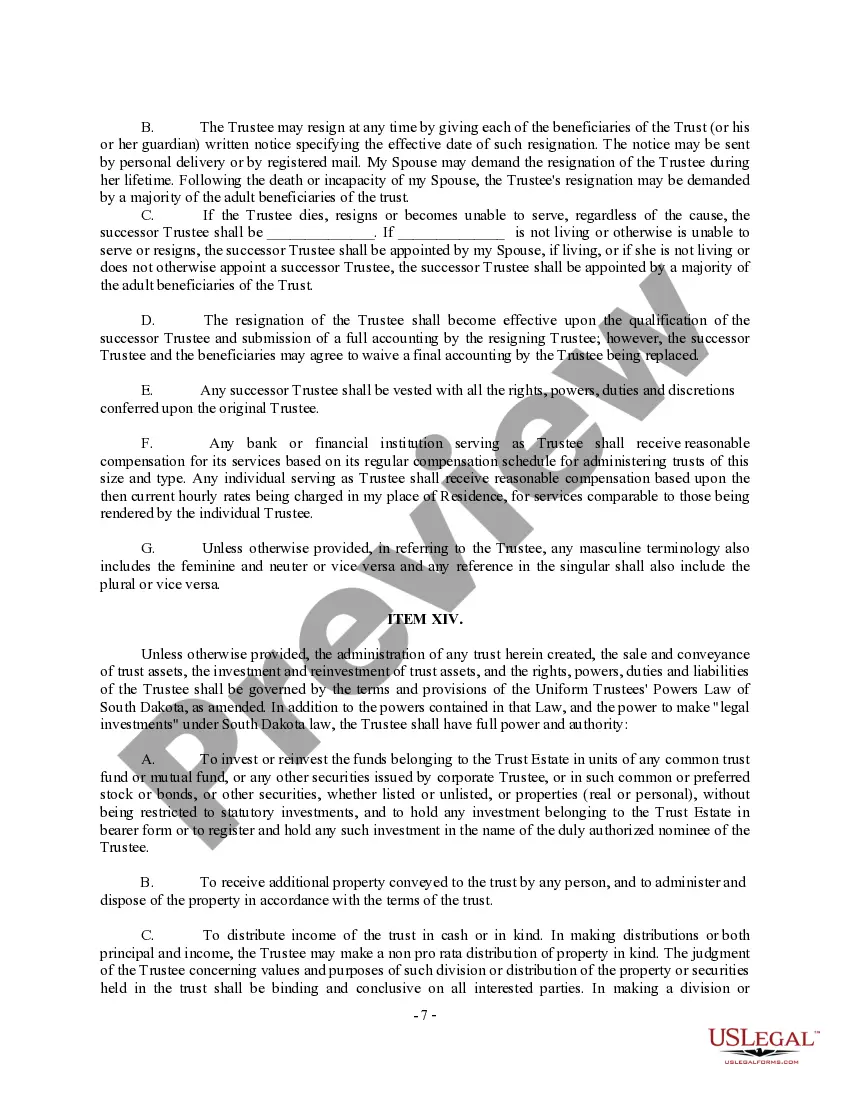
- Trust Fund Management: Outlines how the trust will be managed, including income distributions for the surviving spouse and children.





When to use this document
This form is ideal for couples who wish to effectively manage their estates, especially those with large assets or estates that could be subject to high taxes upon death. It should be used when creating or updating a Will to ensure optimal tax benefits and provisions for family inheritance, particularly if you have children and substantial assets.
Who can use this document
This Legal Form is suitable for:
- Married couples with significant assets.
- Individuals seeking to minimize estate taxes for their beneficiaries.
- Parents wanting to secure their children's inheritance.
- Anyone looking to establish a trust as part of their estate planning.
Completing this form step by step
Follow these steps to complete the form:
- Identify the parties involved, including the testator, spouse, and children.
- Appoint an executor who will administer the Will after your death.
- Specify which assets are to be placed in the trust and which will pass directly to the surviving spouse.
- Detail the distribution of various personal belongings and financial assets.
- Ensure that all signatures are completed in the presence of witnesses, if required, to validate the Will.
Does this form need to be notarized?
This form does not typically require notarization unless specified by local law. It is important to follow state-specific requirements regarding signatory witnesses to ensure the Will is legally binding.
Get your form ready online
Our built-in tools help you complete, sign, share, and store your documents in one place.
Make edits, fill in missing information, and update formatting in US Legal Forms—just like you would in MS Word.
Download a copy, print it, send it by email, or mail it via USPS—whatever works best for your next step.
Sign and collect signatures with our SignNow integration. Send to multiple recipients, set reminders, and more. Go Premium to unlock E-Sign.
If this form requires notarization, complete it online through a secure video call—no need to meet a notary in person or wait for an appointment.
We protect your documents and personal data by following strict security and privacy standards.

Make edits, fill in missing information, and update formatting in US Legal Forms—just like you would in MS Word.

Download a copy, print it, send it by email, or mail it via USPS—whatever works best for your next step.

Sign and collect signatures with our SignNow integration. Send to multiple recipients, set reminders, and more. Go Premium to unlock E-Sign.

If this form requires notarization, complete it online through a secure video call—no need to meet a notary in person or wait for an appointment.

We protect your documents and personal data by following strict security and privacy standards.
Mistakes to watch out for
- Failing to update the Will after significant life events such as births, deaths, or marriages.
- Not appointing an executor who is capable and willing to fulfill the role.
- Inadequately specifying trust terms or failing to define the powers of the trustee.
- Neglecting to sign the document in front of the required witnesses.
Why complete this form online
- Convenient online access for immediate download and use.
- Editability allows users to customize terms according to personal preferences.
- Reliability of legal language reviewed by licensed attorneys.
Looking for another form?
Form popularity
FAQ
Yes, the surviving spouse may serve as trustee of the credit shelter trust.All of the assets in the credit shelter trust, including any appreciation in value during the surviving spouse's lifetime, pass free of estate tax to the beneficiaries.
A marital trust allows the couple's heirs to avoid probate and take less of a hit from estate taxes by taking full advantage of the unlimited marital deductiona provision that enables spouses to pass assets to each other without tax consequences.
A bypass trust, or AB trust, is a legal arrangement that allows married couples to avoid estate tax on certain assets when one spouse passes away.The first part is the marital trust, or A trust. The second is a bypass, family or B trust. The marital trust is a revocable trust that belongs to the surviving spouse.
Key points. Death after 75 doesn't mean that a spousal bypass trust is no longer relevant. It is the government's intention that from a tax perspective the new rules mean that the position would be broadly the same for the beneficiary of a bypass trust, as those receiving benefits directly from the pension.
The effect of the marital deduction trust is that it shields both spouse's assets and estates from federal estate taxes because when the first spouse dies, the assets indicated by the settlor (the spouse who created the trust) pass to the marital trust free and clear of any and all federal estate taxes.
First, in a standard credit shelter trust, there is no step-up in basis at the death of the surviving spouse.Second, the credit shelter trust is a separate taxpayer and requires its own tax return, Form 1041.
The trust qualifies for the marital deduction. In a QTIP trust, the surviving spouse must receive all income generated by the trust property for life, paid at least annually.After the surviving spouse's death, the property passes to the remainder beneficiaries of the trust, who usually are the children of the couple.
A Trust (or Marital Trust) It is a trust that takes advantage of the unlimited marital deduction in order to avoid estate taxes at the time of the first spouse's death in the event that the first spouse's individual estate is more than the individual exemption amount.
An estate trust is a type of marital deduction trust requiring that when the surviving spouse dies, all remaining trust principal must go into his/her estate. This means the surviving spouse gets to choose the final beneficiaries, by will or within a living trust.