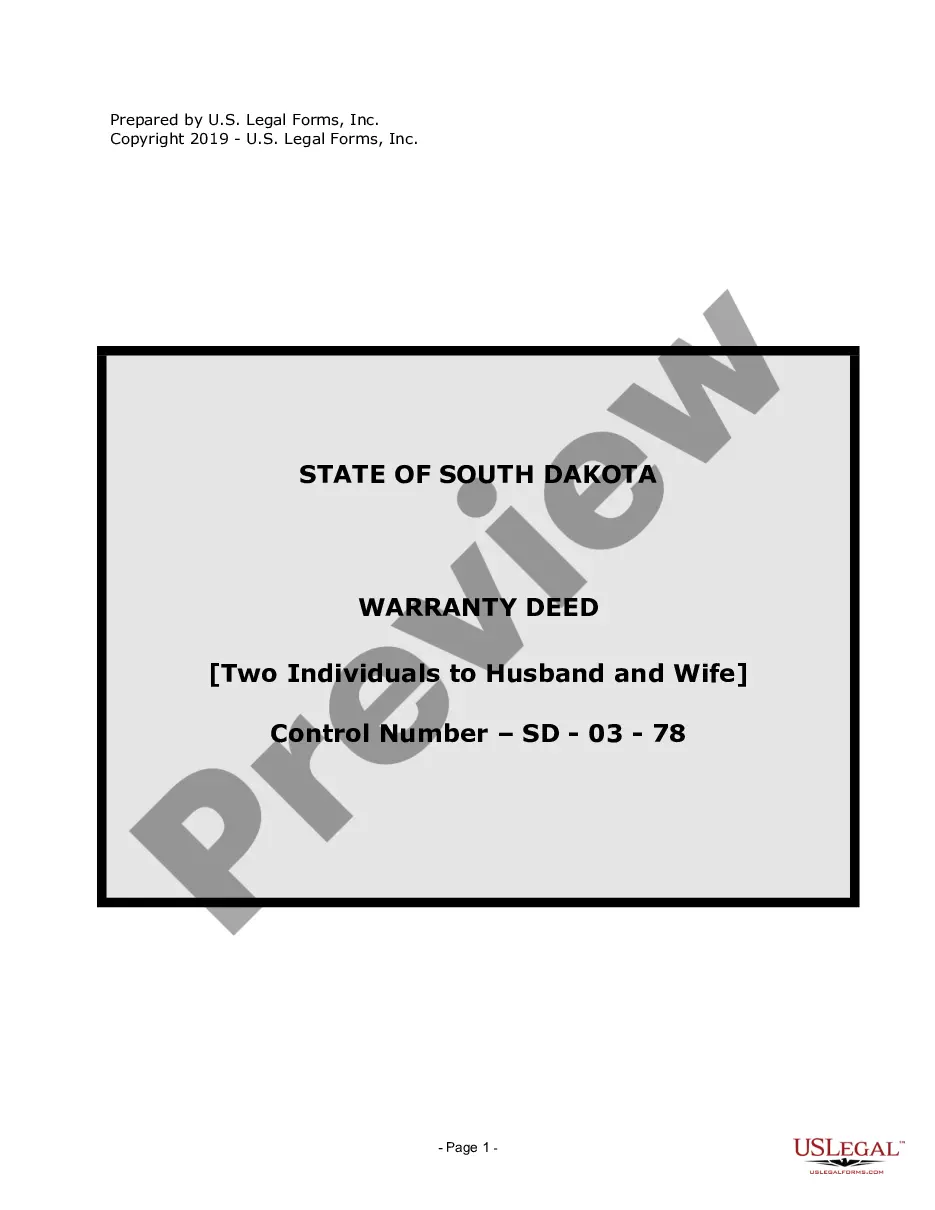
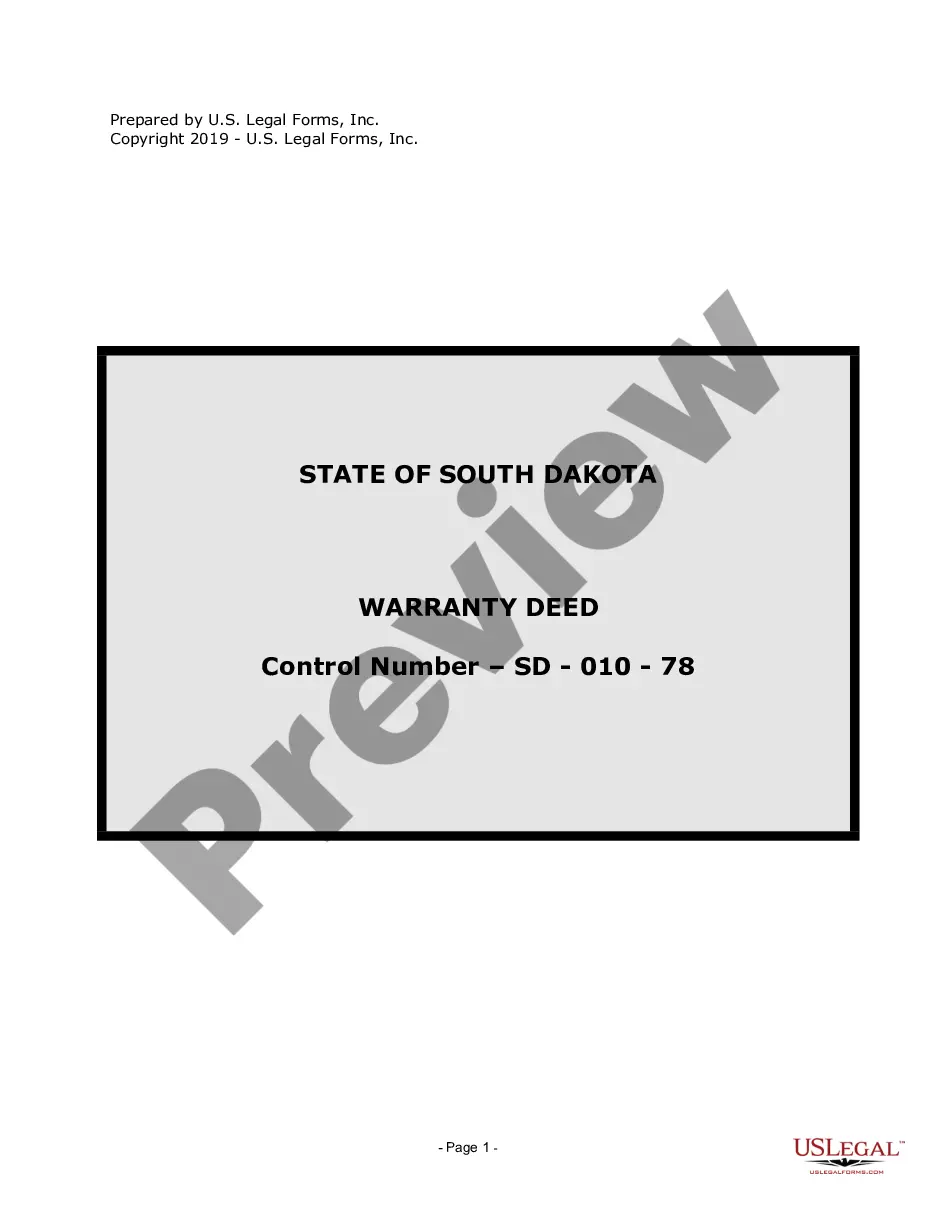
South Dakota Warranty Deed from two Individuals to Husband and Wife
What this document covers
This Warranty Deed is a legal document that transfers property ownership from two individuals to a married couple (husband and wife). It serves to legally establish the new owners of the property while providing them with a warranty of clear title. Unlike other forms of deeds, a Warranty Deed offers assurances that the grantors hold clear title to the property and guarantees against future claims. This form is essential when a couple wishes to formally document their joint ownership of real estate.
Form components explained
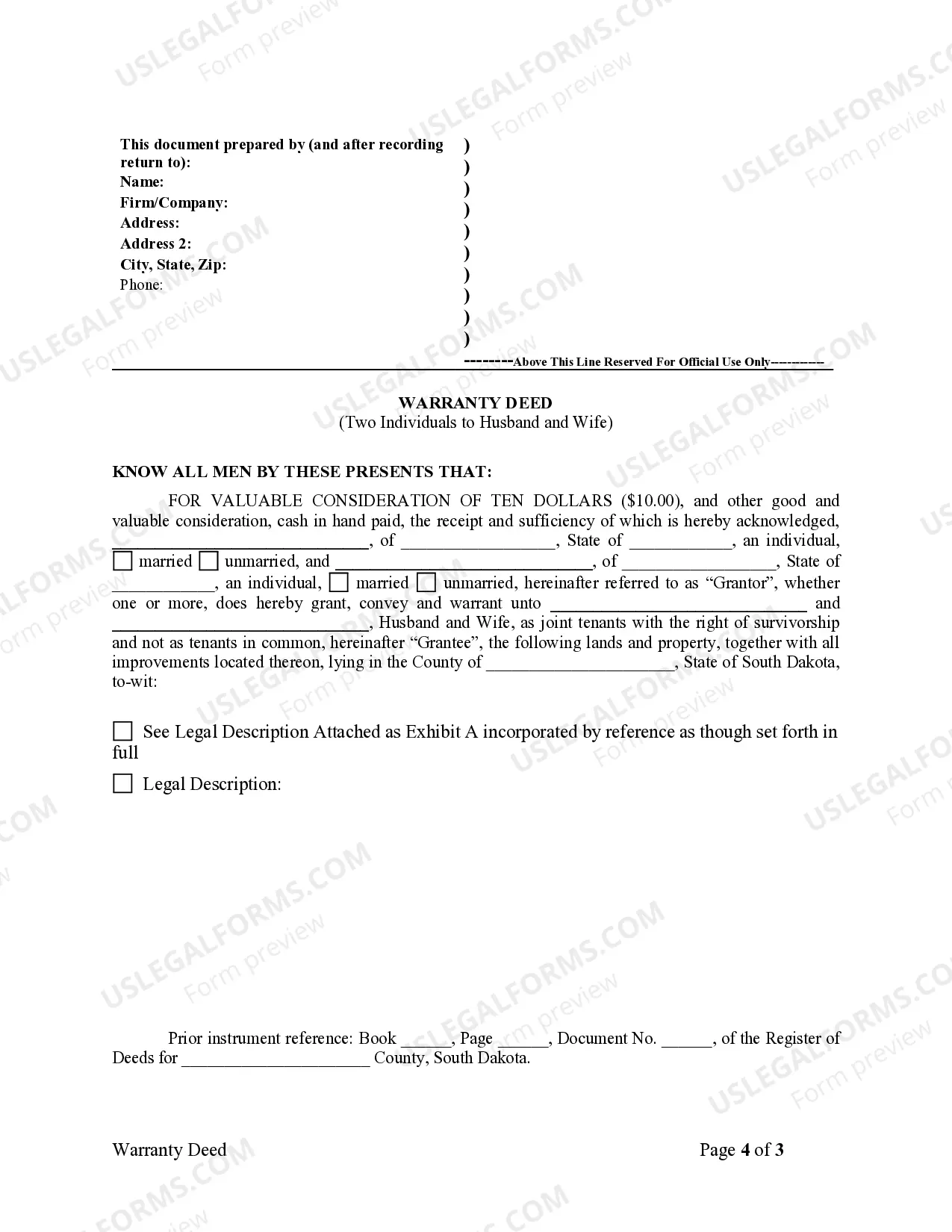
- Identifies the grantors (two individuals) and the grantees (husband and wife).
- Includes a legal description of the property being transferred.
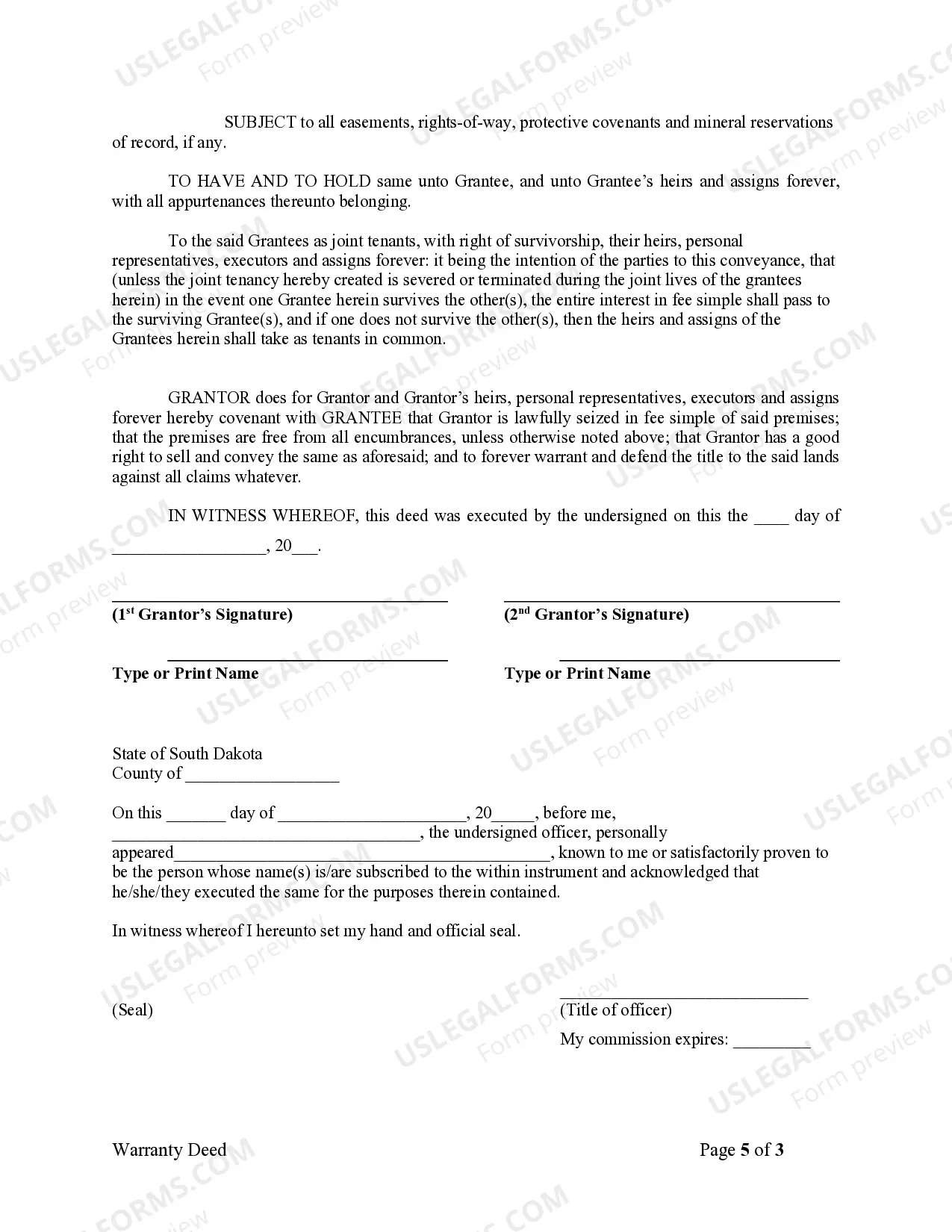
- Contains assurances from the grantors about the title's validity.
- Outlines the rights of survivorship for the grantees as joint tenants.
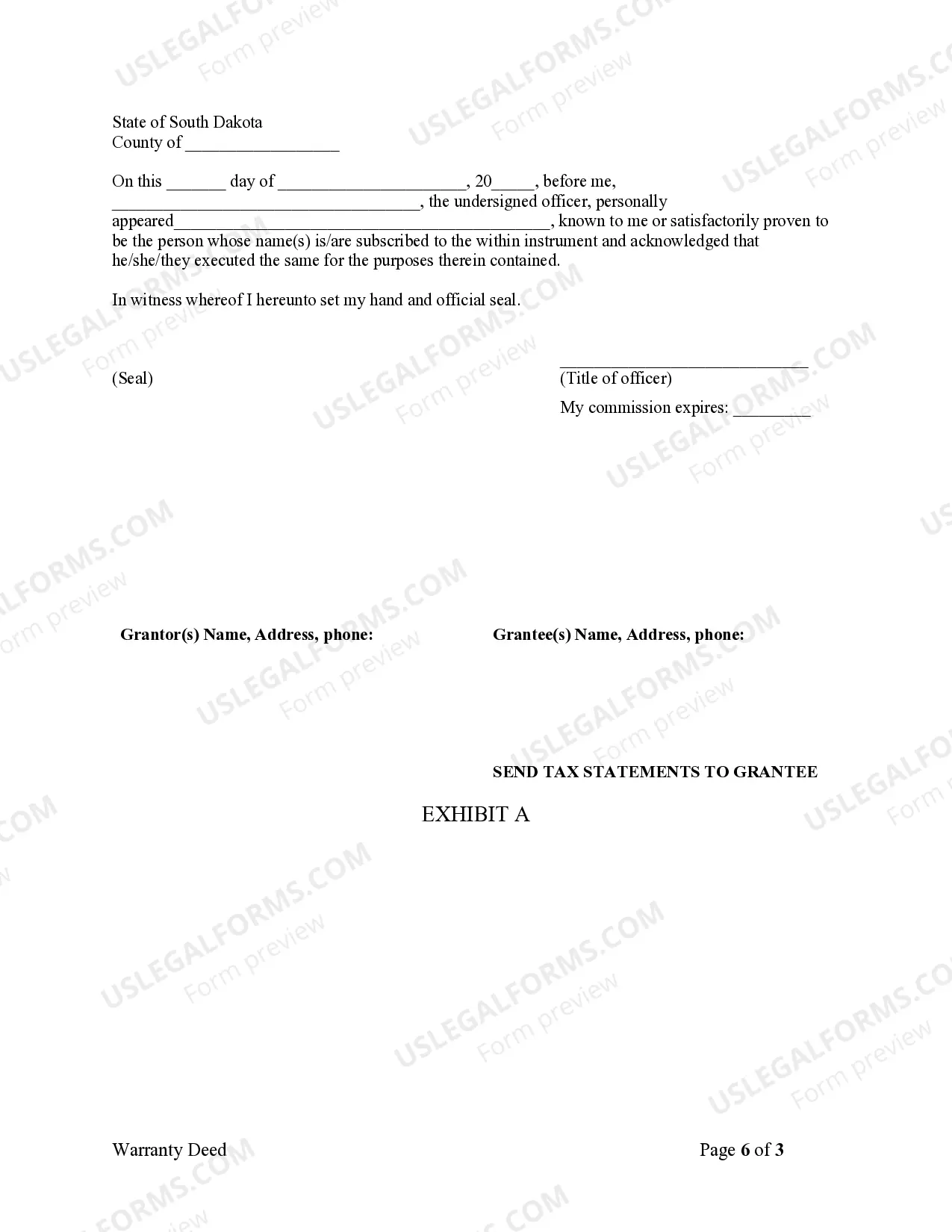
- Requires signatures and dates for execution.






When this form is needed
This Warranty Deed should be used when two individuals wish to transfer property ownership to a married couple. It is commonly used in situations such as purchasing a home together, gifting property, or in family estate planning scenarios. Using this form helps to clarify ownership rights and provides important legal protections.
Who needs this form
- Individuals transferring property ownership to a married couple.
- Couples acquiring property together as joint tenants.
- Family members involved in estate planning that includes property transfer.
- Anyone seeking a legal document ensuring warranty of title.
How to prepare this document
- Identify and enter the names of the two individuals (grantors) transferring the property.
- Specify the full names of the husband and wife (grantees) receiving the property.
- Provide a legal description of the property being conveyed.
- Sign and date the document in the appropriate places.
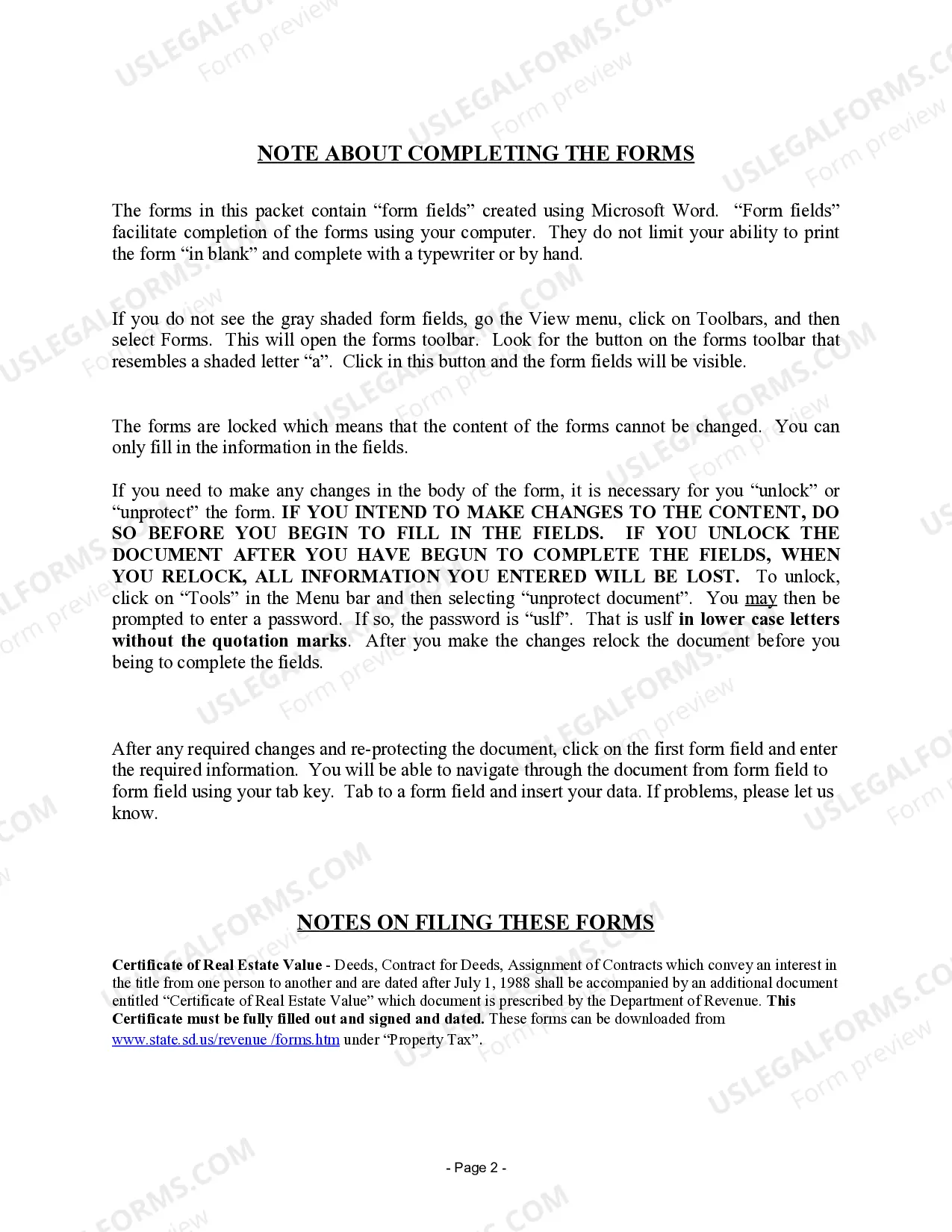
- If necessary, attach the Certificate of Real Estate Value as required by South Dakota law.
Does this document require notarization?
This form does not typically require notarization unless specified by local law. However, it is advisable to have the deed notarized for additional legal protection and to ensure acceptance by local authorities.
Get your form ready online
Our built-in tools help you complete, sign, share, and store your documents in one place.
Make edits, fill in missing information, and update formatting in US Legal Forms—just like you would in MS Word.
Download a copy, print it, send it by email, or mail it via USPS—whatever works best for your next step.
Sign and collect signatures with our SignNow integration. Send to multiple recipients, set reminders, and more. Go Premium to unlock E-Sign.
If this form requires notarization, complete it online through a secure video call—no need to meet a notary in person or wait for an appointment.
We protect your documents and personal data by following strict security and privacy standards.

Make edits, fill in missing information, and update formatting in US Legal Forms—just like you would in MS Word.

Download a copy, print it, send it by email, or mail it via USPS—whatever works best for your next step.

Sign and collect signatures with our SignNow integration. Send to multiple recipients, set reminders, and more. Go Premium to unlock E-Sign.

If this form requires notarization, complete it online through a secure video call—no need to meet a notary in person or wait for an appointment.

We protect your documents and personal data by following strict security and privacy standards.
Mistakes to watch out for
- Forgetting to include the legal description of the property.
- Not signing the document in front of witnesses or a notary, if applicable.
- Failing to duplicate entries correctly in the required fields.
- Leaving out important clauses regarding warranties and rights of survivorship.
Benefits of completing this form online
- Immediate access to a professionally drafted form tailored to South Dakota laws.
- Ability to fill out the form digitally, which simplifies the completion process.
- Reduced chances of errors due to clear instructions and structured fields.
- Flexibility to print and complete manually if preferred.
Looking for another form?


Form popularity
FAQ
A general warranty deed must include the following to be valid: The name and address of the seller (called the grantor) The name and address of the buyer (called the grantee) A legal description of the property (found on the previous deed)
Quitclaim deeds, therefore, are commonly used to transfer property within a family, such as from a parent to an adult child, between siblings, or when a property owner gets married and wants to add their spouse to the title. Married couples who own a home together and later divorce also use quitclaim deeds.
But you might be wondering if an owner can transfer a deed to another person without a real estate lawyer. The answer is yes. Parties to a transaction are always free to prepare their own deeds.A quitclaim deed, for example, is far simpler than a warranty deed.
A warranty deed, also known as a general warranty deed, is a legal real estate document between the seller (grantor) and the buyer (grantee). The deed protects the buyer by pledging that the seller holds clear title to the property and there are no encumbrances, outstanding liens, or mortgages against it.
A warranty deed is a document often used in real estate that provides the greatest amount of protection to the purchaser of a property. It pledges or warrants that the owner owns the property free and clear of any outstanding liens, mortgages, or other encumbrances against it.
A person who signs a quitclaim deed to transfer property they do not own results in no title at all being transferred since there is no actual ownership interest. The quitclaim deed only transfers the type of title you own.
It's important to note that a warranty deed does not actually prove the grantor has ownership (a title search is the best way to prove that), but it is a promise by the grantor that they are transferring ownership and if it turns out they don't actually own the property, the grantor will be responsible for compensating
A warranty deed is a higher level of protection produced by the seller upon the real estate closing. It includes a full legal description of the property, and confirms the title is clear and free from all liens, encumbrances, or title defects. Most property sales make use of a warranty deed.Our title agents can help.
Once you sign a quitclaim deed and it has been filed and recorded with the County Clerks Office, the title has been officially transferred and cannot be easily reversed. In order to reverse this type of transfer, it would require your spouse to cooperate and assist in adding your name back to the title.