South Dakota Notice of Nonliability by Corporation
About this form
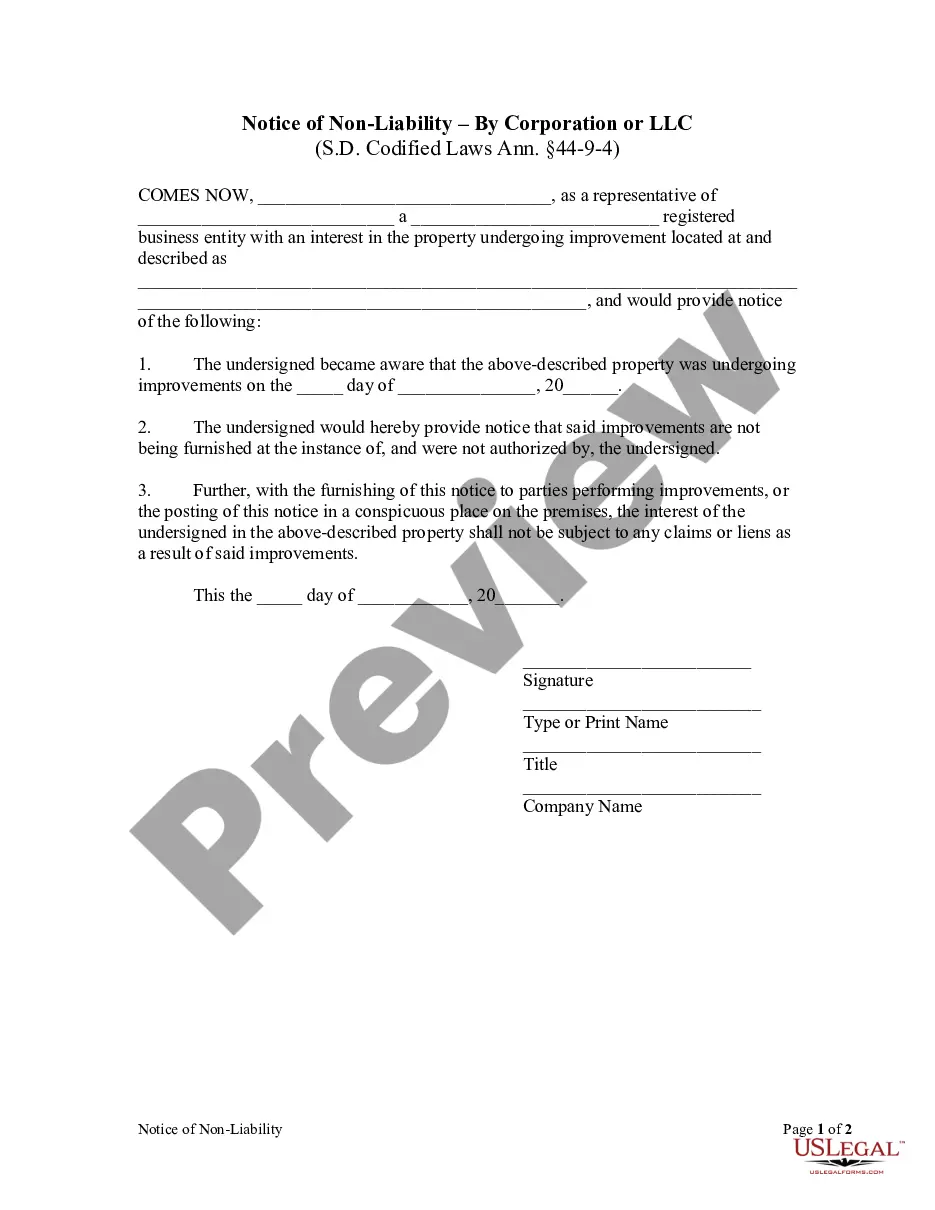
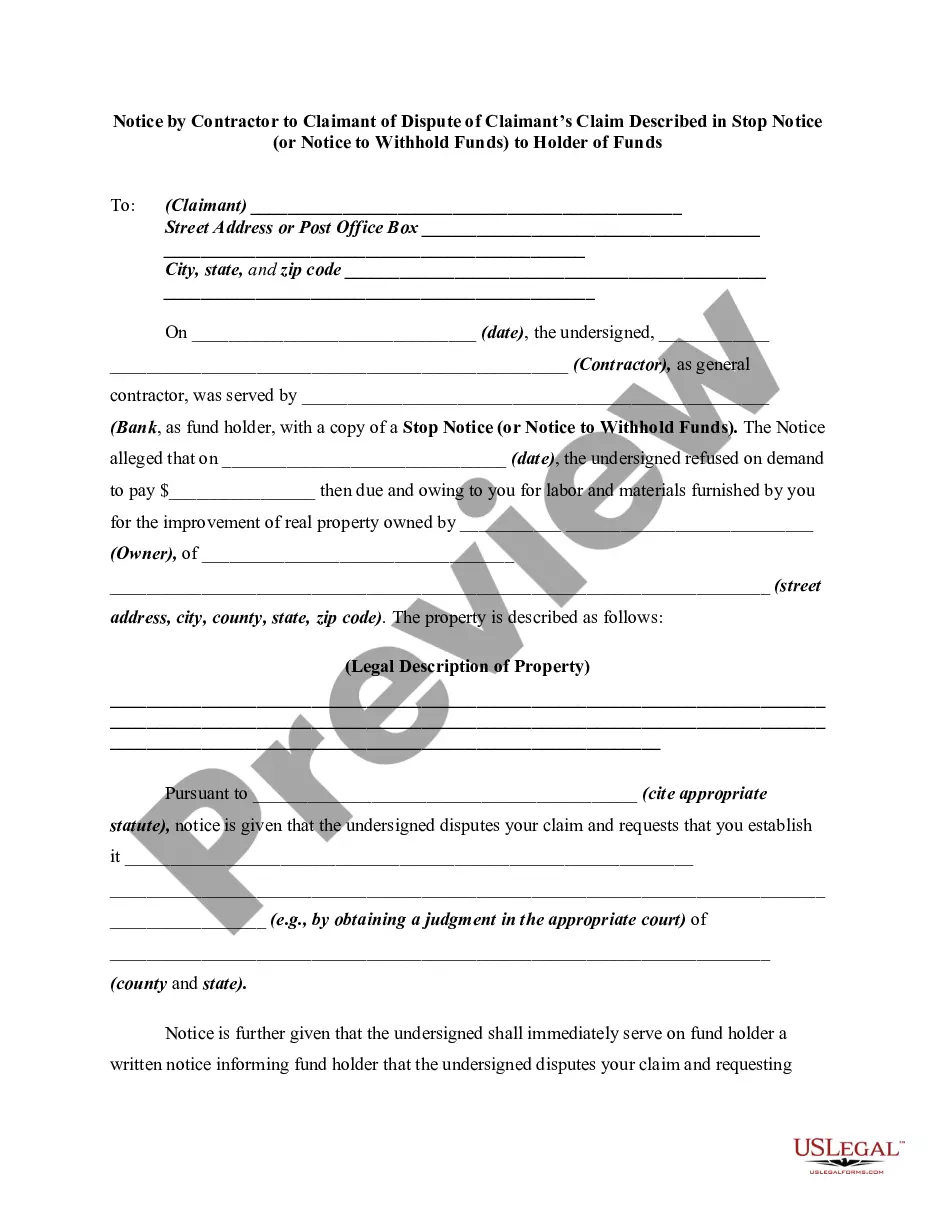
The Notice of Nonliability by Corporation is a legal document that safeguards a corporation's interests regarding improvements made to a property it does not authorize. This form is used to notify parties involved in property improvements that the corporation is not responsible for any liens resulting from those improvements. It distinguishes itself from other forms as it specifically addresses nonliability issues and is tailored for corporate use.
Key components of this form
- Identification of the corporation and its representative.
- Description of the property undergoing improvements.
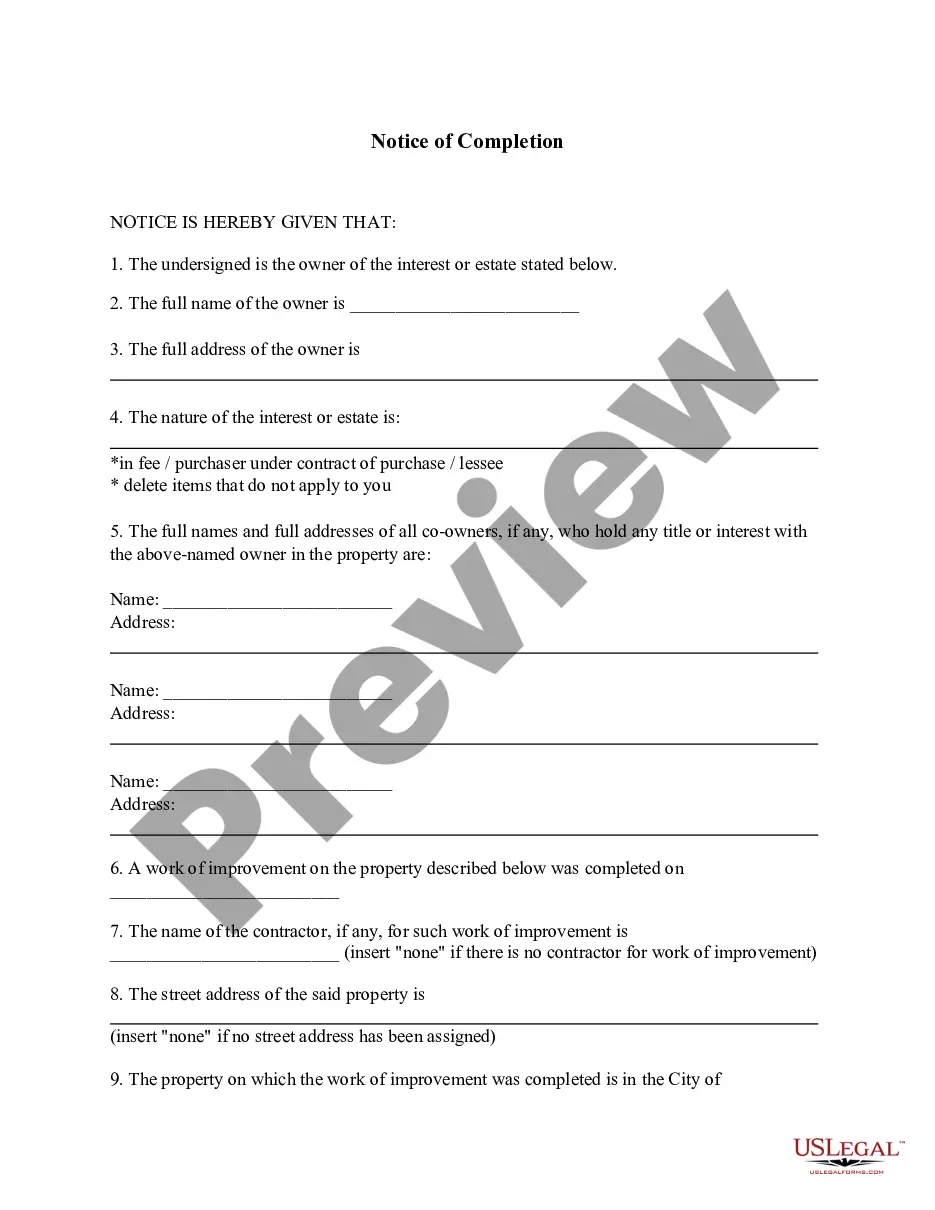
- Date of awareness of the property improvements.
- Statement of non-authorization for the improvements.
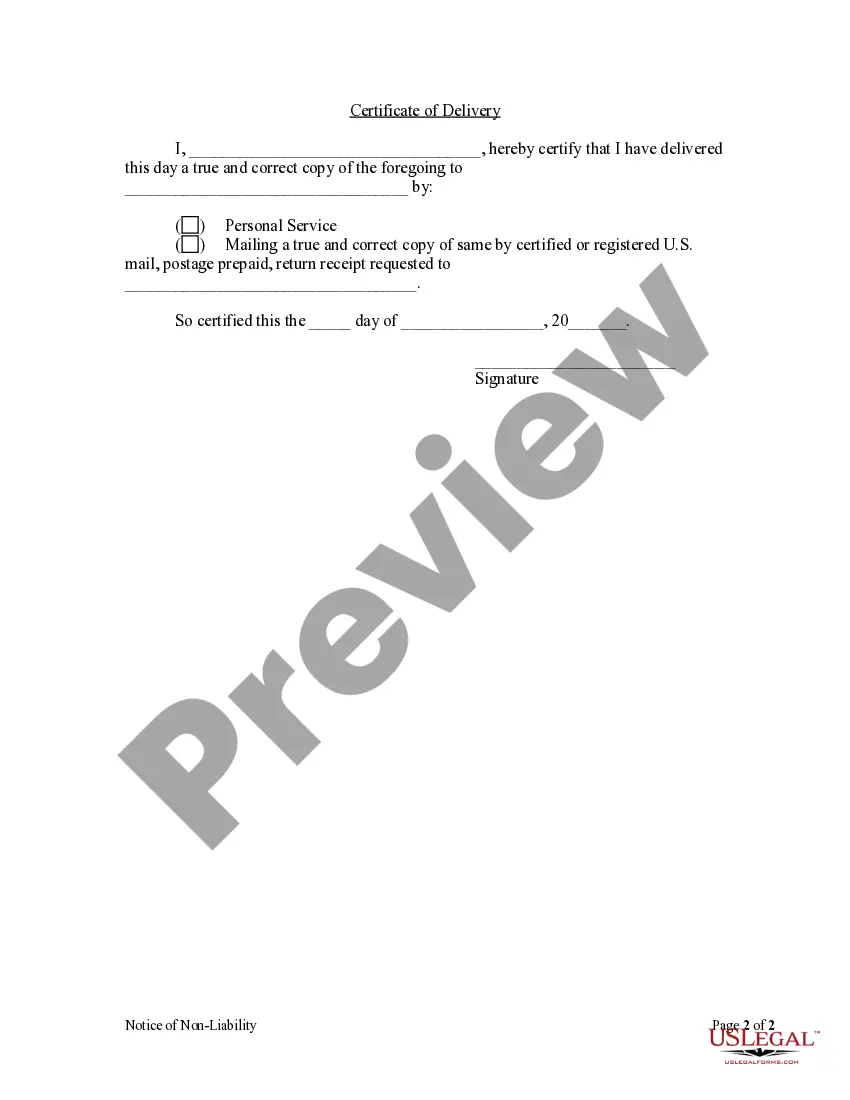
- Certification of delivery of the notice.
When to use this document
This form should be used when a corporation becomes aware of improvements being made to a property in which it holds an interest, but did not authorize. It protects the corporation from potential claims or liens related to these improvements, ensuring that its financial interests are safeguarded.
Intended users of this form
- Corporations with an interest in property undergoing improvements.
- Corporate representatives authorized to act on behalf of the corporation.
- Any corporation wishing to protect itself from unauthorized improvement-related claims.
Completing this form step by step
- Identify the corporate representative and corporation name.
- Provide the specific address and description of the property involved.
- Enter the date you became aware of the improvements.
- Clearly state that the corporation did not authorize the improvements.
- Sign and date the form to complete the notice.
- Deliver a copy of the notice to relevant parties and keep a record of this delivery.
Notarization guidance
In most cases, this form does not require notarization. However, some jurisdictions or signing circumstances might. US Legal Forms offers online notarization powered by Notarize, accessible 24/7 for a quick, remote process.
Get your form ready online
Our built-in tools help you complete, sign, share, and store your documents in one place.
Make edits, fill in missing information, and update formatting in US Legal Forms—just like you would in MS Word.
Download a copy, print it, send it by email, or mail it via USPS—whatever works best for your next step.
Sign and collect signatures with our SignNow integration. Send to multiple recipients, set reminders, and more. Go Premium to unlock E-Sign.
If this form requires notarization, complete it online through a secure video call—no need to meet a notary in person or wait for an appointment.
We protect your documents and personal data by following strict security and privacy standards.

Make edits, fill in missing information, and update formatting in US Legal Forms—just like you would in MS Word.

Download a copy, print it, send it by email, or mail it via USPS—whatever works best for your next step.

Sign and collect signatures with our SignNow integration. Send to multiple recipients, set reminders, and more. Go Premium to unlock E-Sign.

If this form requires notarization, complete it online through a secure video call—no need to meet a notary in person or wait for an appointment.

We protect your documents and personal data by following strict security and privacy standards.
Mistakes to watch out for
- Failing to deliver the notice within the required timeframe.
- Not clearly stating the non-authorization of the improvements.
- Omitting necessary identification details of the corporation.
- Not keeping a copy of the delivered notice for records.
Why use this form online
- Convenient access and instant download for immediate use.
- Editability allows for customization specific to your situation.
- Reliably drafted by licensed attorneys, ensuring legal compliance.
- User-friendly interface makes it simple to complete and file.
Looking for another form?
Form popularity
FAQ
Unlike a corporation, an LLC is not considered separate from its owners for tax purposes. Instead, it is what the IRS calls a "pass-through entity," like a partnership or sole proprietorship.While an LLC itself doesn't pay taxes, co-owned LLCs must file Form 1065, an informational return, with the IRS each year.
A series LLC is a regular business LLC that is set up to hold several properties or interests underneath one LLC. A series LLC can make distributions as allowed by state law. A restricted LLC, on the other hand, is a vehicle created to transfer assets within a family and is not meant for doing business.
LLCs are not corporations and do not use articles of incorporation. Instead, LLCs form by filing articles of organization.
A Series LLC can be a great way to separate your business assets and divide the responsibilities for investment and debt in different areas or divisions of your company. A Series LLC allows you to form multiple mini-LLCs, so to speak, and operate them all under a single umbrella company.
LLC ownership can be expressed in two ways: (1) by percentage; and (2) by membership units, which are similar to shares of stock in a corporation. In either case, ownership confers the right to vote and the right to share in profits.
In an LLC, individuals with an ownership share are called members. In a corporation, they are called shareholders. One of the advantages an LLC has over a corporation is that in many states, a creditor cannot collect a member's dividends, whereas in a corporation dividends can be collected from shareholders.
When a business entity is incorporated, there are a number of steps to take to incorporate a business. The corporate entity owns its own assets and has liability for its own debts. The stock shareholders are considered the legal owners of the company.
The owners of a limited liability company (LLC) are called members. Each member is an owner of the company; there are no owner shares, as in a corporation. An LLC is formed in a state by filing Articles of Organization or similar document in some states.
A Limited Liability Company (LLC) is an entity created by state statute.A domestic LLC with at least two members is classified as a partnership for federal income tax purposes unless it files Form 8832 and elects to be treated as a corporation.