South Carolina Mutual Wills package with Last Wills and Testaments for Married Couple with No Children
Overview of this form
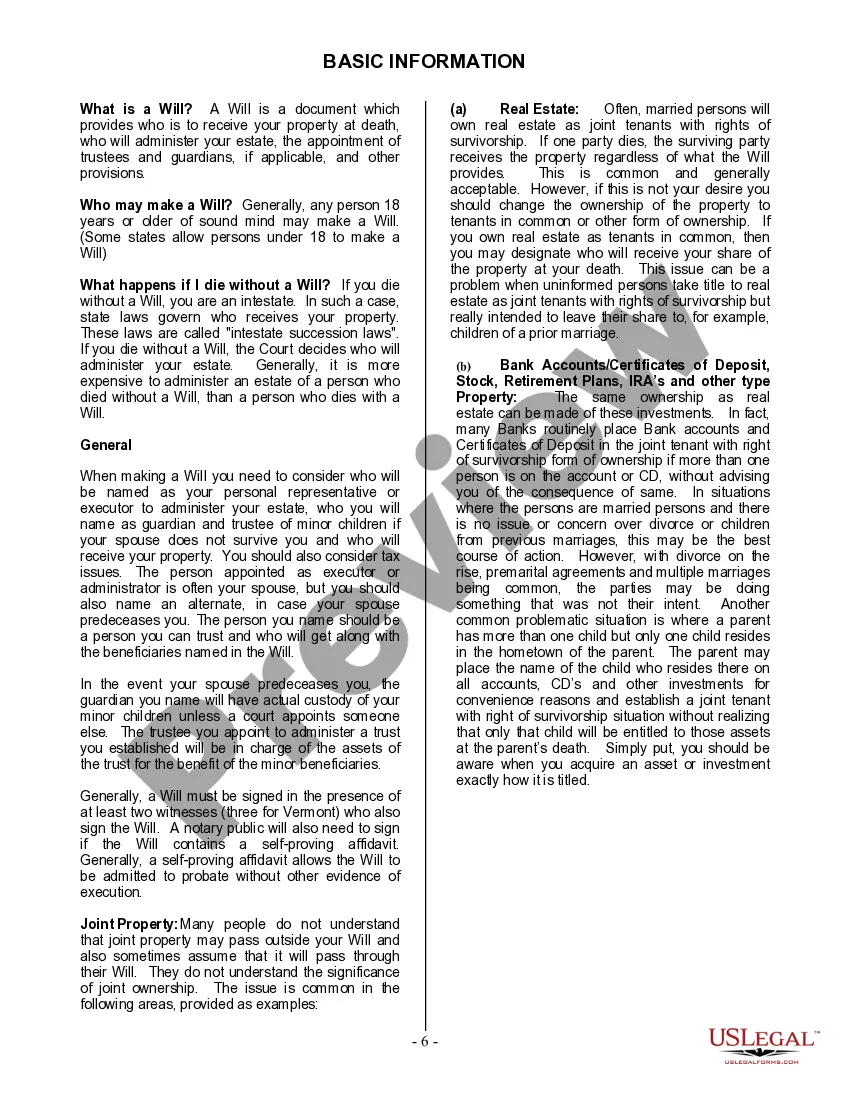
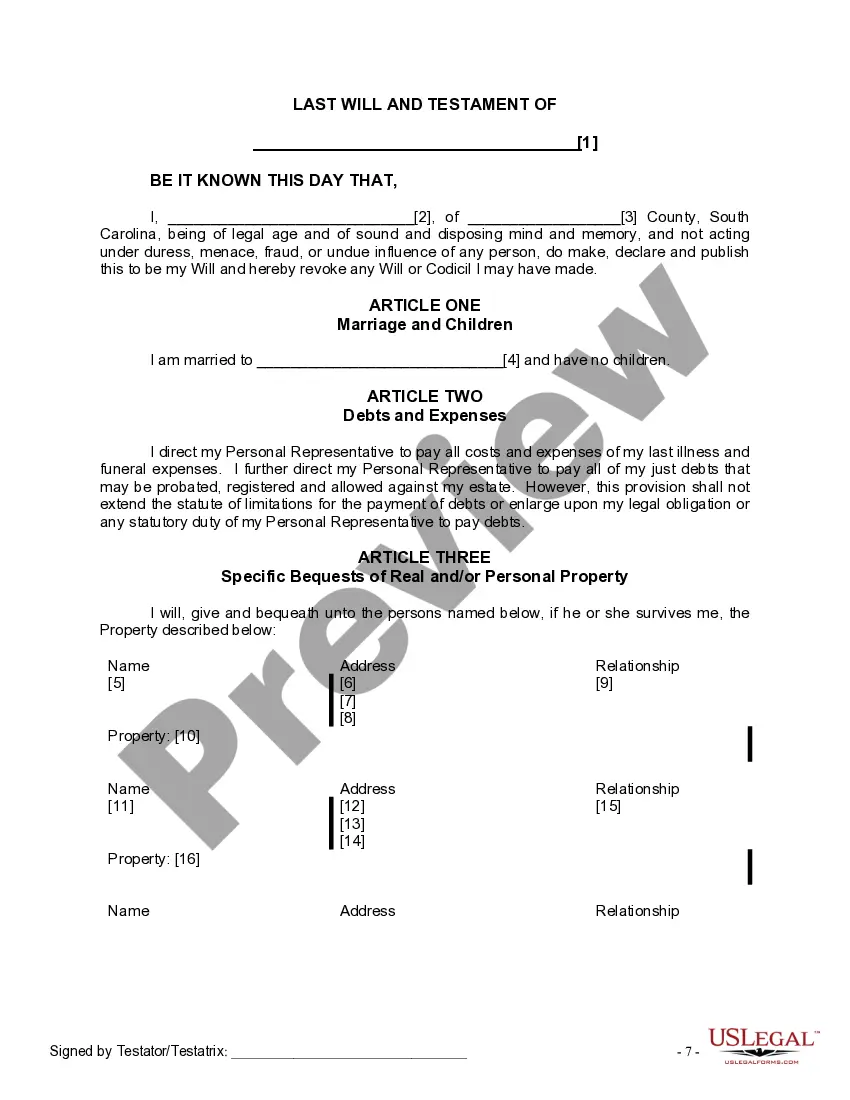
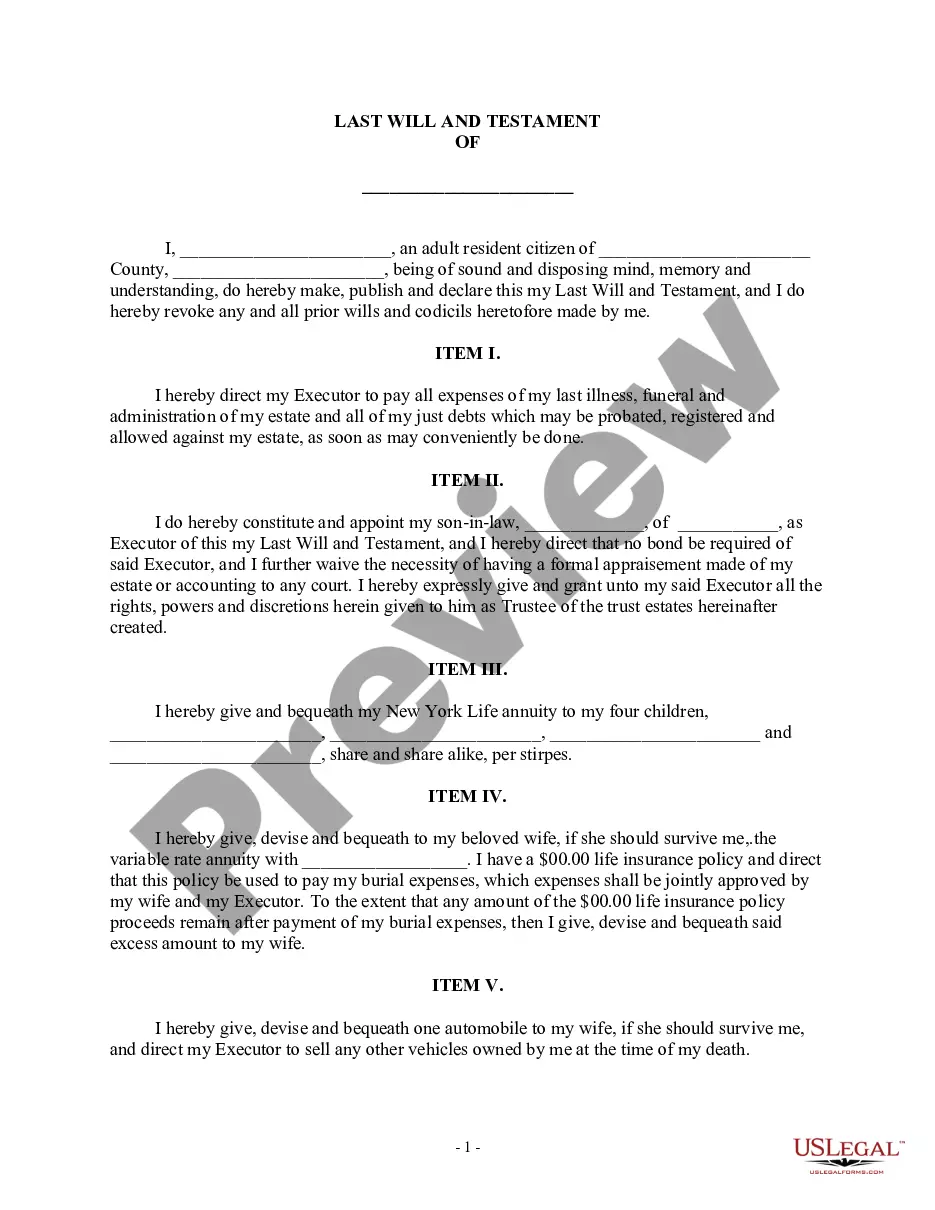
The Mutual Wills package with Last Wills and Testaments for Married Couple with No Children is a legal document allowing two spouses to outline their final wishes regarding the distribution of their property upon death. This package contains two individualized wills that provide for each spouse's needs and specifications. Unlike typical wills, mutual wills create a binding contract between spouses to distribute their assets according to mutual agreements, which is essential for couples without children.
Key components of this form
- Personal information fields for each spouse, including names and addresses.
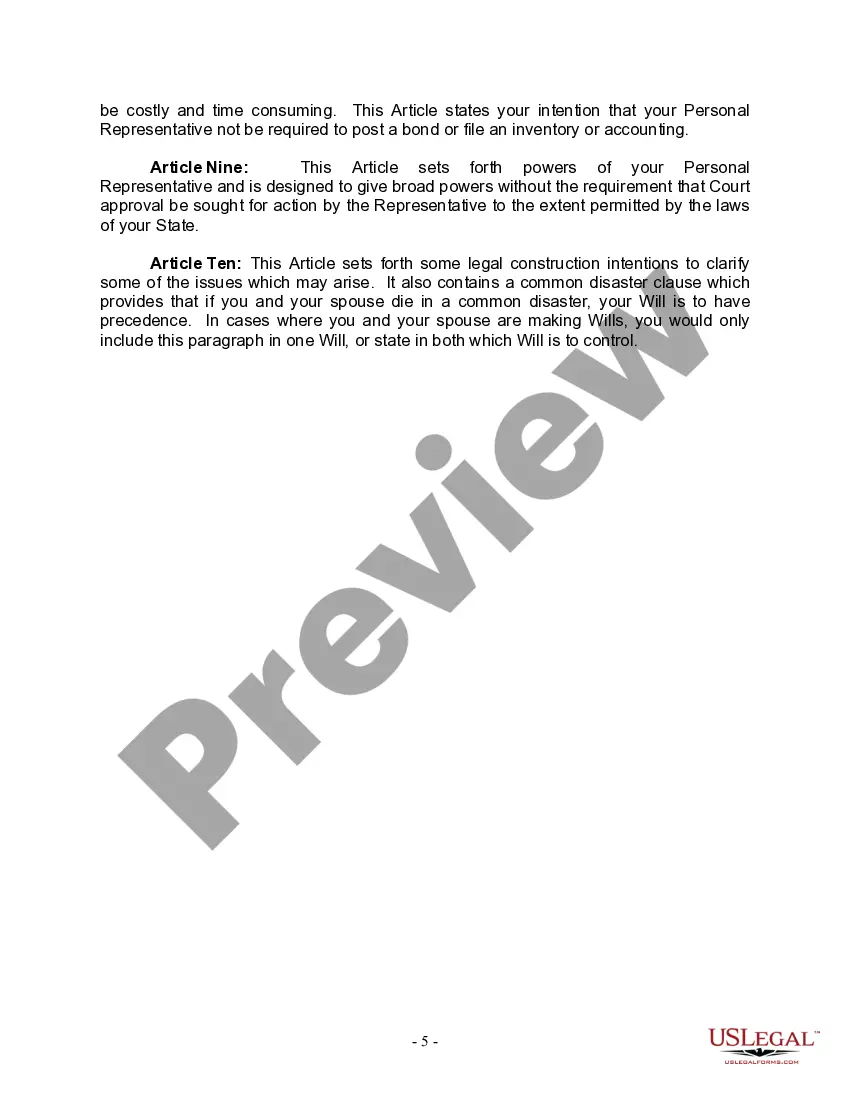
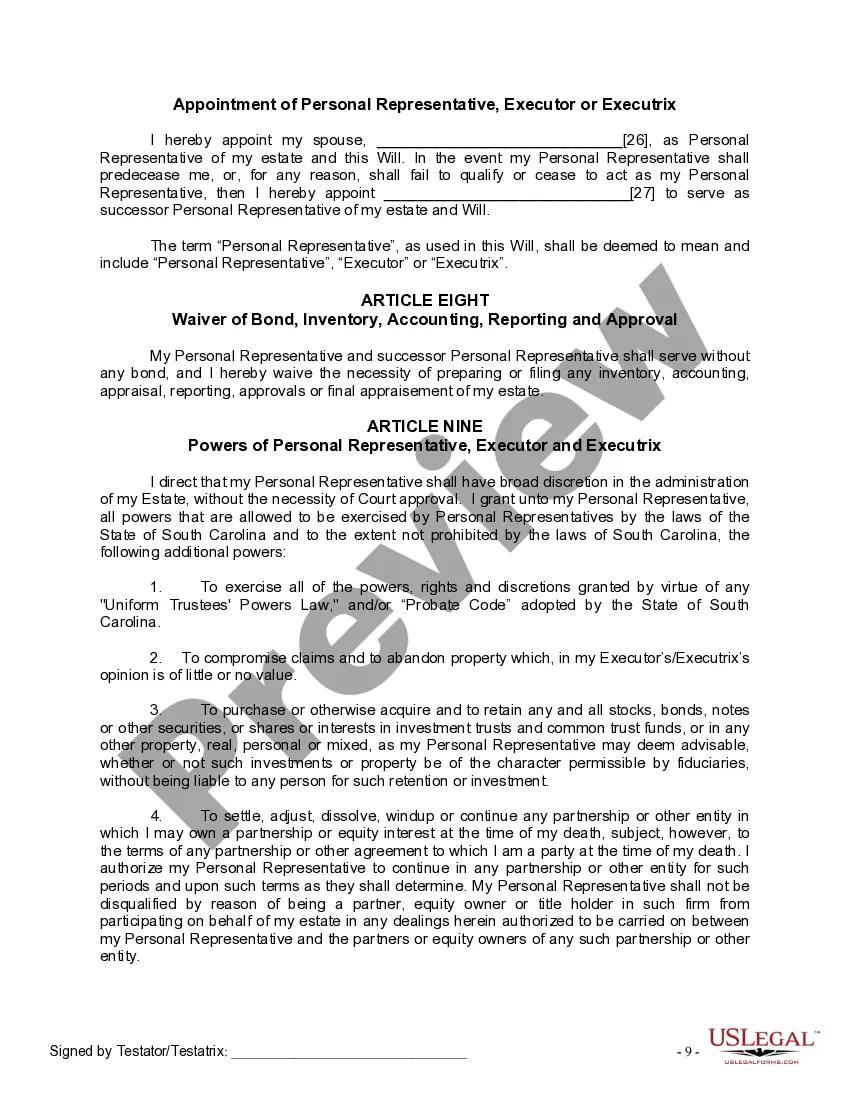
- Designation of a personal representative to oversee estate management.
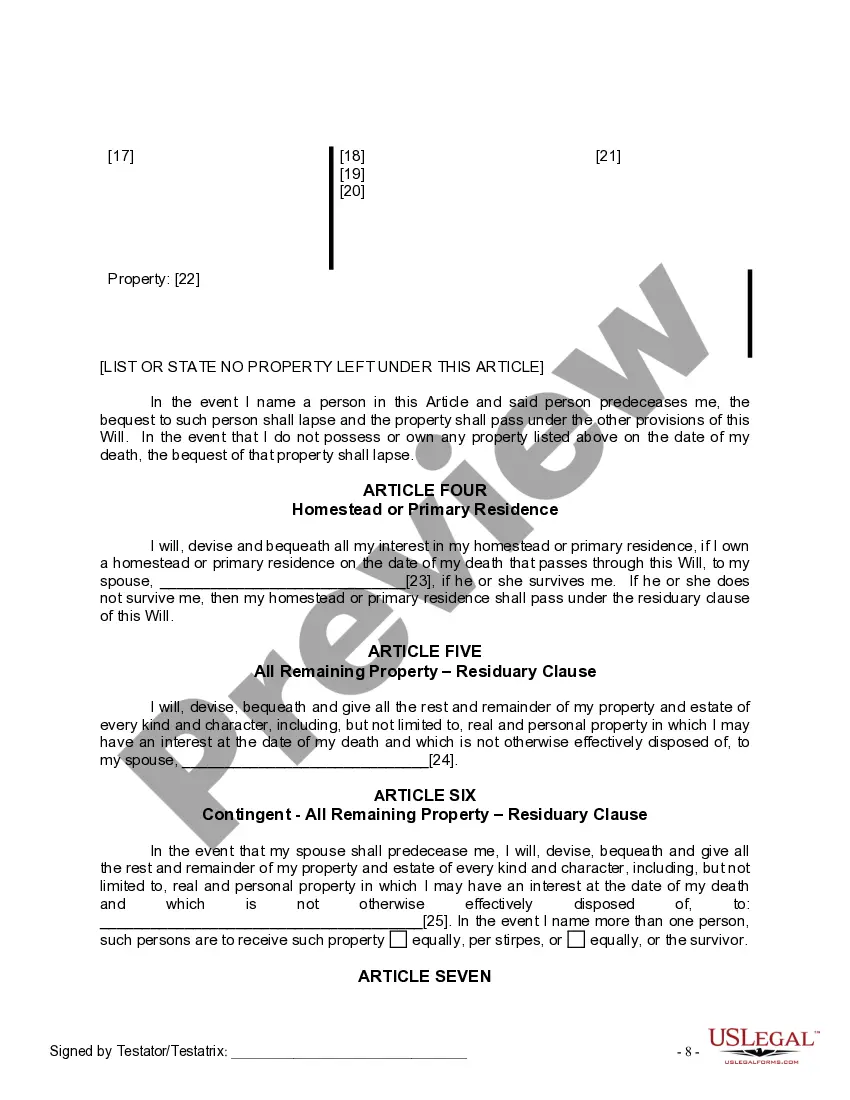
- Specific bequests of property and the distribution of the homestead.
- Alternative distribution plans if one spouse predeceases the other.
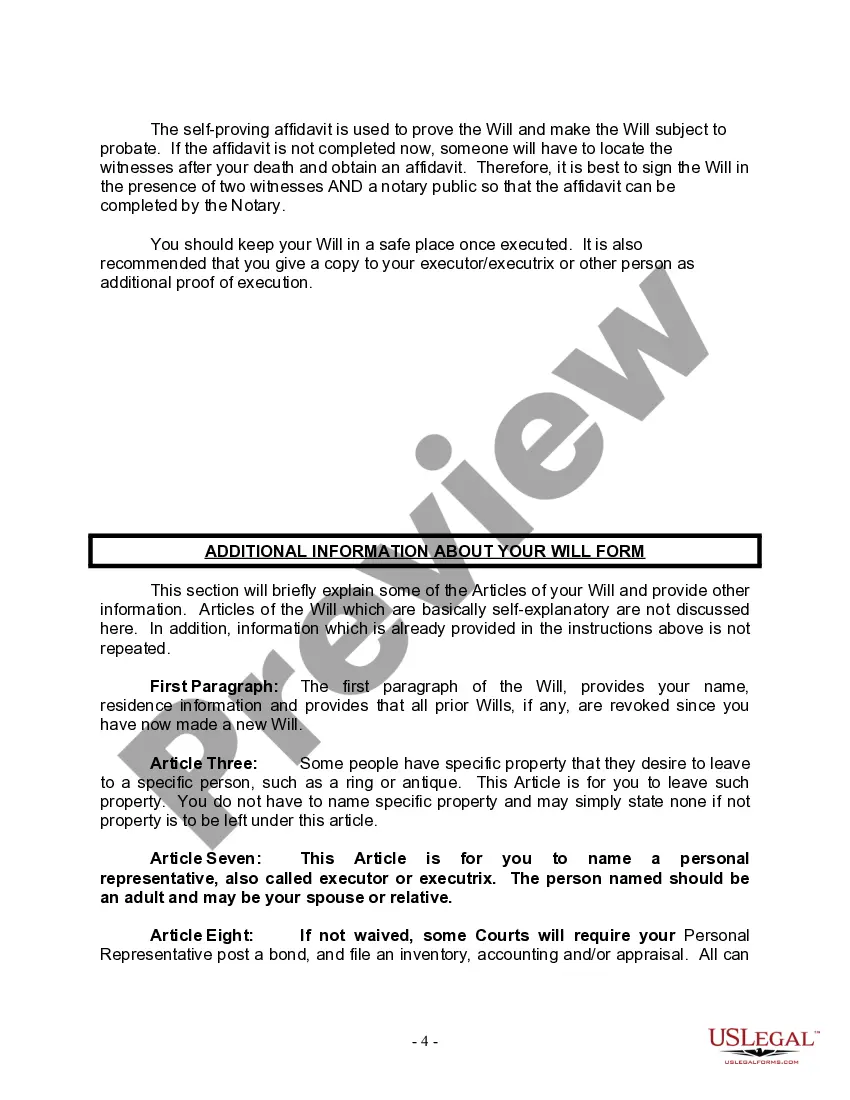
- Self-proving affidavit to streamline the probate process, where applicable.
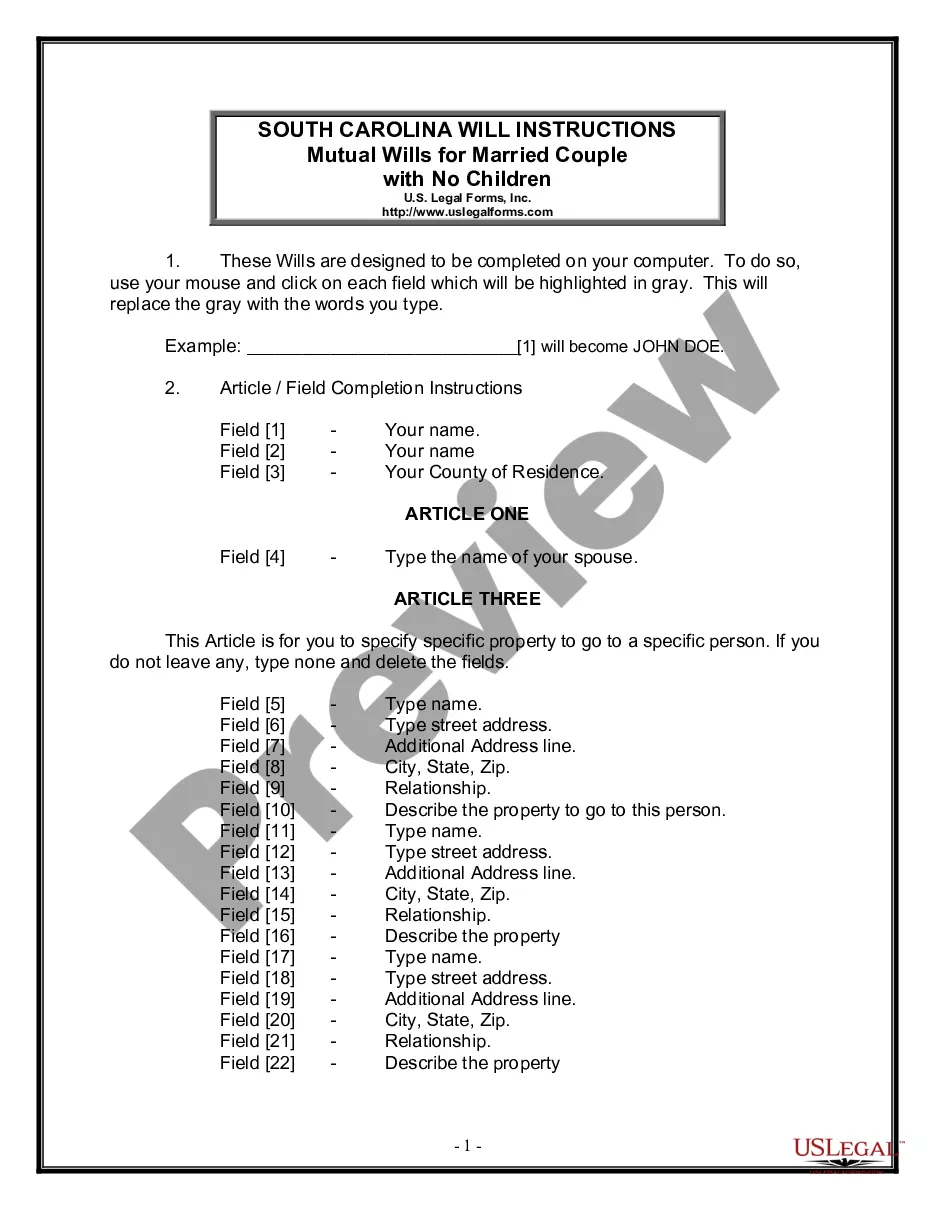
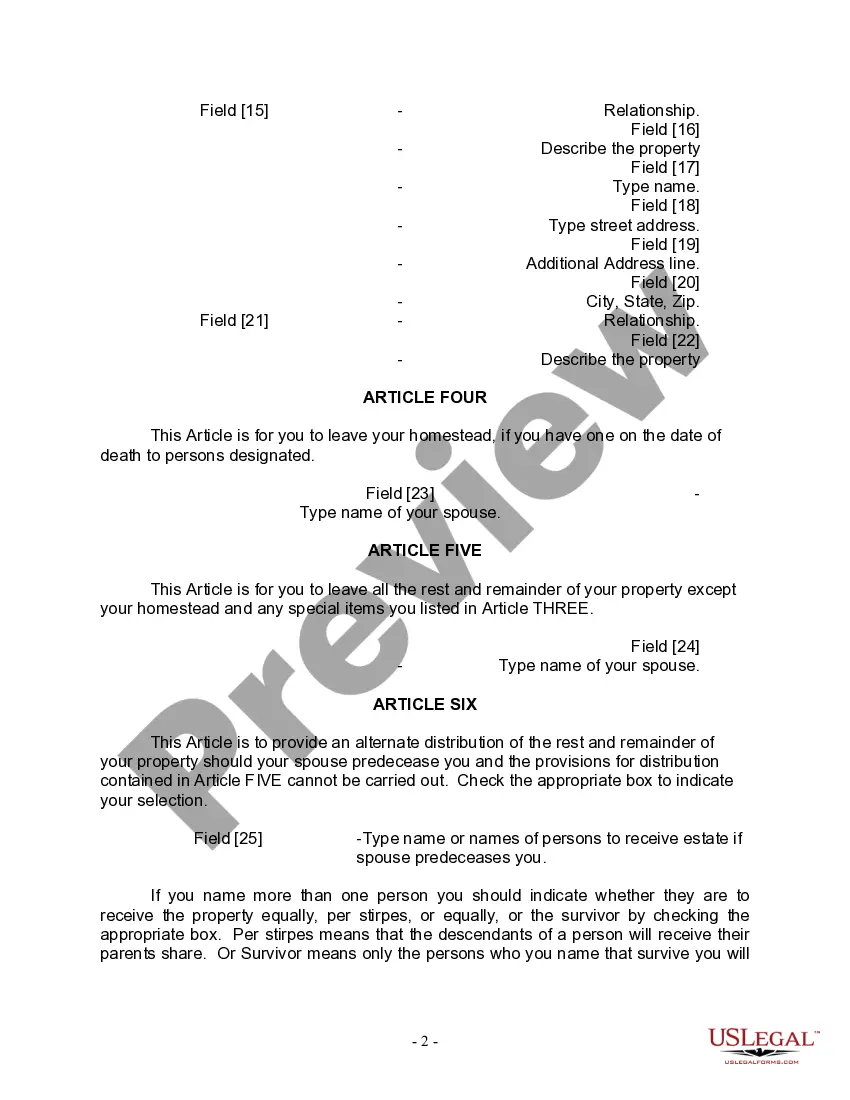
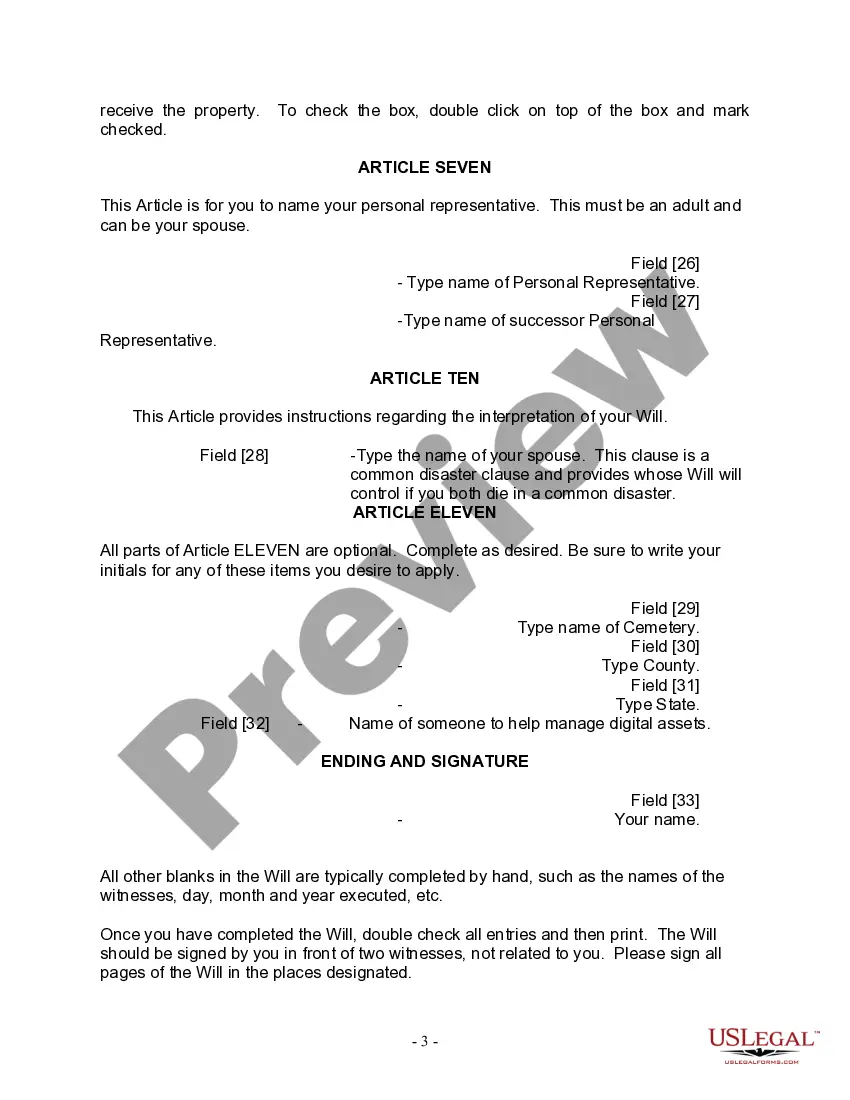




Situations where this form applies
This form is ideal for married couples with no children who want to ensure their assets are distributed according to their mutual wishes. It is particularly useful in situations where couples wish to make provisions for each otherâs financial security, clarify how property will be managed after one spouse's death, and avoid costly probate disputes.
Who needs this form
- Married couples without children seeking to establish clear estate plans.
- Spouses wanting to ensure mutual agreements on property distribution.
- Couples looking for legal protection to prevent disputes over their estate.
Completing this form step by step
- Enter the full names and addresses of both spouses in the designated fields.
- Designate a personal representative who will manage the estate.
- Specify any particular property you wish to bequeath to individuals.
- Indicate your wishes regarding your homestead and any remaining property.
- Have the wills signed in the presence of two witnesses who are not named in the documents.
- Consider notarization if required by your state for the self-proving affidavit.
Does this form need to be notarized?
Yes, this form must be notarized to be legally valid in most jurisdictions. US Legal Forms provides integrated online notarization, allowing you to securely complete the process via video call, making it convenient without the need for travel.
Get your form ready online
Our built-in tools help you complete, sign, share, and store your documents in one place.
Make edits, fill in missing information, and update formatting in US Legal Forms—just like you would in MS Word.
Download a copy, print it, send it by email, or mail it via USPS—whatever works best for your next step.
Sign and collect signatures with our SignNow integration. Send to multiple recipients, set reminders, and more. Go Premium to unlock E-Sign.
If this form requires notarization, complete it online through a secure video call—no need to meet a notary in person or wait for an appointment.
We protect your documents and personal data by following strict security and privacy standards.

Make edits, fill in missing information, and update formatting in US Legal Forms—just like you would in MS Word.

Download a copy, print it, send it by email, or mail it via USPS—whatever works best for your next step.

Sign and collect signatures with our SignNow integration. Send to multiple recipients, set reminders, and more. Go Premium to unlock E-Sign.

If this form requires notarization, complete it online through a secure video call—no need to meet a notary in person or wait for an appointment.

We protect your documents and personal data by following strict security and privacy standards.
Avoid these common issues
- Failing to sign the wills in the presence of qualified witnesses.
- Not naming a successor personal representative, leading to potential disputes.
- Leaving out important instructions regarding property distribution.
Advantages of online completion
- Convenient access to legally vetted templates crafted by licensed attorneys.
- Ability to edit the document easily on your computer.
- Instant download options providing a quick starting point for your estate planning.
Quick recap
- The Mutual Wills package is specifically for married couples without children.
- Completing this form helps prevent disputes over asset distribution after one spouse's passing.
- Ensure all signatures and witness requirements are met for legal validity.
- Review local laws to adapt the form appropriately to your jurisdiction.
Looking for another form?


Form popularity
FAQ
There is no difference between a testament and a will these days.A will traditionally included only instructions regarding real estate. It dealt with the disposition of land and structures on it that were owned by the testator.
A will or testament is a legal document that expresses a person's (testator) wishes as to how their property (estate) is to be distributed after their death and as to which person (executor) is to manage the property until its final distribution.
The four main types of wills are simple, testamentary trust, joint, and living.
Fraud or Undue Influence A nonfamily caregiver forcing the testator to leave them an inheritance. A family member getting the testator to sign a will by pretending it is just a general legal document that needs a signature.
Bank accounts. Brokerage or investment accounts. Retirement accounts and pension plans. A life insurance policy.
What Is a Last Will and Testament? A last will and testament, also known simply as a will, is a legal document that provides instructions for what should happen to a person's assets after his or her death.
There is no difference between a testament and a will these days. A will traditionally included only instructions regarding real estate.It dealt with the disposition of land and structures on it that were owned by the testator.
A will or testament is a legal document that expresses a person's (testator) wishes as to how their property (estate) is to be distributed after their death and as to which person (executor) is to manage the property until its final distribution.