South Carolina Mutual Wills Package with Last Wills and Testaments for Married Couple with Adult Children

What this document covers
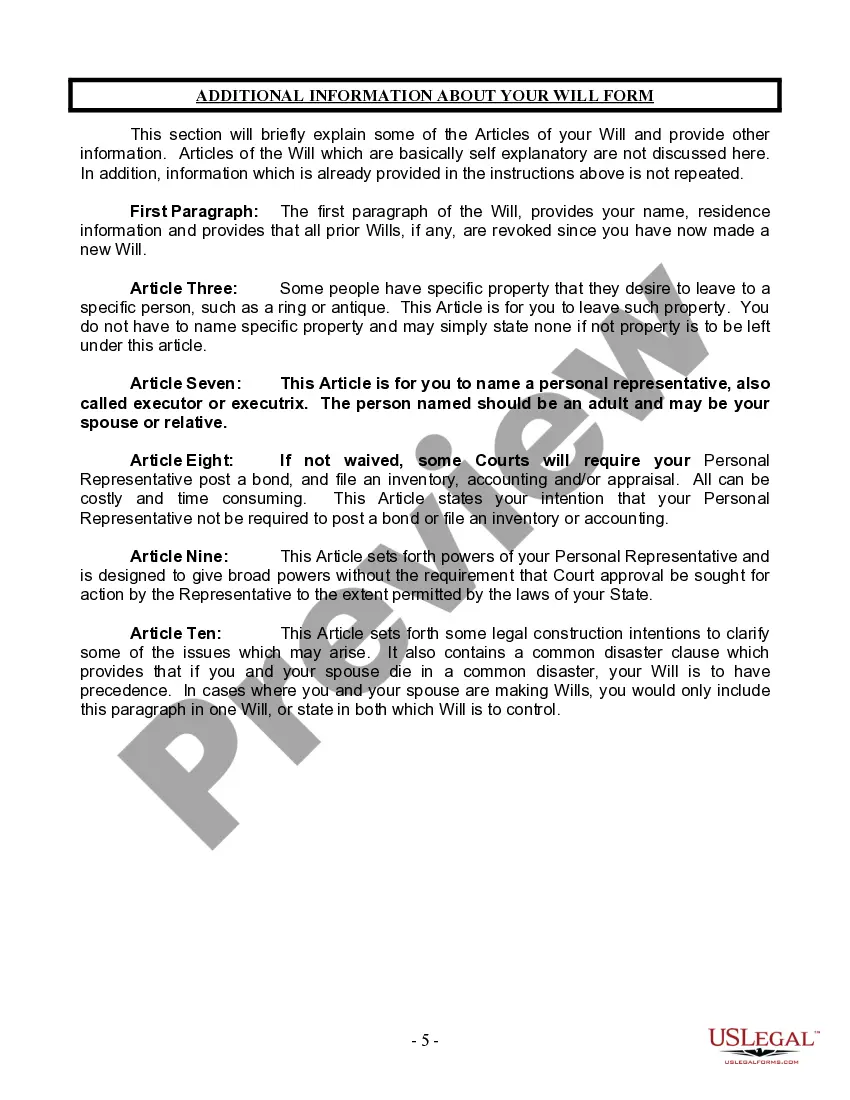
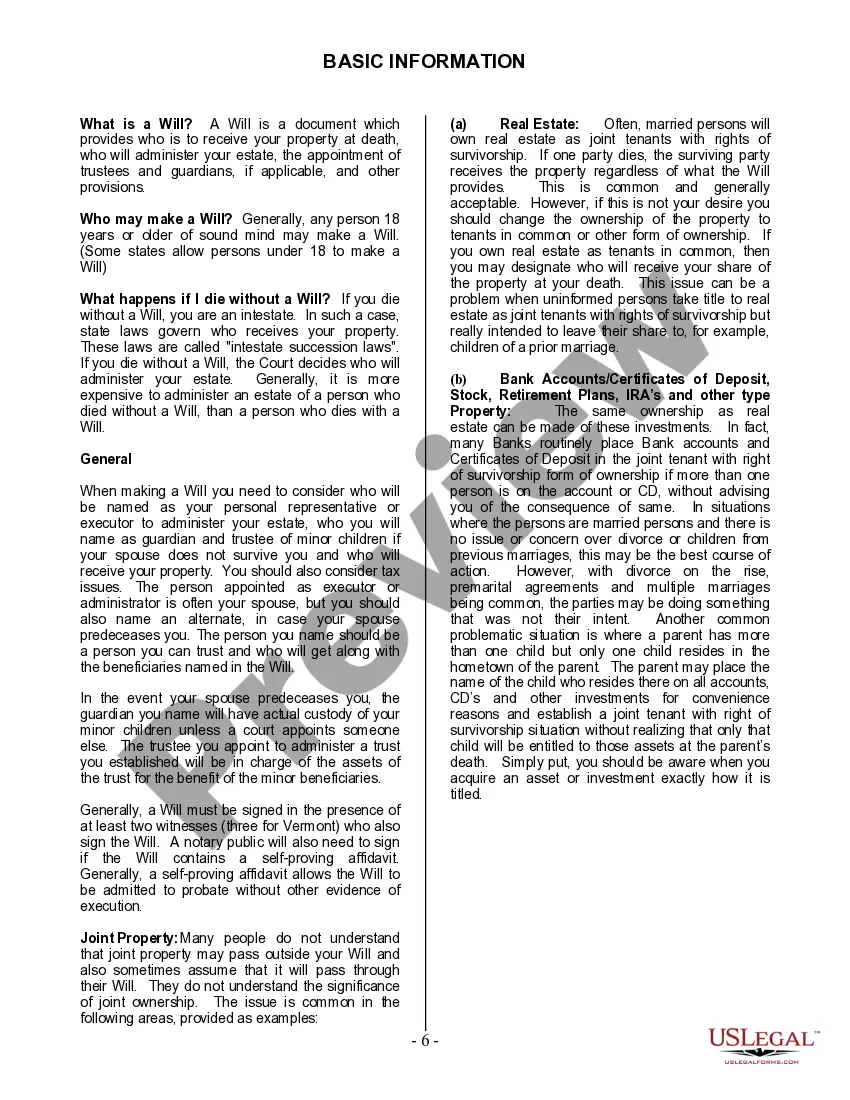
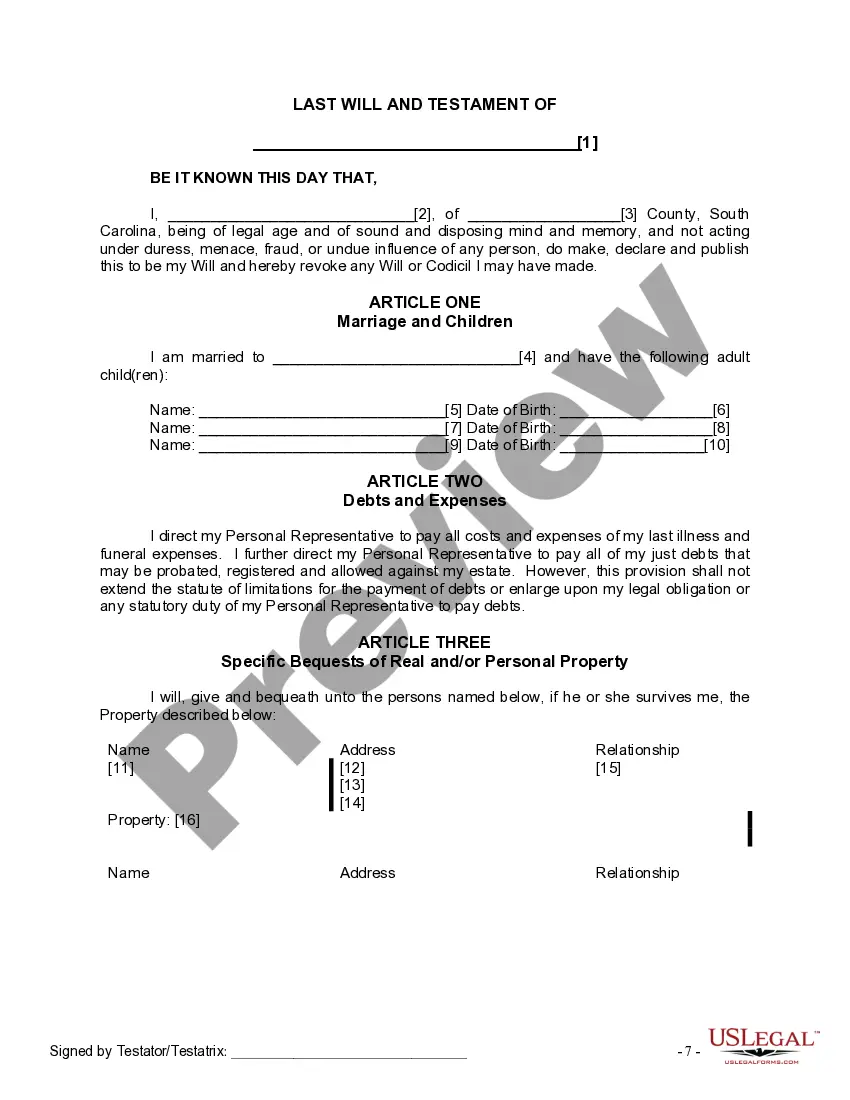
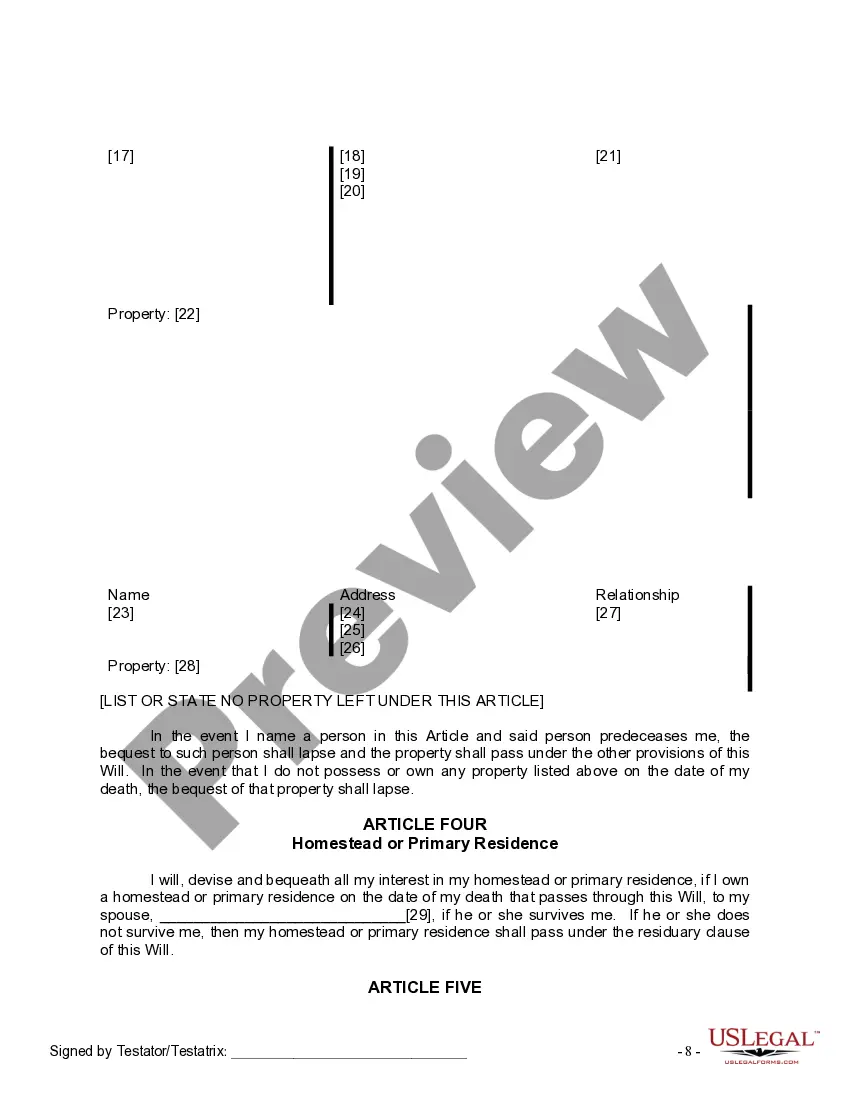
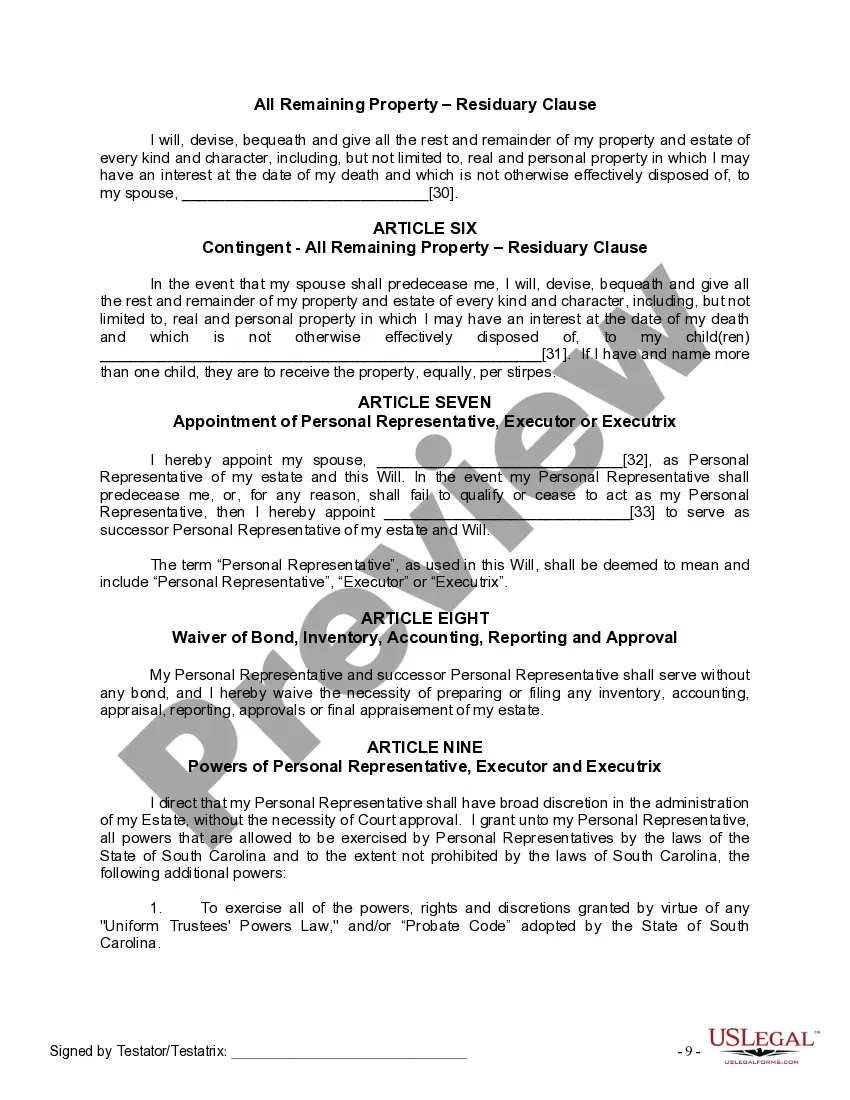
The Mutual Wills Package with Last Wills and Testaments for Married Couple with Adult Children is a legal document that allows married individuals to create mutual wills. This package is specifically designed for couples with adult children, offering clarity in how their assets will be distributed upon death. It includes two separate willsâone for each spouseâensuring that both the intentions of each spouse are duly recorded and respected, which sets it apart from standard individual wills.
Key parts of this document
- Two separate Last Wills and Testaments for each spouse.
- Appointment of a personal representative or executor for estate management.
- Designations for asset distribution among the spouse and adult children.
- Provisions for debts and expenses to be settled by the estate.
- Requirements for signing in the presence of witnesses and notarization.





Common use cases
This form is useful when married couples want to ensure that their wills are coordinated and designate the same beneficiaries. It is particularly appropriate for couples with adult children who want to outline how their estates will be managed and distributed after their passing, minimizing the potential for conflict and confusion among heirs.
Who can use this document
The following individuals should consider using this form:
- Married couples wishing to create mutual wills for estate planning.
- Couples with adult children wanting to provide clear inheritance guidelines.
- Individuals seeking to align their final wishes with their spouse.
- Couples wanting to minimize potential disputes regarding asset distribution after death.
Steps to complete this form
To successfully complete the Mutual Wills Package, follow these steps:
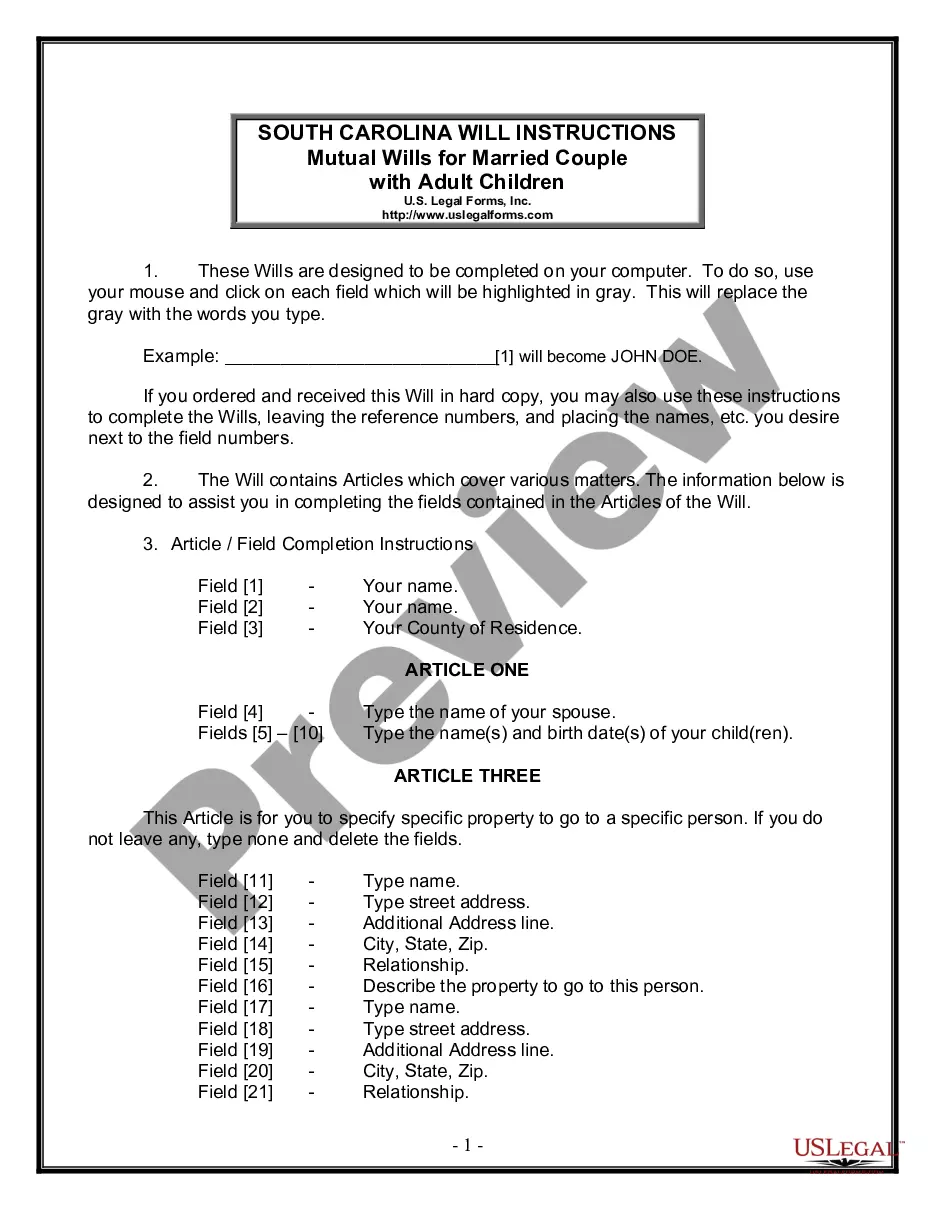
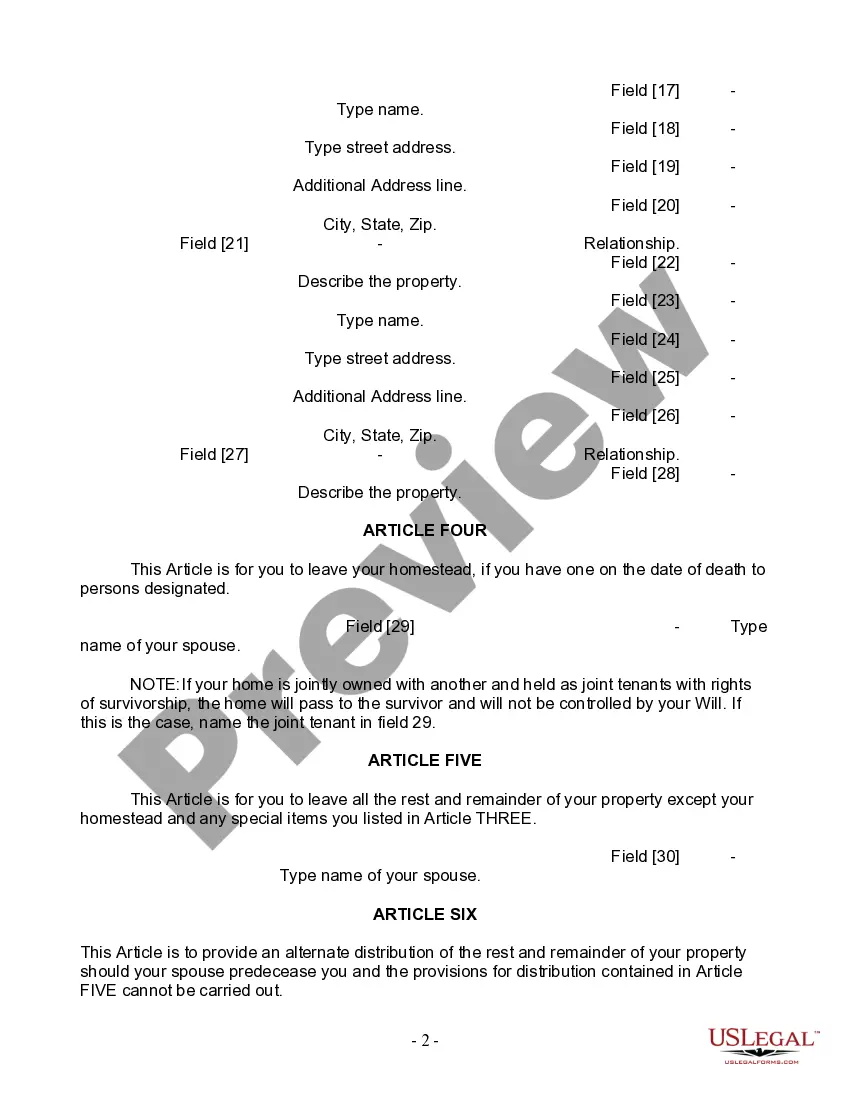
- Identify both spouses and enter their full names in the designated fields.
- List all adult children along with their names and birth dates.
- Designate a personal representative or executor for each will.
- Clearly outline any specific bequests or instructions regarding property distribution.
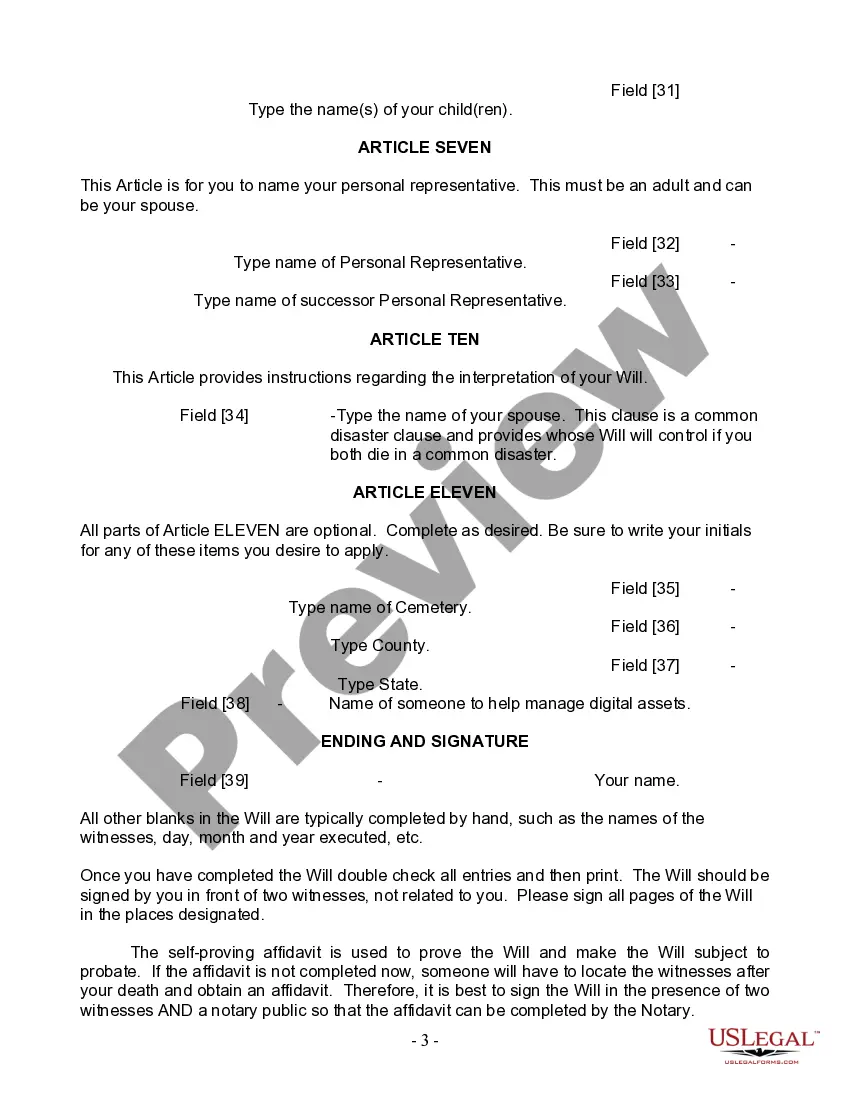
- Ensure that both wills are signed in the presence of two witnesses and notarized if necessary.
Notarization requirements for this form
Yes, this form must be notarized to be legally valid. This ensures that the signatures are authenticated, providing additional verification that the documents are executed in compliance with South Carolina state law. US Legal Forms offers integrated online notarization, providing a secure and convenient process through video calls.
Get your form ready online
Our built-in tools help you complete, sign, share, and store your documents in one place.
Make edits, fill in missing information, and update formatting in US Legal Forms—just like you would in MS Word.
Download a copy, print it, send it by email, or mail it via USPS—whatever works best for your next step.
Sign and collect signatures with our SignNow integration. Send to multiple recipients, set reminders, and more. Go Premium to unlock E-Sign.
If this form requires notarization, complete it online through a secure video call—no need to meet a notary in person or wait for an appointment.
We protect your documents and personal data by following strict security and privacy standards.

Make edits, fill in missing information, and update formatting in US Legal Forms—just like you would in MS Word.

Download a copy, print it, send it by email, or mail it via USPS—whatever works best for your next step.

Sign and collect signatures with our SignNow integration. Send to multiple recipients, set reminders, and more. Go Premium to unlock E-Sign.

If this form requires notarization, complete it online through a secure video call—no need to meet a notary in person or wait for an appointment.

We protect your documents and personal data by following strict security and privacy standards.
Avoid these common issues
- Neglecting to have the wills signed in front of the required number of witnesses.
- Failing to update the wills after major life events such as births or deaths.
- Listing beneficiaries who are unable to inherit due to legal restrictions.
- Not ensuring both spouses' wills are consistent with each other.
Why use this form online
- Convenient online access allows for quick completion and downloading.
- Forms are drafted by licensed attorneys, ensuring legal accuracy.
- Editability lets users customize the document to meet their specific needs.
- Save time and eliminate the need for initial legal consultations.
Main things to remember
- Mutual Wills ensure that both spouses' final wishes are recorded and respected.
- Being specific about assets and beneficiaries reduces potential conflicts among heirs.
- This package includes necessary legal provisions to cover debts and expenses.
- Proper notarization and witnessing are crucial for the validity of the wills.
Looking for another form?
Form popularity
FAQ
Mirror wills are based on the idea that married or unmarried couples will likely have the same wishes regarding their estate. No matter which spouse dies first, the estates are handled the same way. The basic structure of a mirror will is similar to an individual last will.
It is a customary estate planning practice for each spouse to have his or her own will. While some practitioners may draft a joint will for a married couple, it is not recommended.
You and your spouse may have one of the most common types of estate plans between married couples, which is a simple will leaving everything to each other. With this type of plan, you leave all of your assets outright to your surviving spouse. The kids or other beneficiaries only get something after you are both gone.
A mutual Will is where two (or more) testators make Wills which mirror the contents of the other(s). However, mutual Wills cannot be altered upon the death of one of the testators.
(And that includes youso be sure you get that done right away if you haven't already.) But did you know that if you're married, your spouse needs a will too? That's right. This is a case where one will isn't enoughyou each need your own.
The mutual wills can be revoked during the lifetimes of both testators, but, on the first death, the survivor is prevented from making a new will in the future.
Many married couples own most of their assets jointly with the right of survivorship. When one spouse dies, the surviving spouse automatically receives complete ownership of the property. This distribution cannot be changed by Will.
A joint will is a legal document executed by two (or more) people, which merges their individual wills into a single, combined last will and testament. Like most wills, a joint will lets the will-makers name who will get their property and assets after they die. Joint wills are usually created by married couples.