South Carolina Last Will and Testament for Married person with Minor Children from Prior Marriage
About this form
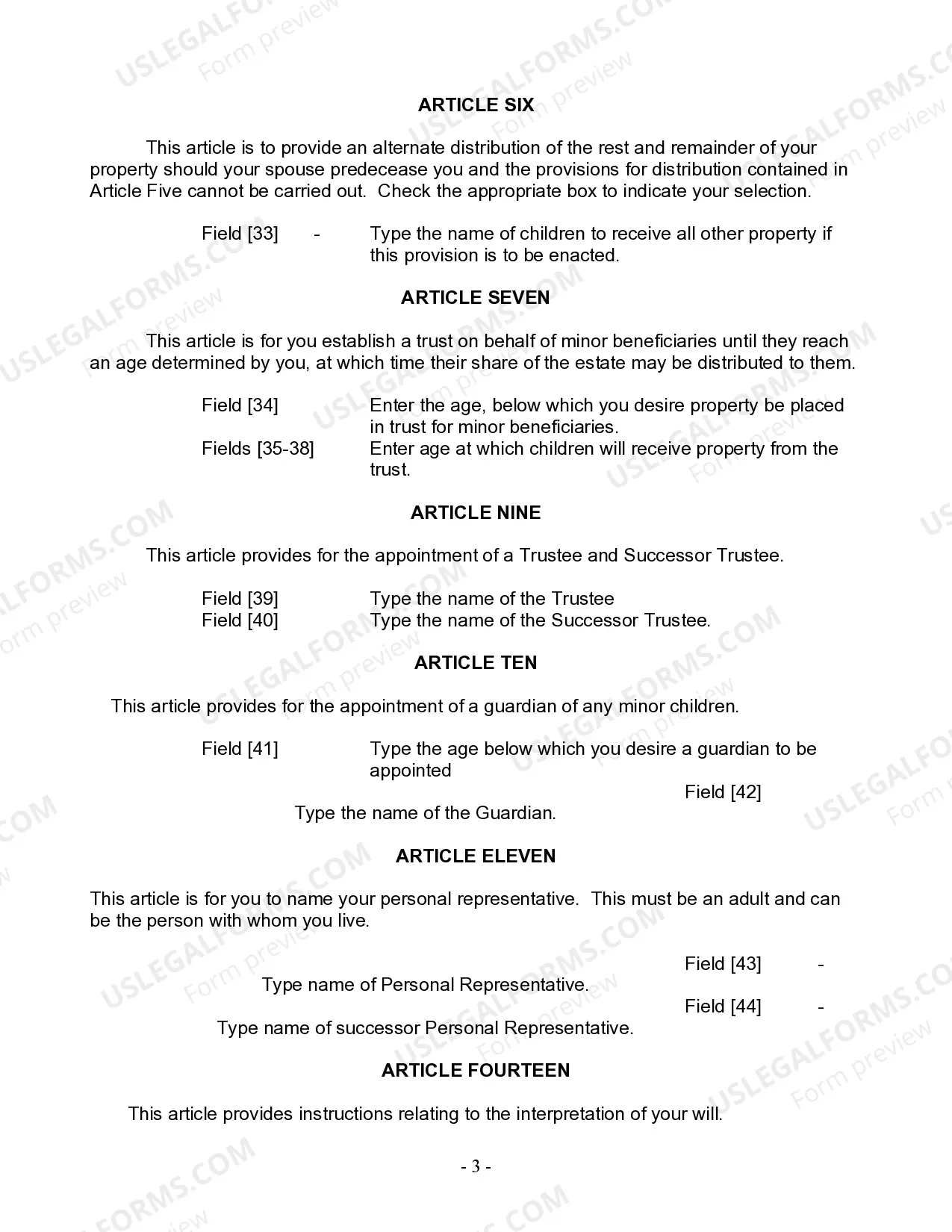
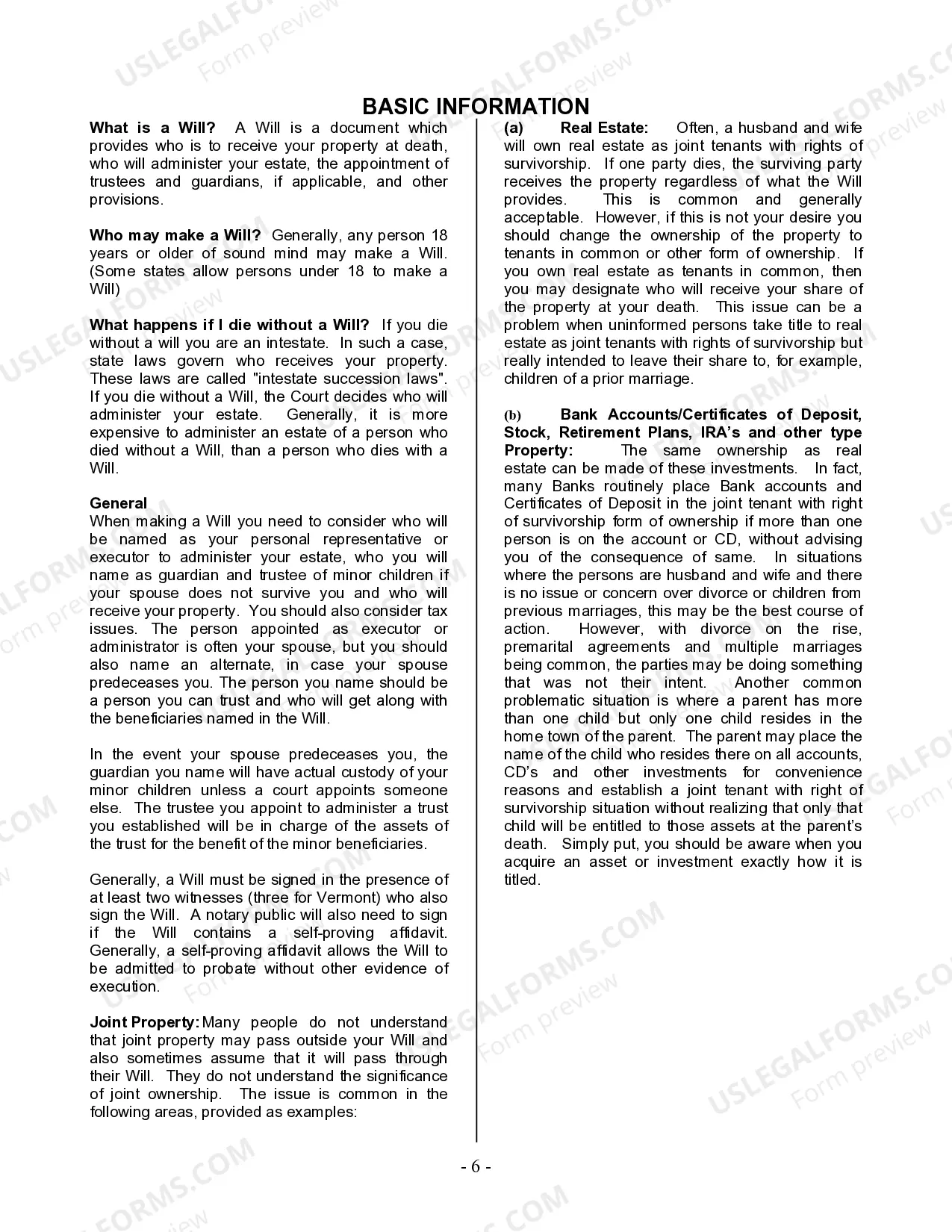
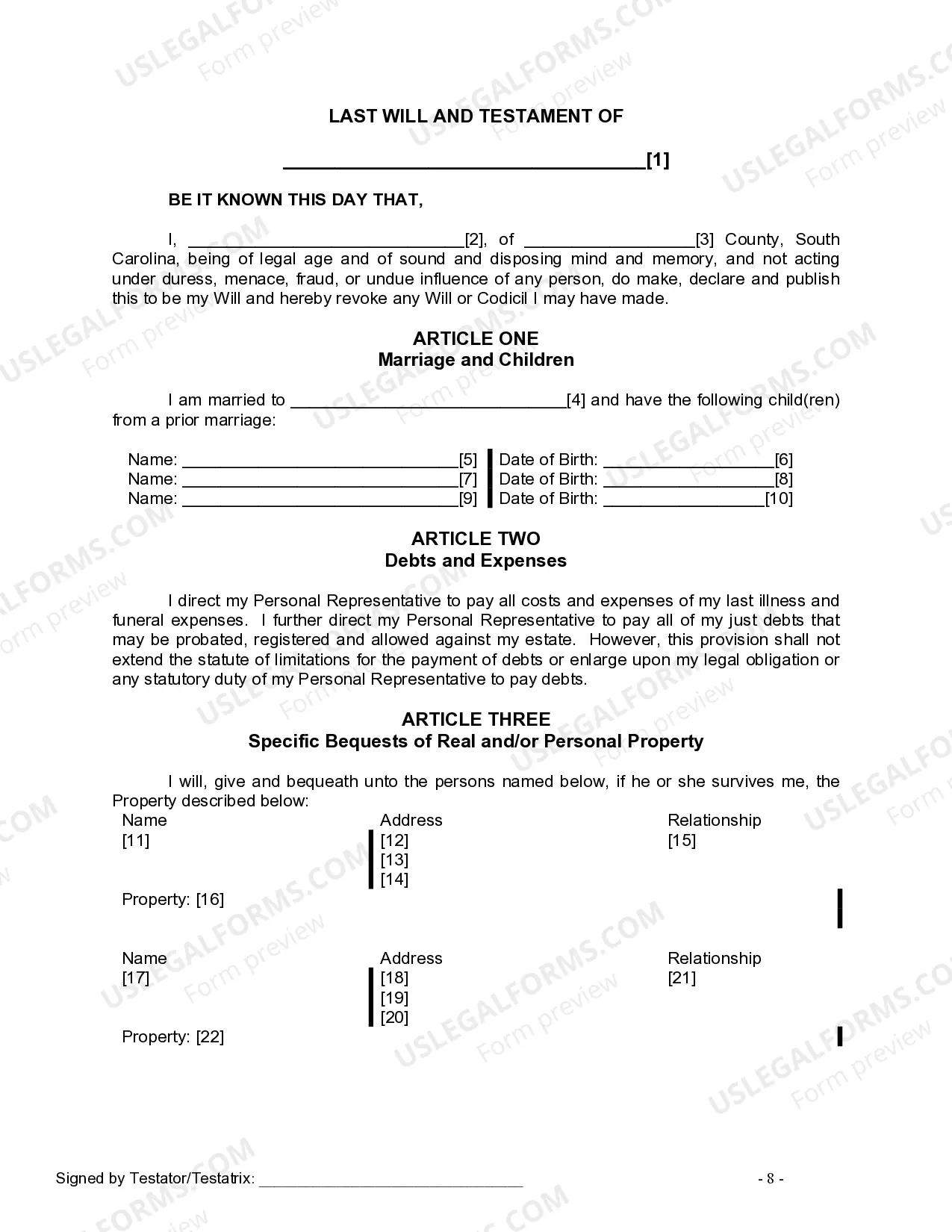
The Last Will and Testament for a married person with minor children from a prior marriage is a legal document that outlines how your assets and property will be distributed upon your death. It is specifically designed for individuals who are married and have children from a previous relationship, ensuring that both your current spouse and your children from the prior marriage are considered in your estate planning. This form includes provisions for appointing a personal representative, designating beneficiaries, and establishing a trust for minor children, which may not be included in simpler wills.
Main sections of this form
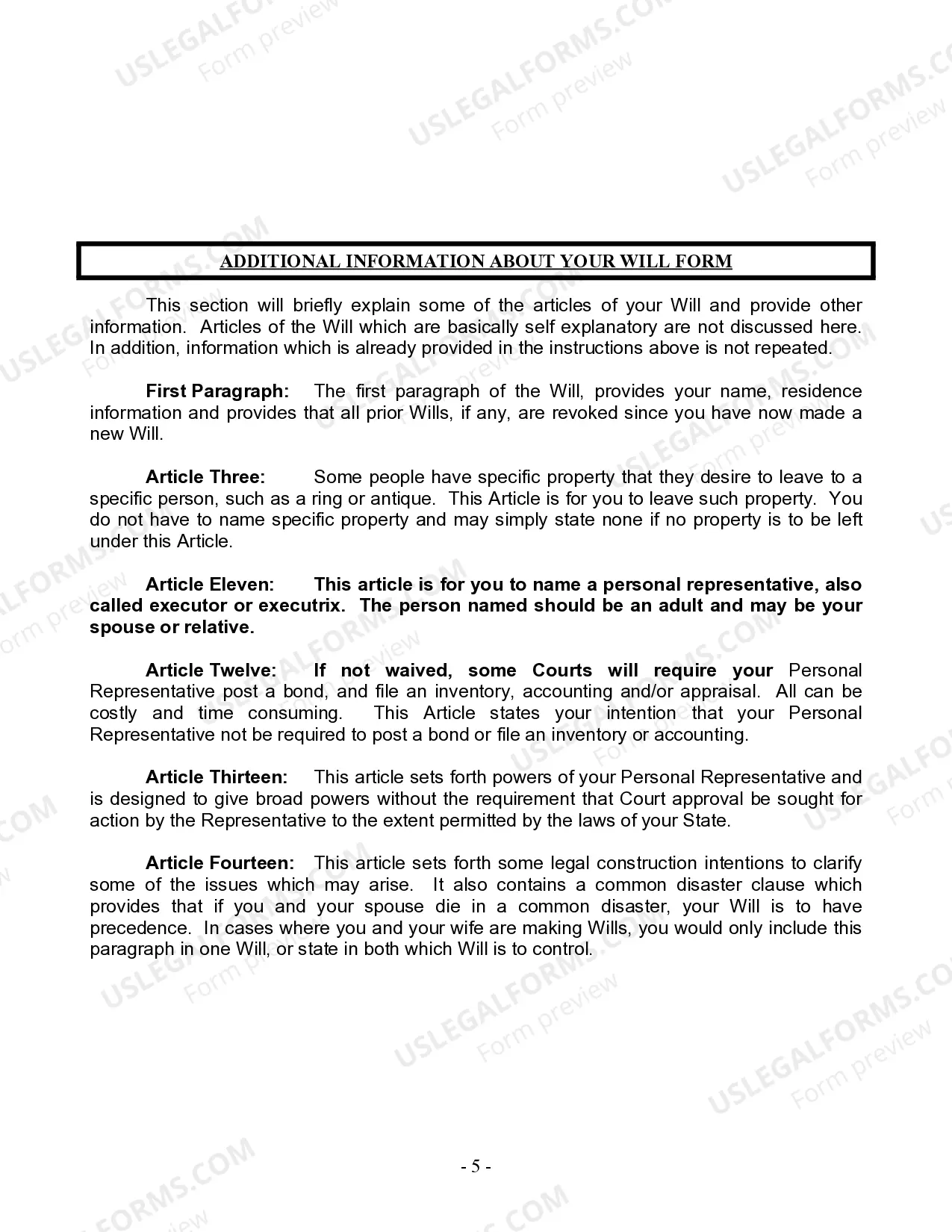
- Appointment of a personal representative or executor to manage your estate.
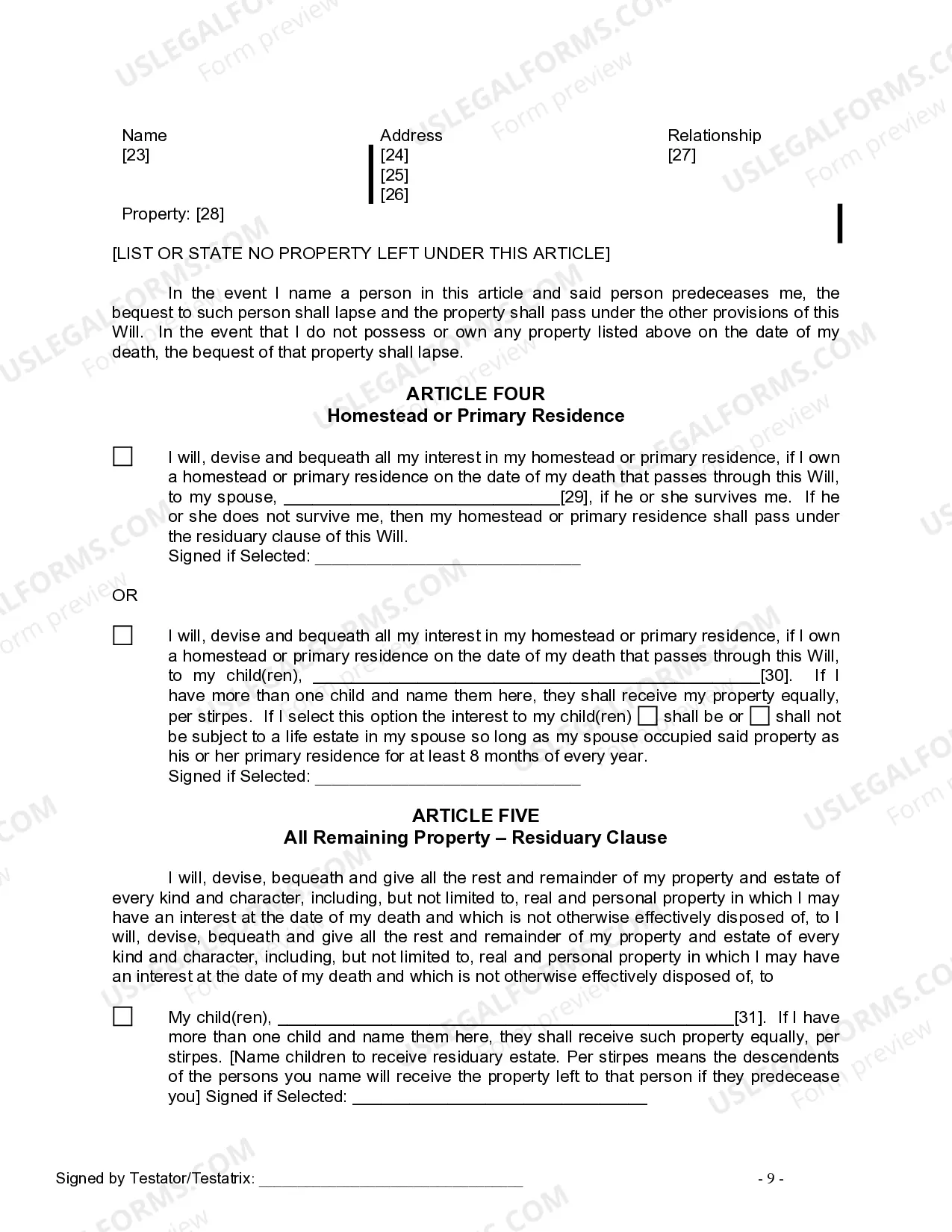
- Specification of who will receive your property, including both your current spouse and children from a prior marriage.
- Provisions for establishing a trust for minor children until they reach a specified age.
- Allocation of your homestead or primary residence to chosen beneficiaries.
- Instructions for appointing a guardian for minor children if necessary.







Common use cases
This form is appropriate when you want to ensure that your estate is distributed according to your wishes while considering your current spouse and children from a previous marriage. It is particularly useful if you have complex family dynamics and want to provide for your children while protecting your spouse's interests. It is advisable to complete this will if you have significant assets or wish to designate specific guardians for your minor children.
Who this form is for
- Married individuals with children from a prior relationship.
- Individuals who wish to ensure both their spouse and children are adequately provided for in their will.
- Anyone looking to establish a trust for their minor children within their estate planning.
- Individuals seeking to appoint a guardian for their children in case of their untimely death.
How to prepare this document
- Begin by entering your full name and County of residence.
- Designate your spouse's name, and provide the names and birthdates of your children from a prior marriage.
- Specify any specific property you wish to bequeath to designated beneficiaries.
- Choose and appoint a trustee for your childrenâs trust funds and a guardian for minor children if necessary.
- Review the document carefully, ensuring all fields are filled correctly before signing in the presence of two witnesses.
Does this document require notarization?
Yes, this form must be notarized to be legally valid if it includes a self-proving affidavit. This ensures the will is accepted in probate without needing witnesses. US Legal Forms offers integrated online notarization services that are available 24/7, allowing for a secure video call with a notary, which is legally equivalent to traditional notarization.
Get your form ready online
Our built-in tools help you complete, sign, share, and store your documents in one place.
Make edits, fill in missing information, and update formatting in US Legal Forms—just like you would in MS Word.
Download a copy, print it, send it by email, or mail it via USPS—whatever works best for your next step.
Sign and collect signatures with our SignNow integration. Send to multiple recipients, set reminders, and more. Go Premium to unlock E-Sign.
If this form requires notarization, complete it online through a secure video call—no need to meet a notary in person or wait for an appointment.
We protect your documents and personal data by following strict security and privacy standards.

Make edits, fill in missing information, and update formatting in US Legal Forms—just like you would in MS Word.

Download a copy, print it, send it by email, or mail it via USPS—whatever works best for your next step.

Sign and collect signatures with our SignNow integration. Send to multiple recipients, set reminders, and more. Go Premium to unlock E-Sign.

If this form requires notarization, complete it online through a secure video call—no need to meet a notary in person or wait for an appointment.

We protect your documents and personal data by following strict security and privacy standards.
Common mistakes
- Not naming a secondary personal representative, which can lead to complications if the primary representative cannot serve.
- Failing to specify guardians for minor children, leaving their care uncertain.
- Neglecting to sign the will in front of the required witnesses, risking the validity of the document.
- Overlooking the requirement for notarization if a self-proving affidavit is included.
Advantages of online completion
- Convenient access to complete your will from home at any time.
- Editable format allows you to easily make changes as your life circumstances evolve.
- Reliable legal templates drafted by licensed attorneys to ensure compliance with state laws.
- Simplified process for organizing your estate and protecting your family's future.
Key takeaways
- This Last Will and Testament is tailored for married individuals with children from previous relationships.
- It addresses critical roles for asset distribution, trust management, and guardianship.
- Proper execution requires witnesses and, in many cases, notarization to ensure validity.
Looking for another form?
Form popularity
FAQ
If each spouse has their own Will, California law allows them to make new Wills after the divorce has been filed and creating the new Will does not violate the Automatic Temporary Restraining Order (ATRO) against changing beneficiaries, selling assets, etc.
A South Carolina will must be filed with the Probate Court within thirty days of the decedent's death. Once the will is proven, the executor (person who oversees the deceased's estate) can proceed to wrap up the estate, which includes collecting and protecting property, paying off debts, and then distributing assets.
It must be in writing. Generally, of course, wills are composed on a computer and printed out. The person who made it must have signed and dated it. A will must be signed and dated by the person who made it. Two adult witnesses must have signed it. Witnesses are crucial.
A South Carolina will must be filed with the Probate Court within thirty days of the decedent's death. Once the will is proven, the executor (person who oversees the deceased's estate) can proceed to wrap up the estate, which includes collecting and protecting property, paying off debts, and then distributing assets.
A will can also be declared invalid if someone proves in court that it was procured by undue influence. This usually involves some evil-doer who occupies a position of trust -- for example, a caregiver or adult child -- manipulating a vulnerable person to leave all, or most, of his property to the manipulator instead
It is a customary estate planning practice for each spouse to have his or her own will. While some practitioners may draft a joint will for a married couple, it is not recommended. Here are a few reasons why.
All wills must be property signed and witnessed to be effective. For example, South Carolina requires two witnesses for a will to be valid. A notary is not sufficient, or even required.Another reason is that having an interested witness may invalidate the bequest to the beneficiary who serves as a witness.
Fraud or Undue Influence A nonfamily caregiver forcing the testator to leave them an inheritance. A family member getting the testator to sign a will by pretending it is just a general legal document that needs a signature.
Do I Need to Have My Will Notarized? No, in South Carolina, you do not need to notarize your will to make it legal.A self-proving will speeds up probate because the court can accept the will without contacting the witnesses who signed it.