South Carolina Letter from Landlord to Tenant about Intent to increase rent and effective date of rental increase
What this document covers
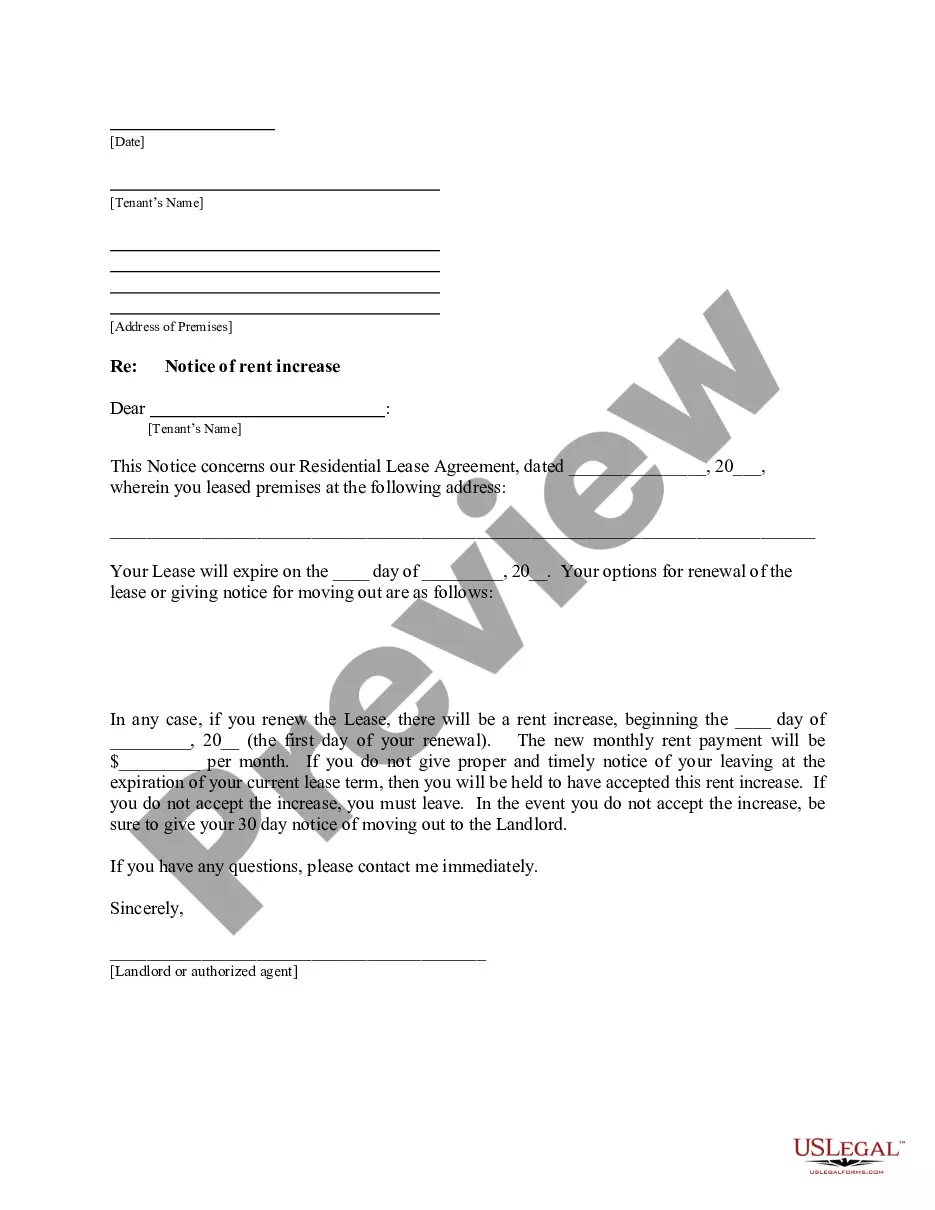
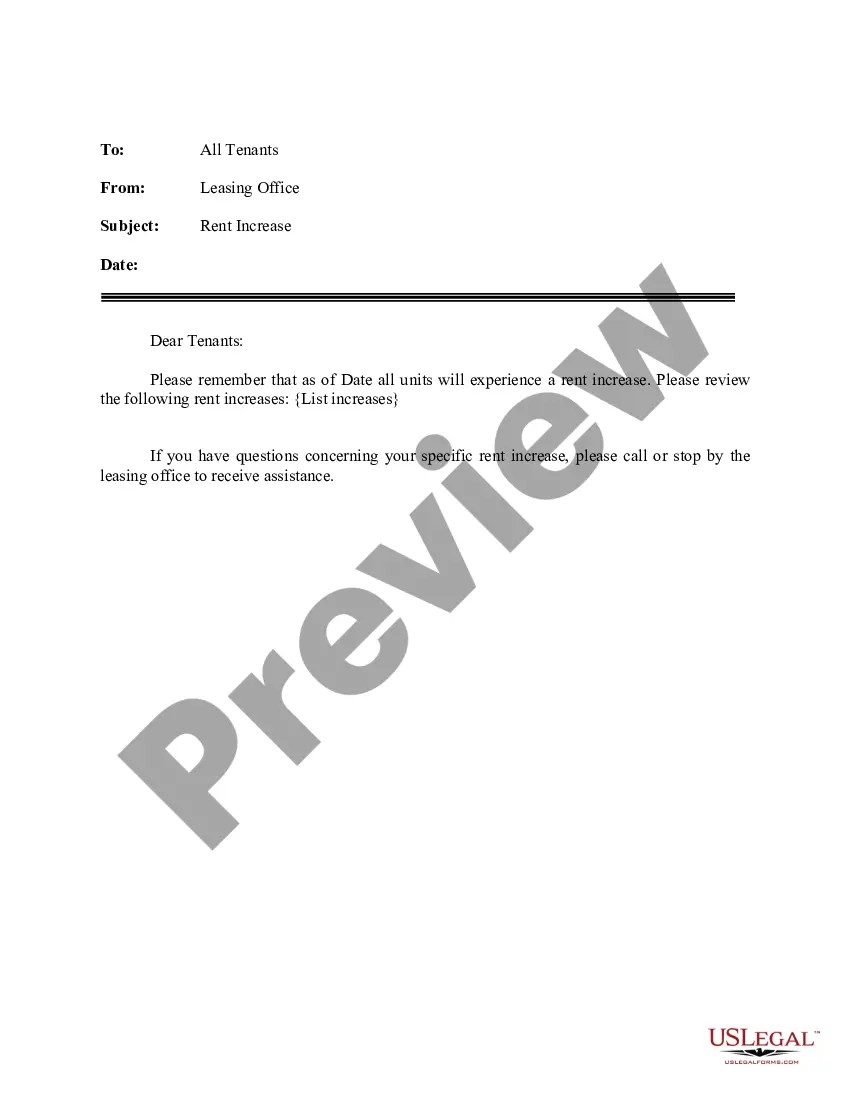
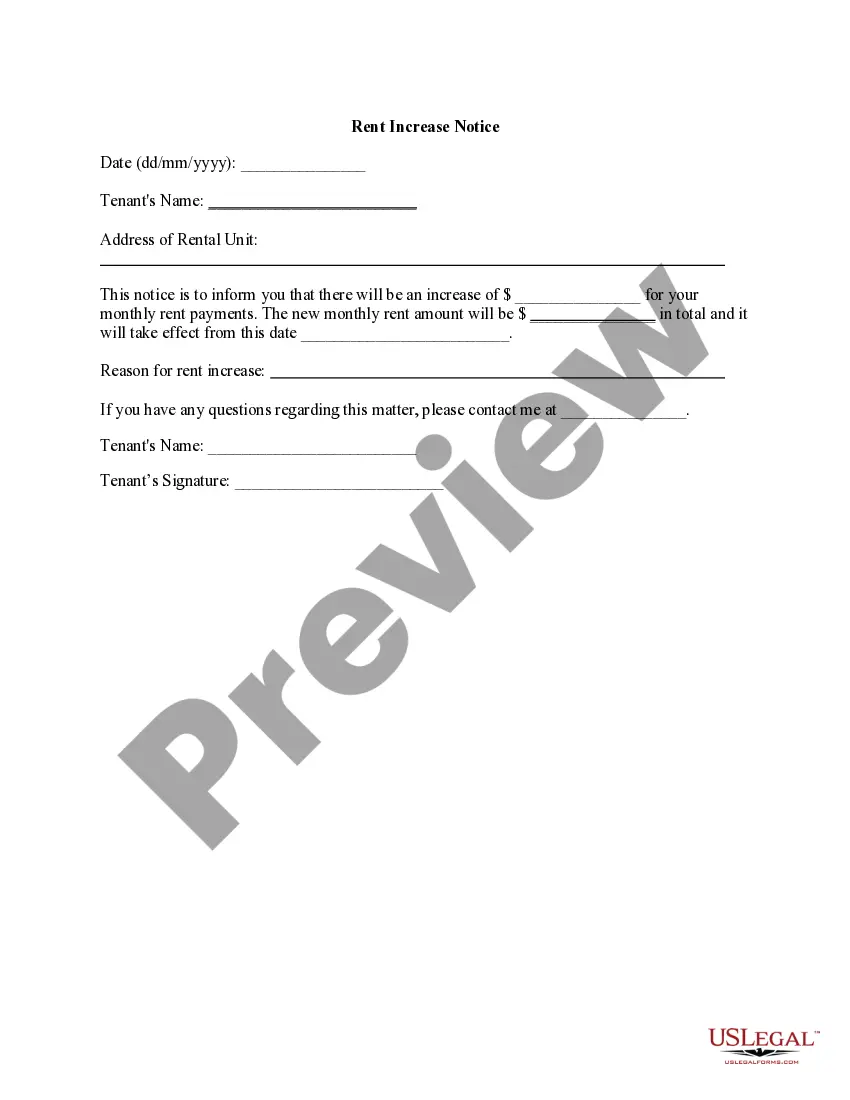
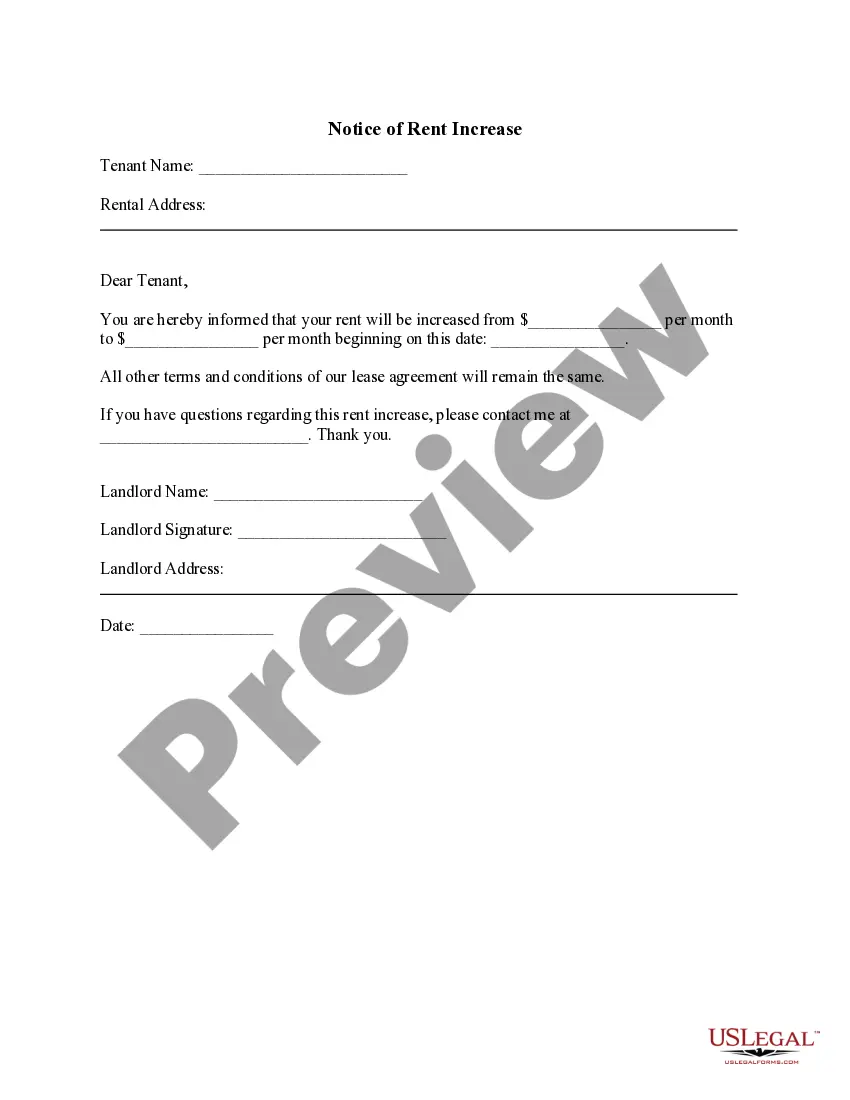
This form is a Letter from Landlord to Tenant about Intent to Increase Rent. It serves as a formal notice to inform the tenant of a rent increase once the current lease term has expired. The letter outlines the effective date of the increase and provides the tenant with options regarding their lease renewal. This form differs from other rental agreements as it specifically addresses a change in rental terms rather than the original lease conditions.
Form components explained
- Date of the original lease agreement.
- Address of the leased property.
- Expiration date of the current lease.
- Details on the rent increase and options for the tenant.
- Contact information for the landlord or authorized agent.

Common use cases
Intended users of this form
- Landlords who wish to increase rent for their rental property.
- Tenant facing a lease expiration and needing clarity on new rental terms.
- Property managers acting on behalf of the landlord.
Steps to complete this form
- Identify the parties involved by entering the landlord's and tenant's names.
- Specify the address of the rental property.
- Enter the date of the original lease agreement.
- Include the expiration date of the current lease.
- Clearly state the new rent amount and the effective date for this increase.
- Sign the letter, including the landlord's name or authorized agent's details.
Notarization requirements for this form
This form usually doesn’t need to be notarized. However, local laws or specific transactions may require it. Our online notarization service, powered by Notarize, lets you complete it remotely through a secure video session, available 24/7.
Get your form ready online
Our built-in tools help you complete, sign, share, and store your documents in one place.
Make edits, fill in missing information, and update formatting in US Legal Forms—just like you would in MS Word.
Download a copy, print it, send it by email, or mail it via USPS—whatever works best for your next step.
Sign and collect signatures with our SignNow integration. Send to multiple recipients, set reminders, and more. Go Premium to unlock E-Sign.
If this form requires notarization, complete it online through a secure video call—no need to meet a notary in person or wait for an appointment.
We protect your documents and personal data by following strict security and privacy standards.

Make edits, fill in missing information, and update formatting in US Legal Forms—just like you would in MS Word.

Download a copy, print it, send it by email, or mail it via USPS—whatever works best for your next step.

Sign and collect signatures with our SignNow integration. Send to multiple recipients, set reminders, and more. Go Premium to unlock E-Sign.

If this form requires notarization, complete it online through a secure video call—no need to meet a notary in person or wait for an appointment.

We protect your documents and personal data by following strict security and privacy standards.
Common mistakes to avoid
- Failing to provide the proper notice period required by state law.
- Not clearly stating the new rent amount.
- Omitting necessary contact information for the landlord.
Benefits of using this form online
- Instant access to a professionally drafted legal document.
- Easy to customize the form to fit specific rental agreements.
- Downloadable and printable for convenience.
Legal use & context
- This form provides a clear method for landlords to communicate changes in rental terms legally.
- Helps prevent disputes by ensuring that both parties understand the new rental terms.
Quick recap
- Always communicate rental increases formally and legally.
- Ensure compliance with state-specific regulations to avoid conflicts.
- This form clarifies tenant options and responsibilities effectively.
Looking for another form?

Form popularity
FAQ
This form serves as a formal written notice from a South Carolina landlord to a tenant that rent will increase after the current lease ends. It states the effective date of the increase and presents renewal options for the tenant, clarifying how terms may change if the lease is renewed or renegotiated.
You should include the date of the original lease, the address of the leased property, the expiration date of the current lease, details on the rent increase and any renewal options, and contact information for the landlord or authorized agent. This aligns with the form components and keeps the tenant informed.
A sample notice should clearly state the landlord’s intent to raise rent after lease expiration, specify the effective date, and reference the original lease date and property address. It should also describe renewal options and provide a contact method for questions.
A sample explanation should describe that the increase applies after the current lease term ends, note the renewal options, and provide the effective date along with the landlord’s contact information for questions.
Notice timing depends on the current lease term and South Carolina law. This form is used to inform the tenant of the rent increase and its effective date after expiration, while renewal options are offered. Check the lease terms and consult a local attorney for exact notice requirements.
This form is tailored to South Carolina and helps landlords notify a tenant of a rent increase specifically after a lease expiration. It includes the rent increase details, the effective date, and renewal options, plus the basics like the original lease date, property address, and landlord contact.