South Carolina Letter from Tenant to Landlord containing Notice to landlord to withdraw improper rent increase due to violation of rent control ordinance
What is this form?
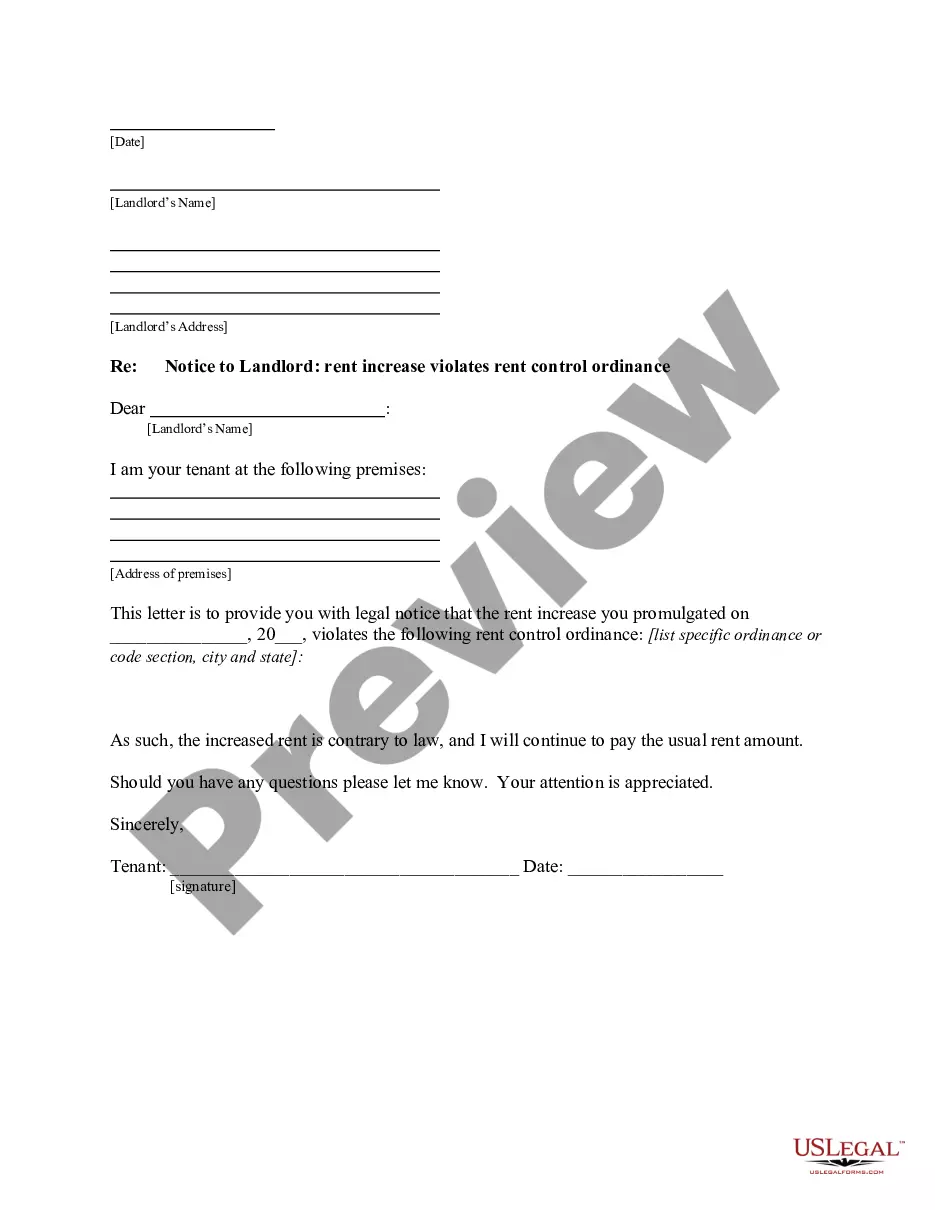
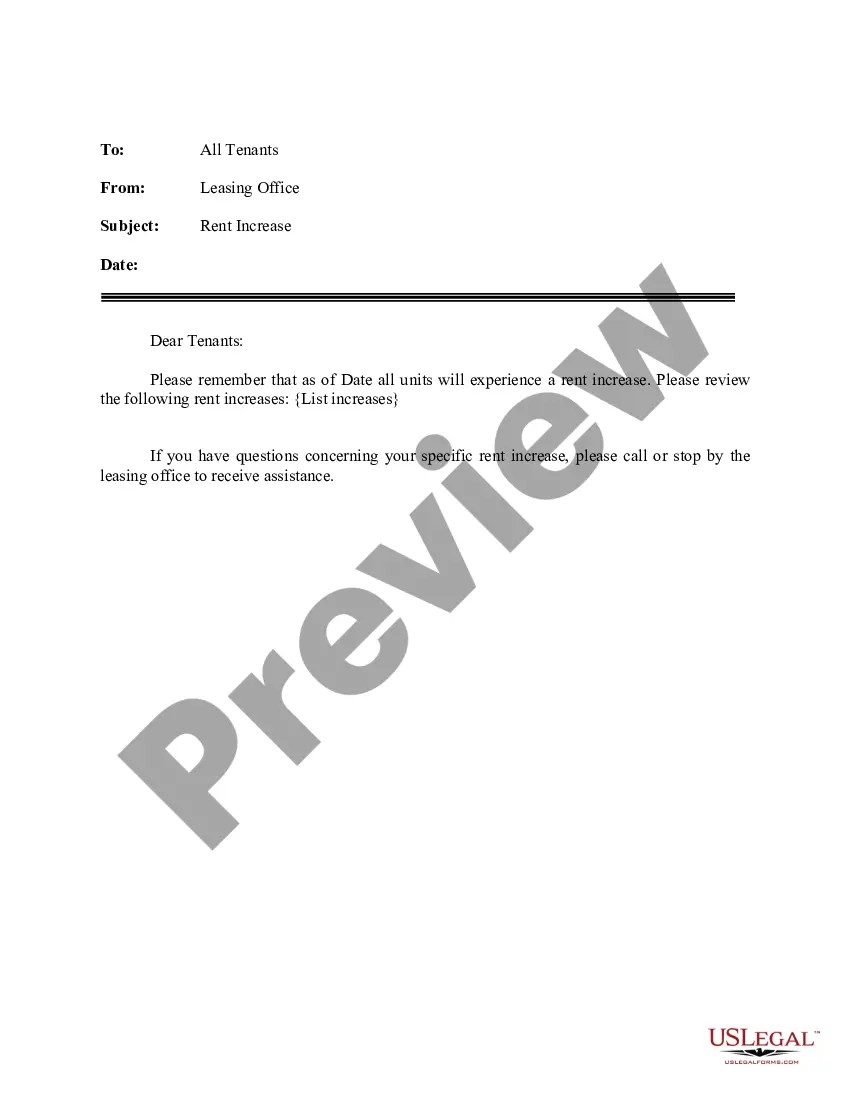
This letter serves as a notice from a tenant to a landlord regarding an improper rent increase. Specifically, it asserts that the increase may violate local rent control ordinances. This form is essential for tenants who wish to formally communicate their concerns to their landlord, distinguishing it from general complaint letters by its specific legal context and citation of rent laws.
Form components explained
- Identification of the tenant and landlord parties.
- A detailed statement regarding the improper rent increase.
- Reference to the applicable rent control ordinance.
- A request for the landlord to withdraw the improper rent increase.
- Proof of delivery method for the notice.


When to use this document
This form should be used when a tenant believes that their landlord has increased rent in violation of local rent control laws. It acts as an official communication to prompt the landlord to reconsider the rent increase and rectify the situation. Using this letter helps to establish a record of the tenant's objection, which may be important if further legal action is necessary.
Intended users of this form
- Tenants who have received a rent increase that they believe is improper.
- Individuals residing in areas with rent control regulations.
- Renters seeking to formally notify their landlord of potential legal violations.
How to prepare this document
- Identify the tenant and landlord by including their names and addresses.
- Clearly state the date of the notice.
- Describe the rent increase issue, referencing the applicable rent control ordinance.
- Request that the landlord withdraw the improper rent increase.
- Sign and date the notice to confirm its authenticity.
- Choose a method of delivery and keep proof for records.
Does this document require notarization?
In most cases, this form does not require notarization. However, some jurisdictions or signing circumstances might. US Legal Forms offers online notarization powered by Notarize, accessible 24/7 for a quick, remote process.
Get your form ready online
Our built-in tools help you complete, sign, share, and store your documents in one place.
Make edits, fill in missing information, and update formatting in US Legal Forms—just like you would in MS Word.
Download a copy, print it, send it by email, or mail it via USPS—whatever works best for your next step.
Sign and collect signatures with our SignNow integration. Send to multiple recipients, set reminders, and more. Go Premium to unlock E-Sign.
If this form requires notarization, complete it online through a secure video call—no need to meet a notary in person or wait for an appointment.
We protect your documents and personal data by following strict security and privacy standards.

Make edits, fill in missing information, and update formatting in US Legal Forms—just like you would in MS Word.

Download a copy, print it, send it by email, or mail it via USPS—whatever works best for your next step.

Sign and collect signatures with our SignNow integration. Send to multiple recipients, set reminders, and more. Go Premium to unlock E-Sign.

If this form requires notarization, complete it online through a secure video call—no need to meet a notary in person or wait for an appointment.

We protect your documents and personal data by following strict security and privacy standards.
Common mistakes
- Failing to include essential details about the rent increase.
- Not referencing the specific rent control ordinance.
- Neglecting to sign and date the notice.
- Using informal language instead of maintaining a professional tone.
- Forgetting to keep proof of delivery for future reference.
Benefits of completing this form online
- Access the form instantly and download it for immediate use.
- Easily customize the form to fit your specific situation.
- Reliable templates drafted by licensed attorneys for legal compliance.
- Convenient and efficient, saving time compared to creating the document from scratch.
Legal use & context
Using this notice can help tenants assert their rights and provide evidence of communication in case of future disputes over the rent increase. It plays a role in legally documenting a tenant's objection to an unlawful rent increase.
Summary of main points
- This letter alerts landlords to improper rent increases due to rent control violations.
- Completing this form aids in protecting tenants' rights.
- Use this form as an initial step to formally dispute any unlawful rent increases.
- Ensure compliance with local laws and ordinances when utilizing this document.
Looking for another form?
Form popularity
FAQ
A landlord cannot evict a tenant without an adequately obtained eviction notice and sufficient time. A landlord cannot retaliate against a tenant for a complaint. A landlord cannot forego completing necessary repairs or force a tenant to do their own repairs.A landlord cannot remove a tenant's personal belongings.
To file a complaint: The first thing you should do is call, write, or come into the office and talk with a Housing Intake Investigator. He/she will be able to explain what we do and help to determine if you have a basis for filing a complaint. Click here for the Fair Housing Complaint Questionnaire to complete.
Tenant Rights to Withhold Rent in South CarolinaTenants may withhold rent or exercise the right to repair and deduct if a landlord fails to take care of important repairs, such as a broken heater.
In very limited circumstances, your tenancy may be binding on the landlord's lender. This means the lender will become your landlord after the repossession and will need a separate court order to evict you. Most tenancies are not binding on the lender, but there are exceptions.
Although renters must abide by the Homeowners' Association rules, they still have rights under the law. The property owner must also follow their home state's Landlord-Tenant Laws that include the Fair Housing Act and Fair Credit Reporting Act.
Tenant Rights to Withhold Rent in South CarolinaTenants may withhold rent or exercise the right to repair and deduct if a landlord fails to take care of important repairs, such as a broken heater. For specifics, see South Carolina Tenant Rights to Withhold Rent or Repair and Deduct.
South Carolina landlords cannot enter an apartment unless they give at least 24-hour notice to the tenant, and may only enter at reasonable times.
What typically happens to a tenant in South Carolina when the rental property is foreclosed? a) The bank becomes the new landlord and the tenant remains in the property.
A Writ of Ejectment is a legal paper that says you must move or the sheriff will remove you and your belongings from the property. A constable or deputy sheriff will give the Writ to you, or post a copy on the door if the premises are abandoned.