South Carolina Warranty Deed from two Individuals to Husband and Wife
Overview of this form
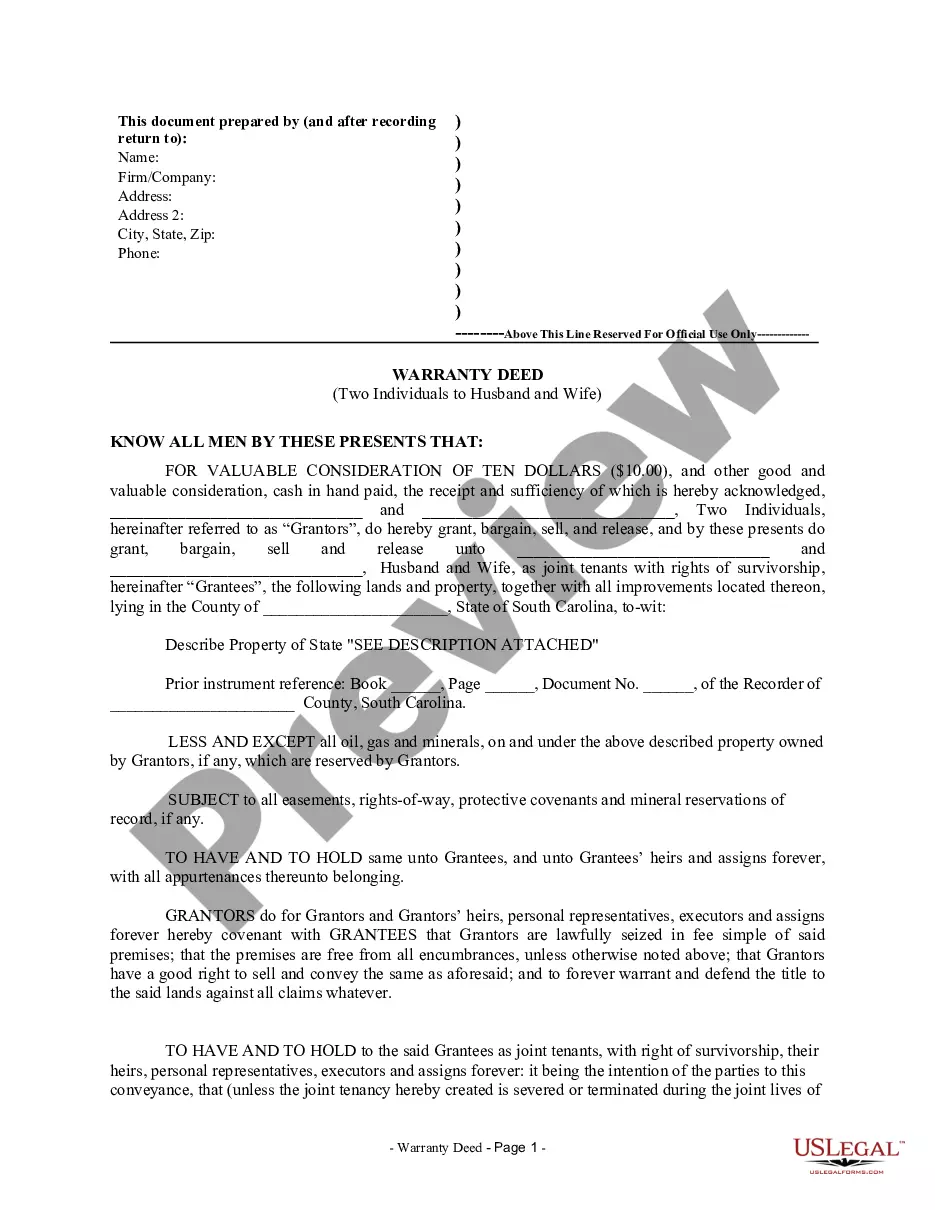
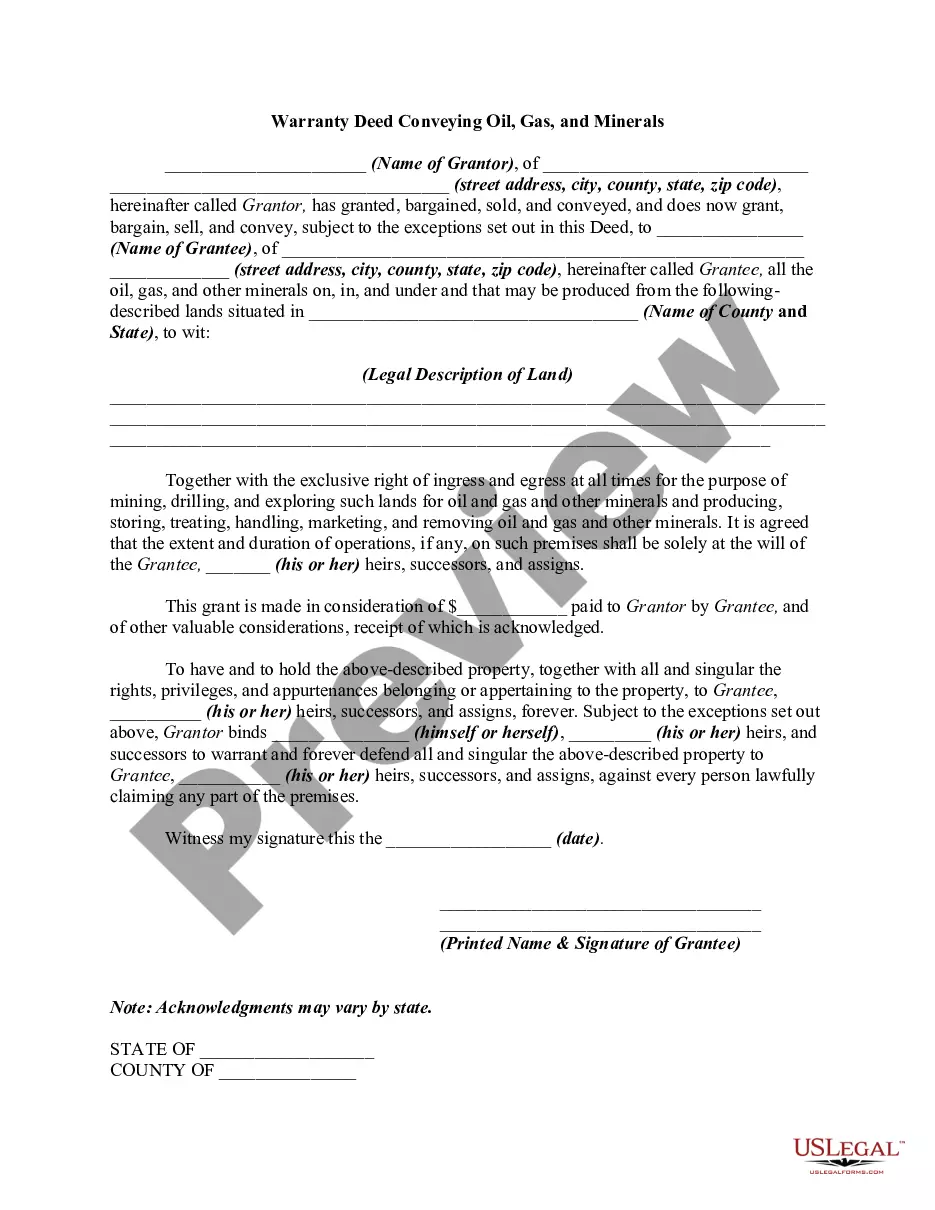
The Warranty Deed from two Individuals to Husband and Wife is a legal document used for transferring property ownership. In this deed, two individuals, known as Grantors, convey their property to a married couple, the Grantees. This form ensures that the Grantors warrant clear title to the property, subject to certain rights and exceptions, such as mineral rights. Unlike other deeds, this specific warranty deed addresses joint tenancy and rights of survivorship, promoting a smooth property transfer in marriage contexts.
Key parts of this document
- Description of Property: Details the property being transferred, with reference to prior ownership records.
- Grantors and Grantees: Identifies the two individuals transferring the property and the husband and wife receiving it.
- Warranties: Ensures that the Grantors are lawfully able to transfer the property and that it is free from encumbrances.
- Right of Survivorship: Specifies that if one spouse passes away, the surviving spouse retains full ownership without the property going through probate.
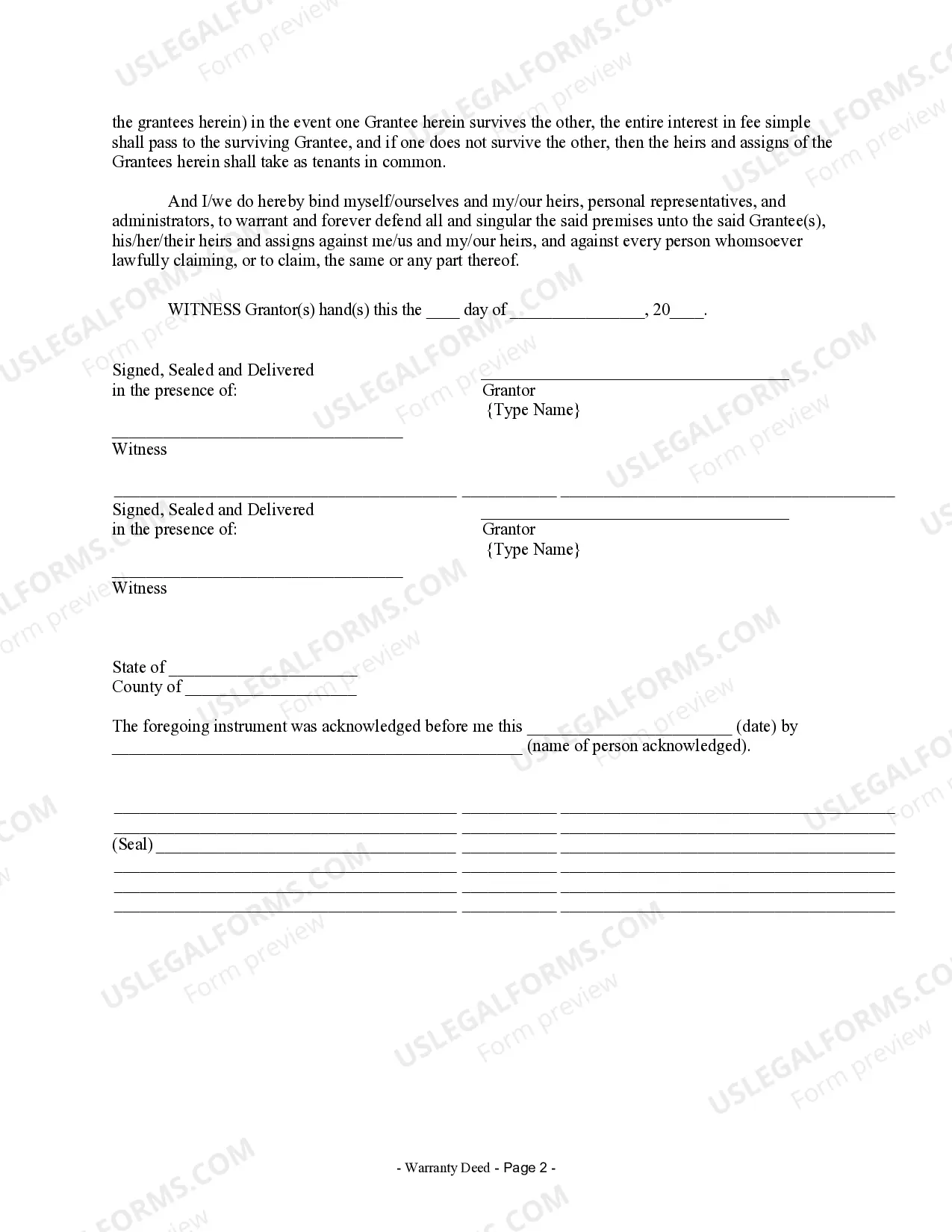
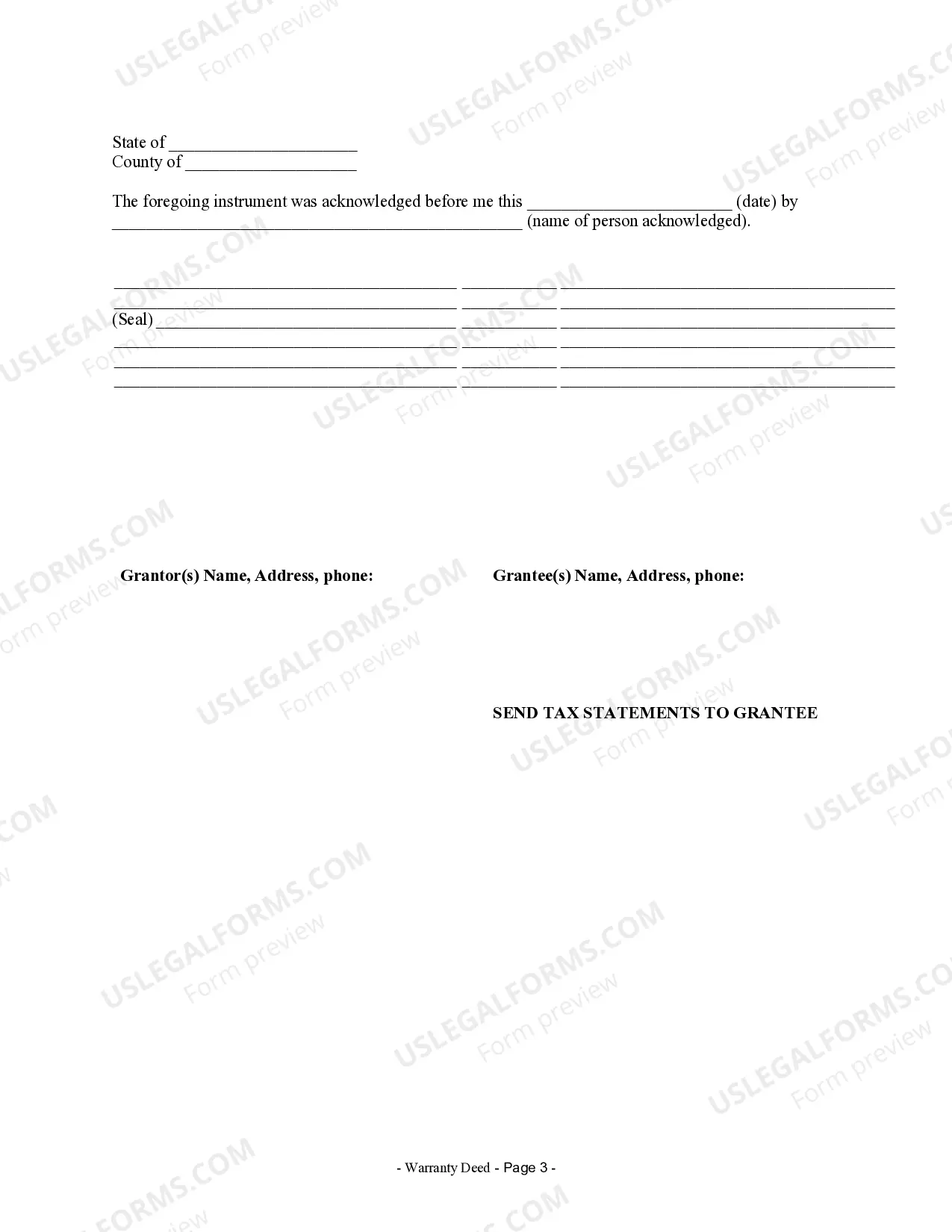
- Notarization and Witnesses: Requires signatures from the Grantors, witnesses, and a notary public for validation.





Situations where this form applies
This form is typically used when two individuals want to transfer property to a married couple. Common scenarios include situations where parents transfer a family home to their child and their spouse or when co-owners of a property wish to finalize the ownership transfer to a married couple. Utilizing this warranty deed helps establish clear ownership and rights between the parties involved.
Intended users of this form
- Property owners looking to transfer ownership to a husband and wife.
- Individuals wishing to establish joint tenancy with rights of survivorship for married couples.
- Legal representatives or attorneys facilitating property transfers on behalf of clients.
How to complete this form
- Identify the parties involved by entering the names of the Grantors and Grantees.
- Clearly describe the property being transferred, including any necessary references to prior instruments.
- Specify the terms regarding oil, gas, and mineral rights reserved by the Grantors.
- Gather necessary signatures from both Grantors, witnesses, and a notary public.
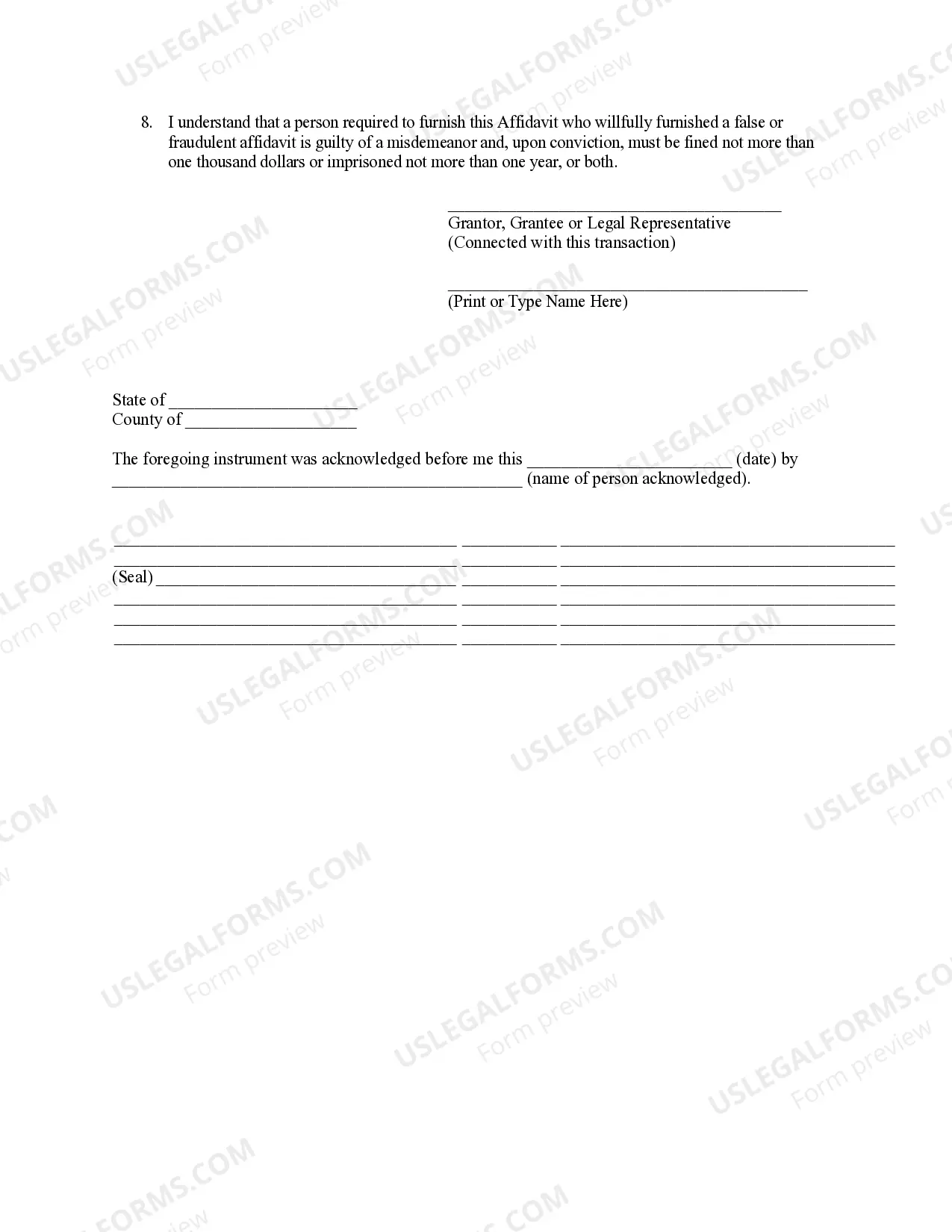
- Detail the exemption status regarding deed recording fees, if applicable, and complete any required sections of the affidavit.
Notarization guidance
This document requires notarization to meet legal standards. US Legal Forms provides secure online notarization powered by Notarize, allowing you to complete the process through a verified video call, available 24/7.
Get your form ready online
Our built-in tools help you complete, sign, share, and store your documents in one place.
Make edits, fill in missing information, and update formatting in US Legal Forms—just like you would in MS Word.
Download a copy, print it, send it by email, or mail it via USPS—whatever works best for your next step.
Sign and collect signatures with our SignNow integration. Send to multiple recipients, set reminders, and more. Go Premium to unlock E-Sign.
If this form requires notarization, complete it online through a secure video call—no need to meet a notary in person or wait for an appointment.
We protect your documents and personal data by following strict security and privacy standards.

Make edits, fill in missing information, and update formatting in US Legal Forms—just like you would in MS Word.

Download a copy, print it, send it by email, or mail it via USPS—whatever works best for your next step.

Sign and collect signatures with our SignNow integration. Send to multiple recipients, set reminders, and more. Go Premium to unlock E-Sign.

If this form requires notarization, complete it online through a secure video call—no need to meet a notary in person or wait for an appointment.

We protect your documents and personal data by following strict security and privacy standards.
Typical mistakes to avoid
- Failing to include all required parties' names and signatures.
- Omitting the property description or failing to reference prior ownership documents.
- Not notarizing the document properly, which can invalidate the deed.
- Incorrectly indicating the status of recording fees or exemptions.
Advantages of online completion
- Easy access to downloadable templates drafted by licensed attorneys.
- Convenience of completing the form at your own pace, with options to edit as needed.
- Securely stores your documents in case you need to retrieve or modify them in the future.
Main things to remember
- The Warranty Deed from two Individuals to Husband and Wife is crucial for transferring property ownership between grantors and grantees.
- This form includes protections for the grantors and outlines rights for the grantees, preventing potential disputes.
- Proper completion, including notarization, is essential for the deed's validity.
Looking for another form?


Form popularity
FAQ
The deed of distribution is evidence of the beneficiary's title to the house, land or other real property interest of the decedent. An ancillary probate is often opened in South Carolina for the purpose of preparing a deed of distribution when an out-of-state decedent died owning real property in South Carolina.
To sign over property ownership to another person, you'll use one of two deeds: a quitclaim deed or a warranty deed.
A tenancy by the entirety is a common way for married couples to hold property and have it easily pass from one spouse to the other upon one spouse's death. South Carolina doesn't recognize tenancies by the entirety, but there are planning steps you can take to get the same effect.
Review the property title to see who is officially listed on it. Sign the title over to the new owner in the place that is noted. Complete a general warranty deed to show the transfer of ownership from you to another. Pay the real estate transfer tax as levied in South Carolina.
Laws § 27-7-20. Recording All forms must be filed at the County Recorders of Deeds. Signing (A§ 30-5-30) A quit claim deed in South Carolina is required to be authorized by a notary public and two (2) subscribing witnesses.
An original, wet signed document. Signature of the Party of the First Part. Two witnesses to the signature. A South Carolina Probate or Acknowledgement. A property description to include a recorded plat reference or metes and bounds description.
The South Carolina deed recording fee is imposed for the privilege of recording a deed, and is based on the transfer of real property from one person or business entity to another. The fee is generally imposed on the grantor of the real property, although the grantee may be secondarily liable for the fee.
In South Carolina, the grantor must sign the deed in front of two witnesses and in the presence of an individual authorized by the state to administer an oath. Record the completed deed at the local county Recorder's office, along with an Affidavit of True Consideration (S.C. Code Ann.
Identify the donee or recipient. Discuss terms and conditions with that person. Complete a change of ownership form. Change the title on the deed. Hire a real estate attorney to prepare the deed. Notarize and file the deed.