Rhode Island Agreed Cancellation of Lease
What this document covers
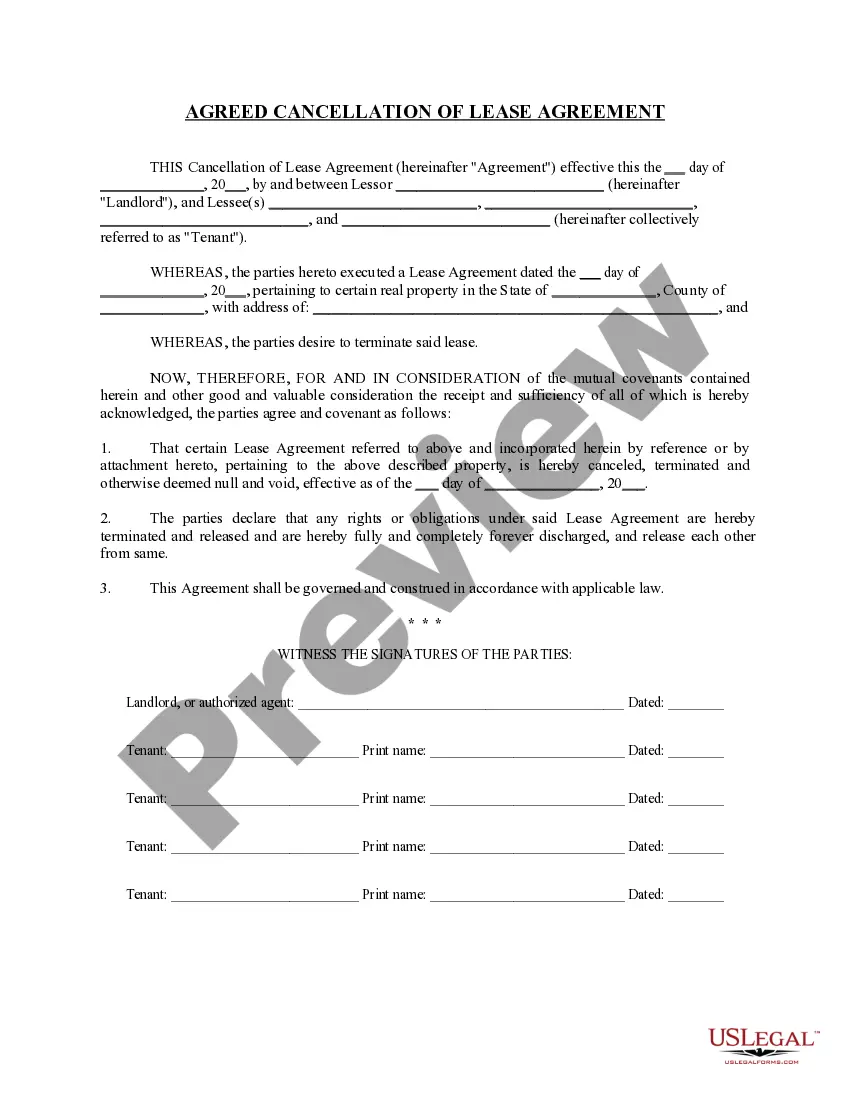
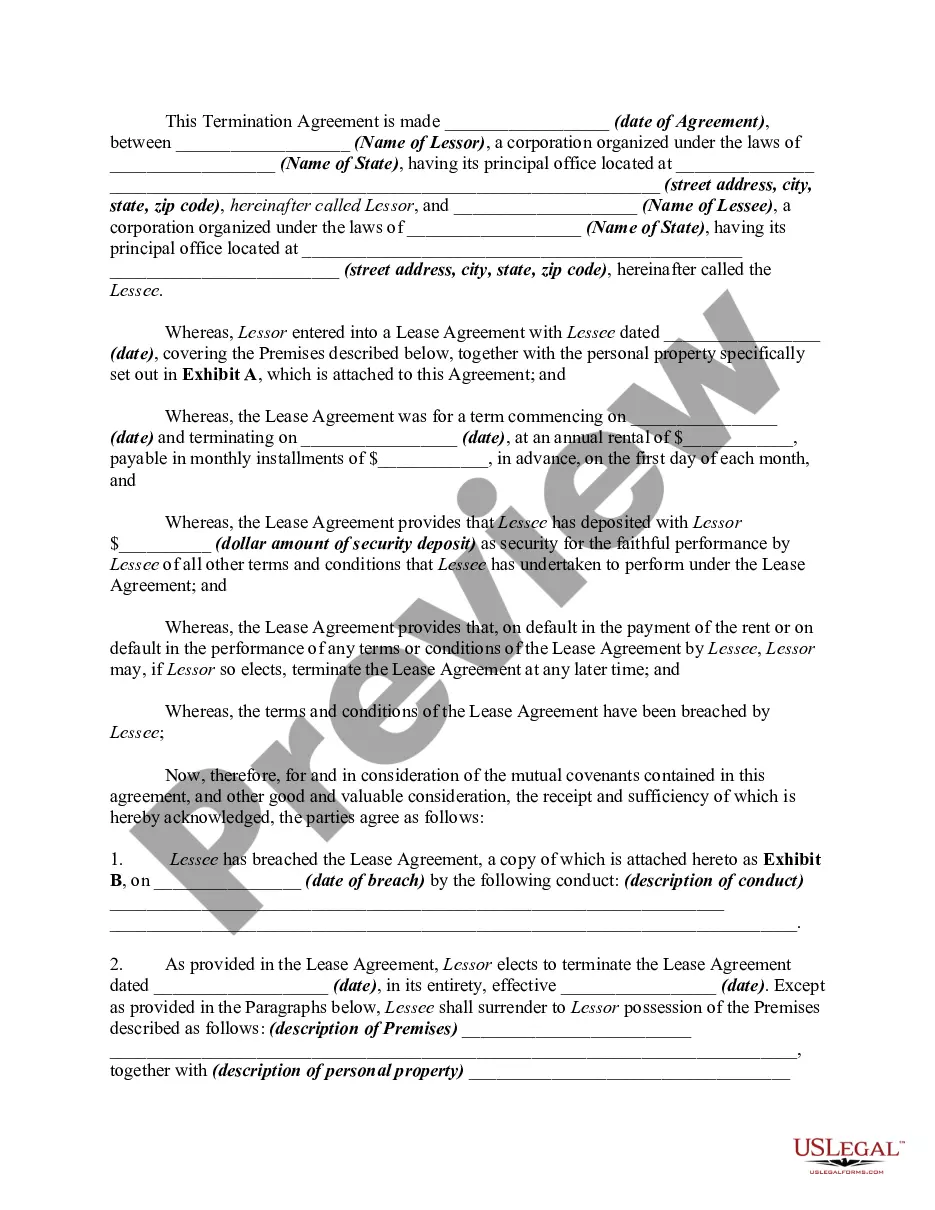
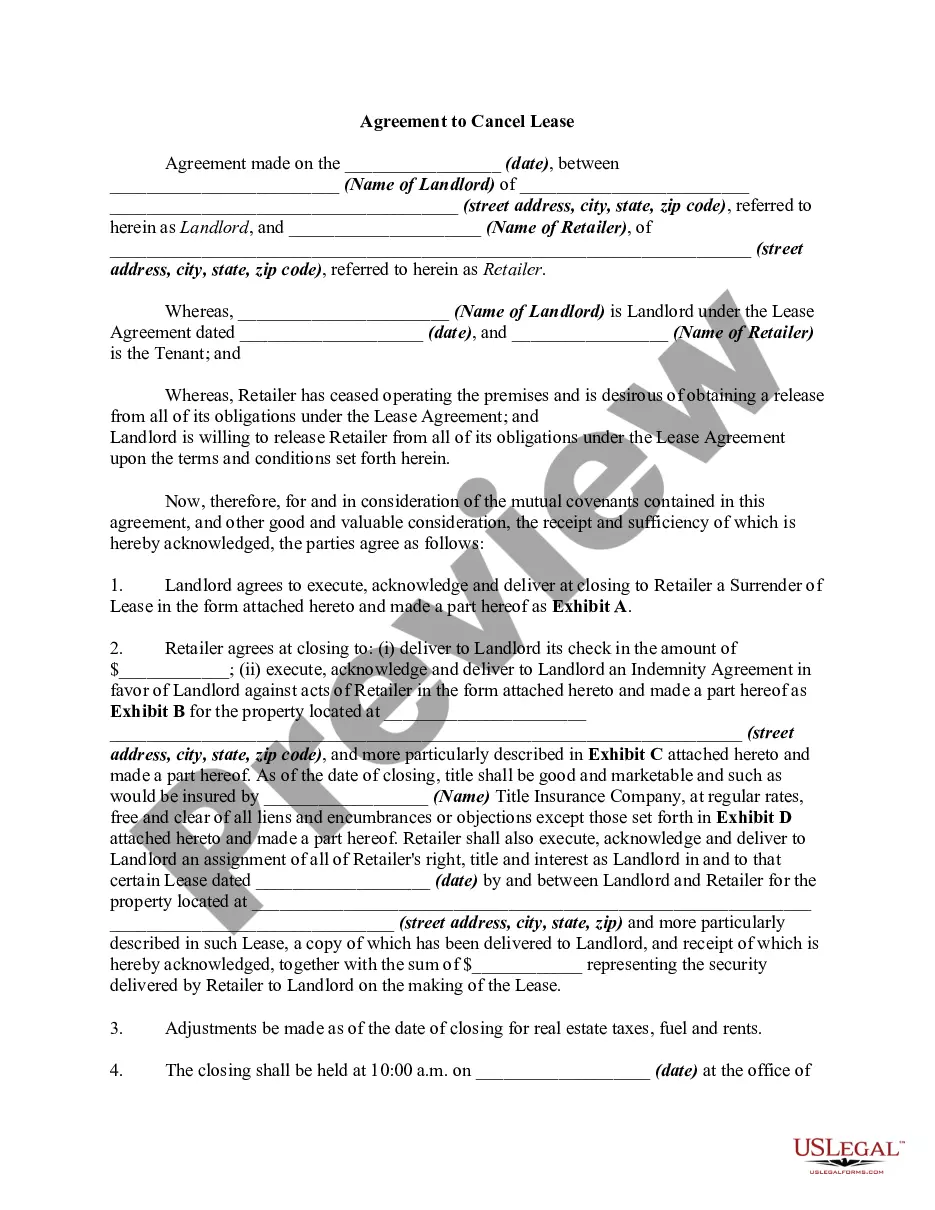
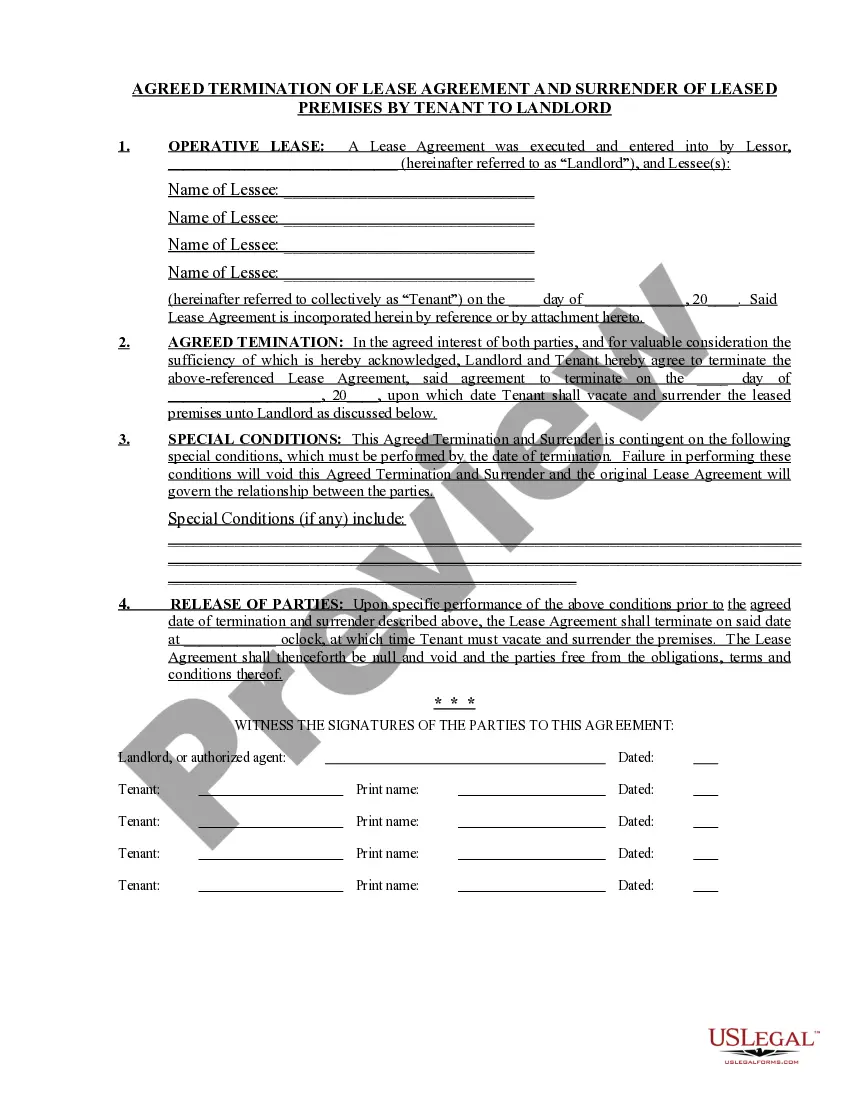
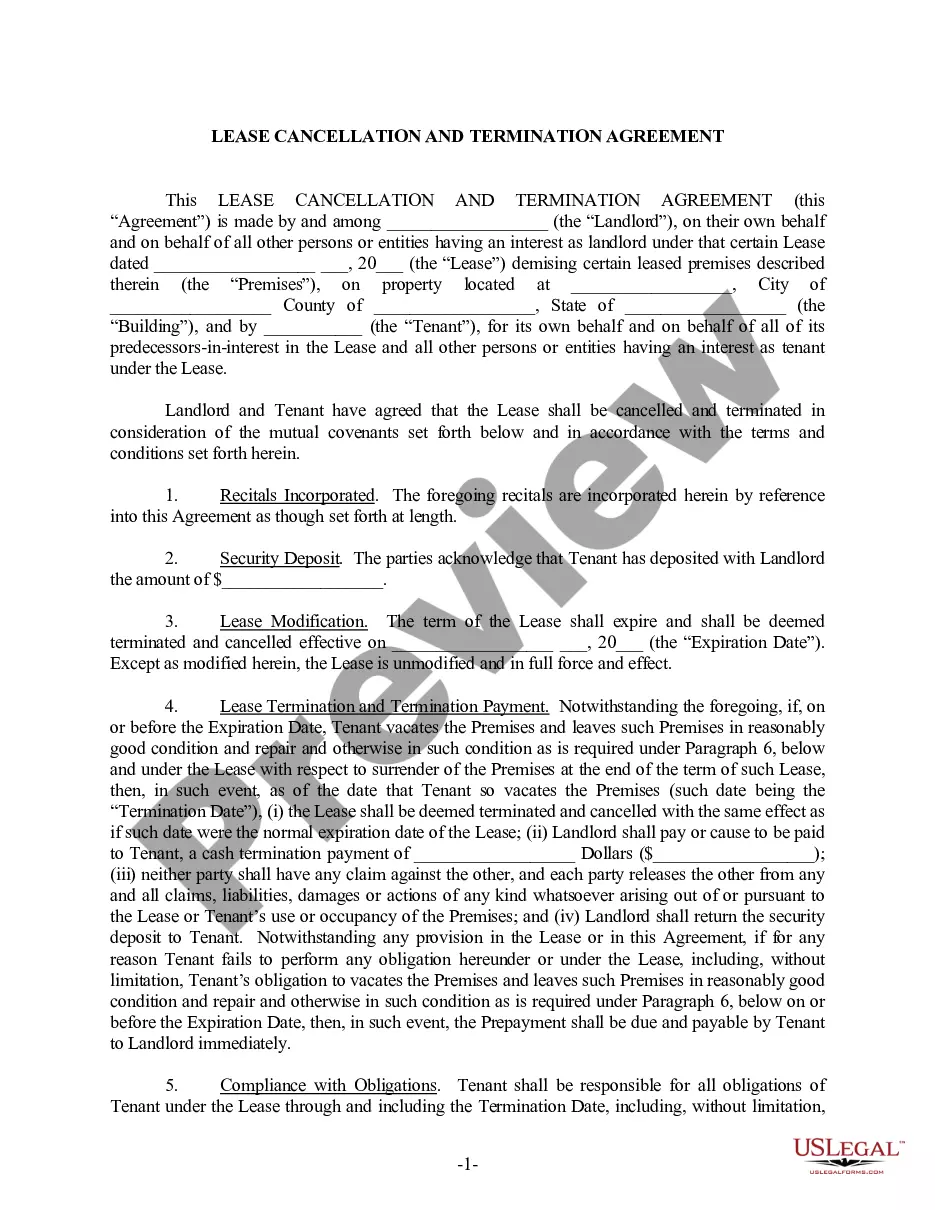
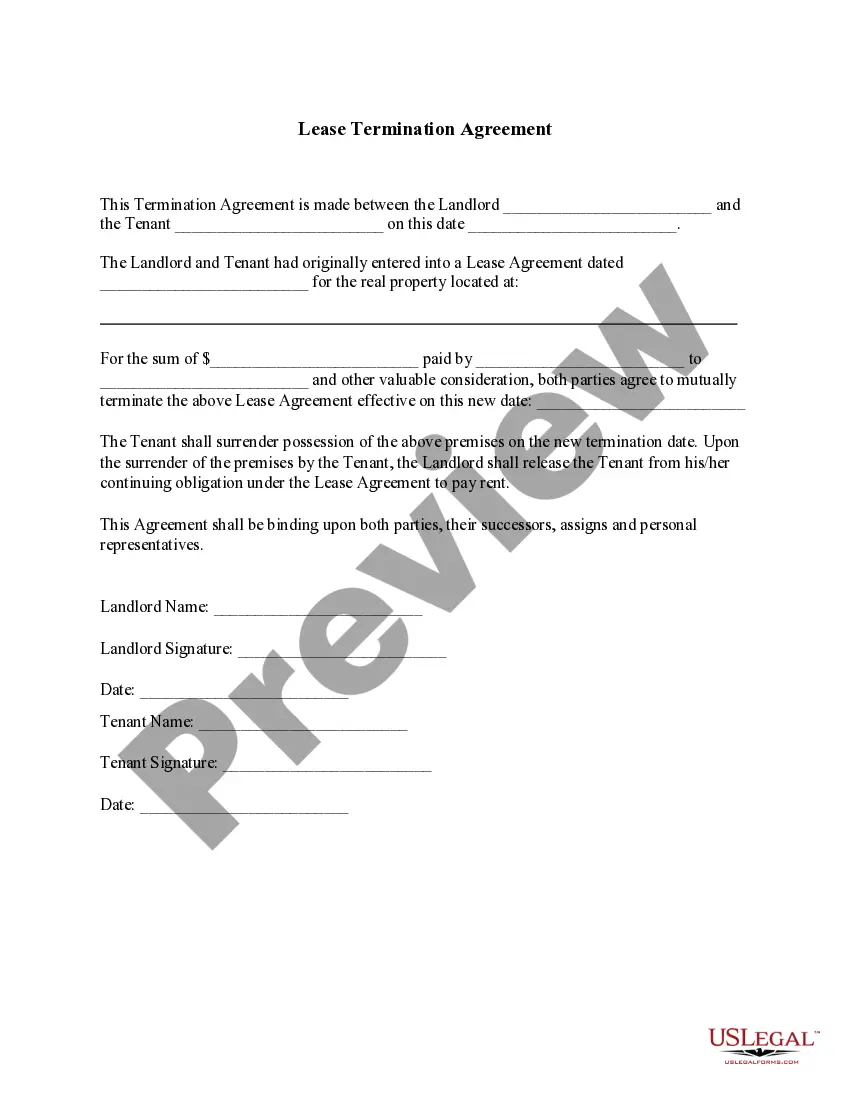
The Agreed Cancellation of Lease form is a legal document that formalizes the mutual decision between a landlord and tenant to cancel an existing lease agreement. Unlike other lease termination forms that may carry penalties or specific conditions, this form ensures that both parties can part ways without any further obligations or consequences. It is designed to provide a clear record of the lease's cancellation, protecting the rights of both the landlord and tenant.
What’s included in this form
- Identifying Information: Names and addresses of the landlord and tenants involved.
- Lease Agreement Reference: Details of the original lease, including its date and property address.
- Effective Date: The date on which the cancellation of the lease becomes effective.
- Release Clause: A statement releasing both parties from any further obligations under the original lease.
- Signatures: Space for signatures of both the landlord and all tenants, along with the date of signing.
When to use this document
This form is essential when both parties, the landlord and the tenant, agree to terminate a lease without penalties. Situations may include when a tenant wishes to move out before the lease term ends, or when a landlord needs to reclaim possession of the property due to changes in circumstances. This form simplifies the cancellation process, ensuring that both parties have clarity and protection against future claims related to the lease.
Who this form is for
This form is ideal for:
- Landlords looking to terminate a lease agreement amicably.
- Tenants who wish to leave the rental property without facing penalties.
- Real estate professionals managing lease cancellations on behalf of clients.
Instructions for completing this form
- Identify the parties: Enter the names and addresses of the landlord and all tenants involved.
- Specify the property: Include the details of the property associated with the original lease.
- Enter effective date: Fill in the date on which the lease cancellation goes into effect.
- Review cancellation clause: Ensure that both parties agree to release each other from any obligations under the original lease.
- Sign and date: Have the landlord and all tenants sign and date the form to finalize the cancellation.
Is notarization required?
Notarization is generally not required for this form. However, certain states or situations might demand it. You can complete notarization online through US Legal Forms, powered by Notarize, using a verified video call available anytime.
Get your form ready online
Our built-in tools help you complete, sign, share, and store your documents in one place.
Make edits, fill in missing information, and update formatting in US Legal Forms—just like you would in MS Word.
Download a copy, print it, send it by email, or mail it via USPS—whatever works best for your next step.
Sign and collect signatures with our SignNow integration. Send to multiple recipients, set reminders, and more. Go Premium to unlock E-Sign.
If this form requires notarization, complete it online through a secure video call—no need to meet a notary in person or wait for an appointment.
We protect your documents and personal data by following strict security and privacy standards.

Make edits, fill in missing information, and update formatting in US Legal Forms—just like you would in MS Word.

Download a copy, print it, send it by email, or mail it via USPS—whatever works best for your next step.

Sign and collect signatures with our SignNow integration. Send to multiple recipients, set reminders, and more. Go Premium to unlock E-Sign.

If this form requires notarization, complete it online through a secure video call—no need to meet a notary in person or wait for an appointment.

We protect your documents and personal data by following strict security and privacy standards.
Mistakes to watch out for
- Failing to have all tenants sign the form, which can lead to disputes later.
- Not including the effective date of cancellation, resulting in confusion regarding when the lease ends.
- Overlooking local laws that may impose specific requirements for lease cancellations.
Benefits of completing this form online
- Convenience: Download and complete the form at your own pace from any location.
- Editability: Easily modify the form as needed before finalizing it.
- Reliability: Access a template drafted by licensed attorneys to ensure legal soundness.
Looking for another form?
Form popularity
FAQ
While some jurisdictions may have provisions that allow consumers to change their minds with no consequences, generally there is no cooling-off period for leasing real property. Once the landlord and tenant sign a lease and a copy is delivered to the both parties, it becomes a valid contract.
Give the landlord/agent a written termination notice and vacate move out and return the keys according to your notice, and/or. apply to the NSW Civil & Administrative Tribunal (NCAT) for a termination order.
In Rhode Island, a tenant is not required to provide notice for fixed end date leases. Rhode Island tenants have to provide written notice for the following lease terms: Notice to terminate a week-to-week lease. 10-day written notice before the termination date specified in the notice (§ 34-18-37(a))
You can legally move out without penalties. Just include your landlord in every step toward opting out of the lease. Go over the sections pertaining to breaking the lease.Many landlords are willing to work with broken contracts under certain conditions.
In some circumstances, a tenant can break a fixed-term agreement early without penalty. A tenant can give 14 days' written notice to end an agreement early without penalty if: they have accepted an offer of social housing (e.g. from DCJ Housing)
Fails to pay rent; Violates a clause in the lease or rental agreement; Violates a responsibility imposed by law.
Unless such a condition is explicitly stated in the lease or there is a rare jurisdictional law that requires a cooling period, your lease is binding the second you sign your name. The landlord has the right to decide whether to mutually agree to terminate the lease or to hold you to the terms.
Give the landlord/agent a written termination notice and vacate move out and return the keys according to your notice, and/or. apply to the NSW Civil & Administrative Tribunal (NCAT) for a termination order.