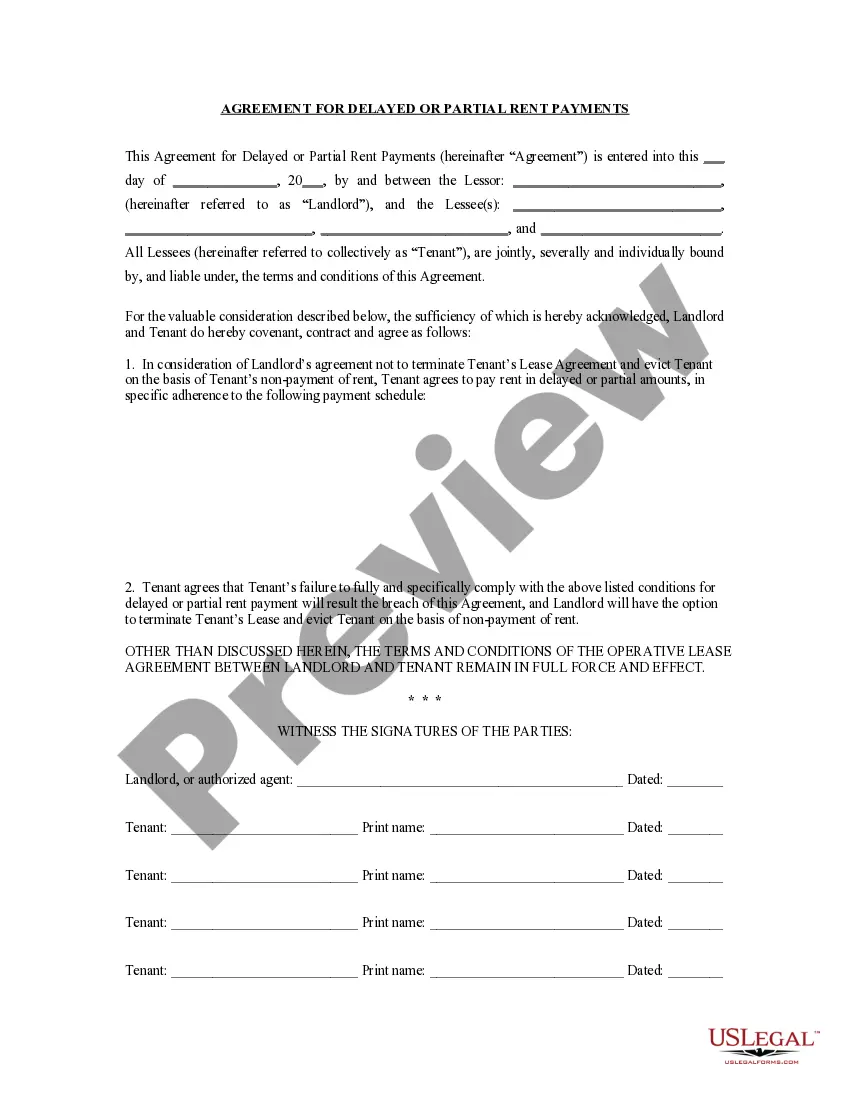
Rhode Island Agreement for Delayed or Partial Rent Payments
Overview of this form
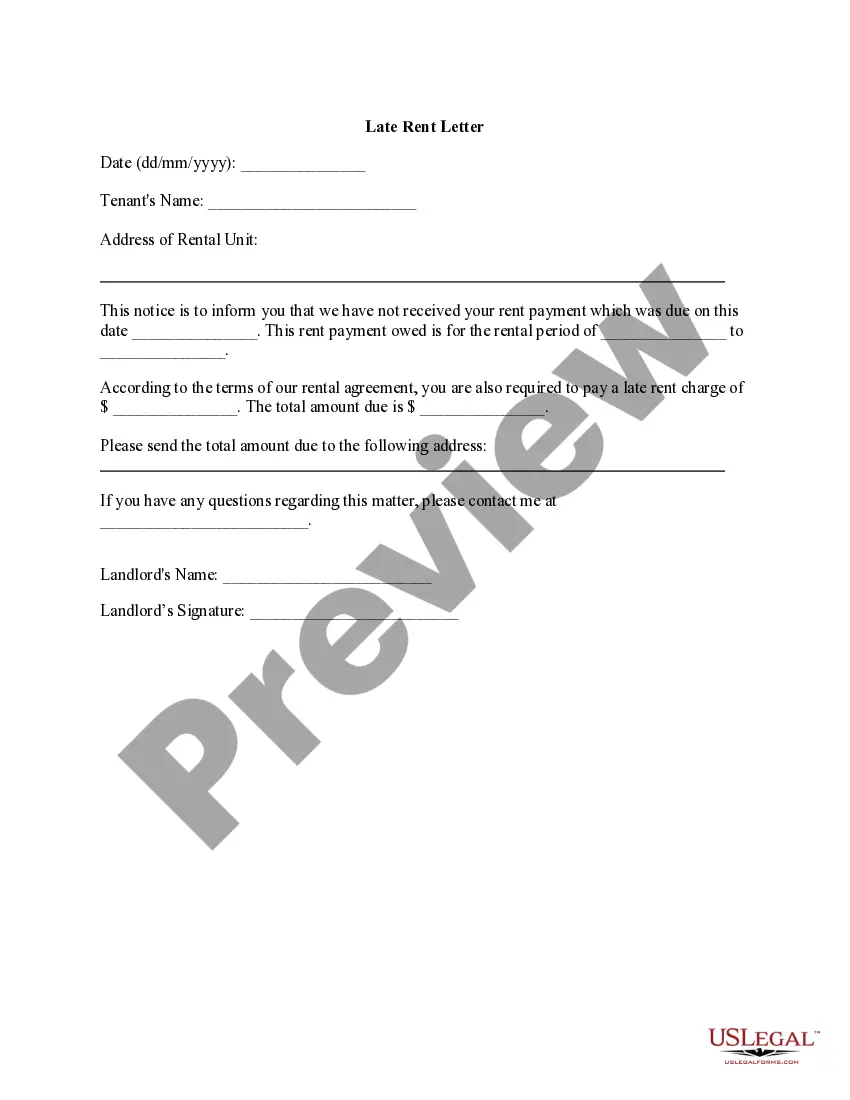
The Agreement for Delayed or Partial Rent Payments is a legal document between a landlord and a tenant. It outlines specific deadlines and conditions under which rent can be paid late or in part. This agreement provides tenants with flexibility in meeting their rent obligations while ensuring landlords do not initiate eviction proceedings for non-payment, as long as the tenant adheres to the agreed payment schedule. This form is distinct from standard lease agreements in that it specifically addresses temporary changes to payment terms rather than the lease itself.
Main sections of this form
- Identification of the landlord and tenant(s).
- Specific dates for payment due and amounts owed.
- Consequences of failing to adhere to the payment schedule.
- Confirmation that all other terms of the existing lease remain in effect.
- Signatures of all parties to formalize the agreement.
Common use cases
This form is useful in situations where a tenant is temporarily unable to pay rent in full due to financial difficulties. It can be utilized when tenants face unexpected challenges such as job loss, medical expenses, or other emergencies that affect their ability to meet their rent obligations on time. It provides a formalized route for tenants to communicate their challenges while ensuring landlords are informed and can manage their property accordingly.
Who needs this form
Individuals or entities that should consider using this form include:
- Landlords seeking to offer financial flexibility to their tenants.
- Tenants facing financial difficulties who need to negotiate delayed or partial payments.
- Property management companies managing multiple rental agreements.
How to complete this form
- Identify and enter the names of the landlord and all tenants involved.
- Specify the date of the agreement and the payment schedule that both parties agree on.
- Clearly define the amount of rent to be paid and when these partial payments are due.
- Include a clause confirming that all other lease terms remain in full effect.
- Ensure all parties sign and date the agreement to validate it.
Notarization guidance
In most cases, this form does not require notarization. However, some jurisdictions or signing circumstances might. US Legal Forms offers online notarization powered by Notarize, accessible 24/7 for a quick, remote process.
Get your form ready online
Our built-in tools help you complete, sign, share, and store your documents in one place.
Make edits, fill in missing information, and update formatting in US Legal Forms—just like you would in MS Word.
Download a copy, print it, send it by email, or mail it via USPS—whatever works best for your next step.
Sign and collect signatures with our SignNow integration. Send to multiple recipients, set reminders, and more. Go Premium to unlock E-Sign.
If this form requires notarization, complete it online through a secure video call—no need to meet a notary in person or wait for an appointment.
We protect your documents and personal data by following strict security and privacy standards.

Make edits, fill in missing information, and update formatting in US Legal Forms—just like you would in MS Word.

Download a copy, print it, send it by email, or mail it via USPS—whatever works best for your next step.

Sign and collect signatures with our SignNow integration. Send to multiple recipients, set reminders, and more. Go Premium to unlock E-Sign.

If this form requires notarization, complete it online through a secure video call—no need to meet a notary in person or wait for an appointment.

We protect your documents and personal data by following strict security and privacy standards.
Typical mistakes to avoid
- Failing to specify exact payment amounts and dates.
- Not signing the agreement by all parties involved.
- Neglecting to include a plan for future payments after the delay.
Why complete this form online
- Easy access to legal templates prepared by licensed attorneys.
- Convenience of filling out and downloading from home.
- Ability to customize the agreement to fit specific situations without legal jargon.
Legal use & context
- The agreement helps establish a clear understanding and prevents disputes between parties regarding rental payments.
- It maintains the validity of the original lease, ensuring continued legal protection for both landlord and tenant.
- Using this form can provide legal evidence in any future disputes related to payment schedules and conditions.
What to keep in mind
- This Agreement for Delayed or Partial Rent Payments aids in preventing misunderstandings regarding rent obligations.
- It is crucial for both parties to agree on terms that are clearly documented.
- Understanding jurisdiction-specific requirements is essential for the enforceability of the agreement.
Looking for another form?






Form popularity
FAQ
There is no rent control in Rhode Island, so a landlord is free to set the rent at whatever s/he decides. You and the landlord can agree on the date that rent will be paid. If your rent is more than 15 days late, you can be evicted for non-payment and the landlord can use a quick court proceeding.
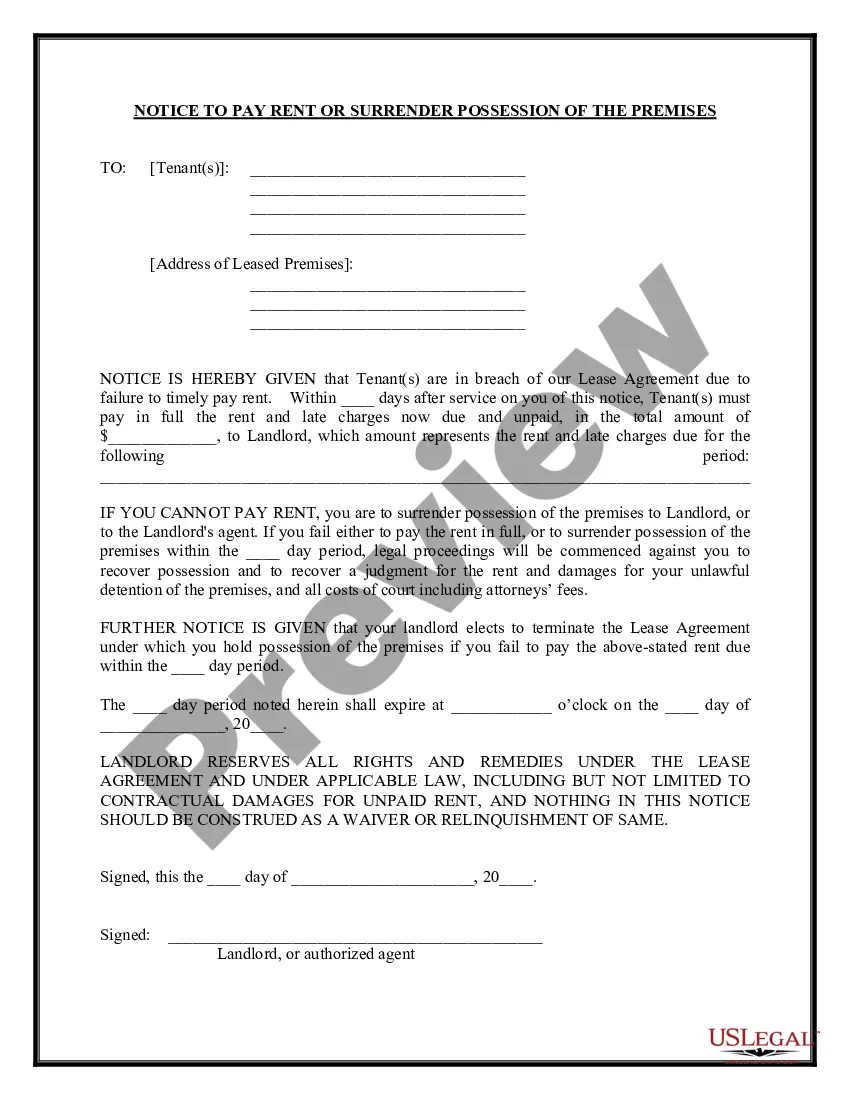
The non-payment termination notice A non-payment termination notice must be in writing, signed by the landlord/agent and set out: the address of the premises. the day by which the landlord/agent wants you to. vacate they must give you at least 14 days' notice.
The law includes an extension of the CDC moratorium on evictions. The CDC moratorium, which was set to expire on December 31 2020, will now be in effect through January 31 2021. The new law did not change any other terms of the moratorium.
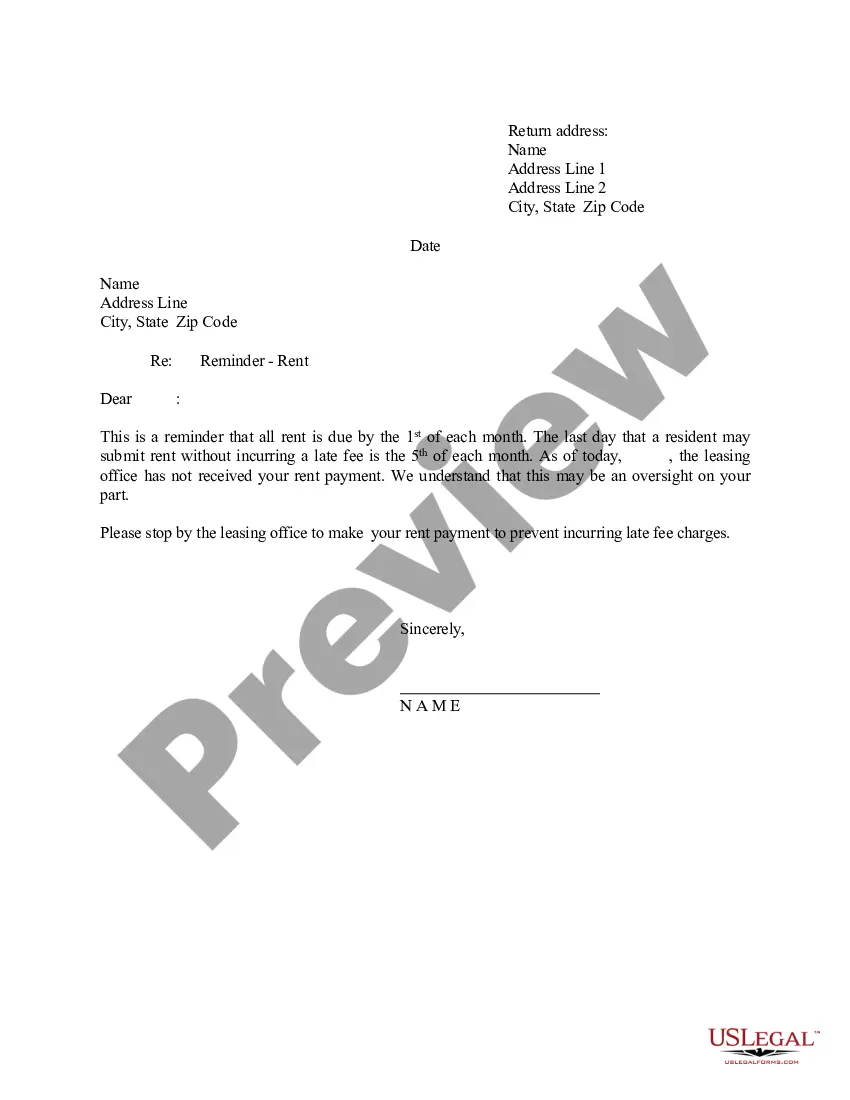
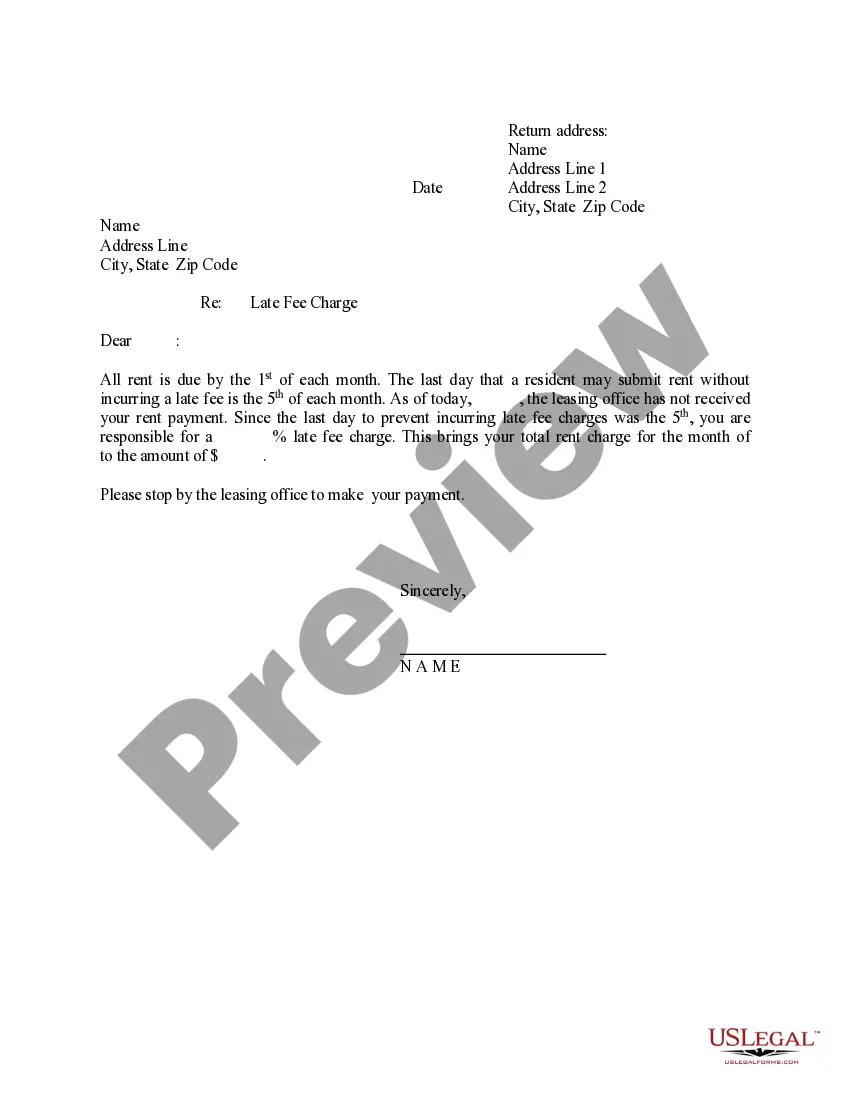
Under normal circumstances, when tenants don't pay rent, landlords have the option of terminating the tenancy (by serving the tenant with either a pay rent or quit notice or an unconditional quit notice, depending on the applicable laws).
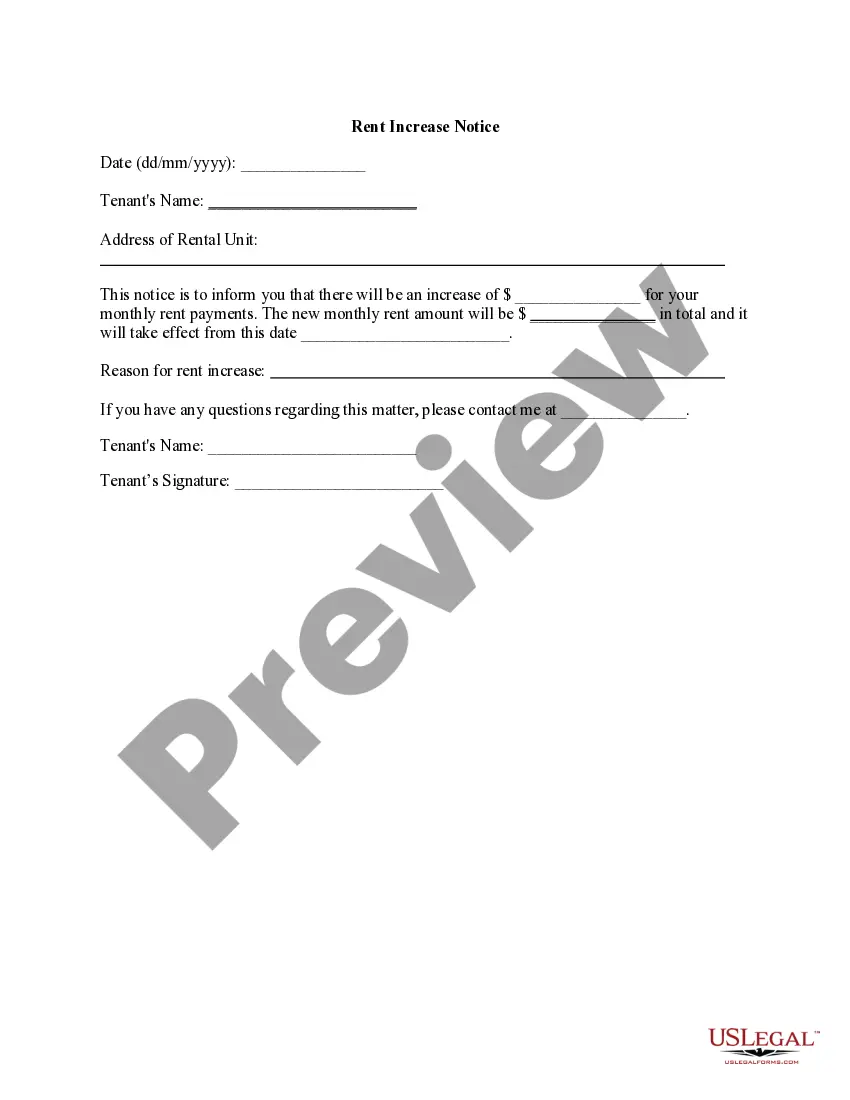
State law regulates several rent-related issues, including the amount of notice (at least 30 days in Rhode Island) landlords must give tenants to raise the rent and how much time (five days in Rhode Island) a tenant has to pay rent or move before a landlord can file for eviction.
Pursuant to RI law, to evict a month-to-month tenant, a landlord must send a 30 day notice to terminate the month to month tenancy. When the 30 day time period expires, then the landlord or the landlord's Rhode Island eviction lawyer may file a complaint for eviction in Providence District Court.
After attending the distract court hearing to get the tenant out of the premises, it will take a minimum of five days to evict the tenant up to a potential of a month or longer (if there is an appeal).
Evicting a tenant in Rhode Island can take around 1-4 months, depending on the reason for the eviction. If tenants file an appeal, the process can take longer (read more).
Under Rhode Island law, the rental agreement between a tenant and a landlord is a contract. A landlord is permitted to attempt to increase a tenant's rent by any amount for any reason, as long as the increase was not done for an illegal reason, and as long as the increase was done by proper procedures.