Rhode Island Letter from Tenant to Landlord for Failure of Landlord to comply with building codes affecting health and safety or resulting in untenantable condition - demand for remedy
What this document covers
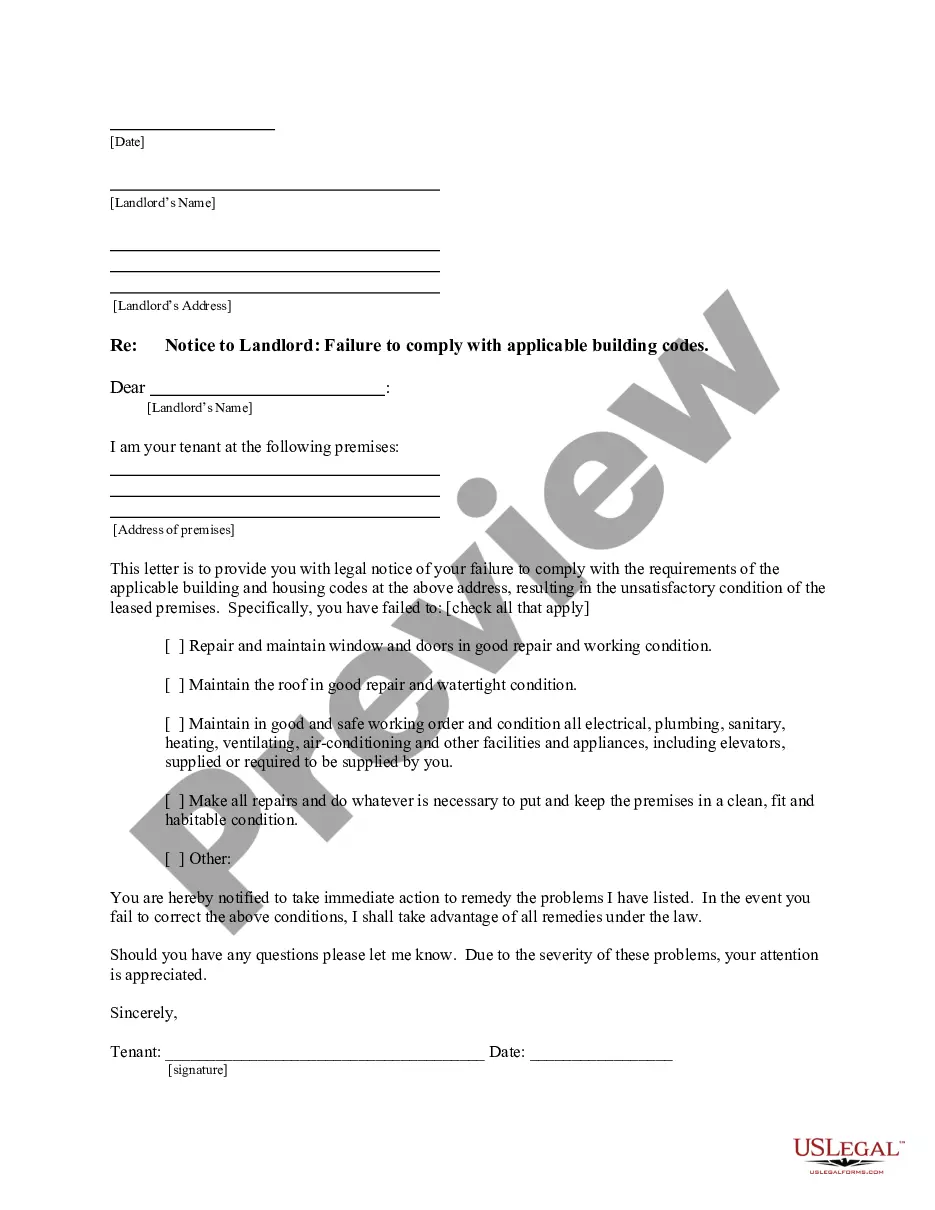
This form is a demand letter from a tenant to a landlord regarding non-compliance with building codes that affect health, safety, or result in an untenantable condition. It specifically requests that the landlord remedy these issues within ten days. This is important for ensuring safe and healthy living conditions, distinguishing it from other tenant-landlord communication forms, which may not formally demand repairs or compliance within a specified timeframe.
What’s included in this form
- Tenant's name and address.
- Landlord's name and address.
- Description of the unsafe or unhealthy conditions.
- Specific building code violations.
- Demand for repairs or remedies to be made within ten days.
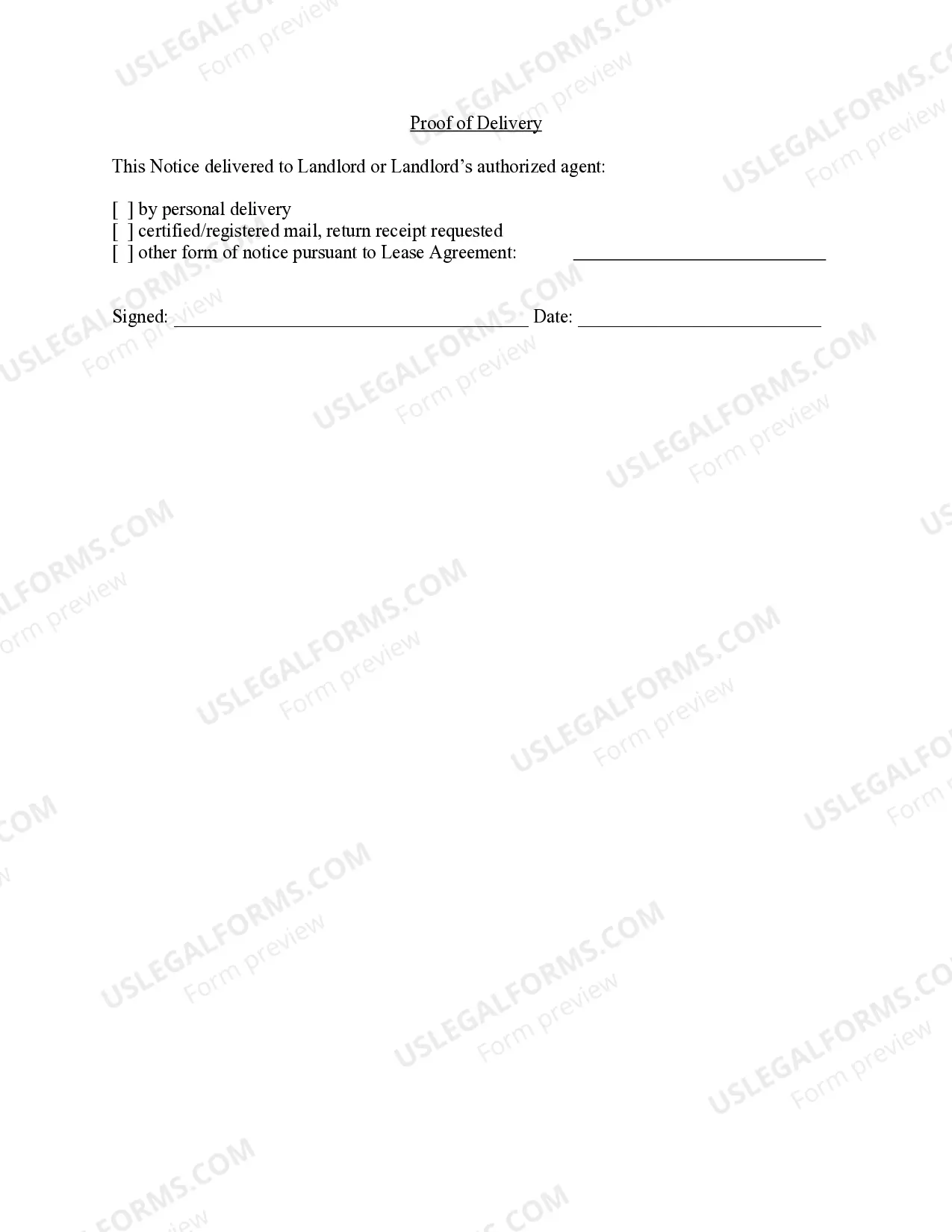
- Proof of delivery section to confirm notice to landlord.

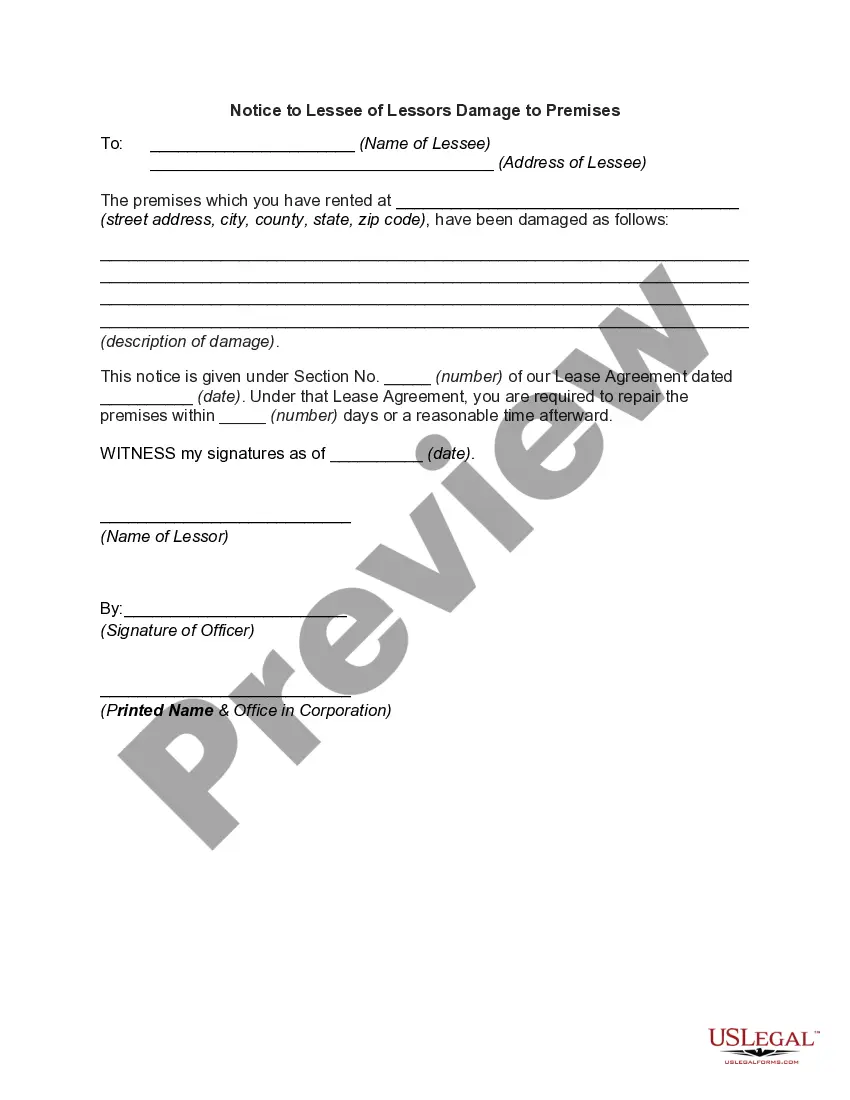

When to use this form
This form should be used when a tenant identifies health and safety violations in their rented property that the landlord has not addressed. Situations may include inadequate heating, leaking roofs, broken windows or doors, or other conditions that render the premises unsafe or uninhabitable. Sending this demand letter can prompt the landlord to take immediate action to resolve the issues.
Who needs this form
- Tenants who have identified serious issues in their rental property.
- Individuals who want to formally notify their landlord of non-compliance with building codes.
- People living in properties deemed unsafe or unhealthy by local health standards.
How to prepare this document
- Enter your name and address at the top of the form.
- Provide the landlord's name and address.
- Clearly describe the unsafe or unhealthy conditions present in the property.
- Cite specific building code violations that are applicable.
- Specify your demand for remedy within ten days.
- Sign and date the document, and then deliver it to your landlord or their authorized agent.
Does this document require notarization?
This form does not typically require notarization to be legally valid. However, some jurisdictions or document types may still require it. US Legal Forms provides secure online notarization powered by Notarize, available 24/7 for added convenience.
Get your form ready online
Our built-in tools help you complete, sign, share, and store your documents in one place.
Make edits, fill in missing information, and update formatting in US Legal Forms—just like you would in MS Word.
Download a copy, print it, send it by email, or mail it via USPS—whatever works best for your next step.
Sign and collect signatures with our SignNow integration. Send to multiple recipients, set reminders, and more. Go Premium to unlock E-Sign.
If this form requires notarization, complete it online through a secure video call—no need to meet a notary in person or wait for an appointment.
We protect your documents and personal data by following strict security and privacy standards.

Make edits, fill in missing information, and update formatting in US Legal Forms—just like you would in MS Word.

Download a copy, print it, send it by email, or mail it via USPS—whatever works best for your next step.

Sign and collect signatures with our SignNow integration. Send to multiple recipients, set reminders, and more. Go Premium to unlock E-Sign.

If this form requires notarization, complete it online through a secure video call—no need to meet a notary in person or wait for an appointment.

We protect your documents and personal data by following strict security and privacy standards.
Common mistakes to avoid
- Failing to specify the exact violations or unsafe conditions.
- Not providing complete address information for both tenant and landlord.
- Not delivering the letter personally or failing to obtain proof of delivery.
Why complete this form online
- Instant access to a legally vetted form.
- Easy to fill out and edit to suit your specific situation.
- Available for download and printing at your convenience.
Legal use & context
- This form serves as an official notice to the landlord, demonstrating the tenant's proactive approach to addressing living condition issues.
- Using this form may strengthen a tenant's position in future disputes regarding the habitability of the property.
- A properly completed demand letter may be necessary for any subsequent legal actions related to tenant rights and responsibilities.
Key takeaways
- The form helps tenants formally notify landlords of unsafe living conditions.
- It specifies a ten-day timeframe for compliance, emphasizing the urgency of the repairs needed.
- Completing the form accurately can protect tenant rights and facilitate further actions if necessary.
Looking for another form?
Form popularity
FAQ
Under Rhode Island law, the rental agreement between a tenant and a landlord is a contract. A landlord is permitted to attempt to increase a tenant's rent by any amount for any reason, as long as the increase was not done for an illegal reason, and as long as the increase was done by proper procedures.
In Rhode Island, your landlord can only require the first month's rent and a security deposit equal to 1-month's rent. (Demanding 'first, last and security deposit' is common, but illegal, in Rhode Island.)If the landlord had a real estate agent, or made you deal with an agency, you do NOT have to pay their fee.
Indiana. Indiana laws allow landlords to hold on to security deposits for 45 days to give them time to determine any damages caused by tenants. Colorado. Colorado is one of few states that allow landlords to access the rental property without an advance notice requirement. Georgia.
Rhode Island is a partially landlord-friendly state. There are no rent control policies and landlords are not limited in the kinds of fees they charge. However, tenants normally require a substantial amount of notice before eviction.