Rhode Island Letter from Tenant to Landlord containing Notice to Cease Unjustified Nonacceptance of Rent
What this document covers
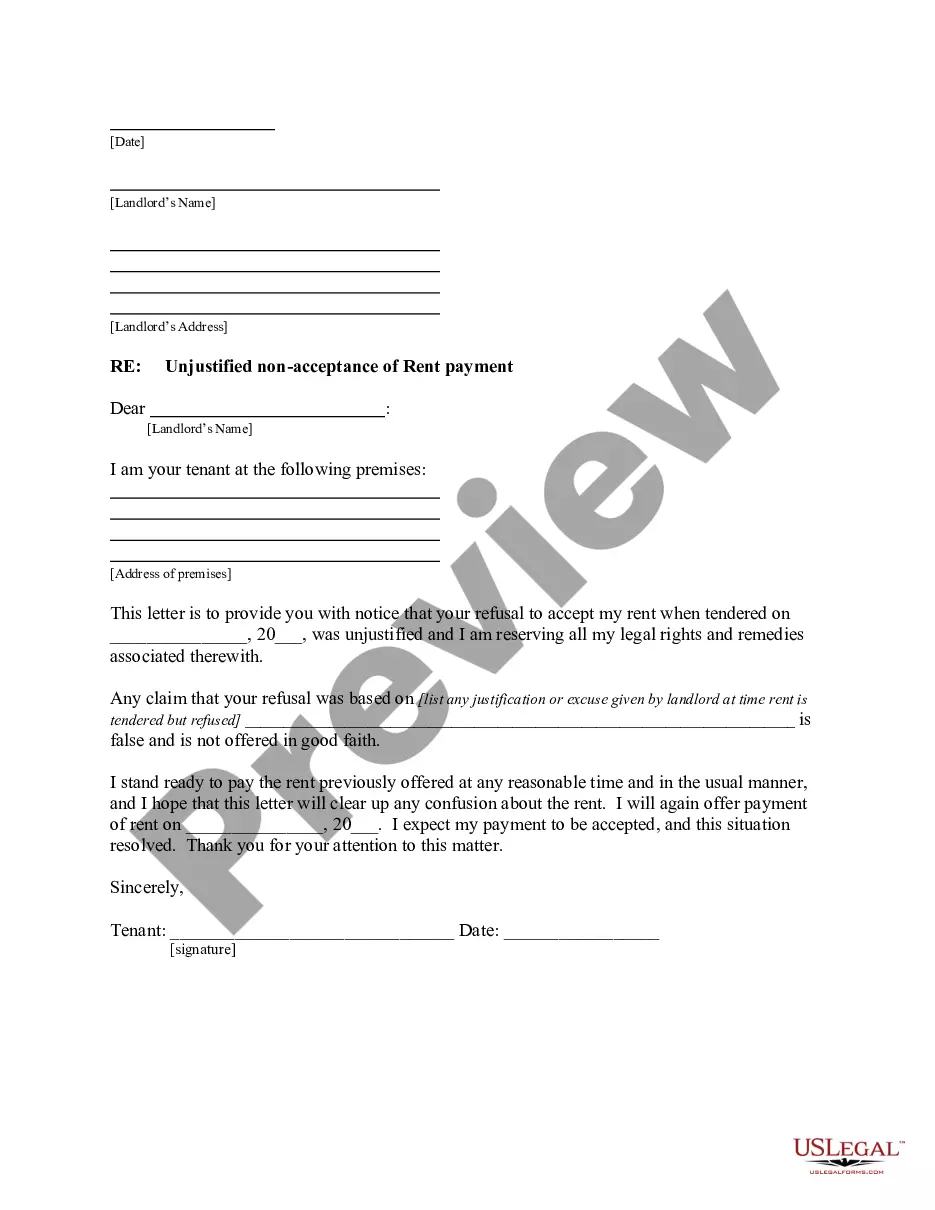
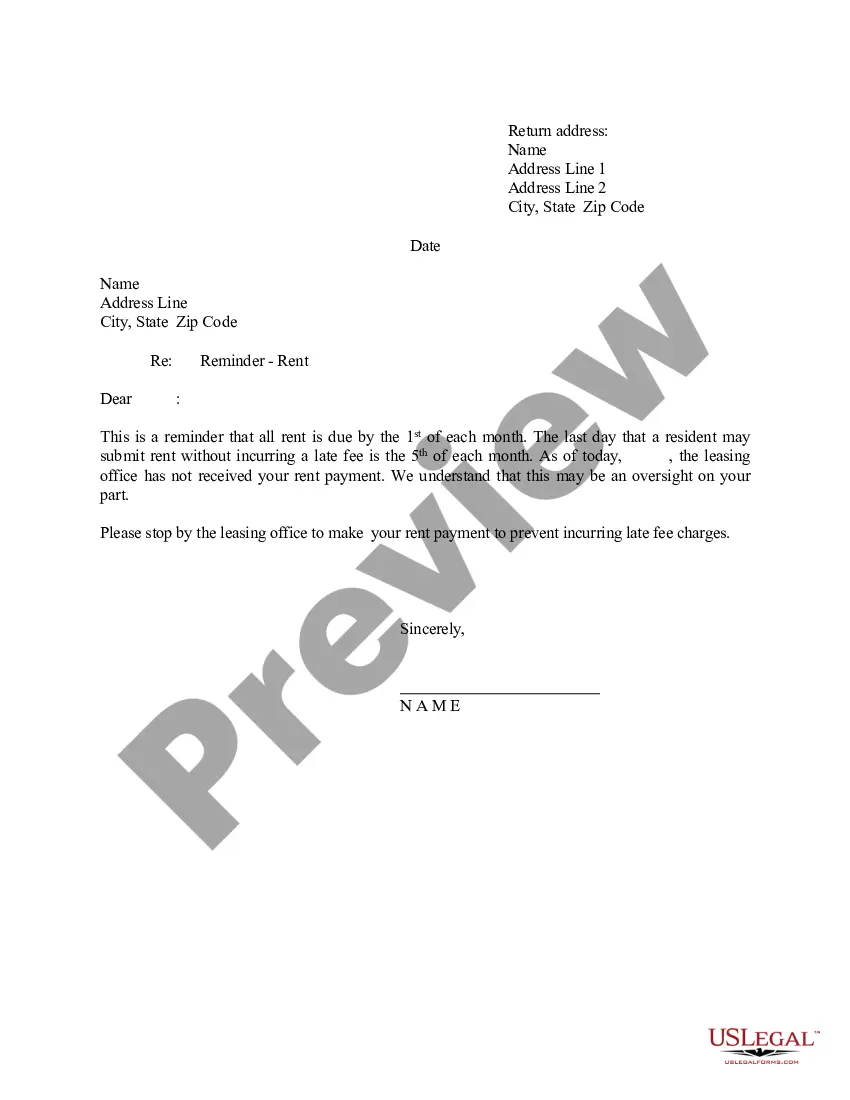
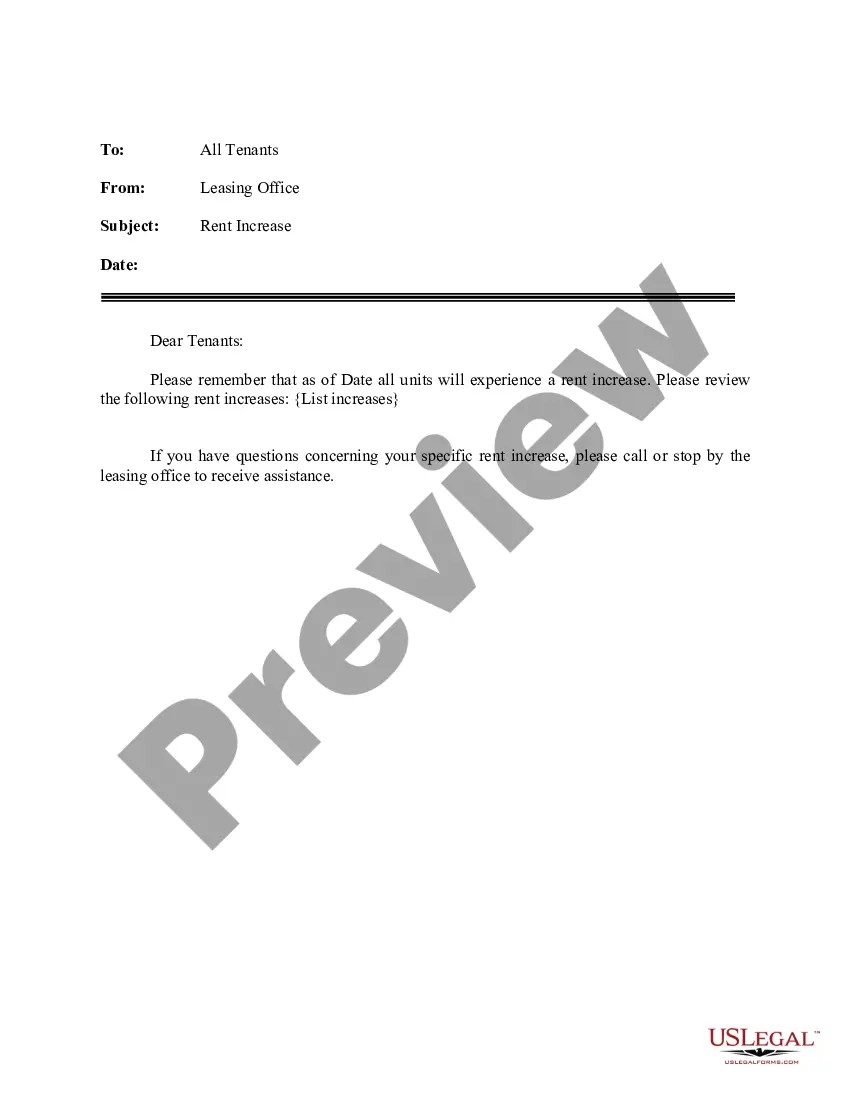
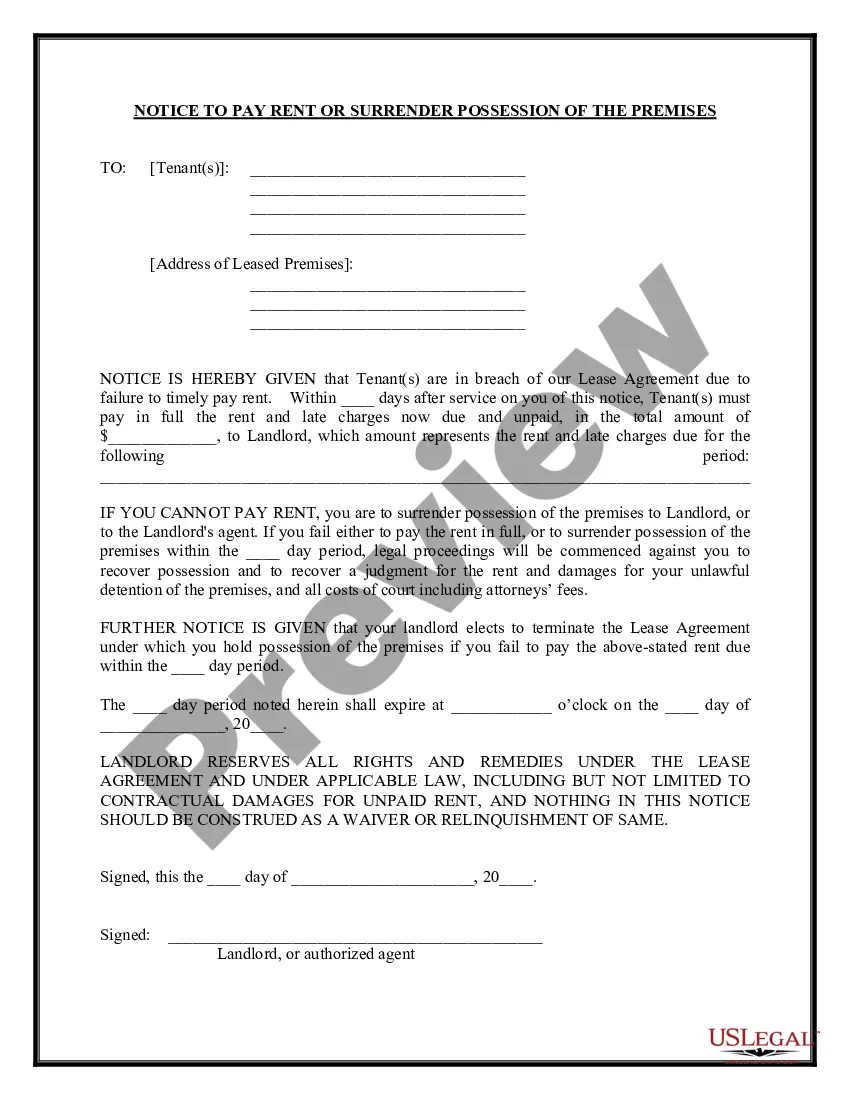
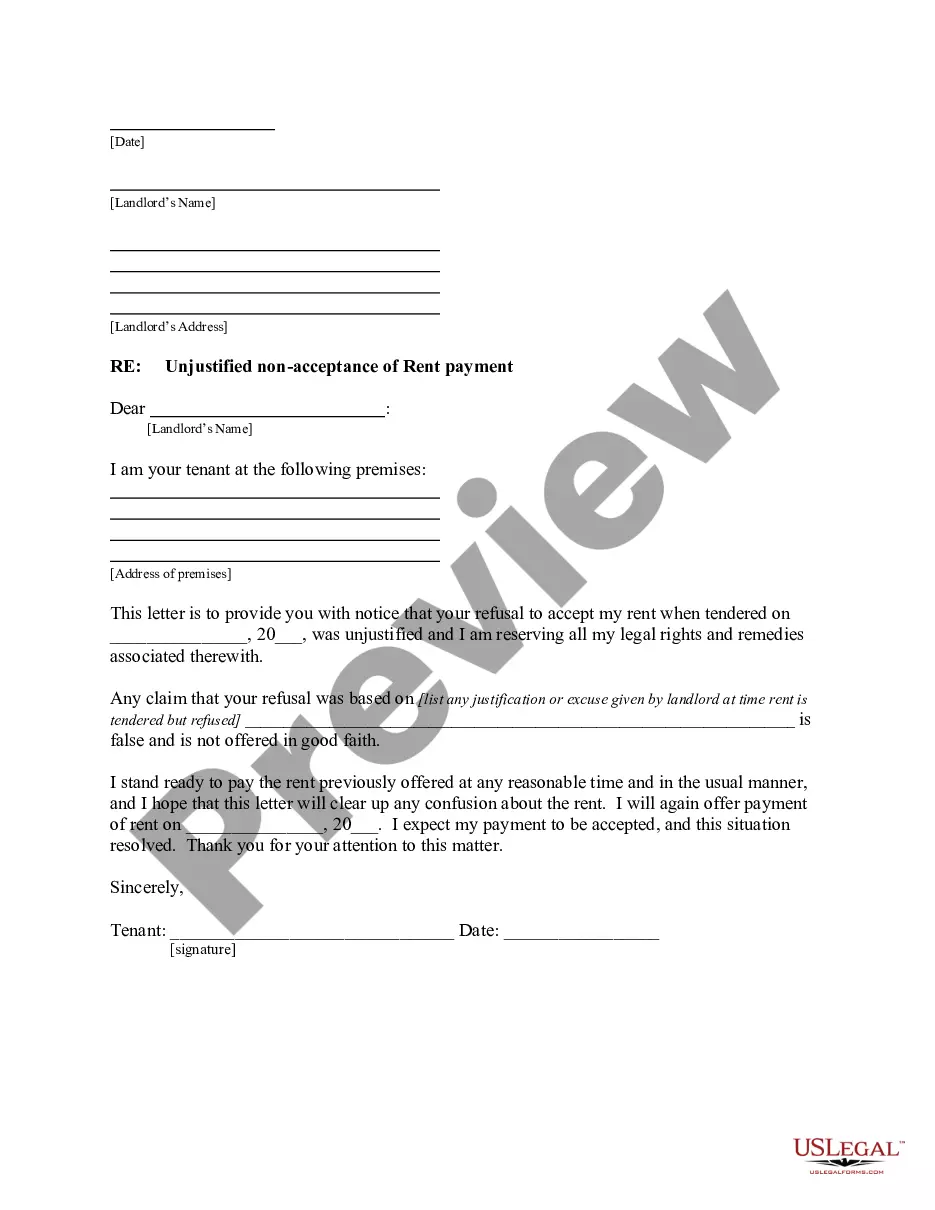
This Letter from Tenant to Landlord containing Notice to Cease Unjustified Nonacceptance of Rent is a legal document that notifies a landlord of their unjustified refusal to accept rent payments. This form is essential for tenants who seek to protect their legal rights when faced with a landlord's nonacceptance of rent, ensuring clarity in the rental agreement process. It differs from other forms in that it directly addresses a specific incident of nonacceptance rather than simply outlining rental terms or agreements.
Key parts of this document
- Identification of the tenant and landlord involved.
- A statement claiming the landlord's refusal to accept rent is unjustified.
- A declaration that the tenant is ready to pay the rent under usual conditions.
- A clear offer of payment with the specified date for the next attempt.
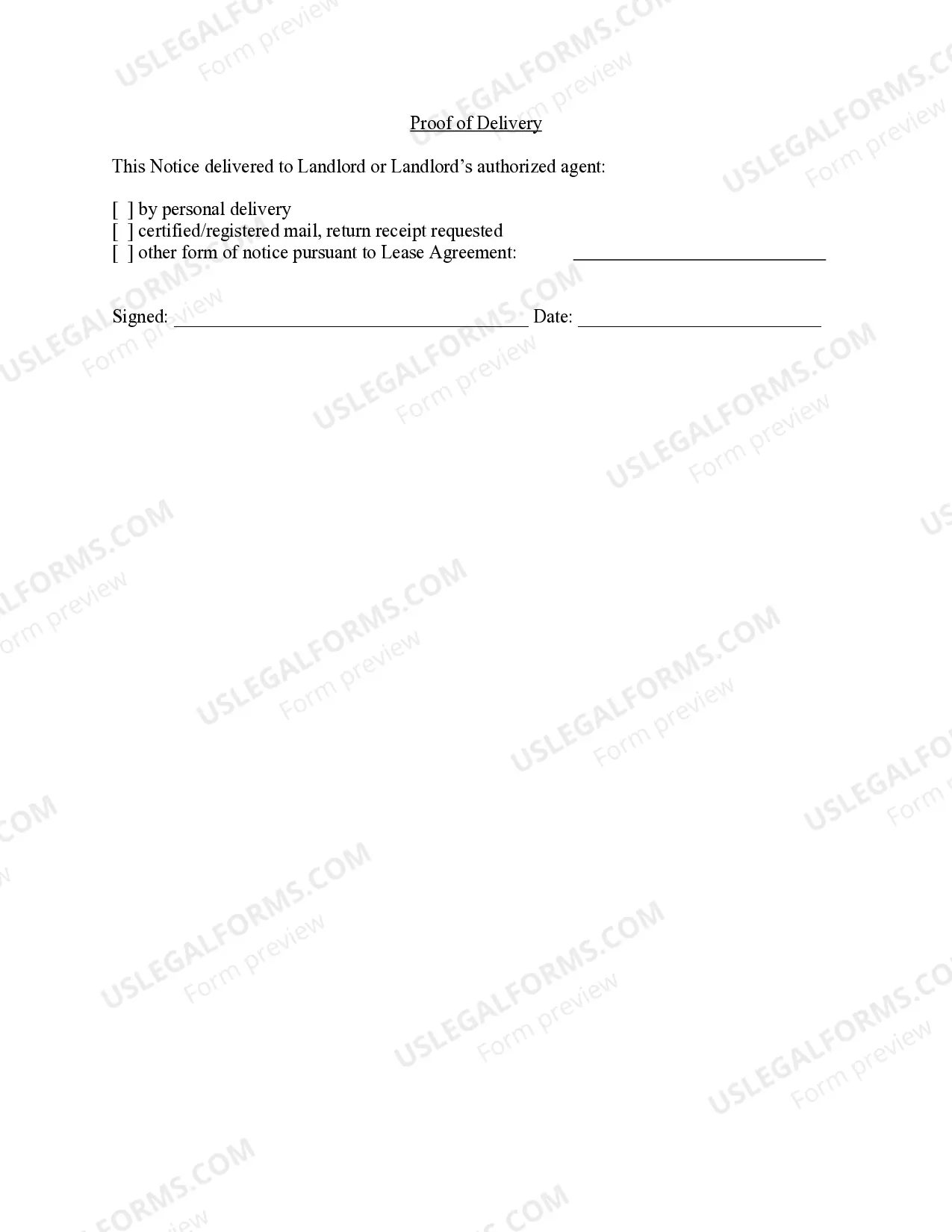
- A section for acknowledging proof of delivery to the landlord or their agent.

When to use this document
This form should be used when a tenant has made an attempt to pay rent, but the landlord has unjustifiably refused to accept it. It is appropriate in situations where there is potential confusion regarding the acceptance of rent, or when the tenant wishes to formally document their intention to continue fulfilling their rental obligations while reserving their legal rights.
Who should use this form
This form is suitable for:
- Tenants currently renting property who have faced issues with their landlord regarding rent payment acceptance.
- Individuals who want to formally communicate with their landlord about discrepancies in rental payments.
- Tenants who wish to protect their legal rights in the event of disputes related to rent acceptance.
Completing this form step by step
- Identify the parties by entering the names and addresses of both the tenant and the landlord.
- Specify the nature of the landlord's refusal, including any justifications given.
- Reiterate your readiness to pay the rent by stating your offer for payment on a specific date.
- Sign the letter to validate your intent and commitment.
- Deliver the letter to the landlord or their agent, making sure to note the method of delivery.
Does this form need to be notarized?
This form usually doesn’t need to be notarized. However, local laws or specific transactions may require it. Our online notarization service, powered by Notarize, lets you complete it remotely through a secure video session, available 24/7.
Get your form ready online
Our built-in tools help you complete, sign, share, and store your documents in one place.
Make edits, fill in missing information, and update formatting in US Legal Forms—just like you would in MS Word.
Download a copy, print it, send it by email, or mail it via USPS—whatever works best for your next step.
Sign and collect signatures with our SignNow integration. Send to multiple recipients, set reminders, and more. Go Premium to unlock E-Sign.
If this form requires notarization, complete it online through a secure video call—no need to meet a notary in person or wait for an appointment.
We protect your documents and personal data by following strict security and privacy standards.

Make edits, fill in missing information, and update formatting in US Legal Forms—just like you would in MS Word.

Download a copy, print it, send it by email, or mail it via USPS—whatever works best for your next step.

Sign and collect signatures with our SignNow integration. Send to multiple recipients, set reminders, and more. Go Premium to unlock E-Sign.

If this form requires notarization, complete it online through a secure video call—no need to meet a notary in person or wait for an appointment.

We protect your documents and personal data by following strict security and privacy standards.
Mistakes to watch out for
- Failing to provide accurate contact information for both parties.
- Leaving out specific dates for the next attempt to pay rent.
- Not clearly stating the unjustified reasons given by the landlord.
- Neglecting to save proof of delivery, which may be crucial in future disputes.
Benefits of completing this form online
- Convenience of accessing the form anytime and anywhere.
- Ability to easily edit and customize the form to fit your situation.
- Access to reliable legal templates created by licensed attorneys.
Legal use & context
This notice is legally significant as it formally communicates the tenant's position and preserves their rights in the event of further disputes. It is crucial for tenants to understand how their rights are protected under rental agreements and state laws, and this form serves as an official record of the tenant's intent and actions.
What to keep in mind
- This form helps tenants formally notify landlords of unjustified rent nonacceptance.
- It preserves legal rights and clarifies the tenant's willingness to pay rent.
- Proper completion and delivery are essential to maintaining legal standing.
Looking for another form?





Form popularity
FAQ
In California, a prospective landlord cannot ask about race, color, religion, sex, gender, gender identity, gender expression, sexual orientation, marital status, national origin, ancestry, familial status, disability, or genetic information.
Yes, a landlord can tell tenants how clean to keep the house. Most times, there's a clause on the tenancy or lease agreement about cleanliness. Always ensure you read and understand the agreement before signing to avoid any disagreement during your stay at the apartment.
A landlord cannot evict a tenant without an adequately obtained eviction notice and sufficient time. A landlord cannot retaliate against a tenant for a complaint. A landlord cannot forego completing necessary repairs or force a tenant to do their own repairs.A landlord cannot remove a tenant's personal belongings.
Tenant Rights to Withhold Rent in MichiganTenants may withhold rent or exercise the right to repair and deduct if a landlord fails to take care of important repairs, such as a broken heater. For specifics, see Michigan Tenant Rights to Withhold Rent or Repair and Deduct.
Invest in the right properties. There's a saying in real estate that you make your money when you buy. Purchase good insurance. Meticulously screen tenants. Streamline rent collection. Partner with the right professionals. Keep good records. Supercharge your ROI.
Do Your Due Diligence. It makes sense to do some preliminary checks on a potential tenant before actually signing the agreement. Request a Reasonable Deposit. Word the Tenancy Agreement Carefully. Carry Out Routine Checks. Get to Know a Good Solicitor. Buy Specialist Landlord Insurance. Use Professional Debt Collectors.
Ending No Grounds Evictions Under our current laws in NSW, a landlord can evict a tenant without grounds with just 30 days' notice at the end of their fixed-term lease, or with just 90 days' notice during an on-going lease. Rental laws in many other countries don't allow 'no grounds' evictions.
If you think your landlord is violating the Fair Housing Act, you can get that landlord in trouble by filing a complaint at HUD.gov. Your remedy for breach of quiet enjoyment is to terminate the lease and move or sue in small claims court.